







 BLOGS
BLOGS  NEWSROOM
  CASE STUDIES
  WEBINARS
  PODCASTS
  ASSET HUB
  EVENT CALENDAR















TL;DR
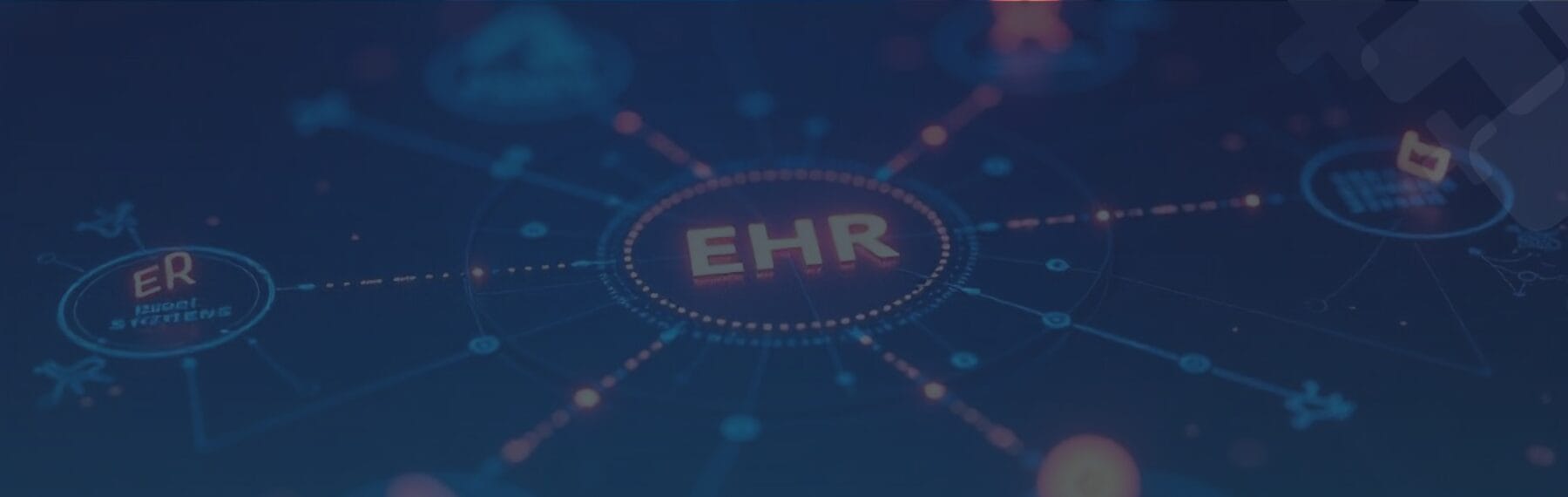
Early disease detection models need one clean, current view of patient data pulled from the EHR, wearables, and payer systems. A SMART on FHIR app embeds the model directly in clinician workflow, while ConnectHealth’s connectors normalize each source to the right FHIR resource so the model isn’t stitching together five different formats. Fastest path: start on the connector, add a custom build only for non-standard sources.
The healthcare industry has made incredible strides in early disease detection, but the challenge of integrating fragmented data from different systems remains a significant barrier. At Mindbowser, we work with healthcare companies facing these challenges and help them bridge the gaps through seamless integration with Electronic Health Records (EHRs).
Let me walk you through a common scenario we often hear from clients and prospects, which highlights the integration challenges and how Mindbowser provides solutions that streamline these processes, improving care and reducing costs.
Scenario: The Struggle with Fragmented Data
Imagine you’re a healthcare company focused on early disease detection using advanced AI technology. Your technology is capable of detecting diseases early, which could save lives and lower care costs. However, there’s a major roadblock: your data is fragmented across multiple systems—EHRs, wearables, payer data, and other healthcare systems. The data is stored in different formats, making it difficult to consolidate and use it effectively.
You need a seamless integration between these systems to create a single, actionable view of patient health. Without this integration, your company is facing:
- Delayed diagnoses because the data isn’t centralized.
- Higher operational costs due to time-consuming, manual data exchanges.
- Frustration from healthcare providers who struggle to navigate multiple platforms for patient information.
Related Read: Medtech Devices: The Future Lies in Seamless Integration
Ready to Break Down Data Silos and Improve Patient Outcomes?
The Solution: Seamless EHR Integration
At Mindbowser, we’ve helped companies in this exact scenario by providing tailored solutions for EHR integration. We specialize in building direct integrations with Epic EHR, Cerner EHR, Athenahealth EHR, and other EHR systems, ensuring that patient data is consolidated and easily accessible for real-time decision-making.
Using FHIR/HL7 protocols, we help organizations normalize data coming from multiple sources, whether it’s from a hospital or third-party systems like wearables. The result? Healthcare companies can now access comprehensive, actionable insights that lead to better patient outcomes and more efficient care.
Early-detection models only work when the data reaches them clean and current. That means pulling readings from the EHR, wearables, and payer systems and normalizing each to a common shape. ConnectHealth’s connectors already speak the source standards — HL7 and FHIR on the clinical side, payer feeds on the claims side — and Helix AI maps each source to the right FHIR resource so your model sees one consistent patient view instead of five formats.
Smart on FHIR: Real-Time Decision Support
Imagine now that you’ve integrated your data and have it all in one place. The next step is to make this data actionable. This is where SMART on FHIR applications come into play. These apps can be embedded directly into EHR systems, providing healthcare providers with real-time decision support and risk predictions based on the most current patient data.
We’ve worked with companies to develop SMART on FHIR applications that offer functionalities such as care plan generation, risk assessments, and predictive analytics. These applications are hosted on platforms like Epic App Orchard, where they can be discovered and used by hospitals to enhance patient care. This integration doesn’t just help improve decision-making; it streamlines the healthcare workflow and improves clinical efficiency.
Related Read: Decoding SMART on FHIR for Healthcare Interoperability
The Epic Showroom: Expanding Reach and Adoption
One major goal for healthcare technology companies is market visibility and adoption. Getting listed in the Epic Showroom can help. This app marketplace acts as an app store for healthcare, making it easier for healthcare providers to discover and adopt new solutions.
Getting listed requires navigating a set of requirements, but once approved, it’s a great way for your product to gain trust and credibility. At Mindbowser, we guide companies through the process of preparing their use case, integrating their app with Epic’s system, and ensuring compliance with Epic’s standards. Once your app is in the showroom, it becomes discoverable by healthcare providers across the Epic ecosystem, accelerating your path to wider adoption.
Connecting Clinical and Payer Data for Holistic Patient Care
Another critical challenge for healthcare organizations is the integration of clinical data from EHRs with payer data (insurance claims, eligibility, etc.). Without this integration, healthcare providers miss out on opportunities to get a complete view of a patient’s health and care costs.
In this scenario, we’ve helped healthcare companies integrate payer data into their system, improving care coordination and enabling healthcare providers to reduce duplication of efforts. Whether it’s eligibility checks or care cost estimations, integrating clinical and payer data allows for a more holistic approach to patient care.
Two ways to wire this up. The connector route — ConnectHealth maps your clinical, wearable, and payer feeds to FHIR resources and gives your detection model one normalized view, fastest to live. The custom route — when you need a bespoke pipeline, a private model deployment, or a non-standard data source, Mindbowser’s engineers build it and you own the result. You keep full control of your data and infrastructure either way.
Key Benefits of Seamless EHR Integration
Here are some of the key benefits that our clients experience when implementing Mindbowser‘s seamless EHR integration solutions:
- Faster Time to Market: Our scalable integration models reduce development timelines, enabling you to launch faster.
- Full Ownership and Control: You own your data and systems, providing the flexibility to adapt as your organization grows.
- Improved Patient Outcomes: By consolidating clinical and payer data, we help you make more informed decisions that lead to better care.
- Reduced Operational Costs: Automating data exchanges and streamlining workflows reduces manual tasks and operational overhead.
- Easier Integration with Multiple EHR Systems: Whether you’re working with Epic, Cerner, or Athena, we make EHR integration easy and efficient.
Related Read: Benefits and Challenges of The Electronic Health Record
Ownership and Flexibility: Your Data, Your Solution
We provide you with full ownership of your data and system architecture. Unlike traditional SaaS platforms, which restrict your control over your own systems, we enable you to own your infrastructure and data. Whether you choose to maintain the system internally or collaborate with Mindbowser for future updates, the flexibility is yours.
The Path to Scalable Success
Once we’ve set up an integration for one hospital or healthcare organization, it can be easily scaled across other institutions, reducing both time and cost. This scalability is essential for organizations that want to expand without having to reinvent the wheel every time they onboard a new hospital or provider.
By enabling seamless integration with EHR systems and payer data, Mindbowser empowers companies to scale quickly and deliver high-quality care to a wider patient base.
Building a Smarter, More Efficient Healthcare System
At Mindbowser, we know that the future of healthcare relies on integrated, actionable data. By connecting EHRs, leveraging the Smart on FHIR apps, and integrating payer data, we help healthcare organizations transform fragmented data into a unified, actionable resource that improves patient care, reduces costs, and drives innovation.
If you are ready to unlock the full potential of your healthcare solutions, streamline your EHR integrations, and enhance AI-powered workflows, we are here to help. Schedule a consultation today to explore how Mindbowser can support your digital health transformation and drive success.
SMART on FHIR is a standard that lets an app run inside the EHR itself, pulling structured patient data and surfacing model output right in the clinician’s existing workflow. For early detection, this means a risk flag shows up where the clinician is already looking instead of a separate tool they have to check.
Epic Showroom listing requires your app to pass Epic’s SMART on FHIR compliance and security review. We can walk you through what that review checks and where your current build stands.
Yes. Payer feeds use a different standard than clinical HL7/FHIR data, and ConnectHealth’s connectors map both to a common resource shape, so the model sees claims, EHR, and wearable data as one normalized input rather than three separate pipelines.
You do, on both the connector route and the custom-build route. Mindbowser builds and integrates; your organization retains full ownership and control of the data and the infrastructure it runs on.
Standard sources (EHR, common wearables, major payer formats) go live in days on the connector. Non-standard sources — a proprietary device feed, a legacy payer format — need a custom adapter, which is scoped on the intro call based on what you’re connecting.