Availity Integration Services for Digital Health Companies and Providers

AVAILITY INTEGRATION SERVICES

Mindbowser’s healthcare engineering team connects your product or health system to Availity’s payer network, so eligibility, prior authorization, claims, claim status and remittance run inside the systems your teams already use. We build it as a custom integration, on our ConnectHealth platform, or both, depending on what gets you live fastest.

Every Availity workflow, built into your systems

270 / 271

Eligibility & benefits

Checked at scheduling and intake.

278

Prior authorization

Submitted and tracked from the EHR.

837

Claims

Built from charge data and routed to payers.

276 / 277

Claim status

Pulled and surfaced to billing.

835

Remittance

Mapped into payment posting.

275 / FHIR

Attachments & FHIR payer APIs

Available where supported.

Healthcare technology, 13+ years
AWS Advanced Tier Services Partner
Epic Vendor Services member
SOC 2 Type II audited
HIPAA-ready, BAA provided

What is Availity integration?

ConnectHealth acts as the integration and orchestration layer between your healthcare application, EHR, billing system, and Availity-connected payer workflows.
It helps teams connect Availity eligibility verification, claims submission, remittance, claim status, and prior authorization workflows directly into the systems where patient access, clinical, and revenue cycle teams already work.

Availity integration connects an EHR, billing system or healthcare application to Availity's payer network, so eligibility checks, claims, remittance, claim status and prior authorization run automatically inside your own workflows instead of through manual portal lookups.

Availity describes itself as the nation's largest real-time health information network, connecting more than 3.4 million providers and directly connecting more than 95% of US health plans. That reach is why so many provider organizations and health tech companies need to exchange data with it. The hard part is not the network; it is getting each transaction into and out of your own systems reliably, in the right format, with the right payer rules applied. That is the work Mindbowser does.

Who we help

Availity integration for digital health companies and for providers

The transactions are the same; the goal is different. Digital health companies need Availity inside their product. Providers need it inside their EHR and revenue cycle.

Digital health & healthcare SaaS

Build Availity into your product

For virtual care, RPM, AI intake, care management and RCM software companies that need payer data in their own app.

  • Real-time eligibility at sign-up, scheduling or enrollment
  • Prior auth and claims workflows your customers can run without leaving your product
  • One integration layer that also reaches Stedi and other clearinghouses as you scale
  • Your engineers keep building the product; we own the payer and EHR plumbing
Talk to us about your product
Hospitals, health systems & provider groups

Bring Availity into your EHR and revenue cycle

For registration, authorization and billing teams who switch between the Availity portal and the EHR all day.

  • Coverage verified automatically before the visit, written to Epic, Oracle Health, athenahealth or MEDITECH
  • Prior authorization submitted and tracked from the order, with status visible to clinicians
  • Claim status and 835 remittance flowing into billing work queues and payment posting
  • Fewer eligibility-related denials and less manual portal work
Talk to us about your organization

Mindbowser integration services, with ConnectHealth when it speeds you up

Mindbowser is a healthcare technology company with an engineering team trained in HIPAA, FHIR and HL7. You get the team and, where it helps, the platform.

Custom Availity integration

Our engineers scope, build, test and support the integration inside your application or systems: API and X12 mapping, payer rules, EHR write-back, work queues and UI.

ConnectHealth

Mindbowser's healthcare integration platform, deployed in your own cloud. Prebuilt EHR connectors and workflows replace months of plumbing work.

Go-live and beyond

Help with Availity access, payer enrollment and testing, then monitoring and changes as payers, rules and your volumes change.

Where Availity integrations usually break down

Availity gives you access to payers. It does not wire that access into your EHR, scheduling, billing or AI workflows. That last mile is where most of the engineering time goes.

Eligibility lives outside intake

Front-desk staff check coverage in the Availity portal, then retype plan details into the EHR. Errors at this step become denials weeks later.

Prior auth means swivel-chair work

Requests, clinical documentation and status checks move between portals, EHR screens, fax and phone. Status updates rarely reach the clinician who needs them.

X12 mapping is unforgiving

837 claims and 835 remittances need exact loop and segment mapping, payer-specific edits and code sets. Small mapping errors create rejections and manual reconciliation.

Responses do not trigger action

A 271 inactive-coverage response or a 277 rejection is only useful if it routes to the right queue. Many teams still rely on someone checking.

API operations add up

OAuth tokens expire within minutes, rate limits apply, and some responses arrive asynchronously. Every team rebuilds the same polling, retry and logging code.

One network is rarely enough

Payer coverage differs by transaction and clearinghouse. Hard-wiring one network into your product makes adding a second one a new project.

The fix

One integration layer between your systems and Availity solves all six.

  • Checks run at scheduling and intake
  • Responses land in work queues
  • X12, tokens and retries handled once
  • Add Stedi or pVerify without a rebuild
See what we integrate
Transaction by transaction

Availity transactions we integrate

Each Availity transaction is handled end to end: request built from your source data, sent through the right Availity channel, response parsed, normalized and delivered to the system that acts on it.

1
BuildRequest assembled from your EHR or app data
2
SendRouted to Availity with auth, retries and limits handled
3
NormalizePayer response parsed into clean, structured data
4
DeliverWritten back where your team or agent acts on it
X12 270271

Eligibility & benefits verification

What we build

Builds the inquiry from patient and appointment data, calls Availity, and normalizes coverage, copay, deductible and plan details.

Where it lands
EHR registrationSchedulingIntake formsAI front-desk agents
X12 278FHIR

Prior authorization (service reviews)

What we build

Submits requests with order and diagnosis data, tracks status, and routes decisions and pended requests. FHIR where payers support it.

Where it lands
Ordering clinicianAuth work queueEHR order
837P837I

Claims submission

What we build

Maps charges to 837 loops and segments, validates required fields, and routes claims to payers through Availity.

Where it lands
Billing systemRCM platform
X12 276277

Claim status

What we build

Polls status on a schedule, flags rejected and pended claims, and tracks acknowledgements.

Where it lands
Billing work queuesDenial management
X12 835

Electronic remittance

What we build

Parses payments and adjustment reason codes into structured data your finance team can use.

Where it lands
Payment postingReconciliationAnalytics
X12 275API

Claim attachments

What we build

Pulls clinical documents from the EHR and sends them with the claim or authorization request.

Where it lands
Payer, linked to the claimAuth request
HL7 FHIR R4

FHIR payer APIs

What we build

Connects to payer FHIR endpoints for prior authorization and data exchange as payers enable them, so today's X12 workflows carry forward without a rebuild.

Ready for the CMS interoperability & prior authorization rule
Where it lands
EHRCare managementPatient apps

Availity's developer portal lists HIPAA Transaction APIs, a Claim Attachments API and a Remittance Data API. Transaction availability varies by payer.

How it works

How the integration works

Whether we build it custom or on ConnectHealth, the same pattern applies: your system makes one consistent call, and the integration layer handles everything specific to Availity and to each payer.

Your EHR or app
Epic, Oracle Health, your product
  1. TriggerAn appointment is booked, an order is signed or a claim is ready in your EHR or app.
  2. BuildThe integration assembles the X12 or API request from your source data and validates it.
  3. SendThe request goes to Availity with token refresh, rate limiting and retries managed.
  4. NormalizeThe payer response is parsed into clean, structured data and every step is audit-logged.
  5. ActResults write back to the EHR or billing system, or route to a work queue or AI agent.
Availity
Payer network

Built visually, run like infrastructure

Workflows are assembled in ConnectHealth's zero-code builder from 150+ prebuilt healthcare nodes, or generated from a plain-English description by Helix, ConnectHealth's AI integration assistant. Our engineers configure them with your team.

Not locked to one network

The same workflow can route through Availity, Stedi or pVerify depending on the payer. Adding a second clearinghouse is a configuration change, not a rebuild.

Free scoping call

Plan your Availity integration with our team

Whether you are building a product or running a provider organization, tell us which transactions, EHR and payers you work with. In a 30-minute call our team will:

  • Map your Availity transactions to your EHR, billing and intake workflows
  • Recommend custom build, ConnectHealth or a mix, and show a live workflow
  • Outline the Availity access, enrollment and testing steps for your case
  • Give you a realistic timeline for sandbox and production
30 minutes No commitment HIPAA-ready team

No commitment. Your information is used only to respond to your request.

Book your scoping callFive quick fields, then we take it from there

Availity integration use cases

Projects we take on for digital health companies and provider organizations.

Digital health and virtual care companies

Verify coverage before a telehealth visit or program enrollment, show patients their cost share, and stop onboarding uninsured or inactive members, without building payer connectivity yourself.

RCM and billing platforms

Submit 837 claims, track 277 status and post 835 remittances through one integration layer, and give your customers broad payer reach through Availity alongside other clearinghouses.

Hospitals and provider groups

Bring eligibility and prior authorization into Epic, Oracle Health or MEDITECH workflows, so registration and clinical staff stop switching to the payer portal.

AI intake, scheduling and voice agents

Give AI agents a structured eligibility result they can act on: confirm coverage, quote a copay, or hand off to a human when coverage is inactive.

Specialty, dental and behavioral health practices

Automate high-volume benefit checks and authorization tracking for services where payer rules change often and denials are costly.

Remote patient monitoring and care management

Check eligibility before enrollment in RPM, CCM or APCM programs and keep billing data clean for monthly claims.

Availity integration with Epic and other EHRs

Payer data only helps when it reaches the chart and the work queue. ConnectHealth writes Availity results back to the EHR through FHIR and HL7 connectors, so staff see coverage, authorization status and remittance where they already work.

From sandbox to production

How to get Availity API access and go live

Most of the calendar time in an Availity project is access, enrollment and testing, not code. Here is the usual path and where we help.

  1. Scope

    Choose transactions, payers and the systems results must reach.

    We run the scoping session with your team
  2. Sandbox

    Register on Availity's developer portal and test against demo responses.

    We build and test the workflows
  3. Agreement

    Complete Availity's commercial and trading partner requirements for live data.

    We guide you through the requirements
  4. Enroll & test

    Enroll with payers where required (for example ERA) and test with real payer responses.

    We support enrollment and run end-to-end testing
  5. Live
    Go live

    Switch to production, monitor responses and expand to more transactions.

    We monitor, support and add transactions

#Regulatory timing#

Prior authorization and the CMS interoperability rule

The CMS Interoperability and Prior Authorization Final Rule (CMS-0057-F) requires impacted payers to shorten prior authorization decision times and to stand up FHIR-based APIs, including a Prior Authorization API, with the main API requirements due from January 2027. Availity is building FHIR-based authorization capabilities to help health plans meet these mandates.

For providers and health tech companies, the practical step now is to move authorization requests and status tracking out of portals and into the EHR workflow. ConnectHealth supports X12 278 today and connects to FHIR prior authorization endpoints as payers enable them, so the same workflow carries forward.

Build vs buy

Building in-house vs working with Mindbowser

What it takes
In-house build on Availity APIs
Mindbowser (services + ConnectHealth) Faster path
Healthcare integration team
In-houseHire or train for X12, FHIR and payer rules
MindbowserHIPAA- and FHIR-trained engineers from day one
Time to first working connection
In-houseMonths of engineering
MindbowserSandbox in the first week
X12 mapping, token refresh, retries, audit logs
In-houseBuilt and maintained by your team
MindbowserIncluded in the platform
EHR write-back
In-houseSeparate EHR integration project
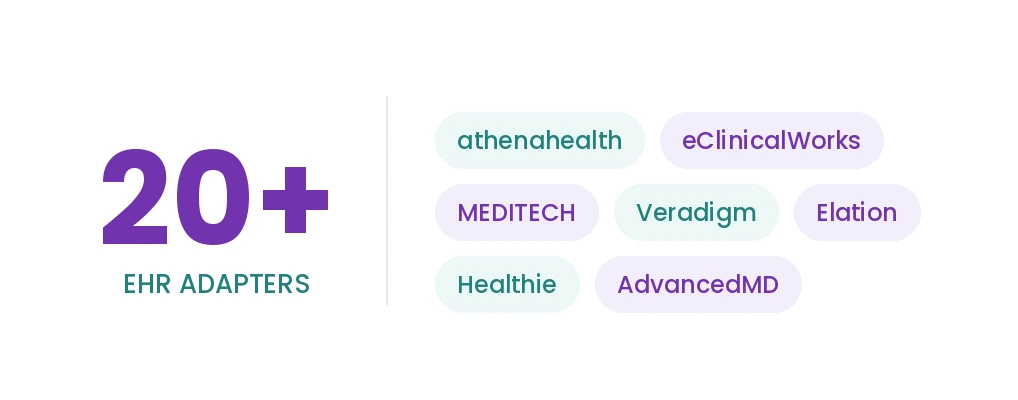
MindbowserSame platform, 20+ EHR adapters
Adding Stedi, pVerify or another network
In-houseNew integration
MindbowserConfiguration change
Where PHI lives
In-houseYour cloud
MindbowserYour cloud (AWS, Google Cloud or Azure)
Pricing
In-houseEngineering payroll
MindbowserScoped services; ConnectHealth priced flat by organization, no per-transaction fees

Not sure which route fits? We'll recommend custom build, ConnectHealth or a mix on the first call.

Compare options with our team

Built for healthcare security and compliance

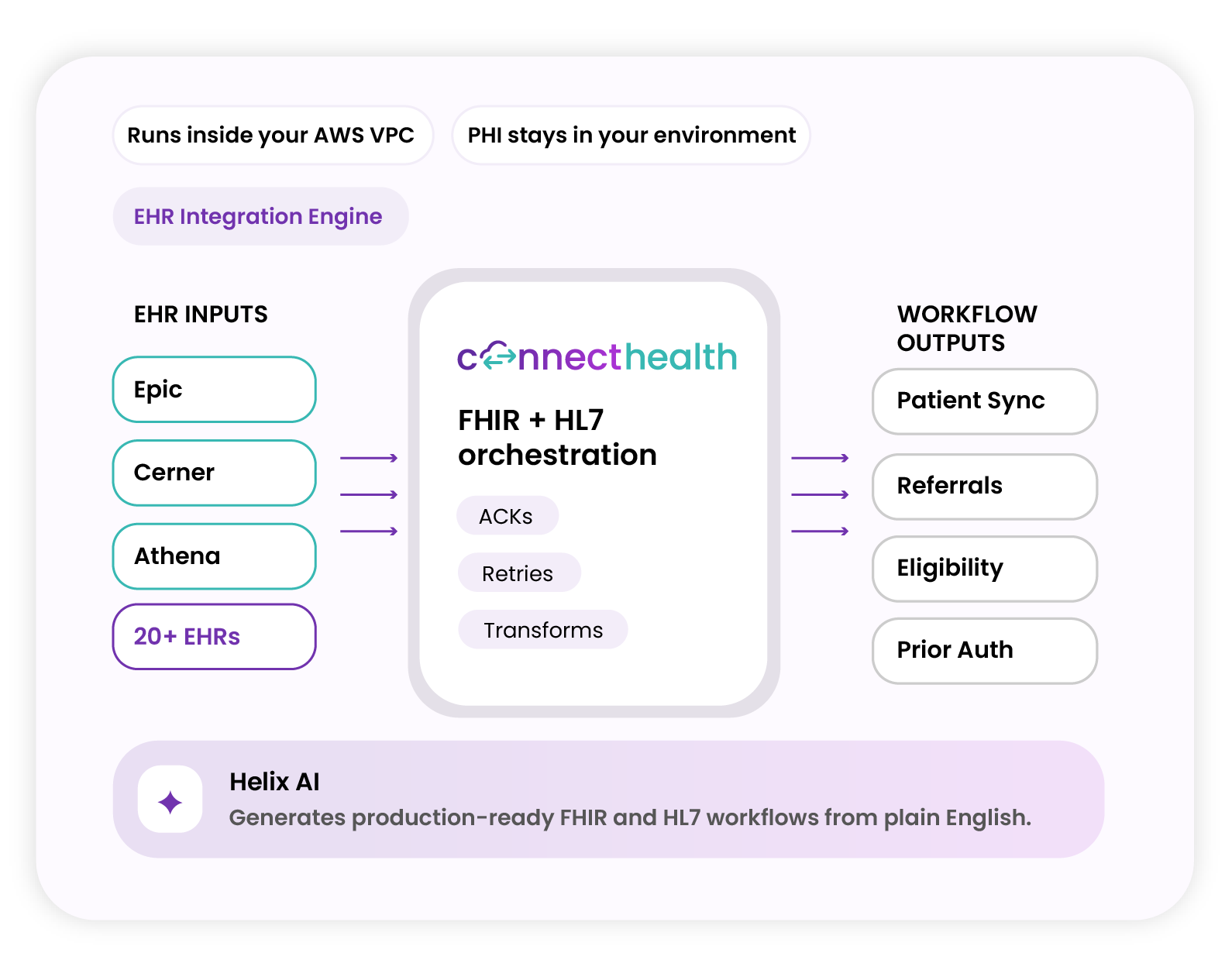
Everything we build runs in your environment. ConnectHealth deploys inside your AWS, Google Cloud or Azure account, so PHI never leaves it except where your own workflows send it.

#Your VPC, your keys#

Deployed in your cloud account and region with your encryption keys. Available from AWS Marketplace.

#Encryption and audit#

AES-256 at rest, TLS 1.3 in transit, and an audit trail of every PHI access: who, what, when and outcome.

#Compliance#

Business Associate Agreement provided. Mindbowser is SOC 2 Type II audited and builds HIPAA-ready by default.

Availity integration: frequently asked questions

Both. Mindbowser is a healthcare technology company, and our engineers build custom Availity integrations inside your product or systems, or deliver them on ConnectHealth when a ready platform is faster. Many projects combine the two: ConnectHealth for the integration layer, custom engineering for your workflows and UI.

Both. For digital health and healthcare SaaS companies we build Availity connectivity into the product. For hospitals, health systems and provider groups we connect Availity to Epic, Oracle Health, athenahealth and other EHRs so registration, authorization and billing teams work from one screen.

Availity integration connects an EHR, billing system or healthcare application to Availity's payer network so eligibility checks, claims, remittance, claim status and prior authorization run automatically inside your own workflows instead of through manual portal work.

Yes. Availity's developer portal offers REST APIs for HIPAA X12 transactions such as eligibility (coverages), claim status and service reviews, plus a Claim Attachments API and a Remittance Data API. Access uses OAuth 2.0 client credentials, and access tokens are short-lived, so integrations must refresh them automatically.

Developers start with a sandbox or demo plan that returns test responses. Live payer data requires an agreement with Availity, payer enrollment where the transaction needs it, and testing before go-live. Mindbowser helps teams plan and complete these steps.

Yes. ConnectHealth connects Availity payer workflows with Epic, Oracle Health (Cerner), athenahealth, eClinicalWorks, MEDITECH and 20+ other EHRs, so eligibility, authorization and remittance data can be written back to the systems your staff already use.

No. Availity provides payer connectivity and clearinghouse services. ConnectHealth is the integration and workflow layer that connects Availity transactions to your EHR, RCM platform or application.

Many teams use both. Availity offers very broad payer reach and a strong prior authorization footprint; Stedi offers a developer-first, JSON-based clearinghouse API. ConnectHealth can route transactions to either, so you are not locked into one network.

With ConnectHealth, a sandbox connection is typically running within the first week. Production timelines depend on the transactions in scope, payer enrollment, testing and your EHR. Eligibility-only projects go live faster than projects that add claims, remittance and prior authorization.

ConnectHealth runs inside your own AWS, Google Cloud or Azure account, so PHI stays in your environment. Data is encrypted in transit and at rest, every access is audit-logged, and a Business Associate Agreement is provided. Mindbowser is SOC 2 Type II audited.

The CMS Interoperability and Prior Authorization Final Rule (CMS-0057-F) pushes payers toward FHIR-based prior authorization APIs and faster decisions. Integrating Availity prior authorization into your EHR workflow lets providers submit and track requests electronically today and adopt FHIR-based options as payers enable them.

ConnectHealth uses flat pricing by organization: an annual platform fee plus a monthly subscription that begins only after your live connection is established. There is no per-transaction or per-message metering.

AI-First EHR Integration Platform

Meet ConnectHealth: EHR Integration Without a New Build per Customer

ConnectHealth is Mindbowser’s AI-first healthcare integration engine. Connect to Epic, Cerner, Athena, and 20+ EHRs, deployed inside your own cloud so PHI never leaves your environment. Helix AI generates production-ready FHIR and HL7 workflows from plain English. No custom code. Predictable pricing. Sandbox in minutes.

20+ EHRs Your cloud FHIR + HL7
ConnectHealth EHR integration platform

Let’s #Transform Healthcare,# Together.

Partner with us to design, build, and scale digital solutions that drive better outcomes.

Location

Global Tech Teams LLC, 525 Washington Blvd, Industrious at Newport Tower, Jersey City, NJ 07310, United States.

Contact

+1 408 786 5974
contact@mindbowser.com
BOOK A QUICK CONSULTATION

Have a Healthcare Project in Mind?

Let’s discuss your goals, workflows, and next steps in a focused consultation call.

Calendar icon Schedule a Call

Contact form