BLOGS
BLOGS  NEWSROOM
  CASE STUDIES
  WEBINARS
  PODCASTS
  ASSET HUB
  EVENT CALENDAR






















TL;DR
- Epic EHR integration is essential for hospitals that need real-time data access, unified patient records, and tighter care coordination.
- Three integration paths exist: direct (high customization, high dev cost), middleware (flexible, more moving parts), and pre-built platform (fastest deploy, lowest maintenance).
- Choosing the right method depends on your team’s dev capacity, how many EHRs you need to connect, and your go-live timeline.
- ConnectHealth gives healthcare teams a faster path with pre-built Epic connectors, AWS-VPC deployment, and no per-interface maintenance overhead.
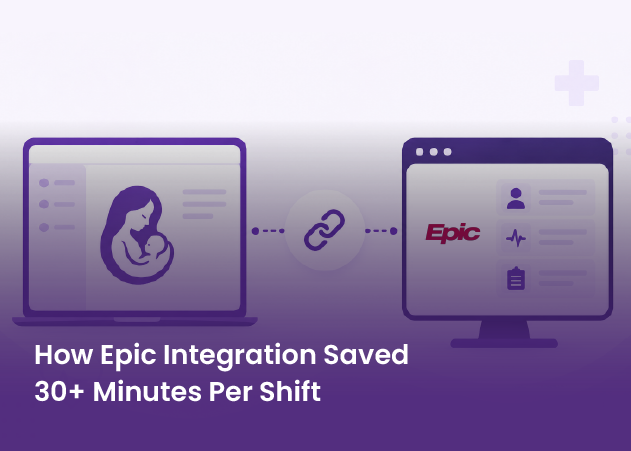
Epic Integration is the term used to describe the digital solution that enables healthcare professionals to access real-time patient health data obtained directly from the Epic EHR system. Epic shares 36% of the market in the USA.
Healthcare professionals can now quickly and easily access important patient data, such as medical history, prescription and medication details, past and current contacts, and possible future appointments, thanks to this Epic integration.
Hospitals looking to improve operations use Epic EHR integration to access real-time data, merge patient records, and sharpen care delivery. By integrating Epic EHR, hospitals can access real-time data, merge patient health data, and improve care management and delivery.
Epic EHR is a comprehensive platform that combines medical histories, treatment plans, and diagnostic results in one place, significantly enhancing the accuracy of diagnoses and treatments.
Epic EHR integration simplifies clinical workflows and amplifies patient involvement by providing access to their health data. It establishes informed and active participation in their care journey, improving outcomes and patient satisfaction.
For decision-makers in healthcare, working with Epic EHR drives efficiency, improves patient care, and helps them stay ahead in a competitive market.
Let’s get to know why you should integrate with Epic EHR!
Why Epic EHR Integration?
Epic EHR integration allows hospitals to consolidate patient health data in real-time, leading to more accurate diagnoses and treatments. Its integration ensures that all patient information is accessible on one platform, enhancing the overall efficiency and effectiveness of healthcare delivery.


✅ Improving Patient Experience and Care
With Epic EHR integration, patient care is elevated through seamless access to extensive health records. Patients can review their medical histories, treatment plans, and test results, promoting active involvement in their healthcare journey. It promotes trust and involvement, which improves overall patient happiness and results.
✅ Simplifying Medical Procedures
By integrating Epic EHR, clinical workflows are modernized through the automation of routine tasks and the reduction of manual data entry. Healthcare providers benefit from rapid access to updated patient information, facilitating faster and more coordinated care. It also reduces administrative responsibilities, freeing doctors to focus more on patient care.
✅ Interoperability Across Healthcare Networks
The powerful interoperability features of Epic EHR integration ensure that communication and data sharing are seamless across several healthcare systems. It also allows for coordinated care across several providers, improving teamwork and ensuring that patients receive consistent and complete treatment regardless of where they are treated.
✅ Data-Driven Decisions
Epic EHR integration provides healthcare decision-makers with real-time data analytics and reporting tools. The data-driven strategy enables informed decision-making, optimal resource allocation, and improved patient outcomes. Access to accurate and timely data supports strategic planning and enhances the overall performance of healthcare facilities.
✅ Regulatory Compliance and Security
The integration of Epic EHRs ensures patient data handling is in line with applicable healthcare laws and regulations. It employs comprehensive security measures to protect sensitive information, ensuring patient confidentiality and data integrity. Compliance with regulatory regulations reduces legal risks while increasing trust in the healthcare system.
Popular Methods for Epic Integration
Epic EHR integration can be achieved through various methods, each with its benefits and considerations.
For the full Epic integration breakdown, including cost ranges, implementation timelines, App Orchard workflows, and platform-vs-custom guidance see our Epic Integration overview.
Here, we discuss three methods for integrating Epic EHR: direct, middleware, and pre-built platform.
👉 Direct Integration with Epic
Direct integration with Epic involves connecting hospital systems directly to the Epic EMR platform. This method ensures real-time data exchange, providing immediate access to patient information across various departments.
Healthcare providers may improve data consistency and dependability by using Epic’s native APIs. It also allows hospitals to customize workflows and connect the Epic EHR integration system with their operational demands. However, direct integration can be complex and may require substantial IT resources and expertise to implement and maintain.
Direct Epic integration is typically preferred when hospitals require tighter workflow control, lower middleware dependency, or bidirectional write-back support through SMART on FHIR and Epic Vendor Services.
👉 Middleware Integration with Epic
Middleware integration involves using an intermediary software layer that connects hospital systems to the Epic EHR platform. Middleware solutions can simplify the integration process by handling data translation, transformation, and routing between disparate systems. This method can reduce the complexity and cost of integration while still providing robust data exchange capabilities.
Middleware integration can also facilitate interoperability with other healthcare systems and applications, enabling a more cohesive healthcare ecosystem. While this approach may offer greater flexibility, it may also introduce additional points of failure and require ongoing management and support to ensure optimal performance.
👉Pre-Built Integration Platform
Direct and middleware both assume you are building the integration from scratch. A third option is to start from connectors that already exist.
ConnectHealth ships pre-built Epic connectors (plus 20+ other EHRs), runs inside your own AWS VPC, and lets your team assemble the workflow with Helix AI, turning a 6-month Direct build into days, without the per-interface maintenance burden of classic middleware. Custom engineering only kicks in for workflows that a connector doesn’t cover yet.
Weighing the Options: A Comparative Analysis for Epic Integration
Choosing the right method for Epic EHR integration involves weighing the pros and cons of different approaches. Below, we compare all three methods: direct, middleware, and pre-built platform to help decision-makers evaluate their options.
Direct Integration
| Factor | Direct | Middleware | Pre-Built Platform (ConnectHealth) |
|---|---|---|---|
| Setup time | Months | Weeks–months | Days |
| Cost | High (dedicated dev team) | Medium | Lower upfront |
| Maintenance | High (Epic API drift) | Medium | Low (connector layer absorbs updates) |
| Lock-in risk | High (Epic-native) | Low–medium | Low (runs in your VPC) |
| Scalability | Custom-built | Moderate | Grows with the connector library |
Pros of Direct Integration:
Direct integration involves connecting hospital systems directly to the Epic EHR platform, which can offer several benefits. In-house development teams can create highly customized solutions tailored to the specific needs of their healthcare facility.
This Epic EHR integration method allows for real-time data exchange and high data consistency, ensuring that patient information is always up-to-date. Additionally, direct integration enables Epic’s native APIs, facilitating seamless data flow and process automation within the hospital’s existing infrastructure.
Cons of Direct Integration:
Direct integration comes with its challenges. The complexity of the integration process can be daunting, requiring significant time and resources to develop and implement. Hospitals often need to hire dedicated development teams and subject matter experts, which can be costly.
This method also poses the risk of vendor lock-in, where hospitals heavily rely on Epic’s technology and support. The development and maintenance efforts required can lead to increased operational costs and potential delays in achieving the desired outcomes.
Middleware Integration
Pros of Middleware Integration:
Middleware integration offers several benefits for hospitals looking to connect their systems with Epic EHR. This approach provides flexibility, allowing hospitals to integrate various applications without extensive modifications to their existing infrastructure. Interoperability is another significant advantage, as middleware facilitates communication between disparate systems, ensuring smooth data exchange.
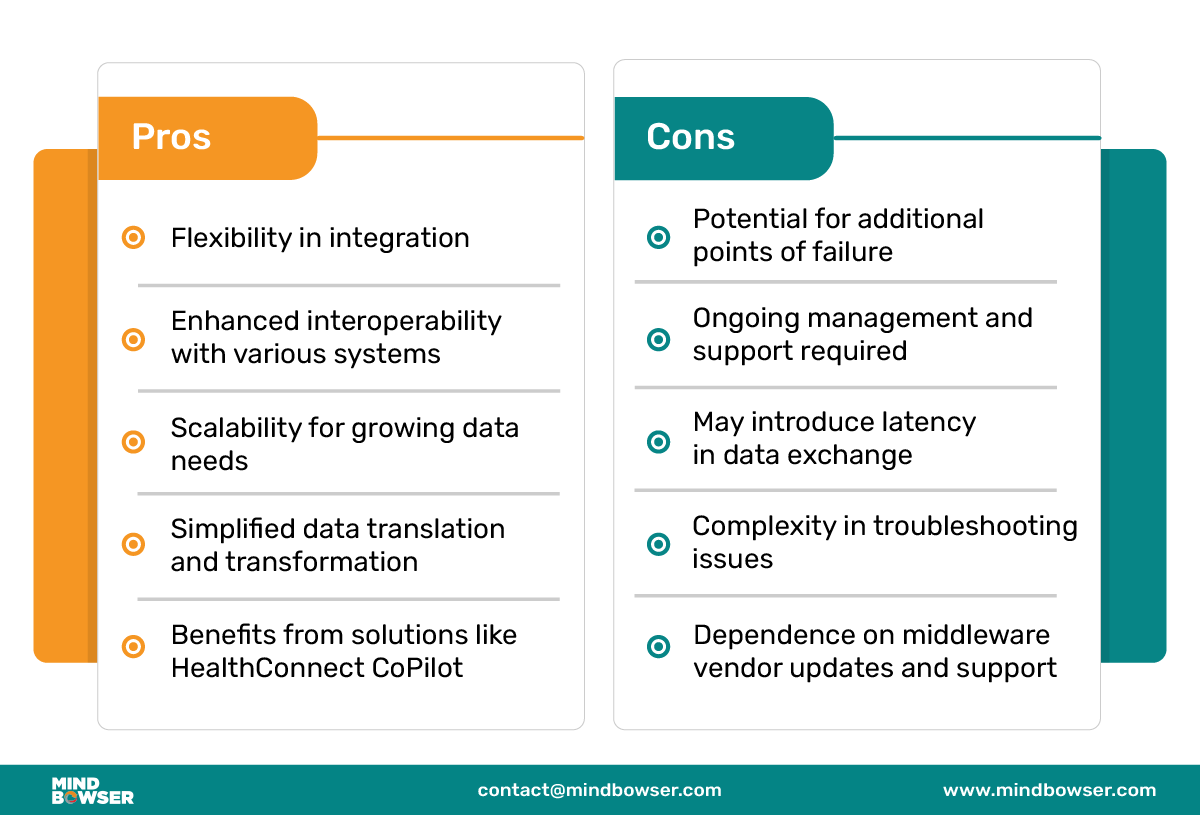
Scalability is also a key benefit; middleware solutions can grow with the hospital’s needs, accommodating increased data volumes and additional functionalities. This method supports efficient and cohesive integration, enhancing overall system performance and the user experience.
Cons of Middleware Integration:
Despite its advantages, middleware integration has its challenges. One common issue is the potential for increased complexity in managing multiple systems and interfaces. Middleware solutions require thorough configuration and ongoing maintenance to ensure they function correctly and continue to meet integration needs.
What are EHR Integration Challenges?
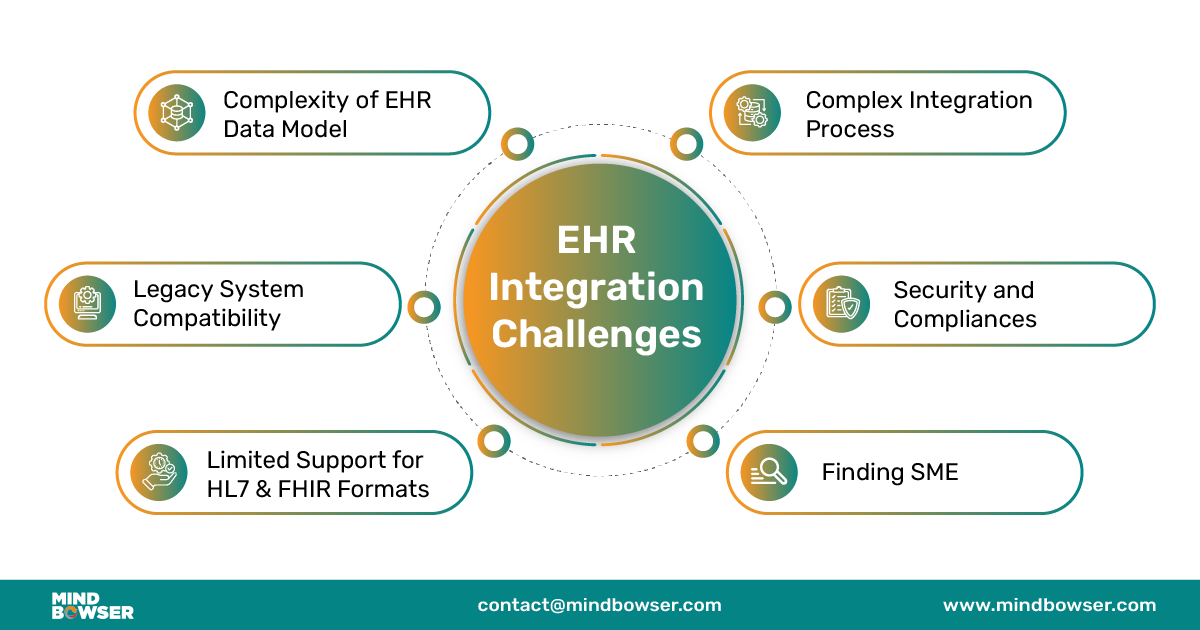
EHR integration, while valuable, presents challenges. These include technical hurdles like incompatible data formats and complex data mapping, workflow disruptions due to cost and staff training needs, and data concerns around privacy, security, and accuracy.
❌ Complexity of EHR Data Model
The EHR data model is intricate, encompassing diverse patient information and clinical workflows. This complexity can lead to challenges in data management, analysis, and integration with other systems.
❌ Limited Support for Standards like HL7 and FHIR
Many EHR systems offer limited support for standards such as HL7 and FHIR. This restriction hampers interoperability and data exchange between different healthcare systems and applications.
❌ Security and Compliances
Ensuring data security and compliance with regulations like HIPAA is critical in EHR systems. These requirements add layers of complexity to EHR management, requiring stringent controls and regular audits.
❌ Legacy System Compatibility
Integrating EHR systems with older legacy systems can be challenging due to differences in technology and data formats. This incompatibility often results in additional costs and time-consuming modifications.
❌ Complex Integration Process
Integrating EHR systems with other healthcare applications and systems is often complex. It involves meticulous planning, testing, and coordination to ensure smooth and accurate data flow.
ConnectHealth: Resolving Your Epic Integration Challenges
ConnectHealth is Mindbowser’s pre-built interoperability platform, not a middleware bridge, but a platform that ships with connectors already built for Epic, Cerner, and 20+ other EHRs.
How It Works
ConnectHealth runs inside your AWS VPC, so patient data never leaves your environment. Helix AI lets your team configure integration workflows in plain English rather than writing bespoke code. App Orchard certification and per-org auth management are handled at the platform layer, not your dev team’s sprint backlog.
Real-world Impact
A digital health company integrated Epic + Cerner simultaneously using ConnectHealth, which their team estimated as a 6-month direct build, and was live in weeks. A separate Epic-only deployment came in at a $25K total integration cost.
Benefits
Pre-built connectors: Skip the certification queue; connectors for Epic, Cerner, Athena, Meditech, and 20+ EHRs are ready to configure.
AWS-VPC deploy: Data stays in your cloud environment, not a third-party service.
Helix AI: Workflow configuration in plain English, no bespoke integration code.
AWS Marketplace: Available for procurement through existing cloud spend.
Lower maintenance: The platform absorbs Epic API version updates, not your team.
Epic EHR Integration Challenges (and How to Resolve Them)
Even with the right method, these five challenges regularly surface in Epic integration projects:
1. App Orchard certification timelines (4–8 weeks): Epic’s review process can stall dev timelines. Mitigation: start the registration process before development completes, not after.
2. Sandbox-to-production delta: Epic orgs customize their build — the open.epic.com sandbox may not reflect your client’s configuration. Mitigation: request access to the customer’s sandbox environment, not just the public one.
3. HL7 message version drift: Some orgs still run Epic on older HL7 versions. Mitigation: confirm the interface version in the Technical Review before writing a single parser.
4. FHIR resource scope creep: Every FHIR resource type requires a separate scope approval. Mitigation: define the minimum viable resource list up front, not after the first rejection.
5. Multi-tenant token management at scale: Each Epic org has its own client ID and auth endpoint. Mitigation: use a platform layer like ConnectHealth to abstract per-org auth rather than managing it in your own codebase.
Choosing the Right Epic EHR Integration: Key Factors to Consider

Selecting the right integration method for Epic EHR involves evaluating your hospital’s specific needs, current infrastructure, and long-term goals. Understanding these factors ensures a smooth integration process and maximizes the benefits of your EHR system.
1️⃣ Specific Needs and Use Cases of Your App
When choosing an integration method for Epic EHR, consider the specific needs and use cases of your hospital’s applications. For example, if your hospital relies heavily on real-time data from wearable health devices, ensure the integration method supports continuous data flow and immediate updates.
Additionally, consider the types of data your applications handle. If they require secure transmission of sensitive patient information, prioritize integration methods that offer strong, auditable security controls.
Evaluate the compatibility of your existing systems with Epic EHR integration to avoid extensive modifications. Finally, consider scalability if your hospital anticipates growth or increased data volumes, ensuring the chosen method can accommodate future needs.
2️⃣ Development Resources and Expertise for Epic EHR Integration
Choosing the right development resources and expertise is crucial for successful Epic EHR integration. Hospitals need to assess the skill sets of their in-house IT teams and determine if they have the experience necessary for complex integrations. Often, it may be beneficial to partner with experienced third-party vendors like Mindbowser, which specializes in EHR integration.
These vendors bring a deep understanding of Epic’s architecture and best practices, ensuring a smoother and more efficient integration process. By harnessing specialized expertise, hospitals can minimize disruptions, reduce the risk of errors, and ensure that the integration supports their clinical and operational objectives effectively.
3️⃣ Long-Term Scalability and Interoperability Goals
For decision-makers in hospitals, achieving long-term scalability and interoperability with Epic EHR integration is paramount. It involves planning for future growth and ensuring that the systems can expand seamlessly as patient volumes and data complexity increase.
Interoperability means connecting Epic EHR with systems across healthcare networks, enabling consistent data exchange and better care coordination. By strategically aligning integration efforts with scalability and interoperability goals, hospitals can adapt to evolving healthcare demands while maintaining operational efficiency and enhancing patient care outcomes.
Conclusion
Epic EHR integration gives hospitals the data backbone for faster decisions, tighter care coordination, and lower administrative drag. The right method depends on your team’s dev capacity, your timeline, and how many EHRs you need to connect.
A platform like ConnectHealth helps organizations integrate Epic in days rather than months, with pre-built connectors, AWS-VPC deployment, and no per-interface maintenance overhead.
Talk to our Epic integration team to scope yours.
Epic EHR integrations involve connecting Epic’s electronic health record (EHR) system with other healthcare applications and systems to enable seamless data exchange and interoperability. These integrations help streamline workflows, improve patient care, and ensure that healthcare providers have access to comprehensive patient information across different platforms.
The required time for Epic EHR integration can vary depending on the complexity of the project and the systems involved. Typically, it can take anywhere from a few months to over a year to complete a full integration. Factors such as the scope of integration, resource availability, and customization needs will influence the timeline.
Epic FHIR (Fast Healthcare Interoperability Resources) is a standard for exchanging healthcare information electronically. It allows for easier and more efficient data sharing between Epic and other systems, promoting interoperability. Epic FHIR enables developers to create apps that can access and use data from the Epic EHR, enhancing functionality and improving patient care.
EMR (Electronic Health Record) integration involves connecting different EHR systems or integrating EHRs with other healthcare applications. This process ensures that patient information is consistently updated and accessible across various platforms. Epic EHR integration improves clinical workflows, enhances data accuracy, and facilitates better communication and coordination among healthcare providers.