





 BLOGS
BLOGS  NEWSROOM
  CASE STUDIES
  WEBINARS
  PODCASTS
  ASSET HUB
  EVENT CALENDAR























TL;DR
- Epic EHR integration connects hospitals, clinics, and third-party apps using FHIR APIs for real-time data exchange and OAuth 2.0 for secure, token-based access.
- Key benefits: faster clinical decisions, automated workflows, HIPAA compliance, and seamless connectivity with RPM and telehealth platforms.
- Mindbowser handles the full integration stack, custom API development, authentication, and compliance-driven architecture.
Understanding FHIR API
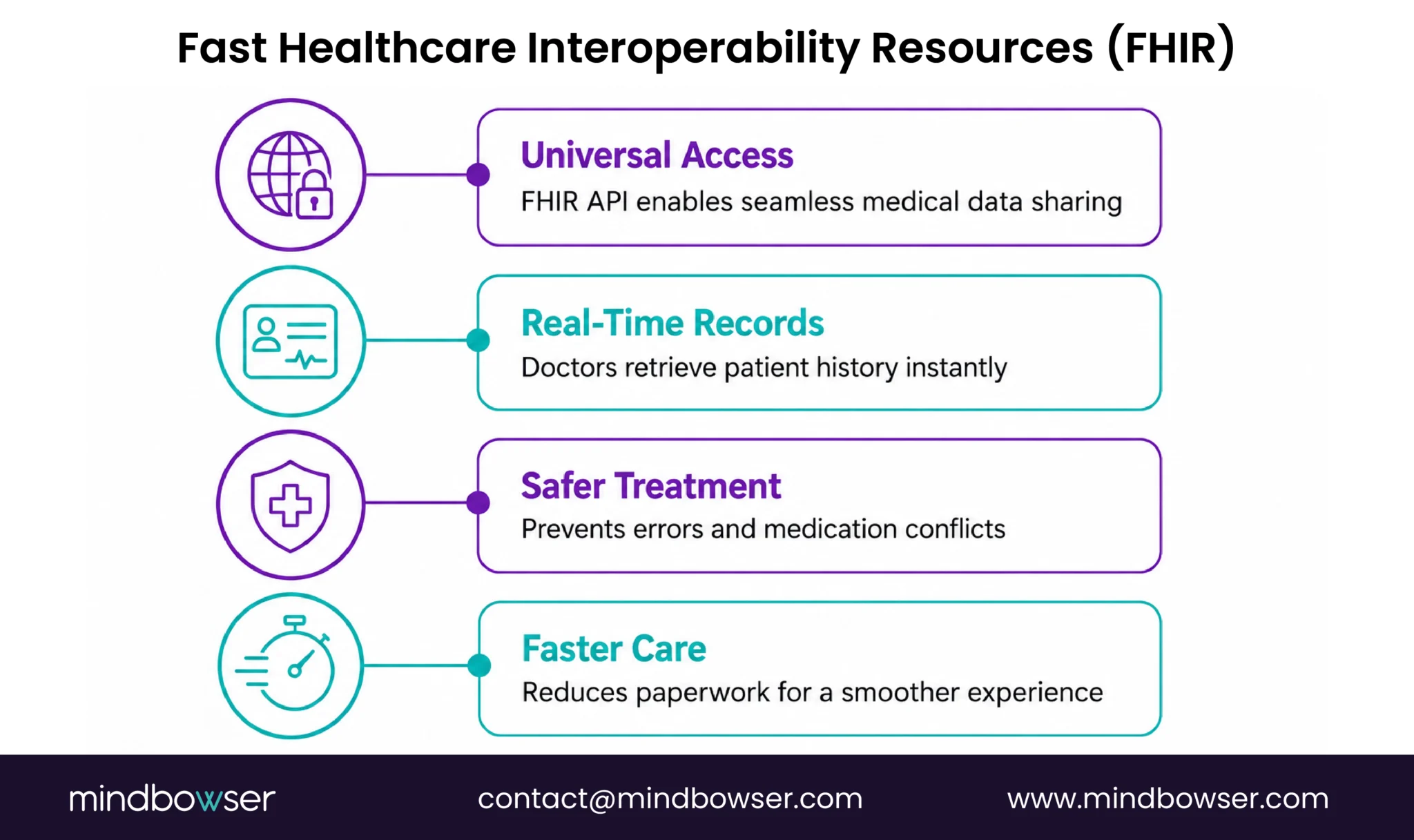
Fast Healthcare Interoperability Resources (FHIR) is a standardized framework that facilitates structured and secure data exchange between healthcare systems. It ensures that EHRs, telehealth platforms, and remote patient monitoring tools can seamlessly communicate, improving interoperability and patient data accessibility. By using FHIR APIs, healthcare providers can retrieve, update, and share medical records in real time, streamlining workflows and reducing administrative burdens.
Its standardized approach enables faster integrations, better compliance with regulations, and enhanced data security, making it an essential component for modern EHR connectivity.
- Standardized Data Exchange – Ensures structured, secure, and scalable interoperability.
- Seamless Integration – Connects EHRs, wearables, and third-party healthcare applications.
- Real-Time Access – Enables instant retrieval and updates of patient records.
- Regulatory Compliance – Supports HIPAA and other healthcare data security standards.
OAuth 2.0 Authentication for Epic EHR
OAuth 2.0 is a secure authentication framework used in healthcare applications to regulate access to sensitive patient data. In Epic EHR integration, OAuth 2.0 ensures that only authorized users and applications can access medical records while maintaining compliance with HIPAA and security regulations. Unlike traditional authentication methods, OAuth 2.0 eliminates the need for sharing login credentials, using a token-based system to manage secure API requests.
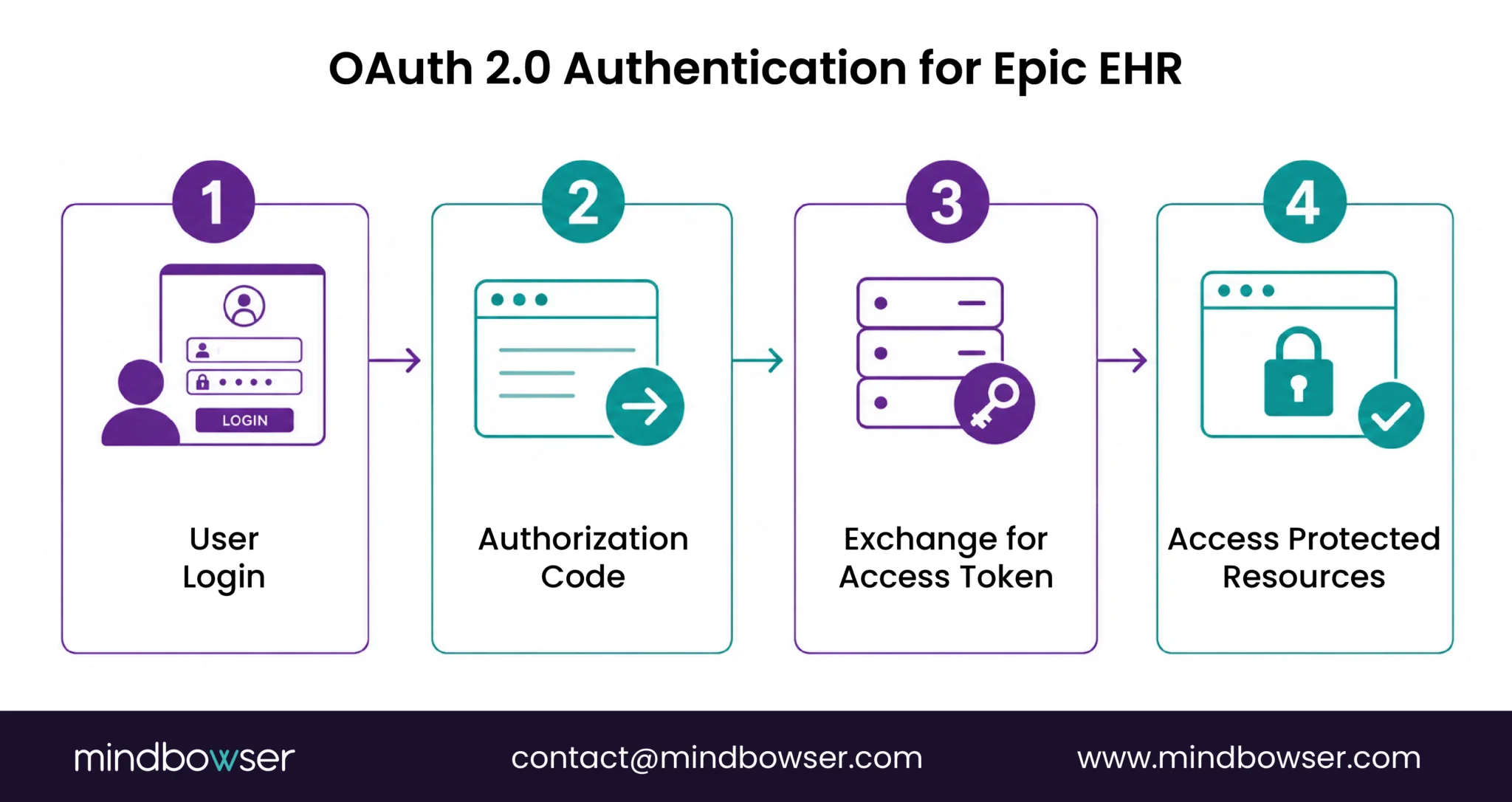
The authentication process in Epic EHR follows these steps:
1️⃣ User Login – The user or application requests access to Epic’s FHIR API.
2️⃣ Authorization Code Exchange – Epic generates an authorization code for secure verification.
3️⃣ Access Token Retrieval – The system exchanges the authorization code for an access token.
4️⃣ Secure API Access – The token grants access to protected resources, such as patient records, appointments, and clinical notes.
This token-based approach prevents unauthorized access, ensuring secure, scalable, and HIPAA-compliant data exchange between Epic EHR and third-party applications.
Conclusion
Epic EHR integration plays an important role in improving healthcare interoperability, patient care, and operational efficiency. By using the FHIR API, providers can enable real-time data exchange, while OAuth 2.0 authentication ensures secure access to sensitive health records. Seamless integration with third-party applications like remote patient monitoring and telehealth platforms enhances clinical workflows, reduces administrative burdens, and ensures compliance with HIPAA and other industry standards.
Mindbowser specializes in Epic EHR integration, offering custom API development, secure authentication implementation, and compliance-driven solutions. Our expertise in FHIR, OAuth 2.0, and scalable healthcare architectures ensures a seamless, secure, and efficient integration process. Whether you need to connect RPM devices, automate workflows, or enhance patient engagement, Mindbowser provides end-to-end solutions to maximize the benefits of Epic EHR integration.