




 BLOGS
BLOGS  NEWSROOM
  CASE STUDIES
  WEBINARS
  PODCASTS
  ASSET HUB
  EVENT CALENDAR

























TL;DR
Training clinicians in CBT (cognitive behavioral therapy) technique beyond a foundational level is expensive and doesn’t scale well with human supervision alone. AI-powered roleplay and coaching tools, distinct from patient-facing AI, are a genuinely different training mechanism: a clinician practices a specific technique against a simulated patient scenario and gets structured feedback, without needing a live supervisor available for every practice session. This piece covers how these tools actually work technically, where clinical review still has to sit, and what’s real custom-build territory.
The Training Gap This Solves
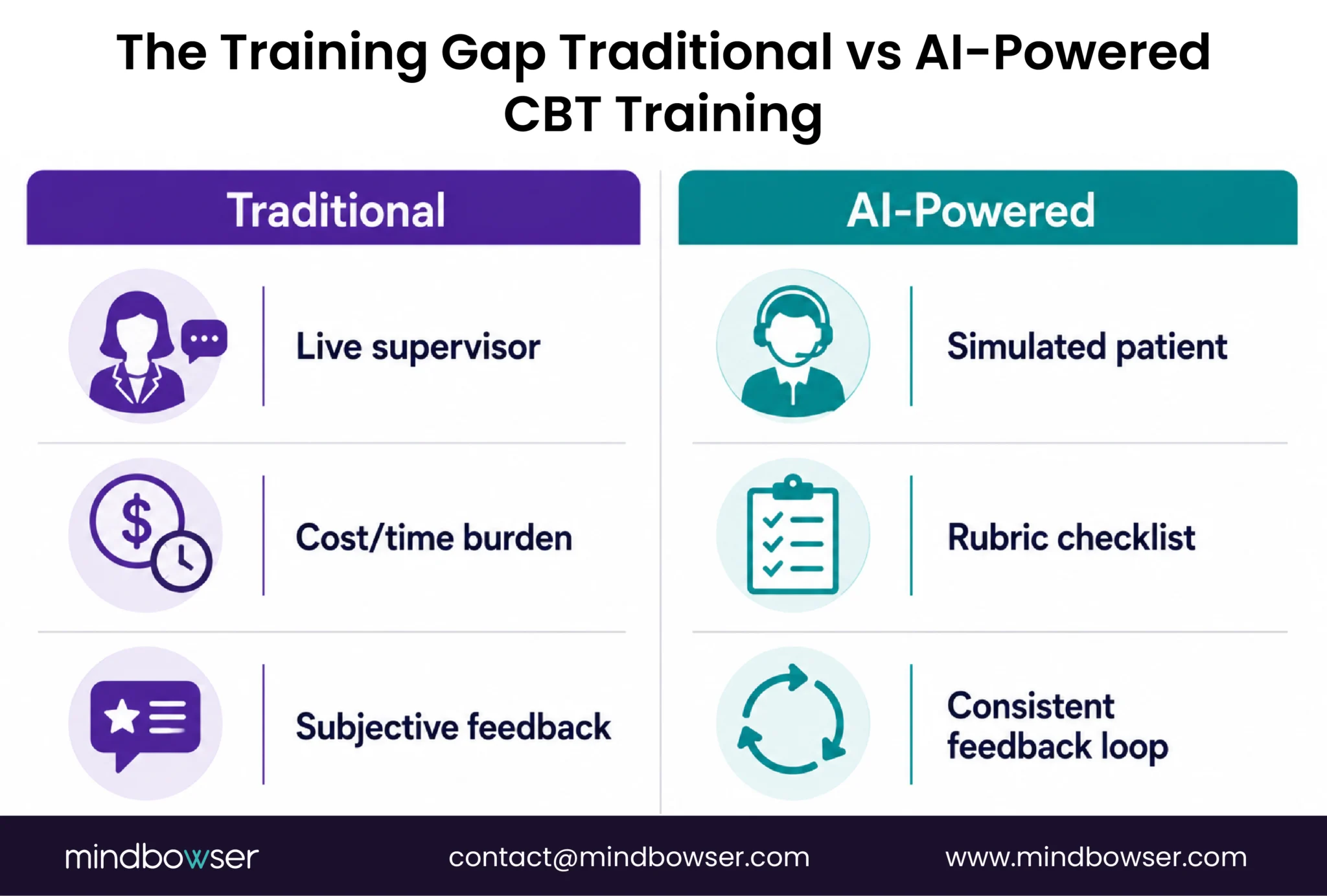
Foundational CBT training, the basics most clinicians learn in graduate programs, is well established and widely available. What’s harder to scale is technique training beyond that foundational level: handling a specific kind of cognitive distortion in real time, managing a difficult roleplay scenario, adjusting technique for a specific presenting problem. That kind of training traditionally requires a live supervisor or experienced peer available for supervised practice, which is expensive, hard to schedule at scale, and inconsistent depending on which supervisor happens to be available.
AI-powered roleplay and coaching tools address this differently. A clinician practices a specific technique against a simulated patient scenario, generated and responsive in real time, and receives structured feedback on technique fidelity, not a live supervisor’s subjective read, but a consistent rubric applied the same way every time.
How This Is Technically Different From Patient-Facing AI
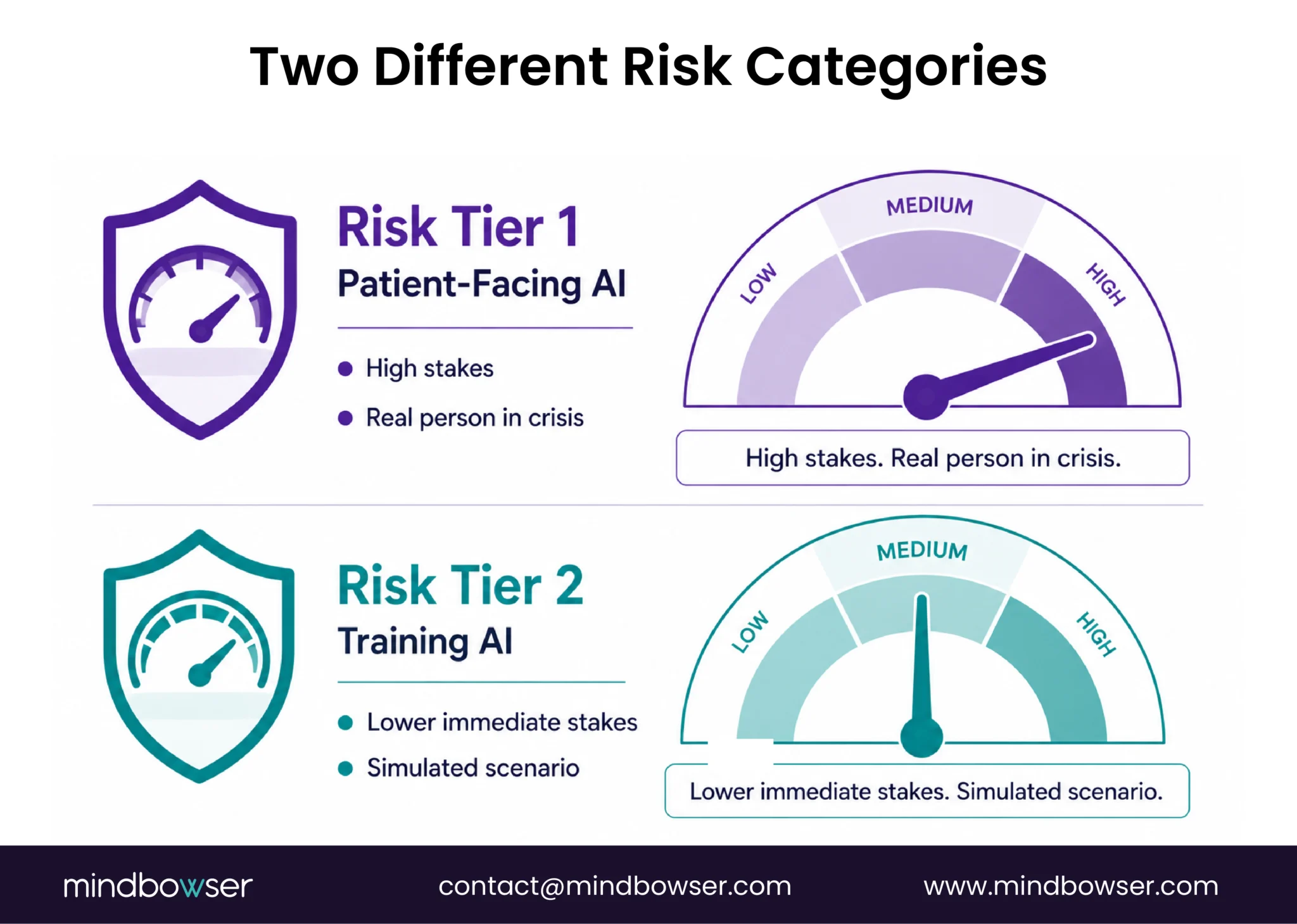
This is worth being precise about, because it’s a different risk category than an AI chatbot talking to actual patients. The simulated patient in a training scenario isn’t a real person in crisis, it’s a training construct, and the immediate stakes of an imperfect AI response are different in kind: a clinician gets suboptimal training feedback in the moment, versus a real patient getting a wrong or harmful response during an actual clinical crisis. That immediate difference doesn’t erase the downstream risk. If the training content itself is wrong, that error can still reach real patients later, through every clinician who trained on it. That doesn’t mean training-tool AI needs zero oversight, the technique feedback itself needs to be clinically accurate, but the risk profile at the point of interaction is meaningfully lower than direct patient-facing AI, and it’s worth not conflating the two when scoping a build or evaluating a vendor.
What the Technology Actually Has to Get Right
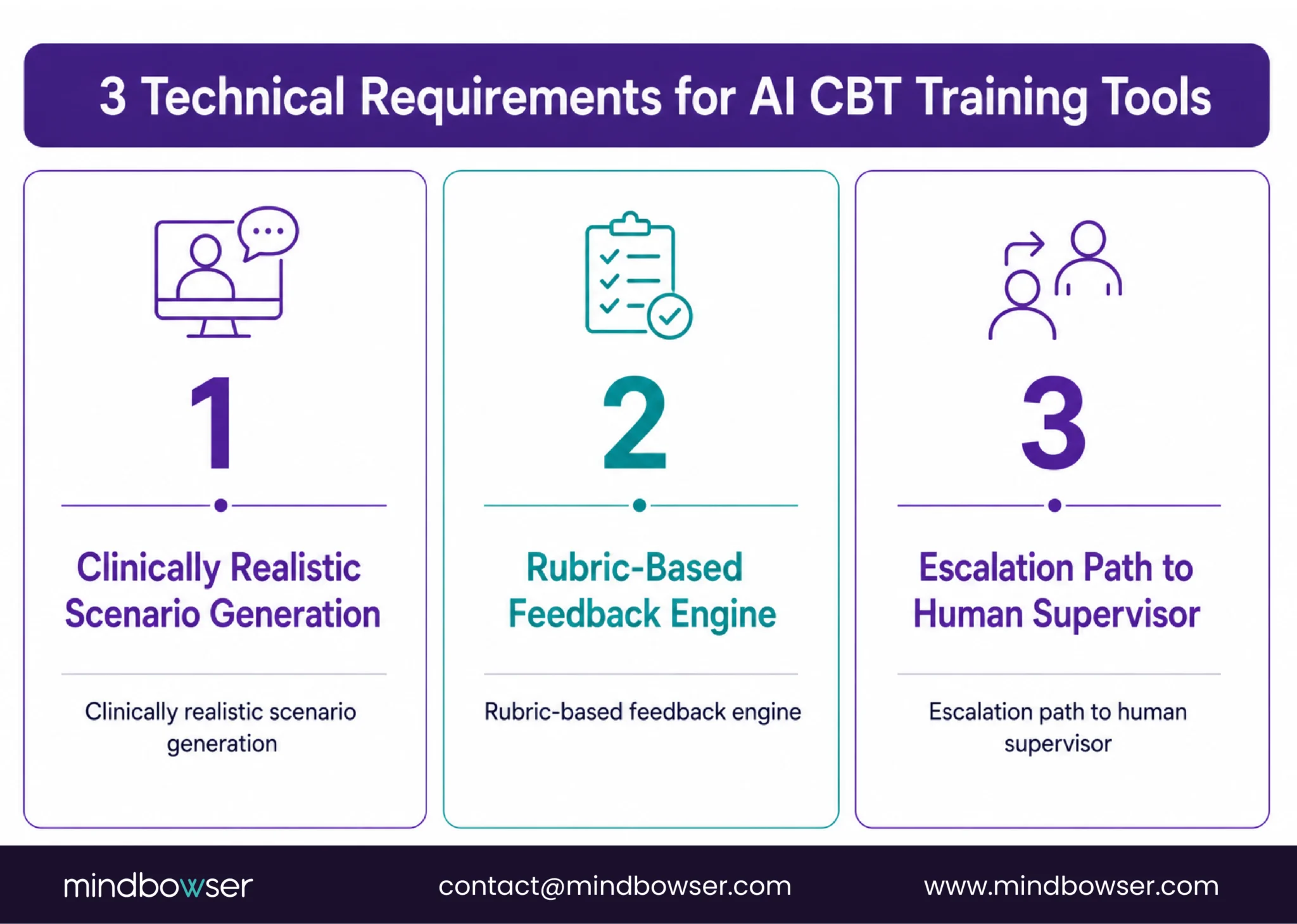
Three things matter technically. First, the simulated patient scenario has to be clinically realistic enough that practicing against it transfers to real sessions, which means the underlying scenario generation needs real clinical input in its design, not just generic conversational AI wearing a patient persona. Second, the feedback mechanism needs a real rubric behind it, mapping specific clinician responses to specific CBT technique markers, not a generic “good job” or vague coaching language that doesn’t actually help someone improve a specific skill. Third, the system needs a clear escalation path for the rare case where a training scenario surfaces something outside its intended scope, a supervisor needs to be reachable, not just an AI feedback loop with no human backstop at all. Our AI guardrails guide covers the general discipline behind building that kind of escalation path and human backstop into any healthcare AI system, not just a training tool.
Planning An AI-powered Behavioral Health Solution?
Where Clinical Review Still Has to Sit
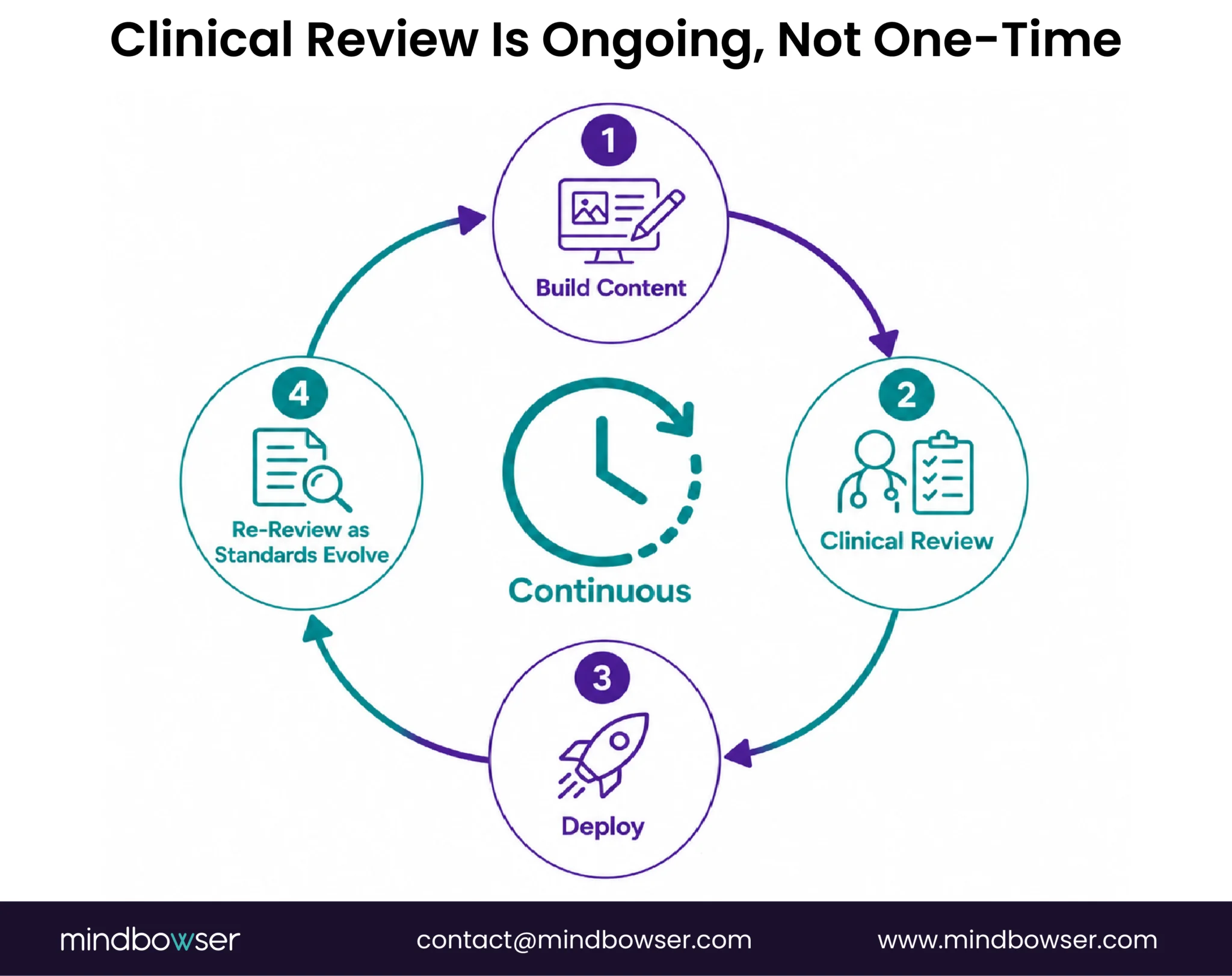
Even in a lower-risk training context, the content of what the AI is teaching matters. A coaching tool that reinforces a subtly wrong version of a CBT technique, at scale, across every clinician using it, is a real problem, just a different kind of problem than a direct patient-safety incident. The rubric behind the feedback mechanism needs real clinical development and review before it goes live, and it needs periodic re-review as technique standards evolve, not a one-time build-and-forget clinical sign-off. Training tools also need to account for documentation compliance requirements, including how session logs and feedback records are stored, which can intersect with 42 CFR Part 2 depending on what is being documented. For organizations building out the broader care coordination layer alongside training tools, the same clinical rigor applies to behavioral health integration workflows.
What’s Genuinely Custom-Build Territory
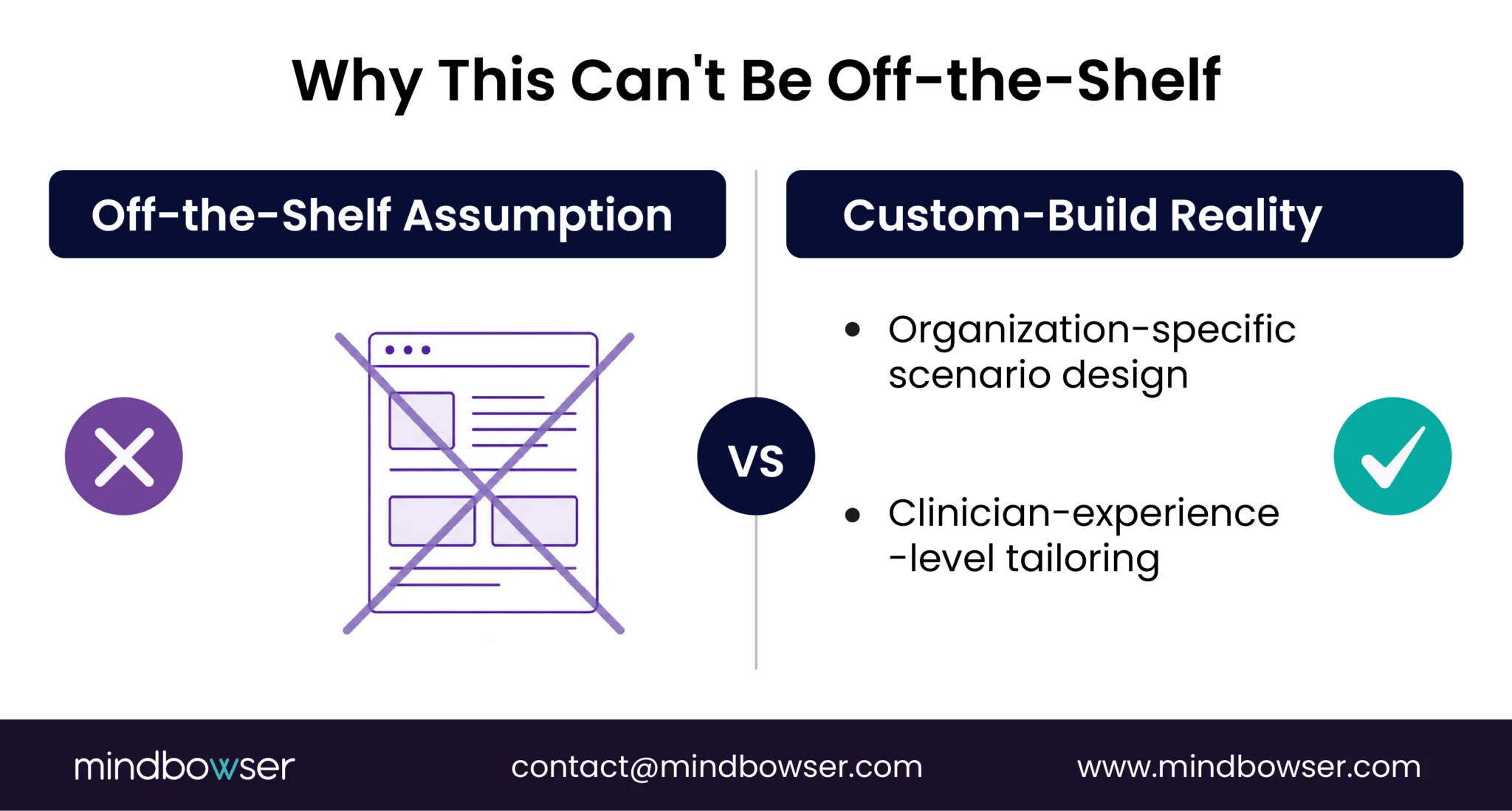
This isn’t a category with a mature off-the-shelf accelerator yet, training-simulation AI for a specific clinical technique is a genuinely narrow build, and the right scenario library and feedback rubric depend heavily on which techniques a specific organization wants to train for and at what clinician experience level. A generic conversational AI platform can supply the underlying roleplay mechanics, but the clinical scenario design and feedback rubric are the actual value, and those have to be built specifically for the training use case, not borrowed from a general-purpose AI product.
How Mindbowser Helps
We’ve built AI systems with real clinical safety guardrails in sensitive mental health contexts. Mori, our AI grief-support assistant, is one example of building AI for an emotionally sensitive domain with the safety review that requires, a different product than a clinician-training tool, but the same underlying discipline. That discipline, real clinical input into the scenario and feedback design, not just conversational AI wrapped in a training use case, is what a CBT training tool needs to work well.
Training tools simulate a practice scenario for a clinician to rehearse technique against, not a real patient in an actual clinical situation. The risk profile is lower than direct patient-facing AI, but the training content itself still needs clinical accuracy and review.
It can support technique practice with structured, consistent feedback at a scale live supervision typically can’t match, but the underlying scenario design and feedback rubric need real clinical development. AI without that clinical grounding risks reinforcing a subtly incorrect version of a technique at scale.
No. A patient-facing AI chatbot interacts with real people, often in vulnerable moments, and carries the safety requirements that come with that. A training tool’s “patient” is a simulated scenario for clinician practice, a meaningfully different risk category.