BLOGS
BLOGS  NEWSROOM
  CASE STUDIES
  WEBINARS
  PODCASTS
  ASSET HUB
  EVENT CALENDAR




















Looking to explore virtual care for your organization?
Mindbowser helps hospitals and health systems build secure, EHR-integrated virtual hospital solutions — from remote monitoring to care team dashboards.
Core Technologies Behind Virtual Hospitals
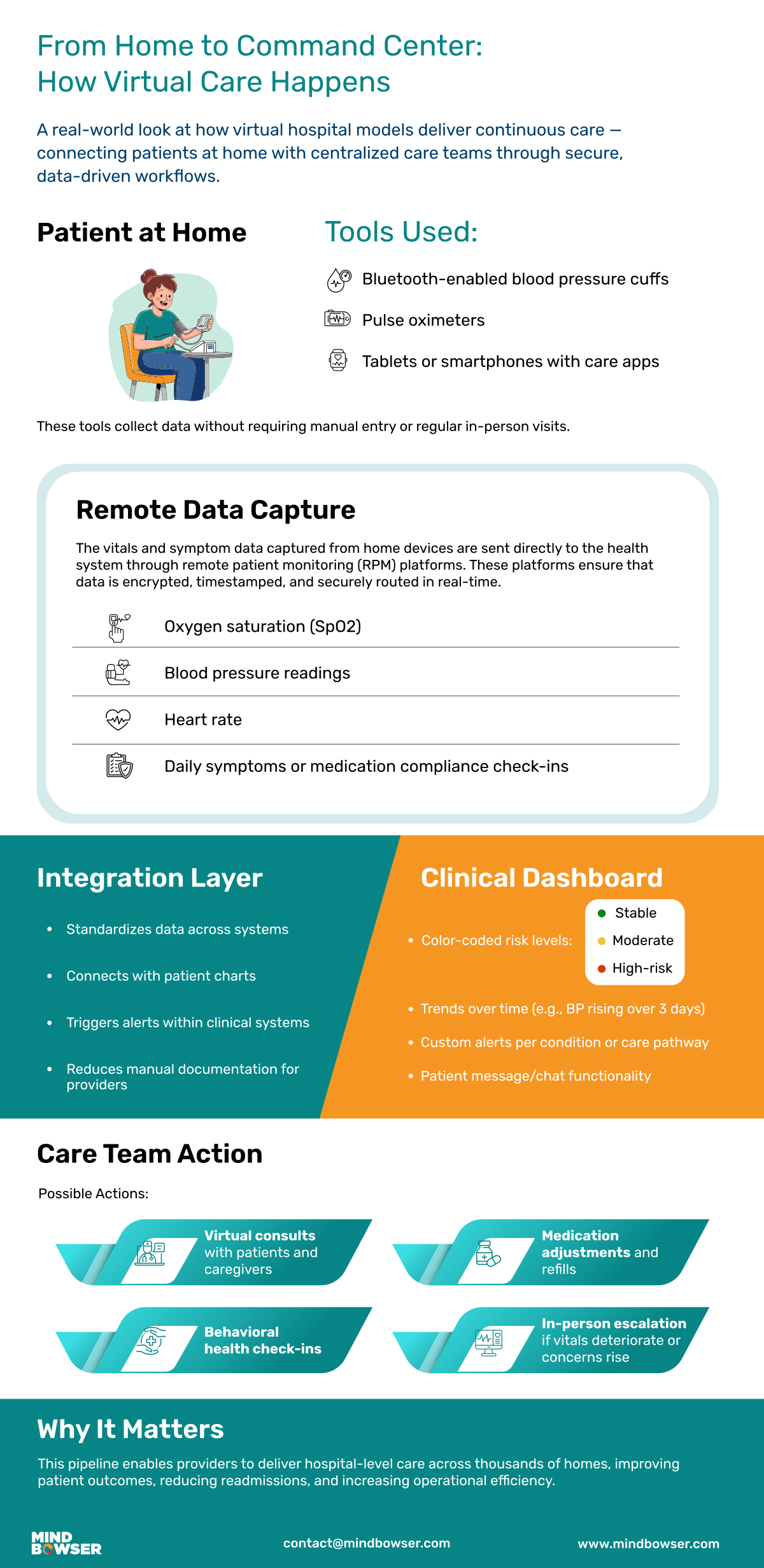
A virtual hospital isn’t just a telehealth program with added bells and whistles. It’s a fully integrated care delivery system that relies on the seamless flow of clinical data, device readings, and communication between patients and care teams, all in real time.
Here are the foundational technologies that make it possible:
🔸 Remote Patient Monitoring (RPM) Devices
From Bluetooth-enabled blood pressure cuffs to continuous glucose monitors, RPM devices form the backbone of patient assessment in virtual care. These tools automatically collect and transmit vital signs, minimizing manual entry and enhancing data reliability. For multi-condition management, patients may use several devices concurrently.
🔸 Telehealth Platforms
Video consults are essential, but not enough. A virtual hospital platform enables high-frequency, low-friction communication, including video, audio, and messaging, between patients and multiple care team members. It needs to handle scheduling, documentation, and patient-facing education in a single location.
🔸 EHR Integration (FHIR & HL7 Compatibility)
For a virtual hospital to function safely, remote data must sync into the hospital’s existing EHR system. This ensures continuity, reduces duplication, and provides clinicians with a comprehensive view. Interoperability with HL7 and FHIR standards is no longer optional; it’s the baseline.
🔸 Cloud-Based Infrastructure
Virtual hospitals depend on scalable, secure cloud platforms to manage data, run analytics, and support remote collaboration. HIPAA-compliant architecture with built-in redundancies is crucial for ensuring uptime and data protection, particularly in 24/7 care models.
🔸 Analytics Dashboards with Clinical Insights
Care teams need clear, actionable dashboards that show who’s stable, who needs attention, and what tasks are pending. These dashboards typically include color-coded vitals, medication tracking, symptom reports, and risk scores, enabling proactive rather than reactive care.
🔸 Build a Workflow That Works Not Just for Today, But Long Term
Our workflows, like ConnectHealth, are designed to help provider organizations integrate virtual care directly into their existing EHR and operational stack. Whether you’re using Epic, Cerner, Athenahealth, or another system, our tools allow:
- Seamless bidirectional data flow between RPM devices and the EHR
- Real-time patient status updates and alerts
- Unified dashboards that reduce toggling between platforms
- Secure FHIR and HL7-compatible APIs for rapid deployment
Need to bridge your EHR with virtual care tools?
Types of Virtual Hospitals & Treatment They Provide
Virtual hospitals aren’t one-size-fits-all. Depending on the population served and the clinical goals, these models can be tailored to address a range of needs, from short-term acute episodes to the management of complex chronic conditions. Below are the most common formats emerging across health systems:
As Sir David Sloman, Chief Operating Officer at NHS England, noted:
“This virtual hospital model is a fantastic example of embracing innovation while providing safe and high‑quality care for all.”
– NHS Providers
1. Acute Virtual Hospitals
These are typically used to manage patients who present to the emergency department but don’t require immediate inpatient admission. Instead, they’re stabilized and monitored remotely.
Conditions treated:
- Pneumonia
- Heart failure exacerbation
- Urinary tract infections
- Mild sepsis
Patients are sent home with monitoring equipment, and clinical oversight continues 24/7 through a centralized command center. Most episodes last 3 to 7 days, mirroring the durations of inpatient stays.
2. Chronic Care Virtual Hospitals
For patients with long-term conditions, this model provides ongoing support through daily check-ins, vital sign tracking, and lifestyle coaching. These programs are especially effective in reducing readmissions and improving adherence.
Conditions managed:
- Type 2 diabetes
- Hypertension
- Chronic obstructive pulmonary disease (COPD)
- Congestive heart failure (CHF)
In some cases, health coaches and pharmacists are included alongside nurses and physicians, forming a multidisciplinary virtual care team.
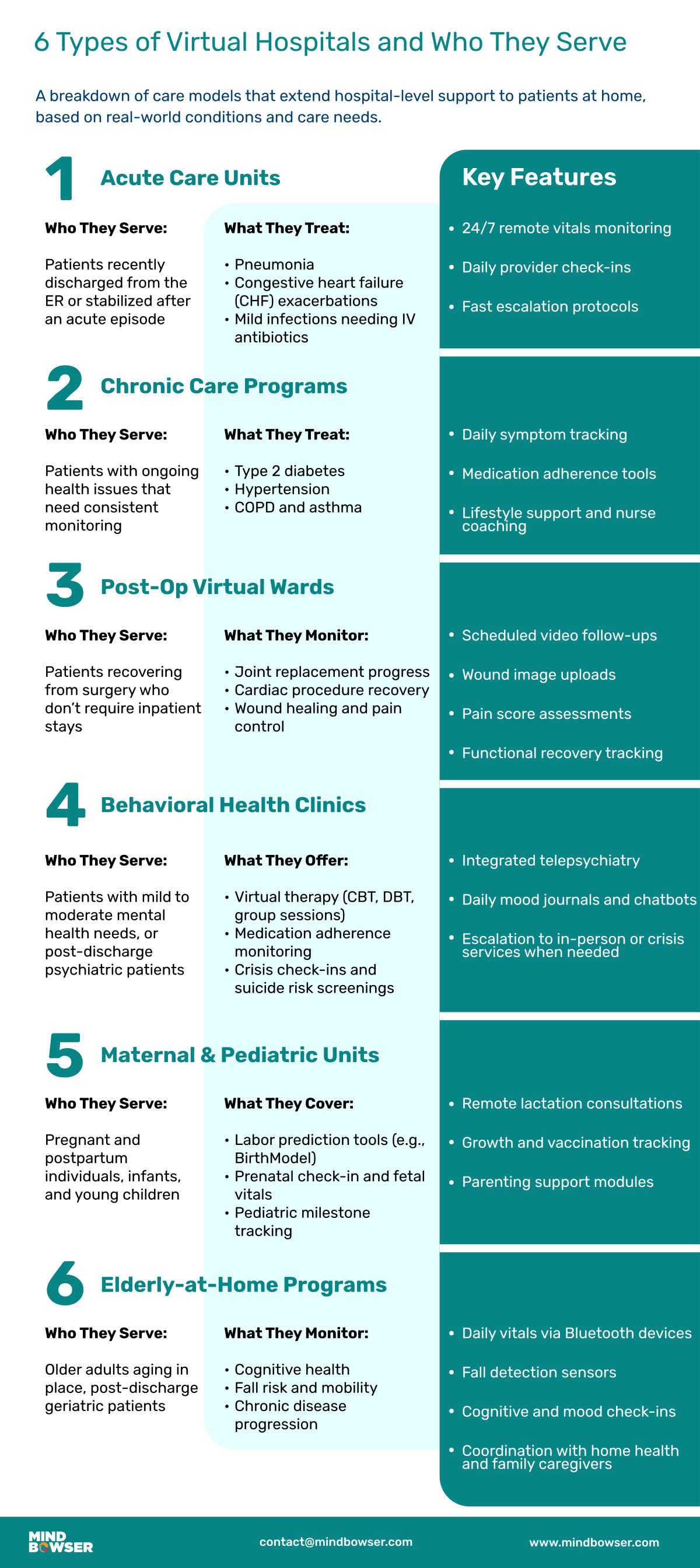
3. Post-Operative Virtual Wards
Surgical recovery doesn’t always need a hospital bed. These virtual wards help patients transition from hospital to home safely while still under observation.
Use cases include:
- Joint replacement
- Cardiac bypass recovery
- Bariatric surgery follow-up
Pain scores, wound images, and mobility milestones are tracked remotely, with escalation protocols in place for early signs of complications.
4. Behavioral Health Virtual Clinics
With demand outpacing availability for in-person therapy, virtual models are filling the gap. These clinics support a range of mental health needs — from routine therapy to crisis intervention.
Services offered:
- Psychiatric evaluations
- Cognitive behavioral therapy (CBT)
- Medication management
- Suicide prevention planning
Platforms often combine synchronous (live sessions) and asynchronous tools (journaling, symptom check-ins) to stay connected with patients between visits.
Related Read: Behavioral Health Revenue Cycle Management: A Modern Guide
5. Maternal & Pediatric Virtual Care Units
Expectant mothers, new mothers, and young children benefit significantly from early interventions. Virtual units here focus on convenience, education, and timely support.
Care delivered includes:
- • Prenatal monitoring and appointment reminders
- • Remote ultrasounds and fetal vitals capture
- • Lactation consulting and newborn wellness
- • Developmental screening and pediatric check-ins
For example, an AI-supported virtual care model is helping improve outcomes in labor and delivery:
- • Purpose: Predict labor progression and support clinical decision-making during childbirth
- • Technology used: AI algorithms integrated directly with Epic EHR systems
- • How it works:
- 1. Analyzes real-time data from labor assessments
- 2. Provides insights to delivery teams for timely interventions
- 1. Analyzes real-time data from labor assessments
- • Why it matters:
- 1. Helps optimize staffing during unpredictable labor timelines
- 2. Improves maternal care coordination and delivery outcomes
- 1. Helps optimize staffing during unpredictable labor timelines
This type of integration demonstrates how AI and EHRs can collaborate to support frontline teams in high-impact situations.
6. Elderly Care-at-Home Programs
Older adults often have multiple comorbidities, but many prefer aging in place. Virtual care models offer a structured approach to doing so safely.
Program elements typically include:
- • Daily vitals tracking and symptom checks
- • Medication reminders
- • Cognitive health assessments
- • Fall detection and emergency protocols
For example,
We helped to build a remote care model tailored for senior populations, which demonstrates how virtual hospitals can simplify complex care:
- • Who it’s for: Older adults managing chronic conditions at home
- • Key tools used: Bluetooth medical devices (e.g., BP monitors, pulse oximeters)
- • How it works: Vitals are captured and sent to a centralized clinical dashboard in real time.
- • Why it matters:
- Enables timely care decisions
- Reduces hospital visits
- Keeps the user experience simple for elderly patients
- Enables timely care decisions
This approach reflects how thoughtful tech design can improve outcomes without overwhelming patients or providers.
Related Read: Telehealth in Home Health Care: Enhancing Patient Outcomes Through Innovative Solution
Popular Use Cases
As hospitals face mounting pressure to reduce inpatient volume, lower readmissions, and reach underserved populations, virtual hospital models are emerging as a practical and scalable alternative. Below are the most common and high-impact use cases health systems are prioritizing:
1. Managing Chronic Conditions like CHF and Diabetes
For patients with heart failure, diabetes, or chronic obstructive pulmonary disease (COPD), proactive monitoring is critical. Virtual hospitals enable the real-time tracking of vital signs, medication adherence, and symptom progression. This leads to fewer acute exacerbations and improves patient engagement between clinic visits.
Example: RPM-based alerts for weight gain in CHF patients can help clinicians adjust diuretics early, preventing a trip to the ER.
2. Hospital-at-Home Programs
These programs take traditional inpatient-level care, IV antibiotics, wound care, oxygen therapy, and deliver it at home under virtual supervision. This reduces the strain on hospital beds, improving patient satisfaction and recovery time.
Who benefits:
- Post-surgical patients
- Those with infections requiring home IV antibiotics
- Medically stable patients needing short-term observation
3. Reducing Readmissions Post-Surgery or Hospitalization
CMS penalties tied to 30-day readmission rates have prompted health systems to reassess their discharge strategies. Virtual wards provide structured follow-up, daily check-ins, and prompt access to care teams, thereby reducing the risk of bounce-back admissions.
What’s monitored:
- Pain and wound scores
- Medication side effects
- Mobility progress
- Red flags needing escalation
4. Extending Access in Rural or Underserved Areas
Many rural hospitals have closed or are operating at limited capacity. Virtual hospitals bridge that gap, enabling patients to receive high-quality care from specialists without the need to travel long distances. For some communities, it’s the only way to access consistent care.
Impact:
- Specialty access for cardiology, endocrinology, and behavioral health
- Fewer unnecessary transfers to tertiary care
- Reduced transportation and caregiver burden
5. Behavioral Health Monitoring and Support
With rising demand for mental health services, virtual models are helping close access gaps. Patients can receive regular therapy, medication monitoring, and even 24/7 support for crises—all from the comfort of their own home.
Tools often include:
- Mood tracking and journaling
- Scheduled virtual therapy
- Escalation paths for suicidality or severe symptoms
Related Read: Streamlining Behavioral Healthcare with Epic EHR Integration: Enhancing Efficiency and Patient Care
Benefits for Hospitals and Providers
Virtual hospitals aren’t just a response to workforce gaps or a stopgap for bed shortages. They represent a durable operational model that aligns with the financial pressures, capacity constraints, and evolving patient expectations in healthcare. For hospitals, payers, and clinical teams alike, the benefits go beyond convenience.
Here’s a deeper look at why health systems are investing in virtual care models:
1. Reduced ER Visits and Avoidable Readmissions
Emergency departments are under constant strain, especially for patients who could have been treated earlier if the right monitoring or outreach had been in place. Virtual hospitals help close that gap.
With tools such as daily vital monitoring, symptom trackers, and quick video consultations, care teams can intervene before conditions escalate. Patients recovering from hospitalization or managing chronic conditions receive structured follow-ups and active surveillance, which reduces the frequency of unplanned visits and readmissions.
2. Lower Infrastructure and Operational Costs
Hospital beds come at a premium—not just in construction and maintenance, but in the staffing and services that support them. Running a virtual ward costs significantly less per patient per day compared to traditional inpatient stays.
USF Health Online highlights that virtual hospitals allow care teams to work from centralized hubs or even remotely, eliminating the need for physical room turnover, dietary services, and in-room staffing ratios.
By reducing reliance on brick-and-mortar facilities for patients who don’t clinically need to be there, hospitals can allocate resources more efficiently and keep physical beds open for higher-acuity cases.
3. Expanded Clinical Capacity Without Hiring More Staff
Virtual care models allow clinicians to monitor more patients per shift. Dashboards organize patient priorities, alert nursing staff to abnormal trends, and help them work more proactively. This streamlined model reduces the cognitive and physical load on providers while increasing their coverage.
For example, a nurse in a command center can monitor vitals for 30 patients concurrently, something that would be impossible in a standard inpatient setting. The centralized view, combined with AI- or rules-based triage, enables them to focus attention only where it is needed.
In tight labor markets, this translates to operational scale without the unsustainable costs of constant hiring.
4. Improved Continuity and Care Coordination
Patients discharged into virtual programs don’t fall through the cracks. They receive regular check-ins, symptom assessments, medication tracking, and direct access to their care team, all of which are coordinated within their existing medical record.
This level of continuity not only improves outcomes but also strengthens the patient-provider relationship. It also ensures better data capture, fewer errors in care plans, and more seamless coordination between physicians, pharmacists, case managers, and home health agencies.
Virtual hospitals function as an extension of inpatient care, not an isolated program. They keep patients engaged in their recovery and providers engaged with their patients.
5. Increased Access to Specialists, Regardless of Geography
Virtual models remove the geographic bottleneck. Patients in remote areas or smaller hospitals can receive care from cardiologists, pulmonologists, or psychiatrists without needing to leave their homes.
Rather than referring patients to tertiary centers, providers can engage specialists virtually and share relevant data in real time through EHR integration.
This capability supports underserved communities and reduces delays in diagnosis or treatment planning, particularly in behavioral health and chronic care domains where specialist wait times are already long.
Examples of Virtual Hospitals in Action
Virtual hospitals are no longer pilot programs tucked away in innovation labs; they are now operating at scale in the U.S., U.K., and Australia, serving tens of thousands of patients with measurable outcomes. Below are some leading examples that demonstrate both the reach and flexibility of these models:
1. Mercy Virtual – United States
Often referred to as the world’s first virtual hospital, Mercy Virtual in Missouri operates without a single inpatient bed. Staffed 24/7 with physicians, nurses, and specialists, the command center provides remote care for patients across multiple states, supporting ICU, chronic care, and post-discharge patients.
Mercy has reported reductions in hospitalizations, fewer emergency visits, and improved patient satisfaction across partner systems, showing what’s possible when remote care is treated as core infrastructure, not just an add-on.
2. Mayo Clinic Advanced Care at Home – United States
Mayo Clinic’s program combines hospital-at-home services with virtual supervision. Patients receive lab tests, imaging, nursing care, and medication delivery in their homes while being monitored by a virtual team. The care model enables earlier discharges and diverts appropriate patients directly from the ER to home.
Mayo partnered with Medically Home to implement this model, demonstrating how large health systems can blend clinical rigor with logistics and tech infrastructure to scale virtual care safely.
3. Kaiser Permanente Virtual Care Services – United States
Kaiser has built a wide-reaching virtual care ecosystem that includes secure messaging, video consults, symptom checkers, and remote monitoring — all integrated within its EHR. The system offers around-the-clock care, supporting high-quality chronic disease management, mental health services, and pediatric virtual visits.
The organization has seen significant increases in utilization of its virtual tools, especially since the COVID-19 pandemic, when members now expect a digital-first experience.
4. RPA Virtual Hospital – Sydney Local Health District, Australia
Launched in February 2020, the RPA Virtual Hospital was designed as a 24/7 service to expand capacity in New South Wales. In its first year, the virtual hospital managed care for over 5,000 patients, including more than 1,000 individuals with COVID-19. The program demonstrated the viability of scaling virtual services rapidly during public health crises while maintaining safe, monitored care at home.
Source
5. Leeds Community Hospital – United Kingdom
To address the growing needs of aging populations, Leeds Community Hospital implemented a virtual ward that supports up to 40 elderly patients per day. Over two years, the initiative helped avoid nearly 10,000 bed days, freeing up inpatient resources while delivering close supervision and support to seniors in their own homes.
6. Kent Community Health NHS Foundation Trust – United Kingdom
Serving a region with over 500,000 residents, Kent NHS launched a COVID-19 virtual hospital ward to provide remote assessments and monitoring for patients. Within 18 months, the program had transitioned 45% of patient assessments to virtual settings and enabled 90% of patients to recover at home without escalation. This protected acute capacity and reduced patient exposure, and improved comfort.
Challenges in Setting Up a Virtual Hospital
While the benefits of virtual hospitals are clear, getting there isn’t as simple as flipping on a video platform. For providers looking to adopt this model, several structural and operational challenges must be addressed early on, or the program may be undermined altogether.
Here are some of the most common hurdles health systems face:
1. Integration with Existing EHR and Clinical Workflows
One of the biggest barriers is connecting new virtual care technologies with the hospital’s core EHR system. Remote monitoring data, virtual consultation notes, and task management tools must integrate smoothly into the existing workflow to prevent duplication, manual entry, or missed documentation.
Many hospitals still operate on legacy systems that aren’t fully FHIR-compatible, making integration complex and time-consuming. Without clean interoperability, care teams spend more time toggling between systems than focusing on patient needs.
2. Data Security and HIPAA Compliance
Expanding care beyond the hospital walls also increases the risk surface area. Transmitting sensitive health data from a patient’s home to the hospital’s command center, often via cloud infrastructure, introduces a new layer of cybersecurity requirements.
Any system used in a virtual hospital model must be HIPAA-compliant, encrypted end-to-end, and continuously monitored for vulnerabilities. This includes not only the RPM and telehealth platforms but also the APIs that connect them.
3. Staff Training and Workflow Redesign
Shifting to virtual care isn’t just a technical change—it’s a cultural one. Clinical staff require new skills, including interpreting remote vitals, managing digital escalations, utilizing dashboard-based workflows, and maintaining patient rapport through virtual screens.
Nurses and physicians accustomed to bedside care may require coaching to feel confident delivering the same high-quality care virtually. Without proper training and buy-in, adoption suffers and program outcomes stall.
4. Patient Engagement and Digital Literacy
The success of a virtual hospital depends on the patient’s ability to participate, not just passively, but actively. That includes using RPM devices correctly, attending scheduled check-ins, reporting symptoms, and following instructions.
For some patients, particularly older adults or those with limited broadband access, this is easier said than done. Even when devices are user-friendly, there’s still a learning curve.
If patients aren’t comfortable with the tools, compliance drops, risks increase, and outcomes are compromised.
5. Licensing, Reimbursement, and Policy Complexity
Virtual care still faces regulatory gray areas in many states. Cross-state licensing for physicians, reimbursement for hospital-at-home services, and documentation rules all vary by payer and jurisdiction.
Health systems need to build programs that can adapt to shifting regulations, such as HIPAA & GDPR, or risk developing workflows that are unsustainable in the long term.
Overcoming these barriers requires more than a software purchase. It takes clinical leadership, change management, and the right technical partners to turn a virtual hospital vision into a stable, high-performing model.
How Mindbowser Helps You Build a Virtual Hospital?
Launching a virtual hospital involves more than picking a telehealth tool or plugging in devices. It requires a thoughtful blend of clinical insight, secure infrastructure, and integration with your existing systems. That’s where Mindbowser comes in—not just as a tech vendor, but as a healthcare engineering partner.
Here’s how we help provider organizations bring their virtual care models to life:
ConnectHealth for Seamless EHR and Device Integration
One of the biggest challenges in virtual care is integrating data from multiple sources into a single, unified workflow. ConnectHealth was designed to address that issue.
- Supports 20+ major EHRs, including Epic, Cerner, and Athenahealth
- Connects to 100+ wearables and RPM devices
- Enables real-time vitals, alerts, and notes to flow directly into the EHR
- Designed with FHIR and HL7 interoperability in mind
ConnectHealth for Faster Data Harmonization and Automation
When your systems speak different languages, clinical efficiency suffers. ConnectHealth simplifies this by offering:
- Pre-built modules for EHR-to-EHR communication
- FHIR gateway development to unify disparate systems
- HIPAA-compliant architecture for safe API-based automation
Cloud Infrastructure With Built-in Compliance
Mindbowser builds and maintains HIPAA-compliant environments on AWS, Azure, and Google Cloud, complete with audit trails, role-based access controls, and data encryption. Our DevSecOps team ensures continuous compliance across:
- Identity and access management
- Secure storage and transmission of PHI
- Infrastructure-as-code for scalable deployments
Custom RPM and Telehealth Modules That Fit Your Workflow
Off-the-shelf solutions often fall short when real-world clinical workflows don’t match the product. That’s why we build:
- RPM dashboards tailored to condition-specific protocols
- Telehealth tools that embed into your EHR or care coordination platform
- Support for escalation rules, triage logic, and patient reminders
AI-Powered Triage and Clinical Insights
For systems looking to scale efficiently, we help deploy machine learning models to:
- Flag abnormal readings
- Predict deterioration risk
- Recommend care pathways based on historical data
These aren’t generic algorithms — they’re built using your clinical rules and data, in your environment.
End-to-End Development Support
From initial roadmap planning to post-deployment monitoring, Mindbowser acts as an extension of your internal team through our hospital app development services, helping provider organizations build secure, scalable digital solutions that align with clinical workflows and operational requirements.
- Technical discovery and feasibility workshops
- UI/UX design optimized for both patients and providers
- Frontend/backend development with QA
- Regulatory readiness and documentation
Conclusion
Virtual hospitals have evolved into a strategic component of modern healthcare delivery. From chronic disease management to reducing inpatient burden, they provide hospitals with a scalable way to expand capacity, enhance patient experience, and maintain continuous clinical oversight beyond the hospital setting.
As digital infrastructure matures and patient expectations shift, health systems are increasingly designing care models that start and often stay at home.
This perspective reflects the direction many provider organizations are already heading, combining technology with personalized, high-touch care.
At Mindbowser, we work alongside provider organizations to make that transition smoother with solutions designed to meet both regulatory and operational realities.
Ready to take the next step? Let’s talk about building your virtual hospital roadmap. Book a call.