BLOGS
BLOGS  NEWSROOM
  CASE STUDIES
  WEBINARS
  PODCASTS
  ASSET HUB
  EVENT CALENDAR




















Want a wearable app that’s secure, smart, and patient-ready in 2025? The secret lies in selecting the perfect development partner—start your journey with this guide.
Wearable devices have become an integral part of modern healthcare, tracking vital signs in real-time, supporting chronic disease management, enhancing fitness, and enabling elderly care through proactive alerts and monitoring. Whether it’s a smartwatch guiding a cardiac patient or a biosensor patch tracking sleep cycles, wearable apps are reshaping how care is delivered and experienced.
Yet, building a successful wearable healthcare app goes far beyond coding. It demands a partner who understands the nuances of healthcare, from compliance and patient safety to secure data integration and intuitive design. That’s why choosing the right wearable app development company is one of the most critical early decisions for digital health founders and providers alike.
At Mindbowser, we’ve helped healthcare organizations build and deploy wearable-powered applications that don’t just function—they drive measurable outcomes. With experience in BLE integration, HIPAA compliance, cloud infrastructure, and real-time data flows, we deliver end-to-end wearable solutions grounded in both technology and care delivery.
What is Wearable App Development?
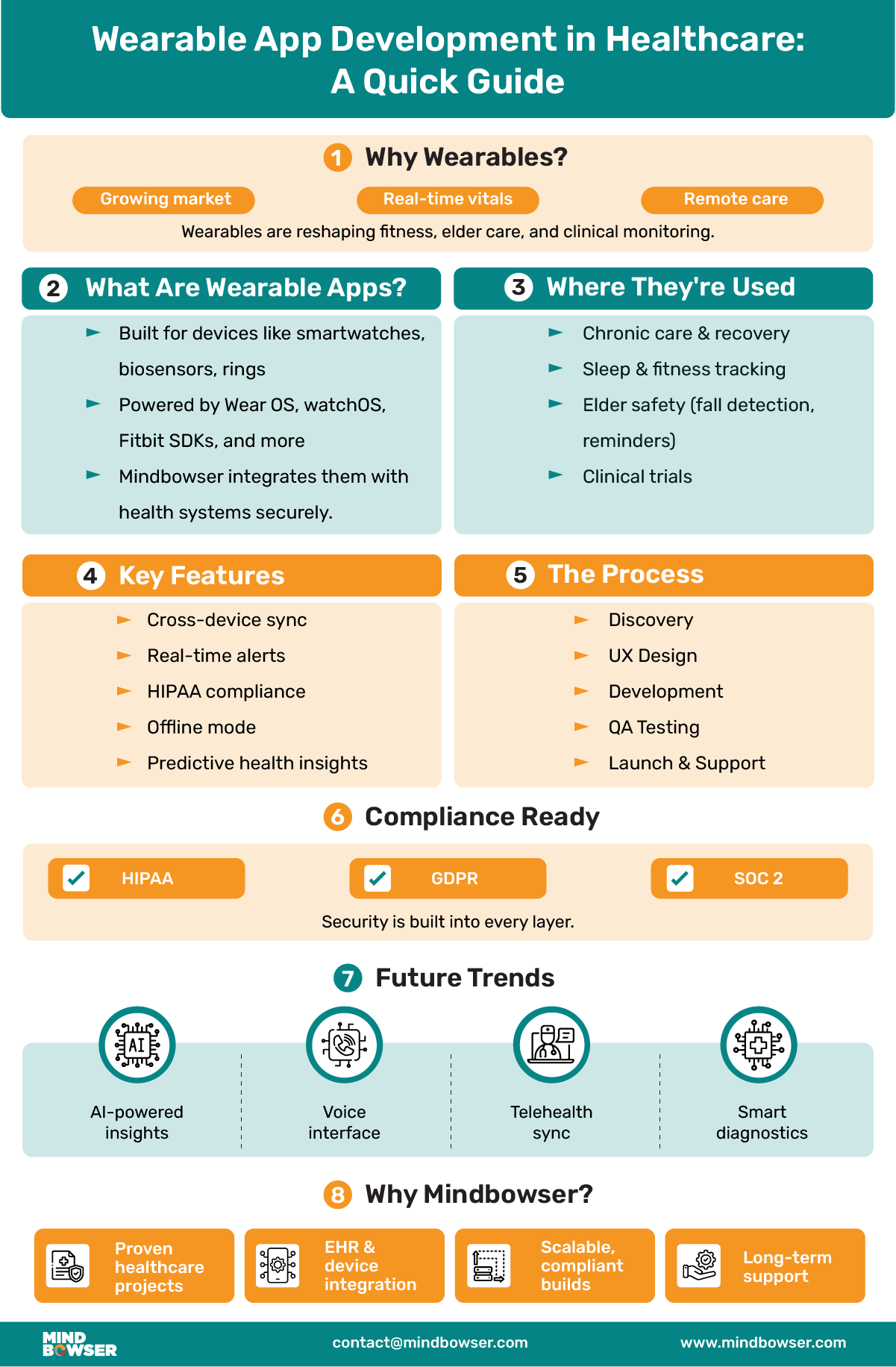
Wearable app development involves creating applications specifically designed to run on wearable devices, such as smartwatches, fitness bands, biosensor patches, smart rings, and even AR glasses. These apps are built to interact with built-in sensors, collect real-time data, and often sync with larger health platforms or cloud systems for analysis and response.
Unlike traditional mobile apps, wearable apps must be optimized for:
• Smaller screen sizes
• Constant connectivity (often via Bluetooth)
• Real-time performance
• Low power usage
• Sensor-level integrations
Popular development platforms include:
• Wear OS (by Google) – Used across Android-based wearables
• WatchOS (by Apple) – Powering the Apple Watch ecosystem
• Fitbit OS – Fitbit’s proprietary system for health and fitness wearables
• Custom SDKs and APIs – Provided by hardware manufacturers (e.g., Dexcom, Garmin, Whoop)
We’ve built apps across all major wearable platforms. Our teams specialize in integrating device-level data with broader healthcare systems, enabling providers to monitor patients, trigger alerts, and visualize data through dashboards—all within regulatory boundaries.
Market Applications of Wearable Devices
Wearable devices are no longer limited to fitness tracking—they now support critical healthcare functions across a wide range of settings. Whether it’s a patient managing their heart condition or a senior receiving fall alerts, wearable apps are making healthcare more connected, personal, and efficient.
Healthcare
• Real-time monitoring of vitals like heart rate, blood oxygen, glucose levels, and sleep cycles
• Chronic condition management (e.g., diabetes, hypertension) using continuous data streams
• Post-discharge recovery tracking to reduce readmissions
• Integration with Electronic Health Records (EHRs) for seamless clinical workflows
Wellness & Fitness
• Personalized activity tracking, workout plans, and fitness milestones
• Sleep cycle monitoring and stress tracking
• In-app motivation through gamification, smart feedback, and behavior nudges
Senior & Assisted Living
• Fall detection sensors trigger immediate alerts to caregivers
• Medication reminders and automated compliance tracking
• Geo-fencing and emergency contact systems for memory care patients
We Built a Smart IoT Platform That Delivers Real-Time Health Insights
Key Features of a High-Performing Wearable Devices App
Not all wearable apps are created equal, especially in the healthcare sector. A truly effective app must go beyond basic tracking and deliver reliable, secure, and personalized experiences that can support both users and clinical teams. Here’s what sets high-performing wearable health apps apart:
1. Cross-Device and Cross-Platform Compatibility
• Works seamlessly across Android, iOS, and wearable-specific OSs like Wear OS, watchOS, and Fitbit OS
• Ensures consistent experiences whether users switch phones or wearables
2. Real-Time Notifications and Customizable Alert Thresholds
• Instantly notifies users and providers of critical health events (e.g., irregular heartbeat, low blood oxygen)
• Alerts can be adjusted based on individual thresholds or care plans
3. Secure Messaging and HIPAA-Compliant Data Exchange
• Built-in communication tools for providers and caregivers
• Encrypted data transfer and access control for patient privacy
4. Offline Functionality with Seamless Sync
• Data collection continues even without connectivity
• Automatically syncs to the cloud or EHR once the connection is restored
5. Predictive Health Insights with Smart Algorithms
• Uses historical data and AI to predict risk or identify patterns
• Enables early interventions and improved care outcomes
6. Scalable Architecture for Growing User Bases
• Backend is designed to handle growing data volume
• Ready for future integrations with new wearables or third-party systems
The Wearable App Development Process
Building a healthcare-grade wearable app involves more than just connecting to a device—it’s about designing a secure, intuitive, and reliable product that works seamlessly in real-world clinical or wellness settings. Here’s how the development process typically unfolds:
Discovery & Requirement Gathering
• Identify clinical goals, operational needs, and user behaviors
• Align product features with regulatory requirements and stakeholder outcomes
• Define data flow, alert logic, and integrations (e.g., EHRs, cloud, third-party APIs)
UI/UX Design
• Design interfaces for both wearable screens and companion mobile apps
• Focus on usability for patients, providers, and caregivers
• Include accessibility standards for elderly or impaired users
Related read: Elevating Healthcare Experiences: A Deep Dive into UI/UX in Healthcare
Development
• Implement BLE connectivity, sensor integrations, and data sync logic
• Build cross-platform or native applications using Wear OS, watchOS, or proprietary SDKs
• Ensure real-time data handling and alert triggers
QA & Testing
• Device-specific testing across various models and OS versions
• Clinical scenario simulations to validate response accuracy
• Security, compliance, and stress testing under real-world loads
Deployment & Support
• App store publishing and device configuration support
• Ongoing updates for OS changes, device compatibility, and user feedback
• Continuous monitoring for compliance and performance
Security and Compliance Requirements
When it comes to healthcare, security isn’t an add-on—it’s a legal and ethical necessity. Wearable apps that collect or transmit personal health data must meet strict regulatory standards to ensure confidentiality, integrity, and availability of data at all times.
Key Healthcare Regulations to Address
• HIPAA (Health Insurance Portability and Accountability Act)
Required for apps handling Protected Health Information (PHI) in the U.S.
• GDPR (General Data Protection Regulation)
Applies to users in the EU—focuses on consent, access rights, and data portability
• SOC 2
Focuses on data privacy, security, and organizational controls for software companies handling sensitive information
Core Security Measures to Implement
• End-to-end data encryption (in transit and at rest)
• Role-based access control and multi-factor authentication
• Secure cloud infrastructure (AWS, Azure, with HIPAA-compliant configurations)
• Regular vulnerability assessments and penetration testing
• Detailed audit logs for traceability and compliance audits
Ready to Build Your Wearable Health Platform?
Book a quick call with our team — we’ll help map out the tech, compliance, and next steps to move your project forward.
Trends Shaping the Future of Wearable App Development
As wearable technology continues to evolve, so do the expectations from healthcare apps built around it. The future is not just about collecting data—it’s about interpreting it, responding intelligently, and seamlessly integrating it into broader digital care ecosystems.
AI-Driven Health Pattern Detection
• Machine learning models analyzing wearable data for early signs of illness
• Predictive alerts for conditions like arrhythmia, sleep apnea, or dehydration
• Personalization of care pathways based on continuous health signals
Voice Interfaces and Accessibility
• Voice-enabled wearable apps for patients with visual impairments or limited mobility
• Hands-free navigation and command options integrated with smart assistants
Smart Diagnostics Using Biosensors
• Wearables equipped to detect biomarkers for infection, inflammation, or hydration
• Real-time diagnostics reducing the need for in-clinic testing
Integration with Telemedicine and Digital Therapeutics
• Syncing wearable data with telehealth platforms for real-time consultation
• Automated feedback loops between DTx platforms and wearables for behavioral health
Related read: Streamlining Behavioral Healthcare with Epic EHR Integration: Enhancing Efficiency and Patient Care
What to Look for in a Wearable App Development Company
Choosing a wearable app development company isn’t just about finding skilled developers—it’s about partnering with a team that understands the intersection of technology, healthcare regulations, and patient needs. Here’s what to prioritize when evaluating a partner:
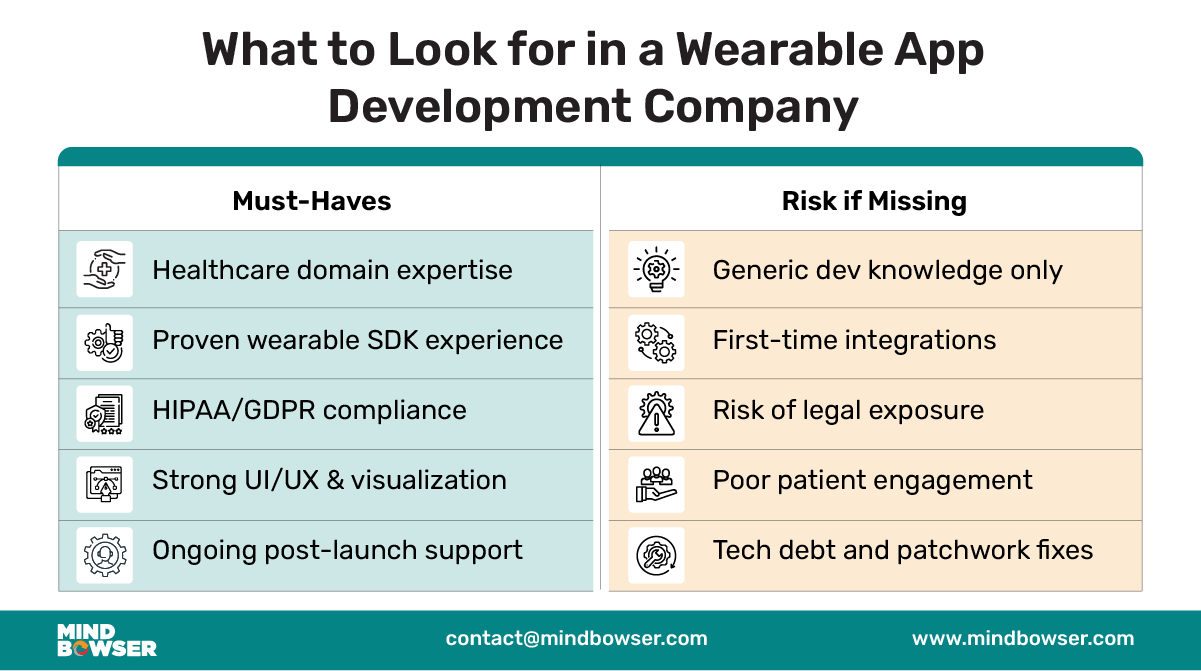
1. Demonstrated Healthcare Domain Knowledge
• Proven experience working with HIPAA, FDA, and healthcare data standards
• Understanding of patient care workflows, provider needs, and clinical integrations
2. Hands-On Experience with Wearable SDKs and Bluetooth Integrations
• Familiarity with platforms like Apple HealthKit, Google Fit, Fitbit SDK, and BLE protocols
• Ability to work across devices, from smartwatches to biosensors and custom wearables
3. Track Record of Compliant Development
• Expertise in building secure apps with end-to-end encryption and access control
• Process-driven teams that follow regulatory compliance during every development phase
4. Strong UI/UX and Data Visualization Capabilities
• Experience designing for smaller screens (wearables) and companion mobile apps
• Ability to present complex health data in a clear, actionable format
5. Transparent Communication and Long-Term Support
• Clear milestones, agile development practices, and dedicated project management
• Post-launch support for updates, bug fixes, and scalability
How Mindbowser Can Help with Your Wearable App Development Needs
At Mindbowser, we don’t just build apps—we craft connected healthcare solutions that meet real-world challenges across clinical, operational, and patient engagement needs. If you’re looking for a wearable app development company that understands both healthcare and technology, here’s how we can support you:
Compliance-First Development
• Apps architected for HIPAA, GDPR, and SOC 2 from day one
• Built-in security protocols, including encrypted data flows, access control, and audit trails
• Support for BAA agreements and clinical-grade documentation
Seamless Integration with Health Systems
• Integration with EHRs, remote patient monitoring dashboards, and third-party health APIs
• Experience working with platforms like Epic, Cerner, and custom RPM tools
• FHIR, HL7, and custom data mapping support
Reusable Modules and Frameworks
• Prebuilt components for:
ㅤㅤ✔️ Real-time vitals tracking and alert logic
ㅤㅤ✔️ BLE and wearable SDK integrations
ㅤㅤ✔️ User dashboards, caregiver modules, and admin portals
• Speeds up time-to-market while ensuring quality
Cross-Platform Development Expertise
• Native development (Swift, Kotlin) for performance
• React Native and Flutter for cross-platform efficiency
• Optimized for iOS, Android, Wear OS, and watchOS
Trusted by Startups, Healthtech Platforms, and Providers
• Delivered wearable solutions for startups in RPM, fitness, elder care, and mental wellness
• Ongoing collaboration and strategy support, not just one-time dev work
• Dedicated product and tech teams aligned with your roadmap
Conclusion
Wearable apps are transforming healthcare, making it more proactive, personalized, and data-driven. From continuous health monitoring and fitness tracking to fall detection and remote patient management, the possibilities are expanding rapidly.
However, building a successful wearable app for healthcare requires more than just great code. It requires a deep understanding of healthcare, regulatory awareness, secure data practices, and a commitment to long-term performance.
Choosing the right wearable app development company can make all the difference.
At Mindbowser, we combine healthcare expertise, proven wearable technology experience, and end-to-end product thinking to help you build solutions that truly enhance care.
Frequently Asked Questions
Look for a company with proven healthcare experience, understanding of compliance (HIPAA, GDPR), hands-on integration with wearable SDKs, and strong UI/UX capabilities. They should also offer long-term technical support and have experience syncing wearable data with EHRs or health platforms.
Wearable app development requires expertise in Bluetooth connectivity, real-time data sync, low-power operations, and limited screen UX. It also involves working with device-specific SDKs (like Apple HealthKit or Fitbit SDK) and often includes integration with cloud-based health systems.
Suppose your app collects or shares Protected Health Information (PHI). In that case, HIPAA compliance is mandatory in the U.S. A reliable wearable app development company will ensure that security protocols, such as encryption, access control, and audit trails, are implemented from the start.
Mindbowser offers full-cycle development for wearable healthcare apps—including sensor integration, secure architecture, FHIR/EHR connectivity, and compliance-first builds. Our team has delivered successful solutions for remote patient monitoring, elder care, fitness, and more.