BLOGS
BLOGS  NEWSROOM
  CASE STUDIES
  WEBINARS
  PODCASTS
  ASSET HUB
  EVENT CALENDAR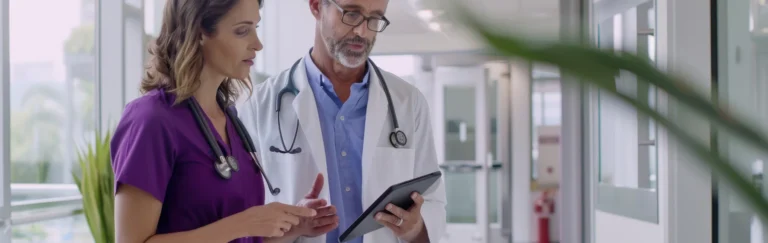




















Usually, if a person wants to get in touch with a doctor through apps, they need to make an appointment and connect. Well, this was the past.
At the time of COVID-19, most people in the world were under a complete lockdown to prevent the spread of the coronavirus outbreak. Since people couldn’t leave their homes then, it became even more difficult for people to get in touch with a doctor. New medical technology solutions were being employed to help patients get easier access to medical services.
These solutions are called telehealth apps, and they administer medical services to patients and improve the quality of treatment they receive. According to the Health Resources and Services Administration, the definition of telehealth is the use of electronic information and telecommunications technologies in providing healthcare treatment. It also refers to the use of these technologies in the fields of medical education and clinical data management.
Telemedicine aims to empower both patients and their healthcare providers. Its applications include video medical consultations, remote monitoring, telehealth nursing, remote physical therapy, and psychiatric therapy. It has the potential to become one of the most integral parts of the healthcare industry. If it is applied correctly, it can be very beneficial for the industry as a whole.
Watch How Telemedicine Apps Are Built: Explained End-to-end
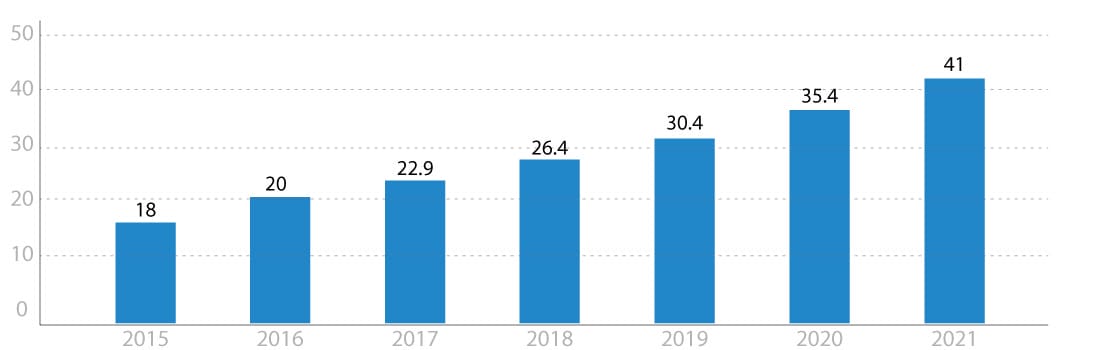
According to the most recent Global Market Insights report, this is the case. The report states that the global telemedicine market will expand from $38.3 billion to $130.5 billion by 2025. Many participants were surveyed to study the adoption rate of such technologies, said that they are investing in telemedicine app development. This number was only 54% in 2014. The rate at which the industry is adopting telemedicine software is a reliable indicator that it is going to be the next frontier in medical care.
Insights on the Lasting Impact of Telemedicine
🔹Easy Accessibility to Healthcare
There is widespread unavailability of professional healthcare service providers in the world. This creates a distance barrier, which is one of the biggest challenges that the healthcare industry faces. Many people have to travel long distances to get quality healthcare services. Sometimes, people even have to travel across countries to get treatment.
Telemedicine app development has provided several solutions to ensure that the distance barrier is overcome. Many applications have been developed to ensure that patients can get video medical consultations for a short period. These applications are making healthcare services more accessible.
Another important task that they are performing is increasing the relevance of healthcare. The ability to get a medical professional’s consultation instantly from the comfort of your home is the most substantial advantage of telemedicine applications.
Related read: Telehealth in Home Health Care: Enhancing Patient Outcomes Through Innovative Solutions
🔹Enhancing the Efficiency of Medicines
Telemedicine has vastly improved both the quality and the availability of healthcare services. As a result, patients now have access to more personalized treatments. They can reach the best doctors via video and make appointments from the comfort of their homes.
The technology is not only beneficial for patients, but it also helps doctors. Medical professionals now have access to better-suited platforms to manage data. They also have access to a better network that helps them leverage the expertise of other medical professionals.
Therefore, the efficiency of medicine has considerably increased. It helps doctors save time spent on each task. Hence, they can provide better treatment to more patients.
🔹Increases Cost-efficiency of Medical Services
The use of telehealth apps is much more cost-effective compared to traditional methods of administering healthcare. The most significant factor that helps in cutting costs is the fact that patients no longer have to physically go to the doctor to get treated. Video consultation is a much more convenient solution for both the patient and the doctor.
It is also less expensive than having to make trips to the hospital each time. A video consultation option in a healthcare service also helps save the salary paid to the receptionist. A common question many people ask is, “What is telemedicine?”. The answer to this question is that telemedicine is the most effective healthcare solution that allows patients to get better treatment without paying more.
Do you want to start a telemedicine business but don’t know how to get started? This free eBook can help you out!
🔹Increased Development in the Field of Healthcare
The advent of telemedicine has also played a crucial role in increasing frontiers in the healthcare industry. Everything from performing new studies to research and development in the medical field is easier than before. Even the training and education of medical students are now more accessible, thanks to video conferencing.
Leading Tech Stacks Used for Telehealth App Development
Many technologies can be used to develop a telemedicine app. The core of a telehealth app is usually developed on either Android or iOS. When it comes to web apps, they are built on React Native and Node programming languages, along with WebRTC technology. Here are the best suitable technology stacks that can be used in telemedicine app development:
🔹 WebRTC
This is a technology that enables mobile applications and performs the functions of a web browser. It uses simple application programming interfaces to communicate in real time.
🔹 Electronic Health Records (EHRs)
These technologies store the patient’s details and medical history. Doctors can later retrieve this information. It acts as a digital version of a patient’s record.
🔹 Interactive Voice Response (IVR)
This technology functions as an automated telephony system. It allows computers to interact with humans through the use of voice and DTMF tones.
🔹 Cloud-Based Server Solutions
Cloud solutions help with the exchange, management, and storage of data in the cloud.
🔹 Integrations with HealthKits
Health-tracking platforms on Android and iOS can be integrated with telemedicine apps. This can be used to transfer data between patients, doctors, and devices.
🔹 Cloud Backend
Amazon Web Services (AWS) offers services that allow customers to work with sensitive information as regulated under the HIPAA Act. It can be used to build applications that store, process, and transmit ePHI. AWS is consistent with all of HIPAA’s privacy and security obligations. With AWS, you do not have to worry about data privacy due to its strong elements of security and compliance with HIPAA regulations. Mindbowser has extensive experience using AWS to build healthcare applications.
Free AWS Infrastructure Audit for Compliance and Optimization

Free eBook on Telemedicine Platform Development
Our 36-page eBook provides a comprehensive strategy you need to know while developing and scaling your telemedicine platform.
🔹Identifying the target audience and their needs
🔹Determining the level of functionalities
🔹Choosing the best tech stack service provider and technology stack for your app
🔹Finding the right balance between features and a good user experience
🔹Deploying secure authentication and data encryption systems
Features that you Must have in a Telehealth App
It is essential to integrate certain features that draw more customers to your app, increase its reach, and ensure its success. Here are some features that you must have in your telemedicine app:
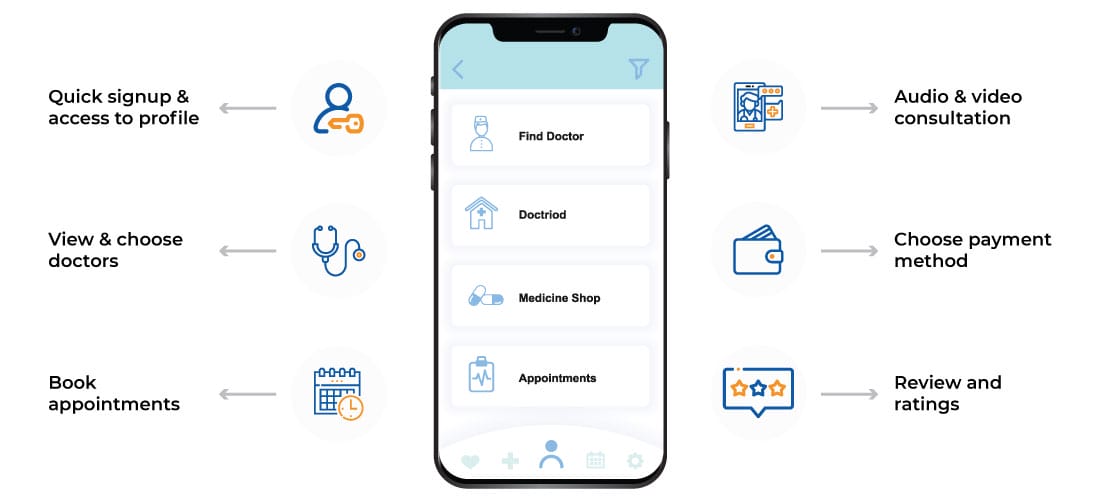
🔸 The telehealth app should have a multi-platform approach. If your app runs smoothly on iOS, Android, and web browsers, the number of users of your app will significantly increase.
🔸 It is important to have a robust telehealth app interface that offers a great user experience. Do not overload your app with too many features, as it affects the user experience.
🔸 There should be integration of your telehealth app with wearable devices. The features of the app would complement the device. Therefore, it provides a functional and practical experience for the user.
🔸 Implement vigorous security algorithms to ensure the protection of health information and patient privacy.
🔸 Ensure that you have a feature to get patient feedback on the app. This will help you make incremental changes to your telehealth app and improve its quality over time.
Conclusion
The development of a telehealth app is a very complicated process and involves a lot of challenges. However, by following the above tips, you can ensure the success of your app. These apps not only bring profits for the developers, but they are also beneficial to the users.
The real value of a medical app is measured by its ability to positively impact the health of people. You can also increase the success of your app by consulting with a professional team at Mindbowser.
An internet connection, compatible gadgets such as smartphones, tablets, or computers, and working cameras and microphones are usually required for telemedicine. A secure telecommunications application or software is also necessary to facilitate smooth video conferencing and data transmission. Data security and seamless telemedicine consultations require compliance with industry-standard encryption protocols and current software versions.
An essential feature for developing a telemedicine app is secure video conferencing for virtual consultations, secure messaging for patient-provider communication, integration of the electronic health record to access patient data, and online prescription and appointment management. To ensure a reliable and user-centric telemedicine experience, user-friendly interfaces, robust data security measures, and HIPAA compliance are essential.
Secure telemedicine platforms or applications with messaging for virtual consultations are necessary software for efficient telehealth services. Systems for managing and storing electronic health record (EHR) data are essential for effective patient management. Also, ensuring smooth financial transactions is the integration of dependable billing and payment processing software. Implementing robust cybersecurity software to safeguard patient information from potential breaches is also crucial in maintaining data security and confidentiality during telehealth interactions.