















 BLOGS
BLOGS  NEWSROOM
  CASE STUDIES
  WEBINARS
  PODCASTS
  ASSET HUB
  EVENT CALENDAR


















$223.5M
Year 1 RHTP Award (5th Largest, $23.5m Above Planned Budget)

Deliver Oklahoma RHTP programs with a FHIR native platform built for the scale of the nation’s largest award. Enable interoperable care coordination, remote patient monitoring, telehealth, and clinical data exchange across rural providers while meeting state program requirements and accelerating statewide deployment.
Year 1 RHTP Award (5th Largest, $23.5m Above Planned Budget)

Expansion + Hie Modernization
(MCOK)

School-based services

Mapped To Oklahoma Workflows

US Healthcare Technology Delivery
Oklahoma received $223.5 million in Year 1 Rural Health Transformation Program funding, the 5th largest state RHTP award and $23.5 million above the planned budget (CMS awards December 2025). The Oklahoma State Department of Health (OSDH) leads the program with co-directors Lisa Rother and Jackie Kanak, supported by the Rise 25 in 25 RHTP Task Force (MCOK). The plan names EHR expansion, HIE modernization, behavioral health integration, community health worker expansion, telestroke program, chronic disease management, and school-based services as core program elements. Vendor procurement opens Q3 2026 through Q1 2027. Mindbowser builds FHIR-native technology for Oklahoma rural health systems and the OSDH RHTP program scope.
OSDH filed Oklahoma’s RHTP application with co-directors Lisa Rother and Jackie Kanak leading the program, supported by the Rise 25 in 25 RHTP Task Force (MCOK). The Year 1 award of $223.5 million places Oklahoma 5th nationally and came in $23.5 million above the planned budget, reflecting CMS confidence in the scope and readiness of Oklahoma’s plan.
Oklahoma’s rural health context:
The Year 1 named technology scope includes AI-automated fax processing as a specific initiative. Broader technology scope across the multi-year plan includes rural hospital EHR and interoperability work, RPM and telehealth infrastructure, clinical AI, and workforce platforms consistent with the 8 capability categories appearing across state RHTP plans nationally.
Oklahoma's EHR landscape has a layer no other RHTP state replicates at this scale: 39 federally recognized tribal nations operating parallel health systems. TruBridge/CPSI historically dominates Oklahoma's smallest CAHs (39-40 CAH facilities statewide). Oracle Health (Cerner) serves mid-size and tribal health systems. MEDITECH runs in community hospitals. Epic covers system affiliates (OU Health, INTEGRIS Health, SSM Health St. Anthony). Cherokee Nation Health System, the largest tribal health system in the state, runs its own integrated platform independent of the state hospital network. MyHealth HIE provides the statewide exchange layer, but modernization is a named RHTP deliverable. The dual challenge: first, connect TruBridge/CPSI CAHs (many running legacy versions without modern API capability) to MyHealth's exchange. Second, integrate tribal health platforms (Cherokee Nation's proprietary system, Oracle Health-based tribal systems) with the state exchange while respecting tribal data sovereignty.

• FHIR R4 + USCDI v3 (mandatory July 2026) across Oklahoma's TruBridge/CPSI, Oracle Health, MEDITECH, and Epic footprint
• TruBridge/CPSI legacy-to-FHIR integration for the smallest CAHs
• Cherokee Nation and tribal platform-to-MyHealth HIE connectivity (tribal data sovereignty compliant)
• MyHealth HIE modernization architecture
• OAuth 2.0 + SMART on FHIR + identity provider federation
• EHR expansion for rural hospitals transitioning from legacy or paper systems
• Telestroke platform integration into rural hospital ED workflows


• MyHealth HIE modernization architecture and governance alignment
• Tribal data sovereignty compliance for Cherokee Nation and other tribal platform integrations
• TruBridge/CPSI legacy-to-FHIR migration for smallest CAHs
• SoonerCare (Oklahoma Medicaid) billing configuration including tribal third-party revenue
• OSDH RHTP reporting infrastructure
• Rise 25 in 25 Task Force coordination requirements
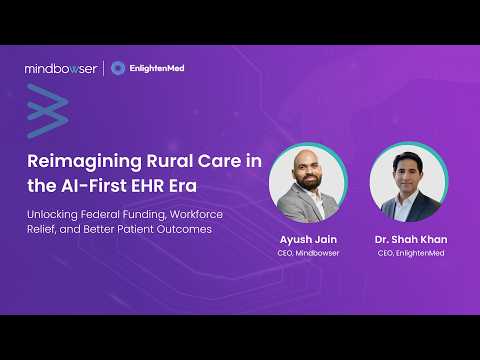
What does AI-first care delivery look like for rural hospitals, clinics, and lean care teams?
In this replay, Dr. Shah Khan, Founder & CEO of EnlightenMed, joins Ayush Jain, Founder & CEO of Mindbowser, to discuss how AI-first EHR workflows can support rural providers across access, documentation, RPM, follow-up, and care coordination.
Points Covered In this replay:
Texas rural counties face structural healthcare access challenges: specialty shortages, geographic distance to regional referral centers, chronic disease burden higher than metro counties, and a mental health access gap that drives ED utilization in rural Texas. Technology investment under RHTP targets these access and workforce gaps.
Remote monitoring for diabetes, cardiovascular disease, obesity, and heart failure across the 75 HPSA counties. Cellular-first connectivity for counties outside the OKC/Tulsa broadband reach. Integration with TruBridge/CPSI at smallest CAHs and Oracle Health at tribal facilities.
he CMS AHCAH waiver extended through September 30, 2030 under PL 119-75 Section 6210 creates the federal framework. For Oklahoma's 47 at-risk rural hospitals, H@H is not an optimization strategy but a survival mechanism: maintaining care delivery capacity while managing financial constraints that have already closed 2 facilities in 2025
Oklahoma's named telestroke program connects rural hospital EDs to stroke specialists for time-critical tPA and thrombectomy decisions. School-based telehealth extends behavioral health and primary care into rural school settings across 75 HPSA counties.
75 of Oklahoma's 77 counties are designated HPSAs. The physician-to-population ratio is 1:1,690 statewide, worse in rural areas. Oklahoma has restricted NP practice authority, limiting NP-led clinic models that work in full-practice states like Utah and Vermont. Community health worker (CHW) expansion is a named RHTP workforce strategy, targeting the gap between physician shortage and restricted NP scope. Oklahoma's tribal health workforce operates as a parallel pipeline. Cherokee Nation alone runs 8 health centers plus W.W. Hastings Hospital. Tribal third-party revenue from Medicaid expansion has funded new university partnerships and workforce training programs. Osage Nation's fiber training program creates broadband construction workforce alongside health workforce, a dual-pipeline model unique to Oklahoma's tribal infrastructure.

• Community health worker training and CHW certification tracking across 75 HPSA counties
• Virtual training platform infrastructure for rural continuing education
• AI-assisted clinical documentation reducing burden on clinicians covering 1:1,690 patient ratios
• School-based services training and coordination platforms for rural school health programs
• Tribal workforce integration platforms connecting Cherokee Nation, Osage Nation, and other tribal training programs


Oklahoma restricted NP practice authority workflow, Nurse Licensure Compact recruitment pipeline, CHW certification and training program infrastructure, school-based health services credentialing, tribal health workforce coordination with Cherokee Nation and other tribal systems.
Oklahoma received $223.5M Year 1 with 39 federally recognized tribal nations running parallel health systems. See how Oklahoma's RHTP technology scope compares to every other state.
Oklahoma follows the common RHTP six-phase procurement timeline. OSDH is in Phase 0 activity (setup, Rise 25 in 25 Task Force coordination, procurement development) through Q3 2026. Phase 1 vendor procurement opens Q3 2026 through Q1 2027. Many states require a local entity (hospital, RHC, FQHC, rural health association) as the lead applicant for RHTP funds. Oklahoma adds a unique dimension: 39 tribal nations with their own health systems and procurement authority.
For Broader RHTP Technology Planning Across States, Explore Our Rural Health Technology Partner

Oklahoma State Department of Health runs the RHTP program under co-directors Lisa Rother and Jackie Kanak. Vendors register through Oklahoma's OMES (Office of Management and Enterprise Services) procurement portal and respond to OSDH-posted RFPs. EHR expansion, HIE modernization, and telestroke may be procured as distinct work packages. The Rise 25 in 25 RHTP Task Force (MCOK) coordinates statewide stakeholder engagement.

Cherokee Nation Health Services (8 health centers + W.W. Hastings Hospital), Chickasaw Nation Industries, and other tribal health systems have independent procurement authority. Tribal third-party revenue from Medicaid expansion funds technology investment. Southern Plains Tribal Health Board coordinates across multiple tribal systems. Technology vendors partner with tribal entities as lead applicants for tribal-specific RHTP technology scope.

Oklahoma Hospital Association (OHA, coordinating across 39-40 CAHs), Oklahoma Foundation for Medical Quality, Oklahoma Office of Rural Health (OSDH), MyHealth HIE, and Oklahoma Primary Care Association (OPCA) provide the local-entity partnerships required for RHTP fund access.
30-minute scope conversations available weekly. Bring your Texas HHSC contact, TORCH membership context, or prime contractor scope; we will map capability fit, accelerator alignment, and Texas-specific procurement pathway in real time.
Save minimum 40% in development costs and build products in 55% less time with our advanced solution accelerators.

DischargeFollow AI is a customizable AI solution for automating Post-Discharge Follow-Up. It connects with patients after hospital discharge via voice or chat, checks recovery progress, and flags red flags for clinical teams.
Read More
InsureVerify AI is a customizable AI solution that automates the insurance eligibility verification process. It contacts patients before appointments to collect insurance details, confirm policy validity, and flag mismatches so your front desk doesn’t have to.
Read More
RPMCheck AI is a customizable AI solution for automating Remote Patient Monitoring Check-Ins. It connects with patients via voice or chat, collects daily health updates, and highlights any warning signs so your clinical team can act faster.
Read More
MedAdhere AI is a customizable AI solution for automating Medication Adherence Monitoring. It sends patients SMS, email, or app reminders, tracks compliance in real time, and flags missed doses so your care team can follow up fast.
Read MoreHIPAA-ready builds with controlled PHI access, secure environments, and disciplined engineering practices. Designed to reduce vendor risk and speed up onboarding.

Independent audit of security controls operating over time.

PHI safeguards built into access, environments, and release workflows.

Data handling built for modern privacy expectations.

Role-based access with controlled PHI exposure.

Code reviews, dependency checks, and security gates.

Secure integrations designed for traceability and reliability.

 Encryption in transit and at rest
 Role-based access and least privilege
 Secure SDLC with code reviews
 Pen testing based on scope and risk
We don’t just deliver solutions we build partnerships that drive transformation. With a proven track record in healthcare technology, we understand the industry’s unique challenges and offer customized solutions to help you achieve breakthroughs.

Deep healthcare knowledge ensures technology aligns with real-world clinical workflows, driving impact.

Pre-built components reduce engineering time by 30-40%, helping you get to market quickly.

AI models are trained on your local data in your secure cloud environment.

Proven integrations ensure seamless connectivity with EHRs, payers, and digital health ecosystems.

Delivered 50+ healthcare solutions across 10+ countries, representing our ability to provide a diverse healthcare ecosystem.

Reduced the development time by 40% by implementing customized solutions for every challenge.

We deliver 100% ownership with a perpetual license for IP and code, enabling seamless data integration. Ensure full control and flexibility.

Ensure seamless integration with your systems and scalability to adapt to evolving needs.

Our 50+ prebuilt frameworks accelerate the development process and reduce time-to-market by 30%.

The specialized AI tools are customized to address healthcare challenges, significantly improving diagnostic efficiency by 25%.

Stay informed with our hub, offering insights and thought leadership to empower your team.

Achieved 90+ NPS with a user-centric approach ensuring seamless adoption and superior experience.

Leverage automation to reduce errors by 60%, boost efficiency, and enhance care quality.

Our clear, open pricing ensures you understand your investment without hidden costs or surprises.

A quick look at how we help organizations transform ideas into outcomes.

We helped a US healthcare Ed platform streamline physician processes & reduce burnout. Download the case study to learn more!

We helped a top media brand scale affiliate marketing with seamless automation, efficient workflows, and performance optimization.
From leading hospitals to digital-health companies, Mindbowser powers real-world healthcare transformation.






























We go beyond core healthcare solutions by offering a comprehensive suite of technology-driven services that enhance scalability, efficiency, security, and user experience.

From concept to deployment, we design and develop high-performance digital health products tailored to industry needs. Our approach focuses on scalability, security, and compliance, ensuring seamless functionality and a strong foundation for growth.

We provide custom AI/ML development services to help healthcare organizations automate workflows, enhance clinical decision-making, and extract actionable insights from data. Our expertise includes predictive analytics, NLP for medical records, and AI-powered automation tailored to your needs.

We help businesses migrate, build, and optimize healthcare applications on cloud platforms while ensuring compliance and security. Our cloud services include architecture design, DevOps automation, and scalable infrastructure management for seamless performance.

We enable secure and efficient integrations across EHRs, medical devices, third-party APIs, and digital health platforms. Our team ensures data interoperability using FHIR, HL7, and custom API development, reducing silos and improving workflow efficiency.

We offer data engineering, analytics, and reporting services to help healthcare organizations harness their data effectively. Our team develops real-time dashboards, predictive models, and automated reporting to support better decision-making.

We help businesses meet HIPAA, GDPR, and other regulatory requirements by integrating security best practices into development. Our services include risk assessments, DevSecOps implementation, and data protection strategies for secure digital health solutions.

We help organizations design, develop, and integrate telemedicine platforms with features like video consultations, remote patient monitoring, and secure data exchange. Our services ensure seamless connectivity while maintaining compliance with healthcare regulations.

We provide end-to-end mHealth app development services, designing secure, user-friendly, and HIPAA-compliant mobile solutions for healthcare providers, patients, and caregivers. Our services include custom app design, wearable integrations, remote monitoring, and telehealth features to enhance patient engagement and care accessibility.

We develop custom Clinical Decision Support Systems (CDSS) that provide real-time insights, AI-driven recommendations, and predictive analytics to improve patient outcomes. Our solutions integrate seamlessly with EHRs and existing healthcare systems, reducing cognitive load and enhancing clinical decision-making.
Collaborating with Industry Leaders for Smarter Healthcare








































Oklahoma received $223.5 million in Year 1 RHTP funding (CMS award December 2025), the 5th largest state award and $23.5 million above planned budget. OSDH leads under co-directors Lisa Rother and Jackie Kanak, supported by the Rise 25 in 25 Task Force (MCOK). The plan targets 39-40 CAHs (70% operating in the red), 75-of-77 HPSA counties, and 39 tribal nations with parallel health systems. Named scope includes EHR expansion, MyHealth HIE modernization, behavioral health integration, telestroke, CHW expansion, and school-based services.
OSDH is in Phase 0 through Q3 2026. Phase 1 vendor procurement opens Q3 2026 through Q1 2027 via Oklahoma's OMES (Office of Management and Enterprise Services) procurement portal. EHR expansion, HIE modernization, and telestroke may be procured as distinct work packages. Tribal health systems (Cherokee Nation, Chickasaw Nation, others) have independent procurement authority for tribal-specific technology scope. Local entities serve as lead applicants, with technology vendors partnering under their applications.
Oklahoma has 39 federally recognized tribal nations, more than any state except Alaska. Many operate their own health systems: Cherokee Nation runs 8 health centers plus W.W. Hastings Hospital on its own integrated platform. Tribal health systems have independent procurement authority and data sovereignty requirements. Tribal third-party revenue from Medicaid expansion (July 2021) funds technology investment through a parallel pipeline. FHIR integration must bridge TruBridge/CPSI state CAHs with Oracle Health tribal systems and Cherokee Nation's proprietary platform while respecting tribal data governance.
Oklahoma has the most acute rural hospital closure crisis of any state in this cohort: 70% of rural hospitals operating in the red, 47 at risk of closure, 2 closed in 2025. Proposed federal Medicaid cuts ($2.4B) would compound the crisis by removing the financial lifeline that 2021 Medicaid expansion provided. H@H and RPM are not optimization tools here but survival mechanisms for at-risk facilities.
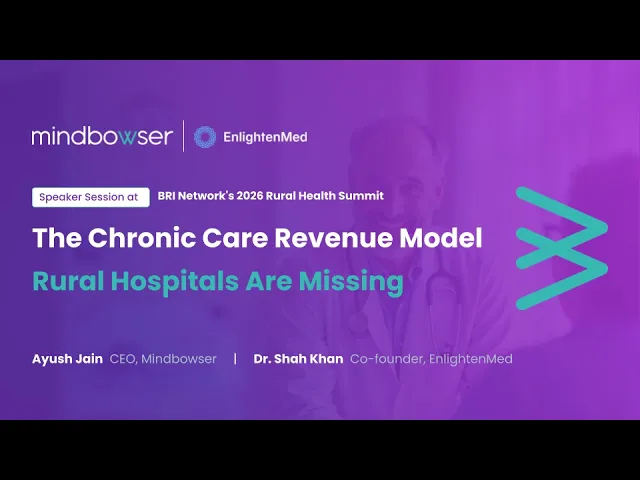

At the BRI Network's 2026 Rural Health Summit, Mindbowser explored the future of rural healthcare through AI and sustainable care models.
Get in Touch ↗Partner with us to design, build, and scale digital solutions that drive better outcomes.
Global Tech Teams LLC, 525 Washington Blvd, Industrious at Newport Tower, Jersey City, NJ 07310, United States.
Let’s discuss your goals, workflows, and next steps in a focused consultation call.
 Schedule a Call