







Epic Integration: A Quick 60-Minute Playbook
EHR/EMR

Epic Integration: A Quick 60-Minute Playbook

Pravin Uttarwar
CTO & Founder, Mindbowser
TL;DR
  • Epic integration works via three methods: SSO (SMART on FHIR / OAuth 2.0) for credential-based access, server-based FHIR and HL7 APIs for real-time clinical and scheduling data exchange, and embedded integration within Epic’s Hyperspace or Hyperdrive for a unified user experience.
  • Timeline doesn’t have to be months. With pre-built connectors like ConnectHealth, integration can go live in as little as 24 hours; the bottleneck is usually planning, not the technology.
  • Cost is tied to approach, not the project itself. Incremental integration, starting with high-priority workflows, cuts spend significantly vs a full custom rollout from scratch.
  • Security and compliance are non-negotiable at every step. Epic integration must meet HIPAA, the 21st Century Cures Act, and GDPR, where applicable; encryption, access controls, and legal coordination are baseline requirements.
  • You don’t have to figure it out alone. Working with an Epic-approved vendor means compliance guardrails, pre-tested connectors, and expert support are already built in, so your team stays focused on the outcome, not the integration overhead.

Epic integration has become an important part of modern healthcare. By connecting different systems, it ensures providers can access and share essential patient information without hurdles. This kind of connectivity gives healthcare professionals the data when they need it, enabling more informed and timely decisions.

Whether it’s eliminating unnecessary tests, improving care coordination, or easing administrative workloads, Integration with Epic simplifies the day-to-day operations of healthcare teams. It clears the way for smoother workflows, allowing staff to focus more on patient care and less on navigating disconnected systems.

Epic integration is about making healthcare more effective and patient-centered. It allows providers to work collaboratively, ensuring better outcomes and improving the overall experience for patients and caregivers alike. This integration helps healthcare teams deliver care with confidence and precision, putting patients’ needs front and center. Let’s learn more about integration with Epic in detail:

Featured Image of Epic Masterclass 60 Minute

Epic Integration: 60 Minute Playbook Webinar

What Topics Will Be Covered?

✅ Current State of EHR Integration: An overview of existing challenges and hidden costs associated with EHR systems.

✅ Introduction to ConnectHealth: A deep dive into this EHR integration platform designed to accelerate the connection process.

✅ Fast Track to Efficiency: Learn how to integrate your solution with Epic in just 24 hours.

✅ Real-World Impact: Understand the data-driven results of implementing ConnectHealth in your organization.

Watch the Recording

Different ways to integrate with Epic

1️⃣ Single Sign-On (SSO) – Standalone

Implementing Single Sign-On (SSO) with Epic’s SMART on FHIR and OAuth 2.0 methods offers a secure, low-friction login experience. Users can access your application using their existing Epic credentials, simplifying authentication and reducing barriers to entry. This approach enhances user satisfaction by minimizing the need for multiple logins while maintaining strong security measures.

Related Read: Decoding SMART on FHIR for Healthcare Interoperability

2️⃣ Server-Based Integration

Server-based integration connects your application with Epic’s server environment, enabling real-time data exchange such as clinical records and scheduling information. Leveraging industry-standard APIs like HL7 and FHIR alongside Epic’s public APIs ensures data transfer remains secure and compliant. This method is particularly effective for environments with high transaction volumes, such as hospitals and extensive healthcare networks.
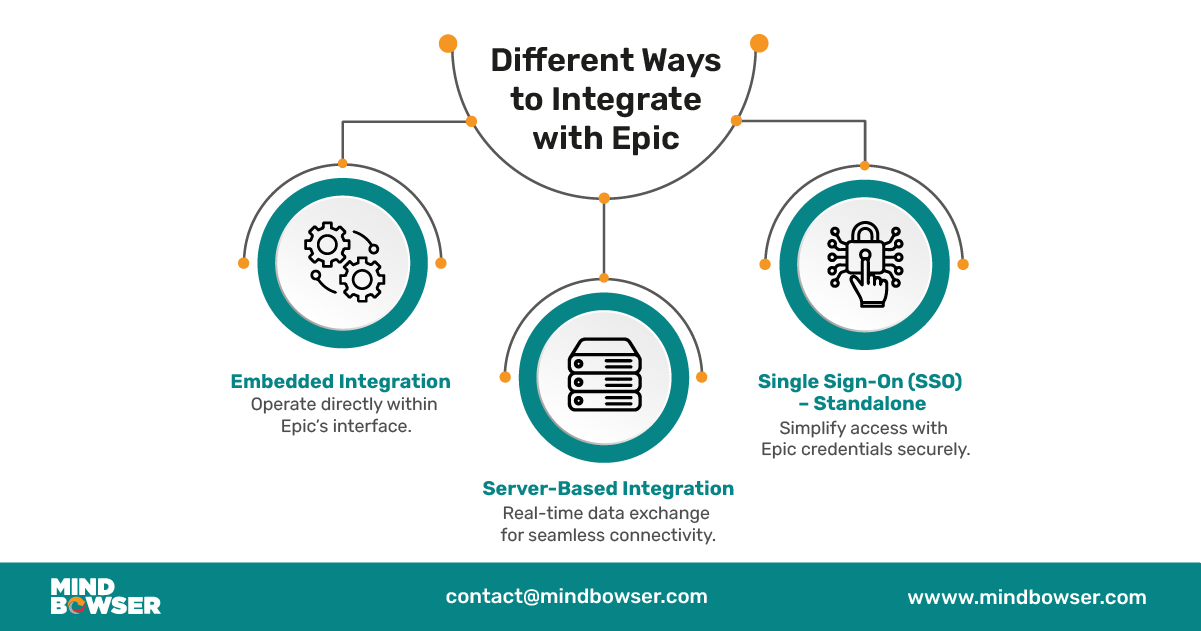
Image of Different ways to integrate with Epic

3️⃣ Embedded Integration

Embedding your application within Epic’s interface through Hyperspace or Hyperdrive frameworks creates a unified user experience. This integration allows healthcare professionals to interact with your app without leaving the Epic environment, eliminating unnecessary switching. The result is a more detailed workflow that saves time and enhances the user’s productivity.

Ready to Integrate Your Solution With Epic?

Talk to Our ConnectHealth Team About Cutting Integration Time From Months to Days.

Key Benefits of EHR Integration

✅ Supporting Interoperability

Integration with Epic allows healthcare systems to communicate with each other more effectively. Whether it’s exchanging patient records or sharing diagnostic reports, interoperability ensures that vital information is available where it’s needed most, reducing delays and miscommunication.

Related Read: The Interoperability Challenge in Healthcare
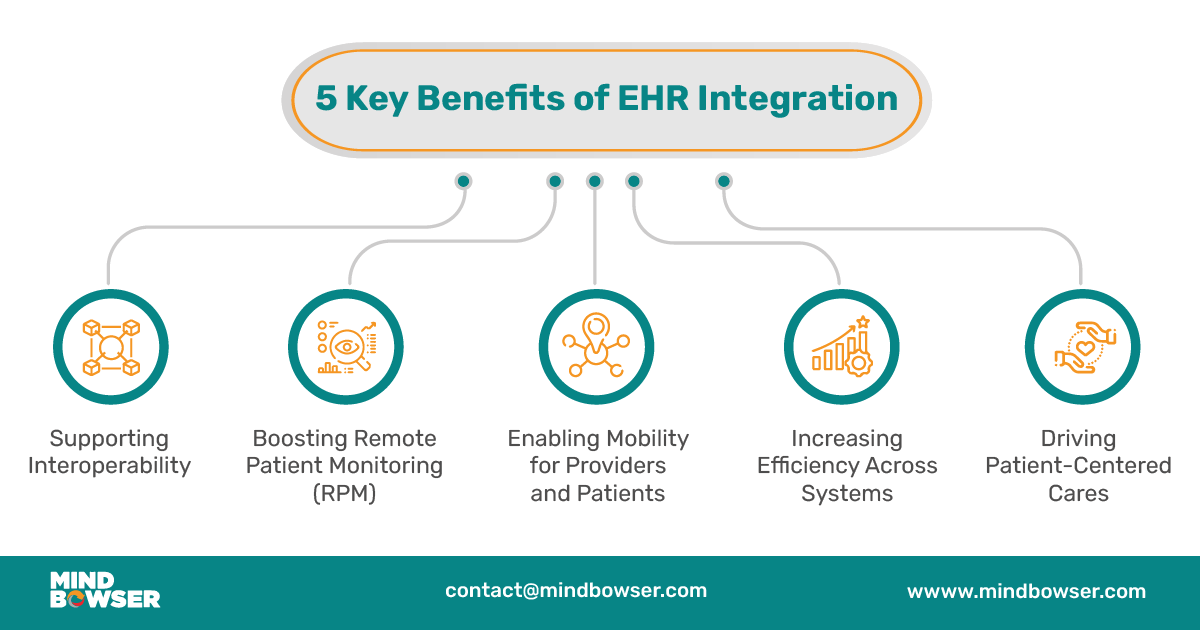
Image of 5 Key Benefits of EHR Integration

✅ Boosting Remote Patient Monitoring (RPM)

Epic supports RPM tools through integration that lets providers monitor patients’ health metrics in real-time. From wearable devices tracking vitals to patient-reported outcomes, this capability helps manage chronic conditions and delivers timely interventions—all without requiring frequent in-person visits.

Related Read: Patient Monitoring: A Guide for Healthcare Providers

✅ Enabling Mobility for Providers and Patients

Integration with Epic offers mobile-friendly access to patient records and tools, allowing providers to work efficiently in the clinic, at the bedside, or attending to emergencies offsite. For patients, mobile access to their health data fosters active involvement in their care journey.

✅ Increasing Efficiency Across Systems

A well-integrated Epic system reduces administrative burdens by automating routine tasks like appointment scheduling, billing, and data entry. This frees up time for clinicians and staff to focus more on patient care.

✅ Driving Patient-Centered Care

By making patient information readily accessible, Epic integration enables healthcare providers to deliver care that aligns more closely with individual needs and preferences. Personalized treatment plans become more achievable, increasing satisfaction and health outcomes.

Navigating Security and Compliance Requirements

When it comes to patient data, there’s no room for error. Integration with Epic means navigating a complex maze of regulations like HIPAA, GDPR, and the Cures Act. It’s like being a detective, uncovering any vulnerabilities in your current system. By putting strong security measures in place, like encryption and strict access controls, you’re building a fortress around sensitive patient information. 

Partnering with your IT team and legal experts is key to staying compliant and avoiding costly penalties. Remember, data security isn’t just about checking boxes; it’s about earning your patient’s trust and protecting their privacy.

Related Read: Understanding Cures Act Compliance: A Modern Healthcare Imperative

Breaking the Myth: Cost and Time of Integration

Epic integration often has a reputation for being a drawn-out, costly process, making many organizations hesitate to take the leap. While it’s true that EHR systems like Epic require careful planning, the idea that integration will inevitably drain your budget and eat up months of time isn’t the full story. With the right strategies, integrating Epic can be efficient and affordable without compromising the quality of your healthcare services.

One way to cut costs and save time is by opting for incremental integration. Instead of attempting a full-scale rollout across all departments at once, start with high-priority areas. This phased approach reduces the financial burden and allows teams to adjust and learn as the system grows. Using proven frameworks and pre-built integration modules can also trim implementation timelines while maintaining functionality.

Partnering with experienced Epic consultants or IT service providers who know the system inside out is another effective way to streamline the process. Their expertise can help identify potential roadblocks early, ensuring that the integration stays on schedule and within budget. Remember, the key is in planning smarter—not spending more or rushing unnecessarily. With thoughtful preparation, integration with Epic can be a practical and rewarding investment.

How ConnectHealth Can Help You With Epic Integration

Integrating Epic can feel like piecing together a complex puzzle. ConnectHealth simplifies this with pre-built connectors designed to accelerate the connection process, no costly custom builds, no restrictive platforms. Every piece fits, without the trial and error.

Partnering with ConnectHealth, an Epic-approved vendor, means bringing deep integration expertise to your project from day one. ConnectHealth aligns workflows, patient data, and operations across systems. With a focus on security, scalability, and HIPAA-compliant data handling, the path from integration kickoff to operational efficiency stays predictable.

Our approach keeps you in full control. You own the integration; we make it work. With transparent processes and expert support, your Epic integration gets built to your organization’s needs today and scales as you grow.

What are the main ways to integrate with Epic?

Three methods: Single Sign-On (SSO) via SMART on FHIR and OAuth 2.0 for credential-based access, server-based integration using HL7 and FHIR APIs for real-time clinical and scheduling data exchange, and embedded integration within Epic’s Hyperspace or Hyperdrive interface for a unified user experience.

How long does Epic integration take?

With pre-built connectors like ConnectHealth, integration can be completed in as little as 24 hours. Custom integration timelines depend on complexity, scope, and your existing infrastructure but phased approaches significantly reduce the overall project length.

How much does Epic integration cost?

Cost depends on approach. Incremental integration starting with high-priority areas and using pre-built connectors cuts cost substantially versus a full-scale custom rollout. Partnering with an experienced Epic vendor keeps implementation on schedule and within budget.

What security and compliance requirements apply to Epic integration?

Integration must meet HIPAA, 21st Century Cures Act requirements, and GDPR where applicable. Core measures: encryption, strict access controls, and coordination with your IT and legal teams. Working with an Epic-approved vendor ensures compliance guardrails are built into the process.

What is the difference between SSO and server-based Epic integration?

SSO (via SMART on FHIR/OAuth 2.0) handles authentication users access your app with their Epic credentials without a separate login. Server-based integration handles data exchange your application communicates with Epic’s server environment to pull and push clinical records, schedules, and other data in real time.

Frequently Asked Questions

Three methods: Single Sign-On (SSO) via SMART on FHIR and OAuth 2.0 for credential-based access, server-based integration using HL7 and FHIR APIs for real-time clinical and scheduling data exchange, and embedded integration within Epic’s Hyperspace or Hyperdrive interface for a unified user experience.

With pre-built connectors like ConnectHealth, integration can be completed in as little as 24 hours. Custom integration timelines depend on complexity, scope, and your existing infrastructure but phased approaches significantly reduce the overall project length.

Cost depends on approach. Incremental integration starting with high-priority areas and using pre-built connectors cuts cost substantially versus a full-scale custom rollout. Partnering with an experienced Epic vendor keeps implementation on schedule and within budget.

Integration must meet HIPAA, 21st Century Cures Act requirements, and GDPR where applicable. Core measures: encryption, strict access controls, and coordination with your IT and legal teams. Working with an Epic-approved vendor ensures compliance guardrails are built into the process.

SSO (via SMART on FHIR/OAuth 2.0) handles authentication users access your app with their Epic credentials without a separate login. Server-based integration handles data exchange your application communicates with Epic’s server environment to pull and push clinical records, schedules, and other data in real time.

Pravin Uttarwar

Pravin Uttarwar

CTO & Founder, Mindbowser

Connect Now

Pravin Uttarwar is CTO & Founder at Mindbowser. He has 16+ years of experience as a developer and technology leader, with deep expertise in healthcare platform architecture, AI/ML strategy, and build-vs-buy decision frameworks.

His career spans founding and growing Mindbowser from a startup to a 150+ person healthcare technology company, while maintaining hands-on technical depth across system architecture, remote team operations, and developer experience.

Share This Blog

Read More Similar Blogs

Let’s #Transform Healthcare,# Together.

Partner with us to design, build, and scale digital solutions that drive better outcomes.

Location

Global Tech Teams LLC, 525 Washington Blvd, Industrious at Newport Tower, Jersey City, NJ 07310, United States.

Contact

+1 408 786 5974
contact@mindbowser.com
BOOK A QUICK CONSULTATION

Have a Healthcare Project in Mind?

Let’s discuss your goals, workflows, and next steps in a focused consultation call.

Calendar icon Schedule a Call

Contact form