











 BLOGS
 NEWSROOM
 CASE STUDIES
 WEBINARS
 PODCASTS
 ASSET HUB
 EVENT CALENDAR

















TL;DR
- A dental clearinghouse turns PMS data into HIPAA-standard X12 transactions, checks them against payer edits and routes them by payer ID. Under HIPAA, it is a covered entity. There is no “HIPAA certification” to ask for.
- Six transaction sets do almost all the work: eligibility (270/271), the dental claim (837D), claim status (276/277), acknowledgments (999 and 277CA), remittance (835) and attachments (275). HIPAA’s first attachments standard takes effect for compliance on 26 May 2028.
- DentalXChange, Vyne Dental, Availity, Stedi, EDS, Dentrix eClaims, and Office Ally all move dental claims for different users: PMS-integrated practice workflows, billing platforms, a payer-sponsored portal, and API networks for software teams.
- Coverage is per payer and per transaction, and it differs by network. We checked 20 large dental payers on two clearinghouses’ public lists (25 October 2026): both listed eligibility for all 20, but one listed attachments for 2 and the other for 11.
- Switching is mostly enrollment work: payer IDs, EDI enrollment, ERA re-enrollment and, separately, EFT. Pick a cutover date and leave in-flight claims on the old route until they close.
- Your PMS decides first. Check its current supported list before anything else.
A dental claim leaves your practice management system (PMS) as one file and reaches the payer as a different one, and the company that does that translation in between is your clearinghouse. Most offices never see it work. They see what it sends back: an eligibility answer, a rejected claim, a payment that posts or doesn’t. In the revenue cycle workflows I’ve mapped, it’s the one system nobody looks at until a claim comes back wrong, and by then the fix means a resubmission and another wait.
Two kinds of reader end up here. Someone running billing at a practice or dental group, deciding whether to stay, add a second clearinghouse or switch. And someone building dental software, picking the clearinghouse the product will depend on for years. Both start from the same map of what goes through a dental clearinghouse, transaction by transaction. To see eligibility run end to end, our dental eligibility automation webinar, co-presented with Stedi’s product team, demos our Open Dental build live.
What Does a Dental Clearinghouse Actually Do?
A dental clearinghouse is the company that takes claims and eligibility requests from your PMS, checks them against payer rules, converts them into the HIPAA-standard electronic format, sends each one to the right payer by its payer ID, and returns the payer’s responses to your system. One connection from the practice reaches hundreds of payers.
HIPAA defines the role precisely. A health care clearinghouse is an entity that takes health information in a nonstandard format and turns it into a standard transaction, or does the reverse for the receiving party (45 CFR 160.103). That makes a clearinghouse a HIPAA covered entity in its own right, alongside health plans and providers. When it handles claims on your practice’s behalf, it also acts as your business associate, which is why it signs a business associate agreement with you.
One phrase on vendor-selection lists is worth correcting. You’ll see advice to choose a “HIPAA-certified” clearinghouse. HHS states that it does not require or recognize a HIPAA “certification”, and a third-party certificate doesn’t change an organization’s obligations. The useful questions are about the business associate agreement, the security controls and the audit reports a clearinghouse will share.
Three jobs happen between your PMS and the payer:
- Edits. The clearinghouse checks the claim for missing or invalid data (subscriber ID format, provider NPI, procedure code by number, tooth and surface where required) before the payer sees it.
- Translation. It builds the X12 file the payer expects, or accepts one your PMS already built.
- Routing. It uses the payer ID, the electronic address each payer publishes, to send the transaction to the right place, then routes the responses back.
Which Transactions Run Through a Dental Claims Clearinghouse?
Six transaction sets do almost all the work, and most front desks only ever see their results. Here’s each one in front-desk terms, with the HIPAA rule that names it and the share of dental-plan transactions that ran fully electronically, from the 2025 CAQH Index.
| Transaction | What it answers | HIPAA standard | Share of dental-plan volume fully electronic (2025 CAQH Index) |
|---|---|---|---|
| 270 / 271 eligibility | Is this patient covered today, and what are the benefits? | 45 CFR 162.1202 | 80% |
| 837D dental claim | Here is what we did; please pay | 45 CFR 162.1102 | 90% |
| 999 / 277CA acknowledgments | Did the file arrive, and did the claim pass front-end edits? | Operating step behind claim submission | not measured separately |
| 276 / 277 claim status | Where is this claim now? | 45 CFR 162.1402 | 23% |
| 835 remittance (ERA) | What did the payer pay, adjust or deny, and why? | 45 CFR 162.1602 | 39% |
| 275 attachments | Here are the X-rays, perio chart or narrative behind the claim | Adopted 2026, compliance 2028 (below) | 28% |
Two numbers stand out. Dental claims themselves go electronic 90% of the time, so submission is largely solved. Claim status sits at 23%, which suggests most offices still check where a claim is by portal or phone. That’s where staff time goes after the claim leaves.
Three edge cases belong in the same table even though they’re rarer:
- Predetermination. Many payers accept a predetermination electronically, sent on the 837D. Availity’s payer-list API filters by “837D Predetermination” as its own transaction type (Availity API guide, March 2025). How to write the narrative that goes with one is in our guide to dental claim narratives and predeterminations.
- Dental work billed to medical. Oral surgery, sleep appliances, and some surgery-center cases go to a medical plan on a professional (837P) or institutional (837I) claim. That means a medical clearinghouse route as well; for the medical side, see insurance eligibility verification for medical practices.
- Benefits the 271 can’t hold. X12’s own interpretation says the HIPAA version of the 271 has no clean way to express a frequency limit shared across several procedure codes (X12 RFI 2773). So some benefit details still come from a portal or a call. We cover where a 271 runs out for dental on our verification page, and the front-desk side in the step-by-step verification process.
Rejected or Denied: Which One Did the Clearinghouse Catch?
A rejected claim never reached the payer’s adjudication system. A denied claim did, and the payer decided not to pay all or part of it. The difference decides who fixes it and how fast.
- Rejection. The clearinghouse’s edits or the payer’s front door stopped the claim. It comes back on an acknowledgment (a 999 for a file problem, a 277CA for a claim problem), often within hours. Fix the data and resubmit. Nothing was adjudicated, so there’s nothing to appeal.
- Denial. The payer processed the claim and refused some or all of it. The reason arrives on the 835 as a claim adjustment reason code, often with a remark code. That’s a correction, a narrative, a corrected claim or an appeal, and it usually lands on the billing team.
A clearinghouse that reports rejections clearly saves the most time, because rejections are the cheapest problems to fix and the easiest to miss. A rejected claim that nobody opens is a claim that was never filed. Denials and aging A/R across locations are a revenue cycle job of their own, covered in dental revenue cycle management.
DentalXChange, Stedi, Availity and Vyne: How the Dental Clearinghouse Companies Differ
They all move dental transactions, and each describes itself for a different user. Everything below comes from each company’s own pages, as published on 25 October 2026. Products and prices change, so treat it as a dated snapshot and check the source before you sign. One disclosure: our team has built on Stedi (the build is below) and co-presented a webinar with its product team, so weigh our Stedi detail with that in mind.
| Clearinghouse | Who it describes serving | How you connect | Dental transactions it lists | Network figure it publishes | Published pricing (as published 25 Oct 2026) |
|---|---|---|---|---|---|
| DentalXChange | Practices, payers and PMS “channel partners” | From inside a partner PMS, its web portal, or its XConnect APIs | Eligibility, claims, attachments, claim status, ERA | “Nearly 1,400” dental payers | None; a “Get Pricing” form |
| Vyne Dental | Dental practices, through its Trellis billing platform | Trellis, which connects to “your PMS appointment book” | Claims, attachments, eligibility and benefits, ERA | “Over 800” attachment connections | “One low monthly fee”, no figure |
| Availity | Providers and health plans, medical and dental | Essentials web portal, batch EDI, or APIs | Dental claims (listed under its paid Essentials Pro tier), predeterminations, eligibility, claim status, ERA | Per plan, on its payer list | Essentials free for plans that sponsor it; paid tiers for others |
| Stedi | Software teams building on its APIs | JSON or raw X12 APIs, SFTP, or a web portal | Eligibility, dental claims, claim status, ERA, attachments | Per payer and per transaction, on public payer pages | Per transaction, no monthly minimum (below) |
| Electronic Dental Services (EDS) | Dental practices, with help centers for Open Dental and Eaglesoft users | From inside the PMS | Claims, real-time eligibility, real-time claim status, ERA, attachments (through NEA) | “Over 800 payers”; open payer lists per transaction | None published |
| Dentrix eClaims | Dentrix practices (Henry Schein One) | “Integrated directly into Dentrix” | Eligibility, claims and attachments, ERA, a submitted-claims dashboard | “Over 1,300” payors | None published |
| Office Ally | Medical and dental providers | Service Center web portal, or its EDI clearinghouse | Claims and acknowledgments (837P, 837I, 837D), eligibility, attachments, ERA | Not stated on the pricing page | Service Center “Start for Free”, transaction fees may apply; eligibility $10/month for the first 100, then $0.10 each; attachments $0.55 each; EDI clearinghouse “Customized Pricing” |
A few details from those pages answer the questions people type into search:
- What is DentalXChange? A dental clearinghouse that has run for more than 35 years by its own count. ClaimConnect is the name of its claims and clearinghouse application, which is why you’ll see “ClaimConnect” and “DentalXChange” listed as if they were two companies. It publishes a payer list and lists XConnect APIs for software partners; one PMS vendor announced in August 2024 that it was the first partner on those APIs for claims, eligibility and ERA (press release).
- Is Vyne Dental a clearinghouse? Yes. Its Trellis platform routes claims “through Vyne Dental’s Clearinghouse”, and FastAttach is its attachments service. Its page lists 84,000+ dental offices and the ERA footnote “requires provider enrollment”.
- Availity for dental providers. Availity runs a multi-payer portal and an EDI clearinghouse. Essentials is free for health plans that sponsor it, and its claims page lists dental claims among the features of Essentials Pro. Some dental plans run their provider tools on it (Premera Dental is one), so check the plan’s own page.
- Stedi. An API clearinghouse whose dental claims API became generally available in January 2025, and which reports CAQH CORE certification for eligibility and, more recently, for claims, claim status and ERAs (changelog). Its published prices include eligibility checks from $0.30 down to $0.08 by monthly volume, dental claims from $0.30 down to $0.10, and $0.75 per claim attachment, plus payer-added fees in a few cases.
- EDS and Dentrix eClaims. Both run from inside the PMS. EDS publishes its payer lists as open PDFs, one per transaction, which is rare enough that we used them for the payer count below.
You’ll also meet the e-claims services bundled into other PMS products, and Change Healthcare, part of UnitedHealth Group. If you’re comparing claims software rather than clearinghouses, our claims processing software guide covers that decision.
How Should a Dental Practice Choose a Clearinghouse?
Start with your PMS, because it decides which clearinghouses you can even send from. Then check payer coverage one transaction at a time. Everything else comes after those two.
- Your PMS’s current supported list. What each PMS’s vendor, or a clearinghouse working with it, publishes (October 2026):
| PMS | What’s published | Source |
|---|---|---|
| Open Dental | A manual page of recommended clearinghouses (DentalXChange’s ClaimConnect and EDS), additional ones, and “not recommended” (Change Healthcare, noting the early-2024 cyberattack) | Open Dental manual |
| Dentrix | Dentrix eClaims, built into Dentrix by Henry Schein One | Dentrix |
| Eaglesoft | EDS runs a help center for Eaglesoft users; Patterson markets its own eClaims service for Eaglesoft, so ask Patterson for its current list | EDS |
| Denticon | Planet DDS announced DentalXChange’s XConnect APIs for claims, eligibility and ERA in August 2024 | press release |
| Curve | Claims, attachments and ERA inside Curve; the clearinghouse isn’t named on the page | Curve billing |
Lists like these change, so read the current version, not last year’s. On Open Dental and want other software connected to it? See our Open Dental integration page. If you’re connecting software to another PMS, our dental PMS integration page covers the access routes.
- Payer coverage per transaction. A payer count tells you how many payers a clearinghouse reaches for something. It doesn’t tell you which transactions work with each one. We checked the same 20 large dental payers on two public payer lists on 25 October 2026: Stedi’s payer network and EDS’s per-transaction payer PDFs:
| Transaction listed | Stedi (of 20) | EDS (of 20) |
|---|---|---|
| Eligibility (270/271) | 20 | 20 |
| Remittance (835) | 19 | 20 |
| Dental claims (837D) | 15 | 20 |
| Claim status (276/277) | 9 | 14 |
| Attachments | 2 | 11 |
| Coordination of benefits checks | 2 | not listed |
Both lists carry eligibility for all 20. After that they part: four regional Delta Dental plans listed eligibility and remittance but not dental claims on Stedi’s directory, and all four were on EDS’s claims list; EDS listed attachments for 11 payers and claim status for 14. EDS lists several plans under one payer name, so read the two columns as directional.
What it does show is that the same payer can look different depending on whose list you read, so ask any clearinghouse for its list by transaction for your top payers, and don’t accept a single payer count. Payers also publish their own lists; Blue Cross NC’s 2024 notice names the clearinghouses its dental providers can submit through.
- Attachments. Ask how X-rays, perio charts and narratives travel, and whether that’s included or priced separately.
- ERA enrollment support. Electronic remittance usually needs payer-side enrollment. A clearinghouse that files it for you saves staff time.
- A second route. When Change Healthcare went down in February 2024, clearinghouse services weren’t fully restored until November 2024. Know how you’d submit if your clearinghouse stopped tomorrow: a second clearinghouse, a payer portal, or paper for your top payers. If the backup is a second clearinghouse, ask which of your top payers it connects to directly and which it passes through another network, and what its contract says about availability.
- Exit terms. Contract length, notice period, and whether you can export your claim history and payer setup when you leave.
On security, ask for the business associate agreement, the security controls, and recent audit reports. A “HIPAA certificate” doesn’t exist, as above.
Want eligibility answers to land in your PMS fields without anyone retyping them? See the dental insurance verification software we build.
Book Your Dental Integration Consultation
Building Dental Software on a Clearinghouse: What the Integration Takes
For a software team, the clearinghouse is a dependency you’ll live with for years, so judge it on its developer surface: the docs, the sandbox and the payer listings.
- API or batch EDI? Real-time eligibility needs a request-response API. Claims can run either way. What each publishes: Stedi, JSON and X12 APIs plus SFTP, with a free sandbox (pricing); Availity, a developer portal where you register an application for credentials (API guide); DentalXChange, XConnect APIs and a developer portal linked from its site; Vyne, an “API Solutions” section on its site. EDS and Dentrix eClaims work from inside the PMS rather than as a developer API.
- JSON or X12 inside your product? If your team doesn’t want to own X12 parsing, a JSON interface moves that work to the clearinghouse. You still need to understand the loops when a payer’s response looks wrong.
- Who owns payer enrollment? You, your customer, or the clearinghouse on your customer’s behalf. Decide it before your first customer goes live, because ERA enrollment is per provider and per payer.
- Transaction-level coverage, by payer, by API. You want to query it, not read a brochure. The table in the last section came from exactly that kind of listing.
- Attachments have their own rules. Ask about file size limits, how long uploaded files are kept, and what happens when a claim flags an attachment that never arrives; some payers hold such claims (one clearinghouse’s attachment docs spell this out).
- Pricing model. Per transaction, per provider or per month changes your unit economics. Model it at your target volume, not your pilot volume.
Our team built this connection for a multi-location family dentistry practice running Open Dental: an integration from Open Dental to the Stedi Open API over EDI X12, with a secure HIPAA portal, replacing manual lookups on payer websites with real-time eligibility verification.
The results, from the Open Dental to Stedi eligibility case study:
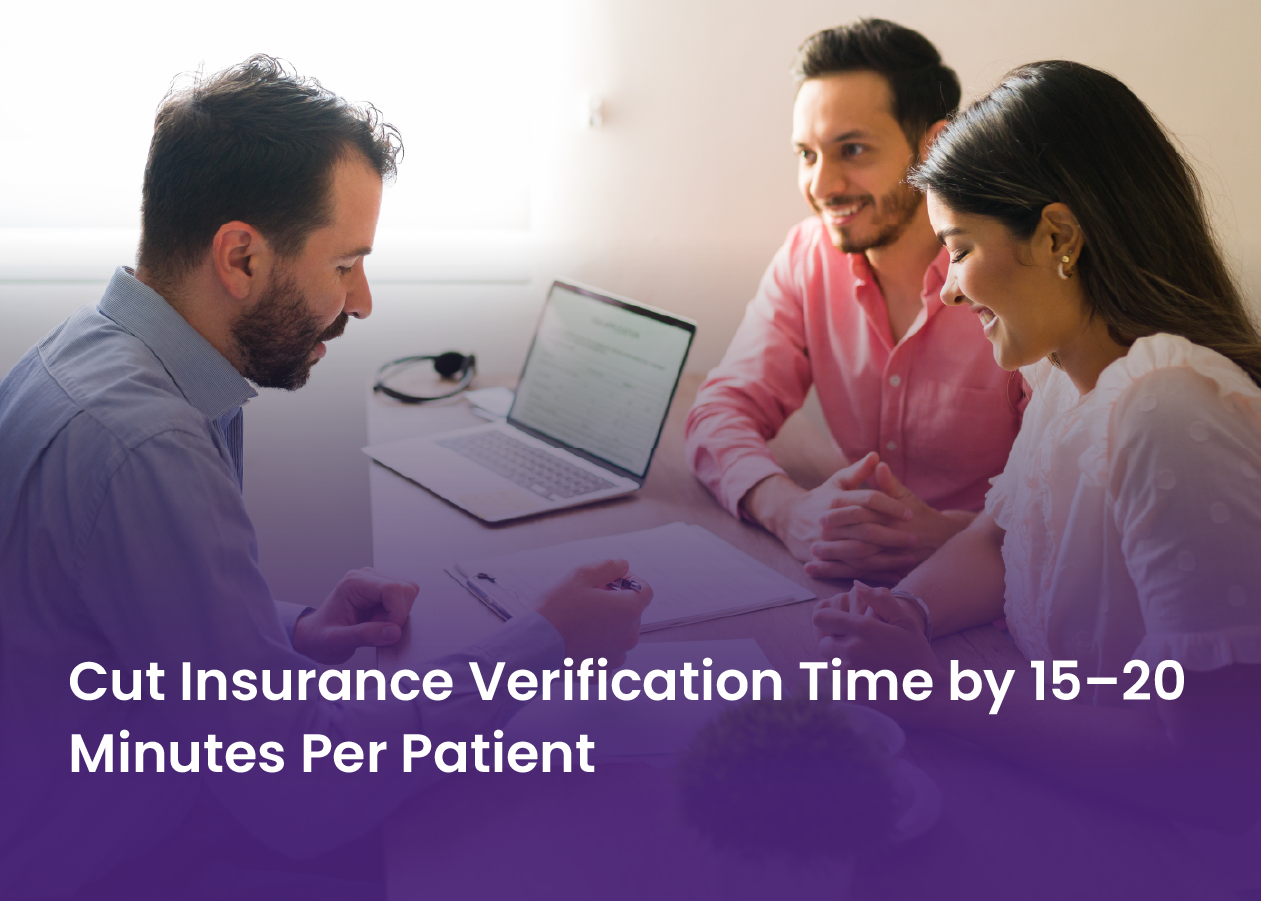
- 15-20 minutes saved per eligibility verification
- ~40% less administrative burden
- 60% fewer data-entry and verification errors
If you already have a clearinghouse, we build to the one you already use. We build in 2-4 week sprints, and once it’s live we keep it running, adjusting field mapping and fallback paths when a payer changes its responses or portal.
Where ConnectHealth Fits
If you’d rather not build the eligibility connection yourself, ConnectHealth, our integration platform, has it as a ready workflow step. ConnectHealth’s eligibility node runs X12 270/271 checks on Stedi’s network, its mapping engine converts X12 to and from JSON and FHIR, and the platform deploys into your own cloud environment, so patient data stays there. See the Stedi workflows on ConnectHealth and the ConnectHealth eligibility verification integration.
Building dental claims or eligibility into your product? Book a call with our integration team and bring your payer list.
What Switching Dental Clearinghouses Actually Involves
Switching is mostly paperwork that has to finish before your first claim goes out on the new route. The clearinghouse connection itself is the quick part. Here’s the order that keeps payments flowing:
- Export your payer list, by transaction. From the PMS, list every payer you billed in the last 12 months, and for each one, which transactions you use: eligibility, claims, attachments, claim status, ERA.
- Map each payer ID on the new clearinghouse. Payer IDs can differ between clearinghouses for the same payer. Update them in the PMS insurance plan records, or claims go nowhere.
- File EDI enrollment where the payer requires it. Some payers need enrollment before they’ll accept claims from a new submitter, and some need it for eligibility too.
- Re-enroll ERA. Electronic remittance is enrolled per payer and per provider, and the enrollment is tied to the route the 835 arrives on. On the directory in our payer count, Delta Dental of Virginia lists ERA as supported with “enrollment required”. Until it’s done, payments arrive as paper EOBs.
- Leave EFT where it is, or move it separately. EFT runs between the payer and your bank, not through the clearinghouse. Enroll payer by payer: CAQH’s EnrollHub, which once handled this for participating plans, has been unavailable since 1 February 2022.
- Pick a cutover date, and keep in-flight claims on the old route. Claims sent before cutover get their 277 and 835 back through the old clearinghouse. Keep that account open until they close.
- Test a small batch per payer. Send a handful of claims to each top payer and read the acknowledgments before you move the full volume.
- Write down what people know. Which payers need paper, which need a call before predetermination, who resubmits what. That know-how is the real switching cost, and it leaves with staff if it lives only in their heads.
How long it takes depends on enrollment, because each payer runs its own process and timeline. Aetna’s dental ERA and EFT agreement, for example, says paper EOBs stop within 31 days of EFT enrollment (Aetna). Start enrollment for your top payers several weeks before the cutover date, and expect the long tail of smaller payers to take longer.
The 2024 Change Healthcare outage is the case for doing steps 1-4 before you need them: practices that relied on it needed another route while services were down. A documented second route with ERA already enrolled turns an outage into a planned switch.
If you’re moving a dental group to a new clearinghouse, we help with enrollment and the cutover.
What Changes Next: HIPAA’s First Claims-Attachments Standard
For the first time, HIPAA has a standard for the X-rays, perio charts and narratives that travel with a dental claim. HHS proposed it on 21 December 2022 and published the claims attachments final rule (CMS-0053-F) on 24 March 2026 (Federal Register, 91 FR 14350). It took effect on 26 May 2026, and covered entities must comply by 26 May 2028 (CMS fact sheet).
What it adopts:
- X12 275 and 277, version 6020, for sending attachments and for the payer’s request for more information.
- HL7 C-CDA and the HL7 Attachments implementation guide for the clinical documents themselves.
- An electronic signature standard for attachment transactions.
The rule’s impact analysis projects $781.98 million a year in savings against $478.23 million in costs (Federal Register). For dental, it lands on a low base: dental plans handled 28% of attachments fully electronically in the 2025 CAQH Index, down from 37% in the 2024 edition. Two years is a short runway for a transaction that dental plans still mostly receive outside a fully electronic route.
What to ask your clearinghouse now: when it will support the HIPAA 275 for your top payers, how its current attachment service maps onto it, and whether your PMS can generate the documents in the required format. Software teams have the same question with more at stake: if your product sends attachments today, plan the 275 path into your 2027 roadmap.
Pick the Route Your PMS and Payers Already Support, Then Build Around It
Choosing the right dental clearinghouse starts with understanding your PMS capabilities, payer coverage, and supported transactions. A clearinghouse that works for one practice may not support the same workflows or payer connections for another.
Start by pulling your top 20 payers from your PMS. Ask your clearinghouse to confirm in writing which transactions it supports for each payer, including eligibility, claims, attachments, claim status, and ERA. Also confirm when it plans to support HIPAA 275.
Next, document a fallback route in case your primary clearinghouse becomes unavailable. Whether you use a second clearinghouse or payer portals, make sure you understand the available connections and have the necessary ERA enrollment in place.
These two steps are worth completing this quarter. Reviewing payer coverage and preparing a backup route can take an afternoon, but addressing these gaps during an outage is far more difficult.