BLOGS
BLOGS  NEWSROOM
  CASE STUDIES
  WEBINARS
  PODCASTS
  ASSET HUB
  EVENT CALENDAR























II. The Benefits and Limits of Epic Cupid
Epic Cupid remains a solid choice for hospitals aiming to centralize their cardiology workflows within the Epic EHR. It brings a level of structure and consistency that’s hard to replicate in standalone cardiology systems. Working within the broader Epic ecosystem, it simplifies data sharing across inpatient and outpatient encounters, reducing the need for disconnected tools.
In our work with hospitals, we’ve seen how Epic can be extended to achieve even more. One organization integrated Epic with a financial coordination platform to reduce repetitive data entry. By utilizing HL7 triggers and FHIR APIs, the hospital reduced manual data entry by 90% and expedited financial eligibility processes. In another engagement, we helped automate transport service requests within Epic, reducing request times by over 70% and boosting workflow efficiency by 40%.
While Epic Cupid provides a strong foundation, examples like these demonstrate how custom development can unlock additional value; particularly when hospitals seek to simplify operations and reduce friction in care delivery.
Why providers choose Epic Cupid:
- It’s built into Epic, which means that all cardiac documentation is stored within the same patient chart.
- Templated reporting supports consistency and improves compliance.
- Cupid helps simplify diagnostic workflows for common studies, such as ECGs and echocardiograms.
- Administrators benefit from consolidated reporting through Epic’s analytics layer.
However, even with these advantages, the limitations become apparent quickly when teams attempt to scale their workflows or tailor them to their specific environment.
Where it falls short in real-world use:
- The module is rigid when it comes to customizing forms or automating processes.
- It doesn’t offer out-of-the-box integrations with popular wearables or home-monitoring devices.
- Mobile functionality is limited, and offline access is almost nonexistent.
- Visualization tools are basic and not tailored for cardiac-specific metrics or timelines.
- Data often remains siloed within cardiology, making it hard for other specialties to get the full picture.
For many mid-sized hospitals, these gaps result in workarounds that increase friction across clinical and administrative teams. That’s why more providers are exploring custom development as a way to extend Epic Cupid’s reach without replacing their existing investment.
Related read: Epic EHR Integration Strategies: Best Practices & Tips
We Improved Predictive Accuracy in Childbirth with Advanced EHR Integration
III. 5 Gaps in Epic Cupid That Custom EHR Development Can Solve
While Epic Cupid lays the groundwork for structured cardiac documentation, many hospitals reach a point where the native features just don’t go far enough. Custom EHR development allows providers to solve very specific problems that arise in the day-to-day workflow of cardiac care without replacing the core EHR. Below are five common gaps hospitals experience when using Epic Cupid, along with examples of how custom tools can address them.
Related read – Headless EHR Comparison: Medplum vs Healthie vs OpenEMR vs Oystehr vs Canvas
A. Automating Rigid Cardiology Workflows
1. The issue:
Cardiology teams often deal with repetitive documentation tasks, filling out the same forms across patient visits, manually entering data from devices, or relying on alerts that don’t reflect real-time acuity. These manual processes can slow down throughput and introduce variability in care.
2. The fix:
Custom tools can speed up these workflows by auto-populating forms based on previous visits, setting up dynamic alerts that adjust based on patient risk levels, and applying clinical logic to help prioritize tasks. For instance, a hospital might develop a module that flags high-risk patients based on recent echo results and places them in a priority review queue.
As Michael Archuleta, CIO of Mount San Rafael Hospital, put it: “We have to create more automations, create more efficiencies… use technology as a tool. Don’t look at it as a cost center; look at it as a true strategic revenue contributor to the organization.” This perspective reflects a growing recognition that well-designed automation isn’t just about cutting time; it’s a driver of clinical and financial performance.
3. The benefit:
Clinicians save time, reduce errors, and focus more on care delivery than on redundant clicks. Automation also supports clinical consistency across teams, especially in high-volume cardiology settings.
B. Building Better Reporting and Dashboards
1. The issue:
While Epic provides standard reports, they often don’t meet the specific needs of cardiology teams. Providers want to visualize echo trends, patient volumes, and readmission risks in an actionable way, not just tabular.
2. The fix:
Custom dashboards can be developed to display cardiology-specific KPIs in real time. For example, a dashboard could display a timeline of key cardiac events, trends in ejection fraction (EF) over time, or comparative performance across cath labs. These can pull from structured data within Cupid but present it in a format tailored to the team’s goals.
3. The benefit:
Administrators and clinicians get faster access to relevant insights. This supports better decision-making, enables proactive patient management, and simplifies reporting for quality metrics and value-based care initiatives.
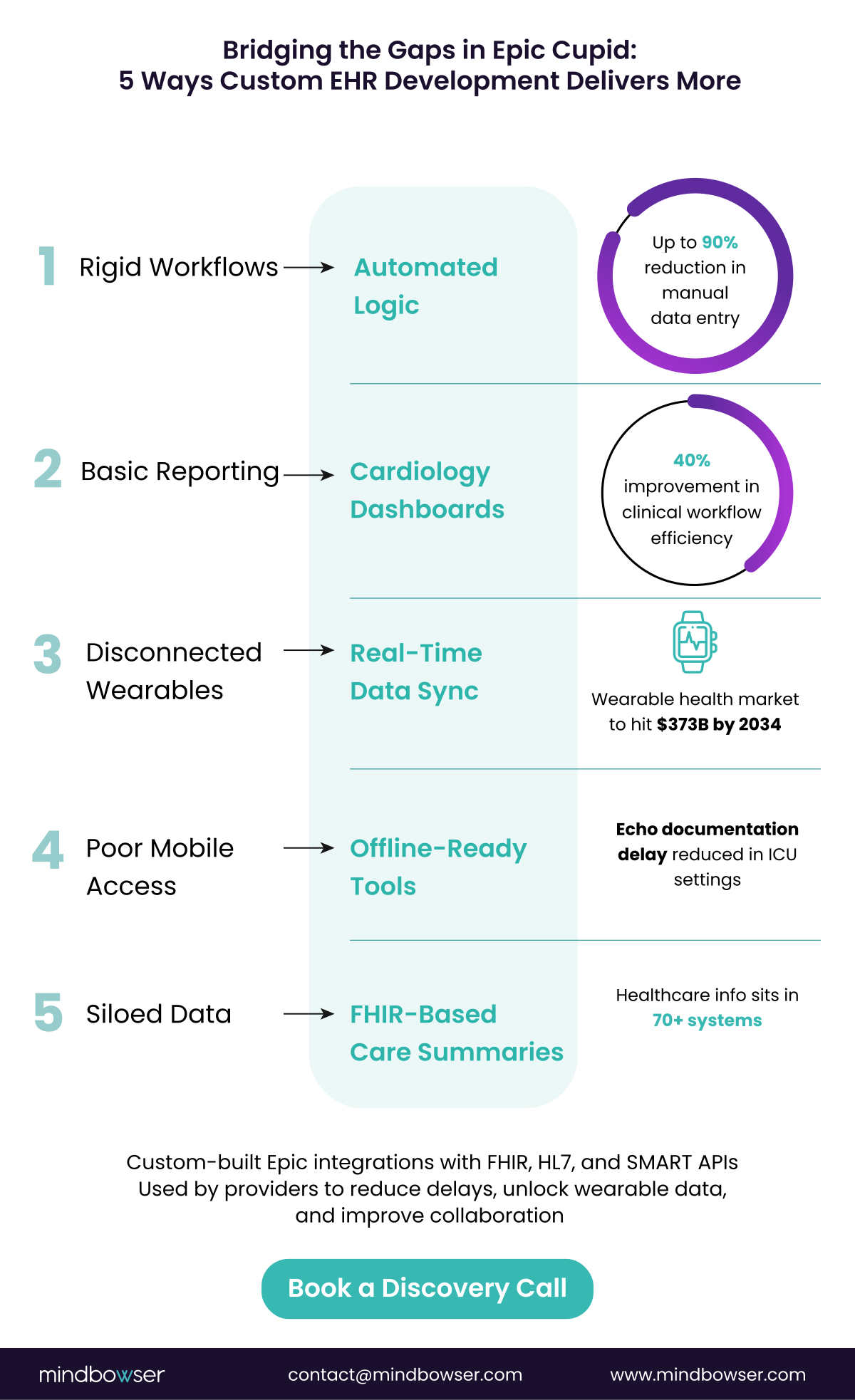
C. Connecting Wearables and Remote Monitoring Devices
1. The issue:
With an increasing number of patients using wearable monitors and at-home cardiac devices, the demand for real-time data integration has grown. Unfortunately, Epic Cupid does not natively support connections to consumer or third-party medical devices, such as Apple Watch, Dexcom, or Holter systems, without additional development.
2. The fix:
Custom APIs can bridge the gap by ingesting remote patient data through FHIR or HL7 interfaces. For example, a provider could develop a module that receives real-time heart rate and rhythm alerts from a wearable device and maps that data into the patient’s Epic chart in a format compatible with Cupid.
Healthcare data fragmentation remains a major barrier to care coordination. “Healthcare information is now sitting in 70 different locations… we leverage all those systems to create one unified experience,” explained Kristen Valdes, a founder and CEO of b.well Connected Health.
Building on that idea, integrating wearable data directly into Epic Cupid helps reduce information gaps and brings real-time insights into the cardiology workflow.
3. The benefit:
This integration transforms Epic Cupid into a real-time monitoring hub, enabling providers to identify deterioration earlier and intervene sooner, especially valuable in managing chronic cardiac conditions such as heart failure or arrhythmias.
Looking to Build a Custom EHR with Epic Integration Capabilities?
D.. Enabling Mobile and Offline Access
1. The issue:
Many cardiac assessments and imaging procedures happen away from fixed workstations at the bedside, in procedural suites, or during outreach care. Epic’s mobile experience is limited, and offline capabilities are virtually nonexistent. That means clinicians often take notes manually or wait until they return to a desktop to chart.
2. The fix:
Mobile-first apps built on top of Epic’s infrastructure can offer offline functionality and tailored forms for bedside data capture. For instance, an echo tech could use a custom mobile app to enter key measurements during an exam, then sync that data to Cupid once back online.
3. The benefit:
It eliminates delays in documentation, reduces the risk of lost data, and supports a more accurate and efficient workflow for nurses, technicians, and physicians working in fast-paced or low-connectivity environments.
E. Improving Collaboration with FHIR-Driven Patient Summaries
1. The issue:
Even within Epic, data from Cupid doesn’t always flow smoothly into the hands of non-cardiology teams. Surgeons, anesthesiologists, and primary care providers often struggle to extract the cardiac insights they need; leading to gaps in care coordination or duplicated tests.
2. The fix:
Custom-built SMART on FHIR apps can generate dynamic, real-time patient summaries that pull in relevant cardiology data in an easy-to-read format. These tools can be embedded into the provider’s workflow, displaying key cardiac insights without requiring the user to click through multiple Epic modules.
3. The benefit:
Multispecialty teams get the information they need without friction. Whether it’s a pre-op clearance or post-discharge follow-up, everyone is working from the same, up-to-date cardiac profile.
Custom EHR development doesn’t mean overhauling Epic; it means building smart extensions that make it work better for your team, your workflows, and your patients. For many hospitals, these targeted solutions are what transform Epic Cupid from a basic cardiology tool into a high-performing clinical asset.
Building a Custom Platform? Make It Epic-Ready from Day One
IV. Real-World Example: What Customization Looks Like
Custom development isn’t theoretical; it’s already happening in hospitals that want to get more from Epic Cupid without switching systems. These enhancements are designed to address real problems in real environments, with a measurable impact.
One mid-sized hospital facing workflow delays in cardiac imaging decided to build a custom dashboard. The goal was straightforward: to enable cardiologists to view echo results and historical cardiac events simultaneously. The internal team partnered with a development firm to integrate this view directly into their existing Epic workflow. Within weeks of rollout, report review time dropped by nearly 40%. Providers reported faster handoffs, fewer delays in care decisions, and improved communication during rounds.
At another organization, echo technicians had long struggled with documenting results in areas with poor Wi-Fi, including older ICU wings and mobile imaging units. The hospital invested in a lightweight mobile module that let techs capture findings at the point of care; even without a network connection. The data automatically synced to Epic Cupid once back online. Not only did this reduce lost or delayed documentation, but it also improved time-to-diagnosis in critical care scenarios.
These kinds of tools don’t replace Epic Cupid. They simply help it do more of what your team needs; on your terms.
V. How Mindbowser Can Help?
For hospitals seeking to enhance the capabilities of Epic Cupid without disrupting existing systems, Mindbowser provides the technical expertise and healthcare context necessary to deliver rapid, compliant, and impactful solutions.
We’ve worked with hospital systems and digital health platforms to build custom modules that integrate directly with Epic Cupid. Whether it’s connecting with wearable devices, building real-time dashboards, or enabling mobile documentation, our team understands how to work within Epic’s interoperability framework, including FHIR, HL7, and SMART on FHIR standards.
One of the ways we accelerate development is through ConnectHealth — our healthcare integration platform with pre-built connectors to Epic, Cerner, athenahealth, and more than 20 other EHRs, deployable inside your own AWS VPC. It helps hospitals reduce build time, lower integration costs, and maintain compliance while launching tools that reflect how cardiac care teams actually work.
From concept to deployment, we focus on solutions that simplify clinical workflows, reduce administrative overhead, and improve data accessibility, all while aligning with your EHR infrastructure.
Conclusion
Epic Cupid provides a solid foundation for managing cardiology workflows, particularly when hospitals are already utilizing Epic for enterprise-wide records. But in many cases, it stops short of what cardiac teams need to work efficiently, document accurately, and collaborate across specialties.
That’s where custom EHR development becomes a strategic investment, not a replacement, but a way to close the functional gaps in your current system. Whether it’s automating repetitive workflows, connecting wearable data, or enabling offline access in critical areas, custom tools help Epic Cupid work more effectively towards your clinical and operational goals.
If your hospital is feeling the strain of rigid workflows, siloed data, or manual processes in cardiology care, now is the time to explore what’s possible with targeted, secure EHR extensions. You don’t need to start from scratch; you just need to make your EHR smarter.