BLOGS
BLOGS  NEWSROOM
  CASE STUDIES
  WEBINARS
  PODCASTS
  ASSET HUB
  EVENT CALENDAR





















TL;DR
- Most CCM platforms sit next to the EHR instead of inside it, causing duplicated work and data drift for coordinators already buried in documentation.
- “EHR-native” means care plans write directly into the chart as FHIR CarePlan resources, time-logging happens in-workflow, and billing pulls from the live chart not a bolted-on integration.
- Skipping this causes real risk: reconstructed time logs (OIG audit flag), stale care plans, and billing decisions made on incomplete data.
- Buyer checklist: does it write to FHIR CarePlan, avoid a second login for time tracking, and can they demo it on your actual EHR Mindbowser builds native Epic/Cerner/athenahealth CCM apps to that standard.
The Integration Gap Nobody Names Directly
A hospital rolls out a CCM program. The software works. Care coordinators log time, generate claims, and the revenue shows up. Eighteen months later, nurse turnover on the care management team is high, documentation quality is inconsistent, and an internal audit finds gaps nobody can explain.
The root cause, most of the time, isn’t the CCM software failing at what it’s supposed to do. It’s that the CCM platform lives next to the EHR instead of inside it, and every context switch between the two systems is a place work gets duplicated, data drifts out of sync, and a tired coordinator skips a step. This isn’t a hunch: a study of 307 primary care physicians across Massachusetts General Hospital and Brigham and Women’s Hospital found physicians spend roughly 36.2 minutes documenting in the EHR for every 30-minute scheduled visit, more time on the record than in the actual visit. Documentation burden is a well-studied driver of clinical burnout. A CCM workflow that adds a second, disconnected system on top of that existing burden is adding friction to a problem that’s already measured and real, not a theoretical concern.
What “EHR-Native” Actually Means, Concretely
Epic has SmartForms and Flowsheets. Cerner (Oracle Health) has PowerForms and CareCompass. athenahealth has structured task queues built around its own encounter model. Each of these is a real, specific data surface, not an interchangeable API endpoint. A CCM workflow that’s genuinely EHR-native means the care plan is a FHIR CarePlan resource written directly into the patient’s chart, not a separate record in a different database that gets manually cross-referenced. It means the minute-logging happens inside the same screen a coordinator is already using to review the chart, not in a second application they have to alt-tab into. It means a billing code recommendation populates from the clinical documentation that’s already there, not from a reconciliation step run days later against a separate log.
The difference between “we integrate with Epic” and “we’re built inside Epic’s actual surfaces” is the difference between a lightweight API pull that shows chart data on a separate screen, and a workflow that reads and writes FHIR CarePlan, Encounter, and Task resources as a native part of how a care coordinator already works.
Why This Is Genuinely Hard to Build Well
Building to a specific EHR’s real data model, rather than a generic “any EHR” abstraction, takes real engineering investment per EHR. Epic’s developer program, formerly branded App Orchard, is now Epic Vendor Services, with approved apps listed publicly on Epic Showroom, and it involves a real technical review of how an application handles clinical data before it’s cleared to launch inside the EHR. Cerner and athenahealth each have their own equivalent review processes and platform quirks. This is exactly why most commercial CCM vendors build a lowest-common-denominator integration layer instead: a thinner, faster-to-ship abstraction that technically connects to many EHRs but integrates deeply with none of them.
The trade-off is real and worth naming plainly. Building EHR-specific depth costs more time and engineering effort upfront. The payoff is a workflow that a care coordinator can actually use without fighting it every shift, and a documentation trail an auditor can follow without gaps introduced by manual cross-referencing between two systems.
What Breaks Without It
Three specific failure patterns show up repeatedly in CCM programs running on non-native platforms:
Time logs drift from what actually happened: When logging time requires switching applications, coordinators batch their entries at the end of a shift instead of logging in real time. Batched, reconstructed time logs are exactly what an OIG audit is designed to catch.
Care plans go stale between systems: A care plan updated in the CCM tool doesn’t automatically reflect in the EHR chart a physician is looking at during the next visit, and vice versa. The patient ends up with two versions of “current” that don’t agree.
Billing codes get selected on incomplete information: A billing recommendation generated from a separate CCM system, without direct visibility into the full clinical picture in the EHR, is more likely to under-code (missing a complexity add-on) or over-code (missing a concurrency conflict with another program) than one generated from the actual chart.
Coordinators absorb the integration gap personally: When two systems don’t talk to each other, someone has to manually reconcile them, and that someone is almost always the care coordinator, not an IT team. That reconciliation work doesn’t show up in any staffing model or productivity metric. It just quietly consumes the hours a coordinator would otherwise spend on actual patient outreach, on top of the documentation burden the EHR itself already creates.
Talk to the team that built this inside Epic, Cerner, and athenahealth
The Technical Shape of a Real Integration
A genuinely EHR-native CCM workflow maps to a small, specific set of FHIR resources, not a generic data pull. The care plan lives as a FHIR CarePlan resource with linked Goal and Condition resources reflecting the patient’s actual chronic conditions. Coordination activities log as FHIR Task resources, timestamped and attributed to a specific staff member, the same structure an auditor would look for. Encounter resources capture the initiating visit that has to precede CCM billing. When these four resource types read and write natively into the EHR instead of syncing to a separate CCM database, the “two systems drifting apart” problem described above structurally cannot happen, because there’s only one system of record.
What This Requires From a Buyer’s Perspective
If you’re evaluating whether a CCM platform is genuinely EHR-native or just EHR-adjacent, ask three concrete questions: Does the care plan write directly to a FHIR CarePlan resource in your EHR, or does it live in a separate database that needs reconciling? Does time-logging happen inside your existing clinical workflow screens, or does it require a separate login? Can the vendor show a real, working integration built to your specific EHR’s actual data surfaces today, not a generic product tour or a marketing claim of “works with Epic”?
Vendors that can’t answer these concretely are usually building the thinner abstraction layer described above, which may still be the right choice for a lower-complexity program, but is worth knowing going in rather than discovering eighteen months later.
How Mindbowser Approaches This
We build CCM platforms as native Epic, Cerner, and athenahealth applications, not integrations bolted onto a separate CCM tool. Care plans read and write as FHIR CarePlan resources inside the patient’s actual chart. Time logging happens inside the same clinical workflow screens a coordinator already uses. Billing code recommendations generate from the full clinical picture in the EHR, not a reconciled export.
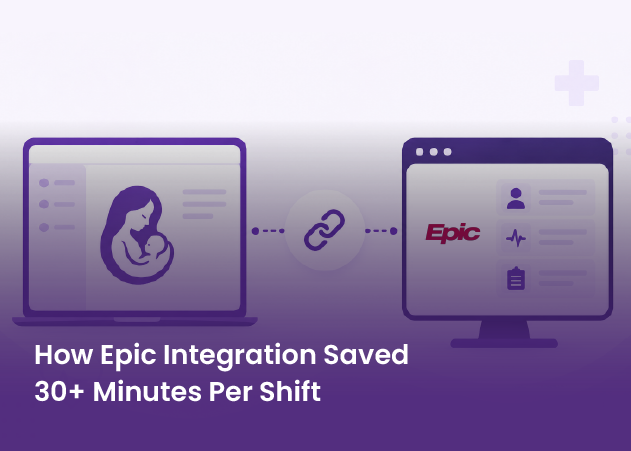
CarePlan AI generates and updates these FHIR-native care plans directly from clinical documentation, reducing the manual template work that typically introduces the two-systems-drift problem described above. A custom pediatric CCM build we delivered runs this way across multiple locations inside Epic, with care continuity maintained through the native integration rather than a nightly data sync.
Where This Actually Gets Decided
The gap between “works with Epic” and actually being Epic-native isn’t a technicality, it’s where CCM programs lose audit-readiness, billing accuracy, and coordinator time, one reconciliation at a time. A platform that writes care plans as FHIR CarePlan resources, logs time in-workflow, and pulls billing from the live chart doesn’t just integrate better, it removes the two-systems-drift problem structurally instead of managing around it. If your current platform can’t answer the three buyer questions above concretely, that’s worth knowing now rather than eighteen months in.
It means the CCM workflow reads and writes directly to the EHR’s own data structures (FHIR CarePlan, Encounter, Task resources; Epic SmartForms/Flowsheets; Cerner PowerForms) rather than maintaining a separate database that gets manually reconciled with the EHR.
Deep, EHR-specific integration requires real engineering investment per EHR, including Epic’s Vendor Services review process, Cerner’s platform requirements, and athenahealth’s own developer program. Many vendors build a thinner, generic integration layer instead, because it’s faster to ship across many EHRs, even though it integrates deeply with none of them.
Ask whether the care plan writes to a FHIR CarePlan resource in your EHR, whether time-logging happens inside your existing clinical workflow, and ask to see a working demo against your specific EHR’s actual data surfaces, not a generic product tour.
It matters most where staff time and audit risk are the binding constraints, which scales with patient volume and program complexity rather than organization size specifically. A smaller practice with a straightforward, single-EHR setup may do fine on a lighter integration; a multi-location or multi-EHR organization feels the gap much faster.