












 BLOGS
BLOGS  NEWSROOM
  CASE STUDIES
  WEBINARS
  PODCASTS
  ASSET HUB
  EVENT CALENDAR
























TL;DR
- Epic Prelude manages patient registration by capturing accurate demographics, insurance, and guarantor details.
- It improves scheduling efficiency through appointment slot optimization, reminders, and waitlist tools.
- Seamless integration with other Epic modules such as Resolute, MyChart, and Care Everywhere, enhances interoperability and data accuracy.
- Combined with Epic Cadence, it creates a full registration-to-scheduling workflow that reduces errors, improves patient flow, and strengthens revenue cycle outcomes.
Patient registration and scheduling are often the first points of contact during a hospital or clinic visit. Errors here can ripple through the entire patient journey, affecting care delivery, billing, and patient satisfaction. Epic Prelude, one of Epic’s core modules, addresses these challenges by standardizing registration processes, validating insurance in real time, and preparing accurate data for downstream systems.
More than just a registration tool, Epic Prelude supports healthcare providers in reducing administrative burden, improving check-in efficiency, and enabling patients to experience a smoother front-desk process. When used in conjunction with Epic’s scheduling and billing modules, it helps organizations maintain cleaner records, reduce wait times, and optimize operational performance.
I. What is Epic Prelude?
A. Overview of the Module and Its Primary Functions
Epic Prelude is Epic’s patient registration system. It manages the intake of demographic, insurance, and guarantor information while ensuring accuracy at every step. Hospitals and health systems use it to capture essential data before clinical or financial workflows begin. Validating coverage, identifying potential errors, and maintaining complete patient profiles sets the foundation for both care delivery and billing.
At its core, Prelude is designed to reduce administrative burden. Instead of fragmented registration processes across departments, it centralizes patient information into a single source of truth. Staff can quickly search, verify, and update details without toggling between systems. This helps prevent duplicate records, improves staff efficiency, and ensures clinicians have reliable information when treating patients.
B. How It Fits Within Epic’s Broader Suite of Applications
Epic Prelude is not a standalone tool. It is tightly integrated within the Epic ecosystem, sharing data with modules that support scheduling, clinical documentation, billing, and patient engagement. For example, information entered in Prelude flows directly to Epic Cadence for scheduling and to Epic Resolute for billing. This eliminates redundant data entry and lowers the risk of inconsistencies across systems.
Because Epic is designed as a unified electronic health record, Prelude plays a critical role in building interoperability within the platform. It ensures that the demographic and financial data collected during registration remain accurate as patients move through care encounters, scheduling, and billing. This alignment between modules enables providers to deliver coordinated, efficient care while maintaining financial operations on track.
Note: Prelude handles registration and eligibility, the clean data it captures flows into Epic Resolute for billing and claims. If you’re researching Epic’s billing module, start there.
II. Key Features of Epic Prelude for Registration
A. Centralized Patient Data Capture
One of the most important functions of Epic Prelude is its ability to centralize patient information. Registration staff can enter demographic details, such as name, address, date of birth, guarantor information, and insurance coverage, in one place. This creates a complete patient profile that flows throughout the Epic system, ensuring consistency across scheduling, billing, and clinical modules. Centralization reduces the need for repetitive data entry and lowers the chance of errors.
B. Real-Time Eligibility Checks
Insurance verification is often one of the biggest bottlenecks during registration. Prelude automates this process by running real-time eligibility checks with payers. Staff can confirm coverage, copays, and deductibles before services are rendered. This reduces claim denials, improves cash flow, and provides patients with a clear understanding of their financial responsibility from the start of care.
C. Duplicate Record Prevention
Duplicate medical records can pose significant challenges for providers, including incomplete histories and delayed care. Prelude uses advanced search and match functions to detect existing records before new ones are created. This reduces duplicate entries and ensures providers are always working with the most accurate version of a patient’s information. Clean records support safer clinical decisions and better financial outcomes.
D. Integration with Other Epic Modules
Prelude is built to work direct with the rest of the Epic ecosystem. Data captured during registration is directly integrated into scheduling modules, billing platforms, and patient engagement tools, eliminating the need for manual intervention. For example, once demographics and insurance details are verified in Prelude, they appear in Cadence for scheduling and in Resolute for billing. This integration keeps all stakeholders aligned, improves efficiency, and reduces administrative overhead.
Related read: Epic Modules for Mid-Sized Hospitals: Which Ones Matter Most?
III. How Epic Prelude Improves Scheduling Efficiency
A. Appointment Slot Management and Optimization
Epic Prelude works closely with scheduling functions to make sure appointment slots are used efficiently. Registration data is connected to provider calendars, allowing staff to quickly match patients with the right provider, location, and time. Prelude helps reduce double-booking and ensures that open slots are filled appropriately, thereby improving clinic throughput and minimizing lost revenue from unused time.
B. Automated Reminders for Patients and Staff
Missed appointments create operational and financial strain. Prelude addresses this with automated reminders that notify patients about upcoming visits. These reminders can be delivered by phone, text, or through Epic’s patient portal, MyChart. Staff also benefit from scheduling alerts that help them stay aware of high-priority appointments or patient instructions, reducing communication gaps and last-minute cancellations.
C. Resource Allocation for Rooms, Providers, and Equipment
Scheduling is not only about matching patients with providers. Many visits require the coordination of exam rooms, medical equipment, or support staff. Epic Prelude helps streamline this by linking registration details with resource scheduling. For example, if a patient requires imaging services, the system can automatically flag the need for the right equipment and time slot. This ensures resources are available when needed and prevents delays during care delivery.
D. Waitlist Management and Overbooking Safeguards
Cancellations and no-shows can leave costly gaps in the schedule. Prelude includes waitlist features that enable staff to move patients into earlier slots when openings become available. Overbooking safeguards are also built in, helping organizations strike a balance between access and efficiency without creating unnecessary bottlenecks. Together, these tools support higher patient throughput, more efficient use of staff time, and improved patient satisfaction.
IV. How Epic Prelude Works with Other Epic Modules
A. With Epic Resolute: Cleaner Billing and Claims Processing
Epic Prelude captures and validates demographic and insurance data at the point of registration. That information is then directly integrated into Epic Resolute, the billing and claims management module. Because eligibility is checked in real time and duplicates are prevented, the financial data sent to Resolute is clean and accurate. This reduces claim rejections, speeds up reimbursement, and strengthens revenue cycle outcomes.
B. With Epic MyChart: Patient Self-Service and Pre-Registration
Prelude integrates with Epic MyChart, giving patients the ability to update their demographic and insurance details before arriving for an appointment. Through MyChart, patients can pre-register, review guarantor information, and confirm insurance coverage. This reduces front-desk workload, shortens check-in times, and empowers patients to be more engaged in their own care journey.
C. With Epic Care Everywhere: Consistent Records Across Sites
Healthcare systems frequently require sharing patient data across various facilities or with external organizations. Prelude works with Epic Care Everywhere to maintain consistent records. This ensures that the demographic and financial data collected at one site is available at another, preventing duplicate registrations and improving coordination when patients receive care in multiple locations.
D. Benefits of Interoperability Across Modules
The value of Epic Prelude increases when it operates in sync with the broader Epic ecosystem. By feeding accurate data into scheduling, billing, and patient engagement modules, Prelude creates a seamless front-to-back workflow. This interoperability reduces duplication of effort, improves staff efficiency, and supports continuity of care across the patient journey. For patients, this translates into faster check-ins, fewer delays, and more consistent experiences across different touchpoints in the healthcare system.
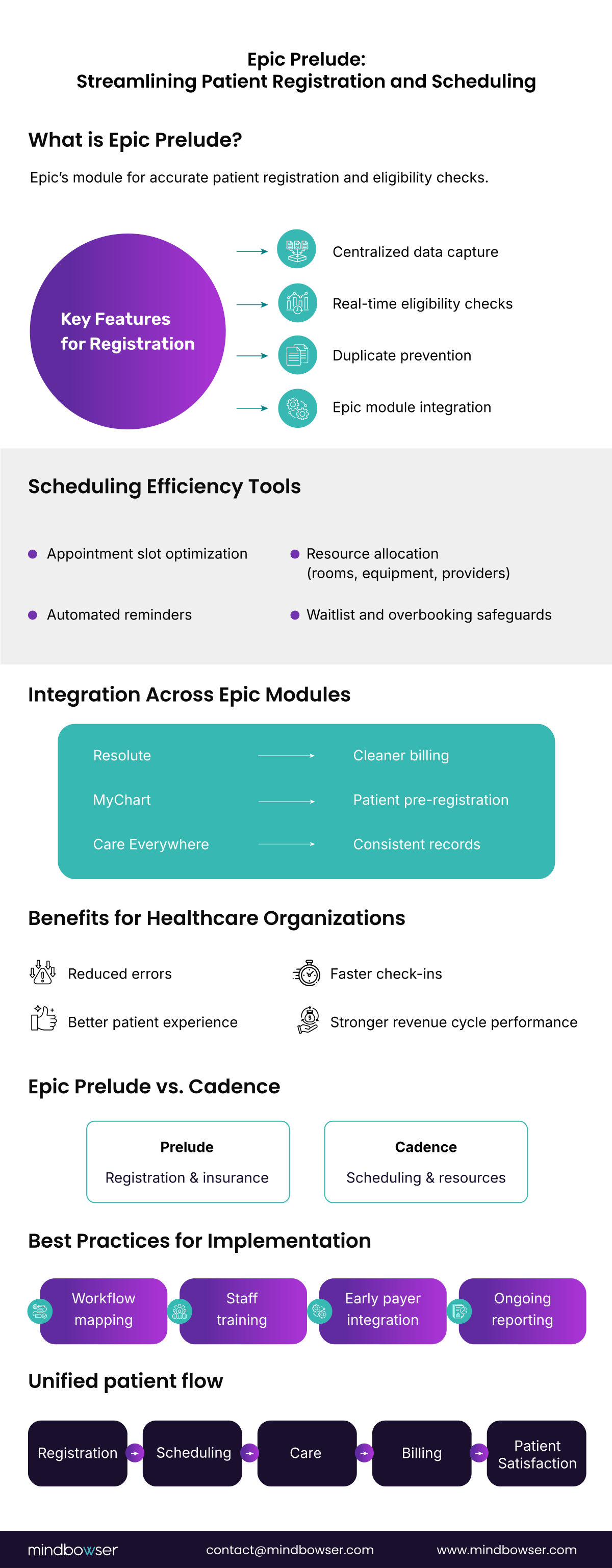
V. Benefits for Healthcare Organizations
A. Reduced Administrative Errors
Registration errors often lead to downstream problems, including claim denials, delayed treatments, and frustrated patients. Epic Prelude mitigates these issues by centralizing demographic and insurance data, as well as running real-time eligibility checks. This creates a more reliable foundation for both clinical and financial workflows.
B. Faster Patient Check-Ins and Shorter Wait Times
Hospitals and clinics frequently face bottlenecks at the front desk. Prelude helps reduce those delays by automating tasks that typically slow staff down, such as verifying insurance or searching for existing records. With fewer manual steps, patients can check in faster, and providers can keep schedules on track.
C. Improved Patient Experience and Provider Productivity
Patients notice the difference when check-ins are smooth and wait times are shorter. Staff benefit as well, since they spend less time troubleshooting errors and more time focusing on patient needs. This improves satisfaction on both sides while freeing providers to see more patients during the day.
D. Better Revenue Cycle Outcomes Through Clean Data
Revenue cycle management begins with accurate registration. When patient data is captured correctly, billing systems receive complete and verified information. Epic Prelude’s integration with Epic Resolute ensures claims are cleaner and denials are fewer. This directly improves cash flow, strengthens financial performance, and reduces administrative overhead linked to rework and appeals.
VI. Epic Prelude vs Cadence: Registration vs Scheduling
Epic Prelude and Epic Cadence both support patient access, but they manage different stages of the workflow.
A. Epic Prelude: Patient Registration
Epic Prelude manages patient registration and eligibility. It captures demographics, guarantor information, insurance details, consent data, and other information required before care begins.
Prelude typically fires first. Its role is to create an accurate patient record, verify coverage, reduce duplicate records, and prepare clean data for downstream scheduling and billing workflows.
B. Epic Cadence: Appointment Scheduling
Epic Cadence manages appointment scheduling. It supports provider calendars, appointment types, decision trees, wait lists, room availability, and resource scheduling.
After a patient is registered in Prelude, Cadence uses that patient record to schedule the appropriate provider, location, appointment type, and supporting resources.
C. Where Epic Resolute Fits
Epic Resolute manages billing, claims, denials, and remittance. It uses the demographic and insurance data captured in Prelude and the encounter information created through Cadence.
In practical terms:
Prelude: Patient registration — demographics, insurance, and eligibility. Fires first.
Cadence: Appointment scheduling — calendars, decision trees, resources, and wait lists.
Resolute: Billing — uses the encounter created through Cadence and the clean data captured in Prelude.
D. Example Patient Flow
Consider a patient scheduling a cardiology visit. Prelude captures the patient’s demographic and insurance information, verifies eligibility, and checks for an existing patient record. Cadence then schedules the patient with the appropriate cardiologist, reserves the required room or equipment, and manages appointment reminders.
After the visit, Resolute uses the registration and encounter data to support billing and claim submission.
Most confusion between Prelude and Cadence comes from front-desk staff performing registration and scheduling during the same session. However, they are separate Epic modules with separate configuration teams, workflows, and training tracks.
VII. Best Practices for Implementing Epic Prelude
A. Conduct Workflow Mapping Before Go-Live
Successful implementation starts with a clear understanding of current registration workflows. Hospitals and clinics should map out each step in the process, from initial patient contact to eligibility verification. This allows leaders to identify gaps, eliminate duplicate steps, and design the most efficient way to use Prelude before the system goes live.
B. Train Registration Staff on Search and Match Tools
Prelude’s ability to prevent duplicate records depends on how effectively staff use its search and match functions. Training should go beyond basic navigation and emphasize best practices for locating existing patient records. Proper training ensures that staff avoid creating unnecessary duplicates and maintain clean data across the system.
C. Integrate Insurance Verification Tools Early
Eligibility verification is one of the most valuable features of Prelude, but only if it is set up correctly from the start. Organizations should work closely with payers and IT teams to make sure electronic eligibility checks are active on day one. This reduces claim errors, prevents rework, and builds staff confidence in the new workflow.
D. Use Reporting to Monitor Registration Accuracy
Once the system is live, leadership teams should monitor performance through reporting. Epic Prelude includes tools to track errors, duplicate entries, and eligibility rejections. Regular audits and dashboards help identify training needs, highlight process gaps, and ensure that registration continues to support both clinical care and revenue cycle goals.
Extending Epic Prelude. To surface registration and eligibility data in your own intake app or front-desk workflow, you integrate via Epic’s APIs — ConnectHealth’s pre-built Epic connector + Helix AI does that in days, not a multi-month custom build.
Conclusion
Accurate registration and efficient scheduling are cornerstones of patient access. Epic Prelude reinforces this foundation by capturing comprehensive demographic and insurance data, preventing duplicate records, and validating eligibility prior to care initiation. When paired with Epic Cadence, organizations gain a seamless workflow that connects clean registration data with effective scheduling, helping providers deliver care without administrative delays.
The benefits extend beyond patient check-ins. Prelude supports faster front-desk operations, improves staff productivity, reduces claim denials, and enhances the overall patient experience. Its integration with other Epic modules, such as Resolute, MyChart, and Care Everywhere, makes it a vital component of the larger Epic ecosystem.
For hospitals and clinics focused on reducing administrative burden and strengthening revenue cycle outcomes, implementing Epic Prelude with best practices creates a streamlined, unified approach to patient access and scheduling.
Epic Prelude is Epic’s patient registration module. It captures demographics, guarantor information, and insurance details while running real-time eligibility checks. It reduces registration errors, prevents duplicate records, and ensures clean data flows into billing, scheduling, and clinical systems.
While Epic Cadence is the primary scheduling tool, Epic Prelude supports scheduling by providing accurate patient and insurance data at the start of the process. This enables staff to assign appointments with confidence, verify coverage, and prevent delays caused by missing or incorrect information.
Epic Prelude works seamlessly with other Epic systems. It passes verified data into Resolute for billing and claims, connects with MyChart to allow patient pre-registration, and syncs with Care Everywhere to maintain consistent records across multiple sites. This interoperability reduces duplication and improves patient care coordination.
Prelude handles registration: who the patient is, their insurance, and their consent information. Cadence handles scheduling, including appointments, calendars, and wait lists. Prelude fires first because a patient must be registered before Cadence can schedule them. Both feed downstream billing workflows in Resolute.
No. Prelude handles registration and eligibility verification. Epic Resolute is the billing module it processes claims, manages denials, and handles remittance. Prelude supplies Resolute with clean patient and insurance data to reduce downstream claim rejections.
Prelude connects with payers and clearinghouses through X12 270/271 transactions to perform real-time eligibility checks during registration. It can flag coverage gaps, confirm deductibles and copays, and surface prior-authorization requirements before the encounter.