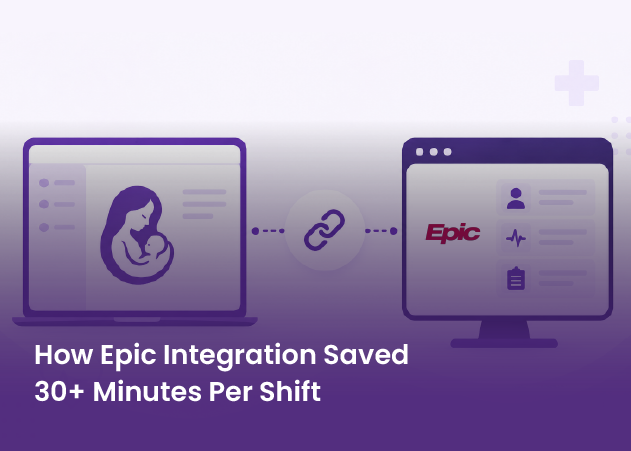
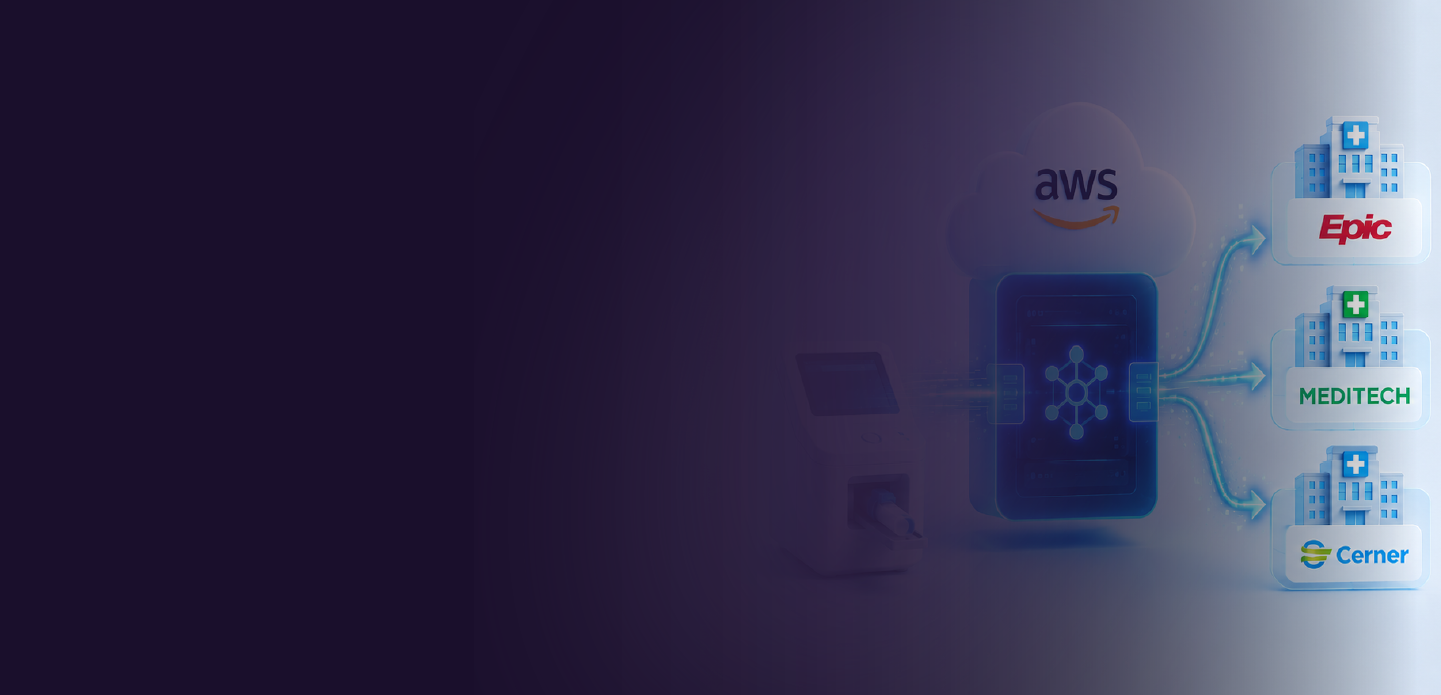
A medical device company selling a cellular-enabled diagnostic patch was onboarding a new hospital roughly every week, but none of them were connected: orders were re-keyed by hand, and results came back outside the patient chart. We built an HL7 v2 integration layer on AWS that connects the device to Epic, Meditech, and Cerner, so orders and results move automatically and the next hospital is a configuration exercise, not a rebuild.
Get in TouchA medical device company selling a cellular-enabled diagnostic patch for at-home sleep monitoring, sold into hospital systems, sleep labs, specialty clinics, and primary care practices.
An HL7 v2 integration layer connecting hospital EHR order and result flow into the client's platform, built for Epic, Meditech, and Cerner.
Node.js, AWS, HL7 v2 over MLLP/TCP, REST API
Live in production, onboarding new hospitals on a repeatable configuration pattern.
The device solved connectivity in the field: it collects data at the patient's home and sends it back over its own cellular radio, no pairing, no app, no clinic gateway required. It stopped one system short at the hospital. A physician ordering a study entered it once in the EHR and again in the device's own system, and a completed result did not land in the chart automatically. That was survivable with two hospital customers. It does not survive onboarding a new one every week.
Hospital connectivity ran through a third-party middleware product, so someone else owned the workflow that mattered most to the client's customers.
Every hospital integration means a separate IT department, security review, and network configuration, and the client had one technical decision-maker carrying all of it.
Epic, Meditech, and Cerner each format HL7 differently, and individual hospitals vary inside those systems, so a connection built for hospital one doesn't clone to hospital two.
Node.js, HL7 v2 (ORM^O01, MDM^T02) over MLLP/TCP, REST API, and AWS networking that isolates every hospital connection.
Orders placed in the hospital EHR arrive as HL7 ORM^O01 messages and create the study directly in the client's system, removing manual re-entry. When the study completes, the result returns to the EHR as an MDM^T02 document message carrying the PDF, landing where the clinician already works. Every message in and out is parsed, validated, and logged, and a test simulator exercises the full order-to-result path before any hospital traffic touches the system.
One interface serves Epic, Meditech, and Cerner, absorbing formatting differences between vendors and between hospitals on the same vendor. Each hospital connects over its own site-to-site VPN, routed through an AWS Transit Gateway, terminating at a dedicated network load balancer for that hospital, so onboarding the next one is a configuration exercise against an existing pattern rather than a rebuild. The interface hands off through a REST API, so changes to the product backend don't ripple into live hospital connections.
Talk to us about what a repeatable HL7 integration looks like for your product.
Partner with us to design, build, and scale digital solutions that drive better outcomes.
Global Tech Teams LLC, 525 Washington Blvd, Industrious at Newport Tower, Jersey City, NJ 07310, United States.
Let’s discuss your goals, workflows, and next steps in a focused consultation call.
 Schedule a Call















 BLOGS
BLOGS  NEWSROOM
  CASE STUDIES
  WEBINARS
  PODCASTS
  ASSET HUB
  EVENT CALENDAR