













 BLOGS
BLOGS  NEWSROOM
  CASE STUDIES
  WEBINARS
  PODCASTS
  ASSET HUB
  EVENT CALENDAR






















➡️ Importance of Interoperability in Electronic Prescription Systems
Let’s explore how interoperability in electronic prescription systems streamlines workflows, reduces errors, and improves patient care:
🔹 Improved Patient Care
Interoperability in electronic prescription systems plays an important role in improving patient outcomes. Enabling real-time data sharing among healthcare providers, pharmacies, and payers ensures that accurate and up-to-date information is accessible at every step of the medication process. This reduces errors and delays, allowing patients to receive their prescribed medications without unnecessary disruptions.
🔹 Streamlined Workflows
Integrating electronic prescription systems with EHRs, billing platforms, and pharmacy databases helps simplify day-to-day operations. Healthcare providers and pharmacists can save valuable time as data flows smoothly across systems, eliminating the need for redundant tasks or manual updates. This efficiency allows more focus on patient care and service delivery.
🔹 Regulatory Compliance
Interoperability also supports compliance with essential regulations such as FHIR standards and e-prescribing laws. By ensuring systems communicate effectively, organizations can meet legal requirements while maintaining the accuracy and security of patient data. This alignment with mandates safeguards healthcare providers and patients in an increasingly digital healthcare environment.
Related Read: FHIR Adoption in Healthcare
🔹 Reduction in Errors and Delays
Errors in medication dispensing can have serious consequences. Interoperable electronic prescription systems minimize these risks by ensuring accurate transmission of prescription details between providers and pharmacies. It helps to eliminate delays, allowing patients to obtain their drugs without waiting.
🔹 Real-Time Data Sharing
Interoperability ensures that critical data flows smoothly across various systems. Real-time sharing of prescription and patient information eliminates miscommunication and helps coordinate efforts among healthcare teams, ensuring that everyone involved has access to the same information.
➡️ Benefits of Electronic Prescription Systems in Healthcare
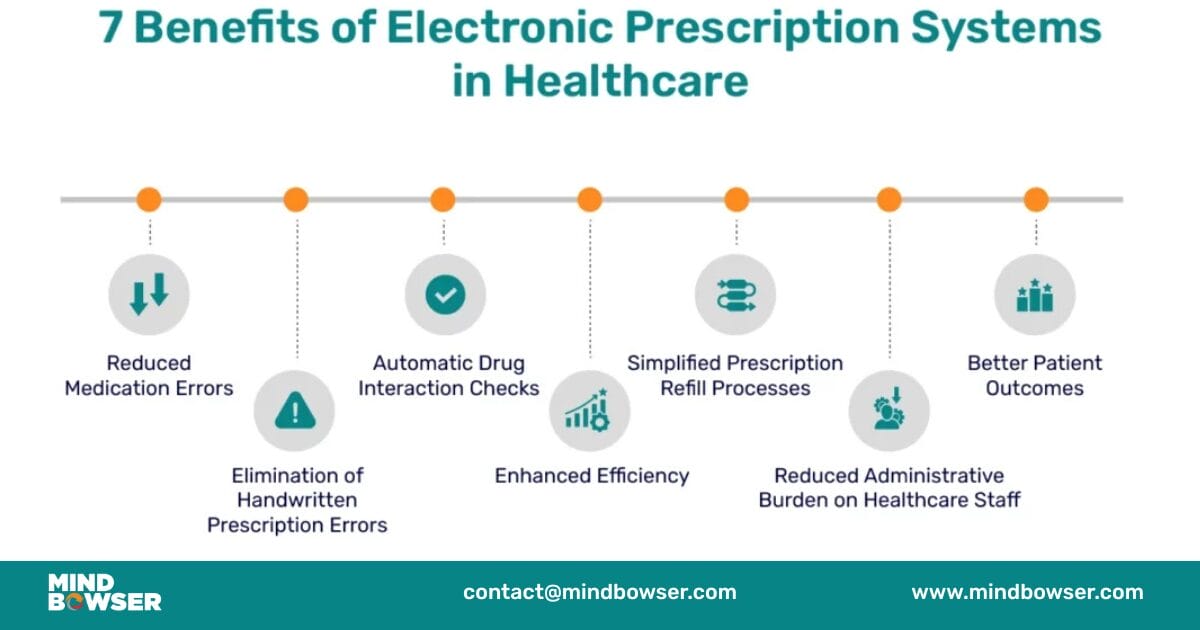
🔹 Reduced Medication Errors
Electronic prescription systems significantly reduce medication errors by digitizing prescriptions and ensuring accuracy in drug names, dosages, and instructions. By eliminating the ambiguity often associated with handwritten prescriptions, these systems help prevent misunderstandings and incorrect dispensation, improving patient safety.
🔹 Elimination of Handwritten Prescription Errors
The shift from handwritten to electronic prescription systems removes the risk of misinterpreting illegible handwriting. Pharmacists receive clear, standardized information, reducing delays and errors in medication preparation and delivery.
🔹 Automatic Drug Interaction Checks
Electronic prescription systems include automated checks for potential drug interactions or contraindications. These alerts help healthcare providers avoid prescribing medications that could cause adverse reactions, ensuring safer treatment plans for patients.
🔹 Enhanced Efficiency
Digital prescriptions simplify the process by reducing paperwork and streamlining communication between providers and pharmacies. This efficiency allows healthcare staff to focus more on patient care than administrative tasks.
🔹 Simplified Prescription Refill Processes
Electronic prescription systems make it easy to manage prescription refills by automating the approval process. Patients can request refills with minimal delays, ensuring continuity in their treatment plans.
🔹 Reduced Administrative Burden on Healthcare Staff
With less time spent on manual data entry and resolving prescription issues, administrative teams experience fewer interruptions. This efficiency leads to smoother operations and a better experience for staff and patients.
🔹 Better Patient Outcomes
By incorporating automated reminders and alerts for medications, electronic prescription systems help patients stay on track with their prescribed treatment plans. This adherence leads to improved health outcomes and reduces the likelihood of complications caused by missed doses.
➡️ Challenges in Achieving Interoperability in Electronic Prescription Systems
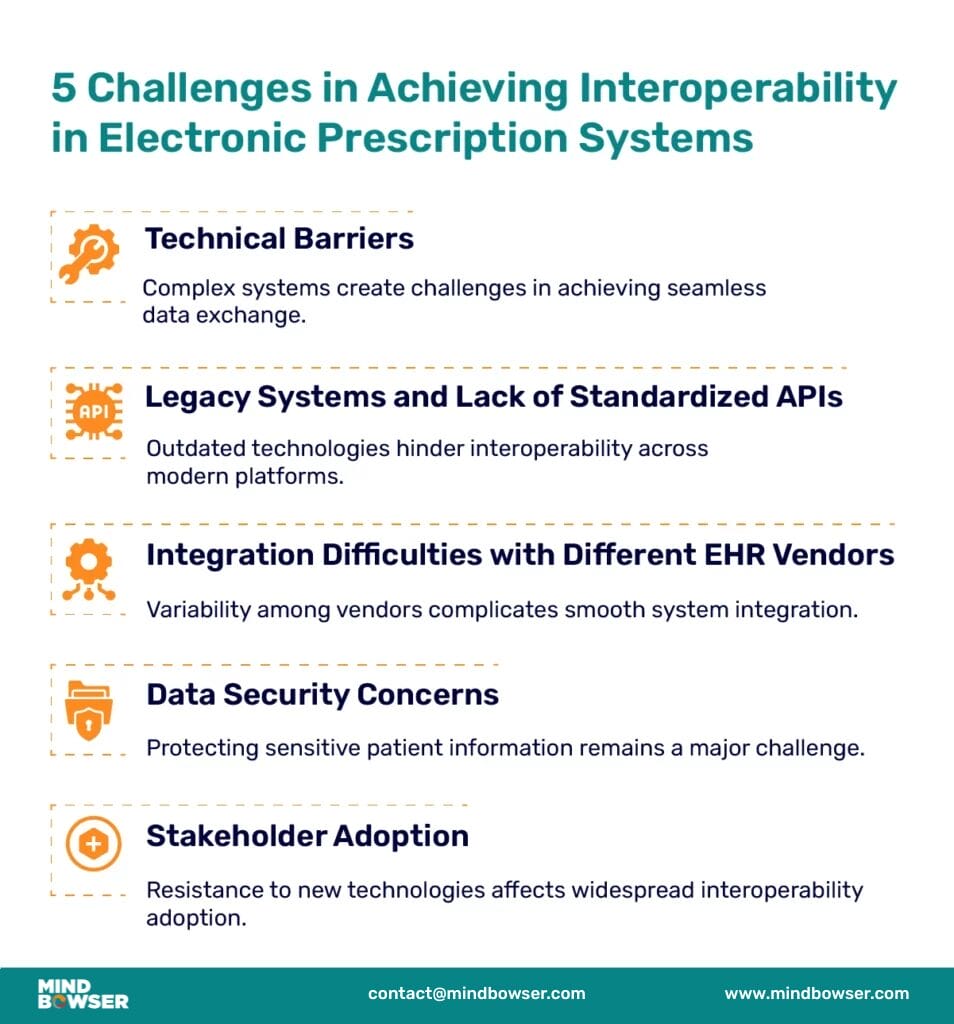
🔹 Technical Barriers
Interoperability often faces technical hurdles, especially when connecting systems with different architectures. Many electronic prescription systems rely on legacy technologies that lack the flexibility to integrate smoothly with modern platforms. Additionally, the absence of standardized APIs makes communication between systems inconsistent and prone to errors, creating a data exchange issue. Overcoming these barriers requires strategic system updates and adherence to emerging interoperability standards.
Related Read: The Interoperability Challenge in Healthcare
🔹 Legacy Systems and Lack of Standardized APIs
Legacy systems remain a significant obstacle in achieving interoperability for electronic prescription systems. These older platforms often lack the modern features and scalability required for smooth integrations. Without standardized APIs, even basic tasks like exchanging patient data between systems can become complicated and unreliable. Addressing this challenge involves updating infrastructure while promoting universal standards that allow seamless connections between disparate technologies.
🔹 Integration Difficulties with Different EHR Vendors
Each EHR vendor has it’s integration protocols, making standardizing e-prescription workflows a daunting task. These differences can lead to compatibility issues, delays, and extra costs during implementation. Additionally, aligning functionalities like medication lists or patient records across platforms demands significant time and effort. Collaboration between vendors and stakeholders can reduce these integration challenges and build cohesive systems.
🔹 Data Security Concerns
Maintaining data security is a top priority in electronic prescription systems, particularly when handling sensitive patient information. Striking a balance between facilitating data exchange and ensuring compliance with regulations like HIPAA is challenging. Risks of data breaches, unauthorized access, or misuse of prescriptions highlight the need for robust encryption, secure communication protocols, and continuous monitoring to protect information.
🔹 Stakeholder Adoption
Adopting interoperable electronic prescription systems requires buy-in from healthcare providers, pharmacies, and payers. Many stakeholders hesitate due to concerns about high initial costs, workflow disruptions, or staff training requirements. Resistance to change can slow progress, even when long-term benefits like improved efficiency and medication adherence are clear. Building awareness about these benefits and offering user-friendly solutions can ease the transition for all parties involved.
Let’s Discuss How Interoperability and Electronic Prescription Systems can Transform Your Healthcare Operations
➡️ Role of FHIR Standards in Enhancing Interoperability
FHIR, or Fast Healthcare Interoperability Resources, is a set of standards designed to simplify healthcare information exchange. Developed by HL7, FHIR provides a framework that ensures data is presented uniformly, making it easier for healthcare systems to communicate. This approach allows for efficient sharing of electronic prescription system data, and critical information like medication details and patient history can flow smoothly between providers and pharmacies.
One of FHIR’s strengths is its ability to support compatibility across diverse software platforms. It enables electronic prescription systems to interact with EHRs, pharmacy management systems, and other healthcare applications without compatibility issues. Standard APIs and FHIR ensure that systems can “talk” to each other, reducing manual data entry and improving the accuracy of shared information. Such interoperability helps create a connected ecosystem, making healthcare delivery more efficient and accurate.
➡️ Key Features of Modern Interoperable Electronic Prescription Systems
🔹 EHR Integration
Modern electronic prescription systems work hand in hand with EHRs, bringing together a patient’s medical history, current medications, and allergies in one place. This connection removes the need for repetitive manual entry, saving time for providers and reducing the chances of errors. It supports better communication and coordination across care teams.
Related Read: EHR Integration: Why It’s Essential for Healthcare Data Management
🔹 Medication Safety Alerts
In-built notifications alert healthcare providers about drug interactions, allergies, or duplicate prescriptions. These alerts are essential for making informed prescribing decisions, helping to lower the risk of medication-related errors, and aligning treatments with the specific needs of each patient.
🔹 Support for Clinical Decisions
Beyond safety alerts, these systems include tools that analyze patient information like age, weight, and health conditions. It offers guidance on appropriate dosages and suggests alternative treatments, allowing providers to make well-informed choices and deliver safer, more effective care.
🔹 Patient-Friendly Features
Modern systems focus on convenience by offering refill reminders, medication tracking, and secure prescription sharing with pharmacies. These features help patients stick to their treatment plans, reduce missed doses, and access their prescriptions more easily, supporting better health management.
🔹 Direct Links to Pharmacies
Real-time connectivity with pharmacies allows prescriptions to be sent instantly, speeding up medication processing. Providers can confirm availability or resolve any pharmacy-related issues quickly, ensuring a smoother experience for patients and healthcare teams.
➡️ Use Cases
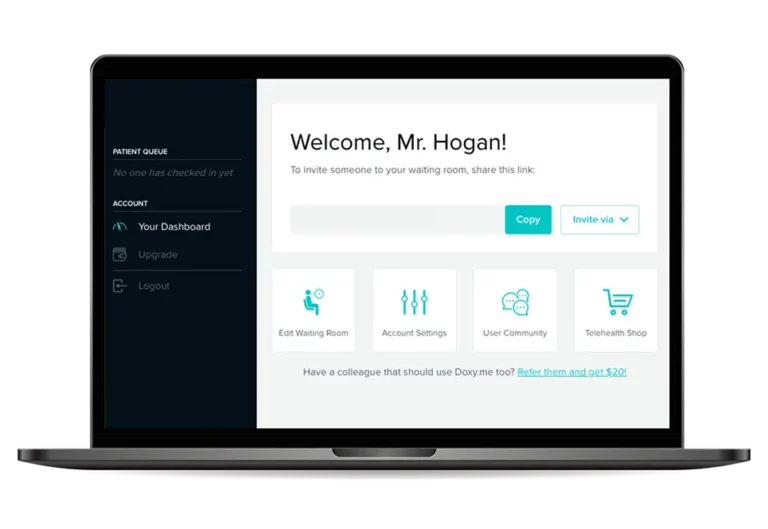
👉 Launching a Secure Telemedicine Platform in 21 Days
A telemedicine platform that simplified remote consultations needed immediate enhancements to launch its next version within 21 days. We resolved critical bugs, integrated features like teleconsent and push notifications, and optimized the platform for scalability using cloud infrastructure. Built to handle growing demand, the platform ensures secure patient-provider communication through personalized URLs. With these solutions, the client achieved a rapid and successful launch, bridging the gap between healthcare providers and patients.
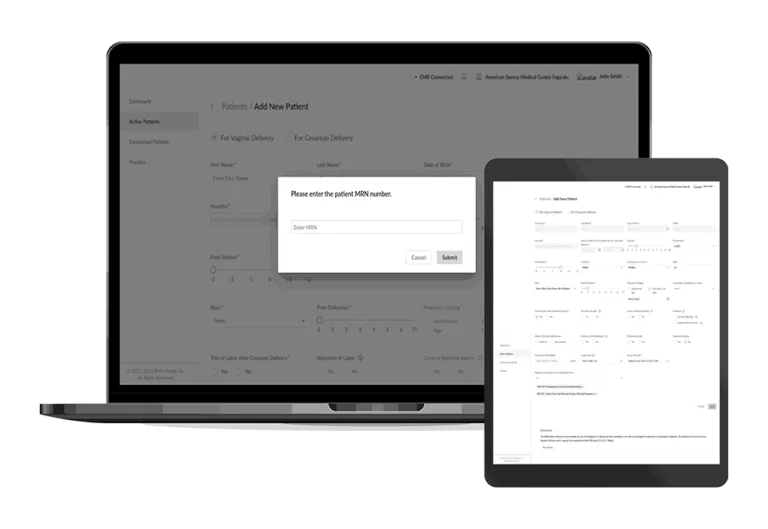
👉 Transforming Childbirth Management with Predictive Technology
A clinical decision support platform revolutionized childbirth care by predicting delivery times through machine learning and patient data analysis. Our team integrated EPIC for streamlined data processes and automated post-delivery updates. Using HL7 protocols ensured secure and standardized data exchange. These innovations reduced the average cesarean delivery rate by 34%, saved $23,500 per practice, and enhanced operational efficiency across 234 practices, setting a new benchmark for cost-effective and data-driven childbirth management.

➡️ How Mindbowser Can Help You with Interoperability and Electronic Prescription Systems
Interoperability in electronic prescription systems is changing how healthcare practitioners and patients interact with pharmaceuticals. By integrating EHRs, pharmacies, and decision-support tools, these platforms streamline operations, eliminate mistakes, and promote patient safety. As healthcare grows, using such technology promotes more effective care delivery and improved health outcomes for all parties involved.
We specialize in creating interoperable solutions that bridge the gap between EHR systems and electronic prescription platforms. With expertise in system integration, our team ensures smooth data flow, improving accuracy and reducing the risk of errors in prescription management. We have successfully delivered projects that address real-world challenges, offering solutions that align with regulatory requirements and meet healthcare providers’ needs.
Interoperability and electronic prescription systems are no longer optional—they’re essential for efficient and safe healthcare delivery. These systems streamline processes, improve patient outcomes, and set the foundation for future advancements in healthcare technology. By partnering with Mindbowser, you can transform your organization’s capabilities while staying ahead of industry demands.
Let’s work together to create innovative solutions that support your goals and shape the future of healthcare.
Interoperability in healthcare refers to the ability of different systems and software applications to communicate and exchange data effectively. It ensures that patient information is accessible across platforms, improving care coordination and reducing errors.
Electronic prescription systems streamline medication management by reducing errors, automating refill requests, and ensuring prescriptions are directly transmitted to pharmacies. This helps improve accuracy, save time, and enhance patient satisfaction.
Key challenges include integrating legacy systems, ensuring compliance with healthcare regulations, and maintaining data security. Providers often require expert assistance to overcome these barriers.
Yes, modern electronic prescription systems are designed to integrate seamlessly with EHR platforms, allowing for smooth data exchange and enhanced workflow efficiency.