












 BLOGS
BLOGS  NEWSROOM
  CASE STUDIES
  WEBINARS
  PODCASTS
  ASSET HUB
  EVENT CALENDAR





















Imagine this: no more rushing through hospital halls or spending hours in waiting rooms. Healthcare is moving toward a simpler solution—home healthcare. Home care management focuses on keeping patients right where they’re comfortable, replacing trips to the hospital with care at home. Transitioning care from hospital to home isn’t just convenient; it offers continuity and the kind of personal attention that hospitals often struggle to provide, minus the sterile lights and constant noise.
The home care industry helps seniors to live with dignity and self-respect, and to feel like an integral part of the society and world in which they live.
Melinda Henderson, Chief Medical Officer at CareBridge
Home healthcare creates a win-win-win for everyone. Patients can recover in the comfort of their homes, families see loved ones cared for without complicated logistics, and healthcare providers can manage resources more effectively. Whether it’s managing chronic conditions or routine check-ups, this transformation from hospital to home care is helping fill gaps as hospitals face staff shortages and rising patient loads. And best of all—no hospital gowns are required! Let’s understand more about home healthcare
Understanding Home Healthcare
Imagine if your living room turned into a mini-hospital, minus the sterile lights and that “hospital smell.” That’s essentially home healthcare—a range of medical and support services delivered right to your door. Home healthcare includes everything from skilled medical care, like administering IV medications or wound care, to personal care services that help with daily activities such as dressing or bathing.
Rehabilitation services also fall under this umbrella, offering physical, occupational, or speech therapy without stepping into a clinic. It’s like getting the best of healthcare without the hassle of getting dressed or finding a parking spot.
The Medical Rehabilitation Services Market, valued at USD 216.5 billion in 2023, is expected to grow at a CAGR of 6.6% from 2024 to 2032, driven by the growing demand for innovative rehabilitation solutions, leading to improved patient outcomes and expanded healthcare access.
Related read: The Role of Technology in Home Health Rehabilitation
The main difference between hospital care and home healthcare is that home healthcare brings medical support into the comfort of your home. Hospitals offer round-the-clock monitoring and advanced treatments, but come with beeping machines and cafeteria food. With home healthcare, patients can rest in their beds, eat good food, and get individualized care without the hospital hustle. While hospitals provide immediate access to specialized equipment, home healthcare offers a personal, relaxed environment that lets patients heal with less stress.
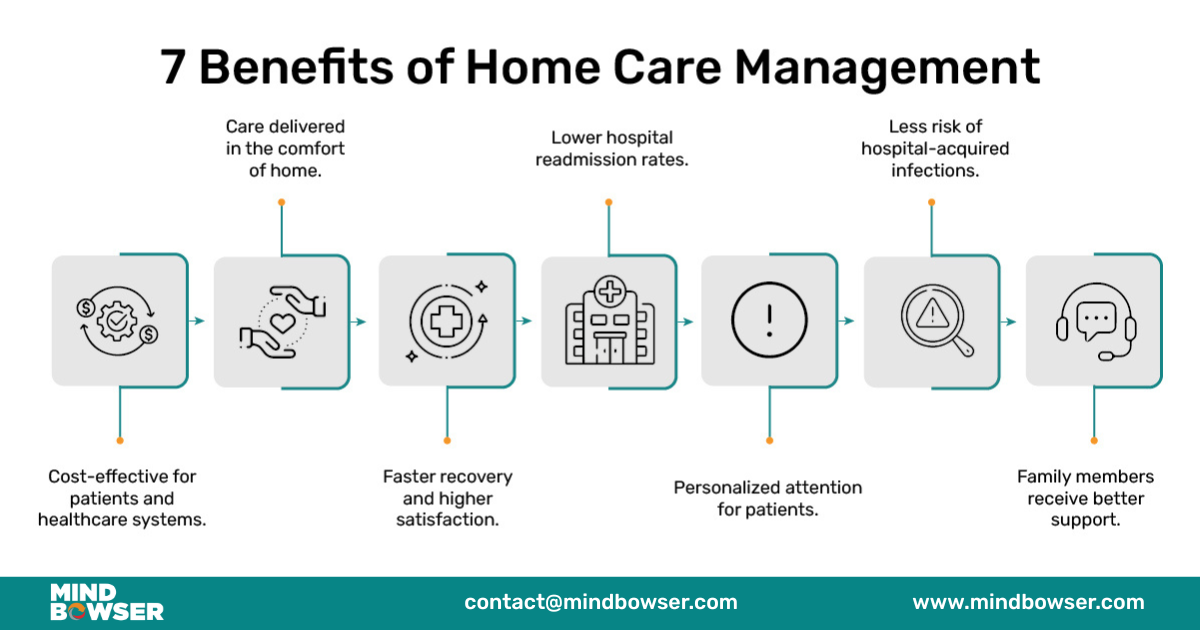
Benefits of Home Care Management
1️⃣ Cost-effectiveness for Patients and Healthcare Systems
Home healthcare can save a lot. Patients can skip the expense of long hospital stays, and healthcare providers cut down on costs, too. It’s similar to getting VIP service without the premium price tag.
2️⃣ Comfort and Convenience of Receiving Care at Home
There’s something about your couch that no hospital bed can match. At home, patients can stay in familiar surroundings, wearing their clothes, and surrounded by family. It’s a “no place like home” setup with all the right medical support.
3️⃣ Improved Recovery Rates and Patient Satisfaction
Studies show that people often heal faster and feel better about their care at home. No loud hospital noises or middle-of-the-night vitals checks—just quiet, comfortable recovery. Emphasizing cultural awareness in caregiving tools is seen as essential, as it can significantly influence engagement and effectiveness in care delivery, ensuring patients feel understood and supported in their healing journey.
4️⃣ Reducing Hospital Readmission Rates
Home care management helps patients follow through on their treatments and follow-ups, which lowers the risk of a bounce-back to the hospital. In many cases, staying on track with recovery plans at home reduces the chance of complications.
5️⃣ Personalized Care and Attention
In a hospital, patients can feel like just another number. At home, care is more one-on-one. Nurses and caregivers focus more on individual needs, creating a connected and attentive experience.
6️⃣ Reduced Exposure to Hospital-acquired Infections
Hospitals, as necessary as they are, can be breeding grounds for germs. By receiving care at home, patients minimize their exposure to infections, making it a safer option for many, especially those with weakened immune systems.
7️⃣ Better Support for Family Members
Home healthcare isn’t just for the patient—it’s also a huge help for families. Family members can be more involved in the care process and gain peace of mind knowing their loved one is safe and comfortable.
Key Challenges in Transitioning to Home Healthcare
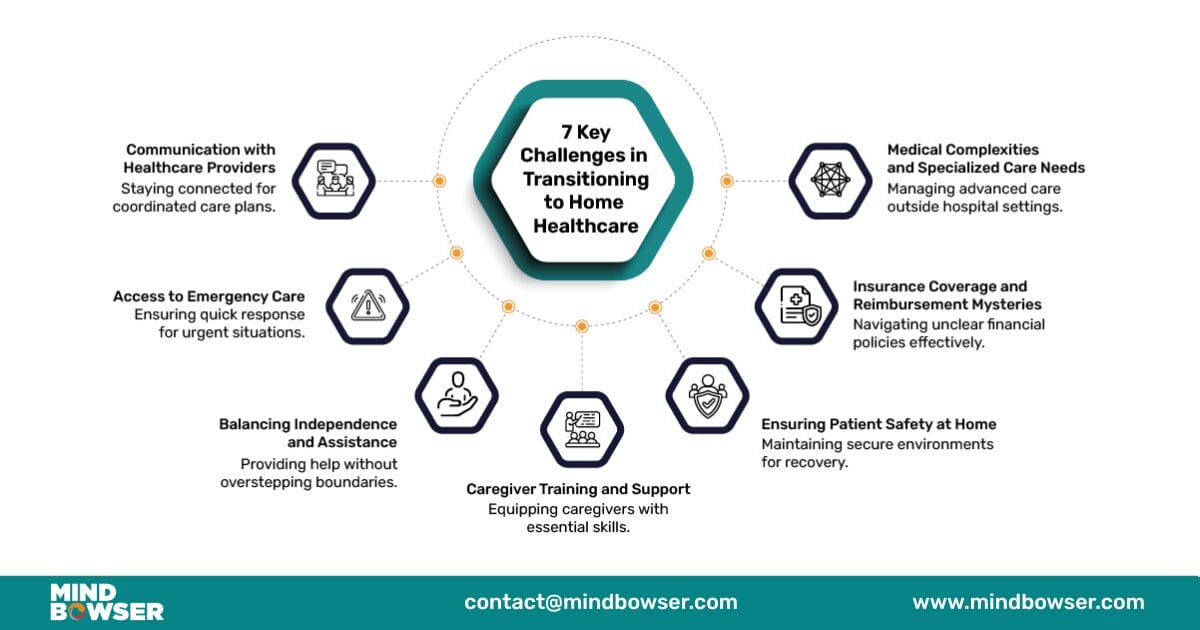
1️⃣ Medical Complexities and Specialized Care Needs
Healthcare at home can get complicated fast, especially for patients with multiple or chronic health conditions. Hospitals come with an entire crew of specialized staff and equipment—replicating this in a home environment is a big ask. Whether setting up a system for monitoring vitals, managing medications, or finding the right medical devices, home care management needs careful planning to support each patient’s unique medical requirements. A common challenge across all companies is the need for greater awareness and understanding of caregiver roles and the complexities of home care. Technological adoption remains a barrier, especially among older adults, despite advancements in user-friendly solutions.
2️⃣ Insurance Coverage and Reimbursement Mysteries
If you’ve ever tried to decipher health insurance paperwork, you know it’s practically a second language. Insurance coverage for home healthcare can be tricky, and figuring out what’s covered (and what isn’t) takes patience. Will they cover the costs of home visits, medical equipment, or even special in-home therapies? Insurance policies vary widely, so it’s essential to understand what kind of financial support is available for hospital-to-home care. By partnering with insurance companies, you get innovative solutions that lower costs and enhance care quality for aging populations, helping make home healthcare more accessible and affordable.
3️⃣ Ensuring Patient Safety at Home
Hospitals are set up for safety with guardrails, emergency systems, and plenty of staff. Home environments? Not always. From preventing falls to ensuring access to medical supplies, security is a top priority in home care management. Adjustments like installing grab bars, removing trip hazards, and setting up medical alert systems can make the home a safer place for patients.
4️⃣ Caregiver Training and Support
Home care management relies heavily on family members or hired caregivers, but they may not have the same training or experience as a hospital nurse. Ensuring caregivers are well prepared can make all the difference. Offering practical training and ongoing support can help caregivers feel more confident, reduce stress, and improve the quality of care patients receive at home.
5️⃣ Balancing Independence and Assistance
Finding the right balance between patient independence and necessary support is a fine line. Most people prefer to be as independent as possible, but health conditions may require a helping hand. Respecting a patient’s independence while providing adequate assistance is key to a positive home healthcare experience.
6️⃣ Access to Emergency Care
Hospitals offer immediate access to emergency care, while home healthcare requires more planning. A backup plan, such as knowing the nearest hospital or emergency contact, is essential for peace of mind.
7️⃣ Communication with Healthcare Providers
Keeping doctors and nurses in the loop can be challenging once the patient is home. However, technology—like telehealth appointments—can help maintain the connection. Clear, frequent communication is vital for tracking progress, making adjustments, and ensuring everyone is on the same page.
Related read: Telehealth in Home Health Care: Enhancing Patient Outcomes Through Innovative Solutions
Discover How Technology Can Enhance Home Healthcare
Essential Technologies in Home Healthcare
Now for the tech that makes home healthcare effective (and yes, a bit futuristic). Here are the tools that help keep patients connected and safe from afar:
🔹 Telehealth and Remote Patient Monitoring
Telehealth is the virtual bridge between patients and providers, especially for quick follow-ups or routine check-ins. With remote patient monitoring, vital signs like heart rate, blood pressure, and oxygen levels can be recorded and sent to healthcare providers in real-time. It’s like having a mini-hospital at home—minus the beeping machines.
🔹 Healthcare Mobile Applications for Patient Management
Mobile apps aren’t just for social media and games! Home care management, these apps help with medication reminders, appointment scheduling, and even direct chats with healthcare providers. Patients can track symptoms, log daily health stats, and easily communicate with caregivers—no more phone tag with the doctor’s office.
🔹 Wearable Devices for Health Tracking
Think of wearable devices like fitness trackers, but on a mission for your health. From smartwatches that track heart rates to devices that monitor blood sugar, wearables provide real-time data on health metrics. They’re helpful for patients managing chronic conditions, allowing caregivers and providers to stay informed and respond to any sudden changes.
🔹 EHR/EMR Integration in Home Healthcare
EHR and EMR systems are the backbone of modern healthcare. When integrated into home healthcare, these records ensure everyone has the latest information on a patient’s health status. This integration reduces paperwork and helps providers access critical information instantly—making care smoother for everyone involved.
Related read: EMR vs EHR: What’s the Difference?
How Mindbowser Can Help You With Home Healthcare
Transitioning healthcare from hospitals to the home is a powerful shift combining patient comfort with quality care. By adopting home healthcare, patients can enjoy a familiar environment while receiving the medical attention they need, and healthcare providers can better manage resources and patient engagement.
Mindbowser is here to help make that transition seamless, offering the tools and expertise needed to support effective home care management. Reach out to us to learn how we can assist in bringing the benefits of home healthcare to you or your organization.