













 BLOGS
BLOGS  NEWSROOM
  CASE STUDIES
  WEBINARS
  PODCASTS
  ASSET HUB
  EVENT CALENDAR























TL;DR
Whether you’re leading a mid-sized hospital or managing clinical operations across departments, the way your systems communicate plays an important role in patient outcomes, care coordination, and operational efficiency. One of the most important choices you’ll face? Deciding between an integrated EHR and a standalone system.
While both options promise digital documentation, only one supports the connectivity modern healthcare demands and for many hospitals, neither integrated nor standalone is the right fit. A custom EHR is increasingly the answer.
In this guide, we break down the differences and help you decide what fits your organization best.
I. What is an Integrated EHR?
An integrated EHR is more than just a patient record system. It serves as a connected hub that consolidates information from multiple healthcare touchpoints, including clinical documentation, lab results, billing, imaging, prescriptions, and even data from wearable devices such as blood pressure monitors and glucose sensors.
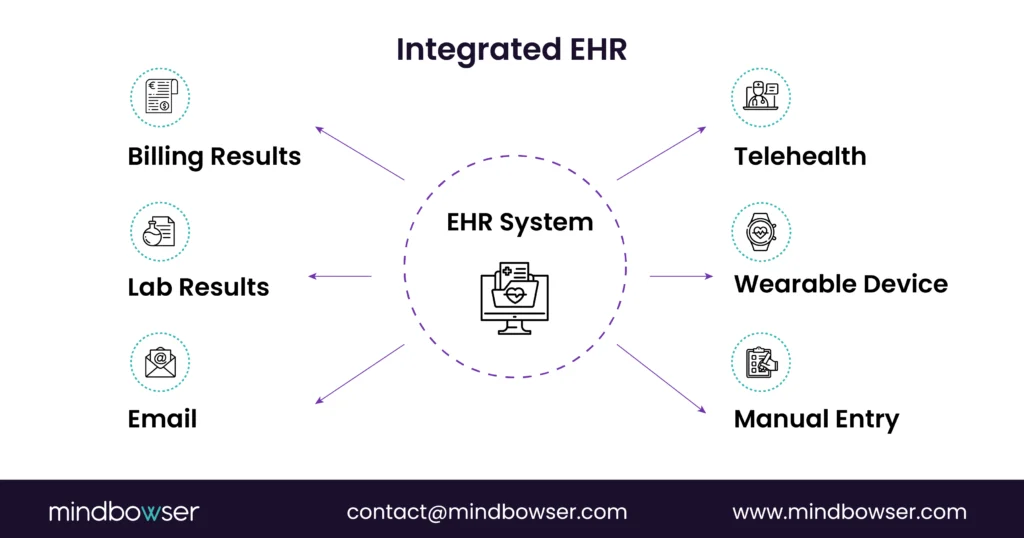
Unlike siloed systems, integrated EHRs facilitate real-time data exchange across departments and care settings. Whether a patient sees a primary care physician, visits the ER, or interacts with a remote monitoring tool, every touchpoint adds to a single, unified health record. This enhances clinical decision-making, improving care continuity and safety.
For mid-sized hospitals, this means physicians aren’t flipping through multiple dashboards or chasing down faxes. Care teams see the full story, recent vitals, medication history, insurance eligibility, and even social determinants; all in one place.
These systems are built using interoperability standards like HL7, FHIR, and SMART on FHIR. This ensures easier connectivity with external partners, including labs, pharmacies, payors, and digital health tools. It’s also the foundation for integrating advanced use cases, such as AI-based clinical decision support or automated billing workflows.
Related Read: Integration with EHR Systems: A Complete Guide for Healthcare Providers
II. What is a Standalone EHR?
A standalone EHR is a self-contained system that serves a narrow purpose, typically managing patient records or documentation within a single department or specialty. It’s often found in smaller clinics or practices that need a digital solution but aren’t ready to connect multiple systems or workflows.
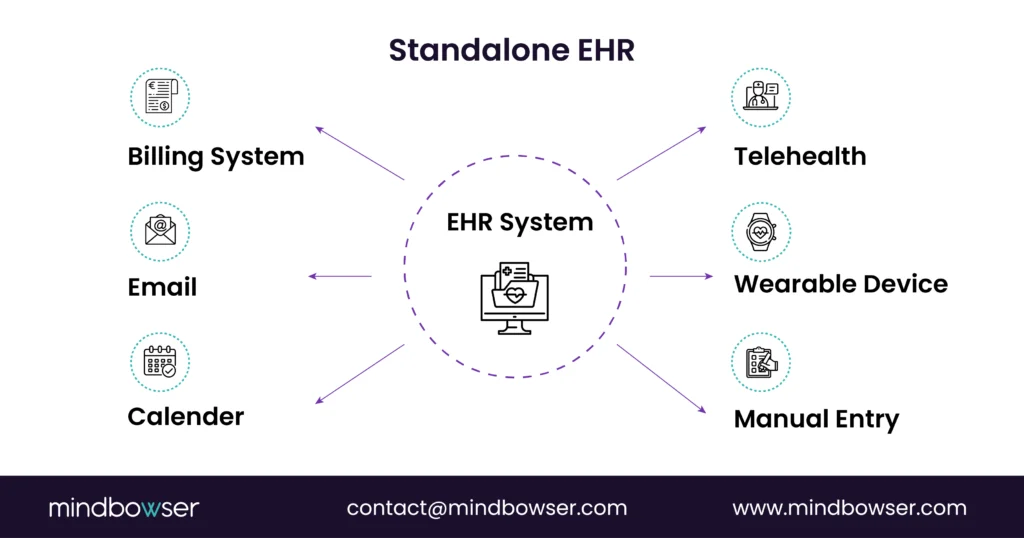
These systems are not built for integration. That means they don’t naturally talk to labs, billing software, or external care teams. Information must be exported manually or through limited interfaces, which slows down processes and increases the likelihood of errors or duplicate entries.
While a standalone EHR may work fine for practices with limited scope, it becomes a roadblock as the organization grows or adopts modern care delivery models. Coordinating across specialists, integrating telehealth, or implementing remote patient monitoring becomes a logistical burden.
More importantly, these systems struggle to support initiatives tied to value-based care, population health, or reimbursement optimization. The lack of real-time data sharing creates friction, not only for staff but also for patients trying to navigate their care.
For hospitals aiming to deliver consistent, coordinated, and data-informed care, a standalone EHR quickly shows its limits.
III. Key Differences Between Integrated and Standalone EHRs
Whether you’re comparing integrated EHR software to a standalone EHR system, the core question is the same: can your platform grow with your care model?
The decision between a standalone and an integrated EHR isn’t just about features; it’s about how your organization handles data, care coordination, and long-term growth. Here’s a breakdown to help clarify where the real distinctions lie:
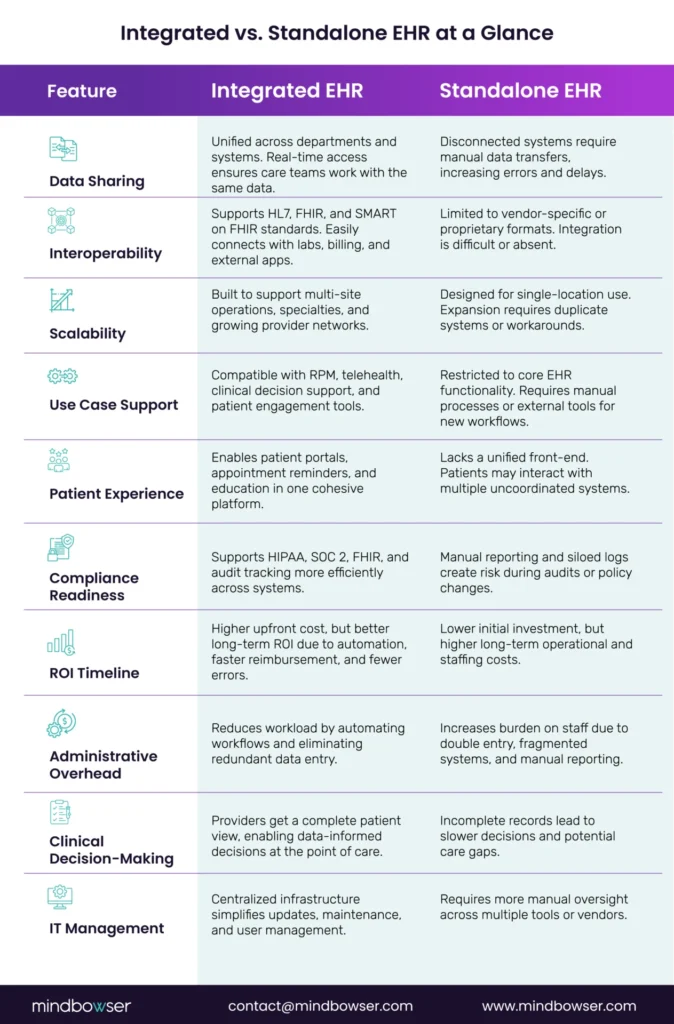
For mid-sized hospitals, the gap becomes clear when evaluating operational efficiency. Integrated EHRs simplify the handoff between front-desk scheduling, medical documentation, and claims management. Standalone systems, on the other hand, create stopgaps that affect everything from staff productivity to billing timelines.
IV. Pros and Cons of Standalone EHR
Standalone EHRs can make sense in certain settings, but the benefits come with trade-offs. For clinics or specialty providers with minimal integration needs, they offer simplicity. For growing systems, they can quickly become a bottleneck.
A. Pros OF Standalone EHR:
- Low setup barrier – Ideal for smaller practices with limited workflows.
- Minimal training curve – Staff can get up and running quickly with fewer modules to learn.
- Cost-efficient in the short term – Initial investment is often lower than that of integrated systems.
B. Cons of Standalone EHR:
- Lacks interoperability – Doesn’t connect well with billing platforms, patient portals, or remote monitoring tools.
- Manual workflows – Limits automation for claims, reminders, and data syncing.
- Restricted growth – Adding capabilities like telehealth or AI-driven scheduling often requires third-party workarounds.
- Patient experience suffers due to a lack of real-time access to a comprehensive care history and cross-departmental visibility.
As more care shifts toward continuity, digital engagement, and proactive intervention, the downsides of standalone systems become increasingly difficult to overlook.
V. Custom EHR: The Third Option
While integrated EHRs are ideal for many hospitals, a custom EHR offers a unique balance of flexibility and functionality, especially for mid-sized hospitals with complex workflows. Unlike standalone systems, custom EHRs allow hospitals to design a solution that fits their specific needs while still benefiting from some level of integration. Whether you’re incorporating specialized features like telemedicine integration or advanced AI-driven diagnostics, a custom EHR can be tailored for your unique patient care goals.
Custom EHRs provide the ability to build exactly what’s needed, avoiding unnecessary modules or restrictions. However, they come with their own challenges, especially around development time, upfront costs, and the need for ongoing maintenance. But for hospitals that need specialized features or are integrating with proprietary systems, a custom EHR might be the perfect middle ground between the simplicity of a standalone and the depth of an integrated system.
Looking to Build Your Own Custom Integrated EHR?
VI. Pros and Cons of Integrated EHR
Integrated EHRs aren’t just about connecting systems, they’re about improving how care is delivered, documented, and reimbursed. For mid-sized hospitals, they set the foundation for scale, compliance, and smarter operations.
A. Pros of Integrated EHR:
- Unified patient records – Everyone sees the same up-to-date information, reducing duplication and medical errors.
- Supports modern care models – Enables telehealth, remote patient monitoring, and automated care planning.
- AI-ready infrastructure –Built to connect with workflows like EduCare AI for patient education and DischargeFollow AI for post-discharge follow-ups; no custom setup needed.
- Improves communication – Smoother coordination between the front office, nursing, physicians, and billing staff.
B. Cons of Integrated EHR:
- Higher upfront investment – More comprehensive functionality requires a larger initial investment in implementation and integration.
- Requires planning and change management – Shifting workflows and retraining staff takes time and buy-in.
- Vendor coordination, especially when third-party platforms or legacy systems are involved.
Still, for organizations preparing for risk-based contracts, hospital-at-home models, or multi-location growth, integrated EHRs offer a much stronger return over time.
Related Read: Benefits and Challenges of The Electronic Health Record
VII. When to Choose an Integrated EHR Over a Standalone?
If your organization is looking beyond basic documentation and into coordinated, patient-centered care, an integrated EHR isn’t optional; it’s foundational.
Here are clear indicators it’s time to move beyond a standalone system:
A. You’re expanding across multiple sites or service lines
Integrated EHRs ensure a unified view of patient data across departments, specialties, and locations, reducing duplication and improving handoffs.
B. You’re launching telehealth or remote patient monitoring programs
Integrated platforms can capture real-time vitals, sync them with the clinical record, and make that data actionable for care teams.
C. Your care models rely on data-driven insights
Whether it’s hospitalization risk, care plan optimization, or early warning systems, integrated infrastructure allows clinical teams to act on complete patient profiles.
D. You’re focused on patient experience
Integrated systems enable the delivery of appointment reminders, secure messaging, education, and self-service portals as part of a connected journey, rather than fragmented touchpoints.
Standalone EHRs can’t carry this weight. For organizations aligning with value-based care, payer collaboration, or scaling digital offerings, integrated systems make these efforts possible and sustainable.
VIII. How Mindbowser Can Help You Move From Standalone to Integrated
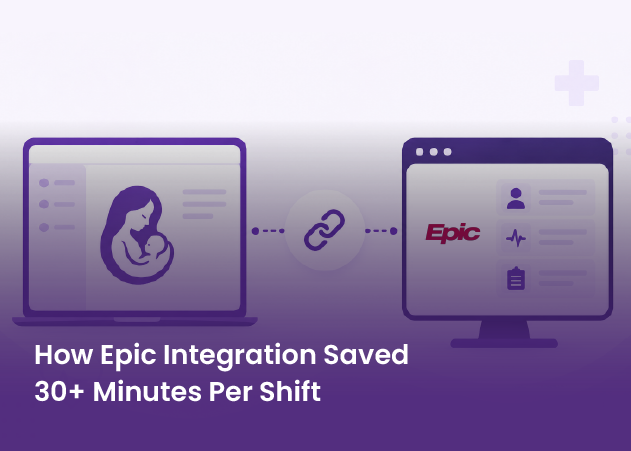
Moving off a siloed system is an integration problem. Mindbowser’s ConnectHealth platform connects you to Epic, Cerner, Athenahealth and 20+ EHRs plus 100+ devices and wearables, with HL7, FHIR and SMART on FHIR support and HIPAA/SOC 2 safeguards built into delivery – so a mid-sized hospital can connect systems incrementally without a rip-and-replace. See how EHR integration works.
Integrated vs. Standalone vs. Custom EHR: Which Fits Your Hospital?
Integrated EHRs are no longer a luxury; they’re a prerequisite for delivering coordinated, efficient, and data-informed care. While standalone systems may offer a quick fix, they often fall short of meeting modern clinical needs, regulatory demands, and patient expectations.
For mid-sized hospitals scaling fast, the ability to connect systems, automate workflows, and surface meaningful insights from patient data is critical. Integrated EHRs lay the foundation for that transformation.
At Mindbowser, we don’t just integrate systems; we help organizations build lasting, scalable infrastructure. Whether you’re focused on RPM, telehealth, or AI-driven care, we align your tech with your long-term goals.
An integrated EHR brings together clinical, billing, lab, imaging, and external data sources, providing a real-time, unified view of the patient across the care continuum.
The main types include:
- Standalone EHR – Operates in isolation, without external connectivity
- Integrated EHR – Connects multiple systems and departments
- Cloud-based EHR – Hosted off-premise with access over the internet, can be standalone or integrated
It’s an electronic patient record system that aggregates data across platforms, enabling clinicians, administrators, and care teams to access a shared, up-to-date record from anywhere in the care journey.