









 BLOGS
BLOGS  NEWSROOM
  CASE STUDIES
  WEBINARS
  PODCASTS
  ASSET HUB
  EVENT CALENDAR















TLDR;
Clinical notes drive safety, reimbursement, and regulatory performance. The fastest efficiency gains come from standardized templates, structured data capture, voice tools, and AI clinical notes models embedded in the EHR. These capabilities improve note quality, reduce clinician time, and strengthen HIPAA compliance. HealthConnect CoPilot brings templates, automation, and FHIR-based integrations together to streamline clinical documentation across specialties.
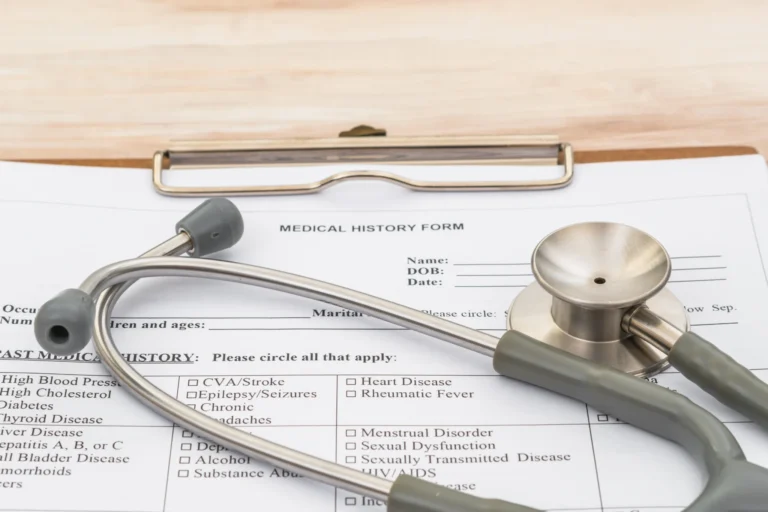
Accurate clinical notes are central to care quality, revenue integrity, and audit readiness. They explain who the patient is, why they presented, what you did, and how you plan to follow up. For CIOs and CMIOs, they are also the most visible symptom of whether an EHR system is helping or hindering clinicians.
The U.S. clinical documentation and clinical notes market is projected to grow steadily over the next decade as health systems digitize more workflows and adopt clinical notes software and automation. Yet clinicians still report spending more time documenting than interacting with patients.
Many EHR environments are described as “integrated,” but in practice, they rely on partial or read-only connections. Clinicians can see lab or imaging results, yet still must manually search, scroll, or re-enter values into the note. When lab results arrive late, imaging reports are posted after the visit, or scheduling data is not reliably linked to the encounter, documentation slows down.
Clinicians either pause note completion or finish the note with gaps that require later addenda. True documentation efficiency depends on reliable, real-time data flowing directly into the note workspace, not just being accessible elsewhere in the EHR. When upstream systems are only loosely connected, the documentation burden shifts back to the clinician.
From an executive lens, the main reasons are consistent:
- Fragmented templates for similar encounters
- Poor alignment between documentation, coding, and quality measures
- Limited use of AI clinical notes tools and voice capture
- Weak integration between EHR, lab, imaging, and revenue cycle systems
- Insufficient training on new EHR functionality and updates
The result is a familiar pattern: high burnout, inconsistent note quality, and greater risk for missed diagnoses, denied claims, and compliance gaps.
For real-world outcomes, explore our healthcare case studies, which highlight how improvements in clinical documentation reduced denials, improved coding accuracy, and accelerated reimbursement cycles.

I. How Do Clinical Notes Impact Compliance, Revenue, and Risk?
For CIOs, CTOs, and CFOs, clinical notes are not just a clinician productivity concern. They are a control point for:
- Regulatory compliance across HIPAA, documentation standards, and payer requirements
- Medical necessity and coding accuracy
- Risk adjustment, quality reporting, and value-based care contracts
- Malpractice risk and legal defensibility
A missing or incomplete entry can lead to incorrect medications, duplicate tests, avoidable readmissions, or denials. Better notes mean more reliable data for population health, AI models, and executive reporting.
When you evaluate your current EHR systems, a key question is: Do they make it easier or harder for clinicians to capture complete, compliant clinical notes at the point of care?
II. What EHR-Based Tactics Actually Reduce Documentation Time?
It is important to be clear about what templates and AI can and cannot fix on their own.
Templates and AI clinical notes tools do not eliminate documentation burden if upstream data is incomplete, delayed, or inconsistent. AI models generate better drafts when lab results, medications, vitals, and prior assessments are already structured and available.
When data arrives late or requires manual workarounds, clinicians spend extra time correcting AI output, reconciling discrepancies, or rewriting sections. In practice, documentation time drops only when AI is paired with reliable data integration and well-designed workflows.
Below are practical levers you can use inside your existing EHR system and surrounding stack.

A. How Can Standardized Templates Improve Note Quality and Speed?
Standardized, specialty-specific templates remain one of the highest-ROI interventions.
- Build templates per specialty and encounter type (e.g., cardiology follow-up, ED chest pain, post-op visit).
- Include required fields for history, exam, assessment, plan, and decision support.
- Align templates with coding, quality metrics, and organizational documentation policies.
- Avoid template bloat by limiting free-text sections to where clinical nuance is needed.
Done correctly, templates turn routine encounters into structured data capture rather than free-form writing. That reduces variability, improves downstream coding, and shortens each note by several minutes.
You can also introduce templates for SOAP notes within the EHR so that providers who prefer SOAP structure can still work inside a standardized framework that maps to your enterprise data model.
B. Where Does AI for Clinical Notes Add Real Value?
Modern clinical notes AI tools can significantly reduce the time clinicians spend typing and editing. You should evaluate AI capabilities along three dimensions:
- Ambient capture and voice support: Automatic conversion of clinician–patient conversations or dictated notes into draft clinical notes that follow your approved templates.
- Summarization and normalization: AI that transforms long free-text into structured summaries, highlights key problems, and proposes ICD/CPT candidates for coder review.
- Quality and compliance nudges: Inline prompts that flag missing elements required for medical necessity, risk adjustment, or specific payers.
Instead of positioning this as “AI magic,” frame it as clinical notes software that:
- Reduces clicks and typing
- Enforces consistent structure
- Surfaces the right data in the context of the note
HealthConnect CoPilot can be configured as the orchestration layer for AI clinical notes, ensuring clinical content, prompts, and routing are aligned with your governance and HIPAA requirements.
C. How Should Clinical Notes Integrate with Other Systems?
A common reason notes feel slow is that clinicians must manually hunt for lab values, imaging findings, and prior notes in multiple screens.
From a technology and architecture standpoint, your goal should be:
- Tight integration between EHR, lab, imaging, and OCR systems so that recent results and key values are available in the note workspace.
- Context-aware “insert into note” capabilities that pull structured data directly into the assessment and plan.
- FHIR-based APIs that allow clinical notes software and AI for clinical notes services to read and write in a governed, auditable way.
When integration is properly implemented, clinicians can create notes that are:
- More accurate, because they reflect real-time data
- Faster, because much of the data is auto-populated
- Easier to audit, because the source systems and timestamps are traceable
HealthConnect CoPilot uses FHIR integrations and proven EHR interoperability patterns to connect these systems without forcing a rip-and-replace of your core EHR.
D. How Can Mobile and Remote Access Improve Documentation Efficiency?
Mobile EHR systems and remote access can shift documentation closer to the point of care:
- Clinicians can complete notes during bedside rounds, telehealth visits, or home care encounters.
- Photographs, vitals, and structured observations can be captured in real time.
- On-call clinicians can review clinical notes and update plans without waiting to access a workstation.
However, mobility introduces additional HIPAA and security considerations. Your architecture needs mobile device management, secure authentication, and role-based access controls to maintain data privacy while enabling flexible documentation.
E. What Training and Governance Do You Need Around Clinical Notes?
Even the best templates and AI services will fail without continuous training and governance.
Key actions:
- Provide role-specific training for physicians, APPs, nurses, and coders on new templates, AI clinical notes workflows, and documentation policies.
- Establish clinical documentation champions in each specialty.
- Review sample notes regularly for quality, compliance, and user experience feedback.
- Align documentation standards with your HIPAA policies, enterprise terminology services, and quality reporting requirements.
Executives should view documentation as an ongoing change-management program, not a one-time optimization.
Modernize clinical documentation with AI, templates, and FHIR-based integration
III. How Should CIOs and CMIOs Measure and Improve Clinical Documentation Efficiency?
Most health systems attempt to improve clinical notes by adding new templates or asking clinicians to “write faster.” This rarely works. Executives need a measurable, structured framework to understand where documentation friction actually lives and how to fix it.
Here’s a practical blueprint used by high-performing provider organizations:
A. Map the Current Documentation Workflow
Identify where clinicians lose the most time inside the EHR:
- Switching between labs, imaging, and prior notes
- Excessive clicks to access templates
- Free-text fields that should be structured
- Repeated manual entry of vitals or orders
- Delays caused by missing data from other systems
- Time spent manually locating data outside the note workspace
- Frequency of copy-paste from lab, imaging, or external systems
- Percentage of notes requiring addenda due to missing upstream data
For executives, these signals point to integration friction rather than clinician performance issues. Rising copy-paste rates, delayed addenda, or excessive data hunting often indicate breakdowns between EHR systems, labs, imaging, or scheduling rather than poor documentation habits.
This helps reveal whether the root problem lies in workflow design, template structure, or a lack of integration.
B. Benchmark Key Documentation Metrics
Track performance with measurable indicators:
- Average time to complete a note
- Percentage of notes completed the same day
- Rate of documentation-related denials
- Number of addenda per note
- Template utilization across specialties
- Time-in-EHR per patient per day
Executives should review these monthly at the specialty level.
C. Identify High-Friction Encounters
Every specialty has visits that generate the most documentation burden, such as cardiology follow-ups, orthopedic post-ops, and primary care chronic disease visits.
Prioritize these for modernization.
D. Redesign Templates and Workflows
Use real encounter data to improve templates:
- Move repeated fields to pre-populated sections
- Consolidate redundant free-text areas
- Align sections to coding and quality requirements
- Introduce specialty-specific smart phrases
- Add structured fields for common decision points
This step alone often reduces note time by 20–30%.
E. Layer Automation and AI Where It Creates Real Efficiency
AI becomes valuable only after the workflow is structured. Recommendations:
- Use AI for clinical notes to draft visit summaries
- Use voice capture to eliminate typing
- Use NLP to surface key findings and missing documentation elements
- Use contextual prompts for medical necessity and coding
Executives should evaluate AI output quality by specialty before scaling.
Organizations that want to layer AI documentation tools without a full rebuild can explore custom EHR development patterns that keep the existing platform and add capability incrementally.
F. Integrate the Note with the Rest of the Clinical Ecosystem
Use FHIR integrations to embed:
- Labs
- Imaging
- Vitals
- Medications
- Prior visit summaries
This reduces manual searching and copy-pasting.
G. Build a Governance Model for Continuous Improvement
Leading organizations use a recurring governance cycle:
- Quarterly template reviews
- Monthly audits for completeness
- Specialty champions who gather clinician feedback
- Version control for templates
- Policy alignment with HIPAA, CDI, and coding teams
Documentation optimization should be a continuous program, not a one-time project.
How Can Mindbowser Improve Clinical Notes in Your EHR?
HealthConnect CoPilot helps healthcare organizations design and implement efficient, compliant clinical documentation workflows on top of existing EHR systems.
You can use HealthConnect CoPilot to:
- Configure and iterate on specialty-specific templates aligned with coding and quality requirements.
- Orchestrate AI for clinical notes models, voice recognition, and NLP summaries inside a safe, governed framework.
- Integrate EHR, lab, imaging, OCR, and revenue cycle systems using FHIR and standards-based APIs.
- Build dashboards that show documentation time, note completeness, and denial trends by service line.
Rather than forcing clinicians to adapt to a generic off-the-shelf product, HealthConnect CoPilot lets you build and evolve a documentation experience tailored to your organization’s workflows and risk profile.
The most effective approach is to combine standardized templates, clinical notes software, and AI for clinical notes within your existing EHR system. Templates reduce variation, while AI provides draft notes, structured suggestions, and auto-populated fields. This shortens documentation time and improves compliance with HIPAA and organizational standards.
AI clinical notes tools integrate through FHIR APIs and your EHR’s standard interoperability layers. They read patient context, generate draft notes, and return structured content for clinician approval. Platforms like HealthConnect CoPilot manage governance, logging, and HIPAA-safe workflows during this exchange.
Yes. AI clinical note tools can be HIPAA-compliant when implemented with access controls, audit logging, encryption, and a valid BAA. CIOs and CTOs should confirm data residency, vendor security posture, and PHI handling when deploying any AI model within or adjacent to their EHR system.
Key metrics include: average time per note by specialty, percentage of notes completed same day, documentation-related denial rates, note completeness scores, and time-in-EHR per encounter. These metrics reveal where templates, workflow redesign, or clinical notes software can reduce burden.
Yes. AI can optimize templates, generate structured suggestions, and highlight missing clinical elements without changing the underlying EHR system. Using orchestration platforms like HealthConnect CoPilot, health systems enhance documentation quality without a rip-and-replace project.