ConnectHealth is an AI-first Epic integration platform that enables secure Epic EHR integration, Epic systems integration, and Epic API integration using FHIR, HL7, workflow orchestration, and real-time healthcare interoperability.
#Epic integration# refers to securely connecting Epic EHR with external systems, applications, and digital health platforms to enable real-time data exchange, workflow automation, and healthcare interoperability.
Modern #Epic EHR integration# and #EHR integration platforms# typically use standards such as:
Many healthcare organizations struggle with Epic integration because traditional EHR integration platforms rely heavily on custom HL7 interfaces and fragmented interoperability workflows.
Traditional Epic integration often relies on custom HL7 interfaces and middleware. These interfaces require ongoing maintenance, version management, and troubleshooting.
Custom Epic EHR integration projects often take 6–12 months due to security reviews, testing cycles, and interface development.
Point-to-point EHR integration creates silos, limiting visibility across scheduling, eligibility, referrals, and revenue cycle workflows.
Handling PHI across systems during Epic EHR integration requires strict adherence to HIPAA-aligned architecture, auditability, and encryption standards.
SMART on FHIR + HL7 v2
OAuth 2.0 + Role-Based Access Control
Audit logs + end-to-end encryption
Epic sandbox ready
ConnectHealth is a healthcare-native Epic integration platform designed for Epic EHR integration and built to align with Epic interoperability standards.
Instead of building one-off connections, we implement a scalable Epic EHR integration architecture designed for long-term operational resilience.
SMART on FHIR + HL7 v2
OAuth 2.0 + Role-Based Access Control
Audit logs + end-to-end encryption
Epic sandbox ready
ConnectHealth is a healthcare-native Epic integration platform designed for Epic EHR integration and built to align with Epic interoperability standards.
Instead of building one-off connections, we implement a scalable Epic EHR integration architecture designed for long-term operational resilience.
ConnectHealth acts as a modern Epic integration platform, helping healthcare teams connect applications to Epic using standardized FHIR APIs and secure interoperability workflows.
#Problem#
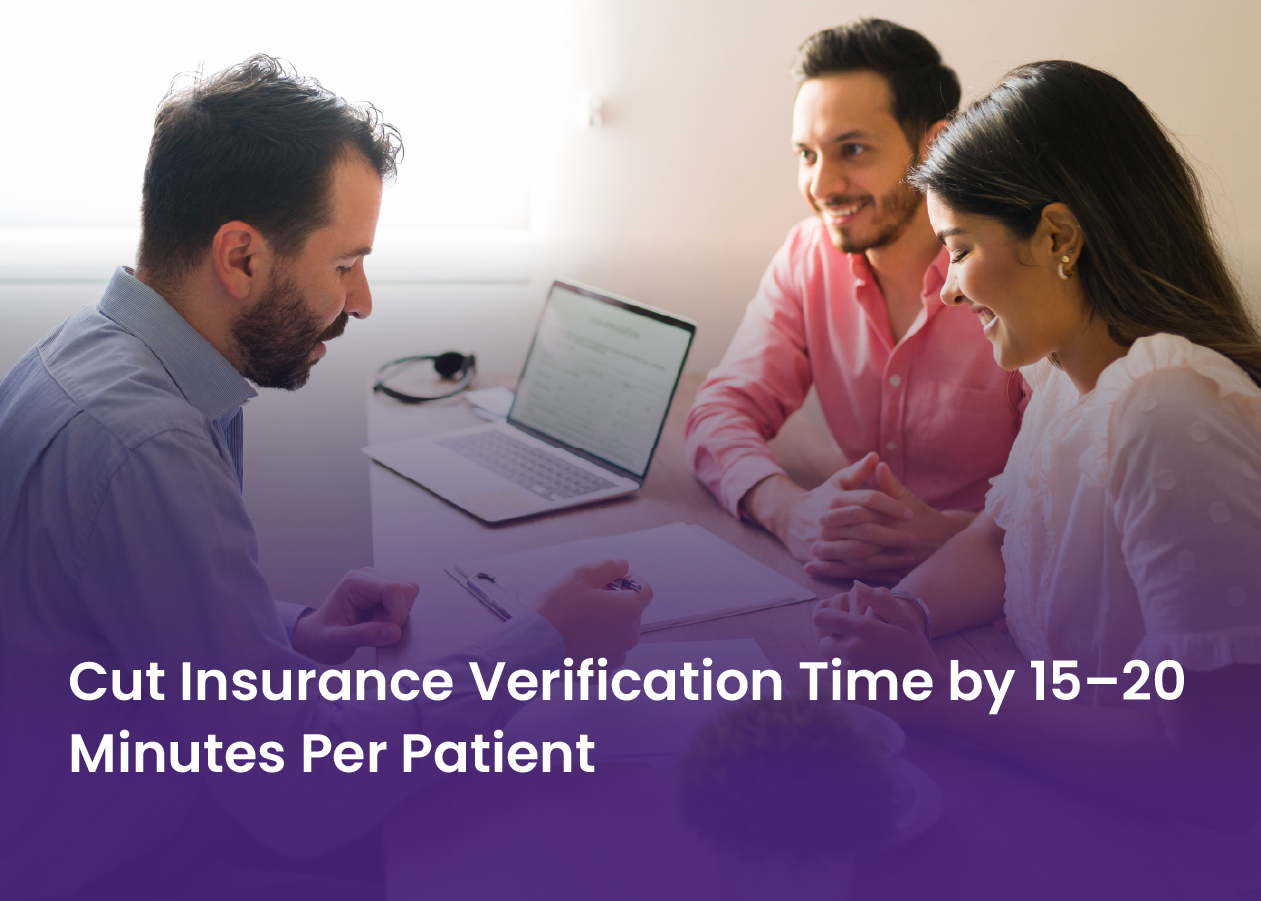
Manual insurance verification increases denial risk and administrative overhead.
#Solution#
ConnectHealth integrates eligibility checks directly within Epic scheduling workflows using API-based Epic integration.
This improves clean claim rates and reduces downstream revenue leakage.
#Problem#
Referral processing delays impact patient throughput and revenue cycle efficiency.
#Solution#
Structured referral routing and status tracking within Epic enable faster processing and improved care coordination through real-time Epic EHR integration.
#Problem#
Unoptimized scheduling results in appointment gaps and underutilized resources.
#Solution#
ConnectHealth synchronizes real-time Epic data through SMART on FHIR Epic integration to improve capacity utilization and reduce no-show rates.
Let’s discuss how #ConnectHealth# can deliver secure, scalable Epic EHR integration for your organization.
Book a quick consultation with our experts.
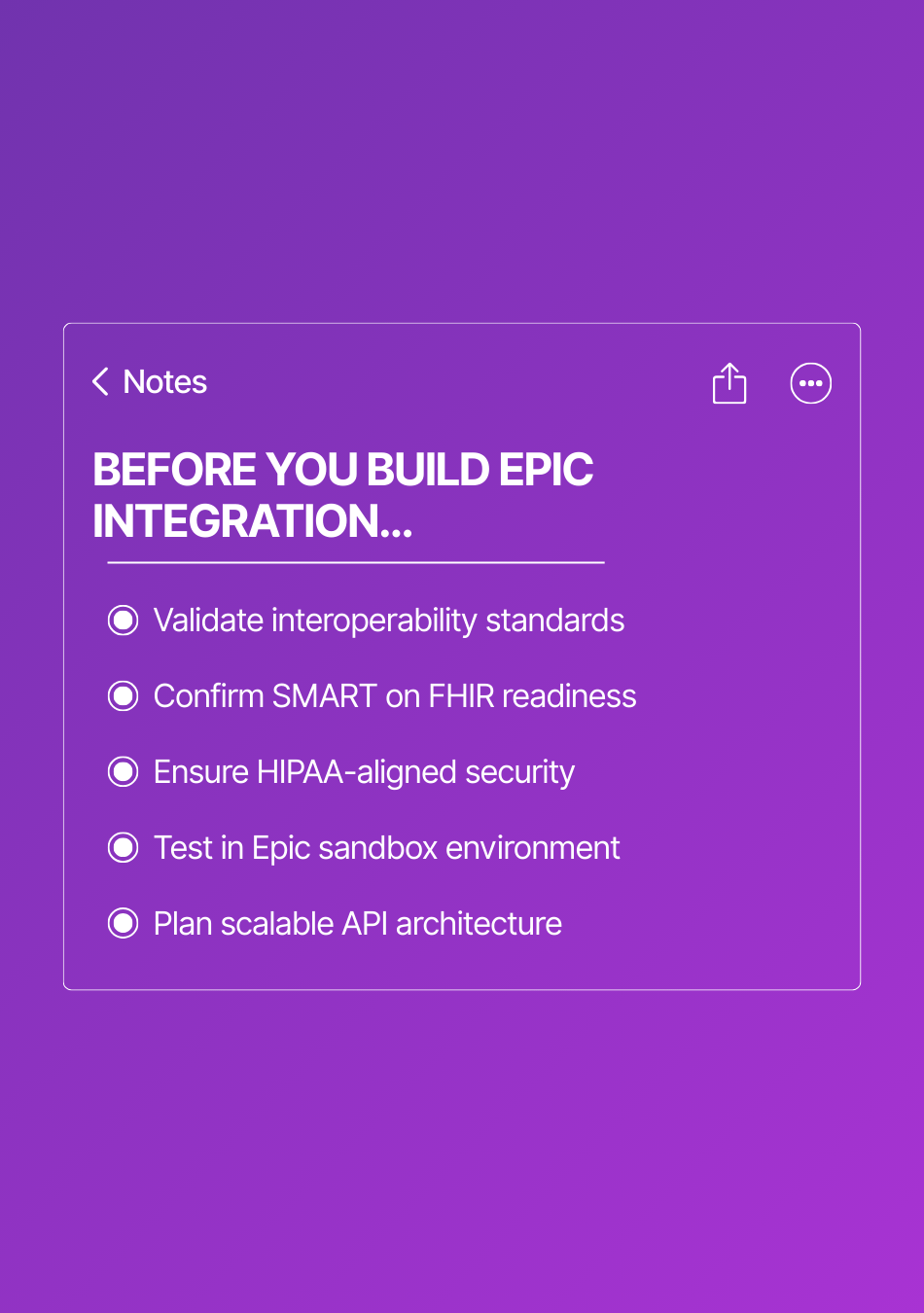

Standards-based #Epic EHR integration platform# reduce deployment cycles compared to custom interface builds.
Modern #EHR integration platforms# minimize ongoing interface maintenance, middleware licensing, and custom coding expenses.
Automation within Epic workflows through #Epic integration# reduces eligibility errors and referral delays.
ConnectHealth enables scalable #Epic EHR integration# across multi-location providers, health systems, and digital health companies entering enterprise sales cycles.

Modernize Epic workflows through scalable #Epic integration services# without increasing IT headcount.
Standardize #Epic EHR integratio# across locations using a centralized #EHR integration# platform.
Accelerate enterprise client onboarding with production-ready #Epic integration architecture.#
Working with an experienced #Epic integration# partner ensures:
Interoperability-first architecture
Faster validation within Epic environments
Reduced security review friction
Long-term compatibility with Epic updates
Epic integration allows healthcare organizations and digital health platforms to securely connect with #Epic EHR systems# using modern interoperability standards like #FHIR APIs, SMART on FHIR# authentication, and #HL7 messaging#. These technologies enable applications to exchange patient data, automate workflows, and integrate clinical systems without building complex custom interfaces.

Every #Epic API integration# begins with secure authentication using the #SMART on FHIR# framework. This OAuth-based model allows healthcare applications to safely access Epic systems while maintaining strict security controls, access permissions, and HIPAA-aligned audit logging.

After authentication, applications interact with #Epic FHIR APIs# to retrieve and exchange clinical data. Through #Epic FHIR integration#, healthcare platforms can access patient demographics, appointments, medications, lab results, and clinical documents directly from Epic.

Most #Epic integration# workflows combine #FHIR APIs and HL7 messaging# standards. While FHIR powers modern applications and analytics platforms, HL7 messaging continues to support operational workflows such as admissions, scheduling, and referral coordination.

Epic’s official developer ecosystem, #Epic App Orchard#, allows approved applications to integrate directly with Epic environments. Through #Epic App Orchard integration#, developers gain access to Epic APIs, testing environments, and security validation processes.

Modern #Epic integration platforms# orchestrate workflows between healthcare applications and #Epic systems#. These platforms automate tasks like scheduling synchronization, clinical document extraction, referral routing, and real-time data exchange making #Epic EHR integration faster#, scalable, and easier to maintain.

A key goal of #Epic integration# is enabling real-time data synchronization between #Epic EHR systems# and external healthcare applications. Using Epic API integration and FHIR-based interoperability, healthcare organizations can securely exchange patient information across digital health platforms, analytics tools, and care management systems.
Watch how #ConnectHealth# simplifies #Epic integration# using automated workflows and FHIR-based interoperability.


We don’t just deliver solutions we build partnerships that drive transformation. With a proven track record in healthcare technology, we understand the industry’s unique challenges and offer customized solutions to help you achieve breakthroughs.

Deep healthcare knowledge ensures technology aligns with real-world clinical workflows, driving impact.

Pre-built components reduce engineering time by 30-40%, helping you get to market quickly.

AI models are trained on your local data in your secure cloud environment.

Proven integrations ensure seamless connectivity with EHRs, payers, and digital health ecosystems.

Delivered 50+ healthcare solutions across 10+ countries, representing our ability to provide a diverse healthcare ecosystem.

Reduced the development time by 40% by implementing customized solutions for every challenge.

We deliver 100% ownership with a perpetual license for IP and code, so your systems stay connected without vendor lock-in.

Ensure seamless integration with your systems and scalability to adapt to evolving needs.

Our 50+ prebuilt frameworks accelerate the development process and reduce time-to-market by 30%.

The specialized AI tools are customized to address healthcare challenges, significantly improving diagnostic efficiency by 25%.

Stay informed with our hub, offering insights and thought leadership to empower your team.

Achieved 90+ NPS with a user-centric approach ensuring seamless adoption and superior experience.

Leverage automation to reduce errors by 60%, boost efficiency, and enhance care quality.

Our clear, open pricing ensures you understand your investment without hidden costs or surprises.

We go beyond core healthcare solutions by offering a comprehensive suite of technology-driven services that enhance scalability, efficiency, security, and user experience.

From concept to deployment, we design and develop high-performance digital health products tailored to industry needs. Our approach focuses on scalability, security, and compliance, ensuring seamless functionality and a strong foundation for growth.

We provide custom AI/ML development services to help healthcare organizations automate workflows, enhance clinical decision-making, and extract actionable insights from data. Our expertise includes predictive analytics, NLP for medical records, and AI-powered automation tailored to your needs.

We help businesses migrate, build, and optimize healthcare applications on cloud platforms while ensuring compliance and security. Our cloud services include architecture design, DevOps automation, and scalable infrastructure management for seamless performance.

We enable secure and efficient integrations across EHRs, medical devices, third-party APIs, and digital health platforms. Our team ensures data interoperability using FHIR, HL7, and custom API development, reducing silos and improving workflow efficiency.
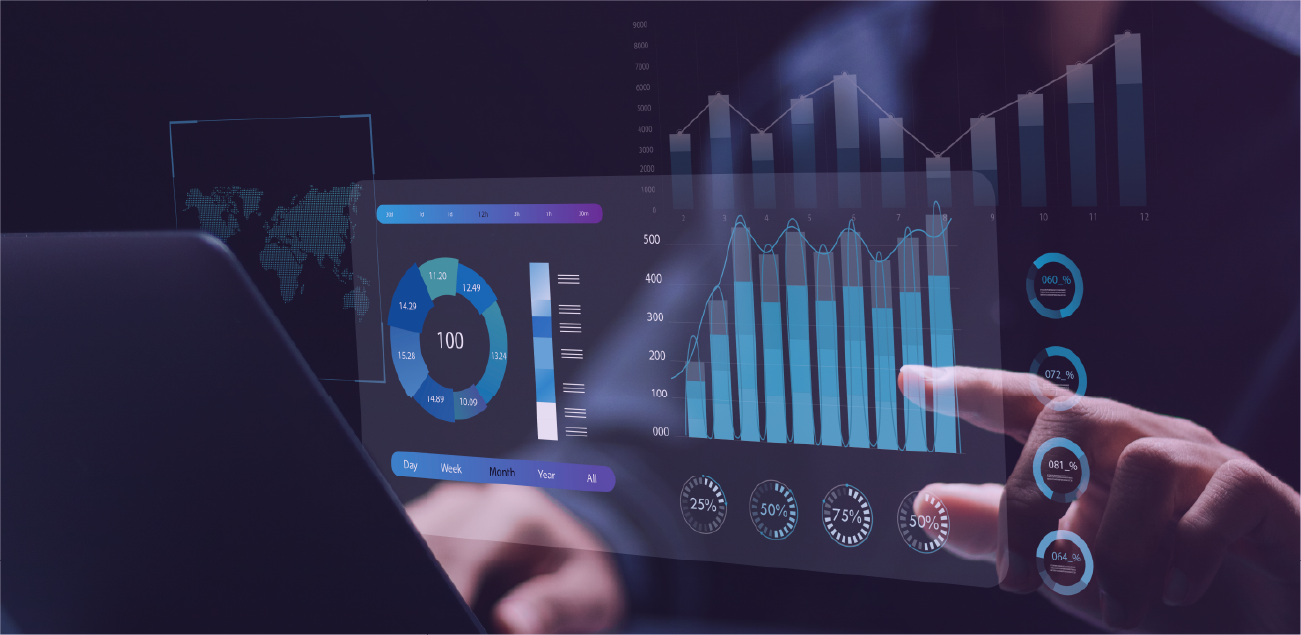
We offer data engineering, analytics, and reporting services to help healthcare organizations harness their data effectively. Our team develops real-time dashboards, predictive models, and automated reporting to support better decision-making.

We help businesses meet HIPAA, GDPR, and other regulatory requirements by integrating security best practices into development. Our services include risk assessments, DevSecOps implementation, and data protection strategies for secure digital health solutions.

We help organizations design, develop, and integrate telemedicine platforms with features like video consultations, remote patient monitoring, and secure data exchange. Our services ensure seamless connectivity while maintaining compliance with healthcare regulations.

We provide end-to-end mHealth app development services, designing secure, user-friendly, and HIPAA-compliant mobile solutions for healthcare providers, patients, and caregivers. Our services include custom app design, wearable integrations, remote monitoring, and telehealth features to enhance patient engagement and care accessibility.

We develop custom Clinical Decision Support Systems (CDSS) that provide real-time insights, AI-driven recommendations, and predictive analytics to improve patient outcomes. Our solutions integrate seamlessly with EHRs and existing healthcare systems, reducing cognitive load and enhancing clinical decision-making.
From leading hospitals to digital-health companies, Mindbowser powers real-world healthcare transformation.































A quick look at how we help organizations transform ideas into outcomes.
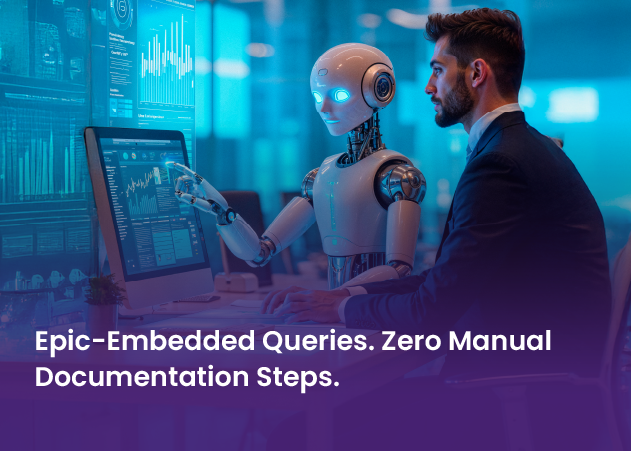
See how a SMART on FHIR app embedded clinical documentation queries in Epic, enabled real-time chat, and auto-filed responses into the patient record.
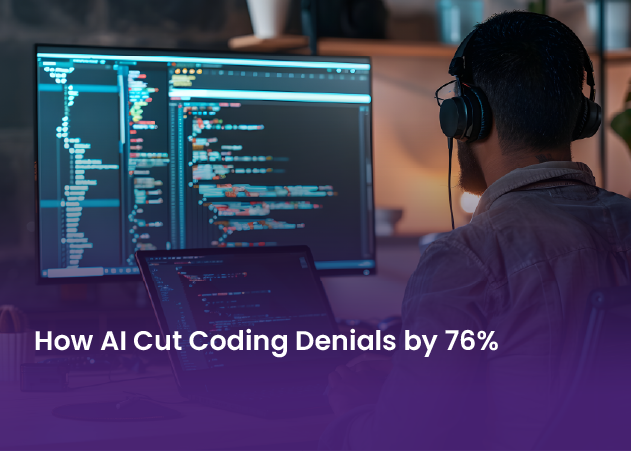
See how a Labor & Delivery AI platform integrated with Epic to predict delivery timing, reduce coding denials, and improve hospital workflows.
Collaborating with Industry Leaders for Smarter Healthcare








































HIPAA-ready builds with controlled PHI access, secure environments, and disciplined engineering practices. Designed to reduce vendor risk and speed up onboarding.

Independent audit of security controls operating over time.

PHI safeguards built into access, environments, and release workflows.

Data handling built for modern privacy expectations.

Role-based access with controlled PHI exposure.

Code reviews, dependency checks, and security gates.

Secure integrations designed for traceability and reliability.

 Encryption in transit and at rest
 Role-based access and least privilege
 Secure SDLC with code reviews
 Pen testing based on scope and risk
Save minimum 40% in development costs and build products in 55% less time with our advanced solution accelerators.

DischargeFollow AI is a customizable AI solution for automating Post-Discharge Follow-Up. It connects with patients after hospital discharge via voice or chat, checks recovery progress, and flags red flags for clinical teams.
Read More
InsureVerify AI is a customizable AI solution that automates the insurance eligibility verification process. It contacts patients before appointments to collect insurance details, confirm policy validity, and flag mismatches so your front desk doesn’t have to.
Read More
RPMCheck AI is a customizable AI solution for automating Remote Patient Monitoring Check-Ins. It connects with patients via voice or chat, collects daily health updates, and highlights any warning signs so your clinical team can act faster.
Read More
MedAdhere AI is a customizable AI solution for automating Medication Adherence Monitoring. It sends patients SMS, email, or app reminders, tracks compliance in real time, and flags missed doses so your care team can follow up fast.
Read MoreCustom #Epic integration# relies on one-off HL7 interfaces that require ongoing maintenance. ConnectHealth's API-based approach uses SMART on FHIR APIs and a standards-based integration platform instead.
Traditional #Epic EHR integration projects# may take 6–12 months. Modern #API-based Epic integration frameworks# significantly shorten deployment cycles.
Yes. The platform follows HIPAA-aligned security practices, including encryption, access control, and audit logging.
Yes. Alongside Epic integration, ConnectHealth supports broader EHR integration strategies using industry interoperability standards.
SMART on FHIR APIs, FHIR R4 resources, HL7 v2 messaging, OAuth 2.0 authentication, secure RESTful services, and USCDI-aligned data exchange.
Partner with us to design, build, and scale digital solutions that drive better outcomes.
Global Tech Teams LLC, 525 Washington Blvd, Industrious at Newport Tower, Jersey City, NJ 07310, United States.
Let’s discuss your goals, workflows, and next steps in a focused consultation call.
 Schedule a Call












 BLOGS
BLOGS  NEWSROOM
  CASE STUDIES
  WEBINARS
  PODCASTS
  ASSET HUB
  EVENT CALENDAR