BLOGS
BLOGS  NEWSROOM
  CASE STUDIES
  WEBINARS
  PODCASTS
  ASSET HUB
  EVENT CALENDAR
























TL;DR
Most CCM programs focus on billing and care plans while treating patient identification, outreach, and consent as an afterthought, but a perfect billing workflow generates zero revenue against an empty enrollment pipeline.
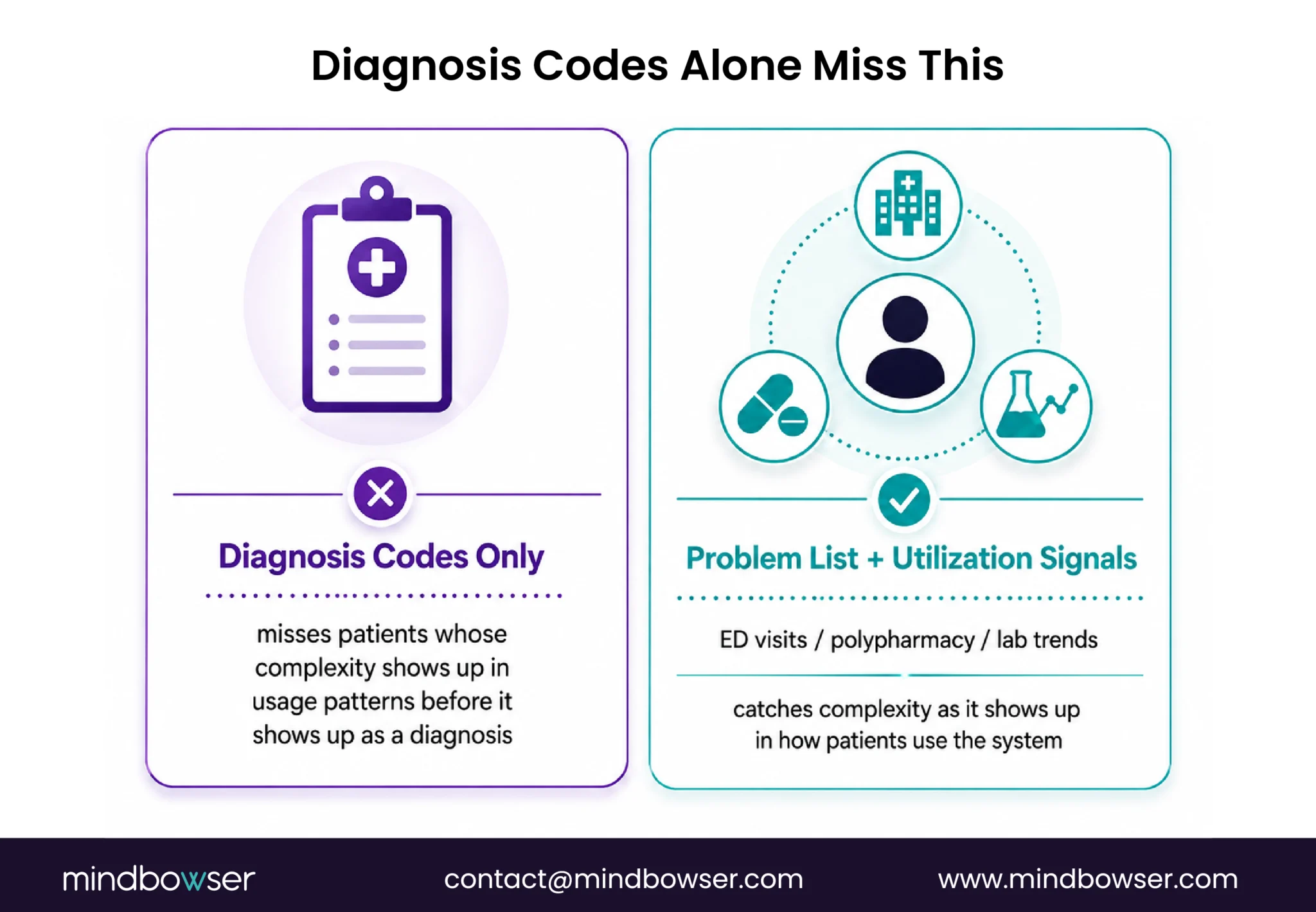
- Identify patients using EHR problem list + utilization signals (ED visits, polypharmacy, lab trends), not diagnosis codes alone, diagnosis-only screening misses complexity that shows up in usage patterns first
- CCM consent is required once, not renewed monthly or annually, unless the patient switches billing practitioners, a defensible record needs date, method, cost-sharing confirmation, and the patient’s right to stop
- Patients decline most often when outreach feels like a sales call framing it as “your doctor’s office managing your care” converts better than framing it as program enrollment
- Treat enrollment as a tracked funnel (eligible → contacted → declined → consented → active), not a single done/not-done task, stage-level tracking alone is linked to a 20-25% enrollment increase
- Benchmark: by day 30 after identification, every enrolled patient should have consent, an active care plan, and a clear care-team access pathway
The Part of CCM Nobody Talks About
Most CCM conversations start with billing codes and care plans. The part that determines whether a program has enough enrolled patients to make the economics work at all, patient identification, outreach, and consent, gets almost no attention. That’s backwards. A perfectly built billing and care-plan workflow generates zero revenue against an empty enrollment pipeline.
Identification: Finding the Right Patients First
Effective identification combines the EHR problem list with utilization signals (recent ED visits, polypharmacy, lab trend flags), not diagnosis codes alone. Diagnosis-code-only screening catches the obvious cases and misses patients whose complexity shows up in how often they’re using the healthcare system before it shows up as a clean qualifying condition on a problem list.
Consent: The Compliance Step That Gets Treated as a Formality
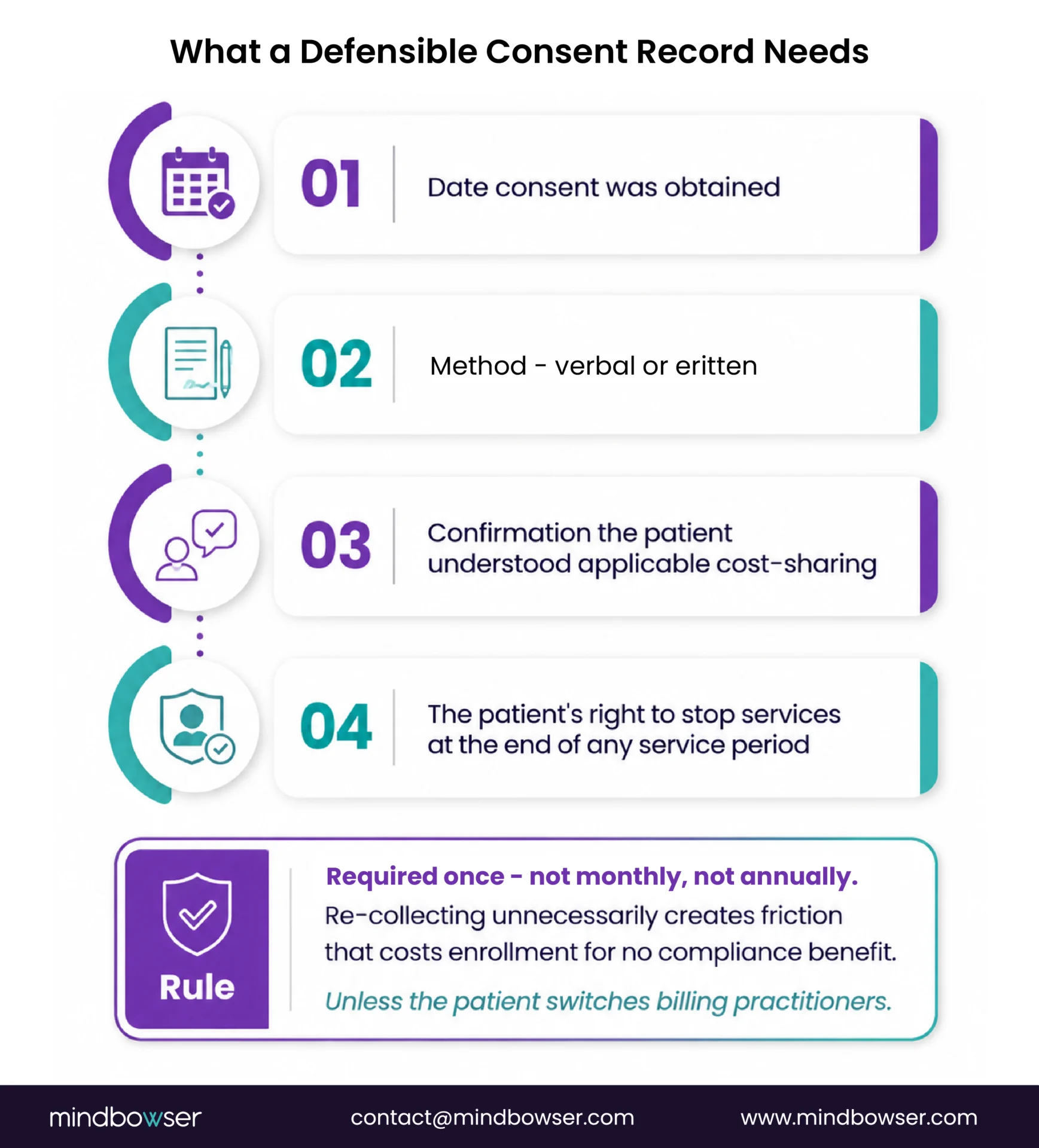
CMS requires documented consent, verbal or written, before CCM time can be billed, and per the American Medical Association’s own guidance, that consent is required once, not on a recurring monthly or annual basis, unless the patient switches to a different billing practitioner. That’s a narrower requirement than a lot of internal program guidance assumes, and getting it wrong in the stricter direction (re-collecting consent unnecessarily) creates friction that costs enrollment for no compliance benefit. A defensible consent record needs the date, the method, confirmation the patient understood the cost-sharing that applies, and the patient’s right to stop services at the end of any service period. “We got consent” without those specifics is not the same as a documented consent record an auditor can verify.
Why Patients Say No, and What Actually Changes Their Mind
A meaningful share of eligible patients decline CCM enrollment. In our experience running enrollment conversations across programs, the reasons cluster consistently: they don’t understand what they’re agreeing to, they’re worried about an unexpected bill, or the outreach felt like a sales call rather than their own doctor’s office reaching out. This is a reasoned pattern from repeated program observation, not a single cited study, and it’s worth naming that distinction rather than dressing up an operational pattern as a research finding. Outreach framed around the patient’s own care (“your doctor’s office is calling to help manage your conditions between visits”) converts meaningfully better than outreach framed around the program itself (“we’d like to enroll you in chronic care management”).
Looking To Improve Your CCM Enrollment Process?
Treat Enrollment as a Funnel, Not a One-Time Task
The single highest-leverage shift most CCM programs haven’t made is treating enrollment as a funnel with tracked stages, eligibility, outreach, consent, conversion, rather than a task that’s either done or not done. Programs that track conversion at each stage separately, instead of just a final enrolled/not-enrolled count, can identify exactly where patients are falling out (never reached vs. reached-but-declined vs. consented-but-not-yet-billed) and fix that specific stage. Industry data on this pattern points to a 20-25% enrollment increase from stage-level tracking alone, without expanding the pool of eligible patients at all. A useful operational benchmark that follows from this: by day 30 after identification, every enrolled patient should have documented consent, an active care plan, and a clear access pathway for reaching their care team. A program that can’t state where a given patient sits against that 30-day standard is running enrollment by feel, not by funnel.

Enrollment at Scale: Where Manual Processes Break
A small practice can run identification, outreach, and consent manually and still hit reasonable enrollment numbers. A hospital system managing thousands of eligible patients across multiple sites cannot, not because the process is different, but because manual tracking of who’s been contacted, who’s consented, and who needs a follow-up call breaks down past a certain volume without structured software support.
What Good Enrollment Technology Actually Does
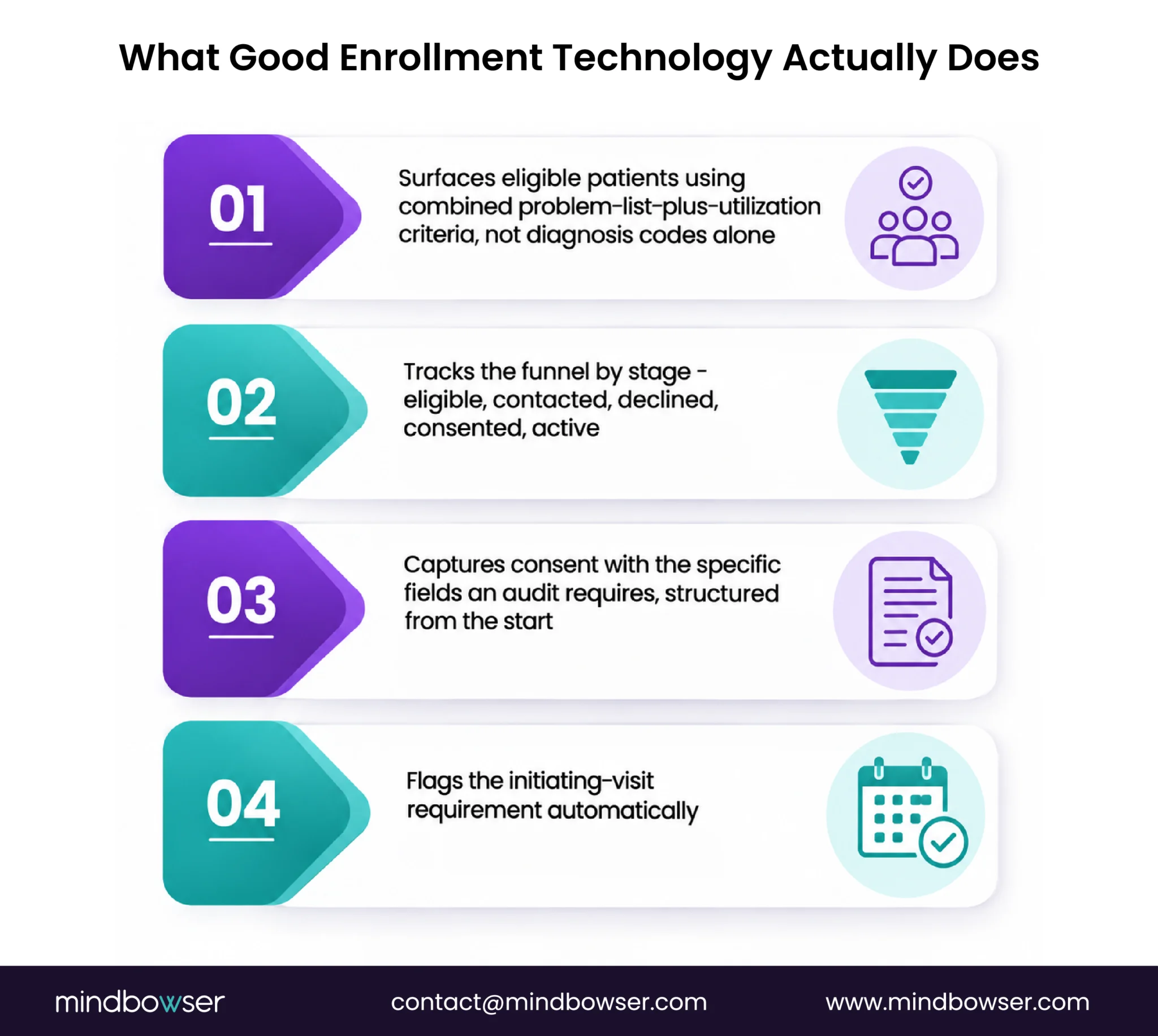
It surfaces eligible patients using combined problem-list-plus-utilization criteria rather than diagnosis codes alone. It tracks the funnel by stage, eligible, contacted, declined, consented, active, not just a final enrolled count, so a stalled cohort shows up as a specific, fixable stage rather than a vague shortfall. It captures consent with the specific fields an audit requires, structured from the start rather than reconstructed later. And it flags the initiating-visit requirement automatically, so enrollment doesn’t get billed before the qualifying visit has actually happened.
How Mindbowser Approaches This
We build CCM enrollment workflows around real identification criteria (EHR problem list plus utilization data, not diagnosis codes alone), stage-tracked funnel visibility instead of a single enrolled/not-enrolled flag, structured consent capture with the fields an audit requires, and automated tracking of outreach attempts so nothing falls through at scale. This is part of the same platform work we do for organizations building or fixing a CCM program end to end, not a separate enrollment tool bolted onto a billing system.
Conclusion
Enrollment is the part of a CCM program that determines whether the economics work at all, yet it’s usually the least examined piece of the workflow. Getting patient identification right means combining EHR problem-list data with utilization signals, not relying on diagnosis codes alone. Getting consent right means capturing the specific fields an audit requires, once, without re-collecting it unnecessarily and creating friction that costs enrollment for no compliance benefit.
The bigger shift is structural: treating enrollment as a funnel with tracked stages instead of a single enrolled/not-enrolled flag. That visibility is what lets a program catch a stalled cohort at the exact stage it’s stuck, whether that’s outreach, consent, or billing readiness, rather than discovering a shortfall after the fact. It’s also what separates programs that can scale past a few hundred patients from ones where manual tracking quietly breaks down.
Mindbowser builds CCM enrollment workflows around real identification criteria, stage-tracked funnel visibility, structured consent capture, and automated outreach tracking, as part of the same platform work behind a full CCM program build.
Combine the EHR problem list with utilization signals (recent ED visits, polypharmacy, lab trends) rather than screening on diagnosis codes alone, which misses patients whose complexity shows up in usage patterns before it shows up as a clean qualifying condition.
The date consent was obtained, the method (verbal or written), confirmation the patient understood applicable cost-sharing, and the patient’s right to stop services at the end of any service period, documented with enough specificity to satisfy an audit request. Consent itself only needs to be obtained once, not renewed on a recurring basis, unless the patient switches billing practitioners.
By day 30 after a patient is identified as eligible, they should have documented consent, an active care plan, and a clear access pathway to their care team. A program that can’t say where a given patient sits against that benchmark is managing enrollment by feel rather than by a tracked process.
Tracking who’s been contacted, who’s consented, and who needs follow-up. Manual tracking works at small scale and becomes unreliable past a few hundred patients without structured software support.