













 BLOGS
BLOGS  NEWSROOM
  CASE STUDIES
  WEBINARS
  PODCASTS
  ASSET HUB
  EVENT CALENDAR



















If one in four adults experiences anxiety or depression each year, why is access to care still so fragmented?
In 2026, mental health support has shifted decisively toward digital-first solutions that are faster, more personalized, and easier to access than traditional care models.
Mental health apps are no longer just meditation tools. Today’s leading platforms combine clinically validated CBT, AI-powered emotional support, wearable data, and therapist-guided programs to meet people where they are at work, at home, and in between. Many are now embedded into employer wellness programs and digital health ecosystems, normalizing mental health care without stigma or long wait times.
For individuals managing stress, anxiety, depression, trauma, or burnout, the best mental health apps of 2026 offer discreet, evidence-based support that fits into daily life. However, with hundreds of options on the market and uneven clinical quality, choosing the right app matters.
This guide breaks down the top 10 best mental health apps for 2026, focusing on tools that are research-backed, clinically informed, and designed to support meaningful, long-term emotional well-being.
Mental Health Apps Market Stats (2026 Outlook)

The global mental health app market has moved from early adoption to mainstream healthcare infrastructure. By 2025, the market is projected to surpass USD 10 billion, and it is projected to exceed USD 30 billion by 2033, driven by demand for scalable, cost-effective mental health support across consumers, employers, and healthcare systems.
What is changing in 2026 is not just adoption, but expectation. Buyers now look for clinically validated solutions that integrate seamlessly with existing care models.
AI-led personalization, real-world outcomes data, and interoperability with healthcare systems are becoming table stakes rather than differentiators. Mental health apps are increasingly evaluated as digital therapeutics, not wellness add-ons.
Employers, payers, and digital health companies are also accelerating adoption as mental health becomes a core component of population health, value-based care, and employee retention strategies. This shift is pushing vendors to invest in clinical trials, HIPAA-grade infrastructure, and FHIR-based integrations.
Key market drivers shaping 2026 include:
- AI-powered personalization and conversational therapy at scale
- Increased focus on clinical validation and outcomes measurement
- Integration with wearables, FHIR APIs, and EHR-adjacent systems
- Rapid global adoption across B2C, B2B, and employer-sponsored models
How to Choose the Best Mental Health App in 2026
Not all mental health apps are created equal. In 2026, the gap between consumer wellness apps and clinically credible digital mental health tools is wider than ever.
Choosing the right app depends on your goals, the level of support you need, and how well the app aligns with evidence-based care.

Here are four key factors to evaluate before choosing a mental health app:
- Clinical validation and credibility
Look for apps grounded in established therapeutic frameworks such as cognitive behavioral therapy, mindfulness-based stress reduction, or trauma-informed care. Apps backed by clinical trials, licensed therapists, or healthcare institutions offer greater reliability than purely self-guided tools.
- Level of human versus AI support
Some users benefit from therapist-led programs or live counseling, while others prefer AI-powered emotional support available on demand. In 2026, the strongest platforms often blend both, using AI for day-to-day guidance and humans for higher-acuity care.
- Personalization and data integration
The best mental health apps adapt to you. Features like mood tracking, wearable integration, and personalized content driven by behavior data significantly improve engagement and outcomes. Interoperability with health platforms is increasingly important.
- Privacy, security, and compliance
Mental health data is highly sensitive. Choose apps that clearly state HIPAA compliance, data encryption practices, and transparent privacy policies, especially if the app is employer- or health plan-sponsored.
Choosing wisely ensures your app supports sustainable, long-term emotional well-being rather than short-term relief.
Top 10 Best Mental Health Apps for 2026
1. Meru Health
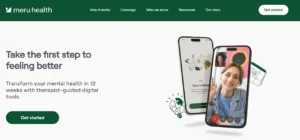
Clinically Guided Program for Depression and Anxiety
Founded in 2016, with headquarters in San Mateo, California, and Helsinki, Finland, Meru Health is positioned as a true digital therapeutic rather than a self-help app. It delivers a structured, therapist-led program designed for individuals with depression, anxiety, and burnout, often sponsored by employers or health plans.
Meru Health stands out for its clinical rigor. The platform combines licensed therapist support, asynchronous messaging, and structured CBT-based modules, enhanced by AI-driven progress monitoring.
Wearable data and behavioral signals are increasingly used to flag disengagement or symptom escalation, enabling proactive intervention. Meru Health has published multiple peer-reviewed studies demonstrating measurable reductions in depression and anxiety scores.
Pros
- Clinically validated and therapist-led
- Personalized treatment plans with human oversight
- Strong outcomes data and employer adoption
Cons
- Not fully self-guided
- Limited availability outside sponsored programs
What do people say?
Meru Health holds an average rating of 4.7/5 from about 1,700+ App Store ratings, reflecting strong user satisfaction with its therapist-guided digital treatment program.
Why choose Meru Health:
Choose Meru Health if you want a clinically validated, therapist-supported program that bridges traditional care and digital delivery. It is ideal for users who need structured treatment rather than standalone self-care tools.
2. Calm

Image Source: Calm
Best Overall for Sleep, Relaxation, and Everyday Stress
Founded in 2012 and headquartered in San Francisco, Calm remains one of the most widely adopted mental health apps globally. By 2026, it will have evolved from a meditation app into a comprehensive emotional wellness platform focused on sleep quality, stress reduction, and mental resilience.
Calm’s strength lies in its high engagement and accessibility. The platform offers guided meditations, breathing exercises, sleep stories, and soundscapes, increasingly personalized through AI based on usage patterns and sleep data from wearables. Calm is also deeply integrated into employer wellness programs, making it a common entry point for mental health support.
Pros
- Best-in-class sleep and relaxation content
- Easy to use with broad appeal
- Strong employer and consumer adoption
Cons
- Limited clinical depth for severe conditions
- Subscription required for full access
What do people say?
Calm maintains an average rating of around 4.8/5 across millions of App Store reviews, making it one of the highest-rated meditation and sleep apps globally.
Why choose Calm:
Calm is ideal if your primary goals are better sleep, daily stress management, and emotional balance rather than clinical treatment.
3. Headspace
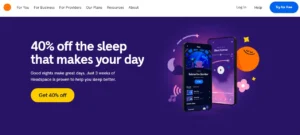
Structured Mindfulness and Meditation
Founded in 2010 with headquarters in Santa Monica, California, Headspace is known for bringing mindfulness into the mainstream through structured, educational content.
It continues to lead in guided meditation and mindfulness-based mental fitness.
Headspace offers step-by-step meditation courses designed for beginners and advanced users alike. Its programs address anxiety, focus, emotional regulation, and burnout.
AI personalization now helps recommend sessions based on stress patterns, mood check-ins, and consistency data. Headspace is also widely adopted by employers and health plans as a preventive mental health tool.
Pros
- Structured, beginner-friendly programs
- Strong focus on habit-building
- Trusted brand with evidence-based foundations
Cons
- Less suitable for acute mental health needs
- Primarily guided content only
What do people say?
Headspace maintains a 4.8/5 rating from nearly one million App Store reviews, highlighting its strong reputation in mindfulness and meditation.
Why choose Headspace:
Choose Headspace if you want a clear, structured approach to mindfulness that builds long-term mental resilience through daily practice.
Ready to Complement Your Mental Health Journey with
Expert Guidance and Solutions?
4. Happify
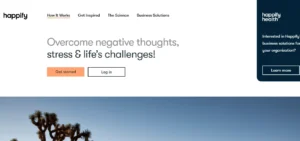
Gamified CBT and Positive Psychology
Founded in 2012 and headquartered in New York, Happify takes a unique approach by combining CBT, positive psychology, and gamification. It is designed to improve emotional well-being through short, interactive activities rather than long-form therapy.
Happify has expanded its AI-driven personalization to adapt activities based on mood tracking and engagement patterns. The platform is commonly used in employer and payer-sponsored programs as a low-friction mental wellness solution.
Pros
- Engaging, bite-sized activities
- Science-based CBT and positive psychology
- Easy to use and motivating
Cons
- May feel simplistic for some users
- Limited depth for complex conditions
What do people say?
Happify typically maintains ratings in the 4+ star range across app stores, reflecting positive engagement with its gamified mental wellness exercises.
Why choose Happify:
Happify is a strong choice if you want lightweight, engaging mental wellness tools that fit into a busy schedule without committing to therapy.
5. Wysa
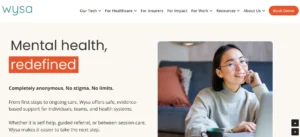
AI-Powered CBT Emotional Support
Founded in 2016 and headquartered in Boston, Wysa is a leading AI-driven mental health app focused on conversational emotional support. It uses a clinically informed AI chatbot trained in CBT, mindfulness, and emotional regulation techniques.
Wysa’s AI capabilities are significantly more advanced, offering context-aware conversations, mood pattern recognition, and escalation pathways to human coaches when needed. It is widely used by employers and health systems as a scalable first-line mental health support tool.
Pros
- Always-on, anonymous emotional support
- CBT-based conversational guidance
- Scales well for everyday mental health needs
Cons
- Not a replacement for therapy
- Limited human interaction unless upgraded
What do people say?
Wysa holds an average 4.8/5 rating from thousands of App Store reviews, reflecting strong adoption of its AI-based CBT support.
Why choose Wysa:
Choose Wysa if you want immediate, AI-powered emotional support that helps manage stress, anxiety, and mood in real time.
6. Youper
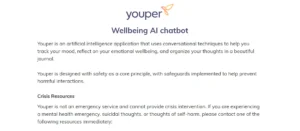
CBT-Focused Conversational Therapy Support
Founded in 2016 and headquartered in San Francisco, Youper is designed around evidence-based cognitive behavioral therapy delivered through conversational AI. Unlike general wellness apps, Youper focuses specifically on helping users identify thought patterns, emotional triggers, and behavioral responses.
Youper’s AI models will be more clinically refined, using mood tracking and longitudinal data to personalize CBT interventions over time. The app supports users dealing with anxiety, depression, and emotional dysregulation, and is often positioned as a daily mental health companion rather than a crisis tool.
Pros
- Strong CBT foundation
- Conversational interface encourages daily use
- Clear insights into mood and thought patterns
Cons
- No direct access to licensed therapists
- Requires consistent engagement for impact
What do people say?
Youper maintains high user ratings across major app stores, reflecting strong adoption of its CBT-based conversational therapy tools.
Why choose Youper:
Youper is ideal if you want structured CBT support in a conversational format to better understand and manage your emotions day to day.
7. Finch
Self-Care and Habit-Building
Founded in 2021 and based in the United States, Finch takes a gamified approach to mental health through self-care and habit formation. Users care for a virtual companion by completing real-world self-care tasks such as journaling, movement, or reflection.
Finch continues to stand out for engagement and emotional accessibility. AI-driven prompts adapt to user behavior, making it especially effective for younger users or those struggling with motivation, burnout, or low mood.
Pros
- Highly engaging and motivational
- Easy entry point for mental wellness
- Encourages consistency through gamification
Cons
- Limited clinical depth
- Not suitable for complex mental health conditions
What do people say?
Finch consistently receives 4.8+ star ratings across hundreds of thousands of reviews, reflecting strong engagement with its habit-building approach.
Why choose Finch:
Choose Finch if you want a gentle, motivating way to build daily self-care habits without the pressure of formal therapy.
8. Bearable
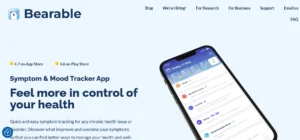
Mood and Symptom Tracking
Founded in 2018 and headquartered in the United Kingdom, Bearable focuses on detailed mood, symptom, and habit tracking. It is widely used by individuals managing mental health conditions alongside chronic illness or lifestyle-related triggers.
By 2026, Bearable will offer advanced analytics, AI-generated insights, and integrations with wearables to help users identify correlations between mood, sleep, medication, and daily behaviors.
Pros
- Deep tracking and analytics
- Highly customizable
- Useful for self-awareness and clinical conversations
Cons
- Requires regular data input
- Less guidance compared to therapy-focused apps
What do people say?
Bearable maintains high user ratings across major app stores, with users highlighting its detailed mood and symptom tracking.
Why choose Bearable:
Bearable is best for users who want data-driven insights into their mental health patterns and prefer tracking over guided interventions.
9. PTSD Coach
Evidence-Based PTSD Support from VA and DoD
Developed by the U.S. Department of Veterans Affairs and Department of Defense, PTSD Coach is a free, evidence-based app designed for individuals managing post-traumatic stress disorder.
PTSD Coach remains a trusted resource, offering psychoeducation, self-assessment tools, grounding exercises, and crisis resources. It is especially valued for its clinical credibility and accessibility.
Pros
- Evidence-based and free
- Strong educational content
- Trusted clinical backing
Cons
- Limited personalization
- Not a substitute for trauma therapy
Why choose PTSD Coach:
Choose PTSD Coach if you want a clinically credible, no-cost resource to support PTSD symptom management.
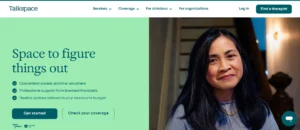
10. Talkspace
Online Therapy with Licensed Therapists
Founded in 2012 and headquartered in New York City, Talkspace is one of the largest online therapy platforms connecting users with licensed mental health professionals through messaging and live sessions.
Talkspace will continue to expand access to care through flexible plans, insurance coverage, and employer partnerships. Its platform supports therapy for anxiety, depression, trauma, and relationship challenges.
Pros
- Access to licensed therapists
- Flexible communication options
- Insurance and employer coverage are available
Cons
- Costs can add up over time
- Not ideal for crises
What do people say?
Talkspace maintains 4+ star ratings across major app stores, reflecting strong adoption of its licensed online therapy services.
Why choose Talkspace:
Talkspace is the right choice if you want professional therapy delivered digitally with the flexibility to fit your schedule.
How to Use Mental Health Apps Effectively
Mental health apps work best when they are used consistently and with clear intent. While these tools can provide meaningful support, their impact depends on how well they are integrated into daily life and, when needed, professional care.
- Set a specific goal before starting. Whether you want to reduce anxiety, improve sleep, build emotional resilience, or support therapy, choosing an app that aligns with a clear goal improves outcomes and long-term engagement.
- Use apps consistently, not intensively. Short, regular check-ins are more effective than occasional deep sessions. Daily or near-daily use helps reinforce habits and makes AI-driven personalization more accurate over time.
- Combine digital tools with human support. Apps are most effective when paired with therapy, coaching, or clinical care for moderate to severe symptoms. Use them as a supplement, not a replacement.
- Pay attention to data and insights. Mood trends, triggers, and behavioral patterns surfaced by apps can be valuable for self-awareness and productive conversations with clinicians.
- Prioritize privacy and boundaries. Choose apps with clear data policies and avoid over-reliance on notifications or constant tracking if it increases stress.
Used intentionally, mental health apps can become powerful, sustainable tools for emotional well-being.
Choosing the Right Mental Health App in 2026
Mental health apps are no longer “nice-to-have” wellness tools. The best platforms combine clinically informed methods, personalized experiences, and practical features that fit into daily routines. Whether you need therapist-guided care, AI-powered CBT support, sleep and stress relief, or mood tracking, the right app should match your goals and deliver consistent value over time.
Use these tools as part of a broader approach. For mild to moderate needs, apps can build habits and improve emotional resilience. For persistent or severe symptoms, apps work best when paired with licensed clinical care.
For digital health teams building mental health products, success increasingly depends on
HIPAA-grade architecture, AI agent readiness, and FHIR-based interoperability. Mindbowser helps teams design and develop secure mHealth solutions, deploy AI agents responsibly, and integrate healthcare data workflows using FHIR standards.