


In this HealthTech with Purpose podcast, Mahek Chhatrapati, CEO & Co-founder of DocNexus, shares the challenges faced during the development of DocNexus and his current focus on feature development and meeting evolving needs of the users.
In this podcast episode, Michael D. Robinson, Vice President of Healthcare North America at VMware, discusses how technology can improve patient outcomes and reduce costs in healthcare. He also talks about the importance of addressing health equity and the future of healthcare technology.
Kal Patel, CEO and co-founder of BrightInsight, joins host Ayush Jain to trace the path from physician and MBA to Boston Consulting Group, commercial roles in pharma, and founding Amgen Digital Health. At Amgen the question was why drugs that cost billions to develop underperform in the real world, and the answer he and his co-founders reached was that point solutions don’t scale: pharma and medical device companies need compliant, globally available infrastructure to build regulated software on. That became BrightInsight.
He explains impact at scale through his daughter’s seasonal allergies: a few data points captured between two doctor visits, personalized and summarized by AI, make the next visit far better informed. On selling to pharma, a conservative buyer for good reasons, he credits co-founders with industry backgrounds, the early backing of Flex, and opening every conversation with regulatory, privacy, security and quality before technology. He closes on culture, including monthly mental health Fridays, and on where pharma is putting AI first: onboarding, adherence and data summaries that stop short of practicing medicine.
At Amgen, Kal founded and led Amgen Digital Health around one question: the company spent billions bringing therapies to market, yet in the real world they reached fewer patients, and were used less effectively, than the clinical trials promised. The team built solutions wrapped around specific drugs to help identify patients, get them on therapy and keep them on it.
What he and his co-founders learned was that fixing problem one, then problem two, then problem three doesn’t scale. You can’t just run to AWS, Google Cloud or Azure and start building regulated products; you get more robust, compliant solutions faster on infrastructure designed for them. That is BrightInsight’s job: infrastructure for pharma and medical device companies to build regulated software at global scale. It’s the same gap Mindbowser works in when it builds software for medtech companies: IEC 62304-aligned development and testing, alongside the client’s regulatory partner, with HIPAA built in from the start.
Kal’s framing is that care is delivered one patient at a time, so scale has to happen behind the scenes while the experience still feels personal. His example is his daughter’s seasonal allergies: a doctor sees a snapshot every six months, built on what the family remembers. Capturing a few data points at the right moments between visits, through a smart device or simple prompts, gives the physician what they need to keep, change or add to a therapy.
AI makes that sharper in two ways he describes. It can personalize how and when it asks, since a 12-year-old and a 48-year-old respond to very different prompts, and it can summarize the data so the doctor isn’t left deciphering it. His point is that impact at scale means hyper-personalized care delivered through scalable technology, not turning everyone into a generic patient.
Pharma is a skeptical, conservative buyer, and Kal thinks it has good reasons: a handful of multi-billion-dollar products, drugs that go into patients, and a long discomfort with collecting patient-level data. Most pharma companies would rather be fast followers than first movers.
What helped BrightInsight was a founding team that had worked at pharma and medical device companies, including a co-founder with software as a medical device algorithm experience, plus the credibility of starting inside Flex, a company pharma already knew. The bigger lesson is language. BrightInsight opened with regulatory, data privacy, data security and quality management systems, and only then showed how the technology covered those risks. He also insists on knowing the customer’s disease area, even for a disease-agnostic product, because the person running a rheumatoid arthritis brand wants to know you understand rheumatoid arthritis. Miguel Amador of Complear made a related case on this show about treating regulatory compliance as part of how innovation reaches patients.
Finally, you need a champion on the client side, someone willing to fight internal battles when it’s easy to say no. Without one, he warns, you might make the sale but the project will turn at some point.
BrightInsight’s main product for pharma, its disease management solution, centers on a configurable patient app used across autoimmune, ophthalmology, oncology and rare disease. Kal sees AI touching every step, from screening to outcomes analysis, but pharma is starting where clinical and safety risk is lowest: easier onboarding, personalized adherence nudges, and summaries that support the doctor and patient conversation without making clinical recommendations. For teams building in this space, that puts FDA-compliant software development and the quality system around the model ahead of the model itself.
He adds that AI investment is now broad across pharma, citing Sanofi’s public commitment to AI and Amgen moving David Reese from head of R&D to CTO. The advice BrightInsight gives customers is to decide which AI capabilities must sit internally and which are better sourced from a specialist partner.
Hi everyone, welcome to another episode of the HealthTech with Purpose podcast. Our guest today is Kal Patel, founder and CEO of BrightInsight. With a background in medicine and consulting, Kal offers valuable insights into the merging worlds of healthcare and technology. We’ll explore his journey, lessons learned, and the profound impact of AI on shaping the future of patient care. Join us for this insightful discussion. Hi Kal, how are you?
I’m good. How are you doing today?
Very good, and really looking forward to this conversation. We have been following BrightInsight for some time, and you guys have been really making waves, so that’s fantastic. In today’s podcast we’d like to learn more about your journey and some of the lessons you can share from building BrightInsight.
Thanks for having me. I’m looking forward to talking about that.
So why don’t we get started right away. Why don’t you talk a bit more about your introduction, in the sense of your beginnings, what led you to starting BrightInsight and whatever you have built today. What were some of those experiences as you were growing up, or any particular things that happened in your life that made a major impact on you? If you can shed some light on those aspects, that would be fantastic to start with.
Yeah, sure. A lot to unpack there, and a lot of time between your comment about the early days and BrightInsight. So maybe I’ll just briefly touch on some of those, because I think they all fed into what we’re ultimately doing here at BrightInsight.
I’m a physician by education, physician and MBA by education actually, though I spent about seven years working in management consulting at Boston Consulting Group, working across all of healthcare: pharma, payers, providers, medical device and so on. That experience really opened my eyes to a lot of the challenges that are not just within one part of the industry but really sit across the healthcare industry.
A key part of the learning there, for me, was around how you drive impact at scale. A lot of the things being worked on were solving important but incremental problems, or were point solutions, whether clinical or process or technology. But very few things were really driving impact at scale. That was one of the things that really stayed with me from those early experiences.
The second part was really around how you align incentives. A lot of the challenges I saw were that even though something made sense in theory, the way the incentive systems were set up, there were key stakeholders who were not incentivized to really drive that adoption and deliver impact at scale, whether that was the provider, the payer, maybe the patient. There was often a lack of aligned incentives.
So I had a lot of that early experience, and then I moved directly into the pharma industry. I had different roles in the commercial organization at Novartis, in their US pharma business, and then at Amgen, where I did three different roles. I was head of corporate strategy, then the global marketing lead for one of their main assets, Enbrel, and then I founded and led what we called Amgen Digital Health.
At Amgen we were one of the early pharma companies that really focused in a deep way on data and digital technology. The question we framed was: we’re spending billions of dollars in research and development (R&D) bringing these amazing therapies to market, yet in the real world, like all drugs, they don’t reach their full potential, in terms of reaching all the patients they could help and then being used effectively by those patients to drive the full clinical impact for them.
So the way we set up Amgen Digital Health was around how we leverage digital technologies to improve the real-world performance of our drug therapies. We built solutions that wrapped around our drugs and helped solve, depending on the disease and the drug, one or multiple problems: getting those patients identified, helping those patients get on therapy, and then helping those patients use the drug appropriately so that they stay on therapy and are likely to achieve the clinical outcomes we saw in the clinical trials.
That really opened up my co-founders’ world and mine in a big way, on both the opportunity, which was massive, and the challenges of delivering against that opportunity. And that ultimately led to the creation of BrightInsight. What we saw was that building those solutions was not about doing point solutions, fixing problem one, fixing problem two, fixing problem three. To really do it, coming back to my point around scale, you needed compliant infrastructure that was globally available, on top of which you can build these solutions. You can’t just run to AWS or Google Cloud or Azure and start building these things. You would get much more robust, compliant solutions, faster, if you had the right infrastructure. And that’s what we do at BrightInsight: we provide that infrastructure for pharma and medical device companies to build regulated software solutions at global scale.
And you mentioned you were a physician, then you went into consulting, and then you became an entrepreneur. Was that something you had in mind when you were a medical student? Did you aspire to be a founder or to run a business, or was that part of your expectations growing up?
100% no. I think even if you had asked me a year or two before I moved to entrepreneurship, and I went to a telemedicine company called Doctor On Demand as chief commercial officer in between Amgen and starting BrightInsight, I would have said 100% no, I’m not an entrepreneur.
To be honest, with all those steps, I’m not one to say, let me think about how I’m going to plot out the next 10 or 20 or 30 years of my career. For me it’s been about where I see the big opportunity, where I’m passionate, and where I believe I can bring something to bear that’s going to drive differentiated impact. That’s what has driven me. When I went to medical school, it wasn’t to eventually go to pharma, as an example, or to become an entrepreneur. That’s what I was passionate about, that’s what I wanted to learn, and that’s where I saw the ability for myself to both get experience and drive impact.
In some ways a key part of my journey has been not to over-plan and not to be overly prescriptive, because then you box yourself in. When I was in medical school, there was no such thing, quote unquote, as digital health. I don’t think anybody had used those two words together.
Right. And we’ll probably touch upon AI at some point in today’s discussion, if time and opportunity permit, given how the world is changing.
One thing I’d like you to go a bit deeper on, because it was a very different and very useful thing you mentioned, is impact at scale. You mentioned that in your journey you got lucky joining one of the big consulting companies, and you were able to see impact at scale. Relating it to a founder’s or a startup’s journey, can you talk more about what it really means, and how to make yourself obsessed with this concept called impact at scale?
Yeah. I think healthcare is a particularly interesting space to talk about impact at scale, because ultimately health is a very personal and individual thing. At the end of the day our journeys and what we experience are unique to each of us, and in that sense healthcare is very personally delivered. Being a physician is a great example of that. In most cases you’re seeing one patient at a time. You’re not seeing 10 patients at a time or 100 patients at a time; you’re seeing folks one on one.
So the question becomes: in a world where care is ultimately delivered in a very personal, one-on-one way, can you drive impact at scale? If you think about that, you ask what the things are that you can unlock to enable it. What are the kinds of problems, and what’s the kind of innovation, that can create that impact at scale behind the scenes, while for an individual user it still feels very individualized and personalized? That’s the framing.
So if you take that broader lens and ask what can be done, let me use an example from one of my kids. My oldest daughter has seasonal allergies. She needs some kind of medicine to help her manage those allergies, so that the sniffling and her eyes watering and all that good stuff are better managed.
Today, you go to the doctor, you describe your symptoms, maybe they run some diagnostic tests, they write a prescription, and the typical experience is that you go home and hopefully that medicine works. You go back in six months, they ask how it’s going, and maybe they make some adjustments. That’s personal, but it’s not very data driven, because you’re getting a little point in time of what she’s experiencing, or what she’s remembering, or what I’m remembering, that we’re telling them in the doctor’s office. The big miss is: how is she actually doing between those two visits?
That’s where, for example, a technology solution comes in that can capture data, either through a smart device or through utilization of the device, or by just prompting her and asking what her symptoms are. Even capturing just a few data points at choice moments between those two visits would dramatically bring the right insight to that physician, so that when we go back in for our next checkup, they can make a more personalized, better decision: keep her on therapy, change it, add to it, try something different, whatever it might be.
That is just a small example of impact at scale. You can build that solution, and it can be deployed to every single patient in the world, frankly, who has a smartphone and has seasonal allergies. You start enabling them to collect that data, and you’re going to drive impact at scale across all of those users, because it’s certainly going to lead to a more effective conversation when they end up with their doctor.
And I’ll mention one more thing. You talked about AI, and that just becomes a natural place where AI can come in. AI can help you think through the right times to prompt and get the information. What’s the right way to get a 12-year-old to respond versus maybe a 48-year-old? How you engage them and prompt them to get that information, and what medium you might use, might be very different. AI is probably going to be very good at personalizing to my habits versus her habits in how it prompts us for the information it needs.
AI can also be very good at helping synthesize that information, so that when you walk into the doctor’s office, you’re not just giving them all this data that they then have to decipher. AI could be very good at taking it and giving the doctor a preliminary summary of the information, so it’s much faster for them to analyze. It could potentially even give the doctor a recommended diagnosis or assessment, getting much closer to a clinical assessment that the doctor can then validate. So there are lots of places, even in the example I gave, where AI can come in, and those are just small examples. AI can do a lot more than that, and it can sit on top of that.
So that’s really the opportunity. Impact at scale is not about fundamentally turning us all into a generic patient or a generic customer. It’s actually using the power of technology to hyper-personalize and improve the care and support we get, but with very scalable approaches to enable that.
Well said. I get the context: while it’s personalized, it’s at scale.
So Kal, another thing I was very intrigued to learn from you today: pharma is one of the tough areas to get into, especially as a startup, because the pharma industry as a whole is very skeptical about making any new bets unless they’ve already seen things happening elsewhere, which is a catch-22 for any startup. Tell us more about your journey: how did you crack your first customers, your alpha customer, when you started?
Yeah. So first, you’re right, pharma is a very skeptical and conservative buyer, and there’s good reason for that. Number one, as a business, they have assets that are typically multi-billion-dollar assets. A typical pharma company doesn’t have a thousand products. They have a handful of products, and each one of those is fundamental to the existence and value of that company. So they have these very valuable assets that they’ve spent billions of dollars bringing to market, and they’re naturally going to be very careful about anything that touches their drugs.
Secondly, these are obviously medicines that are going into patients, so there’s a huge element around safety that naturally should be there. Hence pharma brings the right level of thoughtfulness and conservatism around the safety aspect of it all.
And thirdly, when you move into digital, pharma is moving into a space where historically they’ve been very uncomfortable, which is collecting data about their end user in a patient-specific way. In fact, sometimes I laugh: you talk about social media companies, and pharma companies are the opposite. I don’t know any industry that tries harder to have less data about its end customer, because of this historical conservatism.
And has that changed over the years?
It’s slowly changing. You see this, for example, in pharma now hiring people into marketing roles who come from the consumer industry, at a level I’ve never seen before. And they’re talking about understanding their customers not just at the level of generic patient journeys, but really understanding what each individual’s journey is, doing that segmentation and trying to support it. So they’re slowly moving in the right direction, because there’s a lot of value to unlock for their patients and for their businesses.
But coming back to your question: they are very conservative, and they don’t typically want to be the first to do something. They want to be fast followers on proven innovation. So getting in the door can be a challenge. The things that really helped us at BrightInsight: number one, all of us as co-founders came from the industry. We had all worked at multiple pharma companies or medical device companies, and we had very established backgrounds individually as well.
This episode of the HealthTech with Purpose podcast is brought to you by Mindbowser, a product engineering and digital transformation company focused on health. At Mindbowser, we enable health companies to build the future of health with accessible, equitable [inaudible] patient care. We strongly believe that technology can empower a healthier world, and that’s why we are partnering with healthcare experts like you to make it happen.
Hi guys, thanks for listening to HealthTech with Purpose. Make sure to subscribe to us on Spotify, Apple and YouTube for more expert insights on industry innovation and transformation. And remember: share the knowledge.
[inaudible] the medical degree, but also engineering and other appropriate healthcare-focused backgrounds. One of my co-founders had done software-as-a-medical-device algorithms in his career, and so on. I think that goes a long way. Nothing wrong with it, but if you’re a group of innovators without that deep healthcare background, they’re going to be more skeptical than if you come in having walked in their shoes. So that’s one.
Secondly, we came to our first customers as part of a bigger company that they were also familiar with. Being part of Flex, or Flextronics, and being able to say, “Look, we already serve your industry,” went a long way for us. It gives that additional validation.
Those are the types of things that are important, but I’ll add a few others. At the end of the day, being able to say, “I’ve literally worked in the same job, maybe even at the same company you’re at today,” and talking their language is key. That means being able to start by not talking about the technology, but by talking intimately about the problem and the challenges. For us, we would start by saying: forget about the innovation for a moment. First you’ve got to talk about regulatory, you’ve got to talk about data privacy, you’ve got to talk about data security, you’ve got to talk about quality management systems. Then they’re like, “OK, now I get this.” You’re starting by understanding all the concerns they’re going to have, and then you can migrate to how your technology robustly covers all of those requirements and risks, before you talk about how it could actually drive that impact. So you’ve got to be able to talk their language.
And then in the early days you’ve got to find the sponsors. You’ve got to find the people on the other side who are not just willing to take risk, but willing to champion, willing to fight the internal battles to do something when it’s easy for people to say no. That takes a client who really has a similar level of passion to yours as the entrepreneur, and who’s going to partner with you and stick with you, so you can form that partnership to navigate all those challenges together. Because if you don’t have that, it’s going to fail at some point. You might make the sale, but at some point the project’s going to turn.
No surprises. Much in line, but something I can definitely take away is talking the customer’s language, and not putting a solution up front, but really working with them toward recognizing the problem and then working with them to find the solution.
I’ll give you another example. When I was at Amgen running the digital health group, I would have all these entrepreneurs and startups come to us, and it was so easy to tell within a minute who really understood our problem and our industry and who didn’t. And the reality is, for those who didn’t, their technology could be fantastic, but you’re just not going to work with them, because you’re never going to get there. It’s going to be too hard. They need to come in having done that work.
So even for us, even though we’re a brand-agnostic, therapy-agnostic solution for pharma today, we don’t walk in without understanding the disease area they’re working in. Even though our technology is agnostic to the disease area, we need to be able to say, “In rheumatoid arthritis we understand the disease, we understand the patient journey, we understand the specific challenges,” and then we can talk about how our technology helps within that. If we skipped from regulatory compliance straight to a generic tech discussion of our solution, the person running the rheumatoid arthritis brand is going to want to know that you understand rheumatoid arthritis. So you have to invest in really knowing the customer’s shoes before you can talk about the solution.
Makes sense, and thanks for sharing that context. So Kal, let’s talk about some of the current affairs at BrightInsight. Two things really stood out in my research. One was that you went through an exercise of rebranding and creating a new digital identity for the company. As a leader, what was your reasoning for taking that initiative, and what were your learnings, if you can share?
Yeah, the reasoning was quite straightforward. We’d been around with that branding for about five years, and we wanted to make sure that as the technology world and the digital healthcare world evolve quickly, our branding continues to reflect how we want to be positioned in the market: as leaders, as being modern, as being solid and trustworthy. So it was really about ensuring our branding stayed at the forefront and kept leading on the differentiators we see in ourselves. That was part of the logic.
It also becomes a good conduit to keep folks from just getting used to something. You want that balance: “We know BrightInsight, we know they’re well known for [inaudible]. But here’s a nice, slightly differentiated, updated look for them.” That just gives a little bit of energy.
And maybe a stimulus, so the next time they see BrightInsight…
Exactly. They’ll notice something different, instead of “I’ve seen that before.” Take any iconic brand, not to compare us to something like Coca-Cola, but why does Coke still go through refreshes? Everybody knows and trusts that brand, but it still gives everybody that slight pause: “Here’s a slightly different look,” and it still feels consistent.
Exactly. Cool. And the second thing I wanted to talk about, which I think you’ve done very well, is that you were recently recognized in the Forbes 2024 survey as one of America’s best startup employers. Talk to us about that, and primarily, what are some of the cultural hacks that you as a leader have inculcated or been part of?
Look, we were really proud of the Forbes recognition, because it’s totally third-party driven. They don’t ask us anything. They look at the data they can assess and come up with the list, so I think it’s very objective. We were certainly proud of the team and the whole company for the recognition.
In terms of cultural hacks, I don’t know if the word “hack” is appropriate in this setting, and I only say that because I don’t think culture is about shortcuts. I think it’s actually about what we’re doing all the time, and whether it’s how [inaudible]…
Decisions, maybe. I think you always have to make a choice.
Exactly, exactly right. I think those choices come through all the time. They come through in a one-on-one with somebody, regardless of who that person is or at what level. They come through in how we interact with customers and prospects, what we stand for and how we express our values. And they certainly come through in all the tough business decisions and discussions. So one thing is just having that common view of what we stand for.
An example of that: we really believe that in order to do our best work, we have to really be taking care of ourselves. So we do things like mental health Fridays, where once a month the company is off on a Friday. Some days I’ve used that to go up to wine country with my wife and have a nice relaxing day. Sometimes I’ve used it to catch up on emails or on bigger problems I wanted to think about but didn’t get a chance to, because the work weeks had been too hectic. The point is, it’s time for me to decide what I need to do for myself, whatever that is. That has been with us since the beginning of COVID, as a small example.
Another example: if somebody needs time off, I’ve never seen anybody in this company say you can’t take time off to do something for yourself or for a loved one. If you need to fly across the world to take care of a relative in another country, we always say, “You go do that, we will figure it out.” It’s never, “You can’t do that,” or “You have to keep working while you’re taking care of something else.” We all immediately default to how we support each other with what’s happening in our personal lives that needs attention, and we’ll figure out the work. I think that gives folks the ability not to have to artificially compartmentalize their work life from everything else going on at home.
I have three kids, so I have constant examples of that. I’ll say, “Sorry, I can’t be on video for this one, my daughter missed the bus and I’m driving her to school,” which is what happened this morning. I had a call with somebody and said, “Sorry, I’ve got one of my kids in the car, I’m dropping her off.” And that’s just how we operate. There’s no feeling bad about that, and there’s no judging anybody else for it.
Then there are also very important things oriented around why we’re here, so that we’re constantly focused on the impact we’re trying to drive, coming back to your question on impact at scale. I always say everybody at BrightInsight could get five other jobs quickly. They’re here because they really believe in our mission and our vision, and we’re extremely committed to that. So we have a real desire for problem solving in a pragmatic way to get to that outcome. It’s not about bureaucracy, and it’s not about “it’s my job” or “it’s your job.” It’s about what we can be doing as a team to move faster, better and more robustly toward driving impact at scale for patients through digital. That orientation really aligns everybody in a very motivating and healthy way, and it helps cut through a lot of the inefficiencies or bureaucracy that otherwise naturally happen as a company grows.
Oh, I can understand. I can totally relate, running my own company. These small things add up. Sometimes you just initiate a small thing, but it goes a long way for people to find a reason to like your place, or to come to work for the company or the vision you are building.
And to be clear, we are far, far from perfect. I’m far from perfect as a leader, and as a company we’re far from perfect. It’s a journey. We’re constantly learning, we’re making mistakes, we’re trying to get better at it. But I think we have an orientation that we’re in it for the right reasons, we give each other that support, team first, and then we try to learn and get better.
Yeah, that’s the way it is: continuous improvement.
The last thing I’d like to cover today is the big elephant in the room, AI. I’d especially like to ask you from the context of where you are today, building digital transformation for bioscience companies, pharma and so on, because these companies have typically been known as laggards in taking up new technology. If you can take some time to elaborate, as an insider, as a person who can speak from that industry: where and how is AI having an impact? What are the opportunities you see, both problems and solutions?
So our main product that pharma uses is something called the disease management solution. It’s highly configurable, and a key part of it is a highly configurable patient app. Regardless of the disease area, and we’re in everything from autoimmune diseases to ophthalmological diseases to oncology to rare disease, we have this fundamental technology, the disease management solution.
When you look across the types of things we’re doing, AI can enhance virtually every aspect of it: from screening to diagnosis to therapy selection, which is more the top of the funnel, if you will, to treatment onboarding, actually helping the patient manage that specific disease for them personally, helping them stay persistent or adherent to the therapy, and analyzing the data and thinking about the outcomes. There’s a huge opportunity for AI to have an impact across all of that.
But to your point about how you bring this kind of technology into a conservative industry: what we’re focused on with our disease management solution (DMS) and with our customers is what we can do that is ultimately lowest risk from a clinical or safety perspective. So it’s things like: can we use AI to make it easier to onboard a patient onto therapy? For example, even just filling out the forms you might be filling out, or providing your background information. Can we use it to personalize the interventions that keep you adherent to your therapy? That might be AI deciding that Ayush is going to get a text message with this kind of reminder, and Kal is going to get an email with this in it, instead of just having a regimented intervention protocol.
Another example is how we take the data we’re collecting, like the example I gave with my daughter and her symptoms, and use AI to summarize it. Again, not to make a clinical recommendation, but to summarize it so that it can be used to have a more efficient, effective conversation between the healthcare provider and the patient.
So these are the types of areas where we’re pushing with our DMS solution. They can have a big impact on experience, and ultimately enable a better conversation and clinical outcome, without moving into AI practicing medicine. I think we’re still a ways away from having both the technology ready for prime time and, certainly, our customer base ready to jump into that. We’ll get there eventually, but it’ll be a journey.
Right. So we can definitely see that the technology has the promise that things can be done. But today, is the CIO of, let’s say, any large pharma company already looking at AI as something they want to invest in, or are they still skeptics who want it to prove itself first? What has that been like?
I’ll tell you that AI is definitely a huge area of investment, I would say virtually across every company we’re working with, and even the ones we’re talking to that we’re not yet working with. To give you an example, Sanofi is a public customer of ours. Their chief digital officer, Emmanuel, has talked a lot about AI, and even their CEO, Paul Hudson, has published about the company being all in on AI. So they have a very extensive portfolio of areas where they’re applying that technology.
Look at another company like Amgen. They recently took their head of R&D and made him the CTO of the company, which I think is a really interesting move: taking David Reese, who’s an amazing person and an amazing R&D leader, and having him focus on how to leverage technology to improve not just R&D, but to drive impact at scale across the company. A huge part of what David has already been doing has been around leveraging AI, and I think they might even have publicly announced some things with Nvidia and others.
So it’s for sure where the industry is heading, which is great. But similar to the point I made earlier, they’re thinking about which use cases are less likely to directly put them at risk, if you’ll excuse me. And secondly, what we’re encouraging them to think through is which capabilities they need to build internally versus which capabilities they need to find a best-in-class partner for. Again, what Emmanuel at Sanofi would tell you is: why would I rebuild what BrightInsight does? I have so many other problems to tackle that are going to drive value, where a partner doesn’t have the right capability or the capability really needs to sit internally.
That’s the part that becomes important now. There’s going to be no shortage of areas where AI can drive an impact. The question is how and where you build that capability internally, versus where you partner for that capability with a best-in-class partner who can work with your organization to unlock that problem and that value.
Yeah, that’s where a company like BrightInsight would come in, doing the heavy lifting to build those solutions.
Yeah, exactly. And remember, again, we fundamentally come from a compliance-driven perspective, which is very important in general, but particularly from an AI perspective. It’s not that we’re building and deploying these solutions outside the context of the quality management system and the regulated space we enable our customers to operate in.
Yeah, that’s common for all of pharma and health, and I understand. Cool. Thank you so much, Kal. It has been a real pleasure spending the last 40 to 45 minutes with you on this podcast. There were some really great insights I was able to learn, and I feel the same will be true for all our audience who tune in to this podcast. Thank you so much.
And thanks for having me.
Wish you all the best on your journey, and thanks.
Same to you, and I appreciate you reaching out. I enjoyed the conversation as well.
Thank you. All right, cheers.
Thank you for joining us on the HealthTech with Purpose podcast. Before you leave, make sure to like and subscribe on Spotify, Apple and YouTube. And if you would like to see someone on this podcast, do refer them to us; my contact details are in the description. Before I leave, I wish you stay healthy, stay curious and keep [inaudible].
At the time of recording (published May 2024), Kal Patel was CEO and co-founder of BrightInsight, a company that provides compliant infrastructure for pharma and medical device companies to build regulated digital health software. A physician and MBA by education, he spent about seven years at Boston Consulting Group working across pharma, payers, providers and medical devices. He then held commercial roles at Novartis in its US pharma business and three roles at Amgen: head of corporate strategy, global marketing lead for Enbrel, and founder and head of Amgen Digital Health. Before starting BrightInsight, which began inside Flex (formerly Flextronics), he was chief commercial officer at the telemedicine company Doctor On Demand. LinkedIn: https://www.linkedin.com/in/kal-patel-m-d-mba-92b693b/
Building software that has to hold up to a pharma or medtech quality review? Tell us what you’re working on and we’ll walk you through how we’d build it compliant from day one.
Join us on this episode of ‘HealthTech with Purpose’ as we delve into the challenging world of medical device startups with Scott Nelson, Co-Founder, President, and CEO of FastWave Medical. Scott shares insights from his extensive experience in the med-tech space, discussing the unique challenges of building from scratch to becoming a medical maverick in the medical device startup arena.
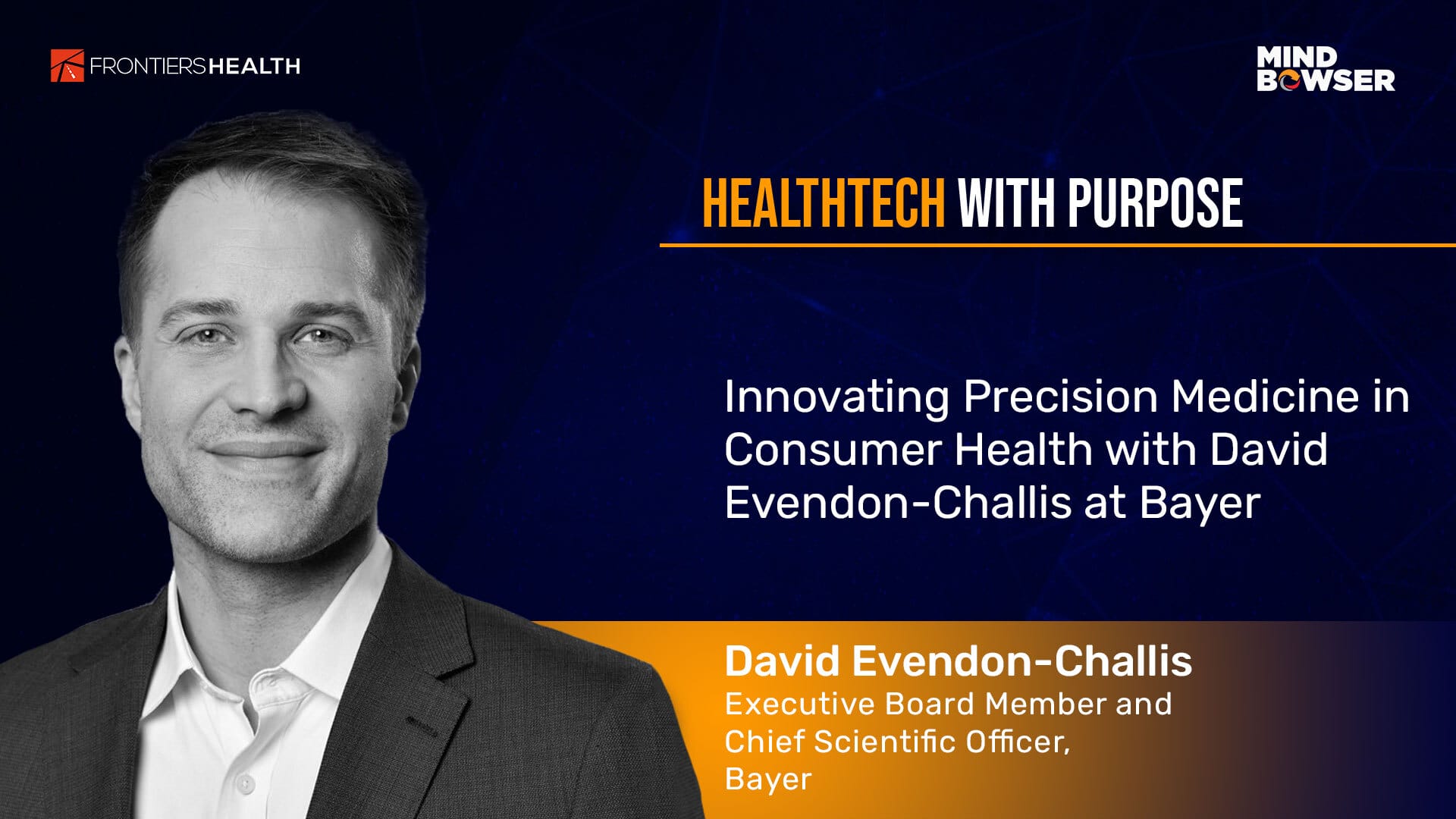
Join us in an insightful HealthTech with Purpose podcast episode as David Evendon-Challis, Executive Board Member and Chief Scientific Officer at Bayer, discusses innovative consumer health advancements.
Partner with us to design, build, and scale digital solutions that drive better outcomes.
Global Tech Teams LLC, 525 Washington Blvd, Industrious at Newport Tower, Jersey City, NJ 07310, United States.
Let’s discuss your goals, workflows, and next steps in a focused consultation call.
 Schedule a Call














 BLOGS
 NEWSROOM
 CASE STUDIES
 WEBINARS
 PODCASTS
 ASSET HUB
 EVENT CALENDAR