
Mahek Chhatrapati, CEO and co-founder of DocNexus, joins Mindbowser’s Rushikesh Kulkarni to talk about building a healthcare AI company from outside healthcare. Mahek started as an engineer at a chemical refinery, worked with large aerospace and petrochemical companies, and spent time at Amazon and AWS during the COVID-19 pandemic before co-founding DocNexus with two fellow Duke University graduates.
DocNexus began with a weekend web scraper built to help a colleague find top pediatricians and neurologists for a vaccine launch. It grew into a data platform that helps pharmaceutical and medical device companies find key experts by joining publications, trials, payments, social media and internal data into knowledge graphs, plus an NLP engine that summarizes field notes against a medical ontology. Mahek is candid about the lessons: enterprise sales cycles run far longer than accelerator timelines suggest, founders must listen before they pitch, and feature requests have to be weighed against long-term vision. He shares how he sees large language models as collaborative tools, how his remote team across the US, Latin America and Asia Pacific builds culture, and why predictive models for chronic disease patients excite him most.
The problem DocNexus solves starts with scattered data. A pharmaceutical company launching a product has to find the right experts, which means reading scientific literature and clinical trials, scanning digital channels like Twitter and LinkedIn, and checking internal systems such as IQVIA data, Veeva or Salesforce. Joining those sources into one view of a person is hard. DocNexus builds knowledge graphs where each physician is a node connected both to the people they work with and to every data stream they appear in: publications, trials, payments, posts and patients seen. Kahun’s Michal Tzuchman Katz described a related approach on this show, a knowledge graph built from clinical citations in the medical literature, used as ground truth for clinical AI.
The second product came from listening to medical affairs teams who generate thousands of insights a month from conversations with healthcare providers and can’t tell what matters. DocNexus built an NLP engine to summarize text, extract keywords by cross-referencing a medical ontology, and enable medical search. As Mahek puts it, counting that myocardial infarction appears 14 times in a paper is only useful if it tells an organization what to do next.
Mahek had never worked in healthcare or scaled a product from zero, and the learning curves showed up fast. Processing hundreds of millions of publications, trials, payments and social posts rules out the usual one-month MVP. When he joined Techstars, he assumed onboarding the large pharma names would take two months; it didn’t. His advice is to stop pitching and start listening, because what customers ask for now differs from what they asked for two years ago. He sorts feature requests into two tests: can we build what the customer needs, and does it fit where we want to take the company long term, since it’s easy to go down “the customer rabbit hole.”
Mahek treats GPT-3 and GPT-4 as collaborative tools and argues companies that don’t embrace them will fall behind. He gives two examples: pharma companies deploying chatbots that answer physicians’ drug safety questions in seconds instead of hours of manual document search, and his own team using ChatGPT to classify hundreds of thousands of drug names by therapeutic area in a fraction of the weeks it would have taken by hand. Both sit squarely among the ChatGPT use cases in healthcare teams were testing in 2023. He is clear about the limits, naming concerns about inaccuracy, data privacy and compliance, and says the models are “a good foundation” to build on. Getting from that foundation to production is where deploying large language models securely, on-premises or in the cloud, becomes the real work.
DocNexus was born remote during the pandemic, with teammates across US time zones and later in Latin America, the Philippines and Asia Pacific. Weekly game sessions helped, but Mahek says what mattered more was a weekly or twice-weekly open forum where leaders just listen, and time spent understanding what engineers face day to day, personally as well as at work. His reasoning: “people don’t join startups because of money or stock,” they join out of passion, so founders should put themselves in their employees’ shoes the way they do with customers.
Looking ahead, Mahek is most excited about AI that supports physicians directly, and about predictive models for people with chronic diseases such as cancer, diabetes and heart disease. He describes a patient who misses an appointment and rarely gets followed up, and asks how a system could tell whether that patient is in a green, yellow or red state and what the next best action is. That kind of predictive analytics is where he believes AI will keep improving patient outcomes. For DocNexus itself, the long-term goal is a two-sided marketplace where healthcare providers talk to each other and to the life sciences companies building new treatments.
[The host’s opening introduction, before 00:25, is not captioned.]
Excited to be on the podcast. Thank you.
Thanks for joining us. So where are you joining us from today?
I’m joining you from Seattle, Washington. It’s not rainy for once, so it’s exciting, and it’s back to summer weather.
Amazing, amazing. So Mahek, before we start, I would like to know a bit more about you and your background. I’m sure everyone who’s watching would also like to know a little more, so why not start with that?
Yeah, happy to share a little bit of my background. I’m CEO of DocNexus, a healthcare AI company. My journey into healthcare was pretty unique. I started off as an engineer working at a chemical refinery, then ended up transitioning into working with a lot of large aerospace and petrochemical companies, from the NASAs and SpaceXs to BP. Then I eventually went on to do my MBA, and I spent some time at Amazon in the middle of the COVID pandemic, where I helped build out some algorithms on the retail side. Then I was at AWS most recently, servicing folks across the enterprise as well as the life sciences sector.
It’s a very interesting background. And I think it’s been a while that you’ve been in the health tech space.
Yeah. I would say the health tech space has been something I grew up with, seeing my parents and family members going into healthcare, typically into nursing or doctor professions. It’s been an exciting journey. I didn’t really envision myself jumping into healthcare so soon, but I think COVID, seeing all these things across the ecosystem, was kind of inspiring.
Awesome, awesome. So tell us a bit more about DocNexus, a little more about the company.
I’ll start off with a little background on how we even came up with the idea of DocNexus. My background is far from healthcare. Myself and two other co-founders met at Duke University. We were all really excited about starting a company and about the landscape of entrepreneurship. My CTO’s background is very unique: he’s a doctor who practiced internal medicine for about five years, then worked at large pharma, and is now a full-on front-end and back-end developer. So he’s seen things from being a doctor to now being on the development side of cutting-edge products.
The way we started was actually from a problem statement. One of my colleagues was launching a new vaccine at a large pharmaceutical organization, and the biggest thing he found was that getting in touch with key experts across the ecosystem was hard. Talking to pediatricians, talking to top neurologists around the world, is difficult. So we built out a web scraper, essentially over a weekend, to figure out who these top neurologists and pediatricians were. We showed that to the large pharmaceutical organizations and saw real interest. So, in typical Amazon fashion, we decided to go and talk to hundreds of customers across the ecosystem, the Pfizers, the Mercks, the GSKs, to figure out if this was actually a pain point. Since then, we decided to quit our full-time jobs, join Techstars, and we’ve been on the journey of DocNexus ever since. That’s how we came up with the idea.
Quickly, about what we do at DocNexus: we’re a healthcare AI company. At the core, we help pharmaceutical and medical device companies find key experts so they can get their products to market faster. For me, growing up, one of the most important things was spending time with family. Unfortunately, my grandparents passed away from Alzheimer’s and cancer, like so many other loved ones do. So we decided the mission of our company would be to help folks bring new life-saving products to market faster, across pharmaceuticals and medical devices. Today we’re a data platform. We scour through millions of publications, trials, payments and even social media to figure out who those key experts are: who can join scientific advisory boards, who can run clinical trials for you as principal investigators (PIs), or who can help you do competitive due diligence as you bring that new product to market.
Great, amazing. And I see DocNexus is leveraging AI, and the product is AI-powered. Can you share a little more on how it provides insights and connections in the healthcare ecosystem?
I think the first way to think about it is that in healthcare there are so many disparate data sources. Let me walk you through it. If you’re a Pfizer or a Moderna and you’re trying to bring a new product to market, you have to figure out who the key experts are. To do that, you have to read through a ton of scientific literature, look through digital assets, and even look through internal data. Scientific literature could be public data on publications as well as clinical trials. Digital assets means Twitter, LinkedIn and other data sources. And internal data could be data from IQVIA, or from your internal systems like Veeva or Salesforce. What we found is that it’s very difficult to join all these datasets together to create a holistic view of one person.
So we leverage AI by creating what we call knowledge graphs. A knowledge graph is a graph where you have nodes. Think of a node as a physician. That node is connected to the other people they engage with, but it’s also connected to every single data source or data stream that individual has participated in. So if an [inaudible] or a [inaudible] has written publications, run trials, received payments, posted on Twitter or LinkedIn, or seen certain patients, we take that one node as that individual, connect them with all those different data streams, and use that to create a holistic view of that one individual. That’s how we’re leveraging AI on the knowledge graph side.
In addition to that, I think the big buzzword has been generative AI, and it’s been taking the industry by storm. We started before a lot of these big buzzwords were announced, and honestly, forget about the AI; it’s more about the pain point customers face. That’s really where problems emerge. One problem we saw, talking to folks across the large pharmaceutical sector, was that one of their biggest pain points was processing notes: processing the conversations they have with leading healthcare providers. You’re talking to a healthcare provider, and you have a massive team of 25 to 30 people. How do you figure out what’s valuable and what’s not? Customers would generate thousands of insights per month. So we created a natural language processing (NLP) engine, where we summarize text, extract keywords by cross-referencing them with a medical ontology, and enable medical search. Some of the algorithms we’ve built have surpassed both Google and Facebook on that end as well.
Amazing, amazing. I believe what’s critical here, and it would be great if you could shed some light on it, is the whole context-building around the keywords. A certain keyword in a healthcare or life sciences industry would mean something different from its common context. When we’re talking about AI sourcing through a series of data, as you mentioned, plotting and mapping that context is key. I won’t say it’s IP, but creating the whole context around the keywords is really important here, right?
Yeah, I think that’s a good point. If you think about keywords and search, the industry has changed. It’s great to count the number of times a symptom, a healthcare provider or a healthcare organization has been mentioned, but what do you do with that? How do you take “myocardial infarction has popped up 14 times in my paper”? What am I supposed to do with that statistic? That’s what we try to make sense of. We try to paint the broader picture: this myocardial infarction has popped up 14 times, and this is what I’m going to go and do with it. Now I need to take action as an organization and figure out how I’m going to look at the product from a testing and safety perspective, because this is going to impact millions of people long term. That’s the light we’d like to shed for our customer base and even our operators.
Amazing. That makes total sense. So while building DocNexus as a company and as a product, what were some of the challenges you faced? What keeps you awake at night?
That’s a great question. The macroeconomic conditions are not what they used to be, compared to last year or even a couple of years ago. Luckily, I think the healthcare industry is rebounding, and rebounding quite well as a whole.
Some of the challenges we saw: coming from my background, I had never been in healthcare, number one, and I had never built and scaled a product from zero to one. So for us there were a lot of learning curves, like any other startup. You start a company and you think a product goes live in a month or two, and you build MVPs quickly. When you’re processing hundreds of millions of publications, trials, payments and social media posts, that isn’t doable. Thinking with a clear head about what the long-term strategy should be on the product development side is key.
Secondly, within pharma and med devices, and this is the case for a lot of B2B startups out there, enterprise sales cycles are not what you assume they’re going to be. When I joined the Techstars program, I assumed it would take two months and you’d onboard the J&Js, the Pfizers and the Modernas of the world. That’s not the case. You have to be open and really learn what your customers are asking for. I think a lot of founders make the mistake of pitching the customer without even listening to what they want; they’re just pitching. Starting off by learning what your customers are asking for, especially in this environment, matters, because it’s a lot different from what they were asking for a couple of years ago. Now you’re seeing the emergence of generative AI; people are starting to get into NLP and understand what AI is actually about, and trying to understand the use cases. That’s probably the biggest thing I’ve learned to date.
What keeps me up at night right now is feature development. There are so many features customers have asked for, and we’re trying to meet the needs of every single customer out there. That’s something I’m actively working on.
Awesome, awesome. When you say feature development and some of the challenges, are they particularly tech challenges, like how to scale up, how to deliver on time, or which stack to use? Or are they more about understanding what customers are asking for and building on top of it? Just to have a little more idea.
I would say they fall into two camps. The first camp is product development: actually building and meeting the needs of the customer base, and, as product feature requests come in, being able to assess them and build them. The second camp is whether that aligns with the long-term vision. You can go down the customer rabbit hole of building something because customers asked for it, but that’s not where you want to take the company long term. So it’s about finding a balance between what customers want and where we want to build this company, where we see ourselves. For us, that’s been the answer.
Great, great. So where does the majority of your time go as a CEO? You’re handling certain tech aspects, and at the same time talking to a lot of customers, with all the different scalability issues. Where does the majority of your time go, at least in the current phase?
There’s no clear-cut answer; it depends week to week, to be honest. I like to spend the majority of my time on two things. The first is focusing on the customer and understanding more of the use cases that are coming about, whether across pharma, med devices or even startups. Startups have the best ideas, and startups are typically early adopters, so I love to focus on that side. The other side is the product. As a CEO, focusing on what you’re building and how you’re delivering value to customers is equally important. And lastly, like any other venture-backed startup, you also have to focus on your investors and what they’re looking for. So it’s split between those three camps. Today it’s mostly on the customer, but that’s how I see my role.
Awesome. So in the health tech space, especially with all this tech coming up, what’s your take on the opportunities, and what are the major problems that technology is going to solve?
I think that’s a very important question, and the world is still figuring out what it means. I actually just read an article yesterday from BCG about where the highest adoption of large language models will be today, and it’s probably going to be in the medtech space. They’re expecting over 90%, 95% growth year over year within that space. This could be across research and development, opportunities in marketing and sales, which we’ve all seen with GPT-3 and GPT-4, and involvement in corporate functions, like generating content and automating forecasts.
For us specifically, where we think there’s going to be further adoption is automation of tasks. A lot of tasks that are done manually today can be done in a much more efficient way with some of the models that exist. That’s the adoption we’re going to keep seeing. We recently talked to a couple of large organizations, and here’s an example where a large language model was very useful. Today, pharmaceutical companies talk with healthcare providers across the ecosystem. A doctor has a question: they’re treating their patients with a drug from a large pharmaceutical company, they have a question about the safety of that drug, and who do they ask? They go and ask the pharma company. Pharma companies have actually developed AI chatbots, so they no longer have to talk to healthcare providers for basic questions. The doctor can come in and ask as many questions as they want, and the chatbot returns the answers. Instead of waiting two or three hours while people manually search through documents to find the answer and send it to the physician, the AI chatbot can do that within seconds. So I think we’re going to see further adoption of chatbots across the industry, further adoption of GPT-4 and GPT-3 models, and we’ve seen that with prompt engineering roles continuing to grow. That’s my take.
Interesting, interesting. There’s a lot being said about ChatGPT and OpenAI, as you mentioned. With respect to DocNexus, do you see it as more competitive, or as something that can be used collaboratively to do things much faster?
From a DocNexus perspective, I would say overall, ChatGPT, GPT-3 and GPT-4 are all collaborative tools. If you’re not willing to embrace them, you’re just going to fall behind. One analogy I like is two moments in history that everyone remembers: the Industrial Revolution, and the 2000s. The world was very different back then, and any innovation was seen as taking away human jobs. I don’t think that’s the case. We saw it with the Industrial Revolution, we saw it in the 2000s with computers, laptops and the growth of the internet, and we’re seeing it again in 2023.
So for us, we’re trying to embrace GPT-3 and GPT-4 models as much as we can. I actually used it two days ago for a very manual task: we had to scan through hundreds of thousands of different drug names and associate each one, this drug is a dermatology product, this is a cardiology product, this is an oncology product. If my team and I had to do that manually, it would have taken us not days but weeks or months, and ChatGPT was able to do it in [inaudible] hours. So I think leveraging that technology is going to be key long term.
Here’s another example that anyone who’s a developer, in healthcare or not, has seen: Copilot. Copilot helped across the ecosystem by reviewing code and providing suggestions, and GPT-3 and GPT-4 are doing the same thing. They’re a good foundational base. They may not be the answer, and there are a lot of concerns out there today around inaccuracy, data privacy and compliance. But it’s a good foundation, and you can take that foundation and build on it. At least at DocNexus, that’s how we see it from a product perspective. We can use GPT technologies to help us grow faster and deliver value to customers better, and we can also use them to train models and build better solutions. Overall, we’re trying to leverage it as much as we should, and I think that should be the case for any emerging startup or even any large enterprise.
That’s a very interesting and good take. From a collaboration perspective, it’s helping reduce weeks of effort to two days, so you can basically do more. It’s a productivity tool, at least as of now.
Yeah. And as we’ve seen with Y Combinator, Techstars or any of the other accelerators, so many startups are launching every other day leveraging generative AI. A lot of these startups are going to be very important in shaping what the future workflow looks like. I’m not even thinking about it from a healthcare perspective right now, just from an AI perspective. One of the biggest themes in the potential mission of OpenAI, which I heard on another podcast where Sam Altman was talking, is that he wanted to create a world where everyone has an AI assistant that can help them with daily tasks, from answering phones to emails to a variety of things. I think we’re starting to move into that world, where generative AI tools are emerging not only for fun and pleasure but also for corporate functions: helping you optimize your financial functions, or optimize things across the medical affairs ecosystem. We’re going to keep seeing that over time.
Yeah, exactly, exactly. So what are some of the lessons or best practices you’ve learned from your previous experiences that you’re applying at DocNexus?
My background and my experiences have spanned engineering, being a product manager, and even working in venture, so I’ve seen the other side of the table: from building a product to deciding whether a founder is a good founder to invest in. Now, being on the other side, I’m very appreciative of having those experiences.
The one thing I’ve learned, and this may be cliché advice, is that from a product development side, it’s very difficult to build a meaningful product that customers love. That’s what a lot of startups are trying to figure out: how do you find that customer love, where they’re excited to message you in the middle of the day, or in the middle of the night if something’s wrong with the product? How do you make your customers happy? That’s number one.
Number two is thinking about it from the founder side. On the venture capital side, it was very easy to dismiss a startup founder: they need more traction, they need a better go-to-market strategy, they need a better product. Being on the startup side, I’ve realized those things are actually very difficult to achieve, and especially to do in a couple of months. That’s the hardest thing. So the one thing I take away as a founder is building that strategy, and the simplest thing is objectives and key results (OKRs) and key performance indicators (KPIs). If you’re not tracking yourself on key performance indicators, on how you can improve your business across investments, product or customers, every single week, you’re not doing it right. That’s one thing I’ve really learned and implemented across our team.
Awesome, awesome. Finding your product-market fit is really, really key. That’s one of the important things, and as you rightly said, finding out what will make the customer happy, and then implementing it to that depth, which also helps everybody grow along the journey.
Yes, exactly.
So we talked about the whole engineering and some of the challenges. But when it comes to a startup or an organization, cultivating a culture is really, really important. So how do you foster a culture of innovation and collaboration at DocNexus?
That’s a good question. We actually started around the COVID pandemic; we were born in the COVID era, so we started as a remote team first. That’s been very interesting, to be honest. We’ve experimented a lot, we’ve failed a lot, and we’ve learned from that. We started off, like everyone, doing Zoom meetings, and you have to figure out how to build a culture across a team spread across the country. I’m on the West Coast, I have a couple of teammates on the West Coast, some in Central, and some on the East Coast. How do you foster that culture? That was one of the biggest things we questioned.
It started off with: let’s do a fun event once a week where we get the team together, not discuss anything about work, and just play games. That goes a long way and really helps build culture. But what’s more meaningful is understanding your teammates, what they want to do and what they want to talk about, and listening to them. Having a meeting once or twice a week where you just listen, and keeping it as an open forum, has been instrumental to our success. Our team is actually not only in the US; we’re also in Asia Pacific. As a CEO whose team went global in a very short period, about seven months, you have to figure out how to make it work for everyone. You have all the tools: Slack, Zoom, screen sharing, gaming-type systems. But the most important thing isn’t the games or the virtual piece; it’s the interactions. So we try to meet with each other regularly, and we’ve started doing more in-person events as well, which I think builds more camaraderie long term. For us, it’s sitting down with your engineers in Latin America or in the Philippines and trying to understand what they’re facing on a daily basis, not just from a work perspective but also personally.
Amazing, amazing. Thank you for sharing, because some of these thoughts are really interesting, especially when the team is remote and you’re trying to make sure everybody grows together and has the same feeling of growth and of being proud of what you’re building. That’s equally important, because only then does the whole integrity, and “what can I do best for the company,” come into play.
Exactly right. It’s a hard thing to do remotely, and I don’t think I have all the answers. We’re still going to be figuring it out as we go, and I think that’s completely okay. You always put yourself in the shoes of the customer, so why not put yourself in the shoes of your employees, your engineers, who are excited about what you’re building and aligned with that vision? That’s the reason they’re on it. People don’t join startups because of money or stock or other things; they join startups because of passion. That’s the one thing we try to maintain at DocNexus.
Great, great. That’s a great thought. Moving ahead, what are some of the trends or developments in healthcare that you’re excited about? It could be in the AI domain or any other tech, something you feel would change a lot in healthcare.
From the healthcare domain, there are a lot of things. I’m very interested in how AI is going to help support not only the life sciences ecosystem and medical devices, but also physicians and the actual healthcare providers delivering care across the ecosystem. Let me give you an example across those three pieces. Today at DocNexus, we’re basically a search engine for pharma and medical devices. Just like Google, you can come in, type the name of a hospital system, a doctor or a drug, and find all the information about that person or entity.
From a physician’s side, I’ve seen tools emerging like [Glass] Health, which basically helps diagnose patients. You put in the symptoms and conditions of a patient, and it outputs the prescription pathway and the treatment pathway for that individual.
Moving further, and this is an area I’m really excited about and where I think the future is headed: how do you build predictive models that have a better impact on patients long term? There are so many people in the world dealing with chronic diseases. Everyone probably knows someone who’s dealt with cancer, diabetes or heart disease, and those diseases continue to be prevalent across the world. Building predictive models matters. Let’s say my grandmother gets sick and isn’t able to make her appointment that day. How many times do doctors actually follow up and figure out what’s going on with that patient? Not that often. So how can I know whether a patient is in a green, yellow or red state, and what is the next best action I should take on the patient’s behalf? I think this is where AI will continue to shine and help improve patient outcomes and experience, and that’s probably what I’m most excited about for the future.
Great. The predictive side is a really interesting thought: if we’re able to get to the level where we can predict some of these things before they happen, maybe just based on the symptoms or the patient’s behavior, that’s very interesting.
Yeah, exactly right.
So I would really love to know: what are some of the goals or milestones you’ve set for yourself and DocNexus for the coming years?
The goal for us is a very overarching one. The mission of our company is to bring new life-saving products to market faster. We want to enable the next generation. We’re not going to be the ones developing every piece of cutting-edge technology. There are so many smart people in this world developing things across India, America and Asia Pacific. They’re bringing new cancer products to market, new medical devices, new vaccines, just like we saw with COVID. We want to help them succeed by helping them find who the key experts are long term. So we’re adding further search capabilities: not only search by person, by publication or by clinical trial, but how can you search by drug, by medical device, or by hospital? Those are capabilities we’re adding.
Long term, and this is a very ambitious goal, we’re trying to create a world where healthcare providers, doctors and nurses, are actually talking to each other. Today most doctors and nurses use Twitter. It’s a great platform, but having meaningful discussions about cutting-edge trials or publications there is very difficult. We want to bridge the world of healthcare providers with the world of industry. There are so many cutting-edge startups, and so many people across pharma and medical devices who want to engage. So we’re trying to create a two-sided marketplace where healthcare providers talk to each other, and where a pharmaceutical organization that wants to contact an [inaudible] or a Sanjay Gupta can decide: I want to talk to him, because he’s an expert in myocardial infarction or in atrial fibrillation (AFib). They can have those discussions, and that’s really where innovation develops. Innovation isn’t going to develop on its own; it develops when healthcare providers are actively talking with these cutting-edge organizations and co-developing products. We want to be the intermediary that makes all this possible.
Amazing, amazing. And how are you looking at scaling up? Is it geographic, or, as you’re saying, adding more search options to the product? How do you envision scaling up the overall product?
Today, scaling up happens with more features and more customer conversations. So we’re doubling down on hiring more engineers and more sales folks, people who are really aligned with the vision of building something that will impact not only this moment in society but generations to come. We want to impact the world by building a solution that changes the global healthcare ecosystem as a whole. That starts off with a basic search capability today, and long term it transforms into an ecosystem or marketplace where healthcare providers are talking with folks across the industry. That’s how we see scaling.
And I think it comes back down to trusting your employees. For every employee we have, and this is something we even judge on, it’s the excitement they have about this ecosystem, whether it’s something they faced personally. They don’t have to come in having spent tens of years in healthcare. I didn’t. I came from a background in engineering and product management, then venture capital, and I morphed into this role. People who are excited about where the world is headed, and how healthcare and AI are going to have an impact, are people who should contact me.
Awesome, awesome. Well, this was amazing, and I would say inspiring, especially, as you rightly said, for founders who are keen to work in the health tech space, who probably have an idea and want to create an impact. Healthcare is a space where you directly impact human lives. So this was really good from that perspective. Thank you for sharing your thoughts, and thank you for joining us on HealthTech with Purpose. It was really good listening to you.
Thanks so much, Rushikesh, for having me on. Excited to be part of the podcast community.
At the time of recording (May 2023), Mahek Chhatrapati was CEO and co-founder of DocNexus, a healthcare AI company whose data platform helps pharmaceutical and medical device companies identify key experts from publications, clinical trials, payments and social data. He studied chemical engineering at the University of Texas at Austin and earned his MBA at Duke University, where he met his co-founders. Before DocNexus he worked as an engineer at a chemical refinery and with aerospace and petrochemical companies, held venture capital fellowships, and worked at Amazon on retail algorithms and at AWS with enterprise and life sciences customers. DocNexus went through the Techstars accelerator. He remains CEO of DocNexus.
Sitting on a pile of publications, notes or trial data and wondering what an LLM could actually do with it? Tell us what you’re trying to answer and we’ll show you how we’d build it.

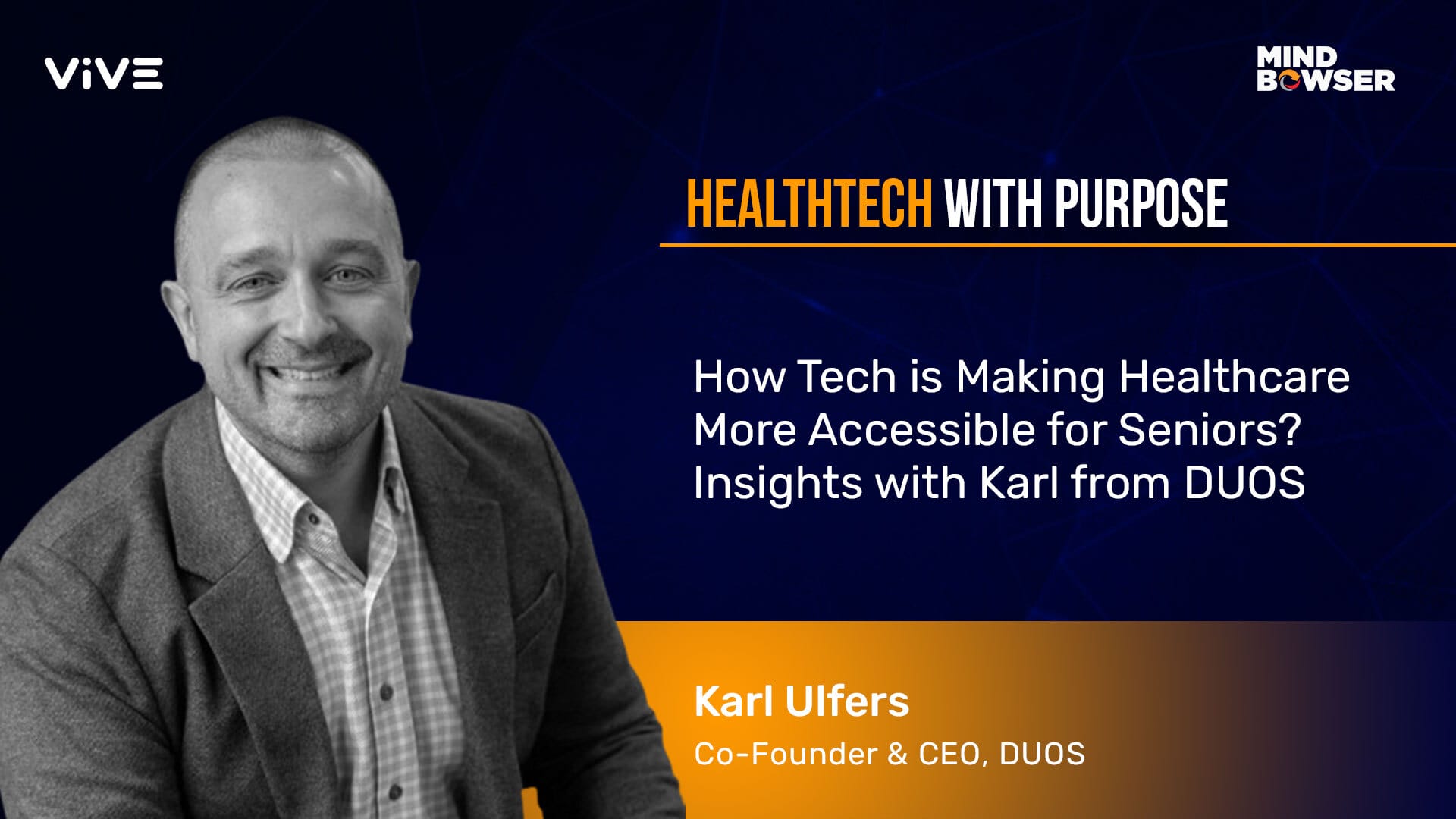
Welcome to HealthTech with Purpose! Karl Ulfers, CEO of Duos, discusses how they use tech to aid older adults in healthcare. Duos helps with daily essentials, employs AI for personalized care, and ensures accessibility without negative coverage decisions. Join us for insights at the tech-healthcare nexus! Learn how Duos leverages digital and human interaction to custom solutions, making healthcare more accessible and impactful for older adults.
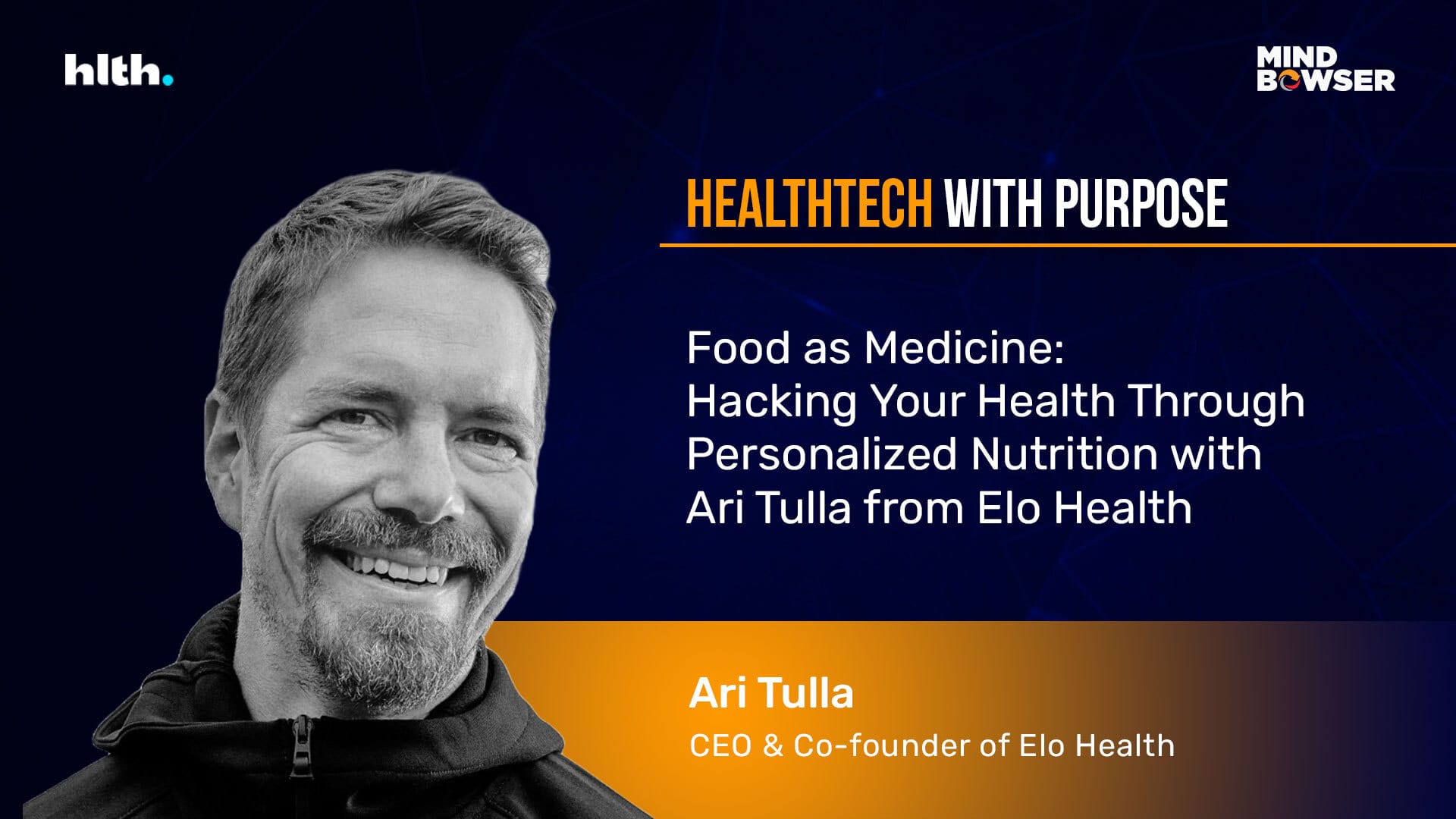
Welcome to the HealthTech with Purpose podcast! Join us as Ari Tulla, CEO and co-founder of Elo Health, shares how his company uses AI and biometric data for personalized nutrition plans. Ari, a former athlete, discusses his health struggles and founding Elo Health. He highlights the importance of preventive care and the role of AI and wearables in promoting healthier lives.
Partner with us to design, build, and scale digital solutions that drive better outcomes.
Global Tech Teams LLC, 525 Washington Blvd, Industrious at Newport Tower, Jersey City, NJ 07310, United States.
Let’s discuss your goals, workflows, and next steps in a focused consultation call.
 Schedule a Call















 BLOGS
 NEWSROOM
 CASE STUDIES
 WEBINARS
 PODCASTS
 ASSET HUB
 EVENT CALENDAR