
Recorded at ViVE 2023 in Nashville, this episode features Missy Lavender, founder and CEO of Renalis, with Mindbowser’s Rushikesh Kulkarni. Missy started as a patient: after a difficult birth 20 years earlier she found her way to a urogynecologist, then built an in-person pelvic health program delivered in YMCAs and wellness settings. In 2017 she and her urogynecologist co-founder founded Renalis to turn that work into a prescription digital therapeutic. She explains the challenges of building CeCe, a conversational agent for overactive bladder that had to be credible, medical and nothing like an irritating customer service chatbot. She also describes usability testing with community health workers that renamed and redesigned it. Missy walks through the patient journey from prescription to digital pharmacy to check-ins that flag the practice, and the pivotal randomized trial against a digital pamphlet. She covers the reimbursement codes providers can use, and a privacy approach built on minimal, de-identified data, with EMR integration central to the long-term strategy. She closes on why overactive bladder, by her estimate a $70 billion annual spend, is a chance to bend the cost curve.
Missy says Renalis faced two questions in 2017: could something that works be delivered through a smartphone at all, and how do you make it more than “another health app”? The company’s motto was “credible, medical.” It chose a conversational agent at a time when chatbots were just entering healthcare, because they are approachable and work across ages, life stages and socioeconomic status, which matters for a company focused on equity and access. The design challenge was not to become the irritating customer service chatbot nobody wants to talk to. That combination of clinical rigor and consumer-grade design is what digital therapeutics software development has to get right.
Before any patient used it, Renalis ran usability trials with community health workers, many of whom served mostly non-native English speakers. They rejected GIFs the team found funny (a Godzilla, for one), disliked the colors, and renamed the agent: Missy wanted “Coco,” for coaches and connects, and the testers chose “CeCe.” Her favorite story from the proof-of-concept study is a 72-year-old woman in Cleveland who found the first four days of questionnaires and a three-day bladder diary tedious, then asked at the end, “Wait, what do you mean? No more CeCe?”
In market, CeCe is meant to be prescribed like a drug and filled through a digital pharmacy, with onboarding inside the app. At four weeks a one-day diary checks progress, and a patient who isn’t improving, or whose symptoms worsen, is flagged back to the practice. Providers co-designed where it fits in their care pathway, and Missy points to a remote therapeutic monitoring code, plus a behavioral therapy treatment code Renalis will build a case for with data, as ways providers get paid. Her rule: “We don’t want to invent something that we have to come up with a CPT code for.” The pivotal trial compares CeCe with “Contessa,” a digital pamphlet that represents today’s standard of care.
Renalis built on AWS in a HIPAA-compliant cloud environment, has a chief privacy officer, and kept study data de-identified. Missy’s principle is to collect the minimum patient data needed, because “when it’s EMR integrated, that’s already there.” She calls EMR integration key to the long-term strategy, including the chance to look at comorbidities and flag conditions such as possible diabetes from the record plus app interactions. For a digital therapeutic company, that integration is the kind of work ConnectHealth is built for: connecting a product to 20+ EHRs through one integration model, inside the company’s own cloud. Danika Kelly of My Normative made a related case on this show about collecting representative data for women’s health.
[The opening, from 0:00 to 0:29, plays under music and is not captioned; the transcript starts at the end of Rushikesh’s first question.]
…like to know a little bit more about you and your background.
Great, thank you for having me. We’re always happy to talk about healthcare with a purpose, and you’re right in my sweet spot. So I’m Missy Lavender. I founded this company, Renalis, for one main reason: I was a patient. I had a big baby 20 years ago, and I like to say he delivered me into my new career, not happily. I was kind of a grumpy patient: a well-insured white woman in a major metropolitan market, and those are all really important demographics. I eventually found my way to a fantastic female doctor in a space called urogynecology. I had never even heard that word, and the more she talked, the more grumpy I got.
So at that point I started thinking about what I could do to create a different experience for other people who are going to go through this. Luckily, she was my biggest ally and fan, and head of my then advisory board. So 20 years ago we started a related company that developed an analog version of what we’re doing now. In other words, we wanted to create something that could go into a community, into a place where people might be willing to go and learn about their pelvic health, and we designed it with a YMCA in mind. We delivered this program for years in YMCAs and in medically based wellness settings. What we were able to show is that if we taught women a little bit about different exercises, front, back, floor, full body, and then little tidbits around their bladder and bowel and prolapse, et cetera, we could actually improve their pelvic health just from an 11-week fitness and wellness program, if you will.
So that was okay for a while. Then my co-founder, who’s a urogynecologist, and I were watching digital medicine start to really take off in 2016, and so we founded Renalis in 2017 to take that body of work, and everything we know about the patient journey, and elevate it to an actual treatment for conditions below the belt, starting in persons assigned female, or women.
Okay, okay. I’m not going to ask your second question for you.
Yeah, I mean, of course I was going to ask the same. So what were the challenges you faced as things started moving from the actual program to the tech side of it? What were the major challenges you faced there?
Thank you for asking that. First of all, we didn’t know if we could actually create something that would work just by interacting with a smartphone. Secondly, nobody needed another health app. So how do we create something? Our motto was always “credible, medical and approachable.”
Back in 2017, conversational agents, or chatbots as we’re now okay calling them, were just really starting to come into healthcare. That’s a challenge right there, because how do you not be the irritating customer service chatbot that we all don’t want to interact with? But they resonate really well because of their approachability, and because they play well across ages and stages and socioeconomic status, which is big for us. So first of all, designing something that would work, designing something patients would use, continue to use and like using, was challenging. And until we launched it, we didn’t know if it would have any results. So those were probably our first set of challenges.
Great. So is there any particular patient or case you would like to talk about that made you learn a lot of things?
Yes. Before we even launched with real patients, we did a bunch of usability trials with community health workers, because in our old life we did a lot of training of them, and they were great megaphones to their communities, mostly non-native English speakers, Black and brown, which is great, because our focus at Renalis is really to improve equity and access. So we have to develop tools that can be culturally [inaudible] and tailored to be culturally relevant, but let’s just start there with that group.
We had some interesting usability trials and errors. For example, in our first version of CeCe we had a bunch of GIFs, some of which we thought were hysterical. There was a Godzilla at one point, and they were like, “I don’t get that.” They didn’t like the colors. They named her, which was really great. I thought she should be named Coco, because she coaches and connects, but they liked CeCe, because it sounds like “CC.” Like, okay, that’s great. So that early stage was fun.
We just finished our proof-of-concept study, so we’re getting ready to go into a big pivotal trial. We’re going for FDA clearance, so we needed data. Probably one of my favorite stories from the qualitative interviews afterward was a woman, she’s 72, in Cleveland, Ohio, and she said, “In the first four days of CeCe I thought, this is going to be really painful. She’s irritating.” Because in the beginning, the first four days are data gathering. You do a bunch of embedded quantitative questionnaires, evidence-based stuff you’d get in your doctor’s office, and then we set you off on a three-day bladder diary. Now, that is not fun for anyone, but CeCe’s version, we think, is easier and quicker, and we set it up with this whole frosting of: look, the better data you give us, the better we’re going to be able to deliver your care, your treatment pathway. So she said, “The first four days I’m thinking, oh.” And then at the end she’s like, “Wait, what do you mean? No more CeCe? That’s it?” And that was great. That’s what we want.
Yeah. So on that note, let’s say a patient is getting enrolled for the whole program. What’s the process? Take us through the whole journey, start to end.
Okay, that’s a good question, and it depends. In a study modality, they come to their doctor, they get screened, they get invited and selected for the study, and they meet with a study coordinator. In the wild it’s going to be different. Once the patient is interested in becoming a CeCe patient, they’re given an access code. When we’re in the wild, in market, it’ll be a prescription, just like they get a drug prescription. They’ll get prescribed, they’ll go to their digital pharmacy, the digital pharmacy will give them the code to use, and then they come in and they’re onboarded, all through CeCe.
We do everything through the app, and we try to only have human contact… I don’t mean this like we’re being stingy, but if they don’t need a touchpoint with their doctor, then it’s really meant to be an inclusive therapy. So at four weeks, we’ll check back in with another one-day diary. If the patient isn’t better at all at four weeks, that would be a flag to the practice, who would step back in and say, “Okay, let’s add medication,” or “Let’s get you in for a blah blah blah; let’s see what’s happening.” Obviously if their symptoms get worse, or they’re experiencing pain or anything else, that would be another flag. But otherwise it’s beginning and end: they get prescribed, then they get assessed by the provider after CeCe checks in with them, and that’s it. It’s easy peasy.
Nice. And are payers and providers integrated, or how does the system work today?
Yes. We’re pre-revenue, so far it is simply in a study modality. We’re going to be moving into a pivotal, big, double-blinded randomized controlled trial of CeCe versus her twin sister, whom we call Contessa. Contessa is kind of a digital pamphlet, if you will, chopped up into an eight-week journey, but that is the standard of care in our space. If you’re lucky, you get to a physical therapist, but there are 10,000 of those, so most people don’t.
In the future, again, we’re solving the pain point for the providers, so provider acceptance is huge. But they’re the ones who literally co-developed this with us. When we were designing CeCe, we had five big practices and several independents sit down with us and go: okay, where’s your pain point? Where should this be inserted in your care pathway? How do you normally do this kind of behavioral therapy, as it’s called?
So getting them to write the prescription is good, and there’s a remote therapeutic monitoring code, a CPT code for them talking to a patient about a digital product, and they can use it again for a follow-up visit, so they can get paid. That’s good. And then there’s a HCPCS code, an A code, a treatment code for behavioral therapy, that we will have to build a case for with data and with the provider societies and the patient societies, all of whom we know really well, and we’re already talking to them. But there’s definitely a way to get paid for this, which is really important. We don’t want to invent something that we have to come up with a CPT code for.
Interesting. So one of the key things: I’ve been meeting a lot of entrepreneurs who are building products in the health tech space, and one of the things everybody talks about is trust. When you’re dealing with patients, one is, of course, is my data safe? The whole ecosystem of trust, and the notion that whatever I’m doing through an app or a digital platform is taken care of. So how did you tackle this as a challenge?
Data privacy and security is really important to us. Right now, our proof-of-concept study was under the frame of University Hospitals, which was our partner in Cleveland, so Case Western. We built everything in AWS; everything’s HIPAA compliant in the cloud. And we have a chief privacy officer. As we move forward, a lot of our time and energy will be spent on making sure that what we gather is the minimal amount of patient data we need. I mean, we don’t need, Rishi, to know everything about them. When it’s EMR integrated, that’s already there, and EMR integrations will be key to our long-term strategy.
And then that’s where the fun comes, when it comes to looking at comorbidities: what has their treatment journey been, potentially being able to say, “Hey, this person could potentially have diabetes, given A, B, C in their EMR and how they’re interacting with CeCe.” But from the very beginning, data security has just been very, very important to us. Everybody we’ve dealt with is de-identified; we know only their study number.
Yeah, that’s one of the major things: de-identified. Awesome. So what’s next? I think there are a lot of things happening. From a Renalis perspective, and from an overall product perspective, where do you see the whole thing going, and what are some interesting things coming up that you’d like to share or talk about?
Well, I think what’s most important for us is on the partnership level: who can we partner with who has a pain point here, or a solution that our solution would benefit? We have a partnership with a large nurse navigation company that deals with female urology patients with overactive bladder (OAB); that’s us. And they’re clogged at the top. They’re like, [inaudible] is not a good use of our time. They’re hired by the practice to navigate them, so they’re looking to offload. That’s great, and helping them widen the funnel down to third-line care, if the patient is right for it, is a win-win. So things like that. We’re talking to large urology practices, people like that.
But on the technology side, oh, there are so many things. We definitely want to add additional treatments. We did a broad urinary incontinence one; we built that one at the request of University Hospitals, and it’s in a huge study: there are 1,500 patients just in our arm. Primary care is awesome, because it’s way up here at the top of the funnel, so that one’s cool. That has a different revenue model, a whole different commercialization track.
We were asked recently about fecal incontinence, which is a very unsexy condition, but 25% of patients in the urogynecology world will have that as well, and there aren’t really good solutions. It may not be as dramatically improved by CeCe as we’ve seen with OAB patients, but it’s still something we can tackle. On the other hand, one of the men’s health centers out there asked us about premature ejaculation. I’m like, that’s interesting. Again, bad solutions, a lot of behavioral therapy. Obviously we’re willing to consider that once we tackle the biggest patient population over here.
And then there’s this whole concept of ChatGPT and how it would… I mean, CeCe gets smarter with more data. We’re looking for data sets, and I think there’s a lot we can evolve that way, and I’m really excited about the machine learning and AI that will come in the future.
Yeah. On the ChatGPT end, a lot of people are talking about that, but I think the intelligence will only come from the context, right?
And that’s where you missed my panel. I just said the same thing.
Yeah. And I think that’s where the whole contextual data, the clinical learnings being put into the data sets, is where ChatGPT might not be able to reach so fast, because this data has to be handled with care. It cannot be open, right?
Absolutely. I literally was on a panel about AI and chat just half an hour ago. First of all, this is a treatment, you’re right, and it’s for patients. Even in the best case, where it’s all EMR integrated and we can understand that this is a 50-year-old African-American woman who lives in this ZIP code and has this BMI, there’s a lot we can do with that. But this open data set is exciting, I don’t know. My kids love it, and there are some real uses; I’m not pooh-poohing it. There are some good customer service uses. I learned we got some interesting language around looking at adherence to medications; I was like, put that in ChatGPT, that’s cool. But when it comes to patient treatment, I think you have to be very careful.
Very careful, because it has to be curated in a way that wrong information is not passed on. Because today I think that’s one of the problems: if I search something on Google, it will take me to the extremes. I say I have a headache, and it might say I might have certain conditions, which would be scary.
So funny you said that, because somebody was just telling me about an early product they were working on, and it always wanted to take them to particularly distressing things. And they’re like, “Wait a second, I have headaches. I don’t have that.” But it kept taking him back there, and I think once it learned that it was them, it kept going.
Yes, I agree with you. So what is the impact you see this product making as we go along?
I love that question, thank you for asking. Let’s just stay with overactive bladder, because that’s our first condition. It is a $70 billion annual spend, out of $100 billion for all the pelvic health disorders. That is a ridiculously big amount of money. And people pooh-pooh it: “Oh, they’re just going to the bathroom a lot.” Okay, let’s look at what it would do for you if you’re getting up 10 times a night to go to the bathroom, and that’s modest. If you got a full night’s sleep… we know what effect that has on other comorbidities, and on everything: mental health, behavioral health, physical health. So being able to take a chunk of patients and get them off meds, or maybe never get them on meds, or get them to the right care faster, that’s one of our mantras. I think we can really bend the cost curve.
And then the other thing is that there are direct corollaries between people’s wildly out-of-control bladder or bowel and their lack of physical activity, or emotional interaction, sex, again anxiety, depression. So if we can cure that, if we can get to the [inaudible] below the belt, then I think there’s this really exciting possibility to have an impact on these other huge chronic conditions. And then, again, getting to patients sooner: it would be amazing if we got this into primary care and it became the standard of care for first line, one that’s accessible and efficiently priced. That’s exciting.
Awesome, great. So a final thing I would like to know: the podcast is about HealthTech with Purpose, right? So what’s the end goal? What’s the purpose you would like to fulfill through this?
I so appreciate the question. At Renalis, our commitment is that everyone deserves good pelvic health, and I want everybody, whatever they were assigned, female or male, [inaudible], to have access to things that work, that are, again, credible, accessible and medical, and I really encourage people to be mindful and proactive, because they can, because there’s a solution for them.
Awesome, awesome, great.
So hi to everybody who’s watching. I hope you’re watching, and I hope you learned a little more and enjoyed the discussion.
I thank you.
You’re welcome. Thank you for having us.
At the time of recording (ViVE 2023, published April 2023), Missy Lavender was founder and CEO of Renalis, a digital therapeutics company she founded in 2017 with a urogynecologist co-founder to treat pelvic conditions, starting with overactive bladder in persons assigned female at birth. Her path into healthcare began as a patient after a difficult birth about 20 years earlier; she then started a related organization that delivered an in-person pelvic health education and exercise program in YMCAs and medically based wellness settings. Renalis’s lead product, CeCe, is a conversational digital therapeutic; at the time, it had completed a proof-of-concept study with University Hospitals in Cleveland and was preparing for a pivotal trial and FDA clearance.
Building a digital therapeutic that has to earn a prescription and a payer’s trust? Tell us where you are on the path and we’ll show you how we’d build the next stage.

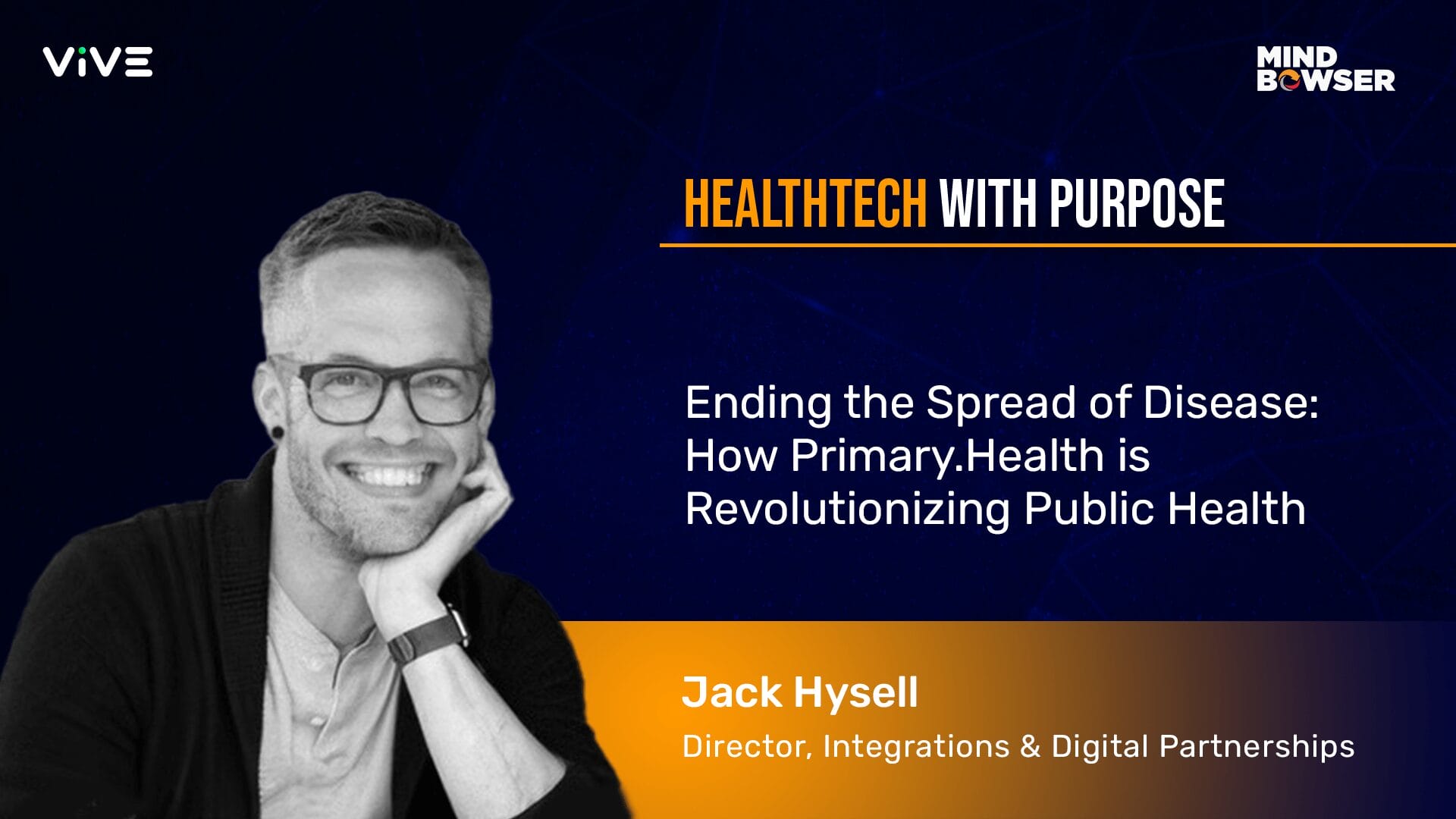
Welcome to the HealthTech with Purpose podcast! In this episode, Ayush Jain talks with Jack Hysell, Director at Primary.Health. Jack shares his journey from hairstyling to computer science and discusses Primary.Health’s platform for testing and vaccination services. Learn about their mission, focus on health equity, efforts in interoperability, and the role of AI in healthcare.
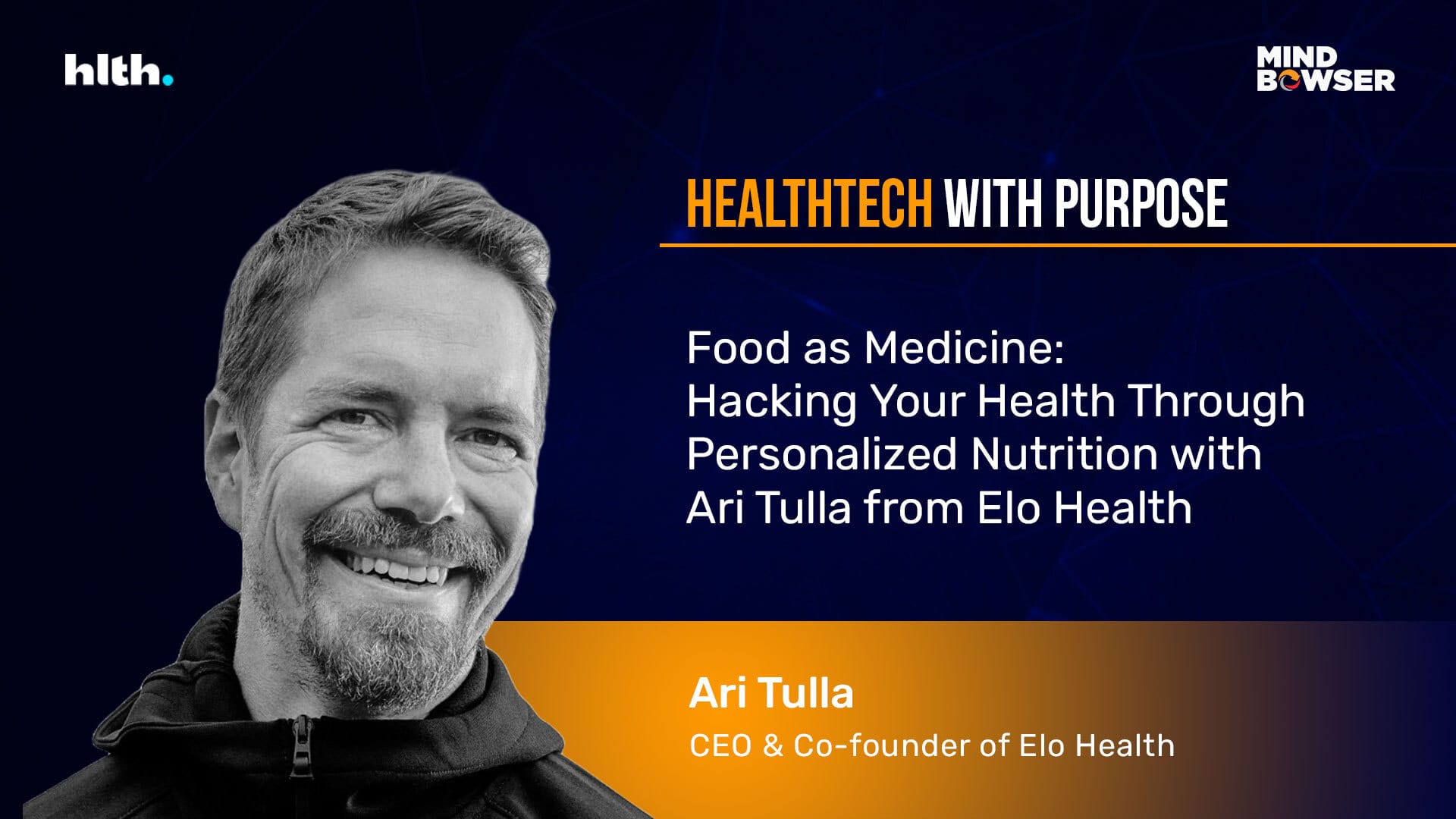
Welcome to the HealthTech with Purpose podcast! Join us as Ari Tulla, CEO and co-founder of Elo Health, shares how his company uses AI and biometric data for personalized nutrition plans. Ari, a former athlete, discusses his health struggles and founding Elo Health. He highlights the importance of preventive care and the role of AI and wearables in promoting healthier lives.
Partner with us to design, build, and scale digital solutions that drive better outcomes.
Global Tech Teams LLC, 525 Washington Blvd, Industrious at Newport Tower, Jersey City, NJ 07310, United States.
Let’s discuss your goals, workflows, and next steps in a focused consultation call.
 Schedule a Call
















 BLOGS
 NEWSROOM
 CASE STUDIES
 WEBINARS
 PODCASTS
 ASSET HUB
 EVENT CALENDAR