
Ari Tulla, CEO and co-founder of Elo Health, joins host Ayush Jain to explain how his company is trying to turn food into medicine. He traces his path from semi-professional gamer and Nokia smartphone games to healthcare, a move driven by his family’s long fight with infertility, where changing their diet finally helped. Before Elo he built BetterDoctor, the doctor-finding service whose data now sits behind much of US provider search.
Ari walks through how Elo works: an at-home blood test, a detailed health questionnaire and optional wearable data, mapped by an algorithm trained on around 6,000 nutrition studies into personalized powders, supplement packs and 3D-printed gummy vitamins, with dietitians coaching behavior change. His own vitamin D story shows why the data matters. He then zooms out to the US system, where spending is high, life expectancy has fallen and prevention gets under 2% of the money, and argues that GLP-1 drugs, real-time body data and AI coaching together could finally change behavior. He closes with a plea for health products people actually rave about, citing Tesla, the iPhone and self-driving cars as the bar.
Ari describes Elo’s starting point as picking a box to play in, because food is too big a space to take on whole. Elo built around a loop: an at-home finger-prick test that covers 12 to 15 biomarkers per kit (lipids, A1C, inflammation, homocysteine, vitamin D, vitamin B, iron and others), a detailed questionnaire on diet, exercise, sleep and stress, and optional data from an Apple Watch, WHOOP, Oura ring or glucose monitor pulled in through Apple Health. The team spent about three years tagging roughly 6,000 human nutrition studies to train the model that maps a person’s profile to what the research says they should focus on, and adds new studies every quarter.
The output is physical: custom protein powders, personalized supplement packs and 3D-printed gummy vitamins, which Ari says have 389 million possible combinations. Human dietitians coach each member, because, as he puts it, you cannot fix being overweight by eating supplements. Teams building this kind of product face the same mix of personalization, coaching and device data that goes into diet and nutrition app development.
Ari’s own stack is an Apple Watch, a WHOOP, an Oura ring and a continuous glucose monitor, and Elo lets members bring that data in through Apple Health, a connection he calls safe because the user can switch it off at any time. The same pattern shows up across wellness platforms that accept data from Oura, WHOOP and Apple Health, where the hard parts are inconsistent APIs and normalizing the data. When that data also has to reach a clinical record, the app reads it from Apple HealthKit with the user’s permission, and ConnectHealth writes it into the EHR as coded FHIR data where the EHR allows it.
He sees real-time data as the next big shift. Once a watch carries blood pressure and glucose sensing, he argues, it can tell you in the moment that something you ate will harm you, and that feedback loop can be turned into a game people actually play.
Ari’s macro case is blunt. By his figures the US spends about $4.5 trillion a year on healthcare, close to 40% of global spend, for about 4% of the world’s population, and ranks around 60th in life expectancy. Less than 2% of that money goes to prevention, and most of that goes to screening and vaccination rather than helping people before they get sick. He points to the two and a half years of life expectancy the US lost in recent years, the gap between US and Japanese men, and the role of sugar, obesity, chronic conditions and the opioid crisis.
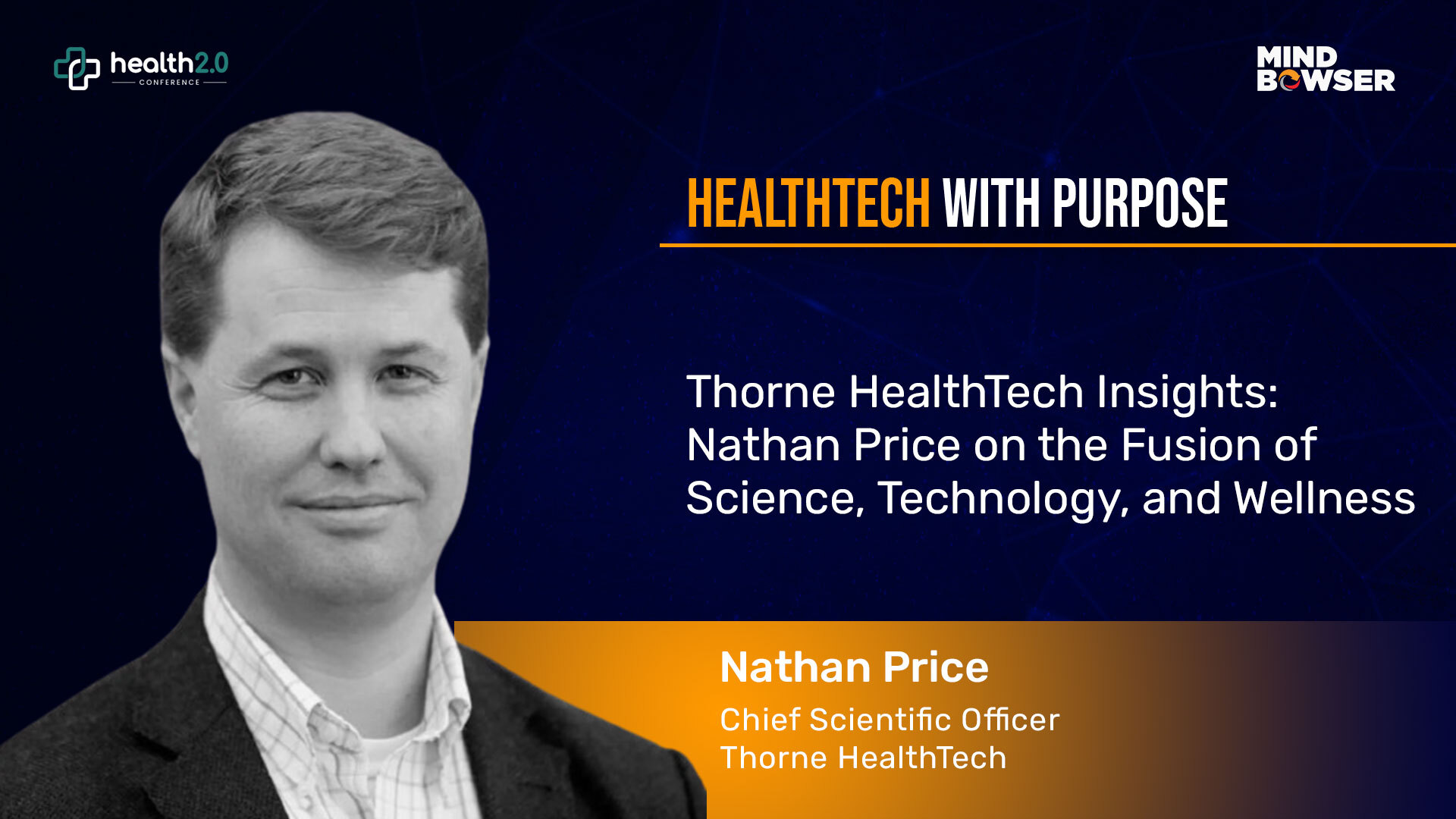
That lines up with the argument Nathan Price makes on this show for precision prevention and extending healthspan: stop disease before it starts instead of intervening late.
Ari is optimistic about the medium term because three things are arriving together. The first is GLP-1 drugs such as Ozempic and Wegovy, which he calls the magic pill people have always preferred to behavior change. The second is the growing stream of real-time data from our own bodies. The third is AI, which he says can act as the accountability partner most people never had, giving the US the equivalent of 300 million dietitians, doctors and health coaches. He expects AI health coaches and dietitians well before AI doctors, because regulation and resistance will slow the latter.
Ari’s product test is whether people talk about it to their friends. Tesla won by building a better car, not just an electric one, and made brave design calls competitors now copy. Apple beat Nokia, where Ari worked, by building a better phone. Health has no equivalent yet, and he points to the routine blood draw as proof: six vials taken when a third of that is needed, at a lab across town, done the same way for a century. If a car can drive itself around San Francisco, he asks, why can’t healthcare do these things?
Welcome to another episode of the HealthTech with Purpose podcast. Our guest today is Ari Tulla of Elo Health. Ari is the CEO and co-founder of Elo Health, which is on a mission to personalize nutrition using the power of AI. With a long history working in the field, Ari brings a wealth of experience and a strong vision for how technology can empower individuals to live healthier lives. We’ll be diving deep into Ari’s background, the exciting work happening at Elo Health, and the future of AI-driven personalized nutrition. So buckle up and get ready to learn from a leader whose purpose is to transform healthcare with technology.
Hello everyone, welcome to another episode of the HealthTech with Purpose podcast. Our guest today is Ari Tulla, who is building a platform that uses blood and digital biomarkers, cutting-edge AI and expert guidance to deliver smart nutrition products calibrated for your unique needs. Welcome, CEO and co-founder of Elo Health, Ari Tulla. Hi Ari, how are you?
Thank you, great to be here.
Okay, great. I’m really looking forward to this episode recording, because what you’re doing is very unique and very fundamental, I must say, to everyday habits. Rather than solving the big things in healthcare, you are solving that foundational need of everyday usage. So I would really like to know more about what you’re doing and your overall story. Let’s start there: your background and what got you here.
Yeah, certainly. I’m from Finland originally, a small country in northern Europe, and I’ve spent about the last 16 years here in the Bay Area building companies. I was an athlete and a geek when I was a kid. I got into computers very early, in the 80s, and then became a video game aficionado in the 90s. I played I don’t know how many hundreds of hours a week or a month, and probably spent my 25,000 hours of video game playing time. I became a semi-professional video game player, one of the first people in Europe making money by playing video games.
That later led me into a startup in ’99. I was working with my roommates to build websites for big corporations, Web 1.0, the first websites people ever had. That company grew to almost 200 people in Finland, Sweden and Norway. That was a cool experience, to see that young kids can build something.
Later I worked quite a while at Nokia. Everybody had to be at Nokia; that was Nokia’s heyday. I joined Nokia a long time ago, and that was the team that built the first smartphone, the N95. It was super interesting to be part of something that completely changed the world. With Nokia I came to San Francisco to build a new kind of unit here for Nokia in video gaming, and I worked many years on building the first smartphone games on mobile phones.
Then around 2010, and we’d had health issues in our family before already, it was really, really difficult for us to get pregnant. My wife had had a thyroid tumor in 2000, and that led us into hormonal imbalances, autoimmune issues and difficulty getting pregnant. We used a lot of different Western and Eastern medicine to try to solve that, and in the end we found that food was medicine for us. Food helped my wife heal her body, and we finally got pregnant with IVF. Then we were very unlucky, and in the end we lost our first son. That was the time I decided I was going to spend my next 30 years in healthcare.
So I came from the gaming, mobile devices and web apps world and started to build a company called BetterDoctor. That was a doctor-finding service. It later became pretty big: we had 20 million people using the service, and we sold it to private equity. Then I was running a company called Quest Analytics, a pretty big company in the space of helping people build doctor networks. Today, interestingly, BetterDoctor is part of that company, and more or less every person in the US who looks for a doctor uses our data as a backbone. It started from our own problem, that we couldn’t find the right doctor in the US, and today that problem is helping 200 million people a year. It feels pretty good that you’ve done this one thing that has a big impact in the healthcare ecosystem. Nobody knows the name anymore; we are the behind-the-scenes backbone for the data. But we’re still there, and it makes me feel good.
For the last three years I’ve been building a new company called Elo Health, E-L-O. The focus is to try to make food into medicine. Like you said already, we use the biometric data from our bodies, blood biomarkers, digital biomarkers and a health assessment, and then turn that with AI into the right nutrition plan that can keep us healthy, or maybe even reverse illness we already have, like type 2 diabetes or heart disease.
It’s been a really fun journey, because my family spent a decade trying to find a solution for my wife, and food became medicine to us. Now we have two wonderful kids today, so it paid off in the end. Every time I look at my kids, I remember that food can be medicine, is medicine. But it’s a very complicated topic, and there’s no simple answer on how to do it, because we all like our highly processed food. It’s poison, but it’s very tasty. That’s the problem we have today. We all know as people what we should do, but we just don’t do it, because it’s so difficult to change behavior. We can go deeper into the problems later, but that’s roughly my story. I’m so thankful for the life that has given me the ability to work in many fields, because you get such a wide array of experience when you work in devices and apps and websites and healthcare and all this stuff. It’s been really fun.
Right, right, right. Very interesting background you have, Ari. Like you said, gaming, Nokia, to health, solving your own problem, then building a company out of it and scaling it to the level you have done in the past, and now with Elo Health as well. So very, very interesting.
Tell us more. Let’s go deeper into Elo Health and what kind of work you’re doing, because, like you said, it’s a very wide space. Especially coming from India, I can very well relate to the whole vision that food is the medicine, and that most sickness basically starts from the stomach. That’s the whole thesis behind Ayurveda as well, which started in India. So tell us more about how Elo is using age-old knowledge and new-age technology together to build the solution.
Yeah. When you build a company, every time you need to pick a box that you play with, or play in. And like you said, this is really vast. Everybody eats multiple times a day. Food is the biggest industry in the world; we’re talking about 10 trillion dollars of money. It involves climate change and cultivation of crops and everything. It’s very big. We have fought wars about food probably since man, or woman, was walking; we’re talking about 100,000 years of wars because of food. So it’s maybe the biggest single issue we have. And not only that, food is culture. Are we here to eat, or are we eating to be here? People debate that every day.
So for us it started with: okay, how do we make a mark? It’s very crowded; there are many companies doing different types of nutrition products. So we decided to build this box first around what we can measure, what we can deliver to people that can have an impact, and then measure again, and then build a coaching layer around that where we can coach people to do the right things. That was the beginning.
The first thing we did was start to work with a lab and build the at-home testing kit. We can now test 75 different biomarkers with our partners. Not all at once, of course, because it’s home testing; we can do around 12 to 15 in any given test. Today we mainly give people a pretty holistic test where we look at your cholesterol, think about the lipid panel, triglycerides, HDL, LDL and so forth. We also look at your A1C, the marker for diabetes. We look at inflammation, homocysteine, then vitamin D, vitamin B, iron and others. It’s a pretty good panel that will give you an indication of what’s wrong.
Then we also get people to fill in a pretty deep, detailed health questionnaire, so we understand your diet pattern, your exercise, sleep, stress, all these things. And if you want, you can also connect all your wearable devices. I have an Apple Watch, I have a WHOOP, I have an Oura ring, I have a glucose monitor. You can connect the data you’re already collecting into Elo using Apple Health. Apple Health is this unbelievably powerful platform that can connect health data into different services in a secure way, and if you want to stop that connection, you can stop it whenever you want. So it’s a really safe way to do it.
That’s what we built. Then we built a model, an algorithm, first. This was a few years ago. We built the algorithm by looking at all the different human trial data and science about nutrition. Say you have high LDL: what can you do from a nutrition perspective to lower or manage it? If you have high or low vitamin D, it’s pretty evident: you can get sunlight, eat vitamin D heavy food, or supplement vitamin D. That’s pretty easy to understand. But A1C, what do you do to manage diabetes? A lot more complicated. You have to change your diet, you have to change different things.
So we collected all the 6,000 studies ever done in the world, tagged them, and built them into the algorithm and into the AI. We trained the model with that data. It’s a lot of work; we had multiple people working on it for three years, and now it’s done. Of course new studies come in, and we add them into the model every quarter.
What we then do is take who you are: your age, gender, eating behavior, stress, weight, height, all these details, and your blood biomarkers. We map them with the system into the research, and the research tells us the optimal focus for you, what we should give you based on who you are and what the data says.
Then we went on to find partners. We now have partners to build powders, so we can do protein powder types of products customized to you; every product is handmade for you. We can do supplement pill packs, every pack made for you. And the latest product we have is gummy vitamins that we 3D print for you. The 3D-printed gummy vitamins, for example, have 389 million combinations today, at the beginning. So it’s pretty unique: we’ll probably sell to 100,000 people and never sell the same one twice.
That’s what we built, and this whole thing has been running with thousands of people for the last year and a half, two years. Now we have accumulated data, and we know that of the people who come in, 90% have something at the assessment level on yellow or red: you sleep too little, or you have low vitamin D, or you’re overweight. When they are with the program for six months, many of those issues are fixed. You can’t fix being overweight by eating supplements, no way. But we also have a coaching layer: human coaches, dietitians, who work with every person and guide them to change behavior and patterns and so forth. We call it the Elo Smart Nutrition Platform.
What are we doing this year? We are starting to take this platform to our partners. Think about wellness or health companies and brands that already have millions of users. We’re going there and starting to empower them by bringing nutrition treatment into the mix. That is what is starting to make food into medicine, and we are really at the forefront of this; we’re some of the first people doing this with doctors. I’m really happy, because yes, we want to go later into meal delivery and grocery delivery. That’s important, but it’s much more difficult to do, because food is very perishable. You can’t send food around the US.
In India, by contrast, you have the most effective food delivery networks in the world. A lot of workers get daily meals, even from home. It’s unbelievable; I went to witness it myself, and it’s so cool. We are not that good in the US yet, but it’s getting better. Now we have the ability to deliver different food and groceries to people’s homes, but the price is still pretty high.
Right, right. No, definitely. The Indian story has to do with economies of scale, and cheap labor, of course, being available, which creates enough opportunity to make it a win-win for all stakeholders. So that’s great. Good to know where you are headed, Ari. Tell us more about some of the success stories Elo Health has been able to achieve over these years. I’d be very interested, because it seems so inspiring.
Yeah, yeah. As I said, we focus on this idea of assessing, planning, delivering and reassessing. We get information that people have improved their blood biomarkers to a level where their doctors are calling us and saying, “What the heck?” And then the doctors are signing up themselves. That’s the ultimate compliment, to me at least. My own doctor, for example, signed up. That’s pretty cool, because usually doctors don’t really appreciate nutrition so much, but we made it scientific enough that even they appreciate it.
One example I can happily talk about is my own story. We have a few people who have given us permission to share their stories, but we are HIPAA compliant; your data is your data. So I don’t want to talk about anonymous people whose stories we haven’t asked permission for. But my own story is, I think, very normal for what we’re seeing a lot.
I started with Elo. People call me a biohacker. I don’t think it’s true, but I’ve been tracking my data for a long time. My team took my DNA sequencing, my vitamin and mineral results and my blood biomarker results, and they realized my vitamin D had been very low for a long time. It had been flagged as low, but no doctor ever told me I needed to supplement vitamin D. And I’m from Finland, where you have barely any sunlight. In northern Finland it’s pretty dark at this time of year; there’s no sun at all. Then I moved to California, and still in California my vitamin D was 15. In the US measurement, normal should be around 40 to 50, so I was far, far too low, in the dark red area.
They looked at my DNA, and my team realized that I have two mutations that make me a poor metabolizer of vitamin D. Of course DNA gives a trait; it doesn’t tell you whether it’s active. But based on the blood data, they knew both markers were active. Then they started supplementing me with vitamin D, and it took a year to get me back to the normal level. I’d probably never been at the normal level. I had to take a massive dose, four or five times the normal dose of vitamin D, for a long time to get there, and I actually started to feel different.
This was happening just before COVID. I went to Finland, hung out with my extended family, and we tested and sequenced them all, and they all had the same mutation. So we mega-dosed them with vitamin D before COVID, and nobody died of COVID in my family. I was pretty happy about that, and we have some pretty old family members. So that’s one example.
Another one I have personally is a mutation in my iron metabolism: I deposit iron. If I take heavy iron supplements, I might deposit iron to a level where I could actually die of iron poisoning. That was good to know as well.
Overall, I never took supplements before in my life. I’ve been an athlete all my youth, and still am, and I realized there is a place for supplementing, because the diet we have today is just very poor in basic nutrients, and every year we’re eating food that has less and less. We do add minerals and vitamins to some foods, like milk and whatever, but most people are still low on basic vitamins, minerals and biomolecules and don’t know about it, and those are easy to fix. So there is a place for this. But I always say supplements are supplements. They’re not the same as food. You can’t become healthy by eating a pill.
Supplement for a reason. 100%.
Yeah. So you have to focus on the diet, and that’s an area we talk about a lot with our customers and members: how to eat right.
So currently, is the Elo Health solution B2C, or is the primary channel through partnerships, a B2B2C kind of model?
We are all D2C today. We’re just going live with the first B2B partners in the coming months, and two big ones are coming live this quarter. So we’re getting there now. I always knew when we built the company that D2C is a great way to start: a great way to learn about customers and what they need, and to build a really good product. Just to give an example, it is pretty cool when you…
This episode of the HealthTech with Purpose podcast is brought to you by Mindbowser, a product engineering and digital transformation company focused on health. At Mindbowser, we enable health companies to build the future of health with accessible, equitable [inaudible] patient care. We strongly believe that technology can empower a healthier world, and that’s why we are partnering with healthcare experts like you to make it happen.
Hi guys, thanks for listening to HealthTech with Purpose. Make sure to subscribe to us on Spotify, Apple and YouTube for more expert insights on industry innovation and transformation. And remember: share the knowledge.
…when you can now have a product like this. These are the 3D-printed gummy vitamins. This gummy vitamin has the same supplements I have in my Elo pack, where you have six supplements. How cool is it that you can have a much more convenient delivery method that is beautiful, tasty and equally effective? We did the testing with a 50-person pill group and a 50-person gummy group, for vitamin D for example, and we found the outcomes are the same. The only difference is that almost everybody preferred the gummy, because people like to have treats, of course.
Going D2C first also happened at my last company, BetterDoctor, where we were D2C first and then became a B2B2C, or B2B, company in the end. It’s a good way to start and to learn, and I think in the coming years the majority of our revenues and numbers will come from partnerships.
Right, right. Yeah, I believe B2B can definitely give the scale that’s required. And on the gummy thing, since I have kids, I think you’ll make parenting difficult, because there’s no difference between trick or treat.
But that’s so cool. So Ari, since you have been so deep into this subject of aging and life expectancy, and how someone with better habits can, over a period of time, make themselves better and free from illness, tell us more about your learnings on preventive care and proactive health practices. That would be very interesting, whether someone is a customer or not.
Yeah. The interesting thing is that, coming from Europe to the US, and having battled with health issues in Europe already, it’s very different. There, you get the doctor who’s given to you. In the US I had an executive health plan from Nokia; I could go to any doctor I wanted, and we have a million options. So how do you know who to go to? That was a very different market to face in the US.
Today the US spends about $4.5 trillion this year on healthcare. That’s 4,500 billion dollars. That’s almost 45%, almost 40%, of global spend on healthcare. How many people do we have in the US? We have 4% of the global population. Think about it: we over-index 10x on spending. We do spend a lot on other stuff too, but nothing like that in any other market.
I always ask people: how do you measure a nation’s healthcare system? It’s tough. I think the only way to measure it is to put life expectancy on one axis and cost on the other. The US is such an outlier. It’s funny when I do presentations: here’s the norm, and you have to zoom out three times to see the US, way over there. We are getting a life expectancy today that is 60th in the world, out of 210 countries or so, and we spend three times more money than any other country in the world. What the hell? That’s unbelievable. We’re not getting the benefit.
At the same time, if you have good health insurance and live in the right city, you get the best cancer care and the best care for the difficult things. But we spend less than 2% of that money on preventive care, and most of that goes into screening, vaccination and testing. Hardly any of it goes into education and helping people before they get sick.
So what do we do? That’s a big question. We have to do something, because the cost is ballooning every year, growing at high percentages, and the starting point is so high already that you don’t need to add many percent on 4.5 trillion to get hundreds of billions automatically. That’s a lot more money than my native Finland’s healthcare budget for a year, for example, which is unbelievable. And this doesn’t only apply to the US; the US is just the canary in the coal mine, because we are in trouble.
What happened in the last five years is very, very alarming, and many people don’t know about it: we have lost two and a half years of life expectancy in the US in the last few years. Many other countries had a tiny dip because of COVID, but in the US it’s much more pronounced, very different from any other country in the world. Today, in certain US populations, people live about as long as people in Sub-Saharan Africa. US men on average live almost 10 years less than men in Japan. Ten years is a long time. That’s 15% of your life, almost. It’s a pretty big deal. How much would you pay to get 10 more years? Ask people that, and many say everything they have.
Those are real macro problems. Education is very important; people need to do the right things. But we also need to use taxation and regulatory systems. It’s silly that in the US we can’t do anything to tax sugar, for example. We know sugar is a big, big culprit in all this, and we’re still selling gallon-sized cups of Coke and whatever. Soda and everything we drink is sugar, and we put sugar in everything, from bread to meals and dinners. How many recipes do you have where you put sugar in the evening meal? None. Yet every food has sugar in a big dose. Those are some of the issues, and they’re very difficult to fix because we have no political will.
But there is hope. I think new technologies are coming that can maybe solve this, possibly in a surprising way. Americans, and I think everybody in the world, always pick the magic pill over behavior change. We like magic pills, like the blue or the red pill in The Matrix; we tend to take the easy way out. And now we have a magic pill that will help a lot: the new weight loss drugs, the GLP-1s, Ozempic, Wegovy and others. They are absolutely unbelievable in how they work. They make you eat half the amount of food you ate before, and you will lose weight. Everybody will lose weight. There are some side effects, and I hope those can be cleaned up in future versions.
But when you pair drugs like those with the ever-increasing amount of data we are getting from our bodies in real time… It won’t take long. The Apple Watch Ultra, maybe version three or four, will actually have blood pressure and a glucose monitor in it. That means everything will change, because suddenly it will tell you in real time if something you ate is going to harm you. That real-time feedback loop changes everything, and you can then gamify it. I built games for half my life, and that is a game we are all going to play. We’re all going to have those devices in the coming years; half the people in the US already have a tracking device.
The third point that’s going to be really impactful is AI. Everybody has now played with the different AI tools. I’ve worked on AI for a decade, and it’s just unbelievable; it doesn’t make any sense. Having worked on computer vision for 20 years, now suddenly you take a photo of a meal, upload it into ChatGPT, ask the AI what’s in the meal, and it knows. That is a very, very difficult problem. People have been trying to solve it for 50 years without getting even close, and suddenly it’s solved. It works now. All those things scientists and technologists have been working on for decades are now working, and you don’t know what to do because it’s so unbelievable.
Everybody who ever read science fiction thought AI would come to us in the form of a robot that does the home chores, cooks, cleans, maybe takes your dog out. That’s what we all thought. And suddenly the AI came to us as a composer, a poet, an author, a business executive. It’s the complete opposite of what anyone thought. I don’t think anyone expected this to happen. It’s so interesting to see where the world goes, because it still can’t pick rice up from the floor, but it can compose a new sonnet or opera. That’s unbelievable.
So AI will be the coach people have, because it’s difficult to change behavior if you don’t have somebody to keep you accountable. We all know that if you have a personal trainer, a personal coach or a tutor, it helps. Now AI will do that for everybody at a very low cost, if not for free. We have a million doctors in the US; we’re going to have 300 million dietitians, doctors and health coaches, one for everybody. Those things, the new drugs, the new tracking and data loops, and AI, will change everything. Even if we don’t legislate or change the rules, I think we’ll still be able to get people healthier, to live maybe 10 to 15 years longer, in the next decade.
Mm-hmm. Yeah, I can connect with the vision that AI can help everybody, like everybody having a personal doctor. When we were trying to solve the problem of access and cost in healthcare, it basically gets solved, because now everybody could keep a doctor in their pocket, on the phone, or have access to telehealth. Everybody would have a personalized doctor and a personalized care plan, and, like you said, a plan that is built custom for them.
100%. And we just opened up telemedicine in the US, which you mentioned. In the heat of COVID, the government passed a law saying you can actually talk to a doctor outside your state borders. That was not legal before, and I was involved…
Yeah, yeah.
Years ago I was writing those laws with other people, and they were finally made law years and years later, because it makes sense to open up the playing field a bit. I think it will take a while before AI is a doctor, because there’s so much resistance, and I think much of that resistance makes sense. But it will be much faster for your health coach, dietitian and nutritionist. That will be happening this year already, and we’re building one of those at Elo, for example.
So I’m really excited about the future, but I’m really scared about the human situation today on health overall, because 80% of Americans are overweight and we are dying younger than we were before, like I said. There’s a lot of optimism in the medium term, but the short term is still pretty bleak.
And why do people die in the US? There are three reasons. One, we are unhealthier than any other nation, thumbs down. Even with good healthcare, we can’t keep people alive if they are obese or have chronic conditions and comorbidities. Second, we have the opioid epidemic in the US, and it’s really, really bad. It’s not talked about a lot, but fentanyl and those drugs are just killing people left and right. In San Francisco, where I live, probably 10 people are dying every night in the streets from fentanyl overdoses. And then COVID of course had an impact, because if the population is unhealthier and they get this sort of disease, more people will die by default.
Mm-hmm. Right, right. No, true, I agree. And the problem, like you said, is so foundational that it’s hard to change it overnight. To solve it, I think it’s only possible when the right intervention, the right timing and the intent come together. That creates the best environment for technology to intervene in a natural way. We already had all these supplements for ages, but that’s a separate thing you have to go out of your way to do, compared to something that is as organic as your daily habits and very customized to you. That could really help.
And you refer, I mean, to how we fit Elo, our play of building smart nutrition, here. We know we all have our own diet pattern and the foods we like; we’re all pretty unique in that. Personalized nutrition doesn’t really need to be personalized exactly to you, but there has to be an ability to get the food we like to eat and get the nutrition in different ways, with an experience that is better than what we have today. And the coaching helps people get the right nutrients at the right time, and then nudges them to do the right thing when they are making decisions.
The problem is that there are a lot of apps and services where you can log your food, and you’ll know after the fact roughly what you’ve done. That’s too late. We almost have to tell you before. That, I think, is the big unknown nobody has really cracked yet. How do we use this new world, where we have more data coming in, the ability to customize and the ability to deliver quickly, so that when you’re deciding what to eat or planning your week, you get the right things? How do we get to the beginning of the problem? That is the big deal.
There are some unbelievable examples today. I’m really excited about one company whose team I know pretty well. It’s called January AI, like the month, January.ai. They built what is maybe the best implementation of food logging ever. You open the app, and it’s a free iPhone app in the US today. You take a photo of any meal, and it uses GPT-4, which I talked about, which is really, really good at recognizing what’s in there. Then it looks at the micros and macros, and then they use their own model to predict your glucose response to that food. That is really cool. You don’t need a glucose monitor, you don’t need to add anything; just snap a photo and you see the impact on your health then and there. Now think about adding that into Whole Foods or Instacart or, let’s say, Walmart. When you shop, you could already see when you’re buying stuff that will not be good for you.
Right, right. No, that’s true. That’s why I keep saying, thinking about the future, going from monitoring to taking control to taking action has to be so natural, because eventually we are all lazy. The nearer a solution is to our normal behavior, and not an external agent, the more chance we accept it into our routine and take action on it.
And even that might be difficult for people to comprehend, and that’s why I often give people an example. Living in California, it’s a local company here, but Tesla is such an interesting company. Not because Elon Musk is the most interesting or vocal person in the world, but because of what they have done. They started to create electric cars that were not just the best electric cars; they were better cars than the normal cars we used to have. They didn’t win as a company because they made the best electric car. They made the best car, period. Anyone who has a Tesla, we don’t need to debate Elon or the build quality, but overall as a car it is really good. It does some things your normal car won’t do, and it has, what, three buttons or something. Look at any normal German car or whatever, and there are 55 or 100 buttons. They took all that away. They made some design decisions that were really brave, really brave. Nobody had done it before in the car business, and now everybody is copying them and desperately simplifying their cars. On the newest versions they even took away the stalks: there’s no turn signal or light stalk; they’re all done differently. And they took away the speedometer and put it on the dashboard. Nobody had ever done that before. By doing that, they captured people’s minds and truly built a better product.
That’s what Apple did. At Nokia we were building smartphones, and we built decent phones; a billion people used them, and now nobody uses them. Apple built such a good product that it was just a better product.
So when we think about nutrition and health, about building good products: can you name one health product people rave about? Nobody has one. It hasn’t been done yet. But that will be the way of the future. We need to build products so good that people talk about them to their friends and rave about them. Think about when you bought your first iPhone, if you’ve had an iPhone. How many people did you tell how awesome it was? In the beginning, when you used a fingerprint or your face to log in, they invented that; that was pretty cool stuff. By the way, they spent many years building the facial recognition system, built a new processor, and it works like magic. And how many people can walk home and open the lock with their face? Nobody. Why can’t we do that? That’s a far better way to do it. Why do we still have keys?
Right, right. No, true, true. That’s such a nice quote, actually. You pretty much nailed it: it has to be natural, it has to be organic, it has to really sync. It all comes down to doing things a better way, or better than what already exists. Disrupting the market with simplicity, of course, because simplicity is the ultimate sophistication.
And that’s why one thing we’ve been doing at Elo a lot, and I would love to see it done better; we can’t change the world, because we’re a small startup, is the testing. Now you can take the Elo test and get 15 or so biomarkers. You do the finger prick at home, but it still sucks. You have to make a hole in your finger and bleed. That sucks.
But think about this: millions of people every day go to a lab, roll up their sleeve, this big needle goes into the vein, and they take, what, five or six vials of blood. They only need about one third of that, but they take six. What the hell? That’s how we do it. And you have to drive to another part of the city, or another city even, to give blood. That’s a fundamental need we have. We need to collect people’s biomarkers more often and in a better way, and still we do it the way we’ve done it for 100 years.
So health goes so backward at times. Why is that? There are a lot of reasons: it’s like a monopoly, and all these regulations, and blah blah blah. But it’s just crazy. We have to become better, and it’s not that difficult, I think, when people invest big amounts of money.
In San Francisco, one thing I almost always do when friends come over from outside is we hop in a self-driving car, a Waymo or one of the other cars, and everybody is blown away. They’re like, “What the hell? This car is driving better than I am driving.” Meaning mainly me; I’m not the greatest driver. But the point is it’s way better, and so much more convenient. It was free for the first year; I was in an alpha group of people testing those. We hop in a car, it’s free, and we get anywhere in the city, and people can’t believe it. So if you can make a car drive itself, why can’t we do these healthcare things? It shouldn’t be that difficult.
Right, right, right. No, I think it’s all about someday, somewhere, and it could be in this room, an entrepreneur just has to do it. That’s the whole beauty of entrepreneurship and startups: they are the ones who can change the world.
But healthcare is so difficult, though. As an example, I talked about the Apple Watch and glucose sensing coming. I have spoken to many people, and even big companies valued at many tens of billions, and they say it’s too difficult for them. They don’t have the money or the resources to do it. Amazon has put in so much money, Google has put in so much money. The only companies that can do it are Amazon, Google and Apple. I don’t think even Samsung can. So you have only three companies, maybe some Chinese companies can also do it, but in the US there are only three companies that can pull it together. That’s really tricky, because as a startup I can try to start developing a better sensor, laser or lens or whatever, but it’s hard to build that company into a real company without raising a billion dollars or more.
Right, right, right. Well, thank you so much, Ari. That has been a really insightful discussion. Thank you so much.
I really enjoyed my time on this podcast.
And with your beautiful insights and the deep knowledge that comes with your passion for what you’re building, that really puts us at least one inch forward to change the world.
Cool. Thank you, thank you.
Thank you for joining us on the HealthTech with Purpose podcast. Before you leave, make sure to like and subscribe on Spotify, Apple and YouTube. And if you would like to see someone on this podcast, do refer them to us; my contact details are in the description. Before I leave, I wish you: stay healthy, stay curious, and keep building.
At the time of recording (published May 2024), Ari Tulla was CEO and co-founder of Elo Health, which he had been building for about three years to turn food into medicine using blood biomarkers, digital biomarkers, AI and dietitian coaching. Originally from Finland and based in San Francisco, he was a semi-professional video game player in the 1990s, co-founded a web agency in 1999, and spent years at Nokia, including building mobile games on its early smartphones. He co-founded BetterDoctor, a doctor data company that was acquired by Quest Analytics in 2018, and then served as CEO of Quest Analytics before starting Elo Health in 2020.
Building a product that turns biomarker, wearable or nutrition data into something people actually stick with? Tell us what you’re working on and we’ll show you how we’d approach it.

Join us for an enlightening HealthTech with Purpose podcast episode! Nathan Price, Chief Scientific Officer of Thorne HealthTech, delves into precision medicine, scientific wellness, and the future of health tech, exploring groundbreaking concepts like ‘digital twins’ shaping the future of healthcare.
Discover Lamia Clinic’s innovative approach to antidepressant medication withdrawal on the HealthTech with Purpose podcast. Personalized solutions and smart technology for mental healthcare.
Partner with us to design, build, and scale digital solutions that drive better outcomes.
Global Tech Teams LLC, 525 Washington Blvd, Industrious at Newport Tower, Jersey City, NJ 07310, United States.
Let’s discuss your goals, workflows, and next steps in a focused consultation call.
 Schedule a Call
















 BLOGS
 NEWSROOM
 CASE STUDIES
 WEBINARS
 PODCASTS
 ASSET HUB
 EVENT CALENDAR