
Recorded at ViVE 2023 in Nashville, this short episode features Taylor McPartland, CEO of ScaleHealth, in conversation with Mindbowser’s Rushikesh Kulkarni. A multi-time founder, Taylor describes ScaleHealth as a matchmaker: a health innovation marketplace where startups join free, with no application process and no equity taken, and health organizations describe what’s keeping them up at night. ScaleHealth answers with a quick market map or a longer challenge that runs hundreds of startups against the organization’s criteria, and can stay involved through procurement and contracting.
He explains how COVID forced ScaleHealth to turn a physical Los Angeles hub into a technology platform that now reaches startups worldwide, and why he wants a stronger presence in India. His favorite example comes from rural New Mexico, where a 25-bed hospital with no budget and a stretched team needed help communicating with hearing-impaired patients who could no longer lip-read through masks. A UK company in the ScaleHealth network went from first meeting to pilot in about three months. He closes on purpose: making health innovation practical for decision makers without big budgets or dedicated teams.
ScaleHealth sits between startups and the organizations that buy from them: health systems, payers, providers and corporate partners. Startups join free, and ScaleHealth doesn’t invest, take equity or run an application process. Instead it asks for financial, team and milestone data, and uses it to point each company to relevant advisors, investors, health organizations and educational resources through a dashboard it calls the ScaleHealth Architect.
Buyers bring the problem. A request might be as specific as a US-based behavioral health solution with a diverse founding team, willing to pilot for free, with prior partnerships. ScaleHealth then returns either a quick market map or a longer challenge that screens several hundred startups against the organization’s criteria, including compliance and market validity. Steven Collens of MATTER described a similar two-sided model on this show, where accelerators prepare both the startup and the health system so a pilot decision can happen in a day.
Taylor says the buyer depends on size. At a 10, 20 or 30-bed community hospital, ScaleHealth usually works with the CEO; at larger systems, with innovation teams, CIOs, strategy and business development, or department leads. After a match, some organizations just want an introduction to one company; others want ScaleHealth to stay involved through procurement and contracting until the handoff is done.
As health innovation partner for rural hospitals in New Mexico, ScaleHealth heard from the CEO of a hospital of about 25 beds. Elderly, often hearing-impaired patients relied on lip reading, and COVID masks had taken that away. The CEO had no large budget, needed a free pilot, and had no time for a long setup or training process. A UK company in the ScaleHealth network, led by Rachael Grimaldi, surfaced as the best fit and went from first meeting to pilot in about three months, and, Taylor says, went on to scale across the US.
The constraints in that story are the ones rural hospitals live with every day: tiny IT teams, thin margins, and no room for tools that need heavy setup. They’re the same constraints Mindbowser designs for as a critical access hospital technology partner.
ScaleHealth opened in Los Angeles in 2018, as Taylor tells it, as a physical center for healthcare entrepreneurs, hosting investor panels, keynotes and roundtables, with speakers including Kamala Harris. When COVID closed the space, the team had to decide what its secret sauce was and deliver it virtually, which led to the technology platform and to growth well beyond Los Angeles. Next on his list is India, where he wants to help startups reach the US and US companies tap into Indian resources.
So, how are you today?
I am doing well. The legs are a little tired; we’re on day two or day three or five, but feeling good, feeling energized.
Awesome. And how’s Nashville? It’s been three days here, right?
It’s pretty cool. I think I’ve got to come back. The music’s good, and a lot of good people.
Awesome. So to start with, we’d like to know a little more about you and your journey so far.
Yeah, absolutely. Prior to founding ScaleHealth, I’m a multi-time founder. I started my first company shortly after I graduated from school and learned a lot along the way. I was fortunate enough to surround myself with good partners and good advisors, and ran that company for about six years. Over the course of that time, and we’re here talking about purpose, I felt like my purpose was really defined for me. It was honed and focused around how I can do a better job of being a good partner to founders, specifically founders who are trying to tackle big challenges, and healthcare was starting to be at the top of that list.
Great, so you’re a serial entrepreneur.
I try.
Nice. So I’d like to understand a bit more about ScaleHealth and what you guys are doing.
[inaudible], we’re a health innovation marketplace. We’re essentially a matchmaker that leverages a technology platform to connect hundreds of thousands of startups and innovative companies on one side with health organizations, payers, providers, corporate partners, basically any entity looking for new, innovative ways to address either their immediate needs or their longer-term strategic goals.
So they’ll come to us and say, “ScaleHealth, we’re looking for a behavioral health solution that’s based in the US, has a diverse founding team, is willing to do a pilot for free, and has run partnerships with these organizations before,” whatever the case might be. And we can very quickly say, “Here are the five best around the world, and here’s how they’re assessed,” making sure they’re compliant, making sure they have enough market validity, and making sure that at the end of the day they’re relevant for that partner’s needs.
Interesting. So how do you curate all the health tech coming onto the platform? What’s the process there?
It’s free for all startups and health tech companies to join. We don’t put our thumb on the scale in any way: we don’t have an application process, we don’t invest, and we don’t take equity in our companies. But when they join, we ask them for insights on who they are, how they’re doing and how they’re growing. We want to know financial information, we want to know the team, we want to know their milestones, their highs and their lows. Based on all of that, once they’re in our system they have access to a curated dashboard we call the ScaleHealth Architect, which connects them with services and resources relevant to them based on that data and the stage they’re at now. That might be connections with advisors, connections with investors, connections to health organizations that have a specific need at the time, educational resources, all of that.
Oh, nice. So that’s one side of the platform. The second side is, of course, payers or providers or different types of organizations using it. What’s the process for them to be onboarded, and who within those organizations usually carries the responsibility of choosing a vendor or working with a company?
The second question first. If it’s a smaller system, a 10-, 20- or 30-bed community hospital, we’re generally working with the CEO in most cases, or the chief administrator. With larger systems, we’re often working more with innovation teams, information teams, CIOs, strategy and business development, or maybe department leads, a nursing unit or an [inaudible] unit, whatever the case might be.
They typically reach out to us, or go to our platform, and they’re free to connect with us there. Essentially, when they’re in, we ask them questions. We want to know what’s keeping them up at night, and, in a perfect world, what solution would solve their problems. Then our job is to take all the information they’ve provided, which might be a very broad topic or might be very, very specific, and go into our system. We can do one of two things. Either we provide them with a quick market map that says, based on your criteria, here’s what’s out there right now. Or we run what we call a challenge, which is more of a longer-tail initiative that takes all of their criteria into account and runs maybe several hundred startups through their process, making sure the startups really align with the needs of that system, so the ones that come out the other side are really perfect matches.
Nice. And what happens once there’s a match? Say somebody on the provider side, or any organization, gets to know about a great company. What happens next?
We can follow that process as far as both parties want. In some cases, the health organization might just want the report. They might say, “Here are the companies you’ve sent us. This first one looks really good; we just want to have a call with them.” That might be the end of our engagement: we go back to that company and say, “Here’s this CIO, you should meet with them,” we connect them, and then we’re hands off. In other cases we stay more involved, and we can follow all the way through the procurement and contracting process to make sure there’s a very smooth handoff.
So you can also go the extra mile to make sure it’s a smooth process.
Absolutely.
Nice. Great. So what were the challenges you faced while building this, and how did the idea come about?
Certainly many challenges, none of them particularly unique to us. The idea came about, again, from what I’m passionate about. The core idea was: how can I do the blocking and tackling? How can I create an organization that empowers innovators to do the work they want to do, while saving them time along the way, so they don’t have to knock on every single door hoping the right person answers? How can I get the right stakeholders around the table, and make sure the startups are talking to the right people and selling to the right people, and saving as much time as they can for the hard enough job of running their own company? That’s where the idea started. As we’ve continued to grow, we’ve built an absolutely amazing team that has helped that vision evolve into what it is today.
In terms of the challenges we’ve come across, first and foremost, the pandemic. We were not the only ones who ran into challenges there. We opened our doors in 2018, and we’re headquartered in Los Angeles. We had a very large physical facility there, and [inaudible] that was really our focus. We were much more an entrepreneurial center specifically focused on healthcare. We had speakers coming through; Vice President Kamala Harris came through. We had a lot of investor panels, a lot of keynotes, a lot of summits, a lot of roundtable discussions, but it was very physically oriented, around our location in West LA.
Then when COVID hit, obviously we couldn’t use that space for a period of time. We were all working from home, so we had to think very quickly about how we could pivot our model in a way that took what was still special about it, our secret sauce, but did it virtually. That was the jump we made, and that’s what led us to build out this technology platform, and it has really enabled us to grow all around the world.
So COVID did present a challenge, but it also helped you think about how you could scale up. It was kind of a blessing in disguise.
Certainly a silver lining. Absolutely.
Awesome. So how do you look to scale this up? Is it geography? What’s the main scaling factor here?
Good question. We want to have line of sight to all innovative solutions all around the world. As an example, most of our startups are based in the US, and we have a quickly growing ecosystem in Europe. We don’t have much of a presence in India, and I know there’s so much amazing work happening there that I’m eager to figure out how we can better tap into and support these amazing entrepreneurial ecosystems, and play a pivotal role in supporting their growth, coming to the US, US companies tapping into the resources in India, as an example, and vice versa. So that’s where we’re looking to really grow.
We have a technology platform that’s working really, really well, and a lot of our goal, of course, is that it continues to improve: keep building out our tent and make sure every innovative solution is coming in and being part of the ScaleHealth ecosystem. On the other side, we want to make sure payers, providers and plans are thinking about us first and foremost. If something is keeping them up at night, we want them coming to us in the morning and saying, “We need a solution for this.” We want to be that first call. So that’s a lot of where we’re growing.
But for us, at the end of the day, it really comes down to ensuring, first and foremost, that the patients, the people who need solutions and innovative ways to access higher-quality care, get the care they deserve. By being able to connect these dots at high volume, we feel we’re in a much better position to support people who are under-supported and under-resourced and who deserve better healthcare than they’re receiving today.
Nice. I was going to come to that: what impact do you see ScaleHealth bringing? And as a follow-up, is there a particular moment or success story you’d like to quickly share?
From an impact standpoint, we do a tremendous amount of work, as core to our mission and values, around health equity. We’re about to kick off a big challenge around street medicine and innovative health solutions for homeless populations, or recently housed community members who are struggling with chronic conditions from having lived on the streets for many, many years. Since our platform is flexible in that way, it’s something that can be done very cost-effectively. I feel we’re uniquely positioned to look at these big issues and say: we can drive some value here, we can create something here and support the people who need the resources we’re uniquely positioned to provide. From an impact standpoint, that’s first and foremost for me.
From a case study standpoint, the one that always comes to mind for me: we’re the health innovation partner for rural hospitals in New Mexico. One of our hospitals, about a 25-bed hospital, came to us looking for a solution that could address a communication gap they were running into. They were dealing with elderly patients, often hearing impaired, who relied heavily on lip reading to communicate with their physician, and with COVID everyone was wearing masks, so they weren’t able to do that.
This CEO, who was really very forward thinking, came to us and said, “We don’t have a huge budget. We’re looking for something to pilot for free. Our team is stretched thin, so we don’t have a lot of time to stand something up and go through a whole training process. What’s a digital solution that’s willing to do a free pilot and can address this challenge?” An amazing company based out of the UK, CardMedic, was a member of the ScaleHealth ecosystem, and was the company that surfaced as the most relevant one for this opportunity. We connected the CEO, Rachael Grimaldi, with this hospital in New Mexico. They went from first meeting to pilot in about three months, and one thing that has come out of that is fantastic, and two, Rachael is now scaling across the US.
That’s amazing. One of the things I wanted to ask you: your marketplace platform is ready, and today it’s serving healthcare. Do you foresee it serving other technology or domain verticals as well?
That’s an interesting question. When we first started off, we were not 100% focused on healthcare. In our very earliest days, and we were talking about where the idea came from, it was originally about solving the challenges in large regulated spaces. We saw the momentum was going into healthcare, and I think we continue to drill down deeper and deeper on that. I would not want to take on another market, because I feel that if we can solve healthcare, that’s a big enough beast on its own. But we do keep that thought in the back of our heads. So much of what we’ve built is easily transferable to other industries, and we want to keep that opportunity. But we’ll cross that bridge when we come to it; we have our work cut out for us here.
Great. Coming to my last question: the podcast is about health tech with purpose, right? So what’s the purpose of ScaleHealth, and where do you see it going?
The purpose is to make health innovation practical and possible for everybody. We don’t want a healthcare decision maker to feel that just because they don’t have a large budget, or a dedicated team, they can’t take advantage of the most interesting, exciting, cutting-edge solutions out there. We want to be that translator. We want to break down those barriers and give them access to this amazing world of up-and-coming, and in many cases very well-established, thought leaders who are pushing the boundaries of what’s possible in this industry. That’s really the core of where we like to focus.
Awesome. Thank you for joining us.
Thank you. Just saying hi to everybody who’s watching: I hope you learned something about ScaleHealth, and I hope you got to know a little bit more about [inaudible].
At the time of recording (published April 2023), Taylor McPartland was CEO of ScaleHealth, a Los Angeles-based health innovation marketplace that connects startups and innovative companies with health systems, payers, providers and corporate partners. A multi-time founder, he started his first company shortly after graduating and ran it for about six years; he also co-founded the Los Angeles crowdfunding agency CrowdfundX and has mentored at the Cedars-Sinai Accelerator.
Building something a rural hospital with a two-person IT team could actually run? Tell us about it and we’ll show you how we’d scope it.

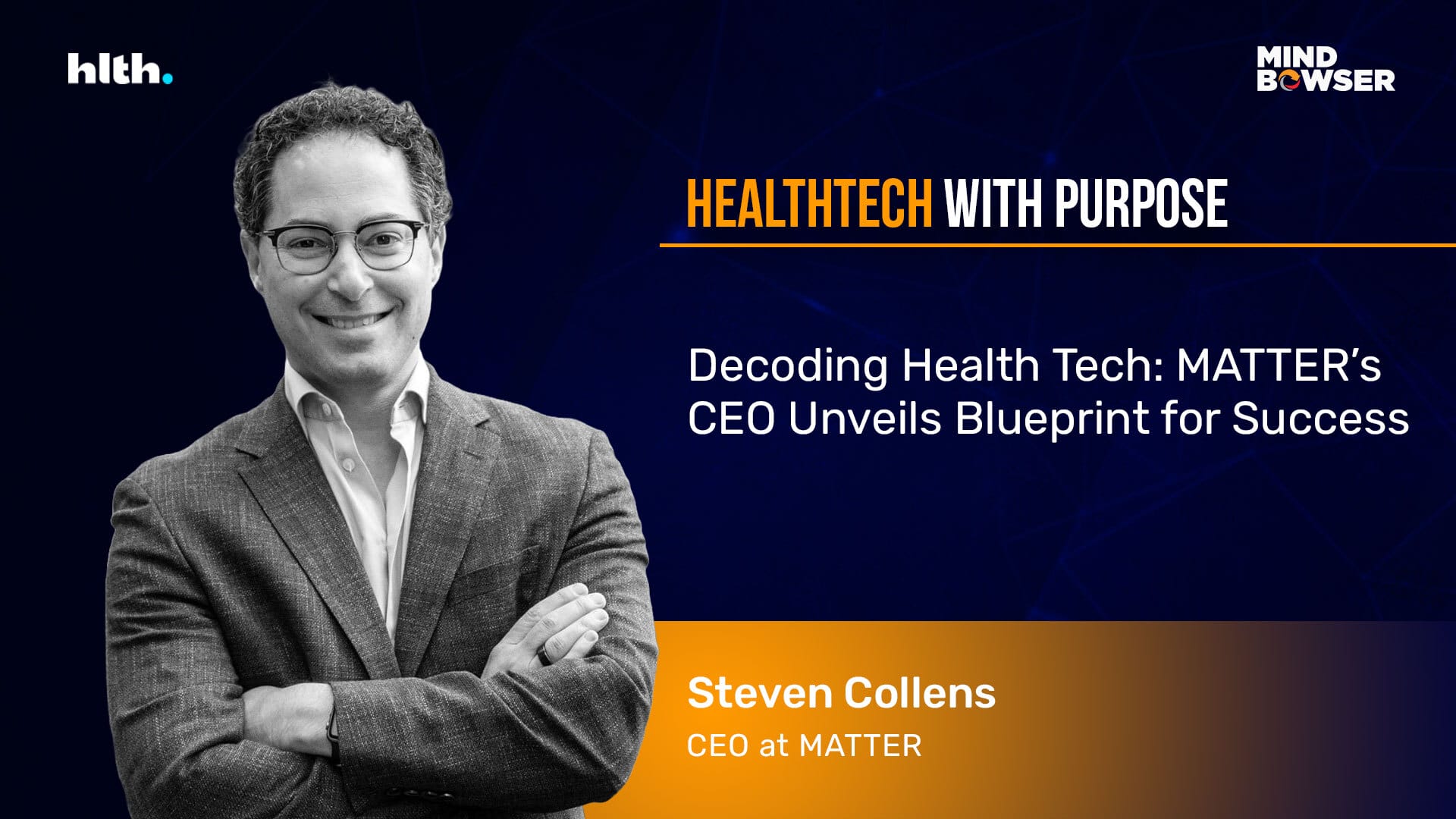
Join us in this episode of ‘HealthTech with Purpose’ as we delve into the world of healthcare innovation with Steven Collens, CEO of MATTER, a global leader in healthcare startup incubation and innovation. Learn how startups tackle the challenge of integrating their systems with hospitals and enterprises, gaining insights from Steven’s extensive experience with over 850 healthcare startups. Tune in for a deep dive into the keys to startup success in the healthcare industry, hosted by our CEO, Ayush Jain, in partnership with HLTH.
Ivy Clinicians is a healthcare staffing platform that matches healthcare providers with appropriate job openings. Co-founder & CEO Leon C. Adelman discussed Ivy Clinicians’ objectives to streamline the hiring process and support healthcare professionals.
Partner with us to design, build, and scale digital solutions that drive better outcomes.
Global Tech Teams LLC, 525 Washington Blvd, Industrious at Newport Tower, Jersey City, NJ 07310, United States.
Let’s discuss your goals, workflows, and next steps in a focused consultation call.
 Schedule a Call
















 BLOGS
 NEWSROOM
 CASE STUDIES
 WEBINARS
 PODCASTS
 ASSET HUB
 EVENT CALENDAR