Recorded for International Women’s Day, this DEI Podcast Series episode brings together two gastroenterologists, Dr. Asma Khapra and Dr. Latha Alaparthi, with Mindbowser’s Manisha Khadge. Asma has spent about 20 years in clinical practice in the Washington, DC metro area, with a focus on women’s digestive health and inflammatory bowel disease. Latha, who moved to the US from India in 1993, stepped back from full-time practice after 22 years to split her time between administration and clinical work as an associate chief medical officer. Together with a third co-founder, they were days away from launching a women’s digestive health startup at the time of recording.
Asma describes how a merger into a national group of about 400 gastroenterologists gave her the opening to start a Women in GI Network in a very male-centric organization. Latha talks about standing up to bullies from a young age and how she now reasons her way through imposter feelings rather than letting them take over. Both close with advice for young women: take the opportunity before you feel ready, and build a network you can lean on.
When Asma’s practice, which she describes as the largest private GI group in Northern Virginia, merged into a national consortium of about 400 gastroenterologists, she saw an opening. Private practice is isolating, and she used the new scale to start a Women in GI Network of around 50 female private practice gastroenterologists, sponsoring them to attend women-focused conferences, network and bring in programming. It took effort in what she calls a very male-centric organization, and the payoff came in one sentence from a colleague at a conference: thank you, this was something that was missing.
Latha adds the uncomfortable contrast. In 2024, organizing something specifically for women still meets resistance, “while there could be a golf social for men with no questions asked.” The same gaps show up across the industry, and Mindbowser’s research on women in healthcare leadership names lack of mentorship and sponsorship as the first barrier women leaders reported.
Latha credits two younger, taller brothers for making her “feisty,” and growing up in India for teaching her to protect herself from street harassment and bullies. She is candid that she still feels like an imposter almost every week. What changed is how she handles it: she steps back, asks why she feels that way and what she could realistically have done differently, and often finds she was expecting something beyond what is humanly possible. Emotional intelligence courses during her MBA, she says, helped her communicate better and understand where other people are coming from. Other women leaders on this series talk through the same imposter syndrome and self-doubt and how they worked past it.
Both guests arrived at digital health through clinical practice. Asma built a personal niche in women’s digestive health and inflammatory bowel disease over 20 years, and through work on the business side of medicine and in national GI societies she met Latha and their third co-founder, Aja McCutchen. Together they saw a real gap in how women are treated in GI care. Latha calls the past year the biggest learning curve of her career, “learning something new every single day” as an entrepreneur.
That path, from physician insight to a product, is where a development partner that can turn clinical insight into something real and usable matters. Brittany Barreto covers the wider picture of FemTech and women’s health innovation in another episode of this series.
Asma’s advice is the lesson she says she learned the hard way: put yourself forward for opportunities even when you don’t feel qualified. Women tend to feel they aren’t ready or deserving, she says, while men often take the opportunity without a second thought. You can learn and grow inside the role, whether it’s a leadership position, starting a company, or anything outside your comfort zone. Latha adds courage and community: remember you’re not alone, find people to bounce ideas off, and learn from the many women now sharing their journeys openly. As a mother of two daughters, she notes the challenges change but the struggles stay similar. “Bullying used to be on the streets, now it’s online.”
Hello Asma and Latha, welcome to the DEI podcast series. We just had International Women’s Day, and I wanted to wish you a happy International Women’s Day. This discussion is more around your challenges, your successes and your personal story. Before we get into the discussion, I would love for you to introduce yourselves to get started.
Okay, thank you, Manisha, for having us here today. Excited to be involved in this podcast, and happy International Women’s Day to you as well. My name is Asma. I am a clinical gastroenterologist and co-founder of a women’s digital gut health startup.
My background goes back to the early 2000s, when I was in medical school and decided what my career was going to be. I loved GI. I loved the patients, I loved the subject matter, and eventually, after medical school, I decided to practice as a clinical gastroenterologist in the DC metro area. Over the last 20 years, which is the time period in which I’ve been practicing, I’ve developed a strong personal niche in women’s digestive health and also inflammatory bowel disease (IBD). So that’s really my area of interest.
Over time I’ve been involved in multiple activities on the business side of medicine, as well as in the national GI societies, which led me to Latha and one of our other co-founders. We came together and realized there was a big need and a big gap in how women are getting treated in the GI world. So that’s where we are at this point, and we’re about to launch our startup in the next week or so. Excited to be involved in the digital healthcare landscape.
Sounds great. Over to you, Latha.
Yeah, thanks, Manisha. It’s always nice to be on the same screen with Asma. We get to see each other this way more than any other way. So I’m Latha Alaparthi. I’m a gastroenterologist as well. I was actually born and raised in India and moved here in 1993, I believe.
Long time. Wow.
Thirty-one years. I pursued my internal medicine residency and gastroenterology because of similar interests to Asma, but I also like having the hand skill in addition to the very clinical side of a very broad field, as you probably know. After being in clinical practice for 22 years, I decided to step away from full-time clinical practice, and now I’m doing part administration, part clinical, as an associate chief medical officer (CMO) for one of the Yale New Haven campuses.
I became involved in the digital health side thanks to Asma and Aja McCutchen, our other co-founder for the company we’re working on. I always liked learning new things, and this has probably been the biggest learning in the past year. It almost feels like I’m learning something new every single day as an entrepreneur, and I’m sure entrepreneurs everywhere will say the same thing. So happy to be here, happy to be able to share the journey, and happy International Women’s Day. I think it should be every day for the two of you.
All right. I think people celebrate it one day, but I feel that every day is a woman’s day, isn’t it?
I agree.
All right, okay. So if you could deep dive into your personal story and share some challenges, and of course successes, as to what has motivated you as a woman leader. Maybe that could be an inspiring story for people who are listening to this podcast.
You know, that’s actually a very challenging question to answer. I was thinking about it when you had mentioned it before. There are so many bumps along the way and so many success periods that it’s hard to pick the one that’s most poignant. But one of the things that stands out for me is in my personal practice. Our medical practice was the largest private GI group in Northern Virginia, and we ended up merging with a large consortium of other private GI groups around the country. So now there are about 400 of us gastroenterologists in this group, and we’re part of this national organization.
When we joined, I realized this was an opportunity to connect with other female gastroenterologists around the country, because in private practice you’re pretty isolated. I had actually spoken to some of the leaders of the organization, and we started this Women in GI Network. We had about 50 or so female private practice gastroenterologists, which is probably the largest really cohesive group of its kind. I started a program where the women would be connected and get sponsored to go to female-specific conferences, network and bring programming.
It’s actually been really rewarding, and I think it’s been one of the nice ways to start my entrepreneurial journey, so to speak, because it was an opportunity for me to see a gap in something that I personally felt was needed. It filled something that was really lacking in what I felt my professional life was. I remember one of the women in the organization, we were sitting at a conference, and she looked over at me and said, “Thank you so much for doing this. I really feel like this was something that was missing.” Just that one comment was really fulfilling. It took a little effort, because it’s a very male-centric organization, and being able to do something like that was a bit of a challenge. But I think the reward at the end was really evident, not only for me personally but for other people as well. So that’s one story that stands out in my journey.
Yeah, I would echo many of the sentiments shared by Asma. I think in 2024, the fact that we’re still talking about having difficulty organizing something specific for women, while there could be a golf social for men with no questions asked, is still a remarkable piece to remember.
In my journey, I always give small credit, even though I don’t want to, to my brothers, because they used to always try to compete with me. They were both younger, and they were taller than me, so standing up to them physically and emotionally made me feisty all along. It was definitely a good character-building phase of my life. I must say, living in India and wanting to be in a co-educational environment, being protective and self-assured really does build a lot of character. You’re probably aware, Manisha, of the eve teasing on the streets and all the comments that come your way. So I’ve been protecting myself from bullies for a long time, and it has definitely helped me over the years.
To go back to what Asma said, there are many, many avenues I’ve been in with women that are very gratifying. But there are definitely times, almost every week, when I feel like an imposter. I feel like I’m not doing enough, I feel like I could have done this better or that. What has changed over the years is that instead of letting that feeling get me down, I take a step back and ask myself: why am I feeling this way? What is it that I could actually have done differently, and is that even humanly possible? Because sometimes we call ourselves imposters when we’re expecting something above and beyond what’s humanly possible. When I normalize it and talk myself through it, I come out much, much better.
That whole process of understanding came from a lot of meetings and sharing ideas with a lot of women, but also a lot of reading. During my MBA, I took a couple of courses specifically on emotional intelligence, which have made me so much better in my own communication, but also in understanding where other people are coming from, navigating other people’s emotions and helping direct them as well.
So it’s really been an interesting journey, and every single day I learn something new, not only about the business side of it. The people who inspire me the most are the people we think of as ordinary, but every person is so extraordinary. In my office I would talk to everyone, from a medical assistant to the professors, and hear the journeys they’ve had and the challenges they’ve gone through. People inspire me, and I think that won’t change.
Awesome, thank you so much. I think that is the most candid conversation, sharing your thoughts about how your journey has been. You’re absolutely right: I think women need to be a little more unapologetic about things. I’ve always faced the problem where people keep asking me about work-life balance. I say I’m not too sure there is work-life balance. Maybe it’s more like work-life integration, because something or the other is always going on. We can’t switch on and off like that, right? It’s tough to do that. But as long as you have your priorities set, you should do things guilt-free, because that’s what you have chosen. You have to miss out on a few things.
So those were great words. I would certainly like to wrap up the discussion by asking both of you: what advice would you give to young women who are aspiring to pursue their dreams and overcome obstacles and challenges? Although I would say some obstacles and challenges have evolved; the current generation faces different challenges from the ones we faced. But what are your thoughts, and what would you advise them?
I think one of the big key takeaways that I’ve seen at multiple conferences, and something I realized the hard way later on, is to always try to put yourself out there for opportunities, even when you personally don’t think you’re qualified. Unfortunately, I think women tend to feel they’re not deserving of an opportunity or they’re not ready for it, whereas men may just take the opportunity and not think twice, even if they’re not ready. That’s a big hurdle you have to overcome emotionally and mentally.
I learned it at one of these conferences: you can take the opportunity, learn along with it and grow within it. You don’t always have to be ready for the opportunity. Whether it’s a leadership position, starting a company or doing something out of your comfort zone, I think it’s so great to take the leap and not have second thoughts about it, because you miss out on a lot of opportunities if you hold yourself back like that.
I’m not sure I have much to add to what Asma said, because it was so well said. The only thing I can add is: be courageous, and remember that you’re not alone. Having a network of people you can talk to or bounce things off always helps. Fortunately for this generation, there are a significant number of podcasts, with people really pouring their journeys out there, that you can learn from.
I have two daughters, and you’re right, the challenges are very different, but the struggles are very similar to what I went through. So it’s very good to have my journey to share with them, and how I navigated it. Having a mom or an elder who has gone through something like that may also be useful for young folks. Bullying used to be on the streets; now it’s online. So it’s all the same, and one needs to learn how to stand up for themselves. I think those are probably the pieces of advice I would give.
Perfect, sounds great. Thank you, ladies, for taking the time to talk to me and share your thoughts. I wish you again a happy International Women’s Day and all the success. Keep inspiring, and good health.
Asma Khapra and Latha Alaparthi [14:09]
Thank you.
Dr. Asma Khapra. At the time of recording (March 2024), Asma Khapra was a clinical gastroenterologist who had practiced for about 20 years in the Washington, DC metro area, with a focus on women’s digestive health and inflammatory bowel disease. She founded the Women in GI Network within GastroHealth, a large national private GI group, and co-founded OLVI Health, a women’s digestive health startup, with Dr. Latha Alaparthi and Dr. Aja McCutchen. She later co-founded Pandora Health, which acquired OLVI Health, and serves as its Chief Medical Officer. Dr. Latha Alaparthi. At the time of recording, Latha Alaparthi was a gastroenterologist who, after 22 years in clinical practice, had moved into a combined administrative and clinical role as associate chief medical officer of Yale New Haven Health’s Bridgeport Hospital Milford campus. Born and raised in India, she moved to the US in 1993, completed her internal medicine residency and gastroenterology training, and earned an MBA. She is a co-founder of OLVI Health.
Taking a clinical insight like this one and turning it into a digital health product? Tell us what you’re seeing in your practice and we’ll talk through how we’d build it.
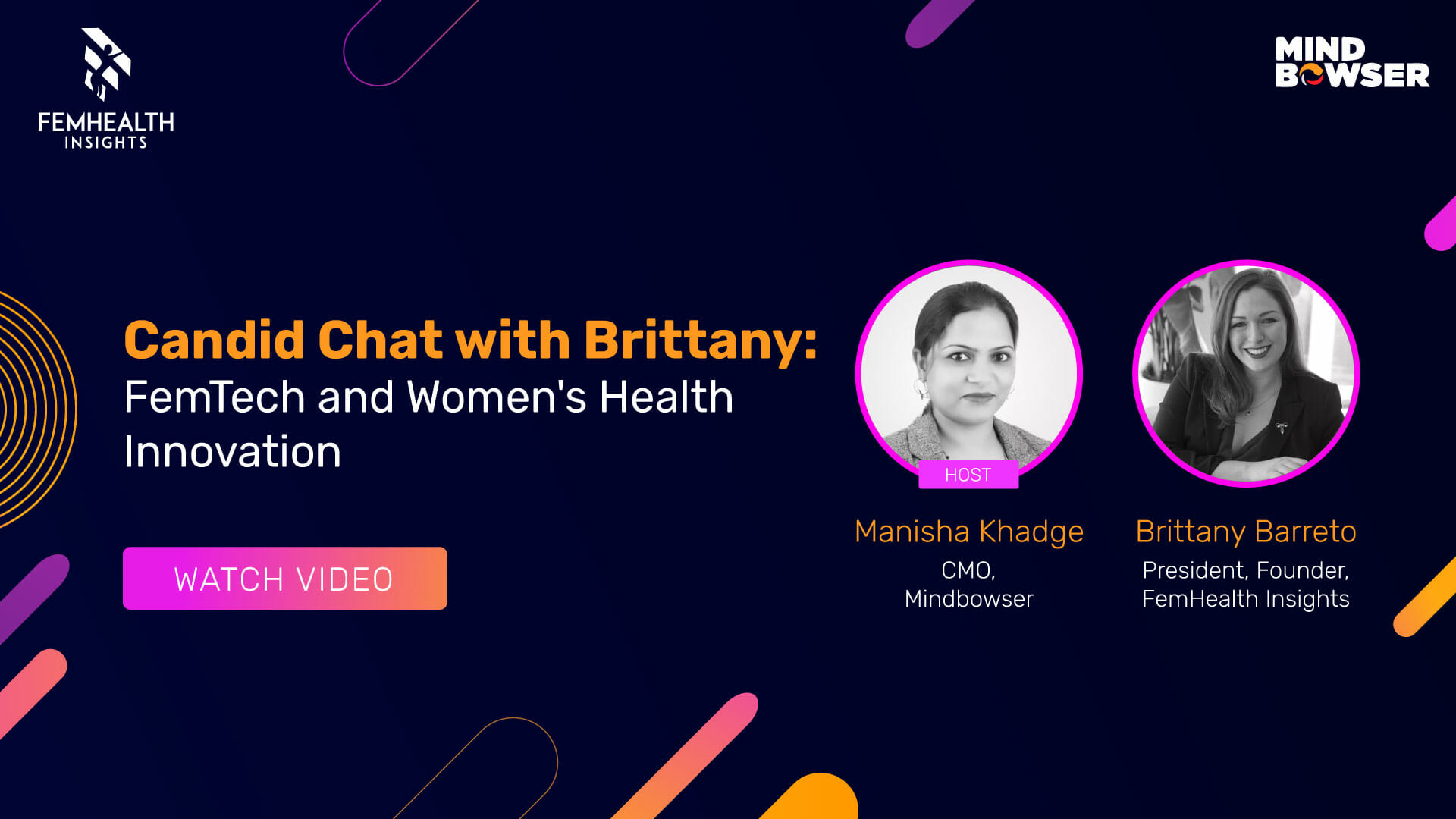
Join Manisha Khadge as she hosts an enlightening podcast featuring Dr. Brittany Barreto, the visionary founder of FemHealth Insights. Explore her groundbreaking work in Women’s Health, where she’s reshaping the landscape and championing diversity, equity, and inclusion within this vibrant industry.



In this episode of HealthTech with Purpose, Danika Kelly, CEO of My Normative, talks about their female-focused health research platform and the challenges faced in adapting technology for the industry.
Partner with us to design, build, and scale digital solutions that drive better outcomes.
Global Tech Teams LLC, 525 Washington Blvd, Industrious at Newport Tower, Jersey City, NJ 07310, United States.
Let’s discuss your goals, workflows, and next steps in a focused consultation call.
 Schedule a Call
















 BLOGS
 NEWSROOM
 CASE STUDIES
 WEBINARS
 PODCASTS
 ASSET HUB
 EVENT CALENDAR