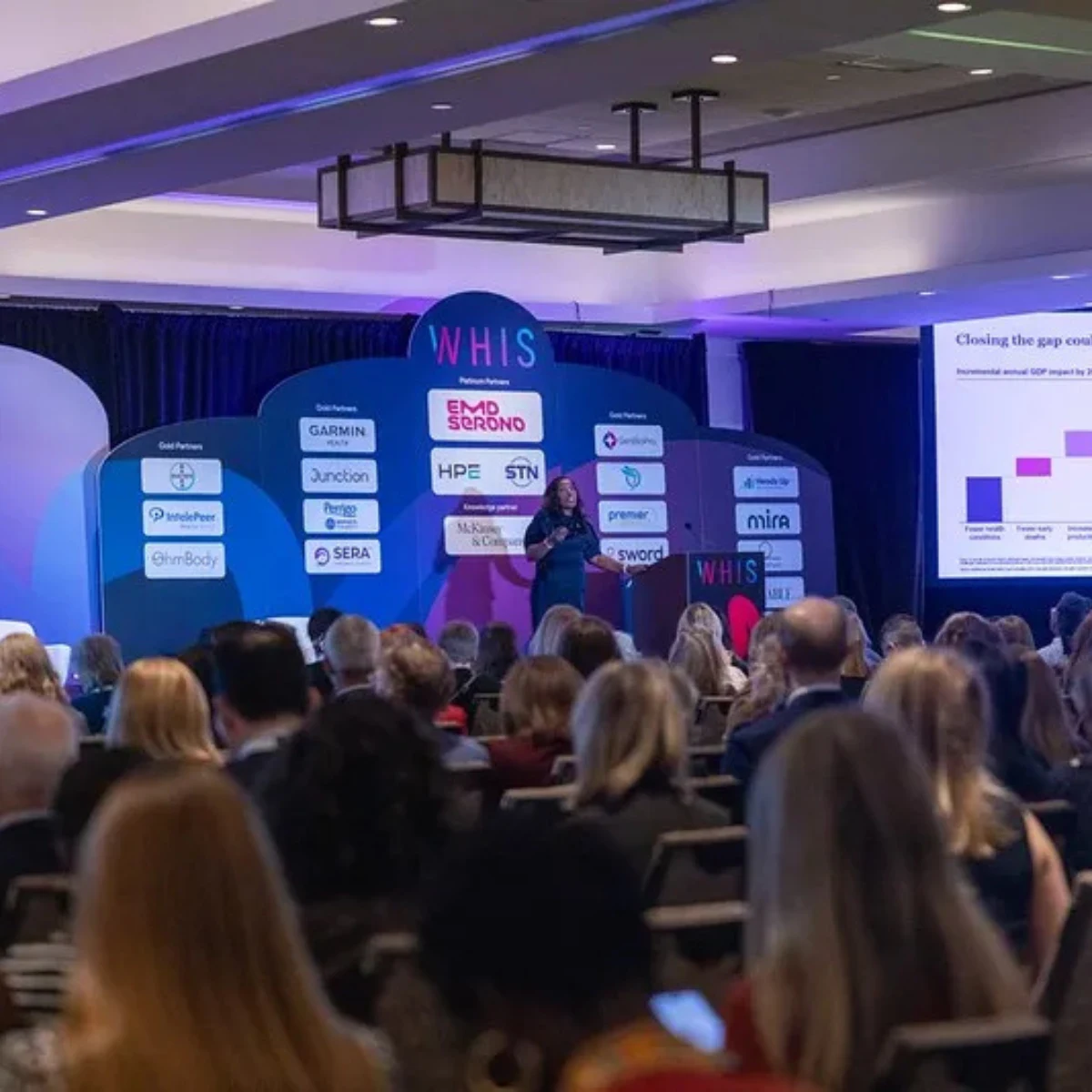

Recorded at ViVE 2023 in Nashville, this episode features Michael Archuleta, CIO of Mt. San Rafael Hospital and Clinics in Trinidad, Colorado, in conversation with Mindbowser’s Rushikesh Kulkarni. His core argument is that hospitals and clinics are digital companies that deliver healthcare services, and that IT has to move from cost center to strategic revenue contributor, from “ticket taker” to “value maker.”
He explains why he calls the patient “the new CEO”: patients have more data and more choice than ever, and will take their care elsewhere without good tools inside and outside the hospital. He argues for automation that lets doctors be doctors, calls cybersecurity a matter of life and death, and describes the “no-nonsense” approach that took Mt. San Rafael from late electronic medical record adopter to Most Wired recognition and HIMSS Analytics Stage 6. He credits a strong technology foundation with letting the hospital move staff home and stand up telehealth clinics quickly during COVID, sees AI as a tool with pros and cons, and closes with a call for startups, interoperability and FHIR: “tell the Flintstones to come meet the Jetsons.”
Michael’s starting point is that the CIO role has moved from advisor to driver, and that hospitals have to stop treating technology spending as a cost center. In his framing, IT that only processes tickets keeps a hospital stuck in a “brick and mortar” mindset, while IT that brings real efficiency, productivity and automation becomes a strategic revenue contributor. “This isn’t a technology makeover,” he says; it’s a business revolution. He contrasts healthcare with oil and gas and finance, which he says are years ahead, even though healthcare is the industry saving lives. Andy Kinnear made the same point on this show from the NHS side: most CIOs can deploy software, but culture change is what makes technology succeed.
His most quoted line from ViVE is that everyone in healthcare now reports to the patient. Patients have more data and more choice than ever, and if a hospital doesn’t build tools that serve them inside and outside its walls, they’ll go elsewhere. He pairs that with the clinician side: the evolution of the EHR has buried physicians in work, and automation should exist to “let doctors be doctors” and stop burnout.
Michael argues that cybersecurity in healthcare reaches past data to patient safety. He cites healthcare’s rise from the top 10 to the top six most attacked industries, thousands of security flaws in pacemaker software, and a claim that 83 percent of FDA-regulated medical device companies admit to a cybersecurity problem. His conclusion is organizational: without a transformational CIO and real attention to security leadership, a hospital can’t realign its culture. For hospitals building that capability, healthcare cybersecurity services have to cover EHRs, connected devices and infrastructure together.
Because Mt. San Rafael had invested in its technology foundation, Michael says the hospital could send staff home “effectively, efficiently, securely” and spin up telehealth clinics quickly, while other organizations that hadn’t “put their home in order” struggled, and that moment is when his board saw the light. Looking ahead, he wants more automation and AI used as a tool, and more startups and third-party companies let in the door. The obstacle he names is EHRs that “don’t want to work with specific vendors,” and the answer he points to is interoperability and FHIR (Fast Healthcare Interoperability Resources), moving faster.
That EHR wall is usually the first engineering problem any outside vendor hits. Mindbowser works on it both ways: healthcare interoperability solutions built around FHIR and HL7 for your product, or ConnectHealth, which connects a digital health product to 20+ EHRs through one integration model and runs inside your own cloud.
Hi Michael, good morning. How are you?
Hey, good. How are you doing?
I’m good, I’m good. So how’s Nashville?
Nashville has been wonderful. It’s been just a phenomenal conference. I love that we’re seeing so many digital disruptors, which is much needed in this industry.
Amazing. I would like to know a little more about you and your journey.
Yeah, absolutely. Thank you again for having me. My name is Michael Archuleta. I’m the Chief Information Officer with Mt. San Rafael; we’re based out of Trinidad, Colorado. The journey has been phenomenal. We’ve seen the overall evolution of the CIO really come to fruition: we’ve gone from being an advisor to really driving the organization, which is so critical.
What I love, too, is that we’re seeing true digital transformation. That has really been my passion. My passion has always been how we re-leverage what information systems mean to an organization, because technology is really the backbone, one of the foundations that creates an overall company. That’s why I always state that, in the end, hospitals and clinics are digital companies that deliver healthcare services. We’re living in the digital age of healthcare, and that’s really the bottom line. The overall focus here has been how we go away from that brick-and-mortar theology of what healthcare has always been, and really focus more on becoming a digital company.
Then look at how the CIO, technology and technology investments have always been considered a cost center. That’s an issue. With my overall focus and advocacy, really trying to change the culture, I’ve been able to re-leverage what technology means: we can no longer be a cost center, but a strategic revenue contributor to the organization. That is so critical. I spoke Monday here at ViVE, and I basically stated, “Ladies and gentlemen, we have to tell the Flintstones to come meet the Jetsons.” It’s about time. It’s really about time for change, and we need change more than ever.
We’ve seen this industry being disrupted, and we’ve seen so many amazing things happen, but we are behind the curve when it comes to technology advancements. We are many years behind the curve. Look at oil and gas, look at the finance industry. But we’re doing the most important thing out there: saving lives, dealing with patient care. We should be leading the pack when it comes to digital transformation and innovation. That’s so critical. And that’s why I always say, too: I don’t care what you do in healthcare, everyone has a new CEO. People say, “Okay, well, who is my new CEO?” Your new CEO is the patient, and that’s basically the bottom line.
That’s a really, really wonderful thought: the new CEO is your patient. Amazing. I would like to know more about what Mt. San Rafael Hospital is doing. As a provider, what are the key things you look at to provide a better service?
Absolutely. One of the critical things we’ve done as an organization is redefine what digitalization means to our group. We also had to redefine some of the digital strategies we built: around the business, around the roles, around the partnerships, and around the technology we incorporate. One of our critical components is that, as an organization, we realized that if we do not continue to invest in tech, and if we do not continue to build strong asynchronous tools that benefit our patients both inside and outside the organization, we’re not going to be successful moving forward. The culture understands the importance of what we have to do, and that’s so critical.
One of the most critical components out there is continuing to enhance patient care with the use of technology, because if we can enhance patient care, we’re doing what we were established to do. The critical thing is how we advance this: how do we give more of a consumer experience to our end users? This is one of the most antiquated industries out there, and that’s such a sad thing, but consumer experience is so critical. That’s why I say your new CEO is the patient. If you don’t continue to build specific tools for these patients, these individuals are going to look elsewhere. They are taking more control of their overall patient care. They have more data than they’ve ever had, so they can make those choices: “I want to go to this other organization versus your organization.” So we have to be innovative. We have to think outside the box about how we promote initiatives that really enhance our overall process.
Automation is such an important thing, too. How do we create more efficiencies? Because we are doing more with less, and that is such a hard thing at times. It’s so sad when you look at the evolution of the electronic medical record system and these poor physicians. In the end, we have to let doctors be doctors. How do we create more enhanced initiatives, using tools that benefit our physicians, create more automation and more efficiencies, and stop the burnout of what’s happening to these poor doctors? This is what we need to do: use technology as a tool.
Don’t look at technology as a cost center. Look at technology as a true strategic revenue contributor to the organization. The problem, too, is that when we look at the evolution of IS, information systems, we’ve seen they’ve always acted as a ticket taker. They’re always receiving tickets. But we have to refocus that, going from a ticket taker to a true value maker. That is really critical, because if you can bring true value, true efficiencies, true productivity and true automation to your organization, you’re leading the way forward.
Great, some really great insights there, Mike. In this new world, where tech is playing a really important role in revolutionizing things, especially on the healthcare side, how is the role of the CIO changing? How critical is it, and what are the key aspects a CIO has to keep in mind while making sure the organization grows in a good way?
Absolutely. Just as you stated, the revolution. Honestly, ladies and gentlemen, this isn’t a technology makeover. This is a true business revolution, where we need complete change and the incorporation of true digital transformation within the organization. We’ve seen how the CIO has gone from crawling to holding the organization up, from advisor to driver. That’s really critical, because your technology leader is such a critical component of your overall success moving forward. As I stated, if an organization doesn’t incorporate technology as a core component of its overall organizational strategy, it’s not going to be successful moving forward.
That’s why I said, too, that we have to get away from this brick-and-mortar theology of what healthcare has been. That is a major disservice. Ladies and gentlemen, we’re in the digital age. We need to be leading the pack when it comes to innovation. Look at what’s happening with our industry as a whole, even from a cybersecurity standpoint, because organizations aren’t really focusing on the importance of the CSO (chief security officer), the importance of security, the importance of technology. These all have to refocus. We went from the top 10 to the top six most attacked industries out there. That is a major issue, too.
I always state, from a security standpoint, that cybersecurity isn’t just about data security; it’s also a matter of life and death. For example, look at pacemaker software alone: there were 5,000 security flaws associated with it. Look at the medical device industry, which is regulated by the FDA (Food and Drug Administration): 83 percent of those companies have admitted they have a cybersecurity problem. This is an issue, and this is why it’s so important to realign and have a true CIO who is transforming the organization. Honestly, you have to be a transformational CIO, because if you’re not, you can’t really realign the focus of the culture within your organization. It is going to be very, very hard to continue to evolve, because healthcare isn’t getting easier. It’s getting harder and more complex. We have a lot of regulatory and compliance items, we have a lot of security issues, and we’re a very antiquated industry. There are a lot of issues here that we need to push forward on. We need to evolve. Let’s get rid of the brick-and-mortar theology, ladies and gentlemen. It is about time. Tell the Flintstones to come meet the Jetsons, because honestly, that is the honest truth.
Great. I’m getting inspired just listening to you; some really amazing thoughts here. In this new world, as you are saying, things are getting more complicated, and building a critical team is very important. As a CIO, what are the key factors you look at in building a solid technology team? Because, to your point, it can no longer be just a cost center. What are your thoughts on that?
And that’s the thing, too, Rushi. That’s why I always state that IS needs to move away from being a ticket taker to a true value maker. Your team is one of the core components of your overall department, and teamwork is so critical for me. That’s why, even as part of our overall digital transformation strategy, we focus on partnerships and on specific roles. We need to make sure we have the proper talent in place to make things happen, and that’s a critical component of anything we do.
The beauty of this, too, is that I’ve been a very young CIO in this industry, and I’ve been recognized by so many different organizations, which has been such a humbling experience. But I had to develop a no-nonsense framework. If individuals know me, there are two categories I look at. I look at your talkers: the ones who talk this big game about innovation, but it never happens, and they don’t live in those shoes. And then there are the GSDers. Everyone’s like, “Okay, Mike, I always see you hashtagging GSD.” And I say, “Well, ladies and gentlemen, this is one of the critical components: I’ve built that no-nonsense framework.” I’ve been able to transform this organization from nothing to something. We went from being a very late adopter of the electronic medical record system when the Affordable Care Act came out to a full digital company that delivers healthcare services. We went on to be a Most Wired winner from 2015 to 2021, which is a top nationally recognized healthcare IT award given to the facilities making the most progress in health IT. We’re also a HIMSS Analytics Stage 6 facility, a feat only 30 percent of US hospitals achieve.
People say, “Well, yeah, you’re a doer, Mike, that’s for sure.” And I say, “Well, ladies and gentlemen, that’s why I’m a GSDer.” They’re like, “Okay, what’s a GSDer?” And I say, “That’s getting stuff done.” That’s basically the bottom line. We have to GSD. We have to have that no-nonsense framework. We have to try to really make some changes, because I am not a talker, I am a doer, and we have to develop a strong team of doers. That’s why I say we have to move away from the silos IS has always been built around. We have to go away from that mentality and that cultural focus of being a ticket taker. We’re a true value maker. We’re a disrupter. We are a digital transformation team taking this organization to the next level. That’s the initiative we need to mold to build stronger teams moving forward.
Amazing. I would like to understand the impact your organization has created so far, and where you want to take it.
Absolutely. Again, there’s still a lot of complexity. There are a lot of regulatory items coming out: the Cures Act, PATCH Act initiatives, a lot of items the organization really needs to evolve into. We’ve seen value-based care going from fee-for-service to more of a value-based care outcome, and we’ve used technology to create consumer experience initiatives, which was extremely critical to our overall success. We’re seeing the evolution of transformation, and we’re seeing how telemedicine has been a huge disruptor.
This is what I always come back to. COVID was one of the worst times this entire world has seen. It really was. We lost a lot of amazing individuals, and it was such a sad situation. But a lot of these healthcare organizations, in my opinion, didn’t have their home in order. What I mean is, when we started sending people home, with work-from-home remote initiatives, and trying to roll out telemedicine… as an organization, thankfully, we had a strong foundational backbone of technology, so we were able to send our people home effectively, efficiently and securely. We were able to spin up our telemedicine and telehealth clinics very effectively, and this allowed us to be just where we needed to be. The board of directors and other members were like, “Okay, wow,” the light bulb clicked: “This technology is really important. Look at what we’re doing. We’re not suffering as an organization.” I’ve seen a lot of organizations that didn’t have their home in order and didn’t focus on that strong technology backbone, which is so critical, and they were struggling with sending people home and struggling to spin up telehealth clinics. So this was definitely an issue.
That’s why I continue to say we need to re-evolve the focus of what hospitals and clinics are, but we also need to start incorporating more automation and more initiatives around artificial intelligence. AI is such a buzzword, but artificial intelligence is really an excellent addition to your organization. I know everyone’s afraid that artificial intelligence is going to take over jobs, but I look at it more as an additional tool that will help create better efficiencies moving forward, even from a healthcare standpoint. Look at what AI is doing in radiology: it’s able to catch things the human eye can’t. So there are benefits, but there are also cons to artificial intelligence. There has to be more regulatory compliance around it. We’re seeing how even ChatGPT is evolving so much, and it is a scary thing how people are using it. There are pros and cons to the use of AI, but we really have to look at incorporating those processes in our organizations to continue building strong efficiencies. That’s why I say cultural change is so important. I think these organizations are either going to evolve into digital companies, or they’re going to be left behind, unfortunately. And you definitely don’t want to be the organization that’s left behind.
Yep. And to your point, it’s all about making the best use of the technology that’s coming up, like AI. Of course there’s the angle about jobs, but if you can take it to the next level and use it to your advantage, I think that collaboration has a huge number of advantages. I fully agree with you on that. Awesome. So my final question: what’s the purpose of your organization, your hospital, and where do you see it going?
Absolutely. I always say my number one thing is patient care. That’s the bottom line. I’m so passionate about this industry and about enhancing patient care outcomes: better ways of doing research, advanced technologies to really save people’s lives. This is where we’re advancing, and digital transformation is such an important thing to our organization. That’s why I say my new CEO is the patient, and that’s the bottom line, because if you think about it, patients are the ones truly driving revenue to your organization, and they can take their care elsewhere if you do not continue to build strong tools that benefit them, both inside and outside the organization. That’s so critical moving forward.
That’s why I say transformation is here, ladies and gentlemen, but we do need that disruption moving forward. We need innovation moving forward. We need a lot of good initiatives that are really going to take us to the next level, because honestly, we should be leading the pack when it comes to innovation, leading the pack when it comes to digital transformation, and truly leading the pack when it comes to enhancing patient outcomes. We need to move away from this antiquated industry to a true digital organization that delivers healthcare services. If we can really focus on that and realign ourselves, we can learn from all of these opportunities, especially during COVID, where we’ve seen the importance of incorporating technology as a core component and of being a true value maker within your organization.
Again, this has been a phenomenal conference, seeing so many disruptors and so many innovation initiatives, and I’m so honored to be here and be a speaker at this event to share my story. It was kind of funny: I was looking on LinkedIn, Twitter and all those social media platforms, and I was being quoted all over: “Hey, tell the Flintstones to come meet the Jetsons.” Because honestly, ladies and gentlemen, it is time. It is definitely time that we move forward in this process. We have to re-evaluate our overall strategy, really start incorporating technology as a core component of the overall organizational strategy, and move away from being the ticket taker to the true value maker. Be a GSDer; let’s GSD together. That’s such a critical thing.
And let’s start incorporating innovation, like bringing startups into the group: third-party companies coming in and really disrupting. We need this more than ever. We cannot continue to have these monopolized EHRs (electronic health records) in place that don’t want to work with specific vendors. We need interoperability. We need to see what FHIR, Fast Healthcare Interoperability Resources, is doing. We’re seeing so many good things, but we need to go faster, and we really need to get to the level where we’ve always needed to be. So again, I’m really honored to be on this podcast. I really appreciate the invite, and it’s just been a phenomenal time.
Thank you, thank you for joining us. It has been a very inspiring and thought-provoking discussion, I must say. I love hashtag GSD, so just waving to everybody who’s watching this: I hope you learned something new, and I hope you liked what you heard.
Well, excellent. Thank you very much.
At the time of recording (April 2023, at ViVE in Nashville), Michael Archuleta was Chief Information Officer of Mt. San Rafael Hospital and Clinics in Trinidad, Colorado, where he led health IT strategy, cybersecurity and digital transformation. Under his leadership the hospital, by his account, went from a late adopter of electronic medical records to a Most Wired winner from 2015 to 2021 and a HIMSS Analytics Stage 6 facility. He has been recognized as one of CHIME’s Most Wired leaders and as an HITEC 100 honoree. He remains CIO at Mt. San Rafael and was named among Becker’s hospital and health system CIOs to know in 2026.
Trying to get a new tool into a hospital that runs on an EHR that won’t cooperate? Tell us which systems you need to reach and we’ll show you the fastest way in.
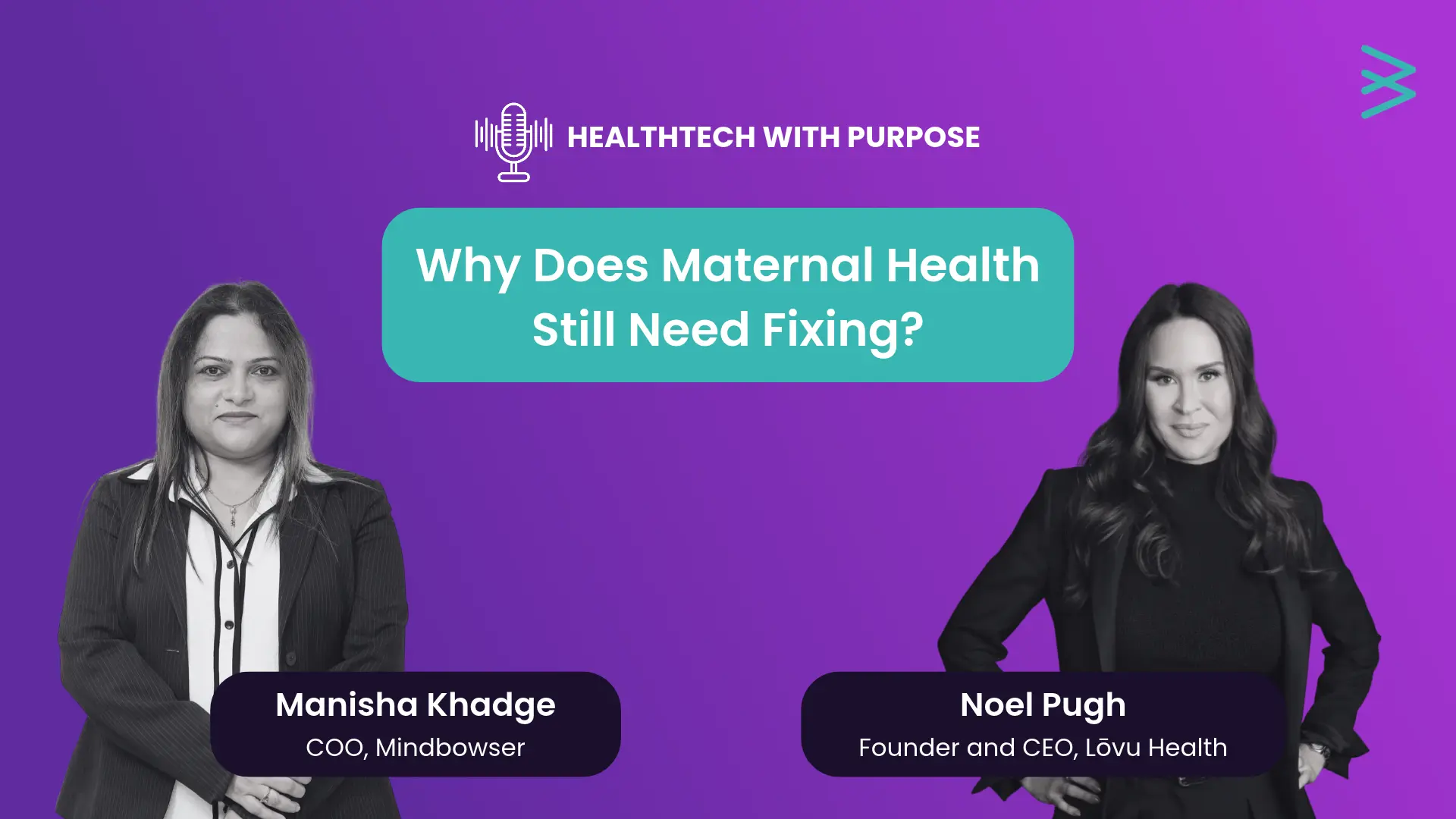
Noel Pugh, Founder & CEO of Lōvu Health, joins host Manisha Khadge, COO of Mindbowser, to unpack why maternal healthcare needs to move beyond monitoring complications toward supporting the everyday needs of mothers. She traces Lōvu Health’s journey building an insurance-reimbursed maternal monitoring and navigation program that connects mothers, clinicians, and community resources.
The conversation gets into the practical side of building that model: remote physiological monitoring, care navigation, EHR interoperability, and bidirectional data exchange. Noel explains how Lōvu’s athenahealth integration helped automate workflows, reduce manual work, and create a foundation for scaling across more healthcare organizations.
She also shares how Lōvu Health is approaching agentic AI, with potential applications across maternal navigation, clinical workflows, revenue cycle operations, and service recommendations, while keeping humans involved in critical decisions. The conversation closes with the realities healthcare founders face around reimbursement, investor skepticism, clinical adoption, go-to-market, and choosing the right technology partner.
Branden Fini, healthcare VC and partner at Providence Ventures, joins host Ayush Jain to explain how a strategic investor picks and backs digital health companies. He traces his path from pre-med sciences into more than a decade of venture capital, then lays out the Providence Ventures model: commercial-stage companies, Providence as anchor LP, and customer access as the edge that shortens healthcare’s notoriously long adoption cycles.
He argues the market reset that began in 2022 makes this a good time to invest, because valuations are more rational. On AI, he applies the same test he uses for any company: real, differentiated results for enterprise buyers who are risk averse and budget constrained, with no premium for technology looking for a problem. The sharpest section covers what goes wrong after Series A: sales teams built before there is a lead engine, raising more than growth can justify, and founders blaming the market once the early adopters run out. He closes with the two capital efficiency ratios he tracks, the firm’s move to an independent fund with more strategic LPs, and the thesis areas he’s watching: workforce, consumer engagement and behavioral health.
Partner with us to design, build, and scale digital solutions that drive better outcomes.
Global Tech Teams LLC, 525 Washington Blvd, Industrious at Newport Tower, Jersey City, NJ 07310, United States.
Let’s discuss your goals, workflows, and next steps in a focused consultation call.
 Schedule a Call












 BLOGS
 NEWSROOM
 CASE STUDIES
 WEBINARS
 PODCASTS
 ASSET HUB
 EVENT CALENDAR