





 BLOGS
BLOGS  NEWSROOM
  CASE STUDIES
  WEBINARS
  PODCASTS
  ASSET HUB
  EVENT CALENDAR



























Digital rehabilitation is reshaping the future of healthcare by incorporating advanced technology into traditional physical therapy practices. Historically, physical therapy relied on hands-on techniques to boost movement, mobility, and overall function. Post-surgery or injury helps patients regain full function and return to their daily activities.
According to precedence research, the global telerehabilitation market, valued at USD 3.58 billion in 2023, is projected to reach USD 12.90 billion by 2032, with a CAGR of 15.30%.
Rehabilitation is crucial in healthcare, significantly impacting patient outcomes and quality of life. It focuses on restoring function, reducing disability, and improving overall well-being, allowing patients to regain independence and achieve optimal recovery. Effective rehabilitation addresses physical and psychological needs, making it a cornerstone of comprehensive patient care.
The emergence of digital rehabilitation introduces transformative solutions to physical therapy practices. Virtual reality, telemedicine, and wearable devices provide real-time feedback, personalized treatment plans, and remote monitoring. These innovations boost patient engagement, improve therapy adherence, and enable more efficient, data-driven care, streamlining the healthcare system.
The Future of Digital Rehabilitation
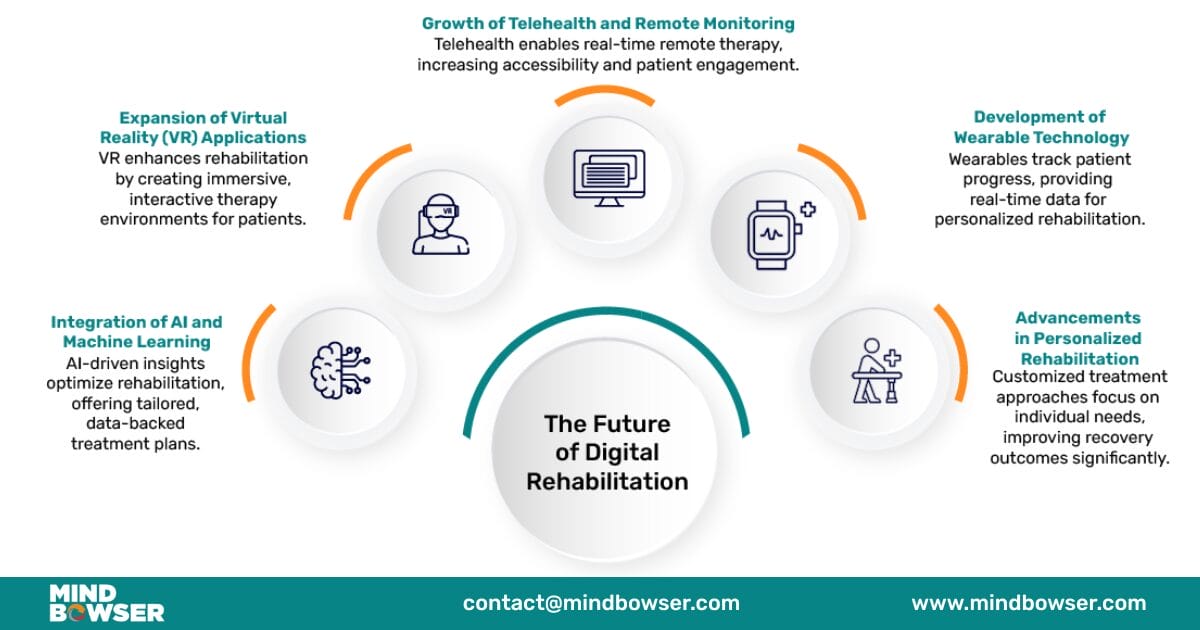
Digital rehabilitation is drastically revolutionizing patient care, influencing the future of recovery and rehabilitation. As technology advances, digital tools are becoming important in improving rehabilitation techniques. Wearable technologies, telemedicine, and virtual reality are enhancing current methods and opening up new avenues for therapy delivery.
Integration of AI and Machine Learning
Advanced AI and machine-learning technologies will play a crucial role in digital rehabilitation. These systems can analyze patient data to predict outcomes, customize treatment plans, and improve intervention strategies. By leveraging real-time data, AI can offer personalized recommendations and adjust therapies dynamically, making rehabilitation more responsive and effective.
Companies like PathAI are already harnessing these technologies to analyze patient data and accurately predict outcomes. AI will enable real-time adjustments to treatment plans, offering personalized recommendations based on the latest data.
For instance, an AI-driven system could dynamically adjust a patient’s exercise regimen based on their progress, making rehabilitation more responsive and tailored to individual needs.
Explore Our Innovative Solutions Today!
Case Studies and Innovations
Exploring successful implementations of digital rehabilitation solutions reveals their transformative impact on healthcare.

Advanced Platform for Personalized Remote Rehab Programs
We integrated digital rehabilitation technologies to boost patient outcomes and optimize care.
CRM Platform Boosts Efficiency for Home Care Companies
We helped a US-based homecare provider that delivers customized care plans tailored to each patient’s unique needs.

How Mindbowser Can Help You with Digital Rehabilitation
Personalized rehabilitation programs are crucial for addressing individual patient needs and ensuring tailored therapy plans. This increases patient involvement and adherence while strengthening treatment relevance and efficacy. Healthcare providers can achieve more accurate and efficient outcomes by tailoring programs to specific conditions, making personalization a key element in successful rehabilitation strategies.
Mindbowser excels at developing custom digital rehabilitation solutions tailored to rehabilitation centers and their patient’s unique needs. With extensive experience in healthcare technology, Mindbowser creates specialized software that integrates seamlessly with existing systems and supports personalized rehabilitation programs.
Our expertise encompasses various features, from interactive therapy sessions to advanced data analytics, ensuring that healthcare providers have the tools to deliver high-quality, individualized care.
Custom applications offer significant advantages in addressing specific patient needs and enhancing rehabilitation outcomes. Tailored software solutions can provide personalized exercise regimens, monitor patient progress in real-time, and deliver targeted feedback.
This level of customization improves the relevance and effectiveness of therapy, leading to better patient engagement and adherence. Additionally, custom software can adapt to increasing patient needs and integrate with other healthcare systems, ensuring rehabilitation programs remain effective and efficient throughout recovery.
Conclusion
Digital rehabilitation is a significant advancement in patient care. It integrates technology with traditional practices to offer more effective and accessible solutions. It provides personalized treatment plans, immersive experiences, and improved data accuracy. The growing adoption of teletherapy, virtual reality, wearable technology, and AI in rehabilitation practices can lead to better patient outcomes, efficient healthcare delivery, and increased satisfaction. This shift towards digital rehabilitation is a pivotal moment in healthcare, paving the way for ongoing advancements.