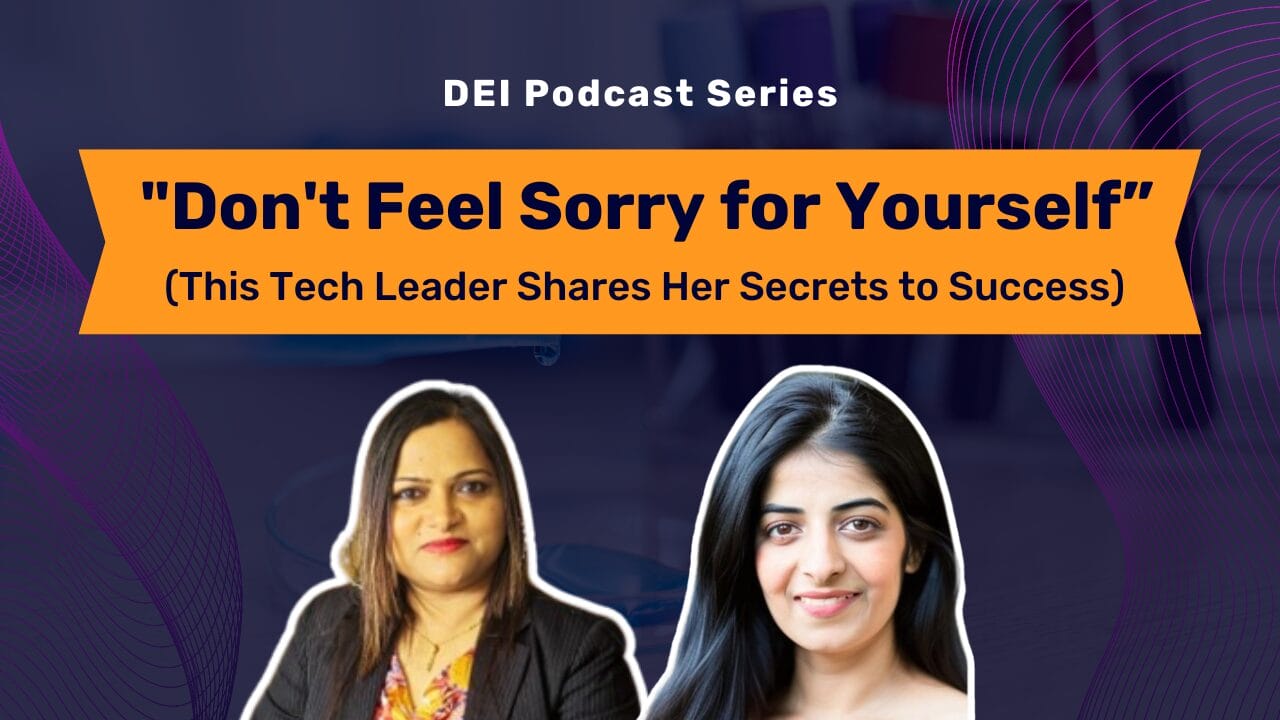
In this International Women’s Day episode of Mindbowser’s DEI Podcast Series, Dr. Patricia Busby-Robinson, a licensed professional counselor in Greenwood, Mississippi, shares the path that made her the only female sex therapist practicing in the state. She runs PBR Counseling Center, serves the Mississippi Delta, and supervises counselors working toward licensure. Her story covers becoming a mother at 17, being the first in her family to go to college without anyone to explain that a psychiatrist is a medical doctor, and being deliberately run over by a car, which broke her pelvis and sacrum and forced her out of university. She came back, moved from business into psychology and counseling, and rerouted her doctorate after disagreeing with parts of a human sexuality curriculum. She also talks about the telehealth gap COVID exposed for her practice: no way to know where a client is during a session, or whom to call in an emergency. That gap led her to invent a platform built around telemental health safety. Her message to young women: you are enough.
Dr. Busby-Robinson describes a practice that covers a lot of ground. She is a licensed professional counselor (LPC) and a board-qualified supervisor, which she calls being “a gatekeeper of the LPC profession” because counselors seeking licensure can train under her. She owns and leads PBR Counseling Center in Greenwood, serving the Mississippi Delta, and specializes in sex therapy and sexology, “the good, the bad and the ugly.” She says she is the only woman in Mississippi practicing it.
She saw that specialization as a way to be set apart. With a sex therapy background and a counseling license, she expected to be able to teach at universities in Mississippi and Tennessee, “because there’s none.”
Her story is a run of setbacks, each met by going back to school. She had her first child at 17 and still earned an associate degree in business administration, helped by her mother and her daughter’s father. As the first in her family to attend college, she wanted to be a psychiatrist but nobody told her it was a medical degree; a high school nursing track convinced her medicine wasn’t for her, so she went into business.
At university she was intentionally run over by a car. Her pelvis was broken and her sacrum broken in four places, and doctors expected she’d need to learn to walk again. She was back at work within about five months. She returned to school as a mother of three, switched to psychology, went straight into a counseling master’s, and later took two years off her doctorate to fight a custody battle for her youngest. At one point, she says, everyone in her house was in school, including her.
When COVID shut her office, she moved clients online and found that nothing gave clinicians “the full circle experience” they need. The platform she is building lets a clinician see where a client is in real time during a telehealth session, along with the emergency contacts for that area, so remote care can match the standard of an office visit. That safety question sits at the center of any telehealth platform built for behavioral health, where clinicians are working without the physical presence they’d have in the room.
She also named the harder part: she didn’t know anyone who looked like her who held a patent, and had to research the whole process herself. Dr. Julie Harrigan, another guest in this series, described a similar experience of pushing through as a foreign medical graduate in a male-dominated field.
Her closing advice to young women is direct. You are already equipped to achieve what you want, even when family and friends don’t believe it and you stand alone doing it. Kill the outside noise that paralyzes you, live your life out loud, and don’t accept the sky as the limit. She also separates achievement from success: for her, success comes at the end, and everything before it is a series of achievements. Her story also appears alongside other women leaders in the series compilation, women on finding their career path.
All right. Hello, Dr. Patricia, I wish you a very happy International Women’s Day, and it’s a pleasure to have you. Before we dive into the discussion around diversity, equity and inclusion (DEI), I would like you to introduce yourself, please.
Dr. Patricia Busby-Robinson [00:20]
I’m Dr. Patricia Busby Robinson. I’m a licensed professional counselor (LPC) here in the state of Mississippi. I’m also a board-qualified supervisor in the state of Mississippi as well, so they almost consider me a gatekeeper of the LPC profession: anybody that desires to be licensed, I’m somebody that can supervise them to become licensed. I’m also the owner and lead therapist of PBR Counseling Center, based here in Greenwood, Mississippi, as a matter of fact, so I serve the Mississippi Delta area.
I also specialize in sex therapy. I’m the only female in the state of Mississippi that practices sex therapy and sexology. So I’m also a sex therapist, with a specialization in sex therapy: all things sex, the good, the bad and the ugly part of it. Right now I’m in full private practice.
My latest endeavor, what I’m working on, is that I’ve just become a patented inventor. I’m looking to create a telemedicine platform, and I’m hoping to revolutionize the entire field of medicine when it comes to telemedicine, because we don’t have a tracking system. I wouldn’t even call it a tracking system, but something that can tell you where your client is in real time. While you’re on the call, like we’re doing now, I will know where you are in real time, and I will also know the emergency contacts for that particular area, which is difficult when we’re serving you that way. So it’s kind of like extending the standard of care for the people that we serve, as opposed to an office visit. It would still be giving you the same quality of care that you would get if you were in my office.
I’m also the mother of three babies. I birthed three babies. My oldest is 28, my son is 21 and he’s in college, and my daughter, the 28-year-old, is working on her doctorate as well. My baby girl is 16. We don’t know if she’s going to be an anesthesiologist, a nurse or a lawyer, so it’s up for grabs. I have five fur babies: two cats and three dogs. And I have a fur grandbaby, because my daughter hasn’t given me grandbabies yet. And I’m married. So, life happening, I would say.
All right, that’s really awesome. Since this is International Women’s Day month, we would like you to share your personal story: your challenges, your successes, and how you overcame those challenges.
Dr. Patricia Busby-Robinson [03:06]
As a woman leader in this field, first and foremost: I was a teen mom. I had my oldest at 17. I turned 18 that August, but I had her in June, June 30th as a matter of fact. And I was blessed to continue to go to school, because I had a lot of help. My mom helped me a lot, and her dad was very active. I went on to school and got my associate degree in business administration, and then I transitioned from community college to university to go ahead and get my bachelor’s in business as well.
Now here’s the caveat. When I was in school, all through school before high school, I always wanted to be a psychiatrist. But being the first person in my family to actually go to college, nobody told me that a psychiatrist is a medical doctor. While I was in high school, they gave us two choices: you could do an allied health program while you’re in high school, or you could do a business program. I chose the allied health program because it was centered around nursing, so in my young mind I was thinking that’s similar to what I want to be. However, when I started the class, the instructor at the time was a nurse, so when we entered the doors it was strictly nursing. When I left the class I would literally have a headache. So I was like, oh no, this is not for me. I wiped off medical doctor all the way and went straight into business.
Now, if I had had someone in my family to pull me back and say, “Trisha, this is not what a medical doctor is. You’re studying to be a nurse there, so what you desire to be when you grow up is not going to be that,” right? Because I didn’t have that, I went running to the other side. But to tell you how life can come full circle, I still ended up in the helping profession as a licensed professional counselor, and I don’t think God could have carved it out better.
Dr. Patricia Busby-Robinson [05:23]
But during those times I had a lot of adversity. When I transitioned to university, I ended up being run over by a car, intentionally run over by a car. I had a broken pelvis, and my sacrum was broken in four places. That forced me to withdraw from school, unofficially, but I couldn’t go because I was basically bed-bound. They thought I would have to learn how to walk all over again, but thanks be to God, I did not have to do that.
I was unable to go to school. That happened in the April of that year, and I can tell you I started back working a job in the September of that same year. So I know that was nobody but God, because they thought I was going to have to go through extreme therapy. Even if somebody sees me now, they would not know that happened to me, because I have no physical evidence of it happening.
I did take a break from school, because now I had to pay to return to school. I was blessed to get somebody to pay for me to go to school. By the time I returned, I was a mother of three children.
Dr. Patricia Busby-Robinson [06:50]
So I’m a mom of three children, and I returned to school. I switched my major from business into psychology, so I ended up getting my undergrad in psychology, and from psychology I went straight into counseling. I did not even break during that time. Once I got my bachelor’s, I went straight into my master’s and got my counseling degree. And once I got my counseling degree, I said, okay, I’m going to give myself two years before I go back and get my doctorate. I’ve always had it in my mind that I’m going to get my doctorate.
So I waited two years from that time to get my doctorate, and this time I was going to do sex therapy, human sexuality. I ended up getting accepted into Widener University in Chester, Pennsylvania, and I was traveling from Mississippi to Chester. I did that for a couple of years, and I’m all but dissertation at Widener.
Dr. Patricia Busby-Robinson [07:51]
But during that time I wrestled with a lot of things that they were doing with regard to sexuality. [portion removed] So I battled with that, and I said, Lord, you’re going to have to figure out another way for me to go. What’s going to make me more marketable in this field, so that I would be able to do this and still be myself?
I’ve always had it in my mind: how can I be set apart from the original people? How can I be set apart? I felt that me having a background in sex therapy and sexology, I would be able to get into different universities to teach, as a licensed professional counselor in the state of Tennessee and the state of Mississippi, being a counselor with this specialization, because there’s none. So that’s my marketability. So I said, okay, let me see where I can go to get the doctorate in counseling. I ended up going to Mississippi College, getting my doctorate there, and I completed there, and here I am today.
Dr. Patricia Busby-Robinson [09:02]
But during this whole time, even while I was working on my doctorate, I want people to understand that adversity happens. Things happen. Life happens. During this time I was going through a custody battle for my youngest baby, so I had to take off from my doctoral program for about two years, because I had to focus my attention on that. It gave me time to think about what I really want to do. During that time I made the decision to go to Mississippi College, after I got through that custody situation with my daughter, because family is first for me. That’s most important for me. And I don’t do well with people lying on me, so I had to fight for my daughter and do what I needed to do for that.
Besides other things, I had two children in school at that time, and my oldest was going into college during that time. So literally everybody in my house was going to school, including myself. I had to deal with that while I was getting my counseling profession done. I tell people all the time about this profession: either it’s in you or it’s not. I think you’re either born to be a counselor or you’re not. I don’t think it’s something that you can literally learn, because I tell people all the time, you could literally get what I give my clients at my kitchen table. It’s literally a part of who I am.
Dr. Patricia Busby-Robinson [10:37]
And what pushed me into getting EmerHelp started, which is my other baby that I’m birthing right now, is that when COVID happened, everything shut down. Now I had to find another way to do business, because I couldn’t see my clients as I was. But what I learned is that nothing offered the full circle experience that we need as clinicians. So that’s what pushed me to do it.
And the issue I had with that is that nobody that looked like me, that I knew, had a patent or was a patent inventor, and I didn’t know where to start. I didn’t know anybody who had done that, so I basically had to start researching myself and learning how to do it. So for me, all those things, being run over by a car, going through a custody battle for my daughter, were things that happened, but I had to learn to push through, trust God even when I didn’t feel God or think he was present, trust that he is, and just do what I have to do as an individual.
That’s totally inspiring. Now I can understand why you are such a strong woman: you’ve always been strong when the difficulties came, and you overcame them because you always looked for the solution. I think that is what defines a person. You always see failure and success; all of this is part of life. But after you fall, what you do after that is extremely important, and I think your life journey certainly tells that. So thank you for sharing that very candidly.
The last section is based on the kind of challenging life you had. You overcame all those obstacles, and where you are today is because you learned from them and moved ahead. What is the message you would like to give to the young women who will be listening to you, Patricia?
Dr. Patricia Busby-Robinson [12:34]
To the young woman that is listening to me: I want you to understand that you are enough. You are enough. You are already equipped with what you need to succeed in this life, and I would say achieve, because I don’t look at success the same way others look at success. For me, I will fully get success probably once I die and God says, “Well done.” Everything else between this and that, for me, is achievements. But you have the ability to achieve whatever it is you desire. If God put it in your heart to do it, it can be done. That’s the way I look at life. If you have a desire to create a new moon, somebody may say the moon already exists, but if he told you to create a moon, you create the moon, right?
So you have to trust and believe. If nobody is believing in you or standing with you, sometimes we have to stand by ourselves to make that happen, and believe in ourselves to make that happen. A lot of humans can tell you no, but if God says yes, that’s all you need. Even if they don’t believe it, you have to believe in yourself and understand that you may stand alone doing it. Nobody in your family may believe it, no friend may believe it. But let’s learn to accept what we want and kill the noise, which I consider outside noise, because sometimes the outside noise will paralyze us and prevent us from pursuing what we need to pursue, based on what somebody else says we should do.
So if you’re living your life, live it out loud. You’re going to do what you know feels good and what you know is right, believe in yourself, and know that you’re enough. You don’t need anybody else. If you can think it, you can achieve it. I hate to say that the sky is the limit, because for me, beyond the sky is the limit. If you can think it, you can have it.
Awesome. You are enough, believe in yourself, and maybe you’re changing the frame: the sky is not the limit, it’s probably beyond the sky. Those are really wise words. I’m sure so many women will get inspired listening to this podcast. Thank you so much, Patricia, for speaking to us. We wish you again a very happy International Women’s Day.
Dr. Patricia Busby-Robinson [14:54]
Thank you so much for having me.
At the time of recording (published March 2024), Dr. Patricia Busby-Robinson was a licensed professional counselor and board-qualified supervisor in Mississippi, and the owner and lead therapist of PBR Counseling Center in Greenwood, serving the Mississippi Delta. She specializes in sex therapy and sexology and describes herself as the only woman practicing sex therapy in Mississippi. She holds a doctorate in counseling from Mississippi College, is all but dissertation in human sexuality at Widener University, and earlier studied business administration and psychology. She is the inventor behind EmerHelp, a telehealth safety tool that shows a clinician a client’s real-time location and local emergency contacts during a session. Her patent, titled “911 APP,” was granted in July 2023 (US 11,706,605 B2).
Building a telehealth product where clinician and client safety has to work as well as the video call? Tell us what you’re building and we’ll walk you through how we’d approach it.



Join Jessica Brazil, healthcare leader, on HealthTech with Purpose Podcast. Explore mental health advocacy, female leadership, and self-care for impactful growth. Don’t miss her inspiring journey!
Partner with us to design, build, and scale digital solutions that drive better outcomes.
Global Tech Teams LLC, 525 Washington Blvd, Industrious at Newport Tower, Jersey City, NJ 07310, United States.
Let’s discuss your goals, workflows, and next steps in a focused consultation call.
 Schedule a Call












 BLOGS
 NEWSROOM
 CASE STUDIES
 WEBINARS
 PODCASTS
 ASSET HUB
 EVENT CALENDAR