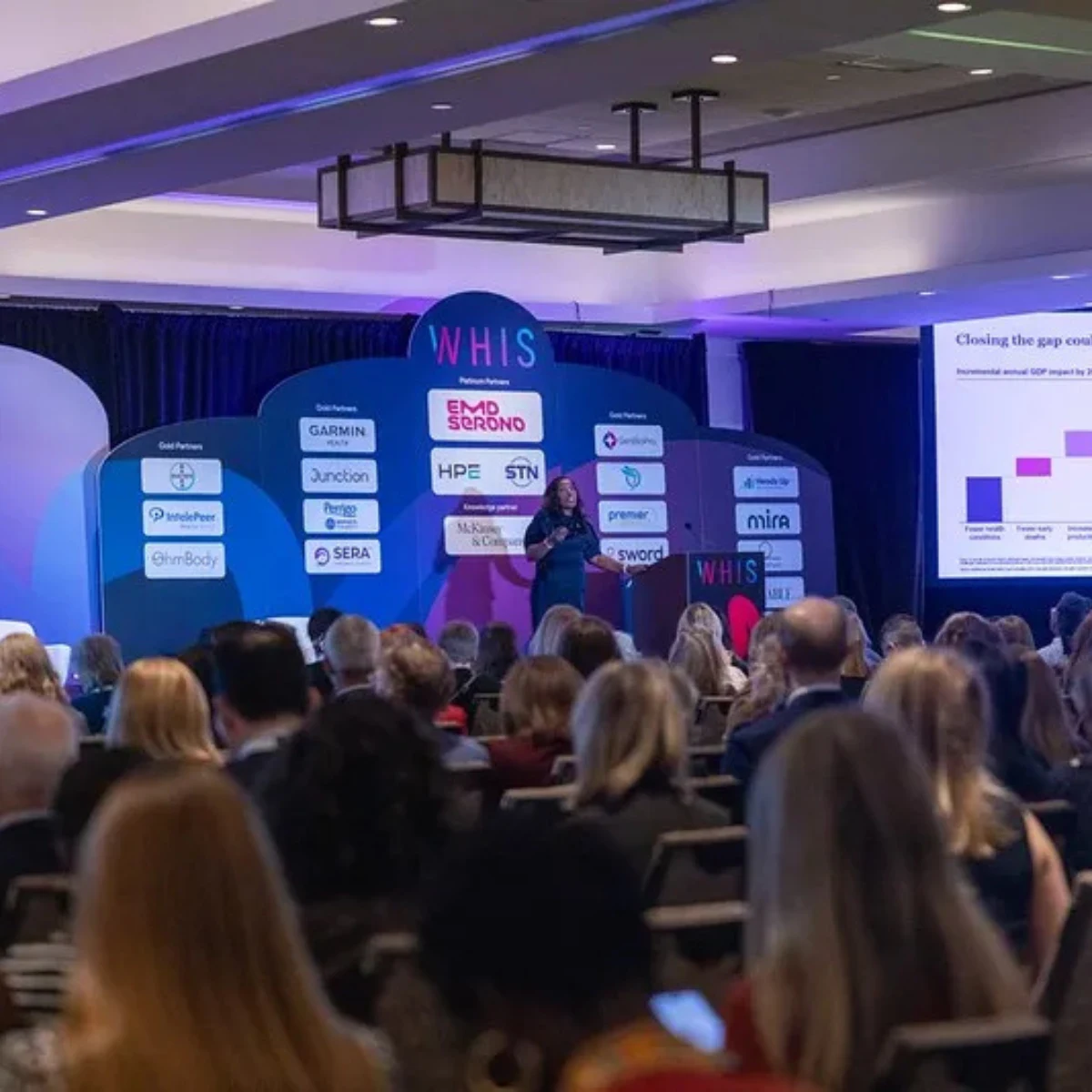

Recorded at the Health 2.0 Conference, where she received an outstanding leadership in healthcare award, this short episode features Jessica Brazil, a social worker of more than 20 years and founder of Mindful Living Group, a multi-specialty mental health group in Hawaii. Speaking with Mindbowser CEO Ayush Jain, she describes building a team of more than 30 professionals across three clinics on two islands, actively treating over a thousand patients.
Jessica makes the case that women bring a collaborative, nurturing balance to leadership, and names the biggest obstacle as confidence: women tend to apply only when they feel fully competent. Her advice is to take the first step and fill gaps with education and mentorship. She explains how a strength-based, collaborative style kept her team stable through Hawaii’s strict COVID lockdown, when demand for mental health services from first responders and the community surged, and why a rigid, authoritarian approach would have failed. She closes with her own self-care practice, the role of mindfulness and spirituality at work, and a simple habit: a short mindfulness practice before every all-staff meeting.
Jessica began her career as a social worker at a state-level nonprofit, doing community-based, direct services. Social work, she explains, looks at people in the context of their environment and connects the systems and resources around individuals, families and groups. That lens led her to mental health and, about ten years before the recording, to founding Mindful Living Group. By her account it grew to more than 30 professionals, including practitioners, social workers, mental health professionals and alternative medicine providers, serving patients statewide from three clinics on two islands. Running care across that many sites and disciplines is the kind of operation mental health practice management software is built to support.
Jessica sees women bringing a collaborative and nurturing balance to leadership, a perspective she found especially valuable through the pandemic. That view echoes Mindbowser’s own women in healthcare leadership research. The weakness she names is confidence: citing research, she says women tend to apply for a role only when they feel fully competent, while men apply at about 60%. Her advice to a 20-year-old is to take the first step, practice using your voice early, and get educated in the areas where you don’t yet feel confident. Two gastroenterologists made the same point in our DEI series, urging women to take the opportunity before feeling ready for it and grow into it.
Hawaii’s lockdown was stricter than most, and Jessica says it showed her team’s strengths and weaknesses clearly. Rather than forcing everyone into one shared skill set, she moved people toward their strengths, where they could operate at a high level. That collaborative, authentic and nurturing approach let the team attend to its own human needs first and stay flexible, so it could keep delivering mental health services while many in the community were suffering. The group expanded significantly during that period and supported first responders. If the leadership had been authoritarian or rigid, she believes, they would not have been able to serve the community at all.
Jessica’s own practice has changed with each chapter of her life: surfing, yoga and meditation, and more recently strength training. The point, she says, is to build reserves, so that when she serves others she gives from overflow rather than from cracks that leak energy everywhere. She applies the same logic at work. Mindfulness means paying attention to the present moment with compassion, neutrality and acceptance, and she treats it like food and sleep. Mindful Living Group opens every all-staff meeting with five to 15 minutes of shared practice, whether breathing, a guided meditation or movement, before getting into business.
[inaudible] (The opening introduction is not captioned.)
Yes, thank you for having me today. I’m very excited to share. I was invited to this conference in recognition of an outstanding leadership award in healthcare, and I’m excited to share on a panel a little about how to build community care and self-care, and also to share some of the leadership experiences I’ve had on the journey.
Thank you so much. So, viewers, in today’s podcast we’ll be talking a lot more about leadership styles, especially female leadership, because that’s been one of Jessica’s passion areas. But before we do that, Jessica, why don’t you tell us a bit about your career, what you’ve been working on, and especially what keeps you busy nowadays? Let’s start there.
Yeah, thank you. I’ve been a social worker for over 20 years. I began my career working at a state-level nonprofit, doing a lot of community-based services and direct service with individuals. One of the unique areas of the social work profession is that we look at people in the context of their environment, and we connect the systems, all the different pieces and resources, when we’re working with individuals, families and groups.
In my experience as a social worker, I found a passion in healthcare, especially in mental health, and I started Mindful Living Group, a multi-specialty healthcare group, about 10 years ago. I’ve been blessed to build a team of over 30 professionals: primary [inaudible] practitioners, social workers, mental health professionals and alternative medicine providers. We serve statewide in Hawaii, actively, thousands of patients. We have three clinics and a presence on two islands. As you can imagine, that’s been a journey in itself, and discovering different ways to be effective as a leader has been quite an inspirational part of it.
I’ve also had the opportunity to lead lifestyle retreats that include yoga, mindfulness, meditation and self-care, and [inaudible] speaking opportunities to a variety of groups, including this healthcare environment with healthcare partners.
And if I may ask, what’s the scale of the operations, in terms of how many lives you have the opportunity to impact with your platform currently?
I would say that in active direct service, we’re always actively treating over a thousand patients. Over a span of 20 years, you can imagine that’s multiplied, so it’s a pretty large scale. We also have thousands of followers on our social media and on our blogs, where we educate the community.
So let’s talk about leadership, especially women’s leadership. There’s definitely a lot of talk about it, but let’s start there. What are some of the unique areas where you think women’s leadership really makes a difference, or the unique skills women are able to bring to leadership?
Yes, this is definitely an area I’ve had some experience in. In theory, we hear there’s a gender gap in female leadership. In my experience as a female leader, I feel we bring a beautiful balance to the leadership platform by offering a collaborative and nurturing approach to leadership, at least ideally. In my experience, that feminine perspective and feminine approach coming through the pandemic has been very helpful, and I think it’s an area we can continue to learn from as more and more women step into leadership.
Right. I think women definitely can bring [inaudible] to a lot of things, because of their own unique abilities and the natural way they are as human beings. So what are some of the weaknesses, maybe? Let me ask you that: what are some of the things you feel women leaders sometimes lack, and how can that be addressed?
Yeah. Well, women, we tend to only apply for positions if we feel 100% competent in those roles, whereas our male counterparts, according to research, will apply for the same position with 60% competency. So I would say our lack of confidence is probably our biggest challenge, and that just comes from wanting to be [inaudible] sure before…
…they want to get it right.
Right. Even though there may be enough competency to come into that role. So I would say our challenge is probably our lack of confidence to step into those roles, even though the science tells us that isn’t always accurate.
Right, right. So what advice would you give to women on leadership, especially someone still in the early years of their career? What would be your top advice if you were 20 today?
Right. Well, that’s a great question, because I would say: take the first step. Women are really needed in leadership. We offer valuable experience that can be very beneficial, especially in healthcare but in a variety of industries. It offers a balanced perspective and a balanced skill set to influence current leadership in the field. So I would encourage women to start practicing using their voices at a young age, to share their perspectives and their experiences, and to get educated in the areas where they feel they’re not competent until they do feel confident.
So, from the experiences you’ve had over the years, is there any particular experience you want to pick and share where your leadership style was useful? Or why don’t we start with what your leadership style is: how do you define your own leadership style, and then any particular situation where you felt that style was very helpful to you, or where you realized, okay, this is how it works?
Yeah, definitely. I would say going through COVID, the pandemic, and being in the state of Hawaii, where we had a much stricter lockdown and isolation so as not to bring tourism back onto our shores, we had an opportunity to really notice where our strengths and weaknesses were, in business and in our community.
For me, I found a collaborative approach that’s very strength-based, that invites team members in and nurtures them into their strengths, rather than trying to force a circle into a square, or getting everybody to have one shared skill set. Instead we moved and nurtured people into their strengths, where they could really operate at a high-functioning capacity.
So during COVID, having that collaborative, authentic and nurturing approach was absolutely imperative to helping people feel safe and stable enough to deliver valuable mental health services at a time when so many of our community members were really suffering. We needed to be very stable as a team, and that collaborative leadership style first allowed us to attend to our own human needs, acknowledge those, and be flexible and adaptable to change. If our leadership had been very authoritarian or very rigid, we would probably have been unable to serve our community through that period. Instead we were able to expand significantly, really help first responders, and help our peers support many lives during that time. So that was a big success, and I think that leadership style played a big part in it.
And Jessica, what I found is that your work is all about helping people become better versions of themselves through self-care, holistic well-being and so on. What are your own methods for making yourself more effective and [inaudible]?
Thank you. Well, self-care for me has been an evolutionary journey through the different chapters of life. In one chapter it was surfing, and it still is a big part of my life. Yoga and meditation are a big practice of mine, and as I’ve gotten older I’ve found I needed to do more strength training, so weight training has become a big part of it. But really, the time I spend practicing self-care is to build up my reserves, so that when I’m serving others and working with others, I have some extra energy, focus and abilities to draw on. It’s very important to me because it brings me back to center, and it allows me to give from a place that’s overflowing, rather than from cracks and crevices, leaking out all over the place and being unable to share effectively.
One of the things I saw in your writing is the role spirituality has taken in your leadership and other life lessons. Would you like to elaborate on that?
Yes. Our group is called Mindful Living Group, and mindfulness really means paying attention to the present moment with compassion, neutrality and acceptance. At the core of spirituality is recognizing that we are, first, human beings: we are spiritual beings having a human experience in physical form. So when we come into this human experience, we first have to know how to be before we can know how to do. That’s step one.
So in my own life, and in our corporate culture, we invite that practice and that presence. Any religion can come into spirituality; our core essence is being a spiritual being having a human experience, and it’s important to acknowledge that. It’s been pretty amazing to see how people show up when they’re invited to be whole, in the different roles and capacities they have. They feel more inspired to be part of a team, to work toward a common goal, and to bring their best self forward.
I think, in today’s context, every leader recognizes that you have to be with the team and lead in the moment and so on. But while that exists in theory, in practice it sometimes lags. So I wanted to ask you: in your experience, what daily steps can leaders take to really embrace that in their lives, and how can they do it?
Yeah, that’s a great question. I would say keeping it a top priority, right next to food and sleep.
The next step: rather than “would be”, it should be.
Yeah, yeah. Just like we’re nourishing our physical body, we need to nourish our spiritual body and our mental body, tending to that. It doesn’t have to be a two-hour practice, or a monk’s or priest’s lifestyle. Just take a moment to tune into your inner world, notice where it’s maybe struggling and where it’s maybe strong, and give it a little extra love and attention. When that’s a regular part of a leader’s practice, it feels more natural to extend it out to those we’re working with.
An example of where we apply that at Mindful Living Group is our all-staff meetings. Before we get into business, we practice a five to 15 minute mindfulness practice together. Whether that’s a breathing exercise, a self-care practice, a guided meditation or a movement, we’re just doing something that brings us all together and that actually [inaudible] us as beings before we start doing our business.
That’s great, actually, because I think I’m already feeling some really good energy in this interview, listening to all the good thoughts you’ve shared, Jessica. So, last question: what is your message, the important takeaway you want to give all the leaders listening today, as a way to live for the next five years? That’s my question.
So I would say we all have the capacity to lead. It’s just recognizing where that strength is and taking a step forward each day into that role. In the areas where, like I said, there’s a deficit, or you feel insecure or uncertain, it’s normal to just acknowledge that and find ways to fill those gaps with knowledge, mentorship and education. Because in five years, when you look back and you’ve put one step in front of the other, day after day, it’s pretty meaningful to look at that life path and the kind of impact that has been made.
I know that from my own journey with Mindful Living Group. When I look back five years and see where we’re at now, I’m in awe. On the day-to-day level it felt like a slow turtle pace, but looking back five years later, when we’re following the journey that we all know is the core part of who we are in our human experience, there’s always a place where we can lead and where we can shine. And when we do that, it actually benefits the entire whole. I just encourage anyone who’s hesitant to take one step forward today.
Thank you so much, Jessica, for joining us. I really enjoyed this.
Yes, thank you.
At the time of recording (published August 2023), Jessica Brazil was a licensed social worker with more than 20 years in the profession and the founder of Mindful Living Group, a multi-specialty mental health and wellness group in Hawaii with three clinics on two islands and a team of more than 30 professionals. She began her career in community-based services at a state-level nonprofit, leads lifestyle retreats built around yoga, mindfulness and meditation, and attended the Health 2.0 Conference after being recognized with an outstanding leadership in healthcare award. She also teaches in the Master of Social Work program at the University of Hawaii at Manoa.
Running a mental health practice that has outgrown its tools, or building one for the next stage? Tell us how your care teams work and we’ll show you how we’d approach it.

Welcome to the Healthtech with Purpose podcast, where we delve into innovative healthcare initiatives. Join us in this episode as we welcome Ayush Jain, CEO, alongside Liana M. Douillet Guzmán, Chief Executive Officer of FOLX Health. Liana discusses FOLX Health’s pioneering efforts in reshaping healthcare for the LGBTQ+ community, tackling issues of discrimination and accessibility head-on.
Discover Lamia Clinic’s innovative approach to antidepressant medication withdrawal on the HealthTech with Purpose podcast. Personalized solutions and smart technology for mental healthcare.
Partner with us to design, build, and scale digital solutions that drive better outcomes.
Global Tech Teams LLC, 525 Washington Blvd, Industrious at Newport Tower, Jersey City, NJ 07310, United States.
Let’s discuss your goals, workflows, and next steps in a focused consultation call.
 Schedule a Call














 BLOGS
 NEWSROOM
 CASE STUDIES
 WEBINARS
 PODCASTS
 ASSET HUB
 EVENT CALENDAR