
Romy Carlson, co-founder of NetGame Consulting and head of growth and partnerships at Hello Alpha (previously Chief Commercial Officer at Kilo Health), joins Mindbowser CEO Ayush Jain to talk about the part of digital health most founders find hardest: selling. Drawing on 23 years in corporate health and wellness, 15 of them in digital health, she explains why founders who are brilliant technologists or clinicians rarely come from go-to-market backgrounds, and why that gap runs from seed stage to mature companies.
Her advice is practical. Treat selling as a team sport. Study your first customer until you can describe your ideal client profile and why they buy. Don’t spend scarce runway on a single account executive before there is lead generation, a CRM and a marketing plan behind them. Use LinkedIn, bring in experienced fractional help, and track every opportunity so conference conversations don’t leak away. When Ayush asks for a go-to-market template or growth hack, she declines: the plan matters less than the discipline to build it from real customer data, revisit it monthly and quarterly, and pivot on what customers say. Across roughly 25 companies she has worked with, none brought its first product to market unchanged, and the lucky breaks were all built on that system.
Romy’s first rule is that founders often assume solving a real problem is the sales strategy. In healthcare, she says, there’s no shortage of problems, so the job is getting a prospect to prioritize your solution over everything else they could invest in. That starts with the first pilot, however it arrived: a friend, a business contact, a chance conversation at a luncheon. Study that buyer until you know the fundamental components of why they bought, and turn that into an ideal client profile. Without it, selling is throwing things at a wall, which isn’t scalable, isn’t repeatable and makes investors uncomfortable.
The first customer is always faith-based, because there’s no case study and no track record to point to. Romy’s advice is to do an exceptional job with that customer and lean on referrals, because early adopters are invested in your mission and want to be part of your success. She also argues founders are too polite: you have to tell everyone you meet about what you’re building. Her example is a random seat at a Kansas City luncheon next to an HR executive whose company was looking for maternity support, which turned into a first relationship for a client with a maternity care app.
Romy tells early-stage through Series A startups they usually shouldn’t hire a full-time account executive. Not because good ones don’t exist, but because building sales and marketing takes more skill sets and bandwidth than one specialist has. Founders pay a salesperson a large share of their runway and give them no lead generation system, no CRM and no marketing plan, which sets both sides up to fail. Branden Fini makes the investor’s version of this point on the show, describing quota-carrying reps with no upstream lead generation behind them as one of the most common post-Series A mistakes.
Her alternative is to fill the top of the funnel with specialists, since lead generation is its own skill, and get the founder, often the best storyteller for the product, as many at-bats as possible. She calls LinkedIn one of the best almost-free B2B resources and one of the most underused, and tells founders to stop worrying about looking cocky. She also recommends experienced advisors, consultants or fractional resources over reinventing the wheel.
Salespeople like her, Romy admits, love lunches, conferences and talking to everyone in the room. The discipline is tracking all of it. Conferences like HLTH and ViVE produce a stack of business cards, and without a system those opportunities leak away. Salesforce is often too expensive for an early team, but affordable CRMs exist, and the one thing she’d ask any founder to do is set up opportunity tracking and actually use it. As the daughter of two entrepreneurs, she frames lost leads as money the company already spent.
Asked for a go-to-market template or growth hack, Romy says there isn’t one. Free templates are everywhere; what matters is the discipline to build the plan from real data after the first pilot. Many founders do the smart thing, finding companies that look like their first client, but skip the strategy document that says who they’re targeting, why and how. In digital health that means choosing among channels such as payer, provider or health system, employer and retail pharmacy, picking the lowest-hanging fruit and staying laser focused. Teams selling into the US from abroad face the same channel choices, which is where crafting a US go-to-market strategy starts.
Then revisit the plan monthly and quarterly with advisors and early investors, and listen to customers and prospects on pricing, packaging and messaging. Of the roughly 25 companies she’s worked with, none brought its first product to market unchanged, which is why she argues for building the product in a way that can move with that feedback, the approach behind healthcare product development that starts from a validated problem.
Ayush compares sales to health advice: everybody knows the basics, few follow them. Romy finds that hopeful, because it means sales isn’t magic; it’s a process and a numbers game you can repeat. The lucky breaks she’s seen, the perfect early adopter at the next seat or a customer someone’s mother knew, always had a trail of work behind them that put the founder in position. Her conclusion: luck is created by the system and the hard work.
Hello everyone, welcome to another episode of HealthTech with Purpose. Our guest today is Romy Carlson, co-founder of NetGame Consulting and head of growth and partnerships at Hello Alpha. Welcome, Romy. How are you today?
I’m doing great. Today I’m four meetings in and a number of cups of coffee, so so far so good.
I think that’s the typical day of a growth marketer, I would say.
Yes, yeah, definitely.
Yes, great, great, great. I know the fantastic work you’ve been doing with a lot of great companies, helping them grow, and I know it’s such a tough job. So why don’t we start by digging deeper into your work and how you’ve accomplished some of the things you have. What works for you?
Yeah, sounds great. An overview is sometimes helpful. After 23 years in corporate health and wellness, and the last 15 in digital health with some of the most innovative and interesting companies in this space, I have definitely learned a lot. My day-to-day is never the same; that’s the one thing about digital health sales. I work especially with early-stage to Series A and Series B startups, some of the most mission-driven founders, who are trying to get really amazing products out into the world to help people.
One of the areas that is most challenging, I think, is often the go-to-market side of the business. A lot of times founders are product people. They’re brilliant technologists, or maybe most often they’re service providers: clinicians who see the problem and know how to solve it. But they very often aren’t salespeople. I think that’s actually the biggest challenge for the majority of digital health organizations, and it goes from seed stage all the way up to the most mature companies: their founders and a lot of their executive teams don’t come from a go-to-market background. So even building the key foundational pieces of a sales strategy and a marketing strategy is foreign to them, and not something they’re confident in.
Right, right. And I can connect with that, working myself with so many health founders. One of the things they always get stuck on is: after building the product, what next? How to find the users, how to get users even after they’ve built a great product, or at least, for a startup, a great hypothesis. How to test it, because they just don’t know how to get those first few users who could give the first feedback on whether it works or not.
So let’s take it another level deeper. Say you’re working with an early-stage founder. What has been your go-to recipe? For our listeners, if they were to take some takeaways today, and you were consulting them, how should they be navigating these waters?
Yeah, it’s interesting. I actually spoke on a panel for Global Entrepreneurship Week here in Kansas City about a week ago, with two other local leading sales executives from large organizations, and we were asked the same question. We each had different points of view, but when we boiled it all down, a couple of things really stood out.
The first one is that selling is a team sport. Especially at an early stage, everyone in the organization is essentially in sales. Even if they think sales is a four-letter word, they’ve got to lean in, get involved, leverage their resources and their networks, get creative and get out of their comfort zone.
As a founder, a lot of times the first step they take, not unwise but maybe not the most efficient, is to hire a single sales exec, an account executive or a VP, and essentially say, “Go sell.” It’s like Field of Dreams: if you build it, they will come; if you go talk about it, they will buy. And it’s just not the way it works.
So I think one of the most important early-stage pieces is understanding that selling takes process and procedure to create a sustainable model. You have to be opportunistic, but as soon as you get that first pilot, that first person interested in talking to you, a proof of market fit, usually from a friend or a business contact or a luncheon where you just happened to talk to somebody, you need to really study that. We call it an ideal client profile. You need to really get down to the fundamental components of what makes that buyer buy your product. If nothing else, when you start a sales initiative, you need to know who is likely to buy your product and why.
A lot of times, because founders go in knowing they’re solving a problem, they think that’s how we sell: we’re going to solve a problem, and everybody’s going to want to buy it. But in fact there are lots of problems to be solved. We know in healthcare there’s no lack of problems to be solved. A lot of times it’s about prioritizing, and getting your prospect to prioritize your solution over all the other solutions they have to assess and consider investing in.
So that really important first step is doing the work, doing the research, getting out there and hitting the pavement as a founder around who your ideal client profile is and why they’re going to buy your product. Once you do that, you can build. Until you have that, it’s very difficult. It’s essentially throwing something at a wall to see if it sticks. It’s not scalable, it’s not replicable, and especially if you’re going to ask for investment, that kind of hope approach really makes investors uncomfortable. So starting to build from that foundation of knowing your ICP, and knowing why they buy your product, is the most important thing.
Right. And in fact, that reminds me of something interesting I was reading: finding the first customer is more difficult than finding the first 10, and finding the first 10 is more difficult than finding the next 100. So it works in an inverse way. At the start, rather than getting more customers being easy, getting your first customer is actually difficult.
I think that’s spot on. You do so much work to get that first customer. It’s a lot of guerrilla work. You’re trying to figure out how to market affordably and get your information out there. You’re an unknown brand most of the time, so you’re leaning on your friends, your network, your relationships, maybe your own thought leadership, and that takes a lot of time and energy, and a lot of humility along the way, because you’re asking for a lot. You don’t have a lot to go off of; you’re hoping they’ll have some faith. That first customer is going to be faith-based no matter what, because you don’t have a case study, you don’t have any record, you don’t have any proof points.
So being able to find that first one, really do a good job with it, and then use them to engage the next ones matters. Referral sales are always the best for startups, because those first clients are going to be the most excited. Usually they’re early adopters, they’re invested in your mission, and they want to be part of your success.
Early on, when I was looking at nonprofit work, I read a book called Uncharitable, and one statement stood out for both for-profit and nonprofit: we’re too polite in the US. We don’t engage; we’re too formal, and too concerned with the way we look to someone else. When you’re starting something, you have to shout it from the rooftops and tell everybody you meet about it, and you can’t have any of that concern about shame. Because at the end of the day, when you go to bed at night, you have to know you gave it every chance to flourish, and the way you do that is to get it out there and talk about it.
And you never know. I recently worked with a client, and I just happened to be sitting at a luncheon, randomly placed next to the HR executive for a large company here in Kansas City. We were just chatting, and I mentioned that I represented a company with a maternity care app. That HR executive said, “You know what, we’ve prioritized that. We found out a large portion of our employees are either going to have a baby or are entering their birthing years, so we’re actually looking for solutions there.” We were able to make that connection. It was such a random statement, something I was really excited about, but it just happened to be the right place at the right time, and I think it’ll be a really powerful first relationship for my client and something meaningful into the future.
So you just never know where that first client is going to come from. And for all the podcasts about how founders got started, remember that story, because you’re going to be asked to tell it again and again: who was that first client, and how did you find them?
Right, true, true. A quick question on another thing you touched on, Romy, that I’d like you to elaborate on: alignment. Like you said, it’s a team sport. It’s not the sales guy’s job to sell; it’s all the founders. And we also discussed how difficult that is, since most founders may not realize it. So what has been your way of bringing in that alignment? What challenges have you faced, and how have you solved them?
Yeah. Most of the time I actually tell early-stage through Series A startups that they really shouldn’t hire a full-time account executive. It’s not because there aren’t great ones out there, and it’s not because they don’t do a great job. It’s because building a sales initiative and a marketing initiative takes so many skill sets and so much bandwidth, and one person with one specialty doesn’t have the capacity to do it.
I’ve seen it so many times: they’ll find an eager salesperson and pay them a hundred thousand, so much of their capital and runway put into that person, and it’s a setup for failure on both ends. Without some sort of lead generation system in place, without a CRM in place, without a strategic marketing plan in place, you’re really giving no resources to that account executive. And at the end of the day, I find…
You just bought the fuel without having the other parts of the car.
Yeah, you really did.
Because fuel probably allows an airplane to move fast, but you just have fuel, without anything else in place.
Yeah, that’s exactly right. And of course, when you’re founding a startup, you have to build the airplane while you’re flying it.
One of the things that has started to evolve, because there are so many digital health entrepreneurs, is resources like what my consulting firm offers. It’s a shameless plug, but it really is why we founded the consulting firm: I’ve been the one hired so many times as that first sales exec, and even if I get one or two sales because of the relationships I have, it’s not scalable. I was getting frustrated. All these founders had such fantastic products, but we couldn’t scale them, because me alone is not something you can build on.
And I’m honest enough to say that one of the things I’m worst at is cold calling. Lead generation for me is painful. I’m really good at going to my network and using my relationships, but even before, in my 20s, when I didn’t have relationships, I was still awful at lead generation. That is a very specialized skill set. So having that resource early on gets the top of the funnel filled, so that the account executive, or your founder, who is often your best storyteller about the product, gets the at-bats they need. Sales is a numbers game. At the end of the day, if you get the person who is mission-driven, who built the product and understands the story, what it does and why they did it, into a bunch of conversations, you’re increasing your likelihood of success by a huge amount.
Having someone who can do that top-of-funnel work sits alongside top-of-funnel marketing: having a social media presence. I think LinkedIn is one of the best almost-free resources in B2B right now, and it’s so underutilized. A lot of times founders feel uncomfortable; they don’t want everybody to think they’re cocky. You should be! You did a whole bunch of work to get this thing off the ground, you believe in it, and it’s going to change people’s lives. So be cocky, be out there on LinkedIn. There are a lot of really good strategies there, and a lot of fantastic marketers who’ve learned the hard way how to do it.
That’s the other piece I tell founders a lot: there’s no reason to reinvent the wheel. New ideas come out all the time, we’re creative, and AI is creating a ton of opportunities. But it’s also important to know there are a bunch of us with experience who can say: don’t waste your time on that, don’t put money into that, because we’re not there yet, or it tends not to work with this type of product. I’ve done it before; take that learning from me. And there are marketers in the same vein. So I always tell founders that finding those experienced resources, even bringing them in as advisors, consultants or fractional resources, is the best use of their own internal capital as well as their time.
Because founders are not always the best salespeople, and by the way, they are the best storytellers, I stand by that. They can tell the story of the product the best, but they don’t know the building blocks of how to build a sale. So ultimately, bring in the people who are invested and passionate about your product but also have that expertise, and get those pieces built.
The other piece I would say is: have a CRM. One of the topics my co-founder talks about a lot is opportunity leaks. You mentioned HLTH and ViVE while we were warming up. You go to conferences, you talk to a hundred people while you’re there, it’s so busy, you get all their cards, but then what do you do with them? How do you manage that? A lot of times founders and early-stage salespeople don’t have a really good system for it. Salesforce is too expensive, but there are lots of really affordable CRMs that let you manage it in an organized fashion, so you don’t lose any of the opportunities you already spent time and money to get.
That’s one of those tips. I hate managing it; it’s not my forte. I love to talk, obviously, so I don’t want to dive into a CRM. But if there’s one thing a founder can do to really optimize their chances of getting those early sales, it’s to build out that initial tracking of their opportunities, invest in it, and use it.
Because I’ve also seen that they bought the best CRM, but then the team doesn’t have the habit of using it.
Yes. So, rigor around your process. Again, most salespeople are like me: they like to talk and they like to build relationships. We love to go to lunches and talk to everybody in the room. I love conferences; I get to meet more people. But one thing I have to really focus on is my discipline and rigor around tracking all of that. I’m the daughter of two entrepreneurs, and they talked a lot about the cost of acquisition and the cost of running a business. So it stuck with me that it’s my responsibility to my organization, whether it’s the one I’m founding or the ones I’m supporting, to make sure I track all of that information and have it available. Because if I lose it, that’s money they wasted, and that’s just not right. We need to be really efficient through that.
So one other thing, Romy, that I really wanted you to elaborate on is a go-to-market plan. You’ve been a strategist for so long, working with some great companies. I’d like you to elaborate on a template for go-to-market: how companies can do it most successfully, what red flags they need to watch for, what initial wins they can go after. Any growth hack, any secret sauce. All of that.
I’m going to really let your listeners down, because unfortunately there really isn’t a hack for this one. There are lots of free resources out there. SCORE is a really good one, as well as Google. I started my first company in 2000, and there was so much less available at our fingertips then. Now most founders can go online, type in “sales plan,” and get probably thousands of templates, a bunch of them free.
I don’t worry so much about the template itself, but again about the discipline of doing the work. Especially once you’ve identified that ideal client profile and have that first pilot, that first sale, actually set aside time and attention to put the strategy work into building a plan. What a lot of people do is get that first client and then do something really smart: they go find a whole bunch of other companies that look just like that client, which is exactly what you should do, and they go try to sell to them. But the step they miss is creating the strategy doc, the plan that says: this is why we did this next step, this is who we’re targeting, and this is how we’re going to target them.
A plan is only as good as its components, the time you spend on it and the data you put in it. So take that first ICP, or maybe your first one or two, because maybe you have a couple of channels you can go after, and assess it and dive deep into it. In digital health, a lot of times your channels are payer, provider or health system, employer, or retail pharmacy. There’s some version of all of those. Maybe you get to sell your product into all of them; I certainly have clients that do. But some work has to be done on which one is your lowest-hanging fruit, your most opportunistic, and then build the plan around that. Be laser focused. You cannot chase bright shiny objects at that point. Certainly keep your ear open for opportunities, because nice people in your network will bring you something, and it might be game-changing, so you never want to say no. But in your day-to-day work, laser focus on the channel you’re going to sell into and the ideal client profile you want to sell to, and build the plan from there.
The other challenge I find, for entrepreneurs and founders and all the way up to the 60,000-person companies I’ve worked for, is revisiting the plan. The plan is a living, breathing document. It’s not something you build, put on a shelf and never go back to. It evolves and grows with you. The most successful startups I’ve seen have been able to create that first version and then iterate on it as they’ve grown, as they’ve seen success and as they’ve seen failure. Instead of just going with momentum, they intentionally build on that initial plan and are strategic about it.
For a lot of us, that takes some discipline: bringing yourself back and saying, okay, here’s what we’re seeing with our activities. Maybe it’s a regular monthly revisit to the plan, and then again quarterly. And bring your advisors in. Bring in those early-stage investors, or the subject matter experts you relied on to build the product, give them visibility and have them give feedback. Entrepreneurs, founders and salespeople who are open to that feedback are the most successful in the long term.
Sometimes it’s hard to hear, even scary. I know founders where the feedback has honestly been: this isn’t the right product; here’s what we think is going to sell; here’s what we’re hearing in the market when we pitch this. Or maybe it isn’t the right pricing, or the right packaging. The only way to actually address that and know it is to have that revisit, that discipline of having the conversation on a regular basis.
The scariest thing I’ve ever seen as a consultant to startups is a startup that, a year after we built that plan, has never revisited it. I go back in, have a conversation, and ask where they’re at, and they say, “We’re really struggling. We got those first couple of sales, but after that we just couldn’t seem to get it.” And if I say back…
Yeah, yeah, no, go ahead, you can continue the thought. I was just saying that making it scalable is a challenge.
Yeah, yeah. And I do think it’s that going back, holding yourself accountable to it, and then taking what you learn from the market. Your clients, customers and prospects are your best advisors. They’ll tell you if the product’s priced right. They’ll tell you if the product’s packaged right. They’ll tell you if they saw your marketing and whether that was the right approach, and they’ll tell you if your messaging is hitting where it needs to hit. So keep your ears open, be able to take that information in, and then be willing to pivot.
There has never been a founder I’ve worked with, and I think I’m up to about 25 different companies over the years in some capacity, where they said the first product they launched is exactly what they ended up bringing to market successfully. Every single one of them that made it and grew their company, whether to acquisition or going public or legacy growth, said that if they go back and look at what they started with, the iteration they’re at now is almost unrecognizable. Or maybe it looks a lot the same and they just had to tweak a couple of things. But they all made changes, they were all open to that along the way, and they all had the willingness to invite in others who are experts.
I’m an athlete at heart, so I go back to this: it’s a team sport. As a founder, whether or not you’re good at sales, you need to be willing to see that there are things you need to ask for and other resources you need to pull in. And as a sales exec, even if I’m supposed to be the expert, sometimes I just need another sales exec in the room to say, “Hey, you missed this. They said this, this is how I heard it, and if you took that in and built it into the business case, you’d get the deal.” It’s not that I don’t know how to sell; it’s just that I hear things differently than other people. So being open to those different resources, and again revisiting and always taking in that data and activating it, is going to make the difference between having one or two clients and having a fully scalable business that shows growth over the long term.
Right, no, well said. And just like you started by saying, which is important, there’s no secret. It’s a repeatable, doable and disciplined process that requires a lot of other parts moving in sync. Results happen when resonance happens, basically. Very, very useful.
What comes to my mind is that there are big books written about how to be healthy, but eventually everybody basically knows it: eat right, drink less, exercise. Then follow it. Sales success is pretty much like that. It seems like a big secret if you want to make it, but to be honest it’s those foundational aspects. People know them, but only if you follow them and commit yourself to them… otherwise you always find yourself falling short.
I think that’s the hopeful part of it. I would even conclude that the hopeful part is there’s an ability to have a system. For a lot of people, sales and marketing are this mysterious thing in their minds; they seem almost magical. At the end of the day, they aren’t. It’s something that has a process, it’s a numbers game, and for someone who likes to be successful, any time you can give me a process, a step I can take to do something and then replicate it, that gives me a lot of hope.
I will also say, and I think this is the piece you’re ultimately looking for with “what is the magic bullet”: I don’t think there’s any one single magic bullet. But if I think about a behavior that increases your chances of a huge opportunity, one of those lucky breaks we talk about, it’s the rigor around doing all the other pieces, those at-bats.
I’ve never seen someone just happen upon a huge deal, where they didn’t do any sales work, didn’t build anything around a strategy, just ran into the right person and that person bought. Anyone who watches Shark Tank, or studies any business podcast, or reads any books, is going to see there was a bunch of work, a bunch of conversations, a bunch of things that led to it. I have seen a lot of founders end up with what seemed like a lucky break: the perfect ICP, an early adopter sitting right next to them, or an early adopter their mom knows who they got introduced to. It seemed so lucky, but when I actually break it down, there were a whole bunch of steps they took that put them in position to get that opportunity.
There’s a really good podcast I listen to about building businesses, and they always ask: was it luck or was it hard work? Every founder has a different take on it, but the theme I see in the standard answer is that luck is created by that system and that hard work.
And yeah, you get lucky with the hard work.
Yeah. And then there’s witchcraft, so if anyone knows the way to do that, tell me. I’ll apply it. I have no shame; I’ll put whatever works into place.
No, great. So much really good knowledge you have shared, and thank you so much for the openness and the attitude you brought to this discussion, sharing it all from your heart. Thank you so much, and we really appreciate you joining in and doing this podcast with us.
Thank you so much. No, thank you for having me. I love the work you’re doing. Again, I started my first company in 2000, and it would have been great to have a podcast like this that would have given me this insight. So I really appreciate all the work you’ve done on this, and I certainly enjoyed it. So thank you.
At the time of recording (published December 2023), Romy Carlson introduced herself on the show as co-founder of NetGame Consulting and head of growth and partnerships at Hello Alpha. She was previously Chief Commercial Officer at Kilo Health (the title used in the episode description), a role she held from August 2022 to January 2024. She had spent 23 years in corporate health and wellness, the last 15 in digital health, working mainly with early-stage through Series A and Series B startups, and by her count had worked with about 25 companies. She started her first company in 2000 and is based in Kansas City. She has since also done growth advisory work for QurHealth.
Got a first pilot and not sure what to build next to win the second and third? Tell us where you are and we’ll show you how we’d approach it.

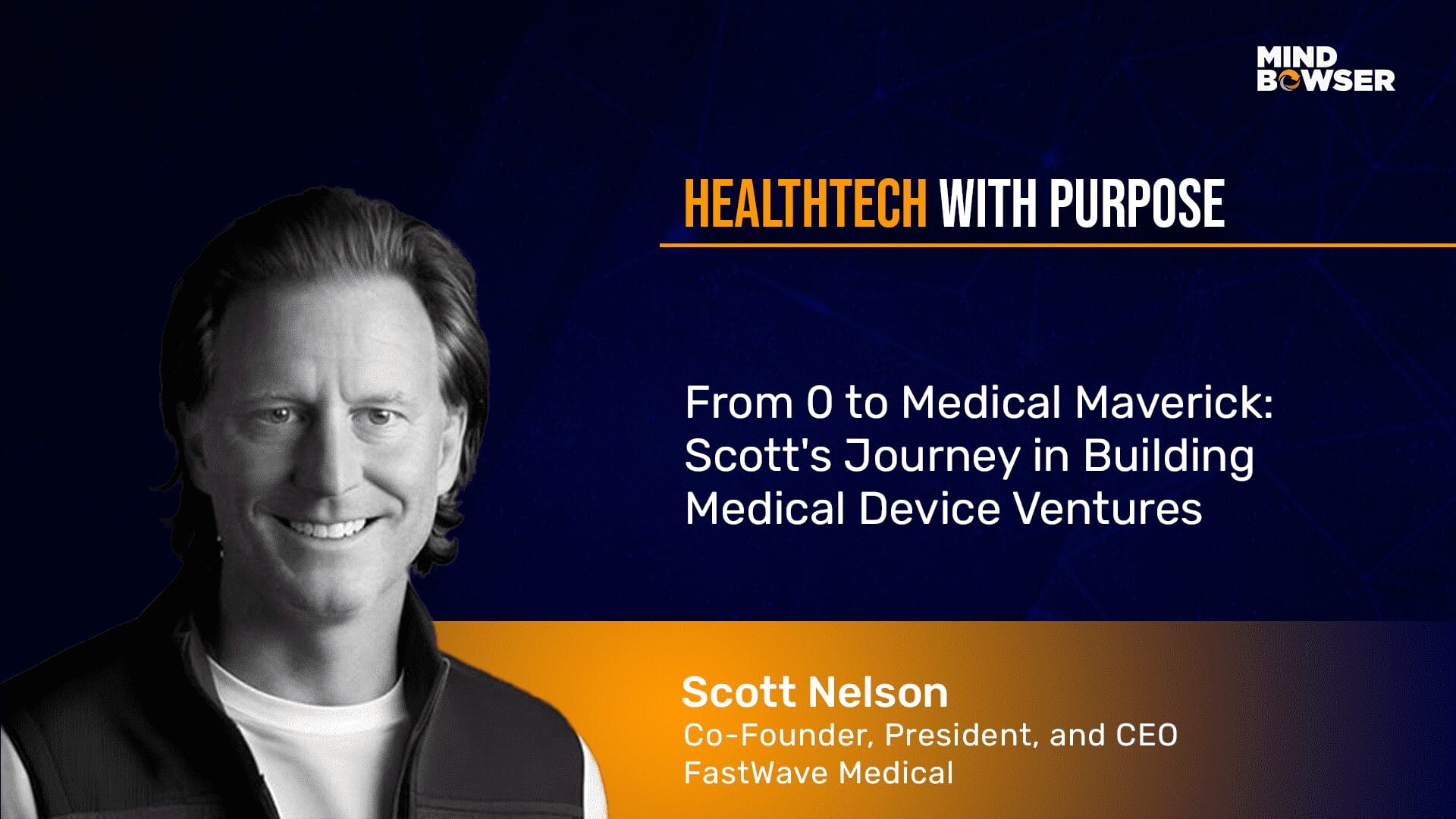
Join us on this episode of ‘HealthTech with Purpose’ as we delve into the challenging world of medical device startups with Scott Nelson, Co-Founder, President, and CEO of FastWave Medical. Scott shares insights from his extensive experience in the med-tech space, discussing the unique challenges of building from scratch to becoming a medical maverick in the medical device startup arena.
Join us for an inspiring podcast featuring Ian Madom, CEO & Co-founder, and Sanji Silva, CPO, of Mocingbird. Explore their journey in building a CME management platform and their insights on healthcare, technology, and the future of the industry.
Partner with us to design, build, and scale digital solutions that drive better outcomes.
Global Tech Teams LLC, 525 Washington Blvd, Industrious at Newport Tower, Jersey City, NJ 07310, United States.
Let’s discuss your goals, workflows, and next steps in a focused consultation call.
 Schedule a Call
















 BLOGS
 NEWSROOM
 CASE STUDIES
 WEBINARS
 PODCASTS
 ASSET HUB
 EVENT CALENDAR