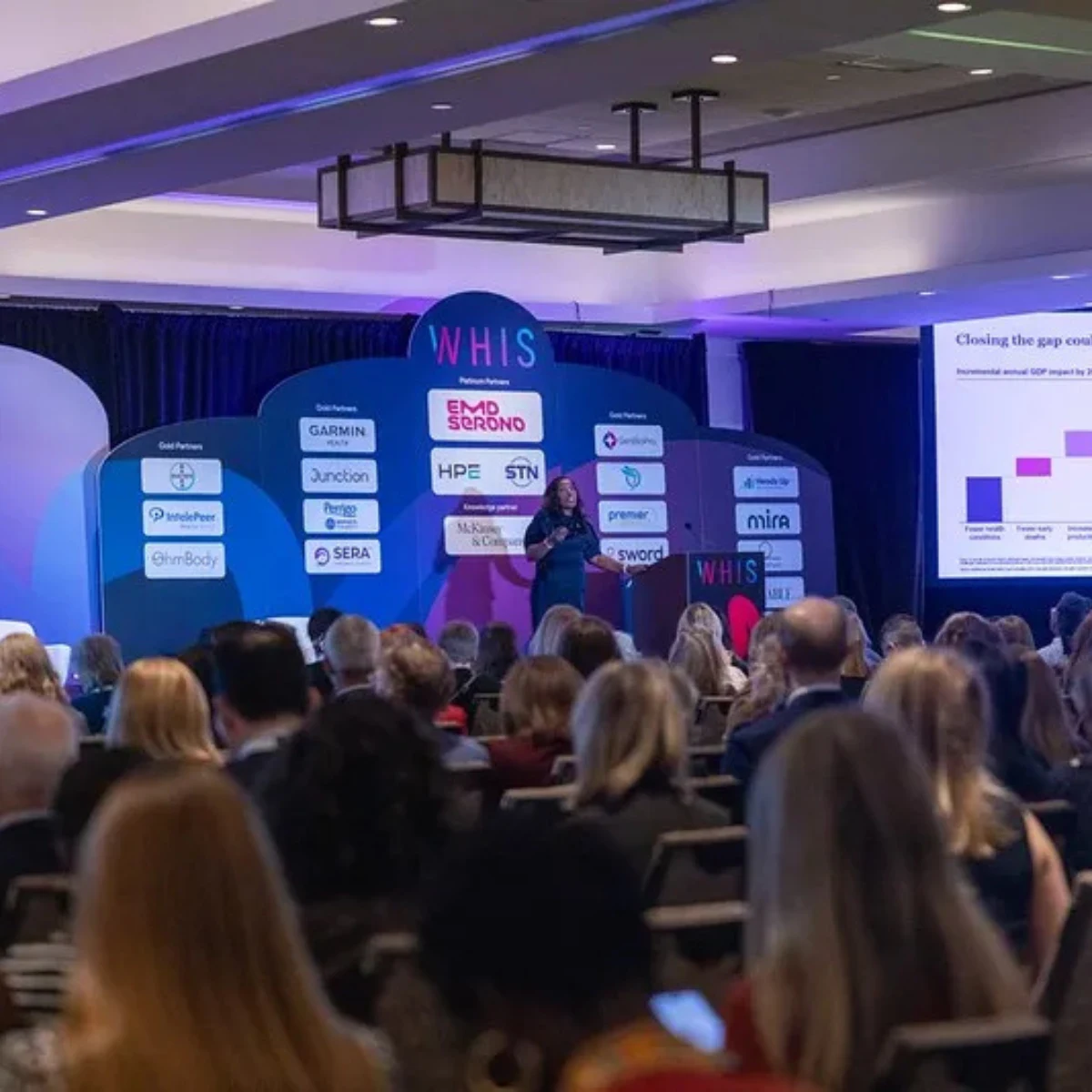

Recorded at ViVE 2023 in Nashville, this HealthTech with Purpose episode features Ryan Lee, co-founder and CEO of HireMe Healthcare, in conversation with Mindbowser’s Rushikesh Kulkarni. Ryan took a non-linear path: criminal and entrepreneurial law, a master’s in human rights in Austria, and a clean energy and health startup in Uganda, before a lifelong friend working in hospital operations pulled him into a healthcare startup.
HireMe Healthcare is an online job marketplace that connects nurse professionals with permanent roles. Its precision staffing algorithm matches jobs and candidates on individual detail, with AI and machine learning planned to personalize it further, and its focus is retention, which starts with the right fit. Ryan explains how hospitals post jobs through a web app and nurses apply once through a mobile app, why the team rebuilt the platform for scale during COVID-19, how turnover and fill times worsened, why nurses respond so strongly to remote roles, and why the company is growing regionally first. He closes on purpose: rebuilding trust in how healthcare hires.
The idea came from Ryan’s co-founder Trey, who sketched it on a pad while working in hospital operations. He watched crucial positions sit open for long stretches, and the reason wasn’t a lack of qualified candidates. It was inefficiency in the system, including algorithmic blocks that kept perfectly qualified resumes from ever reaching a hiring manager. Ryan points out that the staffing crisis gets attached to COVID-19, but it has existed “longer than any of us in this room have been alive.” Abi Global Health’s Kim-Fredrik Schneider puts the same shortage in global terms, roughly 10 million doctors and 25 million nurses missing worldwide, in another episode.
HireMe Healthcare focuses on permanent placement, which Ryan says sets it apart in a crowded market. Its precision staffing algorithm pairs jobs and people on the individuality each brings, because retention starts with the right fit. Hospitals enter each job through a web app that works like a SaaS platform, and every detail becomes a variable in the match, so candidates are ranked on hyper-specific criteria. Nurses fill in one profile on a mobile app instead of a new application for each system, search by location, see which jobs fit them, apply in one click, or get recruited without actively looking. The roadmap adds AI and machine learning to individualize matches further.
Ryan is blunt that building a platform like this from scratch was tough. The team went through a couple of developers, built a beta, made a few dozen placements and was closing larger contracts when COVID-19 hit and healthcare priorities shifted. Knowing the product worked, they chose to rebuild it for scale during the pandemic, a multi-year process with “a lot of ups and downs, a lot of money, a lot of time,” while keeping customer feedback front and center: build it, ask about it, continue. It’s the kind of path where choosing the right development partner early decides how much gets rebuilt later.
By Ryan’s figures, nurse turnover roughly doubled from the high teens to nearly 30% nationwide, and fill times rose from about 80 days to upwards of 90. One of the strongest signals from HireMe’s nurse community has been interest in remote roles, even in clinical bedside healthcare, which he calls “mesmerizing.” Telehealth, he notes, spiked at the onset and has since receded, but the baseline stays high. For health systems designing those remote roles, telehealth software built for nursing care is what makes remote patient management workable.
HireMe is growing regionally first, starting in North Carolina and Tennessee, because the value is quality local talent. Beyond RNs, Ryan sees strong need for CNAs and LPNs in long-term care and smaller practices. The purpose, he says, is to do their part in “salvaging” the US healthcare system by taking care of the nursing backbone and reestablishing trust in hiring, with a focus on the human beings behind the bottom line. His master’s is in human rights, and this is how he chose to keep fighting that fight.
Hi Ryan, welcome to HealthTech with Purpose.
Love it, Rishi. It’s an honor to be here. Thanks for having me.
Great. I just learned that you’re from Nashville, so I’d like to hear a couple of good things about Nashville to start with, and then we’ll come to the next topics.
Well, I’ll start with the obvious: it’s Music City. I’m a musician myself, and what that means is that if I’d be a seven or an eight in another city, I’m a four or five here. That’s either good or bad, depending on how you take it. I just love the neighborhoods and the people here. People rally together in tough times. It’s a small city with a lot of love going around.
Awesome, awesome. So I’d like to know a little bit more about you, and then we’ll go to HireMe Healthcare. I want to understand your background and what you’re doing these days with the company.
Well, for starters, I’m from Charlotte, North Carolina. I grew up there and went to the University of North Carolina for undergrad. I have a bit of a non-linear career path. I was an attorney; I did criminal and entrepreneurial law. Kind of a strange pair, but it opened my eyes to a lot of things, particularly the startup world. I left domestic practice after about five years and moved abroad. I got a master’s in human rights in Austria, and I was working on a clean energy and health initiative, a startup within a startup, in Uganda, right up until my daughter was born. I came back for that, and that was the beginning of 2020, so I stayed.
As for HireMe Healthcare: while I was practicing law, a lifelong friend of mine, whose dad and mine were best friends growing up, so we’ve been tight since literally day one, reached out to me. He’d been working at a major healthcare facility, watching these problems with staffing come through, which I can get into in detail later if you like. He wanted some help, so I came to help him vet an investor, a guy I knew at one degree of separation, if you will. I went to that meeting, and somehow I walked out with me and that other guy splitting checks and becoming the two partners on a founders’ round.
Right. So how did the idea come to mind? Was there a pain point you were trying to solve? What was the striking point that said, this is what needs to be done?
The striking point for Trey, who originally drew this with pen and pad, was working in hospital operations and seeing these vacancies. We see the aftermath of the staffing crisis and we attach it to COVID, but it’s been this way for longer than any of us in this room have been alive. He saw these long fill rates, these crucial positions not getting qualified candidates. Why is that? Because there are no qualified candidates? Not at all. It was inefficiencies and issues with the system, from algorithmic blocks preventing resumes from ever reaching hiring managers, even though that person was perfectly qualified and would have been a great fit.
So he set out, and that’s when he called me into this and said: you grew up around healthcare, you grew up around startups, we’ve got a healthcare startup on our hands, and this is a major issue we can tackle. We didn’t foresee the level of that issue, the exponential growth of the problem just years later, but that was the striking point. That was when the match was lit.
Awesome, awesome. So what’s the coming plan? What are the key things you’re planning to build, and some of the key challenges you’re trying to solve going ahead?
HireMe Healthcare is an online job marketplace connecting nurse professionals to job opportunities. It’s a crowded market, but we focus on permanent placement, which sets us apart from the majority of players in the space. Right now, one of our principal features is our matchability algorithm, called our precision staffing algorithm. It goes a step beyond to pair jobs and humans based on the individuality each brings to the table.
Our idea is that we’re focusing on retention, which, at the front end, starts with finding the right fit, and that’s what our algorithm is set to do. As we move forward, our product roadmap contains ways to make this even more sophisticated. There are AI and machine learning components coming, to truly individualize each match with all the terrifying terabytes of data available out there.
As we focus on retention, the whole process only begins once someone’s hired. Finding them a place where they should fit doesn’t mean they will fit, and HireMe Healthcare wants to work with our clients to keep ensuring that relationship is maintained, so trust can be reestablished in the hiring process. That’s how we plan to grow. We’ve got a lot of exciting things on our roadmap, so it’s going to be a big year for us.
Awesome. So how does a provider use the system? For somebody looking for a job, as you rightly said, they would enter their details. So how does a provider use the system, and how does somebody looking for a job use it?
I’ll start with the provider. The provider uses a web app that operates like a software as a service (SaaS) platform. They go through and input the details unique to each job, not just “here’s our job description, read it and see if it applies.” Each part of it is a component in our algorithm. They put in all the variables and post the job, and from that point job seekers can find it, and the provider can also recruit. Our matchability algorithm then ranks candidates for them based on hyper-specific details, so they can see who would be the best fit for that particular job. From there they can recruit, set up interviews and move through the process. We’re not going to tell hospitals how to do their own internal onboarding. No one’s going to listen to us.
It’s more about finding the right fit to start with.
Absolutely. Then, on the job seeker side, it’s a mobile app, because everyone loves their phones. They get to input their profile. It’s basically a one-time application, instead of a unique one for each different job or each different system. They can search by geographic location, they get to see which jobs they’re a fit for, and they can one-click apply from there. They can also be recruited, so they can find a job when they don’t even know they’re looking.
Okay, awesome, awesome. With the system in place, what impact is it making today, and how big do you foresee the impact being, on both the job seeker side and the provider side?
We’re picking up momentum. We’re early stage right now, rolling out our product. We spent a lot of time developing it and making sure it was ready for the massive task at hand. We’re gaining traction with pilot programs, particularly amongst small practices, and we’re getting hundreds of nurses onboarded. Our nurse community is tight-knit. Our director of nurse relations, Denise, does a great job of engaging them in a way where HireMe has a voice. It’s not just “hey, do you want a job”; we engage this community, and as a result we get a certain quality of nurses. It’s hard to say they’re not jaded with the profession, because 70% of nurses are at this point, or more, I would say, as of the last time that statistic was published. But we find nurses who are looking for something new, who are willing to trust that the process is not entirely broken, that there is hope.
It’s interesting: with 30% of the profession considering leaving, 30-plus really, 70% would still recommend that other nurses join. That’s a dichotomy that’s a little tough to wrap my head around. But we gain traction by engaging those two sides of the audience. As for where I see it going: the stratosphere. What we’re building is set to reestablish the way hiring is done. Hiring sucks, but it doesn’t have to.
From a provider’s perspective, is there a certain kind of curation you do when a nurse is onboarded on the app, or when they create their profile?
The system is able to detect matches for a provider’s job list. So if someone signs up with a new profile and they’re now the best fit, when the provider logs into their job they’ll be able to see that, and they’ll receive a notification. We can set it so they’re notified: hey, you have a new person who’s the right fit. You came to us for the right fit; here’s the right fit. So there are ways to be notified. Engaging the audience, call it what it is, annoying people with notifications the way we all get them every day: people do it for a reason, and it works. We want to make sure people know we’re always working for them in the background.
Great, great. While building this, what were some of the challenges you faced?
Oh man. Building a platform like this from scratch was tough. We’ve been through a couple of different developers in the process. We built a beta version, and there’s an interesting story there we don’t have time for, but next time. We tested that, made a few dozen placements, decided that it worked, and we were moving forward, getting a couple of big contracts actually. Then COVID hit, and priorities in the healthcare space shifted dramatically. Little did they know this would be the lingering effect, one of the biggest issues to come from it.
When they made that shift, we also made a shift and said: let’s go ahead. We now know this product works. People want HireMe Healthcare; they want what it does. So we decided to build it for scale during the pandemic. It was a long process, multiple years, a lot of ups and downs, a lot of money, a lot of time. It’s hard to budget for those things; I don’t even know why people try. It was full of bumps the whole way, and we made sure to keep customer feedback as a front-and-center component: build it, ask about it, and then continue.
Awesome, awesome. It seems to be a great journey, the journey of an entrepreneur starting out, and, as you rightly mentioned, you can’t predict something like COVID. But has it acted as a catalyst? That’s when there was the issue of short staffing, and the overall issue of getting the right talent to the right place. In a way, did COVID become a catalyst for technology adoption, especially in this space?
Yes, I would say COVID was a catalyst for so much digital transformation, in everyday work, with every meeting now being done online. There are a lot of studies about what that’s doing to our brains, but I guess we’ll figure that one out; we’re the guinea pigs there. In the healthcare space, one of the biggest transformations has been the move to telehealth, effectively the same way Zoom has taken over work for us. That’s what people want to see wherever possible. There was a massive spike right at the onset, one that was unsustainable, and since then it has receded, but the baseline is still so high, and there’s been talk all over about this.
For us, it was a catalyst of our need. Nurse turnover doubled from the high teens to nearly 30% nationwide. Fill times increased from 80 days to upwards of 90. Every aspect of the problem was made significantly worse, and it feels like it was overnight. When I look back, it was not overnight, but it was a catalyst for a lot of change. People were already on the idea of wanting to do everything on their phones anyway. Some of the biggest bites we’ve gotten have been from communicating with our nurse community about remote jobs. The spike in feedback and activity on those emails, and any sort of communication about that, is through the roof. People want remote jobs, even in healthcare, even in actual clinical bedside healthcare, and the fact that that’s possible is just mesmerizing.
Very, very interesting. As you rightly said, remote jobs are increasing, and there’s still a shortage of talent and a challenge in matching it, as you mentioned. On the next aspect: how are you planning to scale this? Is it going to be geography-wise, or are you going to add more job roles beyond nurses? What’s the plan to scale in every aspect?
For starters, one of our value props from the beginning is that we’re local-centric. We’re focusing on our market, our home, which is North Carolina and Tennessee, and making sure we get a foothold and start making an impact and a difference there first before we continue to expand. We’re searching for pilots in any major healthcare system, any anchor tenants out there, wherever we can. But our growth trajectory is regional first. We’re talking about getting quality local talent, so if we scatter ourselves, it’s harder to say that. That’s the way we plan to scale.
As far as verticals, registered nurses (RNs) are in big need. There’s a huge need for certified nursing assistants (CNAs) and licensed practical nurses (LPNs), particularly in long-term care and a lot of the smaller practices. In theory, our platform works for any non-physician healthcare professional, so we could place nurse practitioners (NPs) right now, but we’re not targeting that as much. There is demand for NPs, there’s demand for everything, but we haven’t seen enough of that need to justify diving too deep into that vertical quite yet. One step at a time.
Awesome. Finally, coming to the main theme of the podcast, HealthTech with Purpose: I’d like to understand the main purpose behind HireMe, and where you see it scaling and growing.
Our main purpose is to do our part in salvaging the healthcare system in the US. I know that sounds almost cataclysmic, but it’s the real truth. Hospitals are shutting their doors around the country; it’s on the brink of destruction. No one talks about American healthcare as a beacon of light the way they did maybe 60-plus years ago. We want to play a part in the backbone of that, our nursing community: taking care of our nurses and trying to reestablish trust in the system. I don’t blame nurses for wanting to leave the profession. I couldn’t even get into it to begin with.
By reestablishing trust in the hiring process, and encouraging both sides to focus on the human aspect that comes with all of this, that there are bottom lines, but above all that there are people, human beings in these positions. My master’s is in human rights, and I always said I would try to find a way to fight that fight, and this is a big step in my personal journey, and as a team. It comes down to trust. Our drive is based on trust, and I think that starts with vulnerability, but that’s a whole other conversation.
Awesome. I think it’s a very good purpose. Wishing you the best, and I hope you scale up really fast and grow. Waving to everybody who’s watching: I hope you learned a little bit more about HireMe Healthcare, and I hope you enjoyed the podcast.
Absolutely. Rishi, thank you for having me. And thanks to anyone who’s paying attention to this: tell your nurse friends we’re on their side.
At the time of recording (April 2023), Ryan Lee was co-founder and CEO of HireMe Healthcare, a Nashville-area online marketplace that connects nurse professionals with permanent healthcare jobs using a precision matching algorithm. A native of Charlotte, North Carolina, he studied at the University of North Carolina, practiced criminal and entrepreneurial law for about five years, earned a master’s in human rights in Austria, and worked on a refugee-focused clean energy startup in Uganda before joining HireMe Healthcare. He co-founded the company with Trey Ennis, who designed the concept after working in hospital operations. Ryan is also a musician.
Building a two-sided healthcare marketplace and rebuilding it more than once already? Tell us where it’s straining and we’ll walk you through how we’d build it for scale.

Welcome to HealthTech with Purpose! Karl Ulfers, CEO of Duos, discusses how they use tech to aid older adults in healthcare. Duos helps with daily essentials, employs AI for personalized care, and ensures accessibility without negative coverage decisions. Join us for insights at the tech-healthcare nexus! Learn how Duos leverages digital and human interaction to custom solutions, making healthcare more accessible and impactful for older adults.
Join us for an inspiring podcast featuring Ian Madom, CEO & Co-founder, and Sanji Silva, CPO, of Mocingbird. Explore their journey in building a CME management platform and their insights on healthcare, technology, and the future of the industry.
Partner with us to design, build, and scale digital solutions that drive better outcomes.
Global Tech Teams LLC, 525 Washington Blvd, Industrious at Newport Tower, Jersey City, NJ 07310, United States.
Let’s discuss your goals, workflows, and next steps in a focused consultation call.
 Schedule a Call














 BLOGS
 NEWSROOM
 CASE STUDIES
 WEBINARS
 PODCASTS
 ASSET HUB
 EVENT CALENDAR