BLOGS
BLOGS  NEWSROOM
  CASE STUDIES
  WEBINARS
  PODCASTS
  ASSET HUB
  EVENT CALENDAR





















TL;DR
Most healthcare AI startups treat interoperability as something to solve later, but enterprise providers treat it as a prerequisite for trust. When mid-market hospitals evaluate your platform, they assess HL7 and FHIR compliance, claims workflows, EHR embedding, security controls, and audit readiness. If your architecture is not prepared, sales cycles slow, engineering teams shift into reactive rework, and margins erode. Interoperability is not a feature; it is an enterprise-readiness layer that directly determines how quickly you can scale into meaningful healthcare revenue.
In the early stages, interoperability feels manageable.
- You run pilots outside the EHR.
- You exchange CSVs.
- You rely on limited APIs.
- You manually bridge workflow gaps.
Your AI delivers value, and customers are impressed.
Then the first serious enterprise opportunity arrives.
Suddenly, the questions change:
- How do you integrate with Epic or Cerner?
- Do you support HL7 v2 messaging?
- Do you expose FHIR-compliant APIs?
- Can you process 837 claims?
- How do you manage authentication and audit logs?
- Do you maintain sandbox and production separation?
- Are you prepared for certification requirements?
What once looked like “integration work” quickly becomes a full architectural evaluation.
This is where many healthcare AI startups realize a hard truth:
Interoperability isn’t a feature.
It’s your enterprise readiness test.
96% of hospitals now use FHIR APIs, but only 30% of AI startups have achieved enterprise certification.
We’ll break down why growing healthcare AI companies consistently underestimate interoperability and how to think about it strategically before it slows your first major hospital deal.
I. Why Interoperability Gets Deferred in Early-Stage Healthcare AI Companies
In the first 12 to 24 months, most healthcare AI companies are focused on one thing: proving value.
The goal is traction. Not infrastructure.
Interoperability rarely becomes urgent until revenue depends on it.
A. Early Traction Does Not Require Deep Integration
At the pilot stage, providers are often flexible.
- Data can be shared through limited APIs or flat files
- Workflows can live outside the EHR
- Manual reconciliation is tolerated
- One integration can serve multiple pilot sites
This creates a false sense of simplicity.
Integration appears manageable because it is not yet stressed.
B. Product Teams Optimize for Speed, Not Architecture
Founders and VP Engineering leaders are under pressure to:
- Ship features
- Improve model performance
- Demonstrate ROI
- Secure funding
Interoperability is viewed as supporting infrastructure rather than a revenue enabler.
The assumption becomes:
“We will build FHIR exposure when enterprise demand solidifies.”
But enterprise demand does not wait for architectural readiness.
C. Enterprise Buyers Evaluate Architecture, Not Just Product
When a mid-market hospital or health system evaluates a healthcare AI vendor, the conversation shifts from capability to compliance and integration depth.
- Can the solution be embedded inside Epic or Cerner?
- Does it reliably support HL7 v2 messaging?
- Are FHIR APIs standards-compliant?
- Can it process claims workflows such as 837 transactions?
- Are audit logs and access controls enterprise-grade?
- Is there a clear separation between the sandbox and production environments?
Epic requires ONC certification, SMART on FHIR registration, and separate sandbox/prod environments before production access.
At this stage, integration is no longer a backlog item.
It becomes a board-level risk discussion.
II. The Three Strategic Mistakes That Stall Enterprise Deals
When healthcare AI companies approach their first serious enterprise opportunity, decisions made months earlier about interoperability begin to surface.
The pattern is consistent.
A. Treating Interoperability as a Connector Instead of a Platform Layer
Many teams believe they need only one of the following:
- A FHIR server
- An HL7 parser
- A claims integration module
- An API gateway
In isolation, each sounds manageable.
In practice, enterprise readiness requires orchestration across all of them.
- HL7 v2 ingestion and transformation
- FHIR resource exposure with OAuth scope
- Mapping between internal data models and EHR schemas
- Claims workflow support, including 837 transactions
- Clearinghouse integrations
- Version control across multiple hospital systems
- Logging, traceability, and audit trails
This is no longer integration work.
It is an interoperability architecture.
When companies underestimate this scope, timelines stretch, and engineering resources get diverted from core product innovation.
B. Underestimating Certification and Security Review Requirements
Enterprise providers do not rely on vendor promises.
They rely on structured evaluation.
Security and compliance teams will assess:
- Authentication mechanisms
- Role-based access control
- API exposure standards
- Data retention policies
- Audit log completeness
- Environment segregation between test and production
- Documentation readiness for certification pathways
If FHIR APIs are exposed, they must be standards-compliant.
If data is stored, governance policies must be defined.
If claims workflows are processed, traceability must be demonstrable.
Startups often realize during review that their implementation works functionally but lacks formal enterprise safeguards.
That gap delays contracts.
C. Confusing Initial Speed with Long-Term Scalability
There are generally three approaches startups consider.
- Rent interoperability through an intermediary
- Build everything internally
- Architect a workflow-driven interoperability layer
Each has tradeoffs.
Short-term speed can obscure long-term cost.
- Per-connection economics may scale unfavorably
- Limited workflow control may restrict RCM customization
- Dependency on third parties may limit differentiation
- Internal builds may strain engineering bandwidth
- Certification preparation may require rework
Enterprise buyers evaluate stability and scalability, not only functionality.
If onboarding the second or third hospital requires re-architecting integrations, confidence erodes quickly.
The result is not immediate rejection.
It involves prolonged evaluation cycles.
And prolonged cycles reduce revenue velocity.
III. A Practical Framework for Enterprise-Ready Interoperability
Interoperability decisions should align with the company stage, revenue goals, and enterprise exposure.
Instead of reacting to enterprise demands, leadership teams should proactively assess maturity.
A. Stage 1: Pilot-Focused Integration
At this stage, the company is validating product-market fit.
- One or two provider pilots
- Limited EHR interaction
- Minimal claims exposure
- Manual or semi-automated workflows
This stage tolerates lighter integration strategies.
However, leadership must define a transition trigger.
- First mid-market hospital opportunity
- Security questionnaire exceeding basic scope
- Requirement to embed inside the EHR interface
- Demand for structured FHIR endpoints
When these appear, Stage 1 architecture becomes insufficient.
B. Stage 2: Growth-Stage Architectural Expansion
The company now prepares for repeatable onboarding.
- Multiple provider environments
- Different EHR versions
- Increased data volume
- Early RCM or clearinghouse workflows
At this stage, interoperability must support:
- HL7 v2 parsing and transformation
- FHIR API exposure with authentication controls
- Claims workflows, including 837 processing
- Structured audit logs
- Environment separation
- Workflow customization per provider
This is where many startups encounter strain.
Engineering teams are forced to maintain integration pipelines while building core product features.
The cost is not just financial.
It is a strategic distraction.
C. Stage 3: Enterprise-Ready Orchestration
This stage treats interoperability as infrastructure.
The focus shifts from connectivity to orchestration.
- Workflow-level configuration across EHRs
- Reusable integration templates
- Clear separation of integration logic from product logic
- Certification-aware API exposure
- Scalable onboarding across multiple hospitals
At this stage, onboarding a new hospital should not require structural redesign.
It should require configuration and validation.
The difference between Stage 2 strain and Stage 3 readiness often determines whether enterprise sales cycles accelerate or stall.
The central question for founders and VP Engineering leaders is not:
“Can we integrate?”
It is:
“Is our interoperability strategy aligned with the revenue stage we are entering?”
When integration maturity lags behind revenue ambition, enterprise friction increases.
When architecture anticipates enterprise demand, growth compounds rather than slowing.
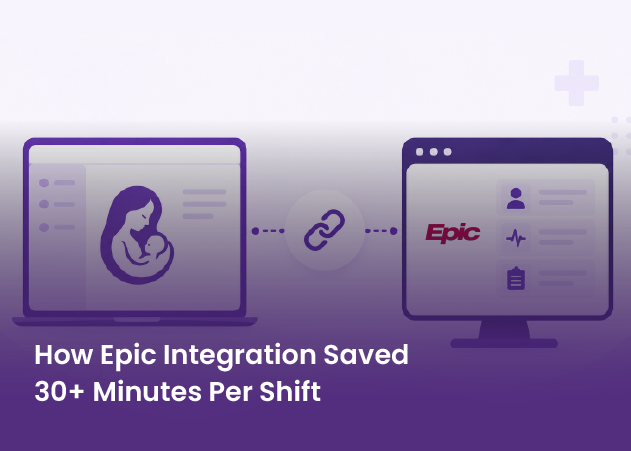
We help healthcare AI companies integrate with Epic, Cerner, HL7, and FHIR.
IV. The Economic and Strategic Impact of Getting Interoperability Wrong
Interoperability decisions influence more than engineering timelines.
They shape revenue velocity, valuation perception, and long-term margin control.
A. Revenue Delay and Sales Friction
Enterprise healthcare buyers move through structured procurement cycles.
- Technical validation
- Security review
- Compliance review
- Integration feasibility assessment
- Pilot approval
If the interoperability architecture is incomplete, delays occur in multiple stages.
- Additional documentation requests
- Revisions to API exposure
- Changes in authentication models
- Workflow redesign to fit EHR embedding constraints
- Rework of claims or clearinghouse logic
Each delay extends the time to revenue.
For growth-stage startups, extended sales cycles affect:
- Forecast reliability
- Burn rate assumptions
- Board confidence
- Fundraising narratives
Interoperability maturity directly influences enterprise conversion timelines.
B. Margin Erosion Through Reactive Engineering
When integration is built reactively:
- Engineering resources shift away from the core product
- Technical debt accumulates
- Custom fixes multiply across hospital deployments
- Maintenance overhead increases
The hidden cost is not only payroll.
It is an opportunity cost.
Every hour spent on interoperability retrofitting is an hour not spent on strengthening differentiation.
Startups that underestimate interoperability often find that their engineering roadmap becomes dominated by integration maintenance rather than product innovation.
C. Platform Defensibility and IP Ownership
Enterprise buyers assess long-term vendor viability.
They ask:
- How stable is the integration layer?
- How flexible are workflows?
- How easily can the vendor adapt to regulatory change?
- Is the integration strategy sustainable?
If interoperability is fragile or overly reliant on third-party abstraction, differentiation becomes more difficult.
Owning architectural control while avoiding unnecessary reinvention is the balance mature healthcare AI companies strive for.
Interoperability is not only about connecting systems.
It is about defining how extensible and defensible the platform becomes over time.
V. What Enterprise-Ready Healthcare AI Teams Do Differently
Companies that navigate enterprise integration successfully tend to share common traits.
A. They Treat Interoperability as a Revenue Enabler
Instead of viewing integration as overhead, they recognize it as a sales accelerator.
- Security questionnaires are answered confidently
- Technical validation is faster
- Workflow embedding is demonstrated clearly
- Claims integration is handled systematically
This builds trust early in the procurement cycle.
B. They Separate Workflow Logic from Product Logic
Mature teams avoid tightly coupling integration code to core product features.
- Workflow orchestration is configurable
- EHR mapping is modular
- Environment management is structured
- Audit logging is standardized
This reduces rework when onboarding new provider systems.
C. They Plan for Certification and Compliance Early
Rather than waiting for enterprise pressure, they prepare:
- FHIR API exposure aligned with standards
- Authentication and authorization best practices
- Documentation structured for certification pathways
- Testing environments that mirror production
This prevents last-minute architectural stress.
Healthcare AI companies rarely fail because their algorithms lack promise.
They stall when enterprise readiness is approached reactively rather than strategically.
Interoperability is where that distinction becomes visible.
If your organization is preparing for its first serious hospital contract, now is the time to evaluate whether your architecture aligns with your revenue ambitions.
VI. A Strategic Self-Assessment for VP Engineering Leaders
Before pursuing or expanding enterprise hospital contracts, leadership teams should conduct a structured interoperability review.
Not to check a technical box.
But to test enterprise readiness.
A. Architectural Readiness
Ask:
- Do we support both HL7 v2 ingestion and FHIR API exposure where required?
- Is our authentication model enterprise-grade with OAuth and role-based controls?
- Can we embed our workflows directly within major EHR interfaces?
- Do we maintain strict separation between sandbox and production environments?
- Are audit logs complete, searchable, and exportable?
If any of these require significant redesign, enterprise readiness is still forming.
B. Workflow and RCM Capability
Interoperability is not only clinical data exchange.
Revenue workflows matter.
- Can we reliably support claims formats such as 837?
- Are clearinghouse integrations standardized or custom per deployment?
- Can eligibility and benefits workflows be configured without code rewrites?
- Is workflow orchestration reusable across hospital systems?
Enterprise providers evaluate operational impact as closely as clinical integration.
C. Scalability Across Multiple Hospitals
The real test of maturity is repeatability.
- Does onboarding a new hospital require code changes or configuration?
- Can we handle multiple EHR versions without a structural redesign?
- Is mapping logic reusable across deployments?
- Do we have a structured debugging and monitoring process?
If each new integration feels like a new build, scalability is constrained.
VII. Positioning Interoperability as a Strategic Advantage
Healthcare AI companies that elevate interoperability early gain more than technical stability.
They gain strategic leverage.
A. Faster Enterprise Validation
When architecture is mature:
- Security reviews close faster
- Technical committees gain confidence
- Integration feasibility discussions are concrete rather than exploratory
This shortens procurement cycles.
B. Stronger Commercial Narrative
Enterprise buyers prefer vendors who demonstrate foresight.
Being able to articulate:
- Standards alignment
- Workflow configurability
- Certification awareness
- Scalable onboarding models
Signals long-term partnership readiness.
That strengthens the negotiation position.
C. Sustainable Engineering Focus
When interoperability is architected intentionally:
- Core product teams remain focused on differentiation
- Integration maintenance becomes structured rather than reactive
- Technical debt is minimized
- Innovation cadence remains consistent
This balance is what allows healthcare AI platforms to scale beyond early traction.
From Pilot Success to Enterprise Infrastructure
Most healthcare AI startups underestimate interoperability because early growth allows them to.
Enterprise healthcare systems do not.
Interoperability is not a feature that can be added under pressure.
It is a foundational layer that determines whether enterprise sales cycles accelerate or stall.
If your organization is preparing for mid-market hospital contracts or expanding into enterprise health systems, this is the moment to evaluate your architecture honestly.
Are you integrating for today’s pilot?
Or are you building an interoperability strategy aligned with tomorrow’s enterprise revenue?
The difference defines how quickly your platform moves from promising technology to a trusted healthcare infrastructure.
Reaching enterprise FHIR/HL7 readiness takes 6-12 months, including Epic App Orchard certification and claims workflow validation. This includes HL7/FHIR alignment, authentication design, audit logging, claims workflows, security hardening, testing environments, and documentation preparation. Teams that begin planning before enterprise pressure significantly reduce this timeline.
Not immediately. Certification requirements depend on your deployment model and enterprise targets. However, if your platform stores clinical data, exposes APIs to providers, or positions itself as an interoperable system of record, adopting FHIR standards early prevents costly architectural changes later.
EHR integration connects systems and enables data exchange. Workflow orchestration manages how data moves across systems, triggers actions, handles transformations, and supports operational processes such as eligibility verification or claims submission. Enterprise buyers increasingly expect orchestration, not just connectivity.
Investors evaluating healthcare AI companies consider scalability and defensibility. A fragile or overly manual integration model raises concerns about margin sustainability and enterprise scalability. A structured interoperability strategy signals long-term platform viability and reduces perceived operational risk.
Partnership becomes strategic when interoperability begins consuming core engineering bandwidth or when enterprise timelines demand faster compliance readiness. If building internal infrastructure delays product innovation or slows revenue expansion, augmenting architecture with structured interoperability expertise can accelerate growth while preserving control.