
















 BLOGS
BLOGS  NEWSROOM
  CASE STUDIES
  WEBINARS
  PODCASTS
  ASSET HUB
  EVENT CALENDAR





















#No-Code Integration#
ConnectHealth offers automated, zero-code workflows.

Transforming Healthcare Connectivity with the Leading API Platform. As healthcare technology evolves, the need for direct integration of Electronic Health Records (EHRs) and other digital health tools has never been greater.
Whether you’re dealing with Epic, Cerner, Athenahealth, or seeking a better alternative to Ellkay
ConnectHealth makes it easier and faster than ever to integrate systems, ensuring real-time data accessibility and secure communication.
ConnectHealth offers automated, zero-code workflows.
Go live in days, not months. Ellkay often takes months for custom integrations, while ConnectHealth ensures rapid setup.
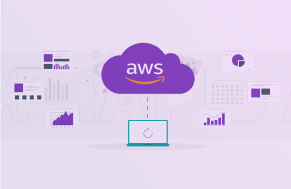
Full control with HIPAA-compliant AWS deployment. ConnectHealth offers data sovereignty, unlike Ellkay’s vendor-hosted solutions.
Full control with HIPAA-compliant AWS deployment. ConnectHealth offers data sovereignty, unlike Ellkay’s vendor-hosted solutions.
Healthcare integration teams need faster deployment, lower operational overhead, and a scalable way to support EHR, FHIR, and workflow interoperability.
Capability Area
Legacy Integration Approaches
ConnectHealth Approach
Deployment Timeline
Typical integration timeline
3–9 months for custom interface planning, mapping, testing, and vendor coordination.
2–6 weeks* using reusable healthcare workflows and prebuilt integration patterns.
Operational Overhead
Long-term operational burden
High maintenance effort across fragmented point-to-point integrations.
Up to 60% lower operational overhead* through centralized orchestration and repeatable workflows.
Workflow Launch Time
New workflow rollout speed
8–16 weeks for each new workflow rollout depending on vendor and EHR complexity.
1–3 weeks* for repeatable workflows such as RPM, referrals, scheduling, and care coordination.
FHIR Readiness
Modern interoperability support
Often requires middleware, custom mapping, or modernization effort.
FHIR-first architecture designed for modern healthcare interoperability workflows.
Workflow Visibility
Monitoring and operational control
Fragmented monitoring across disconnected systems and interface vendors.
Centralized workflow visibility across APIs, EHRs, and interoperability pipelines.
*Illustrative interoperability benchmarks based on typical healthcare integration implementation patterns and internal deployment observations. Actual timelines and operational impact may vary based on workflow complexity and implementation scope.
| Category | ConnectHealth | Ellkay |
|---|---|---|
| Built for | Hospitals, payers, and digital health teams needing bidirectional clinical workflow and no-code EHR connectivity | Health systems and labs needing clinical data aggregation, normalization, and lab results distribution |
| Integration approach | No-code workflow builder; pre-built FHIR R4 and HL7v2 connectors; configurable without custom code | Custom coding required for each integration; per-system engineering work for each EHR connection |
| Integration speed | 2–6 weeks to first live EHR connection | Months for custom integrations per EHR system |
| Data ownership | Customer-controlled VPC on AWS; KMS-managed encryption keys; no shared infrastructure | Vendor-hosted; data flows through Ellkay infrastructure; third-party data handling dependency |
| Write-back support | Native bidirectional — Epic flowsheets, CDS Hooks, care plan updates, scheduling write-backs | Primarily data forwarding and normalization; write-backs require additional custom build |
| Multi-EHR support | Epic, Cerner, Athena, MEDITECH, eCW, and 20+ EHRs from a single integration layer | Broad EHR coverage focused on lab/clinical data; each connection managed separately |
| Engineering effort | Low — operational teams configure workflows; engineering focuses on business logic, not integration plumbing | High — custom integration work per EHR; engineering handles each system connection |
| Reusable workflows | Yes — configurable workflow templates reused across sites and EHRs without re-engineering | No — per-connection custom work; buyer builds reusable layer on top |
| AWS deployment | AWS Marketplace listed; deploys into customer AWS account via CloudFormation in 25 minutes | Vendor-hosted; no AWS Marketplace deployment option |
| Pricing model | One-time setup fee + monthly subscription that begins only after live EHR connection; no per-transaction fees | Customization and maintenance fees per integration; variable costs scale with system count |
| TCO at scale | Lower long-term — no per-transaction overhead; reusable workflow layer reduces ongoing engineering | Higher long-term — each new EHR or site requires new custom work; maintenance costs compound |
| Compliance | HIPAA Privacy + Security Rule + BAA; SOC 2 Type II audited; AWS HIPAA-eligible service stack; full data sovereignty | HIPAA compliant; vendor-hosted model introduces third-party data handling; BAA scope depends on contract |
| Vendor certification | SMART on FHIR Vendor Services certified; App Orchard listed; AWS Marketplace; SOC 2 Type II; HIPAA BAA | Healthcare data interoperability certifications; HL7 and FHIR standards support |
| Best fit | Teams that need workflow depth, write-backs, and low engineering overhead across multiple EHRs | Teams focused on lab data distribution, clinical data normalization, and results delivery at scale |
Accelerate your digital health journey with reliable connectivity and cloud-native scalability.
Skip the integration headaches with direct, reliable connectivity
Let your dev team focus on innovation instead of manual integration work
Easily scalable with a cloud-native architecture that grows with you
Ellkay's architecture is built around HL7 v2 batch exchange — effective for lab routing, but limited when you need real-time workflow automation. ConnectHealth handles both: legacy HL7 v2 message mapping and FHIR R4 real-time APIs from a single integration layer. No parallel stacks. No redundant maintenance as your EHR roster grows.
Get your EHR connected in days, not months. Unlike Ellkay, which often requires months of custom integration work, ConnectHealth accelerates deployment, saving you time and resources.
Pre-built, customizable workflows that save time and reduce coding efforts. With Ellkay, manual coding and custom work are often necessary for each integration, whereas ConnectHealth offers reusable workflows that can be deployed across multiple systems.
Your data stays within your cloud, with no third-party dependencies. Ellkay typically uses vendor-hosted solutions, which can introduce risks around data security and control, while ConnectHealth ensures full data sovereignty and compliance.
Explore how ConnectHealth directly integrates with EHR systems like Epic, Cerner, and Athena. If you're looking for a better alternative to Ellkay, ConnectHealth simplifies the integration process by offering faster deployment, zero-code workflows, and enhanced data security, ensuring a smooth and efficient transition for healthcare organizations.
#Ready to Transition from Ellkay? ConnectHealth Makes EHR Integration Faster and More Efficient#
ConnectHealth can save you time, reduce costs, and improve your workflow efficiency.

Healthcare organizations rarely operate within a single EHR environment. Hospitals, specialty networks, digital health companies, and care coordination teams often manage data across Epic, Cerner, athenahealth, eClinicalWorks, Meditech, and payer systems simultaneously. Traditional EHR integration models built on fragmented interfaces can create operational bottlenecks, slower deployment cycles, and rising maintenance overhead as interoperability requirements grow.
ConnectHealth supports modern Multi-EHR Connectivity through centralized workflow orchestration and reusable interoperability workflows. Instead of managing disconnected point-to-point integrations for every workflow, healthcare organizations can support scalable EHR Integration across multiple clinical systems through a unified interoperability layer.
The platform supports both FHIR and HL7 interoperability workflows while enabling real-time Healthcare API connectivity across scheduling, referrals, patient intake, RPM, care coordination, and clinical data exchange operations. Healthcare organizations can modernize interoperability infrastructure without fully replacing existing systems or rebuilding workflows from scratch.
For organizations evaluating alternatives to legacy interface vendors, ConnectHealth provides a more scalable approach to Fast EHR Deployment while reducing long-term interface management complexity.

Referral management and care coordination remain operationally difficult for many healthcare organizations. Disconnected systems, delayed communication, and manual coordination across providers, specialists, and care teams can slow patient access and increase administrative overhead.
ConnectHealth helps healthcare organizations improve referral workflows through real-time Healthcare API orchestration and configurable interoperability workflows. Instead of relying entirely on static interfaces, organizations can support dynamic data exchange between EHR systems, scheduling platforms, patient engagement tools, and external healthcare partners.
The platform enables faster EHR Integration workflows across care coordination operations while supporting centralized visibility into interoperability processes. Healthcare teams can automate workflows tied to referrals, patient intake, scheduling, RPM, and provider coordination without expanding operational dependency on fragmented integrations.
This approach supports more efficient Multi-EHR Connectivity while helping healthcare organizations reduce operational friction across care delivery workflows.

Healthcare interoperability is increasingly shifting toward API-driven architectures and FHIR-based data exchange. Patient access requirements, payer interoperability mandates, digital health applications, and modern healthcare platforms now depend heavily on real-time Healthcare API infrastructure.
ConnectHealth supports FHIR-first interoperability designed for modern healthcare integration environments. Organizations can connect EHRs, digital health applications, patient engagement platforms, and payer systems through scalable Healthcare API orchestration while continuing to support legacy HL7 interoperability workflows.
This hybrid integration model enables healthcare organizations to modernize incrementally instead of replacing existing infrastructure all at once. Teams can continue supporting legacy interoperability operations while expanding FHIR-based workflows across care coordination, RPM, patient access APIs, and digital health interoperability initiatives.
For healthcare organizations seeking Fast EHR Deployment, ConnectHealth helps accelerate interoperability implementation timelines through reusable workflows and configurable healthcare integration patterns.

Remote patient monitoring programs continue to expand across chronic care management, virtual care, and value-based care initiatives. However, integrating wearable devices, RPM platforms, and patient-generated health data into existing healthcare systems often creates operational complexity.
ConnectHealth supports scalable Healthcare API workflows for remote patient monitoring and device interoperability. Healthcare organizations can connect RPM platforms, wearable devices, patient monitoring systems, and care coordination tools into centralized interoperability workflows while maintaining secure clinical data exchange across systems.
Instead of building entirely new integrations for each device or workflow, organizations can use reusable interoperability patterns to support more efficient EHR Integration and faster onboarding of RPM workflows. This enables healthcare organizations to scale monitoring programs without dramatically increasing interface management overhead.
The platform also supports configurable workflow automation tied to alerts, patient monitoring, scheduling, and care coordination workflows across connected healthcare systems.
ConnectHealth’s zero-code workflows and pre-built templates drastically cut down on manual coding and customization. What used to take months can now be deployed in just days.
Yes, ConnectHealth allows direct integration with Epic, Cerner, Athena, and more, using a single API. No need for custom integrations for each EHR.
Unlike traditional platforms like Ellkay, ConnectHealth offers faster, AI-powered integration with zero coding, ensuring scalability and compliance without the need for extensive IT involvement.
Absolutely. ConnectHealth is built to meet HIPAA standards and ensures that your data remains secure and under your control, with all communications encrypted in transit and at rest.
ConnectHealth offers a predictable pricing model with a one-time setup fee and a monthly subscription, which only begins once your EHR connection is live. There are no hidden fees or per-transaction charges.
Partner with us to design, build, and scale digital solutions that drive better outcomes.
Global Tech Teams LLC, 525 Washington Blvd, Industrious at Newport Tower, Jersey City, NJ 07310, United States.
Let’s discuss your goals, workflows, and next steps in a focused consultation call.
 Schedule a Call