Chronic Care Management Apps: Building SMART-on-FHIR, APCM-Ready Solutions for 2025
Chronic Care Management

Chronic Care Management Apps: Building SMART-on-FHIR, APCM-Ready Solutions for 2025

Abhinav Mohite
Healthcare Business Analyst & SME
Table of Content

TL;DR:

Chronic Care Management apps in 2025 must integrate SMART on FHIR, align with APCM billing, and deliver exportable audit artifacts. Successful apps connect EHRs, RPM devices, and care teams while tracking HEDIS outcomes. Design around CMS, NCQA, and USCDI v4 standards to prove ROI, compliance, and clinical impact.

    The Chronic Care Management (CCM) market has evolved beyond standalone portals. In 2025, hospitals and digital health companies are investing in connected apps that not only improve patient engagement but also support the new CMS Accountable Care and Primary Care Management (APCM) model. These apps must do more than record minutes; they must deliver measurable outcomes, integrate seamlessly with EHR systems, and withstand compliance audits.

    Modern CCM apps are expected to be SMART-on-FHIR compatible, capable of ingesting wearable and RPM data, and aligned with HEDIS 2025 quality measures. For CTOs and product leaders, this means designing platforms that simplify care coordination while remaining audit-ready. As healthcare organizations transition to APCM bundles, the right app strategy determines whether chronic care programs become scalable revenue lines or administrative burdens.

    I. Strategy: What Chronic Care Management Apps Mean in 2025

    A. Policy-Aligned Definition

    The Centers for Medicare & Medicaid Services (CMS) has redefined the scope of Chronic Care Management through the Accountable Care and Primary Care Management (APCM) bundle. This model consolidates traditional CCM, PCM, and communication technology-based services into a single monthly payment. For app developers, this shift changes design priorities—from tracking minutes to enabling continuous documentation, consent management, and automated eligibility validation.

    To meet APCM requirements, apps must record care coordination activities at the team level, prevent same-month CCM and APCM overlaps, and generate structured audit logs for submission. Compliance is no longer a backend function; it is part of the front-end workflow.

    SME Insight: CMS’s 2025 guidelines emphasize documented patient consent, time-tracking per practitioner, and evidence of active care-plan management. These must be embedded directly into the app’s UX to simplify audits and avoid revenue leakage.

    Related read: Chronic Care Management CPT Codes: A Practical Guide For CTOs To Unlock Revenue, Quality, and Audit Readiness

    B. Quality and Population Health Alignment

    CCM apps now play a critical role in meeting HEDIS MY 2025 and NCQA measures related to diabetes, hypertension, and medication adherence. Instead of treating HEDIS metrics as external reports, leading organizations are integrating real-time progress dashboards within the care team’s app interface.

    This approach transforms quality tracking from an afterthought to a daily operational function. Apps that tie interventions directly to measurable outcomes (for example, tracking blood pressure readings to “Controlling High Blood Pressure” measure IDs) gain stronger payer trust and faster reimbursement cycles.

    SME Insight: Aligning app KPIs with HEDIS and NCQA data models helps health systems move from reactive reporting to proactive management. Embedding these metrics into app workflows ensures that clinical and financial goals remain aligned.

    Related read: Decoding HEDIS® MY 2024 for Success in MY 2025

    C. Interoperability as a Default Requirement

    The most successful chronic care apps in 2025 are not standalone tools; they are SMART on FHIR extensions of enterprise EHRs. A modern CCM app must launch securely inside Epic, Oracle Health, or Meditech via OAuth 2.0 and FHIR APIs, allowing clinicians to access patient data, update care plans, and log activities without toggling systems.

    The USCDI v4 standard defines the required data classes—care preferences, adherence, goals, and social determinants—that apps must capture to meet regulatory and interoperability expectations. Mapping these elements correctly to FHIR resources such as CarePlan, Goal, Condition, Observation, and Task ensures that every clinical note or device update is auditable and exchangeable.

    SME Insight: Hospitals undergoing EHR modernization programs expect SMART-ready apps that can be deployed without custom middleware. Developers who adopt USCDI v4 mappings early will avoid costly retrofits later.

    D. Market Momentum and Timing

    EHR modernization is accelerating. Becker’s reports that nearly half of mid-market hospitals are upgrading or replacing their systems by the end of 2025. As Epic and Oracle Health enhance their open API ecosystems, the opportunity for third-party chronic care apps is expanding rapidly.

    For digital health startups and hospital IT leaders, the message is clear: integration-first design is the new competitive advantage. The market no longer rewards isolated patient portals; it rewards interoperable platforms that streamline billing, data exchange, and team coordination.

    SME Insight: CTOs who invest in SMART-on-FHIR and APCM compliance in 2025 will secure multi-year scalability without future rebuilds.

    II. Architecture: From EHR Launch to Audit Artifact

    A. EHR Integration and SMART Launch

    A Chronic Care Management app must function as an embedded clinical tool, not an external add-on. Using SMART App Launch v2.2, the app authenticates through OAuth 2.0 to allow secure, role-based access for clinicians and care managers. This enables a single sign-on experience directly within Epic, Oracle Health, or Meditech.

    During app registration, developers should configure clinical scopes that define access to patient data, goals, medications, and observations. This ensures that only authorized providers can view or modify a patient’s care plan. The exact structure supports FHIR subscription events that notify teams when new lab values or RPM readings arrive.

    SME Insight: Many health systems now include app review steps for SMART-on-FHIR validation. Passing this review once allows distribution across multiple EHR environments with minimal rework.

    B. Data Model and FHIR Mapping

    Every data object in the app should align with USCDI v4 and map to a corresponding FHIR resource.

    • CarePlan: Defines the patient’s active management plan, interventions, and goals.
    • Goal: Represents clinical targets such as A1C reduction or medication adherence.
    • Condition: Identifies each chronic disease category linked to the plan.
    • Observation: Captures vitals and RPM data (weight, blood pressure, glucose readings).
    • Task: Logs follow-ups, calls, and education activities performed by staff.

    Correct mapping ensures audit-ready data exchange and allows payers or auditors to validate care continuity. Terminology bindings should follow SNOMED CT, LOINC, and RxNorm for semantic consistency.

    SME Insight: Structuring data around FHIR objects simplifies interoperability while future-proofing apps for new CMS documentation requirements.

    C. RPM and Wearable Integration

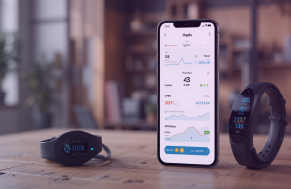
    The new generation of CCM apps integrates directly with Remote Patient Monitoring (RPM) devices and wearables. Data is ingested into the app’s Observation resources, creating real-time insight into patient adherence and symptom trends. Automated thresholds convert abnormal readings into actionable tasks for care teams, improving responsiveness and clinical outcomes.

    APCM’s emphasis on proactive, continuous care means these integrations are no longer optional. Hospitals and digital health partners now expect RPM data to flow seamlessly into chronic care workflows, with alerts, tasks, and documentation linked to billing events.

    SME Insight: RPM and CCM should share a unified workflow in which each device event updates the care plan and audit log, thereby strengthening payer confidence in reported activities.

    D. Billing and Audit Readiness

    Billing workflows must align precisely with CMS APCM and MLN909188 documentation guidelines. The app should:

    1. Log time per practitioner and patient, automatically attributing activities to team members.
    2. Prevent overlapping APCM and CCM claims within the same month.
    3. Generate monthly audit exports that include:
      • Patient consent records
      • Care plan version histories
      • Activity minutes summaries
      • Attestation statements

    Export formats should be structured (JSON or CSV) for easy ingestion by billing systems and audits.

    SME Insight: Automating audit logs reduces denial risk and compliance overhead. Leading providers now treat audit artifacts as part of their monthly quality reports rather than emergency documentation before a payer review.

    Modernize CCM with Audit-Ready, Interoperable Workflows

    III. Proof: Outcomes, ROI, and Governance

    A. ROI Model and Financial Impact

    The financial return from Chronic Care Management apps depends on three levers: enrollment, documentation efficiency, and denial prevention. An APCM-ready system should automatically track these metrics.

    Apps that improve patient onboarding and automate documentation can increase enrollment by 20 – 40%. Streamlined time logging ensures accurate reimbursement for every minute of clinical engagement. Built-in billing validation reduces payer denials that typically cut 5 – 10% of potential revenue.

    When combined, these improvements can deliver an additional $30 – $60 in net revenue per enrolled patient per month, depending on staffing mix and payer contracts. For hospitals managing 1,000 to 5,000 chronic patients, this translates into a six-figure annual gain while also enhancing care quality.

    SME Insight: ROI is strongest when the app integrates directly with the EHR for data capture, avoiding manual reconciliation or double entry.

    B. Clinical Outcomes and Quality Alignment

    Financial success in 2025 depends on proving measurable outcomes. Chronic Care Management apps should align daily workflows with HEDIS MY 2025 measures, such as Controlling High Blood Pressure and Diabetes: Hemoglobin A1C Control.

    Embedding measure dashboards within the clinician interface transforms compliance into an operational routine. Each intervention logged in the app should link to its relevant HEDIS measure ID and show progress over time.

    Organizations using this approach have reported improved adherence rates and reduced readmissions, especially when apps synchronize with RPM devices for blood pressure and glucose monitoring.

    SME Insight: Payers increasingly reward documented, real-time outcomes rather than retrospective reports. Apps that visualize improvement trends at the patient and population level gain strategic leverage in value-based care contracts.

    C. Governance, Compliance, and Trust

    Hospitals and digital health companies face heightened scrutiny over privacy and data integrity. Every CCM app must meet HIPAA, SOC 2, and 42 CFR Part 2 standards, while maintaining clear audit trails for data access and modification.

    Governance also extends to version control, EHR app store submissions, and change management. Each code release should be tied to a compliance review, with automated testing for FHIR conformance and data encryption.

    Building patient trust is equally critical. Transparent data-sharing policies, user consent flows, and multilingual notifications ensure adoption across diverse populations.

    SME Insight: In 2025, compliance is not a checkbox; it is a design principle. CTOs who embed governance from the first sprint shorten review cycles and accelerate hospital approvals.

    Related read: CCM Compliance Automation: Why Hospitals and Startups Can No Longer Rely on Manual Workflows

    IV. How Mindbowser Can Help

    Mindbowser partners with hospitals and digital health companies to design and build APCM-ready Chronic Care Management apps that meet the highest standards of interoperability, compliance, and ROI performance. Our engineering teams specialize in developing SMART-on-FHIR applications that integrate directly with Epic, Cerner, Meditech, and Athena, ensuring seamless clinician adoption and fast go-live timelines.

    Through our proven accelerators—CarePlan AI, HealthConnect CoPilot, and RPMCheck AI—we shorten development cycles by up to 40% while embedding compliance from day one. Our product blueprints include prebuilt modules for FHIR mapping, patient consent, RPM ingestion, and APCM documentation exports, all aligned with CMS, NCQA, and USCDI v4 standards.

    Whether you are modernizing an existing CCM system or launching a new app, Mindbowser provides the engineering rigor and compliance discipline to build solutions that scale safely across populations and EHR ecosystems.

    coma

    Conclusion

    Chronic Care Management apps have become the operating layer for modern population health programs. What was once a documentation tool is now a compliance, revenue, and engagement engine. The 2025 shift toward the APCM model has raised the expectations for both functionality and proof. Hospitals and digital health innovators must now show not only that care was delivered but that it was coordinated, measured, and auditable.

    Building an APCM-ready, SMART-on-FHIR app is no longer optional. It ensures secure interoperability, supports real-time HEDIS tracking, and enables scalable reimbursement across diverse EHR environments. The winners in this market will be those who invest early in integration-first design, measurable outcomes, and audit-ready automation.

    For CTOs and product leaders, the goal is clear: treat compliance, interoperability, and ROI as architectural features—not post-launch add-ons. The result is an app that satisfies regulators, delights clinicians, and delivers sustainable margins.

    What is the difference between CCM and APCM for app design?

    Chronic Care Management (CCM) tracks time-based patient interactions, while Accountable Care and Primary Care Management (APCM) consolidate CCM, PCM, and related services into a single monthly payment. Apps built for APCM must prevent overlapping claims, automate consent capture, and export monthly attestation records in structured formats.

    Why should Chronic Care Management apps use SMART-on-FHIR?

    SMART-on-FHIR enables secure single sign-on across EHR systems such as Epic and Cerner, ensuring seamless data exchange and compliance with ONC interoperability rules. Apps launched through SMART APIs allow clinicians to document, view, and update care plans without leaving their EHR environment, improving workflow efficiency and reducing errors.

    How do HEDIS measures influence CCM app development?

    HEDIS 2025 measures define key quality outcomes such as blood pressure control and diabetes management. Aligning app dashboards with these measures allows providers to track real-time progress and demonstrate measurable improvements to payers. This strengthens both compliance and value-based reimbursement performance.

    What compliance standards must CCM apps follow?

    Every CCM app must adhere to HIPAA, SOC 2, and 42 CFR Part 2 regulations. Developers should also follow CMS MLN909188 guidelines for audit documentation and ensure proper encryption, consent flows, and audit trails for all care-related actions.

    How can hospitals prove ROI from chronic care apps?

    Hospitals can calculate ROI by monitoring three variables: patient enrollment rate, documented minutes per patient, and claim denial rate. Automation in time tracking and audit exports reduces administrative overhead, while higher adherence and enrollment translate into measurable monthly revenue under APCM bundles.

    Your Questions Answered

    Chronic Care Management (CCM) tracks time-based patient interactions, while Accountable Care and Primary Care Management (APCM) consolidate CCM, PCM, and related services into a single monthly payment. Apps built for APCM must prevent overlapping claims, automate consent capture, and export monthly attestation records in structured formats.

    SMART-on-FHIR enables secure single sign-on across EHR systems such as Epic and Cerner, ensuring seamless data exchange and compliance with ONC interoperability rules. Apps launched through SMART APIs allow clinicians to document, view, and update care plans without leaving their EHR environment, improving workflow efficiency and reducing errors.

    HEDIS 2025 measures define key quality outcomes such as blood pressure control and diabetes management. Aligning app dashboards with these measures allows providers to track real-time progress and demonstrate measurable improvements to payers. This strengthens both compliance and value-based reimbursement performance.

    Every CCM app must adhere to HIPAA, SOC 2, and 42 CFR Part 2 regulations. Developers should also follow CMS MLN909188 guidelines for audit documentation and ensure proper encryption, consent flows, and audit trails for all care-related actions.

    Hospitals can calculate ROI by monitoring three variables: patient enrollment rate, documented minutes per patient, and claim denial rate. Automation in time tracking and audit exports reduces administrative overhead, while higher adherence and enrollment translate into measurable monthly revenue under APCM bundles.

    Abhinav Mohite

    Abhinav Mohite

    Healthcare Business Analyst & SME

    Connect Now

    Abhinav has 6+ years of experience in the US healthcare domain with a strong background in healthcare data interoperability, including HL7, FHIR, and SMART on FHIR standards. He has worked extensively on provider workflows, revenue cycle management, and care coordination processes. With a deep understanding of the software development life cycle (SDLC), Abhinav has been instrumental in shaping technology solutions that enhance efficiency, compliance, and interoperability across healthcare systems.

    Share This Blog

    Read More Similar Blogs

    Let’s Transform
    Healthcare,
    Together.

    Partner with us to design, build, and scale digital solutions that drive better outcomes.

    Location

    5900 Balcones Dr, Ste 100-7286, Austin, TX 78731, United States

    Contact form