





 BLOGS
BLOGS  NEWSROOM
  CASE STUDIES
  WEBINARS
  PODCASTS
  ASSET HUB
  EVENT CALENDAR





















TL;DR
Autonomous AI agents are set to revolutionize healthcare in 2026 by enhancing operational efficiency, reducing administrative burdens, and improving patient outcomes. This blog outlines the strategic roadmap for successful adoption, from defining autonomy levels to measuring ROI and overcoming key adoption barriers.
Are you ready to transform your healthcare organization with autonomous AI agents?
As CIOs, CTOs, and healthcare leaders, you’re tasked with driving innovation while ensuring compliance and improving patient outcomes.
In 2026, AI can accelerate operational efficiency and elevate care delivery, but only if implemented correctly. Here’s how to get it right.
I. What Autonomous AI Agents Really Are in 2026 (and What They Are Not)
A. The Definition Leaders Can Govern
As we move deeper into 2026, autonomous AI agents are increasingly driving enterprise automation.
However, confusion remains about what these agents are and how they should be implemented in healthcare. To effectively manage and govern AI adoption, healthcare executives must grasp the distinctions among terms such as “autonomous,” “agentic,” and “copilot.”
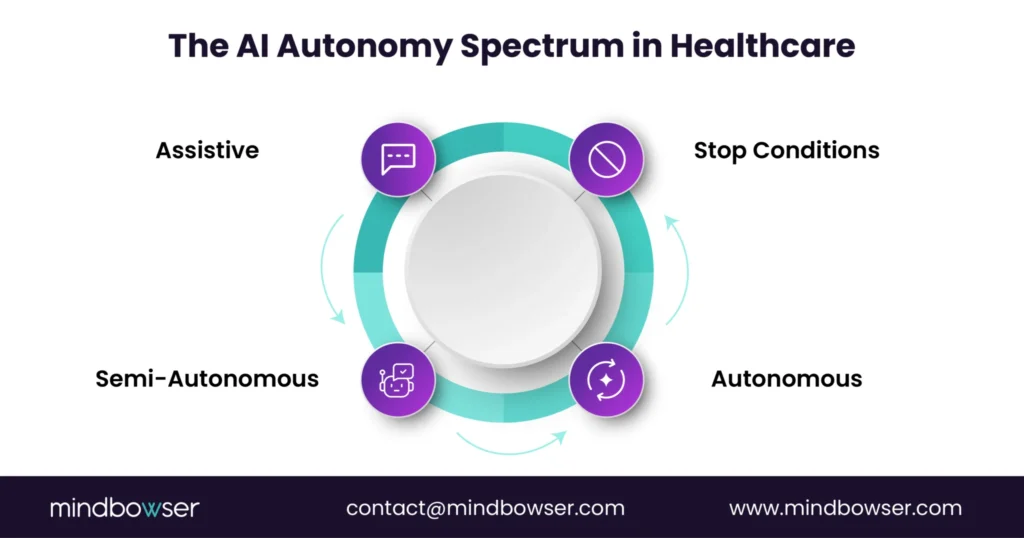
While many use these terms interchangeably, they refer to different levels of functionality. At the heart of this distinction lies the “autonomy” level:
- Autonomous AI agents are systems capable of making decisions and executing actions without human intervention, within a defined operational space. These agents are not merely suggesting or assisting; they are fully executing tasks that would traditionally require human involvement.
Agentic AI refers to systems that can take actions, but only under specific conditions or with predefined limits. These agents require human oversight or approval before taking action, ensuring accountability in sensitive environments like healthcare.
Copilot AI primarily operates as an assistant, offering suggestions and recommendations to support human decision-making without taking any direct action.
A clear understanding of these definitions helps organizations avoid costly mistakes when implementing AI solutions. Failure to define the scope and limitations of AI agents may lead to confusion in procurement, resulting in ineffective tools that don’t meet the organization’s real needs.
1. Minimum Capabilities That Change Risk and Value
To ensure AI adoption drives value, healthcare organizations must focus on a minimum set of capabilities that can fundamentally shift operational efficiency and reduce risk. These include:
- Plan: The ability to autonomously analyze data, make predictions, and propose next steps based on real-time information.
- Act: Executing tasks or processes autonomously, within clearly defined boundaries, such as sending reminders for patient appointments or processing claims in revenue cycle management (RCM).
- Learn: AI systems must evolve based on data and feedback, enhancing their decision-making abilities over time.
- Persist: Autonomous agents need to ensure continuity of tasks, such as keeping patient care coordination workflows running smoothly and without disruption.
These capabilities are not just about improving efficiency; they are about reducing human error, ensuring compliance, and allowing healthcare providers to focus more on patient care rather than administrative burdens.
B. Where Autonomy Sits in the Enterprise Stack
In the context of healthcare enterprise IT, understanding where autonomous AI agents fit into the technology stack is crucial. At the core, healthcare systems can be divided into systems of record and systems of action.
Systems of Record: These are foundational data systems, such as Electronic Health Records (EHRs), patient management systems, and financial record-keeping tools. They maintain the historical and foundational data that inform healthcare workflows.
Systems of Action: This is where autonomous AI agents make an impact. These systems can act on data in systems of record. For example, AI agents can schedule patient appointments, send reminders, or process claims autonomously. The key difference here is that the systems of action drive operational efficiency by executing tasks in real time based on data in systems of record.
A critical aspect of AI integration is access to tools, identity, and permissions, which serve as the “control plane” for the agent. Defining how agents interact with systems of record and ensuring they have the appropriate permissions and audit controls is essential for both security and operational success. The identity management and permissions for these agents must be granular to control what each agent can or cannot do, mitigating the risk of unauthorized actions.
1. Agent Lifecycle Management as a First-Class Platform Function
Just as healthcare organizations manage software and hardware lifecycles, so too should they treat the lifecycle of AI agents. This includes:
- Deployment: Proper configuration of agents to ensure they function within the defined autonomy levels and compliance parameters.
- Monitoring: Ongoing tracking of agent actions to ensure they meet operational and regulatory standards.
- Decommissioning: Safely retiring AI agents that no longer meet performance standards or need to be replaced by new technologies.
Effective lifecycle management is paramount in a regulated industry like healthcare, where patient safety and data privacy are non-negotiable.
II. Why Enterprise Adoption Accelerates in 2026
A. The Business Pull: Speed-to-Outcome Beats Speed-to-Content
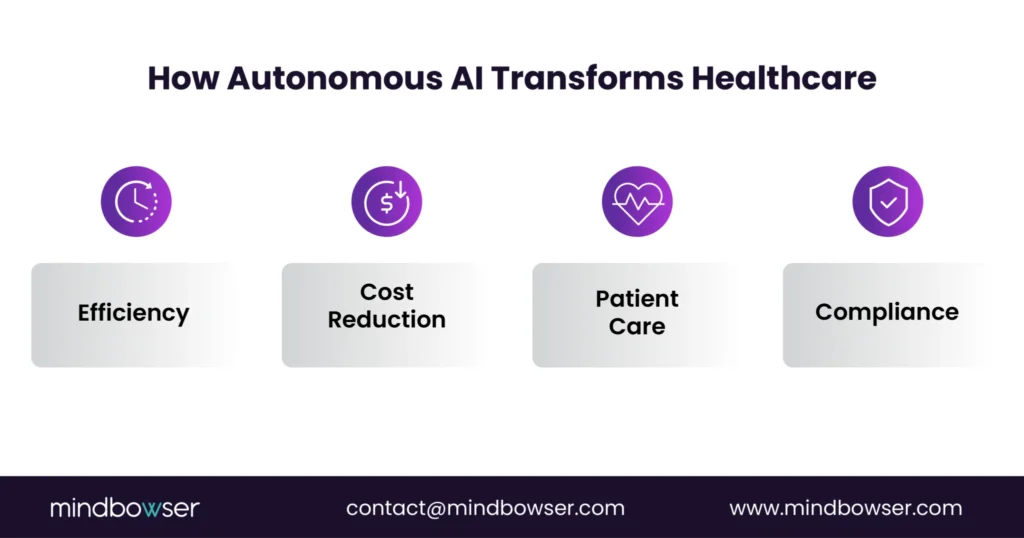
As we venture into 2026, the enterprise adoption of autonomous AI agents in healthcare is not merely a matter of keeping pace with technology trends; it is increasingly driven by the urgency to achieve outcomes, not just content.
The traditional speed-to-content model, which focused on acquiring data or creating resources, has shifted. Today, healthcare organizations are driven by the need for speed-to-outcome, with a primary focus on delivering measurable results quickly and autonomously.
In healthcare, outcomes are often tied to operational efficiency and quality of patient care. Processes that stall in handoffs, where tasks are passed between departments or individuals, are ripe for automation.
By removing these handoffs, autonomous AI agents can reduce friction in processes such as claims management, patient access, or care coordination. With the right AI integration, tasks like verifying eligibility or coordinating patient appointments can be streamlined, reducing the burden on administrative staff and ensuring a more seamless experience for patients and providers.
Furthermore, the shift to value-based care (VBC) models has heightened the pressure to deliver outcomes that improve both patient care and operational efficiency.
Autonomous AI agents can automate administrative workflows, allowing healthcare providers to focus on the clinical aspects of care. This shift is especially critical for organizations aiming to meet the metrics outlined in VBC contracts, such as reducing readmission rates or improving patient engagement.
1. Outcome-Oriented Delivery Models and Operational Leverage
In healthcare, the shift from fee-for-service to outcome-oriented delivery models requires organizations to maximize efficiency across all touchpoints. Autonomous AI agents provide significant operational leverage by automating repetitive and time-consuming tasks. For instance, AI can improve revenue cycle management (RCM) by automating claim follow-ups, reducing claim denials, and ensuring timely reimbursement, all of which are critical to healthcare organizations’ financial sustainability.
As organizations seek to optimize these outcomes, AI adoption will act as a force multiplier for healthcare providers. Autonomous agents can handle routine tasks that would otherwise consume significant human resources. The result is reduced operational costs and improved scalability, enabling providers to scale services without proportional increases in overhead.
B. The Technical Push: What Changed Enough to Matter
The acceleration of enterprise adoption is driven not only by business needs; several technological advancements have also paved the way for widespread AI adoption in healthcare. In particular, the evolution of tool-use patterns and orchestration layers has transformed how AI agents can be deployed and managed in real-world healthcare environments.
One of the major shifts in the technical landscape is the improvement of AI observability and evaluation maturity. Healthcare organizations can now track AI agents’ actions with greater precision, ensuring they adhere to predefined autonomy levels, execute accurately, and are held accountable for their decisions.
This enhanced visibility into AI processes is critical to ensuring that these agents meet both performance and compliance standards, especially in regulated environments such as healthcare.
Additionally, emerging interoperability standards enable autonomous agents to operate across different systems, which is essential in healthcare environments with diverse technological ecosystems.
These advancements in AI integration help mitigate common concerns about AI systems’ inability to “speak” to one another and share data, a problem that has historically slowed adoption.
1. Interoperability Signals and Emerging Standards
The growing emphasis on standards like FHIR (Fast Healthcare Interoperability Resources) and HL7 is enabling smoother integration of autonomous agents with existing healthcare IT infrastructure. These standards ensure that AI agents can pull and push data from various sources, such as EHRs, patient management systems, and clinical decision support tools, in a secure and interoperable manner.
As healthcare organizations adopt these standards, the barriers to implementing AI agents in daily workflows will continue to diminish, accelerating and improving adoption.
C. The Healthcare and VBC Angle: Why Providers and Healthtech Care Now
Autonomous AI adoption is especially critical for healthcare providers navigating the complex demands of value-based care (VBC). The burden of administrative tasks has been a significant challenge in healthcare, and AI’s role in addressing this burden cannot be overstated.
Revenue cycle management (RCM), for example, consumes a large portion of healthcare administrative resources. By automating tasks such as eligibility verification, claims follow-up, and denial management, autonomous AI agents can substantially reduce administrative costs and improve the accuracy and speed of claims processing.
Moreover, autonomous agents are proving invaluable in care management coordination under VBC models.
AI can support healthcare teams in identifying care gaps and streamlining patient outreach, particularly in populations with chronic conditions or high-risk patients. The automation of these workflows allows for more efficient use of clinical staff time, ensuring resources are directed to patients who need them most.
The value that AI agents bring is not only operational but also extends to patient engagement workflows.
With clear, definable guardrails, AI agents can help improve patient engagement by sending personalized reminders, conducting virtual check-ins, or assisting with medication management. This leads to better patient outcomes, improved satisfaction, and ultimately, more successful VBC contracts.
1. Admin Burden as the Forcing Function (RCM, Access, Contact Center)
Healthcare organizations are under intense pressure to streamline operations and reduce administrative burdens. Autonomous AI agents in contact centers can help by handling routine inquiries, such as scheduling, appointment confirmations, and even triaging patient concerns based on urgency.
This frees up human agents to focus on more complex tasks, improving patient satisfaction and reducing wait times.
Additionally, AI can support providers in coordinating patient care, ensuring that follow-up appointments are scheduled, prescriptions are refilled, and care plans are consistently monitored. These improvements directly affect the quality of care delivered and help healthcare organizations meet the performance criteria outlined in value-based care agreements.
III. The Enterprise Adoption Barriers Leaders Must Address Head-On
A. Trust, Risk, and Compliance Are the Adoption Gate
While the potential of autonomous AI agents in healthcare is undeniable, several significant barriers stand in the way of broader adoption. The most pressing of these are concerns related to trust, risk, and compliance. These elements serve as the gates to AI adoption, and without addressing them, even the most well-designed AI systems may fail to gain traction in enterprise healthcare settings.
For executives, especially in regulated sectors like healthcare, security, and compliance, it is not simply a checkbox. They are foundational to ensuring that AI systems are safe, reliable, and capable of maintaining patient confidentiality. As autonomous AI agents take more actions on behalf of human workers, the risk of data breaches, unauthorized access, and compliance violations increases, making it essential to implement robust security and privacy measures.
To mitigate these risks, healthcare organizations must ensure that their AI agents meet stringent HIPAA standards for protecting protected health information (PHI). This includes enforcing least-privilege access, maintaining audit logs, and establishing clear boundaries on how PHI is accessed, shared, and processed.
1. Security and Compliance as Scaling Constraints, Not IT Checkboxes
A key consideration for scaling autonomous AI adoption is ensuring that AI agents are built with security and compliance in mind. This means not just securing the systems from external threats but also embedding security controls within the agents themselves.
For instance, role-based access controls (RBAC) can ensure that agents have only the access they need to perform their tasks. Audit trails should track every action taken by the AI agents, providing a transparent record of their decisions and helping organizations demonstrate compliance with regulatory requirements.
To truly scale autonomous agents, organizations must see security and compliance as ongoing processes, not one-time implementations. Continual monitoring, regular penetration testing, and adaptive risk management protocols are all necessary to ensure the AI agents remain secure as they evolve and as new threats emerge.
B. The Pilot-to-Production Chasm
Another major barrier to the widespread adoption of autonomous AI agents in healthcare is the pilot-to-production chasm. Many organizations start with pilots, testing autonomous AI agents on small-scale projects, only to find that these pilots stall or fail to scale to full production.
There are several reasons for this gap, many of which stem from a lack of clarity on ownership, unclear operating models, and insufficient integration with existing workflows.
In a healthcare environment, pilots often stall because the roles and responsibilities for managing AI agents are not clearly defined. Without dedicated owners accountable for the success of these pilots, there can be confusion about how the agents should be deployed, evaluated, and integrated with other systems.
Furthermore, the operating model for managing AI agents, such as how the agent will be monitored, updated, and scaled, often remains underdeveloped, hindering long-term success.
1. Why Pilots Stall: Unclear Owners, Missing Operating Model, Poor Integration
For AI pilots to succeed and scale to production, executives must ensure they have a clear operating model in place before implementation. This includes identifying the stakeholders responsible for managing AI agents, defining how the AI systems will interact with other IT infrastructure (such as EHRs and CRM systems), and establishing governance frameworks to oversee the agents’ integration and performance.
Additionally, integrating AI agents into healthcare organizations’ existing workflows is essential. Without proper integration, AI agents may operate in silos, leading to inefficiencies and disjointed patient care. By focusing on seamless integration with existing tools and systems, organizations can avoid many of the pitfalls that lead to pilot failures.
C. Change Management and Workforce Realities
One of the most significant barriers to AI adoption in healthcare is not technical change management. As AI agents take on more responsibilities, healthcare organizations need to reimagine roles, responsibilities, and workflows to incorporate this new technology.
This change requires thoughtful planning and stakeholder alignment to ensure that everyone, from frontline staff to senior executives, understands their role in the new system.
Several key workforce realities need to be addressed:
- Role Redesign: Autonomous AI agents will change how work is done. Healthcare workers, particularly those involved in administrative and support roles, will need to shift their responsibilities to include managing AI systems. For example, supervisors may need to focus more on overseeing AI agent workflows and handling exceptions that arise. In contrast, exception handlers might take on higher-level decision-making tasks that AI is not yet capable of managing.
- Training and Governance: As with any new technology, effective training is critical. Healthcare organizations need to ensure that staff are equipped to interact effectively with AI agents. Additionally, governance committees must be established to ensure the responsible and compliant use of AI agents, without hindering operational speed or efficiency.
1. Role Redesign: Supervisors, Exception Handlers, Process Owners
While AI agents can handle routine tasks, there will always be the need for human oversight. Supervisors and process owners will play a key role in overseeing AI agents’ actions to ensure they operate as expected. The focus will shift from micromanaging individual tasks to monitoring AI system performance, managing exceptions, and ensuring that patient care remains a priority. Proper training and role redesign will be vital to ensure that these employees are equipped to handle new responsibilities.
Furthermore, healthcare organizations must recognize that AI adoption is not a one-size-fits-all solution. Different departments will need tailored approaches depending on the workflows involved. The roles of clinical staff, administrative staff, and IT teams must be carefully evaluated and adjusted to ensure seamless collaboration with AI agents.
IV. A Practical Enterprise Transformation Roadmap for 2026
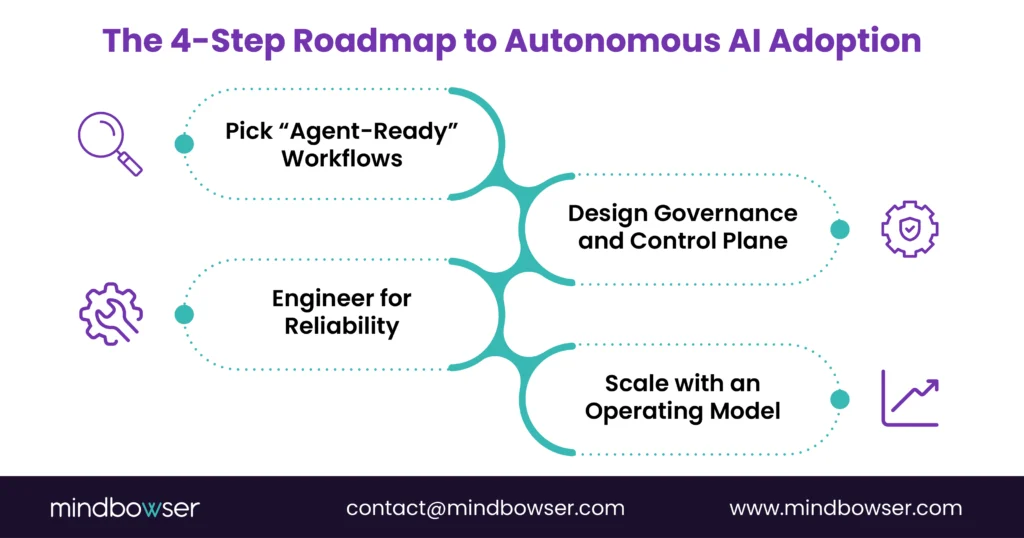
A. Step 1: Pick “Agent-Ready” Workflows with Measurable ROI
When embarking on the adoption of autonomous AI agents in healthcare, it’s critical to prioritize high-volume, rules-informed, low-ambiguity workflows. These are the areas where AI can deliver the most immediate impact.
For example, processes such as prior authorization support, revenue cycle management (RCM), and care gap outreach are ripe for automation. These workflows are often repetitive, involve large datasets, and can be structured into clear approval processes, making them ideal candidates for AI automation. By focusing on workflows that already involve significant human intervention, organizations can reduce both labor costs and human error, driving measurable ROI from day one.
1. Where Human Review Already Exists, and Can Become Structured Approvals
Healthcare organizations can also focus on workflows that currently involve human review and can be streamlined into structured approvals. Tasks like verifying patient eligibility, processing claims, or updating care plans can be automated once the process is clearly defined and compliant with regulations like HIPAA. This allows organizations to reduce the burden on human workers while maintaining high standards for oversight and compliance.
B. Step 2: Design the Governance and Control Plane First
A key aspect of successful AI adoption in healthcare is designing the governance and control plane before deployment. This includes defining the action space, autonomy levels, and escalation paths for AI agents. Without a clear governance framework, autonomous AI agents could introduce operational risks, such as accidentally executing tasks outside their defined boundaries.
Additionally, robust identity, access, and audit standards must be established for each agent. This will ensure that all actions are traceable and that only authorized personnel can adjust AI agents’ actions when necessary. Establishing these standards upfront is crucial for maintaining both security and regulatory compliance.
1. Identity, Access, and Audit Standards for Every Agent
Healthcare organizations should implement role-based access control (RBAC) to govern which staff members or agents can execute specific tasks. Additionally, maintaining audit logs will allow organizations to track every action taken by the AI agents, ensuring they adhere to compliance regulations and organizational policies.
C. Step 3: Engineer for Reliability, Not Demos
AI agents must be engineered to be production-ready, ensuring that they are reliable and capable of functioning at scale. Too often, AI systems are showcased in pilot demos that look impressive but fail when scaled.
This is where healthcare organizations need to focus on evaluation harnesses that align AI performance with key business KPIs, such as patient outcomes, cost reduction, and workflow efficiency.
Furthermore, organizations must prioritize observability, the ability to trace every action, tool call, and handoff, so that any issues can be identified and resolved quickly. This level of visibility is critical for ensuring that AI systems operate as intended and do not cause disruption.
1. Evaluation Harness: Accuracy, Safety, and Business KPI Alignment
Developing a strong evaluation framework ensures that AI agents meet both clinical and operational safety standards. This framework should include continuous testing for accuracy and alignment with key business objectives. By engineering AI systems with reliability at the forefront, healthcare organizations can mitigate the risk of system failures or unintended consequences once the system is in production.
D. Step 4: Scale with an Operating Model, Not Heroics
Once AI agents are deployed successfully, scaling them requires a strong operating model, rather than relying on individual efforts or “heroics” from staff. A sustainable agent platform team should be in place to manage the AI lifecycle, including updates, versioning, and decommissioning as necessary. Moreover, establishing a shared services model ensures that resources are efficiently allocated across departments as AI adoption grows.
It is also critical to develop a vendor ecosystem strategy that aligns with industry standards. As the AI landscape continues to evolve, organizations will need to work closely with third-party vendors to ensure their systems remain compatible with new technologies and regulatory changes.
1. Lifecycle Management: Versioning, Decommissioning, Credential Revocation
Managing the lifecycle of AI agents includes addressing both technological and security concerns. Versioning ensures that the most up-to-date software is in use, while decommissioning policies ensure that outdated or inefficient systems are retired safely. Additionally, credential revocation protocols should be in place to prevent unauthorized access to critical systems.
Looking to Deploy Autonomous AI Agents That Deliver Real Outcomes, Not Just Pilots?
V. ROI and Metrics: How Leaders Should Measure Adoption in 2026
A. The KPI Stack That Boards Will Accept
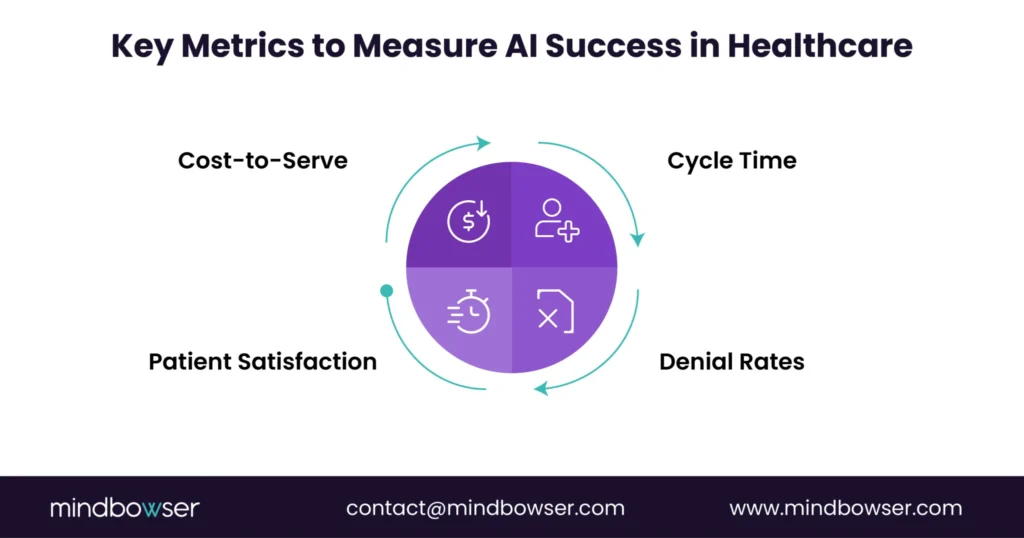
As healthcare organizations adopt autonomous AI agents, measuring ROI becomes essential for validating the success of these technologies. Executives should focus on key performance indicators (KPIs) that align with the organization’s strategic goals. These KPIs should reflect the outcomes that matter most: cost reduction, patient outcomes, and workflow efficiency.
Some key KPIs for healthcare leaders to track include:
- Cost-to-serve: Measuring how much it costs to deliver services, with a focus on reducing overheads through automation.
- Cycle time: How long it takes to complete critical processes, such as claims processing or patient appointment scheduling, which AI can streamline.
- Denial rates: For organizations in revenue cycle management, tracking the percentage of denied claims can highlight the impact of AI automation on claims submission accuracy.
- Leakage reduction: How effectively AI agents prevent inefficiencies or errors that cause financial or operational losses.
By focusing on these metrics, healthcare leaders can gain a clear picture of how AI adoption translates to tangible value.
1. Quality and Safety Metrics in Clinical-Adjacent Workflows
In clinical workflows, quality and safety are paramount. KPIs should include:
- Readmission rates: How AI agents in care coordination can reduce unnecessary hospital readmissions.
- Patient satisfaction: AI agents can enhance patient engagement by improving appointment scheduling, follow-up reminders, and personalized care plans.
- Error rates in diagnostics or treatment workflows: Ensuring AI integration does not compromise patient safety, but rather supports clinicians by reducing human error.
These quality metrics demonstrate how AI can directly improve patient outcomes while streamlining administrative tasks.
B. The ROI Traps That Create Backlash
While measuring ROI is crucial, healthcare organizations must avoid common pitfalls. These traps can lead to unrealistic expectations or disappointment in AI investments.
Measuring outputs instead of outcomes: Focusing solely on the volume of tasks automated (outputs) without tracking the actual impact on patient care or operational efficiency (outcomes) is a common mistake.
Ignoring integration and governance costs: AI adoption isn’t just about the upfront costs of technology. Ongoing maintenance, training, and integration with existing systems must be factored into ROI calculations.
Over-automating broken processes: Automating inefficient processes without first improving them can waste resources and exacerbate existing inefficiencies.
By ensuring that ROI models account for both the direct and indirect costs of AI adoption, organizations can avoid these pitfalls and make more informed decisions.
1. Measuring Outputs vs. Outcomes
It’s critical to distinguish between short-term output metrics, such as the number of claims processed or patient appointments scheduled, and long-term outcome metrics, such as improved patient satisfaction, cost reductions, or better clinical outcomes. A successful AI adoption strategy will be grounded in outcomes that align with the organization’s mission to improve care quality and efficiency.
C. A Simple ROI Model Template (for the Blog’s Later Section)
A straightforward ROI model template includes:
- Baseline costs and cycle times: What is the cost of performing the task manually today? How long does it take?
- Automation coverage rate and exception handling costs: What percentage of the task can be automated, and how much time is saved? What are the costs associated with handling exceptions manually?
- Risk-adjusted benefits and compliance overhead: How does the AI agent mitigate compliance risk, and what savings are achieved by improving regulatory adherence?
By tracking these factors, organizations can create a clear, actionable ROI model that demonstrates the value of autonomous AI agents.
VI. Healthcare Enterprise Use Cases Where Autonomous Agents Win First
A. Revenue Cycle and Administrative Operations
The first area where autonomous AI agents can make an immediate impact in healthcare is in revenue cycle management (RCM) and other administrative operations. AI-driven automation offers significant improvements in claims follow-up, denial management, eligibility verification, and documentation chase-down.
For instance, AI agents can automatically handle claim denial management by identifying patterns and reasons for denials, suggesting adjustments or corrections. During eligibility verification, AI can rapidly process patient data, ensuring insurance information is accurate and up to date before services are rendered, reducing the risk of claim rejections.
1. Patient Access and Scheduling Coordination
AI agents can also streamline patient access and scheduling coordination. Through intelligent automation, they can manage appointment bookings, cancellations, and rescheduling without human intervention, allowing administrative staff to focus on more complex patient inquiries. This not only improves the patient experience but also enhances operational efficiency by reducing scheduling errors and administrative workload.
B. Value-Based Care Operations
Autonomous AI agents also play a critical role in value-based care (VBC), where healthcare providers are incentivized to improve patient outcomes while controlling costs. In VBC, AI can help identify care gaps, prioritize outreach to high-risk patients, and ensure consistent follow-up on care plans.
AI agents can orchestrate outreach to patients with chronic conditions, sending reminders for medication adherence, appointment scheduling, and preventive care, all in alignment with care goals. The result is more efficient management of patient populations, improved patient engagement, and better clinical outcomes.
1. RPM Triage Workflows with Escalation Logic
In remote patient monitoring (RPM), AI agents can triage patient data and escalate cases that meet specific risk criteria to human caregivers for further intervention. This AI integration allows healthcare providers to track high-risk patients without overwhelming clinical staff with routine tasks, ensuring resources are focused where they are needed most.
C. Digital Health Product Teams
For digital health product teams, AI can dramatically accelerate the design and development of healthcare solutions. AI agents assist in regulatory-ready discovery by identifying key compliance requirements, helping teams create products that meet regulatory standards from the start.
Additionally, AI can streamline integration and delivery by automating parts of the process with legacy healthcare systems such as EHRs and billing software. This enables faster go-to-market timelines and ensures seamless, secure integration of new tools into existing ecosystems.
1. Post-Deployment Monitoring and Continuous Improvement Loops
After deployment, AI agents can monitor the performance of digital health products and gather data to identify areas for improvement. They can also help with continuous improvement loops by flagging potential issues and suggesting optimizations to improve system performance or patient outcomes. This ongoing monitoring helps ensure that products remain compliant and effective in a rapidly changing healthcare environment.
VII. How Mindbowser Can Help
A. Compliance-First Discovery for Agentic Workflows
Mindbowser stands at the forefront of AI-driven innovation, offering healthcare organizations a compliance-first approach to building autonomous AI agent workflows. When implementing AI agents in healthcare, understanding the boundaries of autonomy and aligning workflows with stringent regulatory requirements is paramount.
Mindbowser helps define boundaries of autonomy, ensuring AI agents perform tasks within a clearly delineated action space. We work closely with clients to map workflows across revenue cycle management, patient access, and care coordination, ensuring each process aligns with compliance frameworks such as HIPAA. Our experts also help establish risk registers to identify and mitigate potential risks, enabling smoother AI adoption while maintaining strict adherence to regulatory standards.
1. Workflow Mapping for VBC Operations and Enterprise Systems
For organizations transitioning to value-based care (VBC), Mindbowser’s expertise extends to mapping out workflows that support care gap identification, patient outreach, and other critical VBC operations. By integrating autonomous agents into these workflows, we help healthcare organizations increase operational efficiency while improving patient outcomes.
B. Build and Scale “Bounded Autonomy” Safely
Mindbowser specializes in the safe scaling of autonomous AI agents in healthcare settings. We follow best practices for building AI systems that operate within bounded autonomy, meaning they function independently but within clearly defined limits.
Our solutions prioritize AI orchestration, integration patterns, and the critical need for observability. By ensuring every action is traceable, we provide healthcare leaders with the transparency and control they need to build trust in these technologies.
1. Security Controls: Least Privilege, Approvals, Kill Switch, Audit Trails
Security is built into the foundation of Mindbowser’s AI systems. From implementing least-privilege access to ensuring kill-switch capabilities, we take a comprehensive approach to security. Additionally, our audit trails provide full visibility into AI agents’ actions, enabling organizations to demonstrate compliance with regulatory requirements and track AI system behavior in real time.
C. Operationalize in Healthcare Environments
Successfully deploying autonomous AI agents requires more than just technology; it requires a comprehensive approach to change management and operational readiness.
Mindbowser supports healthcare organizations in navigating this transformation by ensuring smooth integration with existing IT systems, including EHRs, payer systems, and other legacy platforms. We also help facilitate training and governance so that healthcare professionals are equipped to manage these new technologies effectively.
1. KPI-Driven Rollout Plan Tied to VBC Outcomes
Our KPI-driven rollout plans ensure that the adoption of AI agents is aligned with healthcare organizations’ overarching goals, particularly in value-based care. By focusing on metrics such as patient engagement, readmission rates, and care coordination, Mindbowser helps organizations achieve meaningful outcomes from their AI investments while enhancing both patient care and operational performance.
VIII. The 2026 Decision: Autonomy with Governance, or Pilots Forever
As healthcare organizations look ahead to 2026, the integration of autonomous AI agents presents a transformative opportunity. By embracing these technologies with clear governance, strategic piloting, and robust ROI measurement, organizations can unlock new efficiencies, improve patient outcomes, and advance value-based care initiatives. The key to success lies in setting clear boundaries for AI autonomy, ensuring compliance, and scaling with a sustainable operating model enabling a future where AI is an essential part of healthcare delivery.
Autonomous AI agents are systems capable of making decisions and executing actions without human intervention, within predefined parameters and compliance frameworks.
Unlike copilots, which offer suggestions, autonomous agents execute tasks and make decisions, often with minimal human oversight, depending on the autonomy level defined for each workflow.
Bounded autonomy refers to AI agents operating within strict parameters, where they are given specific tasks and decision-making authority but are still monitored for compliance and security.
Governance involves defining the action space, ensuring that AI agents adhere to least-privileged access, maintaining audit logs, and implementing clear escalation protocols.
Healthcare organizations must implement robust audit trails, ensure data privacy (e.g., HIPAA compliance), and provide tools for post-incident forensics to track AI agent decisions.