















 BLOGS
BLOGS  NEWSROOM
  CASE STUDIES
  WEBINARS
  PODCASTS
  ASSET HUB
  EVENT CALENDAR



















TL;DR
Clinical Decision Support Systems (CDSS) are powerful tools that can significantly enhance clinical decision-making, improve quality, and reduce healthcare costs. However, their success hinges on careful implementation, adoption, and integration with existing workflows. This article explores the advantages, challenges, and limitations of CDSS, providing healthcare leaders with insights to make informed decisions on whether CDSS are worth the investment.
Watch: Are Clinical Decision Support Systems Worth It? Pros, Cons & Challenges Explained
Effective clinical decision-making + Seamless integration + Clinician adoption = Successful Clinical Decision Support Systems (CDSS).
But is this formula enough to drive better healthcare outcomes? While CDSS holds promise for enhancing patient care and operational efficiency, its success depends on how well it aligns with workflows and gains clinician buy-in.
This blog explores the pros, cons, limitations, and challenges of CDSS to help healthcare leaders determine if these systems are truly worth the investment.
I. What Is Decision Support in Healthcare?
A. Start with the real executive question
Why are hospitals and digital health teams re-evaluating Clinical Decision Support Systems (CDSS) now? In today’s healthcare landscape, efficiency, quality outcomes, and cost-effectiveness are critical.
The question arises: Are Clinical Decision Support Systems (CDSS) truly worth it? The value of CDSS depends on their integration into existing workflows and their ability to deliver measurable outcomes.
Why does “worth it” depend on workflow, adoption, and measurable outcomes? For healthcare organizations, the true value of CDSS is realized when they fit seamlessly into workflows and are widely adopted by clinical teams. Their effectiveness depends on how well they align with the organization’s specific needs.
What this article will help leaders decide. This article serves as a decision-making guide for healthcare leaders. Exploring the pros, cons, limitations, and challenges of CDSS helps executives determine if CDSS are the right choice for their organization.
B. Define clinical decision support in plain language
Clinical Decision Support (CDS) refers to tools and systems that assist clinicians in making informed decisions by analyzing data from EHRs, lab results, and patient histories. These systems provide actionable insights at the point of care to improve decision-making, enhance patient outcomes, and drive operational efficiency.
1. What is decision support in healthcare?
Decision support systems provide clinicians with the information they need to make informed decisions. These systems can offer alerts, reminders, and recommendations based on patient-specific data.
2. What a clinical decision support system does at the point of care
CDSS provides real-time recommendations or alerts during patient interactions, assisting clinicians with diagnoses, medication safety, care pathways, and preventive care.
3. The difference between support, automation, and clinician judgment
CDSS supports, rather than replaces, clinician judgment. It offers evidence-based recommendations, but the final decision remains with the clinician, who also considers other factors such as patient preferences and clinical experience.
C. Core types of CDSS healthcare teams use today
Healthcare teams use several types of CDSS, each addressing different aspects of care:
1. Rule-based alerts and reminders
These tools provide alerts based on predefined clinical rules, such as drug interactions and screening reminders.
2. Order sets and care pathway prompts
CDSS can guide clinicians to select appropriate care pathways or order sets based on best practices.
3. Diagnostic and risk prediction support
These systems analyze data to suggest diagnoses and predict patient risks, such as the likelihood of readmission.
4. Medication safety and interaction checks
CDSS ensures medication safety by checking for potential drug interactions and contraindications.
5. Population health and VBC-oriented gap closure tools
In value-based care (VBC), CDSS help identify care gaps, ensuring patients receive timely screenings and preventive care.
D. Where CDSS fits in a VBC environment
CDSS are particularly valuable in value-based care (VBC) environments, where quality outcomes and cost management are essential. These systems help healthcare organizations meet VBC goals by ensuring timely, appropriate care delivery.
1. Quality measure adherence
CDSS supports adherence to quality measures by reminding clinicians to complete necessary screenings and procedures.
2. Risk stratification and care management
CDSS helps assess patient risk levels and prioritize care interventions accordingly.
3. Readmission reduction and preventive care
CDSS identifies high-risk patients and prompts timely interventions to prevent readmissions and improve preventive care.
4. Clinical consistency across sites and teams
By standardizing care delivery, CDSS ensures consistent treatment across teams and locations, improving patient outcomes.

II. The Pros of Clinical Decision Support Systems
A. Better Clinical Consistency
One of the key advantages of CDSS is the ability to standardize evidence-based care. By providing clinicians with consistent recommendations, CDSS reduces care variation, ensuring that patients receive the same high standard of treatment regardless of the provider or facility. This can be particularly valuable in multi-site healthcare organizations where consistency is critical.
1. Standardizing evidence-based care
CDSS helps standardize treatment by recommending evidence-based guidelines. This reduces the likelihood of inconsistent care and ensures adherence to best practices.
2. Reducing variation across providers and facilities
With CDSS, healthcare organizations can ensure that all providers follow the same protocols, minimizing variability in treatment outcomes.
3. Supporting less experienced clinicians without replacing expertise
CDSS provides support for less experienced clinicians, offering guidance when needed, but it does not replace the clinical judgment of more experienced providers.
B. Faster and Safer Decision-Making
CDSS accelerates decision-making by surfacing relevant patient data in real time, allowing clinicians to make quick, informed choices. These systems can also detect potential issues such as drug interactions, allergies, and contraindications before they affect patient care.
1. Surfacing relevant patient data in the moment
CDSS ensures that clinicians have the most up-to-date information right when they need it, helping them make informed decisions faster.
2. Catching drug interactions, allergies, and contraindications
By automatically cross-referencing prescriptions with patient histories, CDSS alerts clinicians to potential safety issues, such as drug interactions or allergies, before they cause harm.
3. Supporting earlier intervention in high-risk cases
CDSS identifies high-risk patients early, allowing for proactive interventions that can prevent complications or improve outcomes.
C. Stronger Quality and VBC Performance
In value-based care (VBC) models, CDSS plays a crucial role in improving quality and performance. By closing care gaps and supporting chronic disease management, these systems contribute to better clinical outcomes, which directly impact reimbursements and quality scores.
1. Closing care gaps tied to quality metrics
CDSS helps healthcare providers identify and close care gaps, ensuring that patients receive the necessary screenings, treatments, and preventive care.
2. Supporting chronic disease management
These systems offer tools to manage chronic conditions, helping clinicians track progress and adjust treatment plans as necessary.
3. Improving documentation tied to reimbursement and reporting
CDSS ensures accurate and timely documentation, which is essential for proper reimbursement and meeting quality reporting requirements.
4. Helping organizations act earlier instead of paying later
By identifying potential issues before they escalate, CDSS allows organizations to intervene early, reducing costly hospital readmissions and complications.
D. Operational Efficiency Gains
CDSS streamlines workflows, reducing the time spent on manual tasks and improving operational efficiency. By automating certain aspects of care, such as chart reviews or patient prioritization, CDSS frees up valuable time for clinicians to focus on direct patient care.
1. Reducing manual chart review
By automatically flagging important patient data, CDSS reduces the need for clinicians to review charts, saving time and improving workflow efficiency.
2. Streamlining order workflows
CDSS helps clinicians place orders more efficiently by providing guidelines and templates, reducing the risk of errors and improving order accuracy.
3. Supporting case management and utilization review
These systems assist in managing patient cases and reviewing resource utilization, ensuring that care is provided efficiently without unnecessary duplication or delays.
4. Helping teams prioritize patients who need intervention most
CDSS helps care teams prioritize high-risk patients, ensuring that those most in need of attention are treated first.
E. Better Coordination Across the Care Continuum
Effective care coordination is key to improving patient outcomes, and CDSS plays a central role in facilitating communication between primary care, specialty care, and care management teams. By ensuring all parties have access to the same information, CDSS fosters collaboration and improves patient care.
1. Connecting primary care, specialty care, and care management
CDSS ensures that all care team members, whether in primary care or specialized fields, are on the same page, leading to more cohesive and effective care delivery.
2. Supporting transitions of care
During transitions, such as hospital discharge or specialist referrals, CDSS ensures that critical patient information is communicated to prevent care gaps.
3. Improving alignment between clinical and operational teams
CDSS also improves the alignment between clinical and operational teams, enhancing collaboration and reducing inefficiencies in patient management.
F. Where the Upside is Most Visible
CDSS delivers significant benefits in certain high-volume or high-risk areas. The most notable gains can be seen in ambulatory care, medication-heavy workflows, and preventive screening programs.
1. High-volume ambulatory care
In busy outpatient settings, CDSS streamlines care delivery by quickly surfacing relevant information, allowing clinicians to manage a larger volume of patients more efficiently.
2. Medication-heavy workflows
In environments where medication management is critical, such as oncology or cardiology, CDSS ensures that drug safety is prioritized and medication errors are minimized.
3. Preventive screening programs
CDSS helps healthcare providers stay on top of preventive care, ensuring that patients receive appropriate screenings and interventions at the right time.
III. The Cons of Clinical Decision Support Systems
A. Alert Fatigue is Real
While alerts are one of the primary functions of CDSS, excessive or poorly timed alerts can lead to alert fatigue. Over time, clinicians may ignore or override frequent or irrelevant alerts, reducing the system’s effectiveness.
1. Too many interrupts reduce trust
Frequent alerts can disrupt clinicians’ workflows and reduce their trust in the system. If clinicians become overwhelmed by constant alerts, they may start to ignore them altogether, leading to missed opportunities for intervention.
2. Clinicians override what they no longer find useful
When alerts become too frequent or perceived as irrelevant, clinicians may override them, thereby reducing the system’s overall value. For CDSS to remain effective, alerts need to be relevant and timely.
3. Poorly tuned alerts create noise, not action
Unnecessary alerts, such as non-urgent notifications, can create noise in the workflow, distracting clinicians from more critical tasks. Fine-tuning alert settings is essential to ensuring that only the most important messages are surfaced at the right time.
B. Weak Workflow Fit Can Kill Adoption
If CDSS are not seamlessly integrated into the healthcare organization’s existing workflow, they risk being rejected by clinicians. Weak workflow fit can significantly hinder adoption, leading to inefficiencies and frustration.
1. Generic tools slow clinicians down
CDSS that are not tailored to specific clinical workflows or specialties can be slow and cumbersome. Clinicians may find that these systems add more steps to their process rather than streamlining it, leading to reduced usage.
2. Bad timing makes good guidance easy to ignore
If CDSS provide recommendations at the wrong point in the clinical workflow, such as too early or too late, clinicians may not find the guidance useful and will begin to ignore it. The system must be well-timed and contextually relevant to be effective.
3. Systems fail when they do not match real care delivery patterns
If a CDSS does not fit well with how care is actually delivered, it will likely face resistance from users. Customization and integration are crucial to ensuring that the system complements the existing care process.
C. Limited Data Quality Leads to Limited Value
CDSS rely heavily on high-quality, accurate data to deliver actionable insights. When data entered into the system is incomplete or incorrect, the system’s value diminishes. Inaccurate data can lead to misleading recommendations and unreliable insights.
1. Incomplete records create misleading recommendations
Incomplete or inaccurate patient records can skew the recommendations provided by CDSS. For instance, missing lab results or outdated medication lists may cause the system to provide incorrect or irrelevant alerts.
2. Poor interoperability weakens context
When CDSS systems are not well-integrated with other healthcare technologies, such as EHRs, they struggle to pull in necessary patient data from various sources. This lack of interoperability limits the system’s ability to deliver comprehensive, actionable insights.
3. Inconsistent data inputs reduce confidence in outputs
If data is inconsistently entered into the system, clinicians may lose confidence in the recommendations provided. Ensuring that data is accurate, complete, and consistently formatted is crucial to maximizing the effectiveness of CDSS.
D. Overreliance Introduces Clinical Risk
Overreliance on automated recommendations can introduce risks, particularly when clinicians defer too much to CDSS without considering the full clinical context. This can lead to automation bias, where clinicians trust the system more than their own judgment.
1. Automation bias can distort decision-making
While CDSS can provide helpful recommendations, clinicians must maintain their critical thinking and clinical judgment. Relying too heavily on the system can lead to situations where automated suggestions are followed even when they may not be the best course of action.
2. Teams may trust the tool more than the situation warrants
In some cases, clinicians may place too much trust in the system’s recommendations, even when the context suggests otherwise. This can introduce clinical risk if the tool’s recommendations do not fully account for complex patient conditions or nuances.
3. Poorly maintained rules can age into unsafe guidance
CDSS rules must be regularly updated to reflect the latest medical knowledge. If the system is not maintained, outdated or incorrect rules can lead to unsafe or irrelevant recommendations.
E. Financial and Operational Costs Add Up
Implementing and maintaining a CDSS system can be expensive. Licensing costs, integration efforts, and ongoing training all contribute to financial and operational costs that healthcare organizations must consider.
1. Licensing and implementation costs
The upfront costs of purchasing and implementing a CDSS can be significant. These costs often include licensing fees and the resources required to integrate the system into existing workflows and technologies.
2. Integration and customization effort
Customizing the CDSS to fit a healthcare organization’s specific needs can be time-consuming and costly. This process may involve technical adjustments, data mapping, and workflow alignment.
3. Change management and training burden
Training clinicians to effectively use CDSS requires an investment in change management. Without adequate training and support, adoption can be slow, and the system’s effectiveness may be reduced.
4. Governance and maintenance as ongoing expenses
Even after the system is up and running, ongoing governance, maintenance, and updates are necessary to ensure that the CDSS continues to function correctly and remains compliant with industry regulations.
F. ROI Is Often Harder to Prove Than Vendors Suggest
While CDSS are designed to improve clinical outcomes and reduce costs, the return on investment (ROI) can be difficult to measure. Many of the benefits are indirect or take time to materialize, making it challenging for organizations to justify the costs.
1. Benefits may be indirect or delayed
CDSS often lead to improvements that are not immediately apparent, such as better patient outcomes or more efficient care delivery. These long-term benefits may not be easy to quantify in terms of immediate ROI.
2. Outcomes depend on adoption, not just deployment
Simply deploying a CDSS does not guarantee that it will provide value. The system’s effectiveness is closely tied to clinician adoption and engagement, making it essential to have a clear strategy for driving user uptake.
3. Poor measurement frameworks make value difficult to defend
Measuring the success of CDSS requires robust frameworks and data collection. Without accurate metrics to track the system’s impact, it becomes difficult to demonstrate its value to stakeholders.

IV. Limitations of Clinical Decision Support Systems Leaders Need to Understand
A. CDSS Is Only as Strong as Its Inputs
The effectiveness of a Clinical Decision Support System (CDSS) depends on the quality of the data it processes. If the data being entered into the system is inaccurate or incomplete, the system’s value is significantly reduced. Data quality limitations are a major hurdle for successful CDSS implementation.
1. EHR data quality limitations
Many healthcare organizations still face challenges with incomplete or inaccurate data in their Electronic Health Records (EHR). This can lead to CDSS providing recommendations based on incomplete patient information, thereby reducing its effectiveness.
2. Missing social, behavioral, or longitudinal context
CDSS often focus on clinical data but lack access to broader social, behavioral, or longitudinal health information that might influence patient care decisions. This can result in the system providing recommendations that fail to account for the full patient context.
3. Inconsistent coding and documentation practices
Inconsistent coding and documentation can also limit the effectiveness of CDSS. If clinical data is not entered in accordance with standardized practices, it may result in inaccurate recommendations or alerts.
B. Clinical Nuance Does Not Always Translate into Rules
Clinical decision-making is complex, and not all patient situations can be boiled down to clear-cut rules or algorithms. Clinical nuance is often lost in the process of translating real-world situations into decision rules for CDSS, leading to potential limitations in the system’s effectiveness.
1. Complex patients do not fit clean logic trees
Patients with multiple comorbidities or complex conditions may not fit neatly into the decision trees that CDSS use. These systems may fail to account for the full range of variables that affect patient care, potentially leading to suboptimal recommendations.
2. Comorbidities can complicate recommendations
For patients with multiple chronic conditions, CDSS may struggle to provide appropriate recommendations, as these conditions often interact in ways that are difficult to model.
3. Shared decision-making cannot be reduced to a single prompt
Many clinical decisions require a shared decision-making process between clinicians and patients. CDSS cannot easily capture the nuances of these conversations or the individual preferences of patients, which means that recommendations may not always align with the patient’s values or needs.
C. Not Every Use Case is Equally Mature
CDSS solutions vary greatly in their sophistication and applicability across different clinical use cases. Some use cases are well-established and have high confidence in their recommendations, while others are still in the early stages. Leaders must be cautious about adopting CDSS for all use cases, especially those that have not been fully validated.
1. Medication and preventive reminders vs. diagnostic support
Simple use cases like medication reminders and preventive care prompts are generally more mature and effective. In contrast, more complex applications, such as diagnostic support, are still evolving and may not always deliver reliable results.
2. High-confidence use cases vs. emerging predictive models
Some CDSS solutions are highly reliable for well-defined tasks, such as drug interaction alerts or preventive screening reminders. In contrast, emerging predictive models, such as those used for early diagnosis or risk stratification, may not yet have the same level of validation or accuracy.
3. Why not all CDS should be evaluated the same way
It’s important to recognize that not all decision support systems are created equal. Healthcare leaders should evaluate each CDSS solution based on its maturity, reliability, and alignment with their specific clinical needs.
D. Regulatory, Legal, and Accountability Gray Zones
As CDSS solutions continue to evolve, they are increasingly subject to regulatory scrutiny. However, many aspects of CDSS, such as accountability and legal ownership, remain unclear. Regulatory, legal, and accountability gray zones are an important consideration for healthcare organizations adopting CDSS.
1. Who owns the recommendation?
A key question in CDSS adoption is who is responsible when a recommendation leads to an adverse event. Is it the healthcare provider, the technology vendor, or the organization? Clarity on accountability is essential for healthcare leaders to mitigate potential legal risks.
2. What happens when guidance is wrong?
If CDSS provides incorrect recommendations, healthcare organizations must have processes in place to address the situation. This includes understanding how to audit decision-making processes and ensure that corrective actions are taken.
3. Why validation, monitoring, and auditability matter
Healthcare leaders should prioritize CDSS solutions that provide transparency in decision-making. Regular validation, monitoring, and auditability ensure that the system remains up-to-date, compliant with regulations, and safe for patient care.
Ready to evaluate CDSS for your organization? Let's talk about your workflows, use cases, and goals.
V. Clinical Decision Support System Challenges During Implementation
A. Getting Clinician Buy-In
Successful implementation of CDSS hinges on clinician buy-in. Without strong support from clinicians, the system will struggle to gain traction and deliver meaningful results. Clinician buy-in is crucial for ensuring that CDSS is effectively integrated into daily workflows.
1. Why adoption starts before go-live
The adoption of CDSS must begin during the planning phase, well before the system is deployed. Engaging clinicians early in the design process and gathering their input is essential for creating a system that meets their needs and fits into their workflow.
2. The importance of physician and nurse input in design
Involving physicians, nurses, and other frontline staff in the design and implementation process is vital. These users provide valuable insights into what works, what doesn’t, and what’s feasible in real-world clinical practice.
3. Why frontline trust matters more than feature count
Clinicians are more likely to use a CDSS they trust, even if it has fewer features, than a feature-rich one that fails to address their daily needs. Ensuring that the system aligns with clinicians’ workflows and addresses their pain points is more important than adding unnecessary functionalities.
B. Integrating with the EHR and Broader Tech Stack
CDSS must integrate seamlessly with the existing EHR and other healthcare technologies. Poor integration can lead to inefficiencies and delays, making the system difficult to use and less effective. Integrating with the EHR and broader tech stack is a critical challenge.
1. Workflow embedding vs bolt-on tools
To be truly effective, CDSS should be embedded directly into clinical workflows rather than added as a separate tool. Bolt-on tools can create friction, forcing clinicians to switch between systems and disrupting care delivery.
2. Interoperability barriers across systems
Interoperability remains a major challenge in healthcare. If the CDSS cannot access the necessary data from various sources (EHRs, labs, pharmacies), its effectiveness will be severely limited. Ensuring that CDSS can communicate with all relevant systems is essential for seamless integration.
3. The challenge of getting the right data at the right moment
Real-time data access is critical for CDSS effectiveness. If the right data isn’t available at the right time due to integration issues or poor data quality, the system will struggle to provide timely, relevant recommendations.
C. Designing for Specificity, Not Volume
For CDSS to be effective, they must be designed with specific clinical needs in mind, rather than attempting to serve a broad range of use cases. Designing for specificity ensures that the system delivers targeted, actionable insights rather than overwhelming clinicians with irrelevant information.
1. Tuning thresholds and triggers
Customizing alert thresholds and triggers ensures that only relevant recommendations are presented to clinicians. This reduces alert fatigue and ensures that the system’s guidance is useful and timely.
2. Reducing unnecessary alerts
Excessive alerts, especially those that are not urgent or relevant, can disrupt workflows and reduce the system’s overall effectiveness. It’s crucial to fine-tune alert settings to ensure that only critical issues are highlighted.
3. Building role-based decision support by setting and specialty
A one-size-fits-all approach does not work in healthcare. CDSS should be designed to meet the needs of specific roles (e.g., doctors, nurses, case managers) and specialties, ensuring that each user receives the most relevant guidance for their tasks.
D. Governance and Content Maintenance
The success of CDSS doesn’t end with implementation. Ongoing governance and content maintenance are essential to ensure that the system remains accurate, up-to-date, and compliant with evolving clinical guidelines. Governance and content maintenance play a critical role in the long-term success of CDSS.
1. Clinical rule ownership
Assigning ownership of clinical rules ensures that the CDSS stays relevant and aligned with current medical standards. This responsibility typically falls on clinical leadership, who must oversee rule updates and ensure they reflect the latest evidence-based practices.
2. Evidence updates and version control
CDSS content must be regularly updated to reflect new clinical guidelines, research findings, and best practices. Version control is critical to ensure that clinicians are always working with the most current information.
3. Monitoring overrides, adherence, and outcome impact
It’s essential to monitor how clinicians interact with CDSS, including override rates and adherence to recommendations. Tracking these metrics helps identify areas for improvement and ensures the system has a positive impact on patient outcomes.
E. Measuring What Success Actually Looks Like
To determine whether a CDSS is delivering value, organizations must define and track appropriate success metrics. Measuring success goes beyond adoption rates to include quality and safety outcomes, financial impact, and workflow efficiency.
1. Adoption metrics
Tracking the rate of clinician adoption is a key indicator of CDSS success. High adoption rates suggest that the system is valuable and well-integrated into workflows.
2. Override rates
The frequency of overrides can indicate whether the system’s recommendations are relevant and useful. High override rates may signal a need to adjust the system’s logic or content.
3. Quality and safety outcomes
Ultimately, the goal of CDSS is to improve patient outcomes. Tracking improvements in quality and safety, such as reductions in medication errors or hospital readmissions, helps assess the system’s effectiveness.
4. Financial impact and avoided costs
CDSS can contribute to cost savings by preventing adverse events and reducing unnecessary procedures. Measuring the financial impact of these savings is essential for proving ROI.
5. Provider experience and workflow burden
Clinicians’ experience is also a key metric. A system that reduces clinician burden and improves workflow efficiency will lead to higher satisfaction and better overall outcomes.
VI. Are Clinical Decision Support Systems Worth It?
A. The Short Answer
Yes, when the use case is clear, and the workflow fit is strong. Clinical Decision Support Systems (CDSS) can deliver significant value when they are carefully tailored to the healthcare organization’s needs and integrated seamlessly into existing workflows. Their value is most apparent when deployed for specific, well-defined clinical problems and when adoption is supported across clinical teams.
No, when the system is generic, noisy, and poorly governed. However, CDSS can fall short if the system is too generic, lacks proper customization, or does not fit well within the existing workflow. Poorly implemented CDSS can cause frustration, alert fatigue, and low adoption, making the investment unwise.
B. A Practical Decision Framework for Healthcare Leaders
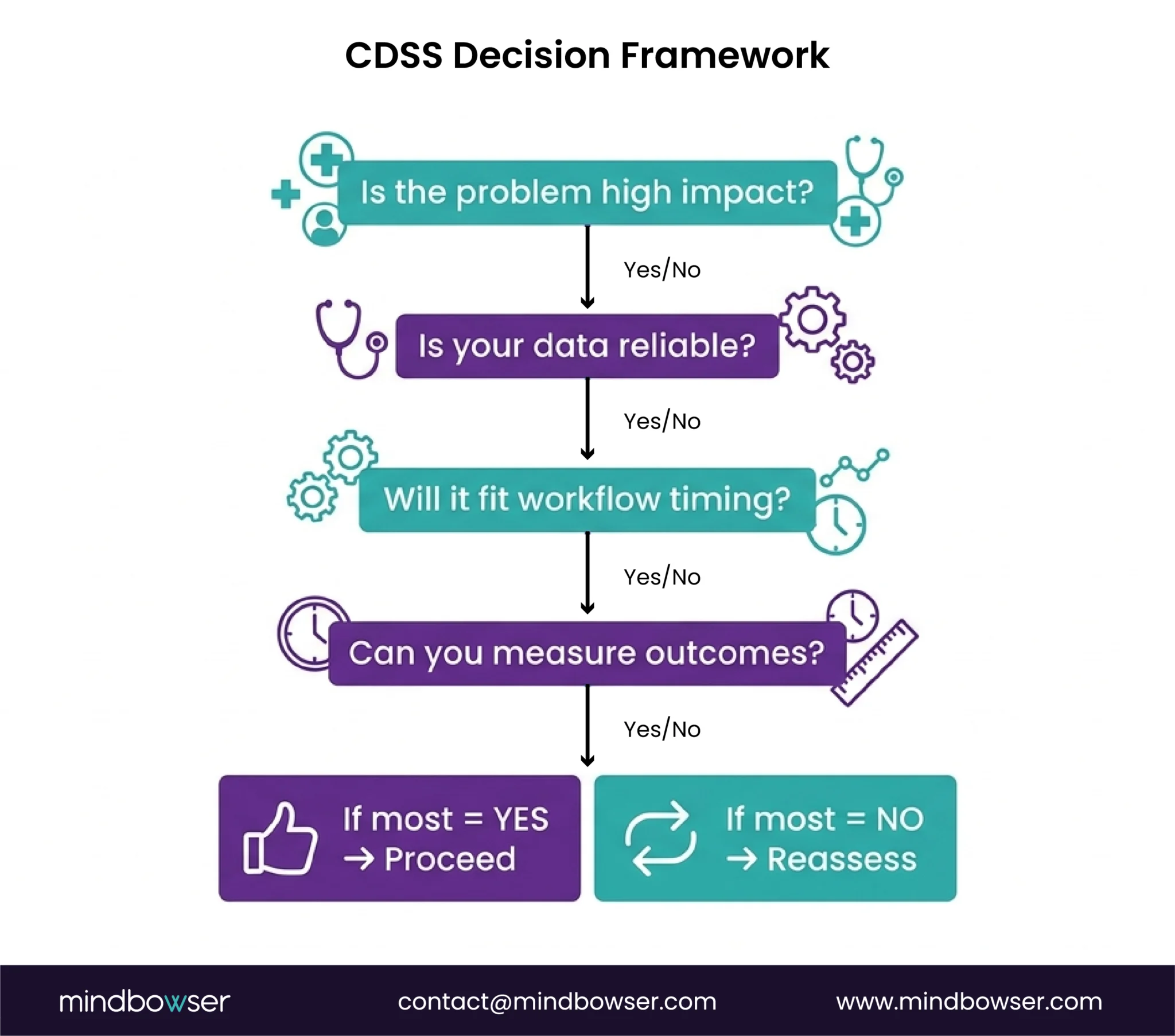
Healthcare leaders need a structured framework to evaluate the potential of CDSS in their organizations. Here are some critical questions to consider:
1. Is the clinical problem important enough to solve?
Before investing in a CDSS, it’s important to assess the clinical problem it’s meant to address. If the issue is not significant or widespread within the organization, the system may not provide sufficient value to justify the cost.
2. Is the data reliable enough to support action?
The effectiveness of CDSS depends on the quality of the data it processes. Leaders should evaluate whether their data is comprehensive, accurate, and up-to-date before deploying a CDSS.
3. Will the recommendation appear in the right workflow moment?
For CDSS to be effective, the recommendations must surface at the right time when clinicians need them most. Systems that provide irrelevant or poorly timed alerts will be ignored or overridden.
4. Can the organization measure adoption and outcomes?
To determine whether the CDSS is delivering value, healthcare organizations must track adoption and clinical outcomes. Without proper measurement, it’s impossible to assess whether the system is achieving its goals.
5. Is there executive and clinical ownership after launch?
For a CDSS to succeed, both executive leadership and clinical staff need to take ownership of its implementation and ongoing governance. This ensures that the system remains relevant and effective in the long term.
C. When CDSS Tends to Deliver Value
Certain conditions make it more likely that CDSS will deliver measurable value. These conditions include:
1. Defined use cases with measurable outcomes
The best results are achieved when CDSS is deployed for specific, high-impact clinical issues tied to measurable outcomes, such as reducing medication errors or improving care coordination.
2. Strong EHR integration
A smooth integration with the EHR ensures that CDSS can access real-time, comprehensive patient data, allowing for more accurate and relevant recommendations.
3. High clinician involvement in design
Involving clinicians in the design process ensures that the system meets their needs and fits well into their workflow. This increases the likelihood of adoption and successful integration.
4. Continuous tuning after rollout
Ongoing monitoring and adjustments are necessary to ensure that the CDSS remains relevant and effective. Continuous feedback from clinicians is essential to fine-tune the system for maximum impact.
D. When CDSS Tends to Disappoint
CDSS can fail to meet expectations under certain conditions. These include:
1. Technology-first deployments
When organizations prioritize technology over users’ actual clinical needs, CDSS can become a tool that adds complexity rather than value. It’s essential to focus on solving real-world clinical problems, not just adopting new technology.
2. Broad rollout without specialty-specific design
A one-size-fits-all approach to CDSS will likely fall short. Without customization for specific specialties or roles, the system may fail to meet the needs of diverse clinical teams.
3. No governance model
Without a clear governance model to oversee the CDSS, the system may suffer from inconsistent updates, a lack of accountability, and missed opportunities for improvement.
4. No plan for ROI measurement
Organizations need a clear framework for measuring the return on investment (ROI) of CDSS. Without it, proving the system’s value can be challenging, especially when financial benefits are indirect or delayed.
VII. What Healthcare Organizations Should Do Before Investing
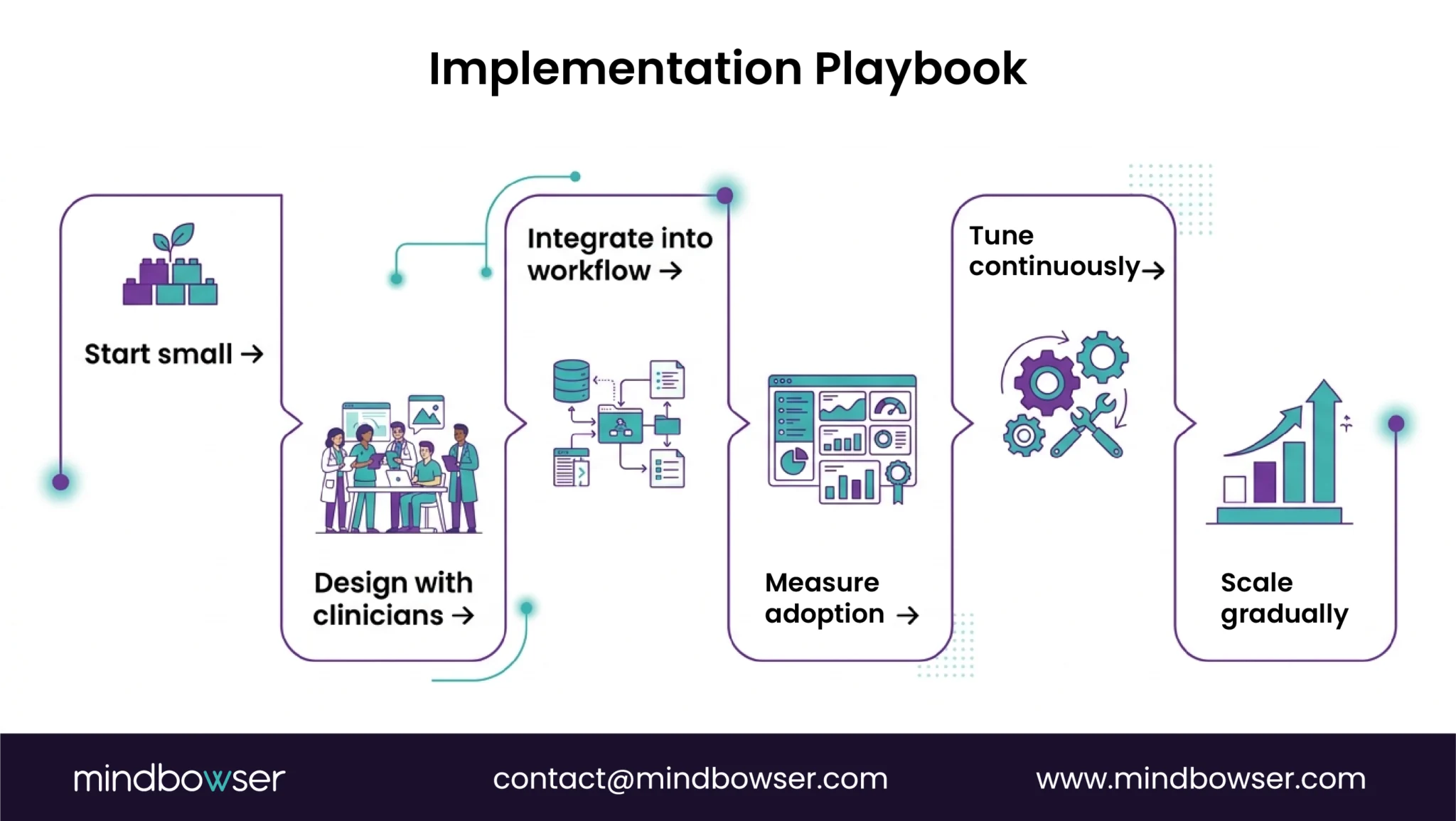
A. Start with One Workflow, Not Ten
Before implementing a Clinical Decision Support System (CDSS), healthcare organizations should focus on a single, high-value workflow. Trying to tackle multiple workflows at once can lead to overwhelming complexity and dilute the potential impact. Starting with a clear, focused use case will allow the organization to measure success and refine the system before expanding its use.
1. Pick a high-value, high-friction problem
Choosing a critical area where CDSS can make an immediate impact is essential. For instance, addressing a frequent clinical challenge, such as medication safety or preventive care, can yield measurable improvements that justify the system’s implementation.
2. Prioritize measurable use cases
Select use cases where the impact can be clearly measured, whether through improved patient outcomes, reduced errors, or more efficient workflows. This ensures that the system’s effectiveness is easily demonstrable.
3. Avoid boiling the ocean
It’s tempting to use CDSS for a broad range of tasks, but tackling too many workflows at once can spread resources thin. By narrowing the scope to a specific, high-priority workflow, organizations can ensure that the system is implemented effectively and delivers meaningful results.
B. Build Around People, Process, and Platform
Successful CDSS implementation requires a balanced approach that integrates people, processes, and technology. Simply purchasing and deploying a system is not enough; organizations must ensure that the people and processes around the system are prepared for its adoption.
1. Clinical champions
Identifying clinical champions within the organization is critical. These individuals can advocate for the system, train colleagues, and provide feedback to ensure that the CDSS meets the needs of clinical teams.
2. Change management
Implementing CDSS requires strong change management strategies. Clinicians must be educated about the system, trained in its use, and supported throughout the adoption process to ensure a smooth transition.
3. Data readiness
Before implementing a CDSS, healthcare organizations must assess the quality and completeness of their data. If the data isn’t reliable, the CDSS will be ineffective. Ensuring that data is accurate, consistent, and ready for integration is essential for success.
4. Integration roadmap
A clear integration plan must be in place to ensure that the CDSS works seamlessly with the organization’s existing tech stack, including EHRs, lab systems, and pharmacy platforms. This integration must be carefully managed to avoid disruptions and inefficiencies.
C. Create an Outcomes-First Business Case
When presenting the case for CDSS investment, healthcare organizations must focus on outcomes rather than just technology features. An outcomes-first approach ensures that the system’s value is tied directly to measurable improvements in clinical care, efficiency, and cost savings.
1. Define baseline performance
Establish a clear baseline of current performance metrics before implementing the CDSS. This could include metrics such as medication error rates, care gaps, or readmission rates. Defining these benchmarks will allow the organization to track improvements after deployment.
2. Model financial upside and avoid waste
Healthcare organizations should model the potential financial benefits of CDSS, including avoided costs such as preventable hospital readmissions, medication errors, and unnecessary tests. By focusing on cost avoidance and efficiency gains, organizations can build a strong business case.
3. Tie success to quality, utilization, and provider efficiency
Linking CDSS outcomes to key performance indicators, such as quality metrics, patient utilization rates, and provider efficiency, ensures that the system’s impact on clinical care and operational performance is clearly understood.
D. Pilot, Tune, Expand
Once the system is deployed, organizations should start with a controlled pilot phase to monitor adoption and performance. A pilot allows organizations to test the system in a smaller, controlled environment before scaling it across the organization.
1. Controlled rollout
A phased approach to CDSS deployment ensures the system is thoroughly tested before full-scale implementation. Starting with a small group of clinicians and workflows allows the organization to identify any issues early and make adjustments.
2. Monitor adoption and override behavior
Tracking how clinicians interact with the system is essential. High override rates or low adoption can indicate issues with system design or integration. Monitoring this data helps the organization identify areas for improvement.
3. Refine before scale
Based on feedback from the pilot phase, the system should be refined to address any gaps or pain points before expanding to additional workflows or clinical teams. This iterative approach ensures the system delivers the highest possible value.
VIII. How Mindbowser Can Help
A. Strategy Before Software
At Mindbowser, we believe that strategy must precede software. A successful Clinical Decision Support System (CDSS) deployment begins with identifying the right use cases for value-based care (VBC) and digital health objectives.
By mapping workflows, personas, and care pathways, we ensure that the CDSS is designed with your organization’s strategic goals in mind, rather than just deploying a generic solution.
1. Identifying the right CDSS use cases for VBC and digital health
Mindbowser works with healthcare leaders to pinpoint the most impactful clinical problems that CDSS can solve. Whether it’s reducing readmissions or enhancing chronic disease management, we help define clear use cases that align with your organization’s value-based care objectives.
2. Mapping workflows, personas, and care pathways
We create a detailed understanding of your clinical workflows and the key personas involved, ensuring that the CDSS integrates seamlessly into your existing processes. This enables your team to focus on what matters most: delivering high-quality patient care.
3. Building decision support around business and clinical priorities
Mindbowser takes a business-first approach to CDSS development. We ensure that decision support systems not only meet clinical needs but also align with operational goals and financial objectives, thereby driving both clinical success and organizational efficiency.
B. Product, Data, and Integration Execution
Successful CDSS implementation requires seamless integration with existing platforms and data sources. Mindbowser specializes in building EHR- and interoperability-aware solutions that enable your team to leverage existing technology investments.
1. EHR and interoperability-aware implementation
Our CDSS solutions integrate smoothly with your EHR and other systems to pull in the right data at the right time. This eliminates silos and ensures that clinicians have comprehensive, real-time patient information at their fingertips.
2. Custom workflow design for provider adoption
We focus on creating workflows that fit naturally into clinicians’ daily routines. By customizing the system to match how care is delivered, we increase the likelihood of adoption and ensure CDSS is used effectively across teams.
3. Data engineering and rule logic support
Mindbowser ensures accurate, reliable data to power your CDSS. We provide data engineering services to optimize your data pipelines and help build clinical rules that reflect the latest evidence-based practices.
4. Dashboards for usage, quality, and ROI tracking
To track the success of your CDSS, we develop customizable dashboards that allow you to monitor key metrics like system usage, quality outcomes, and financial ROI. These dashboards provide actionable insights that can guide ongoing improvements.
C. Compliance and Scale
In a regulated healthcare environment, compliance is paramount. Mindbowser builds CDSS solutions with security, privacy, and governance at the forefront, ensuring that your system is compliant with HIPAA, SOC 2, and other relevant regulations.
1. Designing for security, privacy, and governance
We prioritize security and privacy in every aspect of the CDSS design and implementation process. Our solutions are built to ensure that patient data is protected and that your organization meets all compliance requirements.
2. Building systems that can evolve with evidence and policy
Healthcare is an ever-changing field, and your CDSS must be adaptable to new medical evidence, guidelines, and regulatory changes. Mindbowser designs flexible, scalable systems that can evolve alongside advances in healthcare.
3. Supporting pilots, optimization, and enterprise rollout
Mindbowser helps guide your organization through the entire CDSS lifecycle, from pilot projects to full-scale implementation. Our iterative approach ensures that the system is optimized for maximum impact before it is rolled out organization-wide.
D. Why This Matters for VBC-Focused Organizations
For organizations focused on value-based care (VBC), a well-implemented CDSS can be a game-changer. By supporting targeted interventions, improving care gap closure, and increasing operational leverage, CDSS allows organizations to deliver better outcomes at lower costs.
1. Better care gap closure
CDSS helps ensure that no care gaps go unnoticed. By providing reminders and prompts for screenings, follow-ups, and preventive measures, the system supports comprehensive care for all patients.
2. More targeted interventions
Using CDSS, healthcare providers can identify patients who need intervention the most, leading to more targeted and effective care. This is especially valuable in VBC models, where organizations are held accountable for patient outcomes.
3. Higher operational leverage from the same clinical team
CDSS helps optimize workflows, allowing clinical teams to focus on high-priority tasks. By streamlining processes and automating certain decision-making steps, CDSS can help your team achieve more with the same resources.
4. Stronger outcomes without relying on off-the-shelf logic alone
By customizing CDSS to meet the unique needs of your organization, Mindbowser ensures that the system provides relevant, evidence-based guidance, rather than relying on generic solutions that may not be effective in your specific context.
Navigating the Future of Clinical Decision Support Systems
Clinical Decision Support Systems (CDSS) offer significant potential to improve patient outcomes, streamline workflows, and enhance operational efficiency.
However, their success depends on thoughtful implementation, clinician buy-in, and continuous optimization.
By focusing on specific use cases, ensuring seamless integration, and rigorously measuring outcomes, healthcare leaders can maximize the value of CDSS and drive meaningful change within their organizations.
The key is to view CDSS not just as a technology purchase, but as a strategic tool to enhance clinical decision-making and achieve long-term organizational goals.
A CDSS is a tool that helps clinicians make better decisions by analyzing patient data and providing real-time recommendations. It supports care delivery but does not replace clinical judgment.
CDSS improves care consistency, reduces errors, and supports faster decision-making. It also helps organizations perform better in value-based care by closing care gaps and improving outcomes.
Common challenges include alert fatigue, poor workflow fit, and data quality issues. Without strong clinician adoption and proper tuning, CDSS can fail to deliver value.
They are worth it when implemented for clear use cases with strong workflow integration and measurable outcomes. Poorly implemented systems often lead to low adoption and unclear ROI.
Start with a focused use case, involve clinicians early, ensure data readiness, and continuously monitor outcomes. Success depends on adoption, not just deployment.



![10 Clinical Decision Support System Examples With Real Metrics [2026]](https://www.mindbowser.com/wp-content/uploads/2025/08/Clinical-Decision-Support-System-1024x324.jpg)
![5 Types of Clinical Decision Support Systems: Which One Fits Your Hospital? [2026]](https://www.mindbowser.com/wp-content/uploads/2026/03/medical-technology-network-telemedicine-health-insurance-virtual-hospital-healthcare-1024x585.jpg.webp)
