Choosing Between Ready-Made and Custom EHR Solutions
EHR/EMR

Choosing Between Ready-Made and Custom EHR Solutions

Is your EHR helping your clinicians work smarter, or is it slowing down your hospital’s workflows, revenue cycle, and compliance posture?

For most healthcare leaders, this question surfaces during every budget cycle, quality initiative, or digital transformation project. With 96% of U.S. acute-care hospitals now using a certified EHR, the challenge is no longer adoption; it’s alignment. Does your EHR actually fit the way your teams document, decide, coordinate, and deliver care?

As mid-market hospitals and scaling digital health organizations modernize, the EHR becomes more than a documentation tool. It becomes the operating system for clinical workflows, revenue integrity, interoperability, patient engagement, and regulatory compliance. And that reality forces an inevitable strategic decision:

Should we rely on a ready-made EHR or invest in a custom or hybrid architecture that aligns precisely with our workflows, integrations, and compliance requirements?

The wrong choice can increase documentation burden, drive clinician burnout, create interoperability gaps, and introduce avoidable HIPAA risk. The right strategy, often custom or hybrid, can automate handoffs, reduce friction, accelerate reimbursement, and improve patient outcomes.

With the global EHR market projected to grow from $33.4B in 2024 to $43.4B by 2030, organizations are reevaluating legacy systems and considering whether custom, off-the-shelf, or hybrid FHIR-based extensions best position them for the next decade.

This blog breaks down the trade-offs so leaders can decide with clarity, not guesswork.

I. What Is an EHR System and Why Does Its Architecture Matter?

At its core, an Electronic Health Record (EHR) system is a real-time, longitudinal clinical record. Still, for healthcare leaders, it functions as something much larger: the digital infrastructure that captures, moves, secures, and operationalizes patient data across your organization.

A modern EHR does more than store documentation. It must:

A. Support complete clinical documentation

An enterprise-grade EHR captures and organizes:

  • Demographics, encounters, and problem lists
  • Medications, orders, allergies, immunizations
  • Diagnostics, radiology, labs
  • Care plans and discharge summaries

This information must be maintained as a single source of truth across physicians, nurses, care coordinators, revenue cycle teams, and external partners.

B. Enable safe, compliant clinical decision-making

EHRs embed tools such as:

  • Clinical decision support (CDS)
  • Drug–drug and drug–allergy checks
  • Protocol-driven order sets
  • Population health risk indicators

These capabilities depend on clean, structured data models and compliant workflows.

C. Integrate with the surrounding technology ecosystem

A real EHR is not a silo. It must exchange data with:

  • HIEs
  • Pharmacy systems
  • Lab systems
  • Wearables and remote monitoring devices
  • Revenue cycle and billing platforms
  • Patient engagement tools

This requires interoperability via HL7 v2, FHIR R4 resources, SMART on FHIR, CCD/CCDA documents, and secure APIs.

D. Maintain strong compliance and security controls

To be enterprise-ready, an EHR must include:

  • HIPAA-aligned access controls (RBAC/ABAC)
  • Full audit trails
  • PHI encryption in transit (TLS 1.2+) and at rest (AES-256)
  • Secure BAA-backed vendor relationships
  • Logging, monitoring, and breach detection

Compliance is not a feature; it’s a governance requirement that shapes the architecture.

E. Automate operational workflows

For clinical and revenue cycle teams, an EHR should streamline:

  • Charting
  • Order placement and management
  • Documentation review
  • Referral workflows
  • Prior authorization data exchange
  • Billing codes and claims submission

When an EHR aligns with internal workflows, clinicians spend more time practicing medicine and less time navigating screens.

II. Are Ready-Made EHR Systems the Right Fit for Your Organization’s Workflows?

Most healthcare organizations begin evaluating commercial EHRs because they promise fast deployment, predictable upfront costs, and a large catalog of prebuilt features. For teams with limited engineering capacity or urgent go-live timelines, ready-made systems appear to be the safer choice.

But the reality is more nuanced. Ready-made EHRs can accelerate adoption, but they can also create workflow friction, integration constraints, and long-term cost escalation if they are not tailored to your environment.
Below is a clear assessment of their advantages and limitations.

III. Advantages of Ready-Made EHR Systems

A. Faster Implementation and Lower Initial Investment

Out-of-the-box EHRs arrive preconfigured with:

  • Standardized modules (registration, scheduling, orders, billing)
  • Template-based documentation layouts
  • Built-in compliance guardrails

This lowers implementation time and enables hospitals to stabilize clinical workflows quickly.

B. Mature Feature Set Backed by Large User Communities

Commercial EHRs evolve continuously across thousands of customer environments. Over time, this produces:

  • Deep clinical workflows
  • Rich specialty modules
  • Revenue cycle capabilities
  • Prebuilt analytics dashboards

For organizations with simpler workflows and fewer integrations, this feature density can be sufficient, but it may limit workflow precision as needs evolve.

C. Vendor-Managed Upgrades, Support, and Security

With a ready-made EHR, the vendor owns:

  • Infrastructure
  • Patches and releases
  • Maintenance schedules
  • Regulatory alignment updates (e.g., HIPAA rule changes, CMS reporting updates)

This reduces operational burden for IT departments.

D. Examples of Ready-Made EHR Systems

Common ready-made EHR platforms include:

  • Epic – Widely used by large health systems, offering comprehensive inpatient and outpatient modules with strong interoperability capabilities.
  • Cerner (Oracle Health) – Known for enterprise hospital deployments and population health tools.
  • Athenahealth – Cloud-based EHR commonly used by ambulatory practices.
  • Allscripts (Altera Digital Health) – Modular EHR solutions for hospitals and specialty clinics.
  • NextGen Healthcare – Often used in specialty and mid-sized provider settings.

These platforms provide standardized workflows, built-in compliance frameworks, and established integration ecosystems. However, customization depth, API access, and cost structures vary significantly across vendors.

IV. Limitations of Ready-Made EHR Systems

Despite the strengths, CIOs and CMIOs frequently encounter barriers that affect productivity, scalability, and cost.

A. Limited Workflow Fit and High Reliance on Workarounds

Commercial EHR workflows are built for the “average” organization. In practice, hospitals end up with:

  • Documentation flows that don’t match clinical reality
  • Screens that increase click burden
  • Siloed specialty workflows
  • “Shadow systems” in spreadsheets and point solutions

The more your teams rely on workarounds, the greater your operational and compliance risks become.

B. Integration Constraints with Existing Systems

Most ready-made systems support interoperability, but often with restrictions:

  • Limited API access
  • Additional fees for FHIR endpoints
  • Vendor-controlled data availability
  • Slow integration approval processes
  • Incomplete mappings across HL7 v2 and FHIR resources

Organizations with complex digital ecosystems, remote monitoring tools, care management apps, custom models, or population health platforms may accumulate integration debt.

C. Total Cost of Ownership Often Exceeds Initial Estimates

While entry costs appear low, hidden expenses accumulate:

  • Ongoing licensing
  • Add-on modules
  • Data storage fees
  • Support tiers
  • Custom development charges
  • Integration fees

Over 3–5 years, many hospitals discover that the all-in cost is far higher than expected.

D. Vendor Lock-In and Limited Flexibility

When core workflows are locked into proprietary data structures and interfaces, organizations face:

  • Slow innovation cycles
  • Inability to extend the EHR without vendor approval
  • Limited visibility into back-end logic
  • Reduced bargaining power over time

This also affects long-term strategies such as moving to cloud-native systems or FHIR-first architectures.

E. Security or Compatibility Gaps in Certain Environments

Vendor-hosted systems are compliant but may not align with:

  • Internal zero-trust frameworks
  • Custom RBAC/ABAC models
  • Local hardware performance needs
  • On-premises hybrid-cloud policies

This becomes critical for organizations with advanced cybersecurity or PHI governance requirements.

V. When Does a Custom EHR Deliver More Value Than a Ready-Made System?

Healthcare organizations increasingly explore custom EHR solutions when commercial systems fail to align with how their teams document, coordinate care, or share data across departments

For hospitals with complex workflows, unique specialties, hybrid delivery models, or advanced population health needs, a custom EHR can eliminate years of workaround-driven inefficiency.

Custom EHRs are not simply “build your own software.” They are precision-aligned clinical and operational systems designed to remove workflow friction, strengthen governance, and give you control over interoperability at scale.

VI. Advantages of Custom EHR Solutions

A. Purpose-Built Workflows That Match Real Clinical Practice

A custom EHR is designed around your actual processes, not vendor defaults.
This gives you:

  • Workflow alignment across specialties and service lines
  • Custom documentation flows that reduce click burden
  • Automated handoffs between departments
  • Visibility into every touchpoint across the patient journey

The result: higher clinician satisfaction and fewer workarounds.

B. Enterprise-Grade Interoperability and Integration Control

Custom EHRs offer unrestricted access to:

  • HL7 v2 messages (ADT, ORU, ORM)
  • FHIR R4 APIs and SMART-on-FHIR apps
  • External data networks and HIEs
  • Wearables and remote monitoring (via accelerators like WearConnect)
  • Revenue cycle platforms, payer systems, and care management tools

Unlike vendor-constrained integration models, custom EHRs let you build the exact interoperability fabric your organization needs.

This is also where Mindbowser’s case studies strengthen credibility, for example, our work integrating SMART-on-FHIR, HL7, and automated newborn data flows into Epic for a childbirth management platform.

C.  Stronger Security, Compliance, and Governance

Custom EHRs allow full alignment with internal compliance frameworks, including:

  • HIPAA technical safeguards
  • Encryption at rest (AES-256) and in transit (TLS 1.2+)
  • Multi-layer RBAC/ABAC
  • Fine-grained audit trails
  • PHI minimization and access controls
  • Zero-trust or hybrid-cloud security architectures

This is critical for hospitals tightening PHI governance or integrating next-generation AI tools.

D. Lower Long-Term TCO and No Vendor Lock-In

While upfront investment is higher, custom EHRs reduce long-term spend by eliminating:

  • Per-seat licensing
  • API access fees
  • Premium support charges
  • Add-on module costs
  • Proprietary integration fees

Organizations pay only for what they need, nothing more.

E. Direct Access to the Engineering Team

Custom EHRs provide:

  • Immediate fixes
  • Rapid enhancements
  • Full visibility into code, schemas, and workflows
  • Ability to adopt new regulatory requirements without waiting for vendor cycles

This becomes a strategic advantage in a shifting compliance landscape.

F. Examples of Custom EHR Approaches

Custom EHR solutions are typically built in scenarios such as:

  • A digital health company creating a proprietary care management platform integrated with hospital EHRs through HL7 and FHIR.
  • A specialty hospital is developing a workflow-specific EHR module for oncology, behavioral health, or maternal care.
  • A provider network is building a hybrid system that uses a commercial EHR core but customizes specialty workflows through SMART-on-FHIR applications.
  • A population health organization is designing its own longitudinal patient data platform with real-time interoperability across multiple hospital systems.

In these cases, the goal is not to replace every core function of a commercial EHR but to design workflows and integrations that align precisely with operational and care delivery needs.

VII. Limitations of Custom EHR Solutions

1. Higher Upfront Investment

Custom EHR development typically ranges from $50,000 to $500,000+, depending on:

  • Workflow complexity
  • Integration volume
  • Specialty modules
  • Security requirements
  • Data migration needs

 2. Longer Implementation Timeline

Unlike ready-made systems, custom EHRs require:

  • Discovery
  • Workflow mapping
  • Architecture design
  • Development
  • Testing and validation
  • Training and rollout

This is a measured approach, but it leads to stronger workflow alignment.

3. Dependence on the Right Engineering Partner

A custom EHR succeeds only if:

  • It is architected by an experienced healthcare engineering team
  • Regulators, compliance, and workflow SMEs are embedded from day one
  • Interoperability frameworks are implemented correctly

This is where proven expertise matters.
Mindbowser’s work on wearable and EHR integration, and on real-time health monitoring platforms, demonstrates the depth required for custom builds.

Looking for Building a Custom EHR?

VIII. How Do Custom and Ready-Made EHR Solutions Compare Across Critical Decision Factors?

Fig 1: EHR Decision Framework: Ready-Made vs Custom vs Hybrid

Healthcare leaders rarely choose an EHR based solely on features. The decision typically hinges on five dimensions:

  1. Total Cost of Ownership (TCO)
  2. Workflow and Functional Fit
  3. Implementation Timeline
  4. Support and Vendor Dependency
  5. Compliance and Interoperability Requirements

Below is a structured comparison aligned with the criteria leadership teams evaluate during RFPs, digital transformation programs, and EHR modernization roadmaps.

Why Traditional Build vs Buy Models Often Stall?

Healthcare organizations typically face two options:

Buy Off-the-Shelf

  • Limited workflow flexibility
  • Vendor lock-in
  • Long onboarding cycles
  • Restricted API access

Build In-House

  • 4–8 months per integration
  • $50K–$200K per EHR connection
  • Rewrites for each new hospital
  • Heavy HL7/FHIR talent dependency
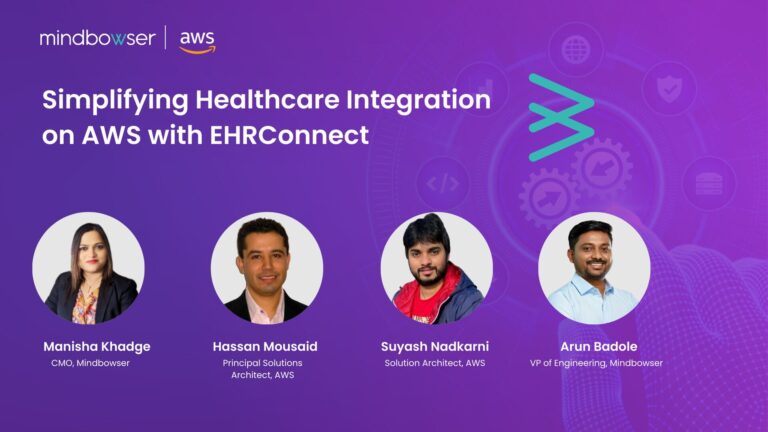
    Simplifying Healthcare Integrat…

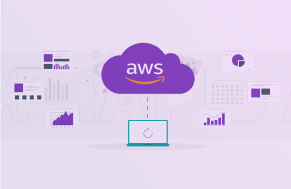
A third approach AWS-native, managed healthcare integration layers compresses go-live timelines to days instead of months while preserving workflow flexibility.

A. Cost: Upfront vs Long-Term Value

Ready-Made EHR

  • Lower upfront licensing and onboarding fees
  • Typically subscription-based (per-user, per-module)
  • Additional charges for integrations, APIs, customization, analytics, and storage
  • TCO increases over 3–5 years due to recurring fees and add-ons

Custom EHR

  • Higher upfront investment
  • No recurring licensing fees
  • You own the platform, eliminating vendor lock-in
  • Long-term TCO is lower when workflows are stable and integrations are extensive

Best for: Organizations seeking long-term control over cost and architecture.

B. Functionality and Workflow Alignment

Ready-Made EHR

  • Broad core features across clinical, administrative, and billing workflows
  • Built for general-use patterns, not specialty-specific workflows
  • Customization options vary and may be fee-based
  • Workarounds are common when workflows don’t match vendor defaults

Custom EHR

  • Designed to fit clinical and operational workflows exactly
  • Eliminates workaround-driven inefficiencies
  • Supports unique service lines, hybrid care models, and multi-site operations
  • Easier to integrate AI tools, decision support, and automation

Best for: Organizations with specialized workflows or strong cross-department dependencies.

C. Implementation Timeline

Ready-Made EHR

  • Deployment can occur within weeks to a few months
  • Requires workflow adaptation to fit vendor templates
  • Faster path to basic go-live, but slower path to optimization

Custom EHR

  • Longer development and testing timeline
  • Driven by discovery, architecture, integration planning, and compliance design
  • Produces an environment optimized for long-term operational efficiency

Best for: Organizations prioritizing precision and long-term workflow quality over speed.

D. Support, Maintenance, and Flexibility

Ready-Made EHR

  • Vendor-managed support
  • Release cycles and updates are controlled externally
  • Limited flexibility for rapid enhancements
  • API and integration access may be restricted

Custom EHR

  • Direct access to engineering teams
  • Full visibility into codebase, logs, and data models
  • Faster iteration cycles
  • Can integrate new modules, FHIR endpoints, or tools without vendor approval

Best for: Teams requiring agility and tight control over workflows, performance, and integrations.

E. Compliance, Security, and Interoperability

Ready-Made EHR

  • Generally compliant with HIPAA, CMS, and ONC standards
  • Vendor controls security roadmap and PHI governance
  • FHIR/HL7 support may require additional fees or modules

Custom EHR

1. Designed to match internal security frameworks

2. Supports HIPAA, RBAC/ABAC, audit logs, encryption, and zero-trust patterns

3. Full control over interoperability using:

  • HL7 v2 (ADT, ORU, ORM)
  • FHIR R4
  • SMART-on-FHIR apps
  • CCD/CCDA exchange

4. Ideal for hospitals requiring granular compliance and data governance

Best for: Organizations with complex interoperability needs or strict internal security models.

IX. What Core Capabilities Should a Modern EHR System Deliver?

EHR systems have evolved far beyond digital charting. For healthcare organizations modernizing clinical operations, the EHR serves as the enterprise’s data, workflow, and compliance engine.

Below are the essential features that define a mature, scalable, and interoperable EHR.

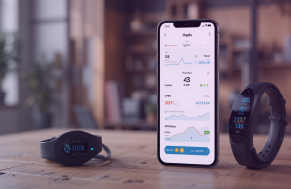
Fig 2: Simple visual that maps the six enterprise-grade capabilities.

A. Comprehensive, Structured Clinical Data Management

A modern EHR must support standardized, longitudinal patient records across:

  • Demographics and encounters
  • Problem lists and diagnoses
  • Medications, allergies, and immunizations
  • Orders, procedures, and care plans
  • Radiology, labs, and diagnostics
  • Clinical notes and documentation templates

Data should be expressed in structured formats (FHIR R4 resources, LOINC, SNOMED, RxNorm) to enable analytics, automation, and AI-driven insight.

B. Clinical Decision Support (CDS) and Safety Controls

Enterprise-grade EHRs incorporate CDS mechanisms that:

  • Surface relevant clinical alerts
  • Provide drug–drug and drug–allergy interaction checks
  • Suggest evidence-based order sets
  • Flag abnormal results or risk indicators
  • Support population-level risk stratification

These capabilities must operate with low alert fatigue, configurable thresholds, and strong audit logging to support quality and safety programs.

B. Interoperability Across Systems and Care Settings

Interoperability is no longer optional. A mature EHR should support:

  • HL7 v2 messaging (ADT, ORU, ORM, SIU)
  • FHIR R4 APIs for real-time data exchange
  • SMART-on-FHIR applications for custom workflows
  • CCD/CCDA document exchange
  • Integration with HIEs, labs, pharmacies, and imaging systems
  • Wearable and remote monitoring data ingestion (accelerators like WearConnect streamline this)

Interoperability is foundational for coordinated care, analytics, and automation.

D. Workflow Automation and Operational Efficiency

EHRs must streamline, not complicate clinical and administrative workflows. Robust systems support automation across:

  • Charting and documentation
  • Order management and routing
  • Handoff and referral workflows
  • Care coordination
  • Prior authorization data exchange
  • Billing and claims preparation

Custom EHRs often excel here because workflows can be designed around actual practice patterns rather than vendor defaults.

E. Compliance, Security, and Auditability

Enterprise EHRs must be built with strict PHI governance in mind. This includes:

  • HIPAA technical safeguards
  • RBAC/ABAC-based access control
  • End-to-end encryption (AES-256 at rest; TLS 1.2+ in transit)
  • Intrusion detection and audit logging
  • BAA-backed vendor relationships
  • Data retention and archival policies
  • Zero-trust or hybrid-cloud architectures

Audit trails should capture every access, modification, and transaction for regulatory reporting.

F. Analytics and Reporting Capabilities

An effective EHR should enable:

  • Clinical quality reporting (CMS, MIPS, HEDIS)
  • Operational dashboards
  • Population health analytics
  • Predictive modeling using structured data
  • Real-time monitoring of throughput, utilization, and bottlenecks

Advanced organizations integrate tools like AI Medical Summary or HealthConnect CoPilot to automate data processing and improve clinical insight.

G. Extensibility and Scalability

Enterprise-grade EHRs should support:

  • Modular design
  • API-driven extensibility
  • Upgrades without downtime
  • Ability to integrate new care models
  • Multi-site, multi-specialty scalability

Custom EHRs often outperform vendor systems here because they allow full control over how new modules and capabilities are deployed.

X. What Drives the Cost of Building a Custom EHR?

Fig 3: Visualizes TCO factors leadership must budget for.

Custom EHR development isn’t just a software project; it is an infrastructure investment that touches workflows, compliance programs, integration architecture, and long-term scalability

Leaders evaluating a custom path should understand the major cost drivers across the lifecycle.

Below is a structured breakdown aligned with typical healthcare budgeting and procurement processes.

A. Software Architecture, Engineering, and Licensing

1. Custom Development Costs

Depending on the scope, custom EHR builds typically range from $50,000 to $500,000+. Key variables include:

  • Number of clinical modules
  • Workflow complexity across departments
  • Required FHIR/HL7 integrations
  • Real-time vs batch data exchange
  • UI/UX requirements for clinicians
  • Data model design for structured reuse

2. Third-Party Licensing

While custom EHRs avoid traditional licensing fees, you may incur costs for:

  • OCR/NLP engines
  • Specialty modules
  • Medication knowledge bases
  • Secure cloud hosting environments
  • Vendor APIs requiring contracts

Custom architectures allow you to choose only what you need, minimizing long-term dependency costs.

B. Infrastructure and Deployment Environment

1. Servers and Networking Equipment

For on-prem or hybrid deployments, organizations may invest $10,000–$50,000+ in:

  • Application servers
  • Database servers
  • Load balancers
  • VPN gateways
  • Backup and failover components

2. Workstations and Mobile Devices

Equipping clinicians and staff may add $1,000–$10,000 per user, depending on device type and security requirements.

Cloud-native EHRs typically reduce on-prem hardware costs but require careful planning around availability zones, redundancy, and PHI isolation.

C.  Integration Architecture and Workflow Alignment

1. System Configuration and Integration

Integrating with legacy and external systems can range $2,000–$10,000+ per connection, depending on complexity.

Common integration use cases:

  • ADT feeds
  • Lab/radiology systems
  • Pharmacy networks
  • Billing and RCM platforms
  • HIE participation
  • Wearables and RPM devices (accelerators like WearConnect reduce this cost)

2. Data Migration

Migration can represent a major cost driver:

  • Extracting historical data
  • Normalizing formats (HL7, FHIR, CCDA, CSV)
  • Validating accuracy
  • Backloading into the new EHR

Typical ranges: $10,000–$50,000, depending on volume and legacy system quality.

D. Training, Testing, and Change Management

1. Initial Staff Training

Training clinicians and administrative staff generally ranges from $1,000 to $5,000 per user, including:

  • Role-based workflow sessions
  • Sandbox environments
  • Job aids and quick guides

2. User Acceptance Testing (UAT)

Testing cycles add cost but are critical for safety and adoption:

  • Clinical workflow validation
  • Edge case handling
  • Compliance testing
  • Regression testing for future updates

3. Ongoing Support & Maintenance

Annual maintenance for security updates, enhancements, and user support ranges $2,000–$10,000 per year, depending on complexity.

E. Compliance, Security, and Regulatory Alignment

Meeting HIPAA and ONC requirements introduces additional investment:

  • HIPAA risk assessments
  • Security rule compliance (access, audit controls, integrity, transmission security)
  • Encryption, logging, and monitoring systems
  • Penetration testing
  • Documentation for audits

Typical budget allocation: $5,000–$20,000 annually.
Security measures (e.g., encryption, intrusion detection, zero-trust configuration) may add $2,000–$10,000 per year.

F. Opportunity Costs and Operational Impact

Productivity Decline During Transition

Any major EHR shift impacts productivity as teams adapt:

  • Temporary decline in throughput
  • Documentation time increases during the transition
  • Operational disruption if training is incomplete

This cost varies widely but should be factored into the ROI model.

XI. Hidden Costs of Integration When Choosing an EHR Path

Hidden Integration Costs: Custom Stack vs Managed Layer
Fig 4: Hidden Integration Costs: Custom Stack vs Managed Layer

For many digital health companies, the real cost of choosing an EHR strategy emerges only when integration work begins

A CTO evaluating how to connect to hospitals often ends up choosing between building a custom integration stack or using a managed healthcare integration layer. Both move data, but the long-term cost profile and engineering burden diverge sharply.

A. Scenario: A digital health startup preparing its first hospital deployment

The engineering team chooses the custom route. They assemble a stack using familiar tools: MirthConnect for HL7 channels, Kafka for event flow, custom microservices for transformation, and a demo EHR to validate workflows.

AI helps generate initial Mirth connectors, but engineers still spend time validating mappings, fixing malformed segments, and stabilizing ACK logic.

From there, the hidden work begins:

  • HL7 mappings and version drift
  • ACK/NACK reconciliation
  • VPN/IPSec setups
  • Smart-on-FHIR authentication
  • Backups, audit logs, HIPAA-compliant infrastructure
  • Scaling, uptime, and operational monitoring

Manual integrations often add 3–6 months to product timelines. Industry experience shows teams can waste up to 40% of engineering hours just connecting systems instead of building differentiated clinical workflows. Senior engineers are tied up building plumbing rather than product features.

B. The alternative: A managed integration layer deployed inside the company’s cloud

Deployment finishes in 20–25 minutes and includes HL7/FHIR parsers, mappers, ADT/SIU support, TCP/HTTP nodes, Smart-on-FHIR tools, and auto-scaling. With workflows and credentials ready, teams move from sandbox to production in a couple of days, not months.

The first subscription usually includes 40 hours of SME-led workflow setup and training, eliminating most trial-and-error. Teams can also bundle sandbox EHR connections during evaluation, reducing friction when working with multiple hospitals.

Pricing becomes predictable with per-connection models rather than per-API-call billing.

C. Why it Matters

Integration isn’t only a technical choice; it’s a strategic allocation of engineering resources. Custom integrations provide control but divert months of engineering effort into maintaining pipelines rather than advancing the roadmap. AWS-native interoperability models and managed integration layers can reduce integration cycles by up to 10x, lower engineering effort by approximately 60%, and reduce ongoing costs compared to repeated manual builds.

For leadership, the question becomes:

Should your engineers focus on building clinical workflows or debugging HL7 ACKs and VPN tunnels?

D. How to use this cost model?

Accurate cost modeling helps leaders determine whether custom EHR development:

  • Reduces long-term operating expenses
  • Eliminates vendor dependency
  • Strengthens security and governance
  • Improves workflow efficiency
  • Creates measurable ROI over 3–7 years

The right custom EHR becomes an enabler, not an expense.

coma

Making an EHR Decision That Strengthens Your Organization for the Next Decade

Choosing between a ready-made EHR, a custom platform, or a hybrid model isn’t just a technology decision; it is a long-term strategic commitment that shapes clinical efficiency, interoperability maturity, compliance posture, and the pace at which your organization can innovate.

Hospitals and digital health companies that thrive in the next decade will be those that:

  • Align EHR systems with real-world workflows
  • Strengthen interoperability through FHIR, HL7, and API-driven architectures
  • Reduce engineering drag by selecting integration approaches that scale
  • Build data foundations capable of supporting AI, automation, and population health
  • Invest in systems that grow with organizational complexity rather than constrain it

Whether you adopt a commercial EHR with targeted extensions or design a platform that reflects your unique workflows, the goal remains the same: enable clinicians to deliver high-quality care while giving leadership the flexibility to evolve rapidly.

With an AWS-native, interoperability-first strategy, your EHR can become not just a system of record but a scalable foundation for AI-ready, secure, and rapidly deployable healthcare innovation.

What’s the main difference between a ready-made EHR and a custom EHR?

A ready-made EHR offers prebuilt workflows and quick deployment, while a custom EHR is designed around your specific clinical, operational, and integration needs. Custom systems offer better alignment, flexibility, and interoperability, but at the cost of a longer build timeline.

When should an organization consider building custom EHR modules or a full custom EHR?

Custom EHR development makes sense when vendor templates don’t align with your workflows, advanced HL7/FHIR integrations are required, or compliance and data governance must be tightly controlled.

How long does an EHR integration typically take?

Custom-coded integrations often require 3–6 months due to HL7 mapping, VPN setup, ACK/NACK logic, compliance, and testing.

Using a managed integration layer can reduce this to 1–2 days for the sandbox and 1–2 days for production after credentials are issued.

Do engineering teams need deep HL7 or FHIR expertise to build integrations?

Not always. Platforms that include HL7 parsers, FHIR mappers, ACK handling, and built-in workflow nodes reduce the need for HL7/Mirth specialists and speed up development.

What integrations should a modern EHR or healthcare platform support?

Key standards include:

1. HL7v2 (ADT, SIU, ORU, ORM)
2. FHIR R4 APIs
3. SMART-on-FHIR
4. OAuth2/OIDC
5. TCP/MLLP
Batch and real-time workflows

These ensure interoperability across EHRs, HIEs, payers, RPM systems, and specialty applications.

Can an EHR integration support write-back to Epic, Cerner, or other systems?

Yes. Write-back uses HL7 SIU/ADT messages or FHIR APIs to sync scheduling changes, enrollment status, visit updates, and other clinical events. This eliminates spreadsheets and manual reconciliation.

What hidden work slows down custom EHR integrations?

The most time-consuming tasks include:

1. Segment mapping and HL7 version drift
2. ACK/NACK reconciliation
3. VPN/IPSec configuration
4. SMART-on-FHIR authentication
5.Audit logging, backups, and HIPAA controls
6. Monitoring, scaling, and uptime engineering

These tasks often take longer than the integration logic itself.

Do organizations need separate sandbox and production environments?

Yes. Hospitals typically require isolated environments for:

1. Testing HL7/FHIR workflows
2. Validating credentials and endpoints
3. Running UAT with clinical teams

Sandboxes are often billed as separate connections and remain essential during evaluation.

How should leadership evaluate the cost of custom EHR development?

Cost depends on:

1. Number of workflows and modules
2. HL7/FHIR integration volume
3. Data migration effort
4. Compliance and security requirements
5. Infrastructure (cloud vs on-prem)
6. Training and support

Long-term TCO is often lower than that of ready-made EHRs because there are no recurring licensing or customization fees.

Is a hybrid EHR approach a viable alternative to fully custom or fully ready-made systems?

Yes. Many organizations maintain a commercial EHR for core workflows and build custom extensions or SMART on FHIR apps for specialty workflows, automation, analytics, or population health use cases. This balances cost, speed, and long-term flexibility.

Your Questions Answered

A ready-made EHR offers prebuilt workflows and quick deployment, while a custom EHR is designed around your specific clinical, operational, and integration needs. Custom systems offer better alignment, flexibility, and interoperability, but at the cost of a longer build timeline.

Custom EHR development makes sense when vendor templates don’t align with your workflows, advanced HL7/FHIR integrations are required, or compliance and data governance must be tightly controlled.

Custom-coded integrations often require 3–6 months due to HL7 mapping, VPN setup, ACK/NACK logic, compliance, and testing.

Using a managed integration layer can reduce this to 1–2 days for the sandbox and 1–2 days for production after credentials are issued.

Not always. Platforms that include HL7 parsers, FHIR mappers, ACK handling, and built-in workflow nodes reduce the need for HL7/Mirth specialists and speed up development.

Key standards include:

1. HL7v2 (ADT, SIU, ORU, ORM)
2. FHIR R4 APIs
3. SMART-on-FHIR
4. OAuth2/OIDC
5. TCP/MLLP
Batch and real-time workflows

These ensure interoperability across EHRs, HIEs, payers, RPM systems, and specialty applications.

Yes. Write-back uses HL7 SIU/ADT messages or FHIR APIs to sync scheduling changes, enrollment status, visit updates, and other clinical events. This eliminates spreadsheets and manual reconciliation.

The most time-consuming tasks include:

1. Segment mapping and HL7 version drift
2. ACK/NACK reconciliation
3. VPN/IPSec configuration
4. SMART-on-FHIR authentication
5.Audit logging, backups, and HIPAA controls
6. Monitoring, scaling, and uptime engineering

These tasks often take longer than the integration logic itself.

Yes. Hospitals typically require isolated environments for:

1. Testing HL7/FHIR workflows
2. Validating credentials and endpoints
3. Running UAT with clinical teams

Sandboxes are often billed as separate connections and remain essential during evaluation.

Cost depends on:

1. Number of workflows and modules
2. HL7/FHIR integration volume
3. Data migration effort
4. Compliance and security requirements
5. Infrastructure (cloud vs on-prem)
6. Training and support

Long-term TCO is often lower than that of ready-made EHRs because there are no recurring licensing or customization fees.

Yes. Many organizations maintain a commercial EHR for core workflows and build custom extensions or SMART on FHIR apps for specialty workflows, automation, analytics, or population health use cases. This balances cost, speed, and long-term flexibility.

Pravin Uttarwar

Pravin Uttarwar

CTO, Mindbowser

Connect Now

Pravin is an MIT alumnus and healthcare technology leader with over 15+ years of experience in building FHIR-compliant systems, AI-driven platforms, and complex EHR integrations. 

As Co-founder and CTO at Mindbowser, he has led 100+ healthcare product builds, helping hospitals and digital health startups modernize care delivery and interoperability. A serial entrepreneur and community builder, Pravin is passionate about advancing digital health innovation.

Share This Blog

Read More Similar Blogs

Let’s Transform
Healthcare,
Together.

Partner with us to design, build, and scale digital solutions that drive better outcomes.

Location

5900 Balcones Dr, Ste 100-7286, Austin, TX 78731, United States

Contact form