
Scott Nelson, co-founder, president and CEO of FastWave Medical, joins host Ayush Jain to explain why building a medical device startup is “playing the game on hard mode.” Scott spent the first half of his career at large strategics including Bard Peripheral Vascular, Boston Scientific, Covidien and Medtronic, then moved into early-stage companies: Touch Surgery, the direct-to-consumer device company Joovv, and now FastWave, which is developing intravascular lithotripsy for calcified blood vessels.
His first test for any device idea is whether it can be a venture-backed business at all. For lower-barrier health tech, it’s traction, and fast. He explains how to test product-market fit before FDA clearance with prototypes and renders instead of question lists, why hospital administrators and payers belong in early conversations, and why the network matters more than the check when choosing an accelerator. He closes with budgeting to the next near-term milestone while keeping the next round in view, and the consumer-driven, personalized health trends he expects to keep growing.
Scott sees the same mistake from engineers and physicians alike: a genuinely good device idea, and no full grasp of what it takes to get there in a space that is highly regulated and capital intensive. His filter is whether the idea can scale with capital to a liquidity event where founders, employees and investors all win. A novel catheter aimed at a market that’s too small usually can’t fund its way to the next development or regulatory milestone, and most often the honest answer is “great idea, but not a venture-backed idea.”
For lower-barrier plays such as a health tech device or a SaaS company, his priority is traction: does it resonate, and will people pay? He points to Justin Mares, who tested demand for Kettle & Fire bone broth with a landing page and a little paid traffic before any product existed, and took real orders within a week or two.
You can’t put up a landing page for a product that needs FDA clearance, so Scott changes the method rather than skipping the test. Classic voice of customer research, a list of questions taken into physician interviews, is too slow to tell you anything definitive. His advice is to get to something tangible fast: a physical prototype, or 2D and 3D renders if a prototype isn’t possible yet, so clinicians react to a thing instead of an idea.
The second half of his advice is breadth. A physician may be the primary user, but hospital administrators, the committees that approve purchases, and insurance payers all decide whether a device gets bought and paid for. If a physician says they’d sponsor your device, he says, don’t accept it at face value: talk to the committee members too, because they may agree it’s a good product and still tell you why they wouldn’t bring it in. That’s the same set of hurdles software for MedTech companies has to clear: regulatory evidence, hospital adoption and payer coverage.
Scott works within a structure closer to a venture studio than a classic accelerator, and he encourages founders to consider every accelerator and incubator available. The value to judge, in his view, is the ecosystem: the resources and network you can still tap once the program window closes, which he says medtech founders consistently rate above the capital or a $50,000 competition win. Steven Collens described what that support looks like from inside one program in MATTER’s model for healthcare startups.
Scott describes a startup as pushing a boulder up a hill in sprints, with plateaus where you prove progress. The budget question isn’t what it will take to reach commercialization. It’s what one or two near-term milestones a round, say a $5 million seed, will buy, and how they show the team can execute. At the same time, keep the next round loosely in view: don’t do anything in the seed that damages the Series A. He cites Lloyd Diamond, CEO of Pixium Vision, on the same point, and the 2020 and 2021 cohort that raised at valuations it couldn’t grow into and now faces down rounds or shutdowns.
The biggest trend Scott sees is consumer-driven healthcare. At Joovv, a Class II device sold entirely online, customers paid an average selling price north of $1,000, which to him shows people will spend real money to be proactive about their health. His takeaway for device companies whose customers are physicians and hospitals is to still think through the patient’s decisions, quoting AliveCor founder Dr. Dave Albert: all patients are consumers, but not all consumers are patients. He sees personalized medicine, from personalized supplements to repeat blood testing with companies like InsideTracker, as part of the same shift.
This episode of HealthTech with Purpose podcast brings to you Scott Nelson, an entrepreneur and founder, president and CEO of FastWave Medical. He’s also the founding partner and managing director of Big Sky Biomedical, a board director of Crossfire Medical, and founder of Medsider and Joovv.com. In this episode we learn about building a journey from zero to one, especially in the medical device startup space, the lessons Scott has learned over the years, and how anybody starting or building a medical device startup can learn from those lessons. So welcome, Scott. How are you today?
I’m doing great, Ayush. Thanks for having me on the show.
Great, lovely speaking with you today. I was really looking forward to this conversation, given your very unique experience in one of the most difficult startup niche areas, I would say, because healthcare is already tough and medical devices is tougher, if I can say so. Why don’t you take a few minutes to introduce yourself and your work? Let’s start from there.
Yeah, you’re definitely right, Ayush. I always like to use the analogy that building a startup in the medical device space is like playing the game on hard mode. For the gamers listening to this, I think you may appreciate that analogy.
I won’t bore your audience by going line by line through my background, but at a high level, I’ve spent the past nearly two decades primarily operating in the medtech space, the medical device space. The first half of my career was spent with large strategic companies. Some of those include Bard Peripheral Vascular, which was acquired by Becton Dickinson a few years ago, and Boston Scientific, which I think most people are familiar with. I actually came into Covidien through their acquisition of a smaller startup called Bacchus Vascular, nearly, I don’t know, 13 or 14 years ago now, and ended up staying on board through Medtronic’s acquisition of Covidien, which was one of the largest M&A (mergers and acquisitions) deals in the space. That was back in the 2014, 2015 time frame.
So the first half was with large strategics, and then for the past decade or so, or close to it anyway, I’ve spent most of my time in early-stage startups, either as an early employee or founding the companies myself. Some of those include Touch Surgery, a London-based digital health startup founded by Dr. Jean Nehme and Andre Chow that exited to Medtronic. I started a company called Joovv, which was my first foray outside of traditional medtech. Maybe we’ll have a chance to dive into it in a bit more detail, because it was an atypical experience for someone who’s always operated in pure-play medical devices. We developed and commercialized a Class II device, but we did it entirely online, direct to consumer. I ran that company for the better part of three or four years.
Then over the past three years, I’ve been focused almost exclusively on a company called FastWave Medical, where I’m currently the CEO. This is back in the traditional medtech space, in the cardiovascular arena. We’re designing and developing something called intravascular lithotripsy, which is an energy-based angioplasty balloon catheter that generates and delivers shock waves into a blood vessel to break up calcium, with the end goal of keeping the blood vessel open. Hopefully that helps set the stage for the rest of the conversation. At a high level, most of my time has been spent in pure-play medtech, most of that within the cardiovascular arena, but I did have a fun ride with that direct-to-consumer company, Joovv.
Great, great. You have a very comprehensive background, and I would definitely like to go deeper into these experiences today. Building a medtech device company from the ground up is a Herculean task. So I would like to start with you elaborating on the journey of any medical device startup. Given the experience you have now, what would be your advice or go-to strategy for your 20-year-old self?
Right. I’ll frame this up in two ways: I’ll speak to pure-play medical devices, and then to startups in general. I’ll start with pure-play medical devices.
The number one thing I see quite often, whether it’s an idea coming from an engineer or a physician who thinks this medical device could be the next big thing, and maybe it is, maybe it’s a really great idea they eventually want to build a company around, is that they don’t have a full grasp of what it’s going to take to get there. Operating in the medical device space, as most people listening understand, is highly regulated and very capital intensive. So the number one thing you need to think about, even if your idea is a great one, is: is it a venture-based idea? Is it an idea that can eventually scale with capital and be acquired, in a scenario where everyone wins: founders, employees, investors and so on?
To be a little more pragmatic, and I’ll frame this within the cardiovascular space: you could have an idea for the next really cool catheter that does a really novel thing, but if the market is just too small, you have to take a step back and think about how you can effectively get to the next development milestone, the next regulatory or clinical milestone, with enough capital to position this asset for an eventual liquidity event. And most often the answer is: great idea, but not a venture-backed idea. I would encourage everyone to take a step back and think about that. It’s something I often do, because it’s so easy for entrepreneurs like us to get stuck on an idea and fall in love with it, when in reality it could be an awesome idea that just doesn’t have legs, and you can’t effectively build a company around it where the investors injecting capital into your venture are eventually going to win. Having a full grasp of that is really, really important.
The flip side is more traditional startups, maybe startups with a lower barrier to entry. This could be medtech, or a health tech device that’s maybe not as capital intensive as a pure-play medical device, or a SaaS (software as a service) company that operates within the healthcare space. If you’re working on something that falls into that bucket, a little lower barrier to entry and less capital intensive, I think the number one thing you need to do, especially in today’s macroeconomic environment, is find traction. Another way to say it is product-market fit, but product-market fit can be a nuanced area, and sometimes you overthink it. Traction is what we’re after: does this thing you’re working on resonate with your end audience, and will they pay for it? The faster you can make a decision on that, the better.
A good practical story I like to reference is one of my buddies, Justin Mares. He’s a serial entrepreneur, but maybe best known for founding a company called Kettle & Fire, in the CPG (consumer packaged goods) space. It’s a bone broth company. I really like to share his story because when he founded the company, he saw a trend in the bone broth space. This was before bone broth was popular, maybe back in the 2014, 2015 time frame. What he did was throw up a simple landing page and drive a little bit of traffic to it, I think from paid search and paid social. He didn’t have a product at all. He had nothing to sell. He simply wanted to see whether people would pay for this thing that didn’t exist yet. And sure enough, within maybe one to two weeks, he received orders. People were paying a relatively high price for this bone broth he didn’t have. It was a fast, relatively easy way for him to determine whether this thing had legs and whether he’d eventually see traction.
I share that story because, while it’s not applicable in every scenario, the mindset is important. As entrepreneurs, we want to determine whether an idea is going to have traction, is going to have product-market fit, as soon as possible, because if it doesn’t, you just move on to the next idea and go after the next thing. So those two ends of the spectrum, whether it’s pure-play medical device or a lower barrier to entry health tech or digital health play, are really, really important to consider.
Right, right. Interesting. But what really comes to mind is: how do you find product-market fit for a medical device company? You can’t release the device until you’ve put in, let’s say, at least 18 to 24 months getting FDA (Food and Drug Administration) approval and other things. So how do you make sure you are on the right idea?
Yeah, that’s a great point, and I’m glad you brought it up, because that’s the counterargument to what I just mentioned. “Wait a second, Scott, you’re talking about a highly regulated space. You can’t throw up a landing page and try to sell a product that requires FDA clearance or FDA approval, or any sort of approval from any regulatory body.” I totally agree with that. However, there are steps you can take to begin to substantiate whether you’re on the path to product-market fit.
One of those easy steps is what we classically call voice of customer. However, I would say traditional voice of customer research in the early stages, I think a lot of people go about it the wrong way. They start out by building a set of questions, then they try to do physician interviews, and it doesn’t get you as fast as possible to whether this thing is going to resonate with your end users. So one of the things I often recommend, when you’re going through a classic VOC (voice of customer) exercise with physicians, is don’t just ask a basic list of questions. You need to go deeper. You need to get a more tangible, realistic response from your end users.
One example: how quickly can you get to some sort of tangible prototype that an end user, whether it’s a physician, a nurse provider or some other stakeholder, can actually touch and tangibly respond to? If you can’t get to an actual physical prototype, maybe it’s renders, and there are a lot of different ways to source 2D and 3D renders. The goal is: don’t just start with a basic list of questions. You need to get to something that someone can give you a definitive response to. So I think there are ways, even in traditional medtech, to determine earlier on whether you’re going to have product-market fit. I would encourage everyone: yes, start out with a basic voice of customer exercise or initiative, but take it a step further and try to have some sort of working product people can respond to.
The other thing I would add, which I think is really important as well: for most medical device companies, the primary end user is a physician. It could be a vascular surgeon, an orthopedic surgeon, whoever. But there are all kinds of different stakeholders who are going to experience and touch your product, and it’s important to consider all of them as early as possible. And they’re not just stakeholders within the hospital system or the clinic. I’m talking about stakeholders like hospital administrators, and insurance payers, as an example. You need to understand the full spectrum of people who are going to touch, feel and respond to your product.
One good example is the one I just referenced, a healthcare payer. If you’ve got a product they’re eventually going to cover and pay for, try to understand whether they are in fact going to cover and pay for it as early as possible. So, under this framework of trying to get to product-market fit and determine whether your product will have traction as early as possible: first, make sure you have something tangible people can respond to. It could be something lightweight like renders, hopefully a prototype, or if it’s a SaaS product, some sort of working thing. And second, make sure you touch the stakeholders who are going to be involved in any decision-making process around your particular product.
This episode of the HealthTech with Purpose podcast is brought to you by Mindbowser, a product engineering and digital transformation company focused on health. At Mindbowser, we enable health companies to build the future of health with accessible, equitable [inaudible] patient care. We strongly believe that technology can empower a healthier world, and that’s why we are partnering with healthcare experts like you to make it happen.
Hi guys, thanks for listening to HealthTech with Purpose. Make sure to subscribe to us on Spotify, Apple and YouTube for more expert insights on industry innovation and transformation. And remember: share the knowledge.
Right. But have you found a difference between physicians or clinicians during the prototyping phase or the voice of customer survey, versus when you’re actually asking them to open their purse, or when you’re going to the stakeholders who provide the money? Has there been a difference, and how do you deal with it?
Yeah, yeah. I’ll answer that specific to the more traditional medtech or medical device space. That’s why I brought up the story of my buddy Justin and Kettle & Fire early on, because there are ways to do this that give you a much more realistic idea of whether people are eventually going to open their checkbooks and pay for what you’re trying to sell.
But within the traditional medical device space, that’s why I think it’s so important early on to talk to those tertiary stakeholders, the second- and third-degree stakeholders. I mentioned insurance payers, but another good example would be hospital administrators, at least here in the US. Yes, a physician is your primary end user, but ultimately they’re going to have to convince some sort of committee or board at the hospital level to actually buy or bring your product into their system. So the sooner you can have conversations with those folks at the hospital administration level, the people who sit on the committees that determine whether they’ll bring in your product, the better. You need to be having those conversations as early in the process as possible.
And you can’t just take it at face value. Let’s say you’re going through a VOC exercise with a physician and you ask, “Is this something you think you would sponsor to bring into the hospital?” and they say yes. You need to take it a step further. You need to actually go and talk to the other stakeholders involved in that decision and get their responses too, because they very well may say, “Yes, I agree with Dr. Smith, this is a good product and we would consider it, but here’s why we wouldn’t bring it in.” You need to understand those reasons why they may not bring your particular device or system into the hospital early in the process, ideally while you’re designing and developing the product. Those sorts of considerations are really, really [inaudible].
Yeah, that’s super important, because that’s the delicate balance any founder has to manage. One of the useful systems I’ve seen, especially on such tricky surfaces, is the various accelerators or ecosystem partners that can help you connect and guide you during these early stages. What is your opinion? Have you been a participant in any particular accelerator while going from zero to one? If yes, what has been your experience, and if no, why not? Either way, what has been your take on that?
Yeah, yeah. I’m part of something I would say resembles more of a venture studio than a true accelerator or incubator. But to answer your question, they can be extremely valuable. And it seems like with accelerators and incubators, and how you describe them, the walls sort of merge together. It’s hard to discern who does what and what the differences are between the two.
But speaking to the entrepreneur who’s maybe listening to this, I would highly encourage you to get involved as early as possible with a wide variety of accelerators and incubators. Consider them all. Some are going to deliver much more significant value than others, of course. And when I say value, I’m not just referring to capital. I’m referring to the ecosystem they provide, which arguably may be more important than winning a $50,000 competition, as an example. Being able to tap into tangible resources that can really get you to the next milestone early on is really, really crucial.
So that’s probably my biggest encouragement: yes, consider any and all incubators or accelerators you can be part of, but pay particular attention not just to the capital they may provide but to the actual resources they allow you to tap into. That’s probably the biggest thing I hear from other medtech founders and CEOs who have been part of an accelerator: yes, the capital was nice, but it’s really the network they’re able to tap into and get access to after the accelerator sprint is over, after that window expires. That network is the most valuable resource the incubator or accelerator ultimately provided. So I would definitely evaluate that before you go too deep with any one particular organization.
Right. Another difficulty for any founder looking at that long-term journey, easily 18 to 24 months as we discussed, is the allocation of resources: time, team, attention. Everything has to be allocated, because one of the important things for any entrepreneur is how they say no to the things that don’t matter, and choose the right things to focus on. So, Scott, from your experience, how should that division be made, if you were to give any kind of guidance on it?
Yeah. The framework I like to use, and this is maybe a little more applicable to a highly regulated space like medtech, is that you’re pushing a boulder up a hill. You’re going against all this friction with your venture and your startup, pushing this thing up the hill. But it’s best to think about the hill as having plateaus you can get to. You push it up in a sprint, then there’s a leveling-off period, then another sprint up the hill, then another plateau. That’s the best way I personally think about budget allocation, because you really should be thinking of those plateaus as milestones. Maybe “plateau” isn’t the best way to describe it, but I think most people get the idea.
What I’m after is that you should be thinking about the budget you need to allocate not to eventually get to commercialization or to hit some long-term milestone, but to reach the next near-term milestone you can demonstrate progress against, one that further showcases your team’s ability to execute. I think it’s really, really important for entrepreneurs to think about that. As an example, if you’re raising a seed round of, whatever, $5 million, you need to be thinking about the key one or two milestones you’re going to hit with that capital. Not “eventually I’m going to need another 10, 15, 20 million to get to this point.” It’s: what’s the next plateau, what’s the next milestone, and how am I going to allocate this budget toward those particular initiatives?
The other thing that coincides with that, and again I’m speaking to an audience operating in a capital-intensive startup environment, is how you raise your rounds of capital. Unless you’re uber wealthy, you’re going to need to raise capital for your venture. Yes, you need to be thinking about the near-term milestones you’ll hit with this particular round of financing, but you also need to be loosely thinking about what’s around the corner. If you’re raising a seed round, for example, and you’re going to hit two or three major milestones with this allocation of capital, you need to think about how that parlays into your Series A, because most likely you’ll need to raise that next round. So don’t do anything too crazy in the seed round that will negatively affect the next round of financing. Thinking around the corner, thinking a little bit ahead, is really crucial.
It’s something Lloyd Diamond mentioned to me in an interview I did with him maybe a year ago. He’s the CEO of Pixium Vision, and he mentioned that very same thing: a lot of founders make the mistake, when they’re raising a certain amount of capital, of not thinking about the next round and how this round will affect it. We saw this a lot in the 2020 and 2021 years, with a lot of startups that raised at crazy valuations. Now there’s this whole cohort, this vintage of startups, doing down rounds or going completely bust, because there’s no way they’ll be able to hit that valuation. So that’s an important point to consider as you think about allocating budget.
Just in summary, and I’m riffing a little here: yes, focus on how you’re going to allocate budget to get to your next very near-term milestones, but also consider how this will affect the next round, and make sure you’re not doing anything demonstrably negative that will impact it.
Right, right. It’s such a tricky thing. One slip, and all the hard work you’ve already put in goes for a toss. So, like you said at the start, it connects: it’s like playing on the hardest level.
That’s right, that’s right. You see it in a ton of different startups, and all of them have their challenges, there’s no doubt. I tip my hat to anyone who’s ever taken a swing at a startup. It’s not easy, it’s not for the faint of heart. But especially when you’re operating in the life sciences, with regulations and physical products, it’s capital intensive, there’s no doubt. It’s like firing up the old video game and playing on hard mode. But it’s fun, and I think that’s one of the more rewarding aspects of being involved in life sciences: you’re not just building a cool new laptop or some device like that, not to discount that, but you’re working on something that typically has a very tangible, very measurable impact on someone’s health, which is always pretty rewarding.
So, Scott, where do you see the future of health tech heading now? What are the things that excite you the most, the possibilities you see, especially in the new times we live in, which probably started in 2023 with AI and processing power and other things? What has been your reading of what’s happening?
I would say the biggest trend, and I’m not sure it’s necessarily eye-opening or novel per se, is consumer-driven healthcare, without a doubt. This has been going on for the better part of a decade. What’s interesting about my particular career journey is that before entering the world of startups, I ran downstream marketing for a business inside Covidien and Medtronic that, even though we sold to physicians, had a very consumer flair to it. We marketed and sold to physicians, but we also marketed to consumers, and that was over a decade ago now.
Then as I transitioned into the world of startups, especially with my experience at Joovv, there’s this burgeoning trend of people taking much more responsibility for their health. When you think about the backdrop of the current insurance market, at least here in the US, if you have an insurance plan it’s typically incredibly expensive on a monthly basis for the consumer, and the deductible is often so high that you don’t even really use it, you know what I mean? So I don’t think this trend is going to stop.
In fact, at Joovv, as I mentioned before, we commercialized entirely online, direct to consumer, and these were expensive products. The ASP (average selling price) was north of $1,000, and we sold thousands and thousands of those devices. So people are willing to pay a significant amount of money to be proactive about their health, and I think that’s only going to continue.
What’s the takeaway for a health tech company, or more so a medtech company? You need to be thinking about that. Even with FastWave, as an example, even though our primary audience is without a doubt physicians in hospitals, if I’m not thinking about the decisions that happen behind the scenes at a patient and consumer level, I’m making a mistake. I think everyone, whether your direct audience is a physician or a consumer, needs to be thinking within that patient-consumer framework. That trend is only going to continue.
In fact, one of my friends, Dr. Dave Albert, the founder of AliveCor, used a phrase: all patients are consumers, but not all consumers are patients. I think that’s a really good statement that I like to remember, because it’s very, very true.
Great, that’s a good summary. And what do you think about personalized medicine? I think that’s also coming in a big way. It’s not one-size-fits-all medicine anymore: with the advent of technology you have biomarkers, and based on those you’re able to customize the medicine that needs to be given. It’s not the same milligrams and the same dose for everybody.
Yeah, yeah. I 100% think that’s part of the same trend of consumer-driven health, where consumers, whether you want to call them consumers or patients, are taking more ownership of their health. They’re not going to settle for some sort of generic treatment algorithm; they’re going to want it personalized for them. You start to see this even with supplements, as an example. There are more and more companies offering personalized supplementation specific to the end user, based on blood profiles or biomarkers. That’s one example, but I think that trend is only going to continue, especially as more patients or consumers pay for these treatments and services out of pocket with their own cash. Anytime any of us pays cash for something, it’s a little more meaningful, so you tend to take a little more responsibility and a little more ownership.
Again, I think that idea of personalized medicine is only going to continue. You see it even with companies like InsideTracker, which has become quite popular, where consumers pay quite a bit of money for quarterly or semiannual blood work so they can measure how their body is responding to, say, exercise protocols or supplementation protocols, and then use that data to inform their next treatments and their go-forward health plans. I think those sorts of things are only going to continue moving forward.
Right, right. Very well said. That would be the end of our talk today. Thank you so much, Scott. I believe I got all my questions answered very comprehensively, and it really helps any medical device entrepreneur who is struggling it out, getting it out, and waiting for the opportunity to go for the home run. So thank you so much, Scott, for sharing all these insights, and we wish you good luck in your journey building your company as well.
Thank you for joining us on the HealthTech with Purpose podcast. Before you leave, make sure to like and subscribe on Spotify, Apple and YouTube. And if you would like to see someone on this podcast, do refer them to us; my contact details are in the description. Before I leave, I wish you: stay healthy, stay curious, and keep building.
At the time of recording (published March 2024), Scott Nelson was co-founder, president and CEO of FastWave Medical, a cardiovascular company developing an intravascular lithotripsy system: an energy-based angioplasty balloon catheter that delivers shock waves to break up calcium in blood vessels. He was also founding partner and managing director of Big Sky Biomedical, a board director of Crossfire Medical, and founder of Medsider, where he interviews medtech founders and CEOs. He spent the first half of a nearly two-decade career in commercial roles at large strategics including Bard Peripheral Vascular, Boston Scientific, Covidien and Medtronic, then moved into startups: Touch Surgery, which exited to Medtronic, and Joovv, a Class II device company he started and ran for three to four years, selling entirely online and direct to consumer.
Building the software side of a device, or a health tech product that has to get past the hospital committee? Tell us where you are and we’ll show you how we’d approach it.

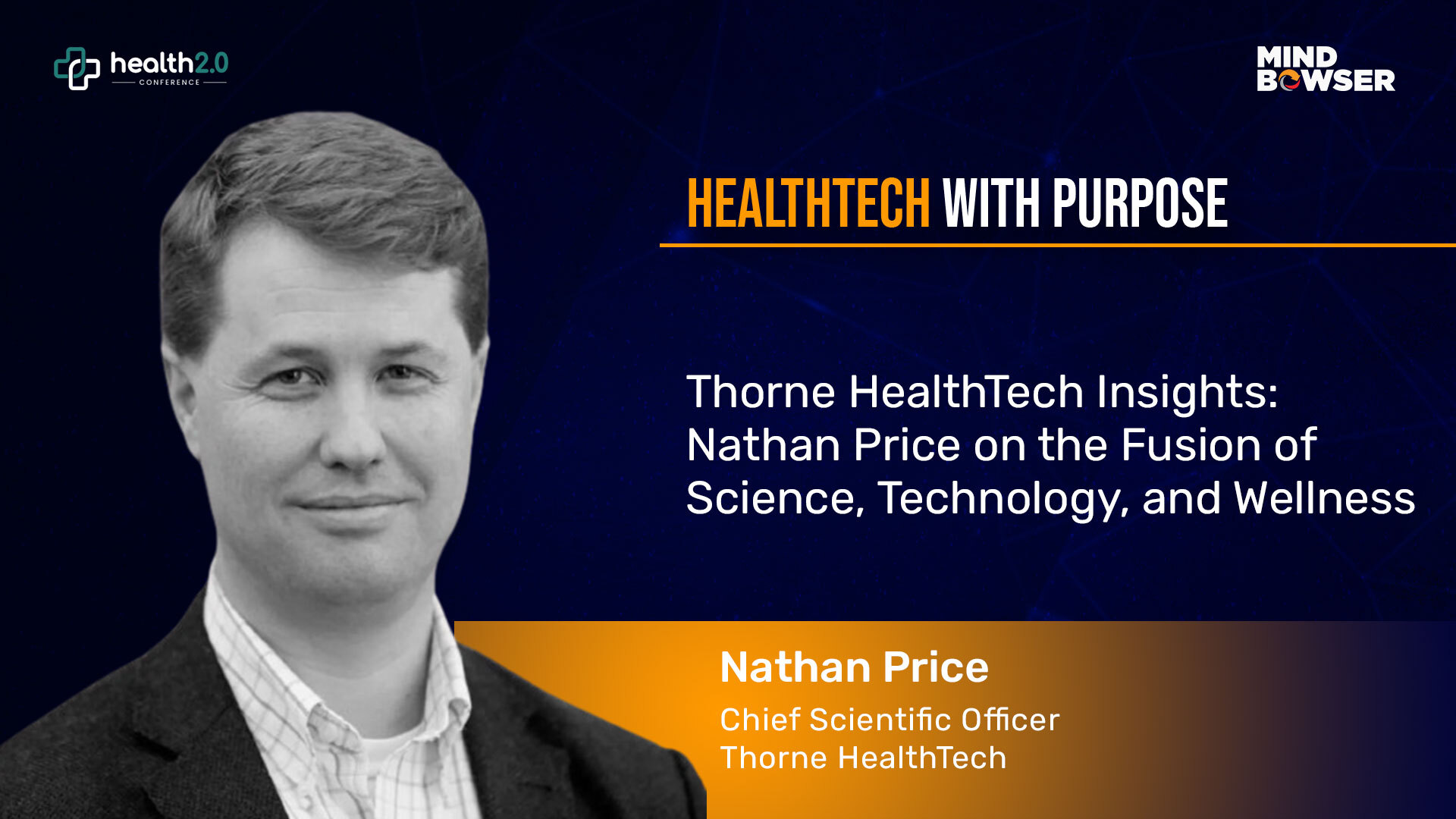
Join us for an enlightening HealthTech with Purpose podcast episode! Nathan Price, Chief Scientific Officer of Thorne HealthTech, delves into precision medicine, scientific wellness, and the future of health tech, exploring groundbreaking concepts like ‘digital twins’ shaping the future of healthcare.
Join David D. Bennett, CEO of pCare, in a transformative podcast on patient engagement through digital transformation in healthcare. Empower patients with pCare’s innovative platform. #HealthTech #PatientEngagement
Partner with us to design, build, and scale digital solutions that drive better outcomes.
Global Tech Teams LLC, 525 Washington Blvd, Industrious at Newport Tower, Jersey City, NJ 07310, United States.
Let’s discuss your goals, workflows, and next steps in a focused consultation call.
 Schedule a Call
















 BLOGS
 NEWSROOM
 CASE STUDIES
 WEBINARS
 PODCASTS
 ASSET HUB
 EVENT CALENDAR