
Johan Folkunger, Group CEO of DNV Imatis, joins Mindbowser’s Rushikesh Kulkarni to talk about making care teams more productive when patients are getting older and caregivers are getting scarcer. A Swede with nearly 30 years in health tech, including leading Philips in Sweden, he took over the Norwegian company in early 2023, two years after DNV acquired it. He describes the core problem DNV Imatis solves: hospital data scattered across legacy silos, forcing nurses who are always on the move to log into system after system. The company integrates and aggregates data from up to 50 sources and puts it in caregivers’ hands. His sharpest point is that technology alone won’t change anything without bold management, process redesign and change management. He sees the future in standards-based ecosystems instead of one system that does everything, in patients engaged in their own care, and in pushing care out of hospitals and into homes. He also covers the company’s plan to grow from a Norwegian base into markets with Nordic-style healthcare, hiring for agility, and a customer who reported 15 to 20 percent productivity gains.
Johan starts from demographics. People are living longer and living with more chronic disease, which piles pressure on health systems, while the number of people available to care for them keeps shrinking. DNV Imatis builds software to free up caregivers’ time, streamline processes and make sure data follows the patient along the care path. He’s clear about who the product serves: the caregivers are the users, and the patients are the people they serve, so the company tries to stay close to the people on the floor and keep learning how they work.
The problem Johan describes will be familiar to anyone who has worked on hospital software: data sits in islands, often in old legacy systems, and a caregiver has to log into several of them, and be trained on each, just to assemble a picture of one patient. DNV Imatis integrates and aggregates data from many sources, often more than 50, and makes it available in the hands of nurses who are mobile workers and never sit in front of a laptop. That same pattern, separate tools with gaps between them, is what trips up programs trying to deliver hospital-level care at home.
Asked for the biggest challenge in digital transformation, Johan points to a persistent misunderstanding: that investing in a platform will solve the problem by itself. Even in the digitally mature Nordics, implementing digital tools in a hospital is rarely straightforward. The tools are enablers that can make a paradigm shift, but only when bold management sets aside time to drive change, redesigns processes, and engages people all the way through the organization. It’s the same reason care coordination often unravels after go-live even when the platform checked every box.
The shift Johan sees across customers and industry is toward ecosystems of solutions built on standards. The electronic patient record is the core of a digital hospital, he says, but it can’t solve every challenge. Customers should be able to combine deeper, specialized systems and add to them over time without heavy cost, “without being hindered” by integration and interoperability. For product teams building into those ecosystems, that’s the argument for one reusable integration layer such as ConnectHealth, which connects a product to 20+ EHRs and runs inside your own cloud. Mark Scrimshire made the standards case from the regulator’s side on this show, warning against islands of interoperability.
DNV Imatis plans to turn from “a Norwegian company with an international touch” into an international company with a Norwegian base, starting with markets whose healthcare resembles the Nordic model, such as the UK and northern Europe, with installations already in six or seven countries. Johan hires for people who embrace change over narrow specialists, and warns that publicly funded procurement means two to three years from first contact to go-live. When he asked one of the largest customers for a number, she told him productivity and efficiency had improved 15 to 20 percent, with more to gain.
[Opening greeting is not captioned.] How are you?
Thank you very much, Rushikesh. I’m very fine. I’m sitting in Norway today, where we have been hit by this somewhat nasty weather named Hans, but today the sun is shining and the future looks bright.
Amazing. So Johan, I would really love to understand a little more about you and your background, and then maybe about the company you are working with. If you can help us with a little more about your background, and how you came about this opportunity.
Right, yes. So to start with, I am actually from Sweden, a Swede, but excitingly enough I have now turned my focus more westbound, and since basically half a year ago I’m the CEO of a Norwegian healthcare company addressing the digital health space.
Time flies, as you typically say, but I think I’ve spent about 25, now 30 years in the health tech sector, in various positions, coming from quite a traditional health tech background with medical devices. I spent a number of years at Philips, as country manager and CEO for Philips in Sweden. I’ve been in investment companies, and I’ve also spent time as CEO of listed companies doing research and clinical development for cancer care. So quite a broad background in various areas. But I actually started my entire career back in the mid-90s in the telecoms sector, and then moved over to healthcare.
Amazing. Quite an extensive, broad background, and thank you for sharing that with us. So can you explain a bit more about what your current organization is doing, and what inspired you to join DNV Imatis?
DNV Imatis is a digital health company developing software solutions to improve efficiency and productivity in the care setting. We have quite a legacy in the company. It was founded basically 30 years ago and has had a tremendous growth trajectory within Norway, but also quite early on internationally, touching a number of what were at the time first movers and front runners in digitizing their health operations. In 2021 the company was acquired by the Norwegian assurance company DNV.
When I was first contacted, in this case by a headhunter, it was quite interesting to have those initial meetings with the combination of the founder of the company and the new owner. That was actually what inspired me at the very beginning: the very interesting combination of a still very entrepreneurial company with strong ambitions, at the same time owned by a large, very strong and well-renowned player with access to and presence in over 100 markets globally. That’s what caught my attention in the beginning. And secondly, DNV Imatis is owned by DNV, which is owned by a foundation with a very strong purpose in making a better world, and that is also very compelling.
Amazing. So that’s why the group as such is quite a big group, doing things in health tech and healthcare.
Yeah. DNV as such operates across a number of business areas, health being one of them, and they are investing heavily into, for instance, digital health, where obviously DNV Imatis is one of their important cornerstones. So we have very strong backing from the owner, all the way up to the board of DNV.
Amazing, amazing. So I would like to understand how DNV Imatis is accelerating the real transformation in healthcare, and what benefits it is bringing for clinical, logistical and administrative teams.
Right. So I think the basis for what we do comes from the fact that healthcare is, and will for the foreseeable future be, a very people-centric type of operation. As we all know, we are growing older on a global scale. As we grow older, we’re also collecting and living with more chronic diseases. This is creating increasingly growing pressure on healthcare systems, and on the other side of this equation, people available to actually care for us when we grow older are becoming a more and more scarce resource.
This is exactly what we’re addressing. We are providing solutions to bring a high level of productivity out of the care system: to help caregivers free up time to care for patients, to help caregivers streamline processes, and to ensure that data is in the right place, truly connected to the patient, following the patient along the patient journey in the care path, and thereby securing a much richer data set around the patient.
Great. So on the health tech side, patients and caregivers are the critical users of the systems you’re building.
Yeah. As I said, we operate in an extremely people-centric environment and context, where the people we serve are the caregivers, and the people the caregivers serve are obviously the patients. So I and the entire organization are always very focused on staying very close to the people who use our solutions, because we constantly need to learn and adapt and truly understand the environment they operate in.
Got it. Pretty interesting, because a lot of solutions have been built, but as you rightly say, a solution that is implemented in the middle of things, where multiple people and multiple users are involved, is absolutely critical, because you have to take care of all the different aspects of the different users who come into play. So how do you manage the overall efficiency of the whole health tech system today? Can you share some examples around that?
You mean practical examples of how we actually support?
Yes.
Yeah. So I think if we start from the perspective of the end user: healthcare systems today are typically very much centered around a lot of data islands, silos with data that is very difficult to get an aggregated grip on from a caregiver’s point of view. You typically have to enter numerous systems to collect various types of data. You have to log into various systems, you have to be trained on various systems, and those systems are many times quite old legacy systems, with quite some hurdles and challenges when it comes to collecting that data into an efficient data aggregation for the users.
That’s exactly what DNV Imatis is very good at. We integrate and aggregate data from a lot of sources, many times up to over 50 different sources, and make it easily available at the fingertips, in the hands, of the caregivers. And caregivers, for example nurses, are mobile workers, right? They don’t sit in front of a laptop. They are constantly on the run, and they need the data basically in their hand.
Yep, yeah. Thanks for sharing that. So from a digital transformation perspective, what are the different things happening, and what are the biggest challenges you see today, especially in healthcare?
Yeah. So I think challenges can be divided into various areas. One is that there is sometimes a low level of digital maturity, depending on markets. We come from a Norwegian and Nordic context, and we are quite mature in the Nordics when it comes to digitization. That doesn’t mean that implementing digital systems or digital tools is necessarily a straightforward or easy task in the hospital or care context.
I think it’s quite often underestimated, and misunderstood to some point, that the digital tools or digital solutions or platforms alone will solve problems. They are important enablers that can truly make a paradigm shift, but this needs to be combined with bold management that really sets aside time to drive change, because technology alone will not drive change. It’s how you change processes and really engage people all the way through the organization to actually embrace new ways of working. I think that is a challenge when it comes to digitization: the sometimes prevailing misunderstanding that investing in a certain technology will simply solve things easily. So it’s very much about change management, and upper management investing time to make change happen based on the technology. That is a challenge I think is quite prevalent.
Got it, got it. So basically adopting the technology, that’s the challenge you’re calling out. You may put some good tech in place, but if it is not used the way it is intended, and adopted the way it is intended, it will not solve the problem. Eventually, the processes are the key.
Yeah, right, exactly.
Great, great. So can you give us certain trends from a digital transformation perspective that you feel are picking up and are going to solve a lot of challenges as we go along? Any trend you are seeing from a digitization perspective that is actually picking up and helping the healthcare industry?
I’m not sure it’s correct to call it a trend, but there are many efforts being reinforced and growing, which is bringing together ecosystems of solutions, as opposed to one solution that solves everything. I’m particularly thinking of electronic patient record solutions, which are extremely important and truly a core of digitizing healthcare, but they cannot solve all the various challenges you have.
So a strong trend, from the customer side but also from the industry side, is to work toward standards where you can actually build sustainable solutions based on ecosystem thinking, i.e., combining various deeper, capable systems together to build an overall operational setting. So: standardization, and ecosystem thinking where, through standards, various solutions can be combined. And if you think of it from a customer point of view, you should be capable over time of adding to your system without too much cost. You should be capable of expanding your digital systems and your digital way of working without being hindered in relation to integration of data and interoperability.
Yeah. Interoperability, as you called out, is probably one of the key things.
I think another trend is that we need to more and more engage and enable patients to also use digital tools in their care journey. There’s a lot of power built into the possibility of having patients involved and engaged in their own journey. Examples of this are how we can push care out of the hospitals and provide care more in the homes and in the primary care setting, and digital tools will definitely support those trends as well. We simply cannot have all patients staying hospitalized. We need tools and processes to push care more out of the hospitals.
I think another important area is the preventive side of things: how can we use digital tools to take a more preventive approach, to prevent patients from becoming ill or sick to the level where they need to be hospitalized? There are many promising possibilities at that end as well.
Great. So more power going into the hands of patients, so to say. They can choose to get treated in the comfort of their home instead of going to the hospital, and technology can play an important role in making that happen. That’s one of the key things; that’s where the world is moving.
Yeah, for sure. That is one of the strong trends, yes.
Awesome. So as the CEO of DNV Imatis, I want to understand your goals for the company. How is the expansion looking, and what strategies can you share with us?
I will try to share it at a certain level, let’s put it that way. Being acquired by DNV has provided us with the tools and the possibilities to become quite ambitious in our plans. We are by definition a scale-up, and we have set quite an ambitious plan for growth, piggybacking on DNV’s presence globally.
I used to say we are a Norwegian company today with an international touch, and we are to turn that around to become a truly international company, but still with a Norwegian base. Because it is historically with our Norwegian customers that we have been innovating. We have very large customers in Norway that have put a lot of trust in the company, and those serve as a very strong platform for us to also grow exponentially outside of Norway, internationally: taking basically 30 years of experience and relationships with Norwegian customers that are front runners in how to digitize care, and bringing that with us out to a number of markets.
So we are setting ourselves toward quite a strong growth path. I’ve been in the health tech sector long enough to know that being successful in your home market is not equal to being successful on an international level. But that’s again where DNV as an owner comes into play and can really be a lever for us in how we make that growth come about.
The strategy there is to target countries, to begin with, that have a healthcare setting at least a little similar to the Nordic ones. You can imagine what markets those could be if you look at, for instance, the UK, the Nordics, as well as northern Europe. So that’s how we start. We already have installations in six or seven countries outside of Norway, and that’s something we will of course continue to expand from those bridgeheads going forward.
Great. So in this exciting journey, and I know you’ve been a part of it for the last six months, what are the challenges you see? What keeps you awake at night?
Well, I sleep quite well, to be honest. But one thing that consumes a bit of my time is how to get hold of good people for our growth journey. I’m not sure my view on that is very different from others’, but I think it’s extremely important, in the business and the context we operate in, to build an agile organization. By that I mean we must not look only for the best people in the sense of the best specialists. As we grow the company, we need to look for people who can embrace change, who have an agile mindset, and who are prepared to take on various assignments as we move forward. Because one of the things that is certain in the industry we operate in is that it changes fast, and therefore we also need to be able to constantly change the direction we move in, with adjustments, and to have an organization capable of coping with that. So recruiting good people is a very important thing for us to constantly think about and work with.
You asked about challenges. Another challenge I think is fair to mention is that we operate in a business segment that is, to a very large extent, run by state or regional funding, meaning we are in public procurements. That means the business cycles, from when you start to engage with a customer until you’re actually installed and running, are quite long, typically somewhere between two to three years. That requires us to have stamina and a long-term view in how we engage with customers. It requires us to be very good at how we act as partners. We are in our relations with customers for the long term. When I meet and talk with customers, the system we provide is typically one of the top five most strategic systems they have in a hospital. So that also requires us to build very long-standing relations, and to have that capability in our company.
Amazing, amazing. Moving ahead, I just wanted to understand a couple of things. From a future of digital health perspective, what are the key areas where you see tech playing a very important role in shaping the future of digital health?
Maybe not too surprising, but I’m very certain that health tech will play a very strong role going forward, as it has over a very long time. And tech in my world is not only software, where we are. Tech is also medtech, and they play a paramount role in building more sustainable healthcare systems.
Again, as I touched upon earlier in our conversation, healthcare providers are facing tremendous challenges going forward, and there is a very strong drive and a very strong need for embracing technologies that can truly support this and truly bridge the shortage of people. Technology is not there to replace people, because we will always need people to care for people, but it will be able to support in a completely different way than we have seen so far. It’s very popular today to talk about AI, for instance, and for sure AI will bring very interesting possibilities to offload and free up time for caregivers and care professionals.
Yeah, yeah. I was just about to say that.
And I always want to repeat this, and put my finger on it: technology always has to be combined with forward-looking decision makers who understand the potential and are prepared to take bolder decisions. It always needs to be combined with process optimization and change management. Those are also important parameters for how tech will play a role going forward.
Great, great. The last couple of questions from my end. First, can you share some insights or lessons you have learned from your previous leadership positions? You have had a very illustrious journey so far. How are your previous leadership positions in the medtech business helping you approach leading DNV Imatis?
I think this goes back to what I said earlier: healthcare is very people-centric. We provide care to people, and it’s people providing care to the patients. That requires a way of thinking in an organization like DNV Imatis. It requires us to constantly have the patient in mind. We are an engineering-heavy company, but we also have a lot of people who come from a caring background, who have been out in the hospitals. At DNV Imatis it is very much about blending these two different professions together: making the engineering side constantly understand the care setting and what the care professionals’ daily work looks like, and at the same time having the side of the company that understands and comes from a care setting constantly feed that back into the company. This is an ever-ongoing journey, which we pay a lot of attention to.
Then, a more general way I have always approached leadership, which is just becoming more and more important, is to provide accountability, and the flip side of that is of course to require people to take ownership. If you have a clear vision of where you’re heading, clear goals and clear objectives, you can create an organization that is very self-motivated and build engagement around that. I believe very much in that way of leading a company. My entire role is to make sure people in the company have the right prerequisites and the right conditions to carry out their work. Of course, I and the management team need to provide a North Star and make it clear where we are heading, but given that that is there, I think leadership is very much about creating the right conditions for people to get there.
Great. Some great insights there. Thank you for sharing those. And the final question from my end: what is the impact you feel your company is bringing to the whole healthcare space? If you want to share a real-life example or a case study, I think we would all love to hear it.
Let me put it like this: I was amazed to learn, very early, how impactful our solutions are for our customers. I’ve worked in a number of companies with very strong and compelling solutions, but what stands out with DNV Imatis is that every time I talk to customers, time after time I experience and learn how much time we free up, and how much more ease we bring to the care setting, for the people who are on the floor and the people who are behind them, planning.
I talked to one of our largest customers just before the summer and asked, “Can you give me a bit more tangible numbers on what we are contributing?” The lady I was talking to said they have improved productivity and efficiency in their operation by, quote unquote, 15 to 20 percent, and, quote unquote, there is much more to gain from it. I was actually quite amazed by that, because those numbers are far bigger than I was expecting to hear.
So we have a number of case studies, and we have had a report done by a third-party institute, and I’m still learning on this side, but I’ve already met so many customers making clear to us that what we bring is truly impactful. It’s just a fantastic position to be in. And a challenge for us is of course to build the message around that and make more people understand it. We have people traveling from various corners of the world to look at our references, and they are typically always quite amazed by what they see and what they learn by talking to their peers. So we are making truly strong impacts.
Awesome. Great to hear that, Johan, and thank you for sharing your story, the details about your company and how it’s creating an impact, and the growth plans. I hope everybody loved your views on technology, and especially on the adoption and process side. Thanks for joining us on HealthTech with Purpose. It was a pleasure talking to you.
Thank you, thank you.
At the time of recording (published August 2023), Johan Folkunger was Group CEO of DNV Imatis AS, a Norwegian digital health company whose software integrates and aggregates hospital data for caregivers, owned since 2021 by DNV. He had joined about six months earlier. A Swede, he started his career in telecoms in the mid-1990s and described nearly 30 years in health tech, including serving as country manager and CEO of Philips in Sweden, roles in investment companies, and CEO of listed companies in cancer care research and clinical development. He was appointed CEO of Boule Diagnostics effective June 2026. LinkedIn: not in the YouTube description.
Pulling data from a dozen hospital systems into one view your care team will actually use? Tell us what you’re connecting and we’ll show you how we’d approach it.

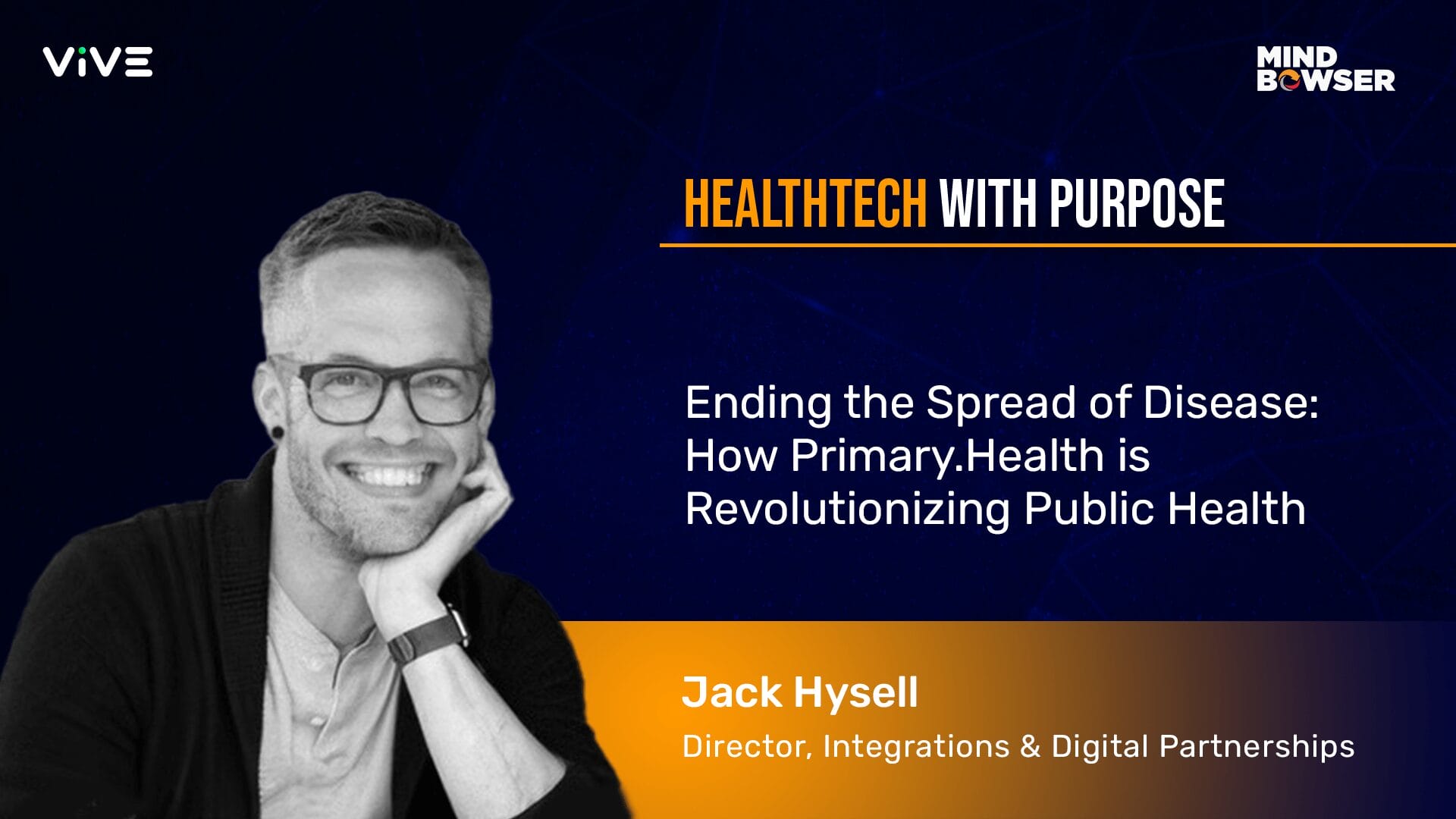
Welcome to the HealthTech with Purpose podcast! In this episode, Ayush Jain talks with Jack Hysell, Director at Primary.Health. Jack shares his journey from hairstyling to computer science and discusses Primary.Health’s platform for testing and vaccination services. Learn about their mission, focus on health equity, efforts in interoperability, and the role of AI in healthcare.
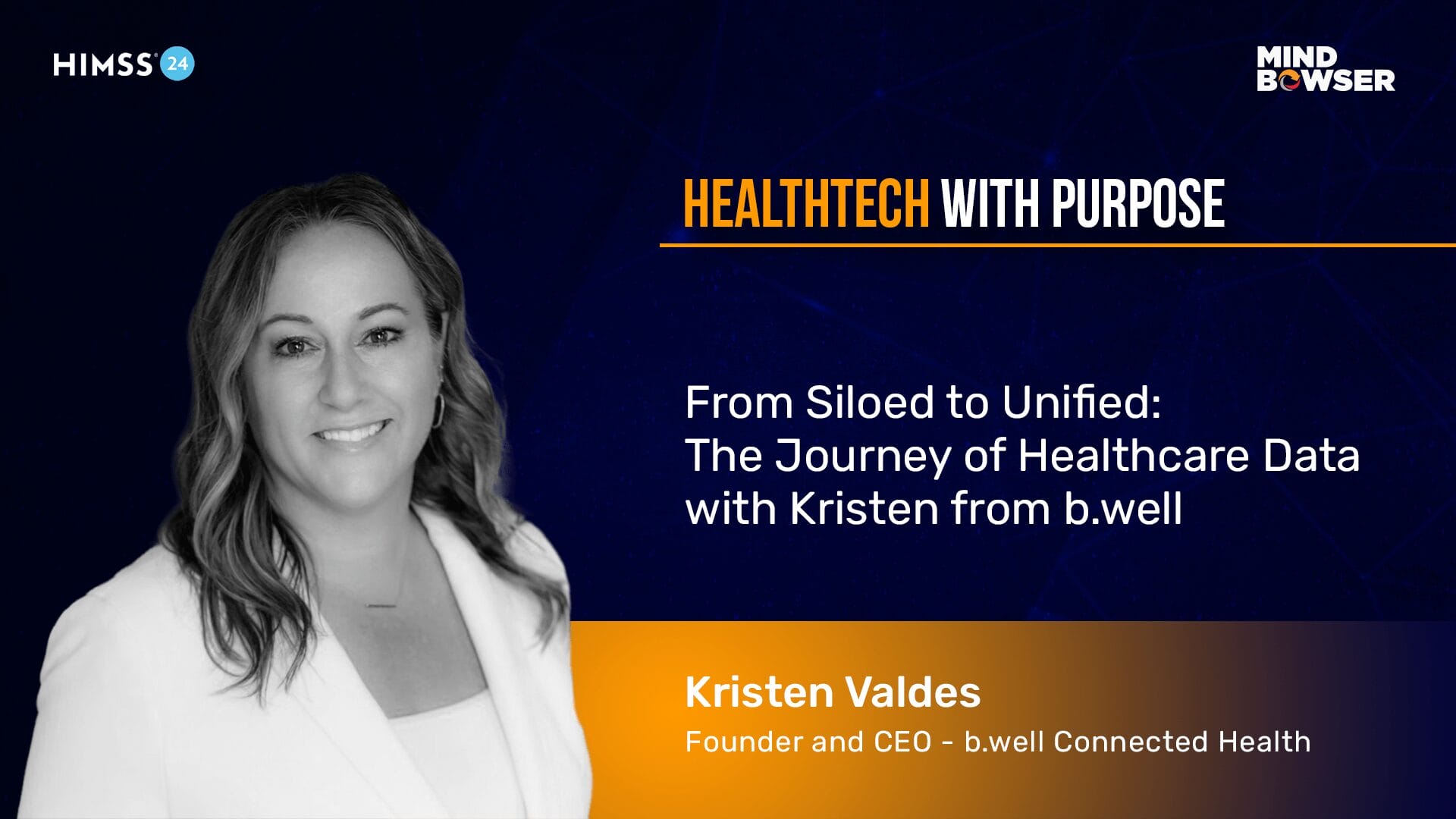
In the HealthTech with Purpose podcast, Kristen Valdes, CEO of b.well Connected Health, discusses unifying healthcare experiences. She founded b.well to connect consumer data, using open standards for control and care coordination. Collaboration among stakeholders is crucial for transformation. Kristen also explores Generative AI and LLMs potential in healthcare data analysis, despite coding system challenges. Benefit from insights on improving patient care.
Partner with us to design, build, and scale digital solutions that drive better outcomes.
Global Tech Teams LLC, 525 Washington Blvd, Industrious at Newport Tower, Jersey City, NJ 07310, United States.
Let’s discuss your goals, workflows, and next steps in a focused consultation call.
 Schedule a Call















 BLOGS
 NEWSROOM
 CASE STUDIES
 WEBINARS
 PODCASTS
 ASSET HUB
 EVENT CALENDAR