













 BLOGS
BLOGS  NEWSROOM
  CASE STUDIES
  WEBINARS
  PODCASTS
  ASSET HUB
  EVENT CALENDAR





















Hospitals are using remote patient monitoring (RPM) to extend care beyond the facility, manage chronic disease, reduce readmissions, and support higher-risk patients after discharge. The right starting use case matters as much as the technology choice itself. A program that nails one use case before scaling typically reaches positive ROI 6-12 months faster than one that tries to launch broadly.
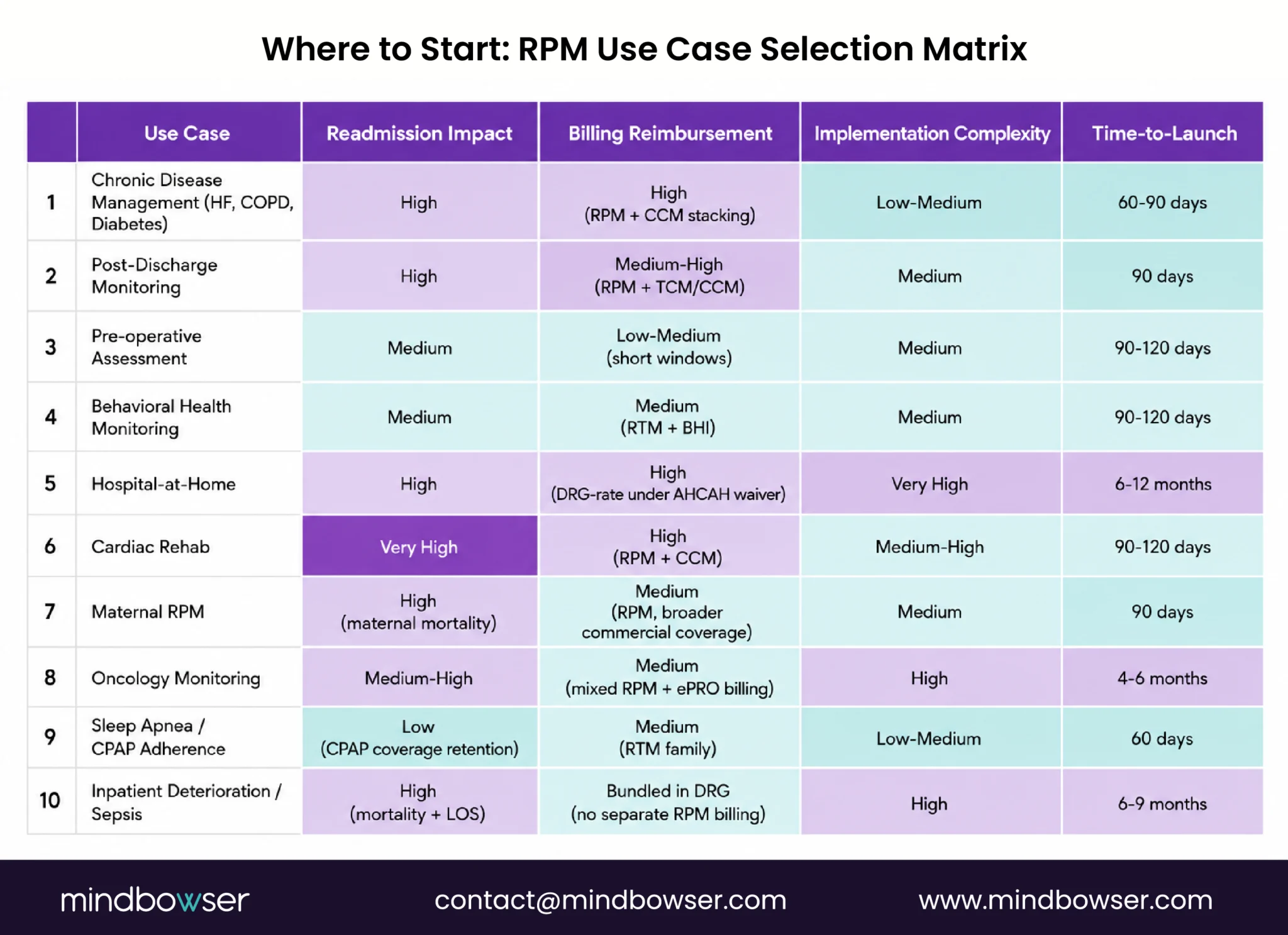
This guide covers 10 RPM use cases hospitals are running in 2026, what each requires, what billing codes apply (including the new CY2026 codes 99445 and 99470), and a selection matrix to help decide which to start with.
How to Choose Your First RPM Use Case
Most RPM programs that struggle in year 1 chose the wrong starting use case. Five criteria separate use cases that pay back fast from those that take 18+ months to break even.
1. Readmission Risk in Your Population
Use cases tied to high-readmission conditions (heart failure, COPD, post-surgical) generate the largest avoided-readmission value. CMS HRRP penalties make these use cases particularly attractive for hospitals already paying readmission penalties.
2. Condition Prevalence in Your Panel
Volume drives unit economics. A use case that fits 200+ patients in your existing chronic care panel hits scale economics faster than one that fits 30 specialty patients. Diabetes, hypertension, and post-discharge use cases typically have the largest patient pools.
3. Billing Code Fit
RPM (99453, 99454, 99445, 99457, 99458, 99470, 99091) and RTM (98975-98985 family) cover different use cases. Behavioral health and musculoskeletal therapy use RTM. Physiologic monitoring uses RPM. Maternal monitoring sits in a hybrid space depending on what’s being tracked. Verify billing fit before clinical workflow design.
4. EHR Integration Depth Required
Use cases requiring bidirectional EHR write-back (e.g., post-surgical recovery flowing alerts to the surgeon’s chart) are higher-effort to launch than use cases that operate on standalone monitoring (e.g., chronic disease education and engagement). Start with the integration depth your IT team can deliver in weeks, not quarters.
5. Existing Care Management Capacity
A use case that requires a net-new clinical FTE is harder to launch than one that adds to an existing care manager workflow. Hospitals with established CCM programs already have the staffing model for chronic disease RPM. Hospitals without CCM should plan for staffing as a separate initiative.
The fast-payback combination: high readmission risk + large panel + clear billing code + minimal EHR integration + existing care management capacity. Chronic disease management for HF/COPD/diabetes hits all five for most hospitals, which is why it’s the most common starting point.
The Top 10 Remote Patient Monitoring Use Cases for Hospitals
Here are the top 4 remote patient monitoring use cases with a wide range of benefits for both patients and providers-
1. Chronic Disease Management (e.g., Heart Failure, COPD, Diabetes)
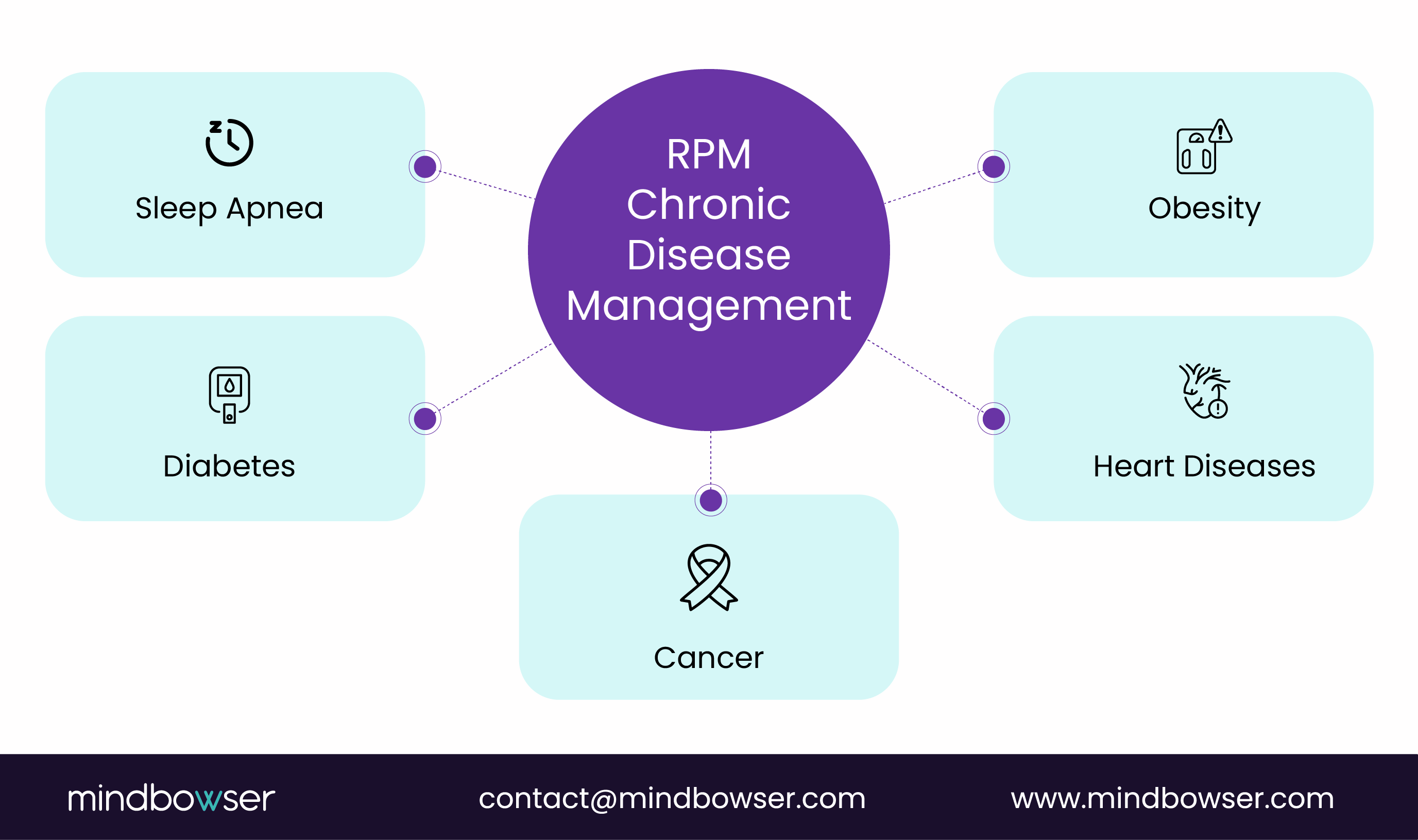
Remote Patient Monitoring (RPM) is changing how chronic diseases like Heart Failure, COPD, and Diabetes are managed. With RPM, healthcare providers can monitor patients’ vital signs and symptoms remotely, using devices like blood pressure cuffs and glucose monitors. This allows for continuous monitoring of key metrics such as blood pressure, blood glucose levels, and oxygen saturation from patients’ homes.
Remote patient Monitoring services help patients stick to their medication schedules by providing personalized reminders and monitoring tools. This improves treatment outcomes and reduces the risk of complications from missed doses.
By enabling proactive monitoring, RPM helps reduce hospital readmissions. Healthcare providers can detect changes in patients’ health early and adjust treatment plans accordingly. This prevents serious symptoms that could lead to hospitalization, saving costs and improving patient outcomes.
RPM devices are tailored to specific conditions, like heart failure and diabetes. They provide real-time data that helps healthcare providers deliver personalized care to each patient. RPM closes the gap between patients and healthcare providers, improving medication adherence, preventing complications, and ultimately enhancing patient outcomes. As RPM technology advances, its impact on chronic disease management will only continue to grow.
Billing codes that apply: 99453 (setup), 99454 or 99445 (device supply, 16+ days vs 2-15 days), 99457/99470 (management time, 20+ min vs 10-19 min), 99458 (additional 20-min increments). For chronic disease with concurrent CCM enrollment, stack 99490/99439 for ~$244 PPPM gross revenue per dual-enrolled patient. See the RPM billing guide for the full code economics.
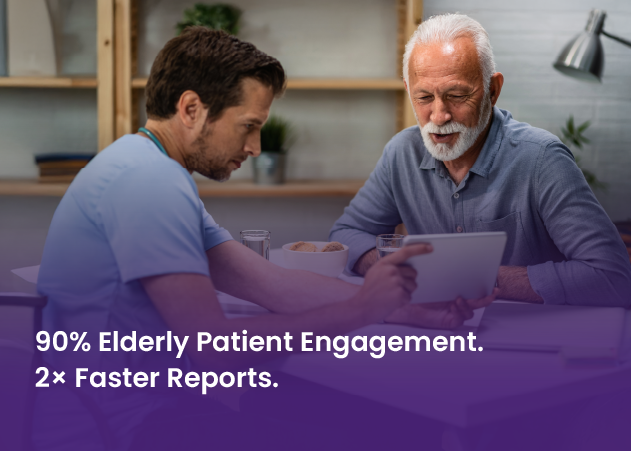
Outcome benchmark: Mindbowser-built RPM platforms serving high-engagement chronic care populations have sustained 90% patient engagement, the upstream lever for hitting the 16-day data threshold for 99454 reimbursement.
See How We Built a Workflow-First RPM System for Elderly and High-Risk Patients
In one RPM program for elderly and high-risk patients, we built a workflow-first RPM system with Bluetooth-enabled device integration, automated vital capture, and rule-based triage. This helped care teams identify risk earlier, improve follow-up, and reduce the risk of avoidable readmissions. The simplified engagement model also contributed to a 90% patient engagement rate.
Transforming Healthcare with Remote Patient Monitoring
- Discover key use cases like managing chronic conditions and post-discharge care
- Learn how RPM improves patient engagement and clinic efficiency
- Understand the potential benefits for healthcare providers

2. Post-Discharge Monitoring: Enhancing Patient Recovery with Remote Care
Remote Patient Monitoring (RPM) helps patients transition smoothly from hospital to home by allowing healthcare providers to monitor their health remotely. This means doctors can monitor vital signs and symptoms, even after patients leave the hospital.
RPM is beneficial because it helps catch any problems early on. By keeping track of patients’ health, healthcare providers can spot signs of trouble before they become serious. This early intervention can prevent the need for patients to go back to the hospital.
RPM also helps with remote care coordination. It allows healthcare teams to work together efficiently, sharing information and adjusting treatment plans as needed. This ensures patients get the support they need, even at home.
Post-discharge cardiac and pulmonary rehab is one of the highest-risk gaps in outpatient care. Patients are sent home with instructions but no real safety net. We built a cross-platform app that fills that gap: doctor- and therapist-curated exercise programs paired with live Bluetooth heart rate monitoring, so patients complete their rehab at home within clinically safe heart rate zones. Daily, weekly, and monthly analytics let the care team track commitment and flag patients who are falling behind before it becomes a clinical issue.
In short, post-discharge RPM supports patients’ recovery by keeping track of their health, catching problems early, and coordinating care between healthcare providers.
Billing codes that apply: Same RPM family (99453, 99454/99445, 99457/99470, 99458). Also consider Transitional Care Management (99495, 99496) for the 30-day post-discharge window, billed by the discharging provider. TCM and CCM are mutually exclusive in the same month, so plan the sequence: TCM in the first 30 days post-discharge, then transition to CCM + RPM stacking.
Outcome benchmark: Post-discharge RPM programs typically target 20-30% reduction in 30-day readmissions for the conditions they monitor. At the CMS HRRP penalty rate, that translates to meaningful avoided cost on top of RPM reimbursement revenue.
3. Pre-operative Assessment and Risk Stratification: Enhancing Surgical Planning with RPM
Remote Patient Monitoring (RPM) is invaluable in gathering essential pre-operative data to optimize surgical planning. RPM, healthcare providers can collect vital health information from patients before surgery, ensuring a complete understanding of their medical status.
RPM offers several benefits in the pre-operative phase, including improved patient outcomes and reduced surgical risks. By continuously monitoring patients’ health status leading up to surgery, healthcare providers can identify any potential concerns earlier. This early intervention allows adjustments to be made to the surgical plan, ultimately improving patient safety and reducing the risk of postoperative complications.
Integration of RPM solutions with electronic health records (EHR) is essential for seamless data management and communication between healthcare teams. By integrating RPM data into the patient’s EHR, healthcare providers can access a comprehensive overview of the patient’s medical history and pre-operative assessments. This streamlined approach ensures all relevant information is readily available to inform surgical decision-making and optimize patient care.
RPM plays an important role in pre-operative assessment and risk reduction by gathering essential data, improving patient outcomes, and reducing surgical risks. Integration with EHR systems further improves the efficiency and effectiveness of surgical planning, ensuring that patients receive the highest quality of care throughout their surgical journey.
Billing context: Pre-operative monitoring sits outside the standard RPM CPT family because it’s typically short-duration and condition-specific. Some programs use 99453 setup + 99445 (NEW 2026, 2-15 day device supply) for pre-op windows. Verify medical necessity documentation before billing for short pre-op windows.
Outcome benchmark: Pre-operative optimization programs that include RPM-driven monitoring (BP, glucose, weight) typically reduce surgery cancellation rates and post-op complication rates by 10-20% for high-risk patients.
4. Remote Behavioral Health Monitoring: Supporting Mental Well-being with RPM
Remote Patient Monitoring (RPM) isn’t just for physical health – it’s also proving to be a valuable tool for monitoring mental health conditions like depression and anxiety. By utilizing RPM, healthcare providers can keep track of patients’ mental well-being from a distance, ensuring timely intervention when needed.
One of the key benefits of RPM in behavioral health is increased patient engagement. Patients can participate more actively in their care by regularly reporting their mood, symptoms, and behaviors through RPM platforms. This increased engagement can lead to better treatment outcomes and improved overall mental well-being.
RPM also allows for timely intervention for mental health issues. Healthcare providers can monitor changes in patient’s mental health status in real-time, enabling them to intervene quickly if there are signs of worsening symptoms or potential crises. This proactive approach helps prevent the escalation of mental health issues and reduces the risk of hospitalization or other adverse outcomes.
RPM solutions have the potential to improve medication adherence in behavioral health. Patients can receive personalized reminders and monitoring tools to help them stay on track with their medication routines. Following prescribed treatments is essential for managing mental health conditions effectively and preventing relapses.
RPM is a valuable tool for monitoring mental health conditions, increasing patient engagement, enabling timely intervention, and improving medication adherence. By incorporating RPM into behavioral health care, healthcare providers can better support patients’ mental well-being and enhance the overall quality of care.
Billing codes that apply: Behavioral health monitoring uses RTM codes (98975, 98979, 98980, 98981) rather than RPM. 98979 was redesignated as “sometimes therapy” in 2026, which affects modifier requirements (GP/GO/GN) when furnished by PT/OT/SLP. Behavioral Health Integration codes (99484 for general BHI, 99492/99493 for Collaborative Care Model) can stack with RTM for patients with both behavioral and chronic medical conditions.
Outcome benchmark: Behavioral RPM programs report 30-50% improvement in medication adherence and 20-30% reduction in psychiatric ED visits for patients with monitored depression or anxiety.
5. Hospital-at-Home / Acute Hospital Care at Home
The CMS Acute Hospital Care at Home (AHCAH) waiver, originally launched in November 2020, has been extended multiple times and remains an active reimbursement pathway as of 2026. Approved hospitals can deliver inpatient-level care in the patient’s home with continuous RPM as the monitoring backbone.
A typical hospital-at-home RPM stack includes: continuous vital sign monitoring (BP, pulse, SpO2, temperature), connected scales, in-home video visits with the attending physician, and 24/7 nurse-on-call. The clinical model substitutes home care for hospital admission for a defined set of acute conditions (CHF exacerbation, pneumonia, COPD exacerbation, cellulitis are most common).
Why it works: Hospital-at-home patients have lower fall rates, lower hospital-acquired infection rates, and shorter total length of stay than matched inpatients, while costing the system meaningfully less per episode.
What it requires: Stronger device infrastructure than chronic care RPM (continuous vs spot-check vitals), a paramedic or RN home visit capability for emergencies, and a dedicated command center model staffed 24/7. This is the most operationally intense RPM use case.
Billing context: Reimbursed under the AHCAH waiver at the inpatient DRG rate. Verify your hospital’s waiver status and approved condition list with CMS before launching.
Best for: Health systems with 200+ beds that already have a strong home health agency or partner, plus the IT infrastructure to support continuous monitoring at scale.
6. Cardiac Rehabilitation (Post-MI, Post-CABG, Post-PCI)
Cardiac rehab programs that include RPM extend the supervised rehab window from the typical 12-week clinic-based program into a longer monitoring tail at home. The clinical goal is to catch arrhythmias, heart failure exacerbation, and medication non-adherence before they escalate to readmission.
A typical cardiac rehab RPM deployment monitors heart rate, blood pressure, weight (for fluid retention), and patient-reported symptoms (chest pain, dyspnea, palpitations). Bluetooth-enabled cardiac wearables can add ECG snapshots for arrhythmia detection.
Why it works: Cardiac patients have one of the highest readmission rates of any inpatient population (heart failure readmissions are CMS HRRP-penalized). Sustained monitoring for 90-180 days post-discharge meaningfully reduces 30-day and 60-day readmissions.
What it requires: Integration with the cardiology service line’s existing rehab program, cardiac-specific alert thresholds, and a clinical staffing model that includes cardiac-credentialed RNs or APPs for high-risk alert review.
Billing codes that apply: Standard RPM family (99453, 99454/99445, 99457/99470, 99458). Concurrent CCM stacking is common for HF patients. RTM codes (98980/98981) for therapeutic monitoring of cardiac rehab adherence are a possible additional billing layer for some programs.
Outcome benchmark: A Mindbowser-built cardiac rehab RPM platform with Bluetooth heart rate monitoring delivered measurable engagement improvements in disease-specific cardiac monitoring workflows for a cardiac rehabilitation provider.
Best for: Hospitals with active cardiology service lines and CMS HRRP exposure on heart failure readmissions.
Build a Custom RPM Solution for Better Patient Outcomes - Book a Consultation with Our Healthcare Experts
7. Maternal Remote Patient Monitoring (Preeclampsia, Gestational Diabetes, Postpartum)
Maternal RPM addresses the gap between scheduled OB visits and the high-acuity windows of late pregnancy, delivery recovery, and the postpartum period. The US has the highest maternal mortality rate among high-income countries (649 maternal deaths in 2024), and most preventable maternal deaths involve conditions detectable by monitoring: preeclampsia, hemorrhage, and cardiomyopathy.
Common maternal RPM protocols: home BP monitoring for preeclampsia screening (especially in late 2nd / 3rd trimester high-risk patients), continuous glucose monitoring for gestational diabetes, and postpartum BP + symptom tracking through the 6-week postpartum window where 60% of pregnancy-related deaths occur.
Why it works: Studies show maternal RPM for preeclampsia reduces hospitalization rates without adverse outcomes, and gestational diabetes RPM cuts preeclampsia incidence rates from ~15% to ~5.8% in monitored populations.
What it requires: OB-aware alert thresholds (different from non-pregnant adult ranges), integration with the obstetric service line and labor & delivery, and protocols for the postpartum continuity window where care teams change.
Billing context: Standard RPM codes apply. UnitedHealthcare’s restrictive 2026 commercial RPM policy still considers hypertensive disorders of pregnancy a covered indication, making maternal RPM one of the few use cases with broad commercial payer coverage even under tightening policies.
Best for: Hospitals with OB service lines, especially those serving rural or geographically dispersed patient populations where in-person visit frequency is limited.
For deeper protocol details, see the Mindbowser maternal RPM guide.
8. Oncology Monitoring (Chemotherapy Side Effects, Post-Surgical Recovery)
Oncology RPM closes the gap between infusion-day visits and follow-up appointments, where chemotherapy side effects (nausea, neutropenia, dehydration, infection) drive avoidable ED visits and admissions.
A typical oncology RPM deployment combines symptom-tracking ePRO (electronic patient-reported outcomes), connected vital sign devices (temperature for febrile neutropenia detection, weight for dehydration), and asymptomatic alerts that flag cycle 2-5 risk patterns specific to the chemo regimen.
Why it works: Symptom-monitored oncology patients have lower ED utilization, longer treatment adherence, and in some studies, longer overall survival compared to standard of care. The Memorial Sloan Kettering ePRO randomized trial (Basch et al, published in JAMA 2017) showed a 5-month median overall survival improvement (31.2 vs 26 months) along with lower ED utilization (34% vs 41%), lower hospitalization (45% vs 49%), and longer time on chemotherapy (8.2 vs 6.3 months) for patients self-reporting symptoms via a web-based PRO platform.
What it requires: Oncology-specific symptom alert protocols (CTCAE grading), integration with the oncology EHR (often Epic Beacon), care team workflows that triage symptom alerts within hours, and clear escalation paths to the on-call oncologist or APP.
Billing codes that apply: RPM codes for vital sign monitoring (99453, 99454/99445, 99457/99470). ePRO symptom tracking sits in a more ambiguous billing space; some programs bill 99091 for physician interpretation. Verify per-program before scaling billing assumptions.
Best for: Cancer centers and hospitals with active medical oncology service lines, particularly those running outpatient infusion programs.
9. Sleep Apnea / CPAP Adherence Monitoring
Sleep medicine programs increasingly include RTM-based CPAP adherence monitoring as standard practice. CMS requires documented CPAP adherence (typically 4+ hours per night for 70% of nights over a 30-day window) to continue covering CPAP rental beyond the initial 90-day trial. Monitoring gives sleep clinics a way to intervene early when adherence is at risk.
Modern CPAP machines include cellular modems that report adherence data automatically. The RPM/RTM workflow layers clinical interpretation, patient outreach for non-adherent users, and documentation for CMS compliance on top of the device-reported data.
Why it works: CPAP non-adherence is high (30-50% of patients fall below the CMS threshold without intervention). Early outreach to non-adherent patients meaningfully improves long-term adherence and prevents loss of CPAP coverage.
What it requires: Integration with the major CPAP manufacturer cloud platforms (ResMed AirView, Philips Care Orchestrator, others), sleep-trained staff for clinical interpretation, and outreach workflows that can scale across hundreds of monitored patients per FTE.
Billing codes that apply: RTM codes 98976 (respiratory device supply, 16+ days), 98985 (respiratory, 2-15 days, NEW 2026), 98980/98981 (treatment management). RPM codes do not apply to CPAP-only monitoring because CPAP machines are therapeutic devices, not physiologic monitors.
CMS adherence rule (LCD L33718): PAP coverage continuation requires use of at least 4 hours per night on 70% of nights during a consecutive 30-day period within the first 90 days of therapy. Failure to meet this threshold ends Medicare coverage of the device. The treating physician must also conduct a face-to-face reevaluation between Day 31 and Day 91 with documented adherence and clinical benefit.
Best for: Sleep medicine programs, pulmonology service lines, and integrated care programs that include sleep diagnosis as part of broader chronic care.
10. Inpatient Deterioration / Sepsis Early Warning
Inpatient RPM (sometimes called continuous monitoring or telemetry-adjacent monitoring) deploys connected vital sign devices on med-surg floors to catch clinical deterioration before patients meet rapid response criteria. The clinical goal is preventing unrecognized deterioration that drives ICU transfers, code blue events, and inpatient mortality.
Common implementations layer wearable continuous vital sign devices (BP, HR, SpO2, respiratory rate) over standard nurse vital sign rounds, with AI-driven trend analysis to flag patients at risk of sepsis, respiratory failure, or hemodynamic deterioration before traditional MEWS or NEWS scores would trigger.
Why it works: Studies show continuous monitoring on med-surg units reduces unrecognized deterioration events, ICU transfers, and in some implementations, inpatient mortality. The clinical case is strongest for sepsis, where every hour of delay in antibiotic administration is associated with approximately 1.8% increase in hospital mortality for septic shock patients. Earlier recognition translates directly to earlier antibiotics and lower mortality.
What it requires: Inpatient-grade monitoring devices with reliable signal quality, integration with the inpatient EHR for nursing workflow, an alert governance model that prevents alert fatigue, and clinical workflows that translate alerts into intervention.
Billing context: Inpatient deterioration monitoring is generally bundled into the DRG and not separately billable as RPM. The economic case rests on avoided ICU transfers and shorter total length of stay rather than direct reimbursement.
Best for: Health systems with active sepsis improvement programs, MEWS/NEWS score initiatives, or value-based contracts where inpatient mortality and complication rates affect reimbursement.
Embrace the Future of Healthcare with RPM
Remote Patient Monitoring (RPM) stands as the most innovative solution for transforming healthcare delivery across various domains. RPM enables hospitals and healthcare organizations to proactive intervention, reduces healthcare costs, and enhances the overall quality of care.
Hospitals are using RPM to improve patient engagement, reduce avoidable readmissions, and support more efficient care delivery across growing patient populations.
For those eager to learn more about RPM technologies and best practices, Mindbowser offers a wealth of resources and expertise.
Our RPM development services support custom workflow design, EHR integration, Bluetooth-enabled device connectivity, rule-based triage, and HIPAA-compliant remote monitoring infrastructure.
Mindbowser’s RPM solutions empower healthcare providers to deliver personalized care and drive better patient outcomes, from pre-operative assessment to post-discharge monitoring.
Explore the right RPM use case for your hospital. Mindbowser helps healthcare organizations design custom RPM solutions aligned to clinical workflows, EHR integration, and long-term scalability.
Remote Patient Monitoring (RPM) utilizes innovative devices to gather vital health data from patients’ homes, enabling healthcare providers to remotely monitor their conditions in real-time. This data helps in early intervention, better management of chronic diseases, and overall improvement in patient outcomes.
Post-discharge RPM ensures a smooth transition for patients from hospital to home by enabling healthcare providers to monitor their health remotely. By detecting any issues early on and coordinating care efficiently, RPM supports patients’ recovery, reduces the risk of complications, and minimizes the need for hospital readmissions.
Patients with chronic conditions, recent discharges, cardiac issues, diabetes, COPD, and high-risk recovery needs often benefit the most from RPM programs.
Hospitals should begin with patient populations that have high readmission risk, ongoing monitoring needs, and clear operational or financial value from better follow-up.
Chronic disease management for heart failure, COPD, and diabetes is the most common starting use case because it combines high readmission risk, large patient panels, clear billing codes (RPM + CCM stacking), and lower implementation complexity than acute or specialty use cases.
Yes. RPM (99453, 99454, 99445, 99457, 99458, 99470, 99091) and CCM (99490, 99439, 99491) can be billed for the same patient in the same month as long as time is documented separately for each program. Stacked, this generates approximately $244 per patient per month in gross Medicare reimbursement.
Chronic disease management (especially heart failure) has the largest body of randomized controlled trial evidence. Maternal RPM for preeclampsia has growing evidence. Oncology symptom monitoring has the most surprising outcome evidence (Basch et al’s MSK ePRO trial in JAMA 2017 showed a 5-month median overall survival improvement).
60-120 days for chronic disease, post-discharge, and behavioral health use cases on existing infrastructure. 4-6 months for oncology and pediatric specialty programs. 6-12 months for hospital-at-home programs that require new operational capability.