A proactive digital health platform needed wearable data, EHR records, and lab reports in one view. We built a mobile app that parses lab reports with AI, runs OCR on scanned documents, and turns all of it into one patient-facing health summary.
Talk to our teamPatients and clinicians at a digital health platform built around health equity, precision medicine, and patient empowerment.
One mobile app for wearable connectivity, EHR integration, lab report parsing, OCR, and health visualization.
WearConnect, OneRecord RESTful API, ChatGPT, and an OCR pipeline.
Patient engagement, prediction quality, and clinician review time, after the platform went live.
increase in patient interaction, concentrated in blood report parsing and wearable connectivity
accuracy in AI-generated disease predictions based on lab and wearable data
reduction in doctor time spent reviewing lab reports
Patients and providers checked three disconnected sources before every decision: a wearable app, a portal login, and a PDF lab report.
Wearable data, EHR records, and lab reports lived in separate systems. Patients ended up doing the integration themselves.
Lab reports, clinical notes, and scanned documents came as PDFs and images, with no path into an AI model without a parsing layer.
Real-time wearable streams, EHR records, and unstructured documents needed to stay accurate and responsive together.
Patients and clinicians needed one summary they could read quickly, with the clinical detail still intact underneath.
Built on Mindbowser's WearConnect accelerator, the OneRecord RESTful API, and ChatGPT, with an OCR pipeline for scanned documents.
WearConnect ingests biometrics from the devices patients already use as readings arrive. Patients and providers both receive real-time risk notifications, so a change in readings reaches both sides as it happens.
The OneRecord RESTful API pulls patient records from multiple health systems into a single view. Patients no longer log in to a separate portal for each system.
ChatGPT parses raw blood report results into plain-language summaries for doctors and patients. The parsed data also feeds disease predictions built on lab and wearable inputs.
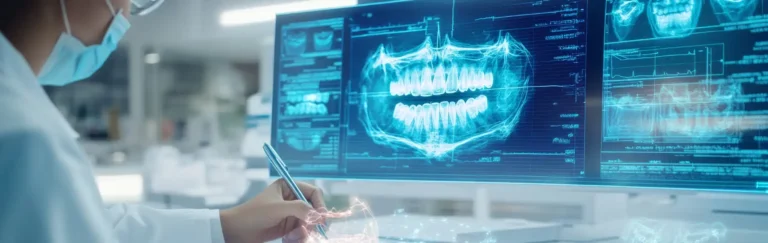
An OCR pipeline converts scanned PDFs, clinical notes, and medical imagery such as X-rays into structured text. That text feeds the AI model, and graphical views show health metrics over time.
Tell us which data sources you need to bring together and we will scope the build.
Partner with us to design, build, and scale digital solutions that drive better outcomes.
Global Tech Teams LLC, 525 Washington Blvd, Industrious at Newport Tower, Jersey City, NJ 07310, United States.
Let’s discuss your goals, workflows, and next steps in a focused consultation call.
 Schedule a Call








 BLOGS
 NEWSROOM
 CASE STUDIES
 WEBINARS
 PODCASTS
 ASSET HUB
 EVENT CALENDAR