
Ayush: Hello, Marco! How are you today?
Marco: Hello! I’m fine. Thank you very much for inviting me good to meet you.
Ayush: Yes, pleasure is all ours. Thank you so much for taking out the time. And that as we get started, why not? We get to know a bit of an introduction and background about you. So right from you. So go ahead, please, introduce yourself.
Marco: Okay? I’m the CIO of the Reggio Emilia Local Health Authority, which is basically a network of 6 hospitals in Northern Italy, Reggio Emilia is a town located halfway between Milan and Bologna. For those of you who are familiar with Italian geography and the the local health authority, of course, comprises also the public health and all the outpatients infrastructures, including also social care. So it’s very diverse and very articulated healthcare environment, I’m part of the regional, the Emilia Romania Regional healthcare system, as probably some of the our business are familiar with Italy, is divided into 20 different regions, and every region is, has been autonomous in with, met with respect to many different aspects, including healthcare. Therefore every region has a different healthcare system in in a way, in terms of management, in terms of development, in terms of actually, also the digital strategy.
Ayush: Great, great good to know. So Marco, tell us more about the recent changes in the Italian healthcare space, especially for hospitals. What kind of transformations the hospitals are currently looking into?
Marco: Well, the COVID, the pandemic has been a major change in the overall healthcare strategy and the digital healthcare strategy at the same time. What happened is, first of all, after the COVID pandemic, we received the significant amount of funding the what’s called the recovery and resilience program which is funded by the European Union. So this major wave of funding also brought with it a new national level strategy with respect both to healthcare in general and to digital healthcare. This is new, because, as I was telling you, Italy has always been divided into 20 different regions with respect to all aspects related to healthcare. Suddenly, in the post-COVID experience, we started to see programs at the national level.
And so this has been a major change. One of the major programs is actually the development of a nationwide electronic health record system which is a very challenging and very ambitious project. And this project basically wants to bring up the experiences of some regions, especially Northern Italy, that had developed at the regional level. And a unique health, and electronic healthcare system and bring it to a national level. So basically, the new wave is trying to leverage experiences positive experiences from the different regions to a national level.
At the same time, the major policy change in terms of healthcare which affects, of course, digital healthcare is the development of what we call beyond hospital healthcare going outside of the hospital. So most of the funding, a significant amount of funding coming from the recovery residents program is focused towards public health and out of the hospital health, including at home care, including social care including telemedicine, of course. So and this is something new, because most of digital healthcare in the past have been focused mostly, if not only on the hospital.
So we are going beyond the hospital. And this is a major change for many different aspects in terms of organizational change but also in terms of cyber security. If you think about it, because suddenly we have to reach some sort of a comfort zone, very difficult and dangerous comfort zone which used to be the hospital. Suddenly now we are forced to actually go beyond the hospital, which means basically increasing the risk in terms of cyber security enormously. So. There are many challenges brought by this new wave of changes.
Ayush: Right right. And I think you touched upon a lot of pointers. So maybe let’s dig a bit deeper into some of them. So let’s start with the recovery and resilience program. So for the you know, for the people outside of Italy, for example, or outside of Europe. Can you give a bit more context about this program? What it entails? What is the purpose of it, and how it impacts? You know the health ecosystem.
Marco: Well, the recovery within this program stems from the experience of COVID. And basically every single aspect of it comes from some aspects that have been shown during COVID not to work the major being the fact that the different regions, the 20 different regions in Italy coped with COVID in a very different way somewhere more advanced, some were less advanced and less organized. So one of the key aspect of the recovery residence program is to have a nationwide program that should. We’ll see how it will go because it’s ongoing right now should basically level up all the regions with many different with respect to many different aspects, including digital healthcare.
And some aspects are, related with the fact that there was very little exchange of information between organizations during COVID. And that’s where actually, the idea of having a unique nationwide electronic health record system, comes from the idea that all different organization, mostly public, but not necessarily. The type of system is mostly public, but we have a significant part of the private of the healthcare system, which is private and and growing actually. And all these organizations should actually bring their information at the national level in order to have the patients basically migrate through different to the different regions and through different organization, and bring their healthcare information with them. It’s not a new idea with me talking about this for the last 20 years. But in Italy they’re actually doing it leveraging experiences of this of some regions, especially the North, and trying to do it, so that in case of a new pandemic, but also for the regular times, I mean, pay patients can actually be travel around the healthcare in healthcare ecosystem, both public and private, anywhere in the geography of Italy, and bring their information with them.
This project is also connected towards your European perspective, but some of you might have heard of the European Healthcare Data Space EHDS, that’s a major pro-project. And if you think about it today, National Electronic Health Record is nothing but the Italian little bit of the overall European system. So the National Health record.
The Fascicolo Sanitario Elettronico. That’s the name of the Italian will be the actual source of information for the European healthcare data space. So this project is in line with the overall European perspective, the overall European project. So this line stems from the COVID. Another aspect that actually came out of the COVID. Experience is the fact that our hospitals were probably especially Northern Italy. But roughly around all of Italy they were ready to cope with regular business, regular healthcare business, but as soon as a major wave of COVID came they collapsed.
That’s something that has happened all over the world. But in Italy, especially as you remember, Northern Italy was one of the first epicenters of the of the pandemic. And this show basically that the hospital was the first frontier. And that’s something not normal. I mean, patients had to be taken care of before they got to the hospital in order to make it possible for the hospital to survive, and actually and just to take care of the most acute patients. So this is basically taught us a lesson which we had already been telling. If you think about it in conferences like 15 to 20 years ago. We’ve always said that the primary care, public health is the first frontier that should manage most of the health care.
And finally, we’re now doing it. So we are putting a lot of investment and a lot of effort, both in terms of organization and digital infrastructures in the general practitioners, general care and the public health system. This, both in terms of digital, but also physical infrastructure. In Italy we are building look many different smaller infrastructure all the community hospitals like you do have in the UK. We never had those healthcare centers for outpatient outposts spread along the the geography of the different regions in order to have the hospital be mostly focused on acute care and bring everything that can be brought outside of the hospital.
Outside, both in terms of infrastructure building acts, actually, organization having professionals work there, and at the same time a digital ecosystem which has to be, of course, all connected with the hospital and at the national level. So the recovery and resilience program is basically a major funding that goes into many different aspects, physical buildings technology build and buying a lot of technology also in terms of medical devices to actually provide this new structures with basic technology organization building up new type of professionals, new type of doctors, new type of nurses that actually will work in these new environments and digital infrastructure everywhere, to get everything connected.
Ayush: Right. Right. Makes sense. And we have, of course, you know, heard this before, like you know, countries like US, or even in India, like very large countries as well as other countries in Europe, for example, France or Germany, they’re all say, trying to unify. You know, systems be able to provide continuity of care between hospital to home and health equity is a big thing today to be able to provide this access to each and every person as a CIO who’s seeing all of these changes happening you know. Can you share some of the best practices that you are probably bullish upon that, this is really going in the right direction, and, if possible, any challenges that you would like to also point out that you foresee happening as this change is happening.
Marco: Well, It’s bringing this ecosystem to be connected is something that, from a technical point of view, is solved. I mean, we have standards we have networking infrastructures.
Ayush: Do you have something similar to like FHIR, like?
Marco: Exactly. I mean FHIR with it’s fairly stable and commonly used. We’ve had HL7 other versions of HL7 in the past. So it’s not a technology issue building a connected ecosystem digital ecosystem for healthcare. It’s a matter of actually planning it and having all the stakeholders involved in it from the bottom up. Okay, one of the major issues that is coming up is coming out of the recovery resilience program is that it is a top down approach. It comes from the National Government. We are establishing a national Electronic Health Record. Now, everybody has to pump information into the electronic health record. And this information, of course, it’s all on FHIR. Because of this being a new project, it’s all FHIR based. So from a technical point of view, it is possible it is perfectly feasible.
The only thing is that you have to get down to the bottom of the overall ecosystem, which means all hospitals in Italy. Starting from the very large Research Institute, like we do, have it here in Reggio Emilia, but also the small hospital up in the mountains. All these structures
have to. Suddenly, be willing and able to actually integrate to their local ecosystem towards an ecosystem that is outside this. It requires a lot of management from the colleague CIOs at every different level, because you have to think about the fact that all these structures have been independent for the last 30 years, basically in terms of development of their digital ecosystem. So suddenly opening everything to a general view is something that is not always that easy. Because there are infrastructures that are ESB-based. They have their own electronic medical record very advanced. So it’s fairly easy to actually scale it up and ship all the information to
a higher level fairly easy. There are structures, hospitals out there in Italy which are very well, very behind in terms of digital development. They have independent silices.
They have absolutely no local NPI to actually refer to. They do not have interoperability within the organization. And suddenly they’re required to actually ship information to a higher level.
So the main challenge that we’re actually facing is that from the top down they are building a unique infrastructure. They’re forcing everything to everybody to have a unique electronic health record system to get the a uniform situation all around Italy, not taking enough into account the fact that all the different bits and pieces, all the different leaves of this giant tree, all these different hospitals and local healthcare organizations have developed in a very different way. Some are very mature and can easily connect to this. Some are extremely mature, and they never actually meant, yeah, never actually reach the local interpolability level. So it is, What’s happening right now is, of course, that major organizations, major hospitals are actually joining the project fairly easily. And we’re getting a fairly good success in terms of data actually gathering on the national platform.
But of course, reaching all the areas of Italy and all the different sizes of organizations is something that is proving to be very challenging. Okay, so we, the risk behind it is to have a major infrastructure, that is, just merging the major organization and not the little leaves. The little hospitals are those that were actually should have been the more active in managing the pandemic. So probably we’re missing the point them from many aspects. But being a fairly new, very new project actually has to be, of course, fine-tuned in the ongoing development.
Ayush: Okay, So since, like you and anyways mentioned that it’s something that is coming from the top. So is there any legislation incentivizing or putting fines against a certain date that everybody has to say, you know. Follow this timeline like what kind of push the Government is making to enable this.
Marco: Okay, of course, there is a national legislation for this, especially because, all this project requires in terms of privacy in terms of data management, personal data management. It requires a national legislation to actually take care of all the all the appropriate measures in order to be sure that no citizen is compromised in their privacy of their data and their ownership of their data. Therefore there is a national legislation. This legislation was actually in place has been in place for several years, and the new, the recovery resilience program basically gave the fuel to actually get the project starting, which is the funding basically. So the key behind it is that we’re all required to actually connect to the system.
And in order to receive the funding which covers all of the different aspects, including buildings, including organization, including improving the local digital healthcare. We have to connect to the National Healthcare Electronic Health Health Record. Therefore, there are no real fines. But if we want to get the money to actually get everything else done. Then we need to ship the information there, and we have KPIs to reach by the end of next year. By the end of 2025 therefore the the national legislation has put it this way. You have to do it. If you want money to actually reconstruct and rethink and revise all the digital ecosystem of your organization. We will give you money. But if you accept this money, then you have to connect to the Electronic National Health record.
So it’s, on paper. It’s a win-win situation. We win because we receive funding to actually restructure the local organization digital infrastructure, and at the same time the national level wins in the sense that we will be required to ship our information to the national level.
So on paper it should work.
Ayush: Make sense, so coming to another aspect that you had touched upon Marco is, you know, since now this change is happening, I believe, any disruption opens up opportunities for you know, new companies or old companies you know, to be able to participate. And I know there are so many digital health companies that you know want to build and participate in this revolution. So can you shed some light around, what are the kind of opportunities that exist for say, larger companies, but, more importantly, smaller companies that would like, let’s say, that’s a startup that wants to change health and one, what kind of opportunities? And, second, how they can participate? So is there a path to it? Or is it something that they have to reach out to each and every hospital separately? Or is there some sort of marketplace they can look into like placing themselves, or to get an audience. So how is that whole startup ecosystem getting fueled in health?
Marco: Well, the whole national resilience, construction, and resilience program has been based on national procurement process, and this was not really good for startups and small companies, because, of course, once you get a procurement process from the top national institutions, of course, they tend to actually stick to the big players. Nevertheless, these big players suddenly were overwhelmed by the amount of projects that they needed to actually to implement. Therefore they are currently involving smaller companies to actually help them build all these new infrastructures.
And because you have to think about the fact that you have the top level, which is the like the National Electronic Health Record. But at the same time, in order to ship information up there with many organizations that actually restructuring the basics, NPIs, electronic medical records laboratory system tax system. And there’s been a major wave of actually renewing all the systems of building or getting new systems from scratch because many organizations did not have an EMR system. And so they’re building them from scratch. So what’s happening basically is that the 4 big players, because in Italy we have 4 big players in the healthcare market and the digital healthcare market are actually joining with minor smaller companies that actually help them actually implement this project at the local level.
So this is the situation with respect to the current market the nice part for smaller companies, is it? Suddenly something new is opening up because part of the side effects of their recollection or recovery program is actually the fact that telemedicine is exploding. Okay? Exploding in the sense that we have a lot of funding for telemedicine and telemedicine, of course, is at the frontier. There are many small companies that are offering new solutions. So that’s probably a great opportunity for these startups or companies that are actually improving their existing systems, and that scaling them up regional or national level, and at the same time having a finally an interoperable national level, or even at the regional level and merging of all information suddenly opens up really, the business intelligence and data analysis field which we’ve already. We’ve always spoken about it. We’ve spoken about AI possibilities in the future.
So we could do this. We could do that if we had all access to all the information. Suddenly, we do have access to all the information, and it’s building up a huge repository of information, structured information because the whole world, the general project is based, not on PDFs. It’s based on actual structured information that we’re gathering. And so suddenly, there’s really a huge market opening up for real medical information analysis which ranges from simple BI-tools up to extremely sophisticated AI systems that could be implemented. So that’s a huge market that is opening and will probably be exploding in the next few years. Because suddenly, the
these projects basically built the building blocks of a real medical information processing at a large scale, not a single organizational level. So this is really a great opportunity that is opening up for startups and the innovative companies.
Ayush: Right. Right. Well said. And definitely like I said, the disruption always opens the best space for startups to grow. So it’s exciting to see especially the evolution that, in Italy, from what I hear, is driven top down, which is very important, like many of the times. Unless you know, there’s a buy-in from the stakeholders, it is very difficult to change. So the good thing I can appreciate about Italian leadership is that they are you know, like driving it from the forefront. So that’s great to hear as a CIO, of course, one of the things that would be like the top 2 things on mind of a CIO today is security. So I can’t skip, but ask about you know the security aspects, Marco. That. You know, I’d say your take on security and you know some of the things that you are always making sure, because when you are taking decisions, you probably have to always think about, you know. Does that keep my system safe or not? Does that increases or decreases my risk. So what are the things as a CIO that come to mind? You know, in terms of security measures that you are taking, and the future of security.
Marco: Well, these are hard times for cyber security, in the sense that after COVID, we’ve had an explosion of cyber security threats and attacks regardless of the fact that we were investing or not, it just exploded, and in Italy healthcare. The healthcare sector is now the second sector in terms of number of attacks overall. So we are a major target. And this was a starting point on this, we basically built designed a general program, like the recovery and resilience program, that is basically destroying and rebuilding everything. And these are the worst times, because when you build, extend, and start extending beyond the hospital your digital infrastructure. These are the worst times in terms of security, in the sense that of course you are more fragile because you are concentrating on other aspects and not strictly on cyber security. We had built a cyber security project, the cyber security paradigm for the hospital in the last 10 years. And suddenly we are. We have to review it completely because we’re going beyond the hospital. We’re changing all the different subsystems because we are renewing them. So it’s the perfect time to be attacked. Actually, in a sense. At the same time, though, we have the opportunity to actually invest in cyber security because part of the funding coming from the program from the national program is devoted to actually cyber security. So these are the best times actually to start rethinking about your cybersecurity strategy and actually getting the right tools and getting the right changes in the organization.
Nevertheless any time of change is really the worst time in terms of cyber security, in the sense that you’re more fragile. So these are hard times, and hope to get through them, but they’re also the opportunity times where you can start rethinking on a larger scale about cybersecurity because all our cybersecurity approach in the last 10 years was retrofitting reverse engineering of our architectures to fit cybe security here and there were possible. Now it’s actually an opportunity to actually redesign the cybersecurity strategy from scratch. So it’s a great opportunity, scary, but a great opportunity.
Ayush: Right, right. No, true that. And how do you see the advent of AI in the hospital systems? I mean, of course no guesses that you know the newest solutions would use, AI, you know, to operate efficiently to create more value, and so on. But I want to really know. CIO’s perspective on you know, when you assess AI solutions on, when you look at the future of using AI into a hospital system. How do you perceive that? And how do you see, you know, like those use cases where it is useful, where we should avoid it? Where, you know. Let’s wait and watch. So what’s your vision?
Marco: Well, we’re, of course, really, literally flooded by offers of different types of AI becoming, yeah. Everybody just would love to have their AI solution implemented. In one of our organization, especially in our case. We hire searches in oncology. Therefore, we have several companies that actually would love to have their solutions implemented in our environment.
The thing is that you can broadly classify the AI solutions into two different categories. One is clinical decision support systems mainly aimed at diagnostic or even therapy therapeutic processes. Those are the nice and fancy ones. I love them. Coming from a university environment myself, I’ve been a researcher. I love the idea of systems that actually help the diagnostic process and improve the quality of the diagnostic process. Nevertheless, seeing the system as a whole, there’s a lot more value in another. The second type of AI systems which are the process optimization AI systems, those AI systems that not look at the single case at the helping the specific, patient, but rather happy. The organization re-manage their workflows in a way that is more optimized and more efficient.
Just to give you an example, having an AI system that within the emergency department schedules dynamically, the radiology examination and all the workflow within the emergency department in order to make it more efficient and get overall gain. It’s not as fancy as having the system that interprets the image. And though, does all fancy stuff, it’s not as that impressive, but nevertheless, the value is a lot more in this specific year. In this specific timeframe, we are in great suffering in terms of resources, medical and nurses, nurses and we are flooded by a huge amount of patients and different kinds of pathologies and chronic pathologies increasing. So our emergency right now is not really getting better at the diagnostic process is getting better at organizing our resources in the sense that if we have AI systems that improve our efficiency 10% in terms of managing the emergency department patients or oncology patients or chronic patients. That’s a lot more value than actually improving their diagnostic process. They’re both extremely valuable. But in this specific time.
What we would probably invest a lot more in is AI systems that improve processes that improve the workflows that improve our overall efficiency, improve our productivity overall as healthcare organization, because that’s a real emergency. Right now.
Ayush: Right, very well said a follow-up question does Italian healthcare system also faces problems around staff, burnout and staff turnover and shortage, etc, just like what we had more in the US.
Marco: Yeah, that’s a worldwide issue. Actually, we have all this issue. We have very few doctors, especially in specific types of disciplines like emergency department anesthesiology and other increasing areas that are in deep shortage. We have a shortage of nurses, actually Italy is in great trouble, because, unlike other countries that have invested in the professional role of nurses and other non-medical non-doctor professionals, we have invested very little, therefore we do not only have a shortage in doctors. We also have shortage nurses, and the combination of the two is terrible.
And also, of course, this brings to burnout because the the two things are related, of course. So when you have burnout the facts on the digital on the digital strategy is, of course, that you have to focus on burnout and start and the resources optimization your EMR has to focus these areas. There’s no way around it. And every project that you implement in terms of digital change will be so hard a lot harder than it used to be in the past when we implemented the first EMR systems in a way, of course they would that there has been resistance in the past, because that’s part of human nature resisting change.
But in a way they were enthusiastic about the fact about the new possibilities and getting all these new fancy ways of managing information and helping their patients. Now it’s a lot harder because every change is upon it sits upon the fact that they’re suffering in terms of burnout in terms of lack of resources, frustration in the fact that they cannot cure the patients as they would love to as they were used to be in the past. Therefore, when you try to impose in a way, a change in terms of digital infrastructure. Okay, we are changing your EMR systems because the new system is nicer. It pumps up information to the new, the Fancy National Electronic Health Record. It’s very hard to convince them, because these are hard times that we simply love not to have any further change, because they’re struggling on an everyday basis on their everyday life. Therefore, having also these new digital changes, really is hard, and it’s very hard also, in terms of psychology to get the messages like we are implementing this new system because we’ll help you on the mid-long term in managing your resources. You have to focus on the short-term also, because otherwise their suffering really brings it rejection of any change.
Ayush: Right? Right? No, I can imagine definitely and you know, the staff being one of the most important stakeholder. And for them technology may not be something that they may think on day like as they start their day when they start their day. You know, things that would be on their mind would be patients. And you know, how do you manage that conflict?
Great! Thank you so much, Marco. I think this has been a very exciting discussion plenty of learnings. And we appreciate you know the way you explained and the openness that you shared with the whole healthcare ecosystem of it. Thank you so much. We appreciate it, and wish you all the best with the endeavors that you are looking to build in the hospitals and with all the future initiatives. Thank you so much.
Marco: Thank you.
In this episode of the HealthTech with Purpose Podcast, Marco, CIO of Reggio Emilia Local Health Authority, discusses the changes in Italian healthcare post-COVID-19. He highlights the impact of the EU recovery program, the shift towards beyond-hospital care, and the challenges faced by the healthcare system.
Discussion Highlights:
✅ The evolving Italian healthcare landscape following the COVID-19 pandemic.
✅ Impact of the EU-funded recovery and resilience program on hospitals and care systems.
✅ Shift towards beyond-hospital healthcare and its cybersecurity challenges.
✅ Opportunities for startups and innovative companies in digital health solutions.
✅ Addressing staff burnout and shortages in healthcare.
✅ Emphasis on resource optimization and improving workflows to enhance healthcare efficiency.
Welcome to the HealthTech with Purpose podcast! In this episode, we’re excited to host Paweł Elbanowski, the Co-Founder and COO of StethoMe. Paweł shares insights into StethoMe, an innovative electronic stethoscope designed for home use, making lung health monitoring accessible for everyone. Tune in to learn about his journey, the challenges of developing medical technology, and the impact StethoMe is making in the healthcare industry.
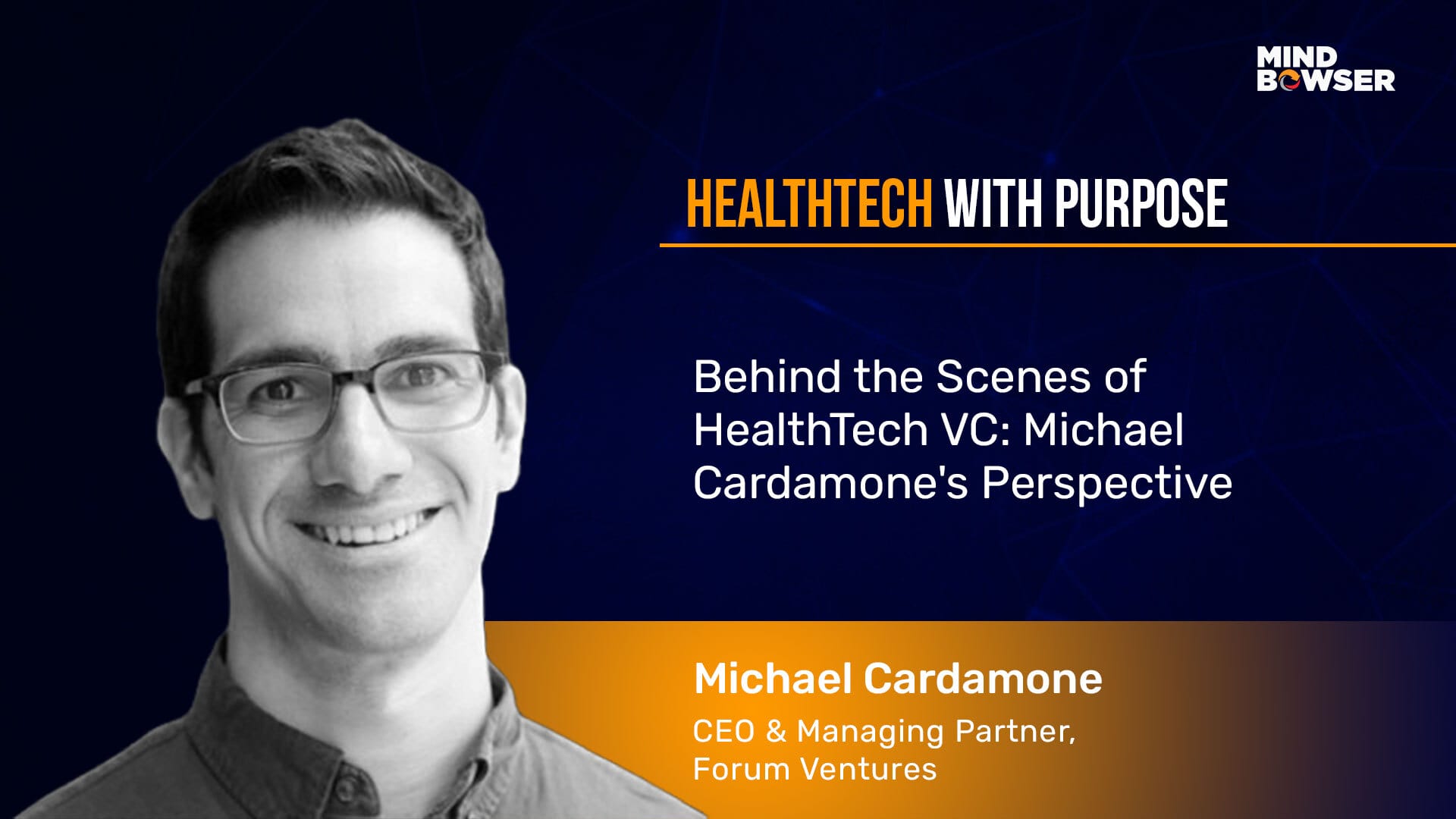
Welcome to the HealthTech With Purpose podcast! In this episode, we chat with Michael Cardamone, CEO & Managing Partner at Forum Ventures. He shares his journey in the startup ecosystem and discusses Forum Ventures’ focus on early-stage B2B and health tech investments, highlighting companies like Remo Health and Finni Health. Michael notes a trend towards increased early-stage funding and explores AI’s potential in healthcare. He emphasizes the importance of market understanding and early engagement with key stakeholders.
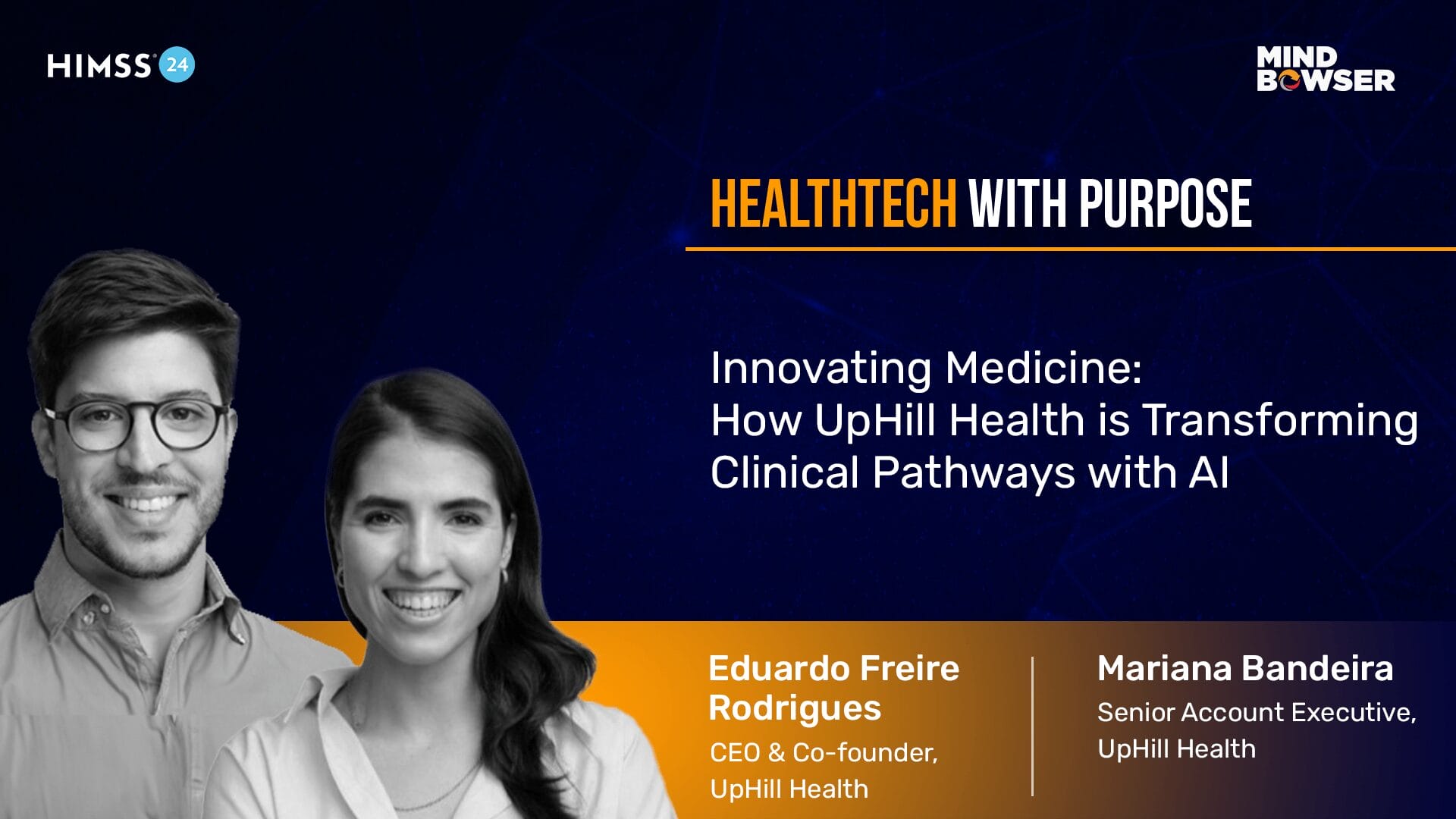
Welcome to HealthTech With Purpose podcast! In this episode, Eduardo Freire Rodrigues, CEO of UpHill Health, and Mariana Bandeira, Senior Account Executive, discuss how UpHill’s care orchestration platform enhances hospital efficiency and patient outcomes. They explore automating clinical pathways, addressing healthcare data integration, the importance of clinician buy-in, and grounding AI in clinical evidence. UpHill’s software acts as a second layer to electronic health records, freeing clinicians to focus on complex cases. The episode also highlights the future of care integration and patient self-empowerment.
Partner with us to design, build, and scale digital solutions that drive better outcomes.
Global Tech Teams LLC, 525 Washington Blvd, Industrious at Newport Tower, Jersey City, NJ 07310, United States.
Let’s discuss your goals, workflows, and next steps in a focused consultation call.
 Schedule a Call










 BLOGS
BLOGS  NEWSROOM
  CASE STUDIES
  WEBINARS
  PODCASTS
  ASSET HUB
  EVENT CALENDAR