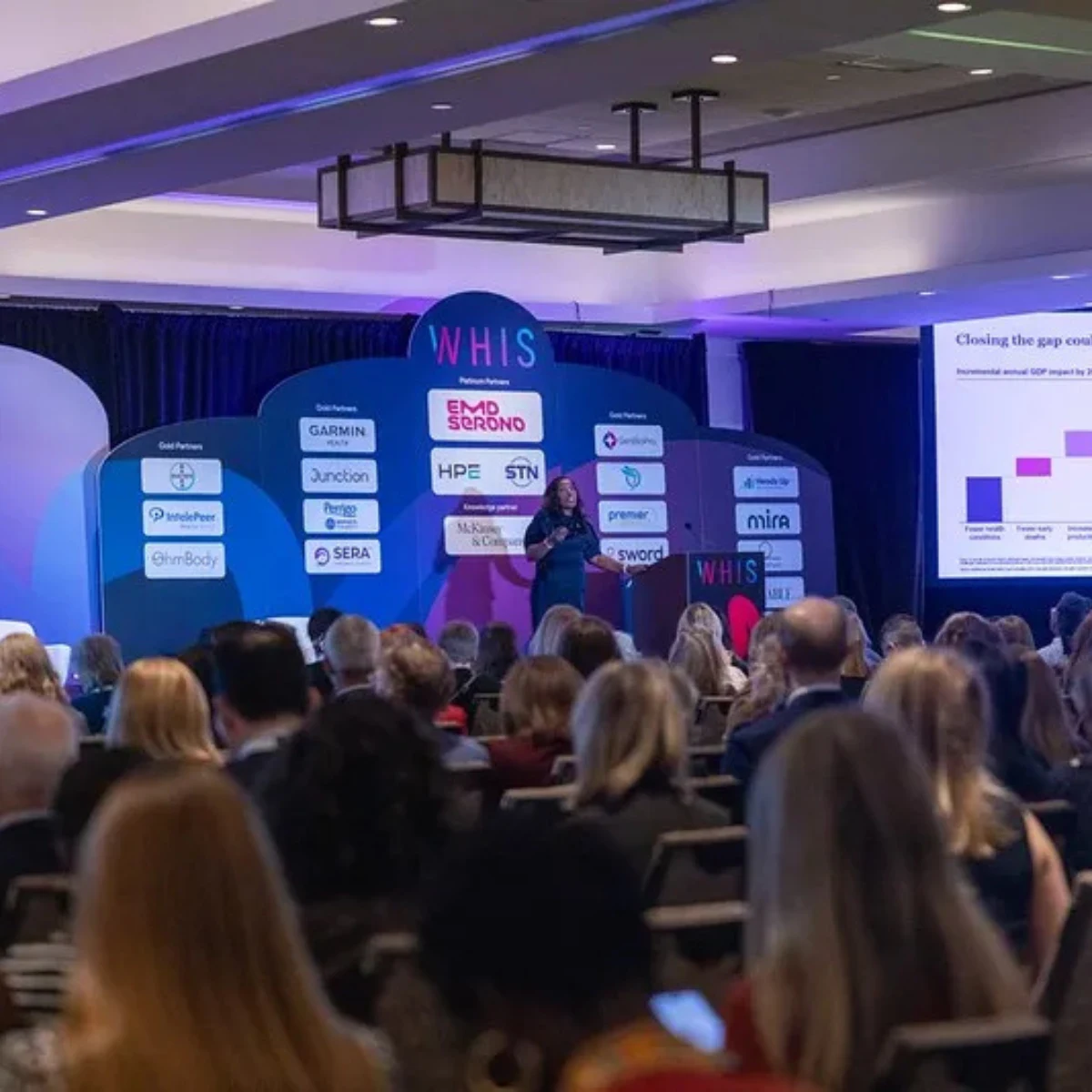
Recorded at HIMSS23, this episode of HealthTech with Purpose features Jessica Shin, Chief Growth Officer of SpeechMED, in conversation with Mindbowser’s Rushikesh Kulkarni. Jessica joined SpeechMED after COVID forced her to leave her father at an emergency room door with his medications scribbled on a receipt. She explains SpeechMED as a multilingual audio platform that lets patients read and listen to their health information in the language they understand best, and makes the case for health literacy with a Spanish-speaking patient who read “once a day” as “once,” Spanish for 11, and took 11 pills. She walks through how patients get the app through a provider or directly on Android, how an InterSystems partnership pre-populates records from many EHRs, and why the data only flows one way for now. The company’s origin story, a French-speaking grandmother who took four medications instead of two after a discharge, frames its view of health equity through language and literacy. The conversation closes on who pays for patient-facing tools and on SpeechMED’s next module: medication reminders and step-by-step alerts to cut last-minute colonoscopy cancellations.
Jessica frames the problem with two figures she cites: one in five people in the US go home to a family that doesn’t speak English, and only about 14% of people in the US are health literate. Health literacy, as she defines it, is whether a patient can understand their health information well enough to make the right decisions, down to reading a prescription bottle. Her example is a patient in Miami who read “take once a day” as “once,” the Spanish word for 11, and took 11 pills. SpeechMED’s medication reminders would have told her to take one.
The company’s origin story makes the same point. Giselle, the CEO’s mother-in-law, spoke French and several other languages, including English, but didn’t read English well. After a hospital stay for signs of pneumonia, her discharge instructions said to stop two medications and start two new ones; she took all four. Jessica says it led to 16 weeks in the ICU and that Giselle died within 11 months. Discharge paperwork written at a high reading level and handed over as 15 pages is where this goes wrong, which is why Mindbowser built EduCare AI to adapt post-discharge instructions by language and literacy level.
Jessica joined SpeechMED because of her father. She had always gone to his appointments as his caregiver, but when he developed heart problems early in the pandemic, all she could do was drop him at the emergency room door. On the drive, her brother dug through her purse for a receipt to write down his medications. With SpeechMED, she says, he would have walked in with his medications, doses and health history in hand, and the care team would have had a way to reach her. Kristen Valdes of b.well described a similar moment on this show: a caregiver without access to a family member’s records, and a daughter nearly harmed by two systems that couldn’t share a contraindication.
Patients reach SpeechMED two ways: through a health organization that provides it to a large multilingual or marginalized population, or by downloading the free Android app, with some features behind a paywall. For the provider route, Jessica says SpeechMED partnered with InterSystems so patient information populates automatically from more than 180 EHRs, and patients can add what records miss, such as multivitamins, allergies, diet, past surgeries, insurance details, a living will or a COVID vaccine card. The data doesn’t flow back into the EHR yet, because writing back needs different permissions depending on what you push.
That one-way limit is common for patient-facing products. Teams that need both directions can build it on ConnectHealth, which connects a product to 20+ EHRs through one integration model, including write-back where the EHR allows it, and runs inside your own cloud.
The hardest challenge, Jessica says, was working out who the customer is: the user is the patient, but someone else has to pay. SpeechMED’s answer to providers is that miscommunication hurts their finances, regulatory metrics and liability, and that a language and literacy tool helps with health equity measures. She cites medical miscommunication happening every 14 minutes.
The next module targets colonoscopy prep. Jessica says 20 to 30% of colonoscopies are canceled at the last minute, largely because paper instructions don’t get followed. SpeechMED plans to walk patients through the low-fiber diet, the liquid diet and each medication regimen with alerts and multilingual videos, and, for the first time, let the gastroenterology center see when a patient has started each step so staff can reach out before the appointment is lost.
[The first 35 seconds, including the host’s opening, are not captioned.] …I am the Chief Growth Officer at SpeechMED, and I got involved in this probably because of COVID. We’ve all experienced it, but for me it’s very personal, in the sense that when we had to go through the pandemic, my father got sick during the earlier parts of it. I’m his caregiver, and I’m always used to going to all his appointments with him. He was having heart problems, and the only thing I could do was drop him off in front of the emergency room. I couldn’t go in. I’ve never felt so useless and helpless in my life, that I couldn’t be there with my father.
And so, I’ve known the CEO, Susan Perry, for a long time, and I’ve known all the great things SpeechMED is doing, and I said, I have to join this company, because there are so many people out there like me who live in multi-generational, multicultural families. Language barriers, and not being there for your family members, are some of the most impactful things in your life.
Yeah. And it is very interesting, because of some of the things you are solving. As you rightly mentioned, multicultural, and especially language, becomes one of the barriers, right? So tell us a little bit more about SpeechMED.
Sure. So when I talk about language: one in five of us go home to a family that does not speak English. In addition, only 14% of people in the US are health literate, which means the remaining 86% have a hard time just reading medical information. That’s why we created SpeechMED. Something we think about every day is: how are patients supposed to follow instructions they don’t understand?
So SpeechMED is a multilingual audio platform, and it helps patients read and listen to their health information in the language they understand best. So don’t only think about people who can’t speak English, but also some of our older patients who might have visual problems, or even literacy problems, among the various populations in the US. That’s who we’re targeting.
Wow. Those numbers are astonishing. They are big. You said 84% of people have trouble with health literacy. Wow. So tell us a little bit more about health literacy. What does it mean, so that everybody understands?
Sure. Health literacy is: does the patient have the ability to understand their health information so they can make the right decisions about their health? This could be something as simple as reading a prescription bottle. One example we like giving: let’s say you have a prescription, and it says “take once a day.” Seems pretty easy, pretty simple. Well, our company’s based in Miami, and a person who speaks Spanish can read it as “take once a day,” with “once” being Spanish for 11. There was actually a case where a woman saw a prescription bottle that said “take once a day,” and she took 11 pills. Something SpeechMED does is provide medication reminders. So if she had SpeechMED, she would have gotten only one reminder, “take this medicine,” as opposed to taking it 11 times.
Yeah, that is an interesting case study. You mentioned your father, and that you couldn’t help much. From a SpeechMED perspective, can you explain how it would have helped your father in that scenario?
Sure. When my father went to the hospital, one of the things I was really unprepared for was that I would have to send him to the hospital by himself. So I was driving to the hospital, and my brother was in the back seat, searching through my purse for a random receipt so we could jot down all the medicines my dad was taking. The thing is, a lot of people in emergency situations aren’t prepared to go to the hospital, or into an emergency situation, with the right information, or even the information to help the provider make the right decisions for the patient.
So with SpeechMED, my dad would have had all of his medication information and his dosages. It would have had some more information about his health, and he could have gone in and fully informed the health staff, and they could have provided him the best care. And then there would have been a way for them to contact me, so that we could have gone through this process together, even without me there.
Got it, got it. And that’s very helpful, because I believe when you are getting hospitalized, one of the key things is confidence. The patient’s confidence goes low, and they’re a bit worried, so there has to be a way that some of these checks have been made, right?
Right. And for a patient going into an emergency situation, the biggest question for them is: can I trust these people to take the best care of my health? So instead of that, what we’re doing is empowering the patient, so that they understand what’s going on with their health.
Yeah, yeah. So help us understand the journey. If a user wants to use SpeechMED, how do they get access to the application? Is it from the provider side? How’s the overall journey?
Sure. It could be two ways. We [inaudible] provide SpeechMED for their patients. So if they have a large multilingual population, or maybe a population that’s marginalized or could use extra help, we would love to work with organizations like that, so they can provide SpeechMED for their patients. We also have an Android version of SpeechMED, so they can download it from the Play Store. It’s free, but we do have some features that are behind a paywall.
Okay, okay. So basically it is B2B2C in a way, and on Android you can download it directly from the store as well?
Yes.
Right. Interesting. And how’s the journey? Do I sign up, and how do I start using it? For example, if I got the application, what are the steps the user has to follow, and how easy is it to start using it?
Yeah, sure. If you come in through a health provider, one thing we did to make that workflow really simple for the patient is partner with InterSystems. So now we can integrate with over 180 different EHRs, and the patient information is automatically populated into SpeechMED. In addition, there are features where the patient can upload some of their own information. Most medical or health records might not capture the fact that you’re taking multivitamins, so the patient can plug that into the app.
If they are just downloading the Android app, they can sign up through the app. We also have a patient portal, so they can use the same username they used to sign up and go to live.speechmed.com. From there it’s really easy to populate. Just have some of your insurance information, maybe some important documents you’d like to have with you at all times. It could be a living will, maybe some end-of-life instructions, your latest blood work, your COVID vaccine card. You can upload those same things.
Oh, great, great. So it also serves as a repository for some of your key documents that might come in handy if needed.
Sure. And you can also plug in maybe your diet, your allergies, maybe previous surgeries, different things you’ve had.
Yeah. So does this information then go back to the…
No, it doesn’t. Right now it’s all one-sided, because you need different permissions depending on the information you are pushing back, and you have to be an organization.
That’s interesting. So can you tell us a bit more about your partnership with InterSystems, and what they are looking for?
Yeah. They’ve been a great partner for us, and they’re one of the biggest data providers out there. A lot of EHRs you don’t even think about run on top of the InterSystems ecosystem. So we’re really thankful that they have created a partnership for a company like us, so that we can make it easy for patients to have their information, and through SpeechMED, now they can read and hear their information in different languages.
Yeah, that’s interesting. Since you’re coming to that point, can you explain a little bit more about the hearing part? Because I think that’s one really interesting point.
In the US medical system, I think we expect patients to read, and read really well, in English. Think about a discharge instruction. They give you 15 pages of paper and you take it home. But some people are more comfortable hearing their information, and they might have trouble reading health information, which is usually written at a tough grade level, when most people might communicate better at a fifth-grade level. So what we do just helps with some of the information. It might be older patients, or patients who have visual impairments, being able to hear the information. Also think about people who are from different countries. They might have different literacy levels, and maybe reading isn’t the most comfortable.
Case in point, one of the reasons why we started SpeechMED: the origin story of the company all starts with Giselle. Giselle is our CEO’s mother-in-law. She spoke French, she spoke other languages, and she spoke English really well. She had a minor emergency and went to the hospital for signs of pneumonia, and after a couple of days they said: stop taking these two medicines and start taking these two new ones, which was written in her discharge instructions. Well, instead, since she didn’t really read English very well, she ended up taking all four of the medicines. It led to 16 weeks in the ICU, and she ended up passing away within 11 months. If she had gone home with a device like SpeechMED, it would have prompted her in French on which ones to take, and her caregiver could have read everything in English.
So that’s where we are. I would say we’re addressing health equity in a different way. Instead of a systemic way, we are addressing health equity through language and literacy, and these are things where we can use digital technology to help patients.
Yeah, that’s a big impact. It’s basically the difference between a patient’s life and death, in a way, if things go wrong, as in the example you gave.
Yeah, right.
Which is crazy. So what’s the impact you see SpeechMED bringing in? Is there something like this already present?
I would say the impact is on medical miscommunication, and medical miscommunication happens every 14 minutes. It’s a big liability for organizations. Financially it hits them, and it hits some of their metrics, the regulatory metrics. But also from the patient’s perspective and their families’: who wants to go through a medical mishap? Going to a hospital or a health facility is one of their most vulnerable times, so you want to meet that with the best way for them to empower themselves.
Yeah, that’s amazing. So what are the languages that are supported today?
In the Android version we have English and Spanish, and we will also offer six other languages: French, Italian, German, Korean, Mandarin and Hindi.
Wow, okay. And is there an iOS app as well?
Yeah, it’s currently in development, but you know the process of going through the iOS store. It will be releasing.
Amazing, amazing. So all in all, you would very soon be supporting around eight languages.
Yeah, and we’re already thinking about two more: [inaudible] and Arabic.
Oh wow, okay, okay. So, the last couple of questions. What are some of the challenges you faced overall while going through this whole journey?
Where do I start? I would say one of the first things is just finding out who the customer is. We know the user has to be the patient, but it’s always: who’s going to pay for it? So it’s been about addressing the fact that not providing a service like this for patients hurts the financial bottom line of the organization, of course, and also hurts it from a regulatory and a liability standpoint. And right now there’s a lot of conversation about health equity, and using a product like SpeechMED would help you address some of the health equity metrics.
Okay, okay, great. And one of the final questions is about the purpose. What’s the overall purpose of SpeechMED, and where do you see it going?
All right. There are so many different ways we want to expand SpeechMED. Our company is really good at the language and literacy engine we’ve developed, and one area where we’re going to expand SpeechMED is colonoscopy. If you know about the current colonoscopy process: colon cancer is, I think, the second deadliest cancer in the US, but it can be prevented if a patient gets screened. Once they get a colonoscopy, you might detect polyps, and the person’s chance of living increases.
The colonoscopy process is very paper-based. Pretty much, the gastro center will give you a piece of paper and say, all right, here are your instructions, come back for the colonoscopy. Because of this, approximately 20 to 30% of colonoscopies are canceled at the last minute, because patients don’t prep themselves well for the colonoscopy, and it’s very resource intensive and becomes expensive.
So what we’re going to do is walk patients through the colonoscopy process. They will get instructions and alerts for when they need to start a low-fiber diet, when they should stop taking solid food and start a liquid diet, when to take the first medication regimen, the second medication regimen, and so on. And there will be multilingual videos, so regardless of your language, you’ll be able to understand the colonoscopy process and the diet process. What makes this really unique is that now the patient will acknowledge that they’ve started the process, so the gastro center, or wherever the colonoscopy is going to be done, will know for the first time exactly when the patient has started each of these different regimens. They can be proactive, reach out to the patient and say, “Hey, it seems like you haven’t followed the schedule.” This is to prevent any last-minute cancellations that can occur.
Well, this is amazing. I have been talking to a lot of founders, and this idea is unique thinking, definitely, the way you are addressing it. And once I started learning more, I could really see it. In fact, you said Hindi. If my parents are here and they have an emergency, even listening to something in a local language brings better confidence.
Yeah. And especially now, with a lot of home care moving to the home, and remote patient monitoring, this would be a great tool to help someone with that.
Great, great, great. Thank you, thank you for your time.
No problem.
And thank you for sharing all the details. I hope all of you also learned a little more about SpeechMED. Thank you for sharing the insights and for being here at HIMSS.
Thank you, thank you so much for giving me the opportunity.
Amazing. Thank you. All right.
At the time of recording (May 2023, at HIMSS23), Jessica Shin was Chief Growth Officer of SpeechMED, a multilingual health literacy platform that reads patients’ health information aloud in their preferred language. She described joining the company, led by CEO Susan Perry, after caring for her father through a hospital visit early in the COVID pandemic. She remains listed as Chief Growth Officer on SpeechMED’s leadership page.
Building patient tools that have to work for people who don’t read English well? Tell us who your patients are and we’ll show you how we’d approach it.

Welcome to the HealthTech with Purpose podcast! In this episode, Ayush Jain talks with Jack Hysell, Director at Primary.Health. Jack shares his journey from hairstyling to computer science and discusses Primary.Health’s platform for testing and vaccination services. Learn about their mission, focus on health equity, efforts in interoperability, and the role of AI in healthcare.
Discover how pCare revolutionizes patient experience in healthcare with technology. Tim Vaughan, Chief Product Officer at pCare, discusses scaling challenges, AI’s role, and improved outcomes.
Partner with us to design, build, and scale digital solutions that drive better outcomes.
Global Tech Teams LLC, 525 Washington Blvd, Industrious at Newport Tower, Jersey City, NJ 07310, United States.
Let’s discuss your goals, workflows, and next steps in a focused consultation call.
 Schedule a Call










 BLOGS
 NEWSROOM
 CASE STUDIES
 WEBINARS
 PODCASTS
 ASSET HUB
 EVENT CALENDAR