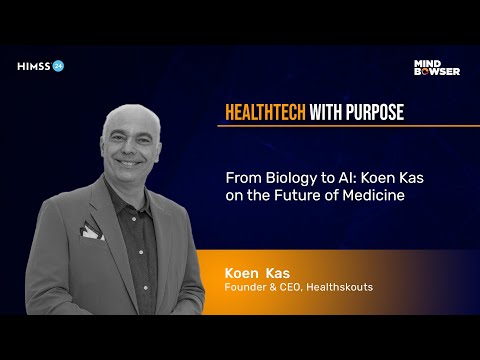

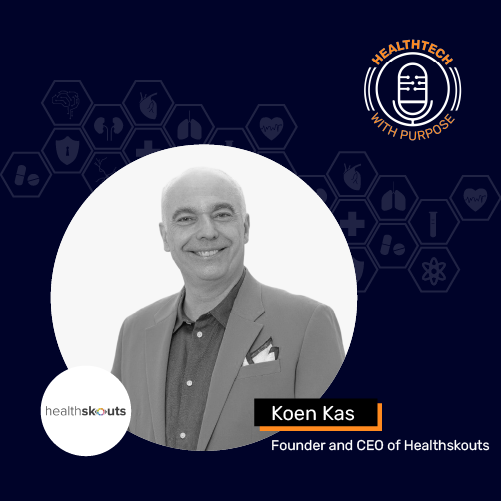
In this episode of HealthTech with Purpose, we sit down with Kas, a renowned healthcare futurist, author, and founder of Healthskouts. Kas brings a visionary perspective on how the convergence of digital technology, AI, and biological data will reshape healthcare into a system that is predictive, personalized, and preventive.
Drawing on his medical background and global insights, Kas shares how digital twins, genomics, and biological biomarkers can empower patients to make proactive health choices. He explains why current healthcare practices remain “in the Middle Ages” compared to what is now technologically possible, and how tools like AI-enabled diagnostics, wearable sensors, and genetic testing can fundamentally shift care models from reactive to preventive.
This conversation explores the barriers of adoption, including physician resistance, siloed data, and cost challenges, while emphasizing the role of education, awareness, and trust in accelerating innovation. Ultimately, Kas outlines his vision of a world where people live long, healthy lives and healthcare systems reward prevention over treatment.
Ayush: Hello everyone, welcome to another episode of HealthTech with Purpose. Today, our guest is Kas—a healthcare futurist, author, international keynote speaker, and the founder and CEO of Healthskouts. In this episode, Kas discusses the future of healthcare, emphasizing the importance of combining digital technology with biological data to create personalized health experiences. Welcome, Kas.
Kas: Hi, thank you for having me on the show. I’ve seen the variety of topics you’ve covered—super exciting—so I hope I can add something valuable for your audience.
Ayush: The feeling is mutual. You’ve been a strategist and a thinker in healthcare, building solutions and advising companies. To start, could you give our audience a quick introduction to your work and background?
Kas: People often call me a healthcare futurist, which is a bit of nonsense because I cannot predict the future. But I’ve developed a methodology to create a future from a blank page, which we call Delight Thinking. It’s about building experiences close to magic—but real—that help people deal with change.
Healthcare is very change-averse. On average, it takes seven years for innovation to land in a system. While technology can create databases and apps, what really changes the world is giving people—hospitals, doctors, pharma companies, even nations—the chance to create experiences for their customers.
I’m trained as a biomedical scientist and used to treat cancer patients. I even helped develop a drug for childhood brain cancer. But my perspective changed when I studied an ancient Chinese healthcare system where doctors were paid only if villagers remained healthy. Once patients got sick, they no longer had to pay. That became my obsession—recreating the “Chinese doctor” in a digital version.
My dream is to give every citizen a digital twin—an avatar that is with us 24/7, providing proactive health insights and helping us live longer, healthier lives. I call it creating a world where we “die young, but as late as possible.”
Ayush: That’s powerful. On your website, you mention: “The digital healthcare revolution was only the beginning. The biological revolution—AI and digital twins—will render past practices as archaic as those from the Middle Ages.” Could you expand on this?
Kas: Absolutely. Healthcare was late in adopting digital. We’ve accepted that digital removes friction—just like Uber or Spotify did in other industries. But the real revolution is biological.
Take genomics: sequencing a human genome once cost $3 billion and took 10 years. Today, it costs under $600 and takes just three hours. I sequenced my genome 10 years ago and learned I’m predisposed to blindness. That knowledge gave me “superpowers.” I changed my lifestyle and used AI-enabled eye scans to monitor my retina. Without that knowledge, I would eventually go blind.
That’s the leap biology brings—predictive insights. But it also raises ethical questions: Is it okay to still have a handicapped child if risks can be predicted? Should every newborn have a genetic passport? In Hong Kong and Dubai, babies will soon be born with one. This is not just about privacy—it’s about morality and rights.
AI plays a critical role here. Not just as chatbots like ChatGPT, but as anticipation intelligence. It helps us combine massive amounts of omics data—genetics, proteomics, microbiome—and make it actionable through digital twins.
Ayush: If a perfect future is at 100 on a scale, where are we now?
Kas: Around 2 or 3. In keynotes, I ask: “Who here has access to their genome?” Almost no one raises a hand. But when I show examples of how technology changes behavior, adoption rises.
For example: men resist colonoscopies. But when shown a pill camera that provides a painless colon scan, acceptance doubles. Or think of Angelina Jolie, who had a double mastectomy due to her genetic risk of breast cancer. Imagine instead a sensor-embedded bra that detects early tumors. Suddenly, the choice shifts from fear to empowerment.
Technology creates comfort, and comfort drives behavior change.
Ayush: That makes sense. But what about costs—will this precision and comfort make healthcare more expensive?
Kas: Actually, it’s the opposite. If we don’t adopt predictive tools, costs will skyrocket. Diabetes, for example, leads to blindness and kidney failure—hugely expensive conditions. Yet, only 2% of healthcare spending goes to prevention.
Digital tools can predict diabetes through something as simple as a video selfie. AI can detect changes in blood flow patterns on your face that signal rising blood sugar. Wearables can track your movements to suggest healthier choices—like replacing soda with water.
In some countries, insurers already reimburse preventive apps. In Singapore, citizens get $2 per day for proven healthy behavior tracked by wearables. Prevention is far cheaper than waiting until people get sick.
Ayush: That’s fascinating. But what about resistance and risks?
Kas: The biggest barrier is behavior change, especially among older doctors who still use paper and fax machines. Adoption also lags due to awareness and effort. For instance, in Germany, a government-reimbursed health app system had only 2% physician adoption after a year. Doctors felt prescribing apps added workload without enough automation.
Another risk is data silos. Too often, apps collect data that isn’t connected to other systems. What we need is integration—one backbone. In Europe, the European Health Data Space aims to decentralize data ownership, giving patients control via personal online data stores. Tim Berners-Lee’s Solid protocol allows users to decide what data to share, with whom, and for what purpose. That builds trust and empowers citizens.
Ayush: You also lead Healthskouts. Tell us more.
Kas: In 2014, after publishing my first book, people asked for a list of certified digital health apps. None existed at FDA or EMA, so we built one in 2017. It started with 110 apps; today we track over 340 certified health apps globally.
We classify apps by certification, clinical evidence, partnerships, and adoption. This gives developers guidance. Some lessons:
These five principles help apps move from idea to adoption effectively.
Ayush: That’s a comprehensive framework. Thank you, Kas, for this inspiring conversation. We wish you success with your upcoming book and your mission to transform healthcare.
Kas: Thank you. My hope is that by combining biology, digital, and AI, we can help people stay healthy longer, live purposeful lives, and truly unleash their potential.
Ayush: And to our listeners—thank you for tuning in to HealthTech with Purpose. Don’t forget to like, subscribe, and share. Stay healthy, stay curious, and keep building.
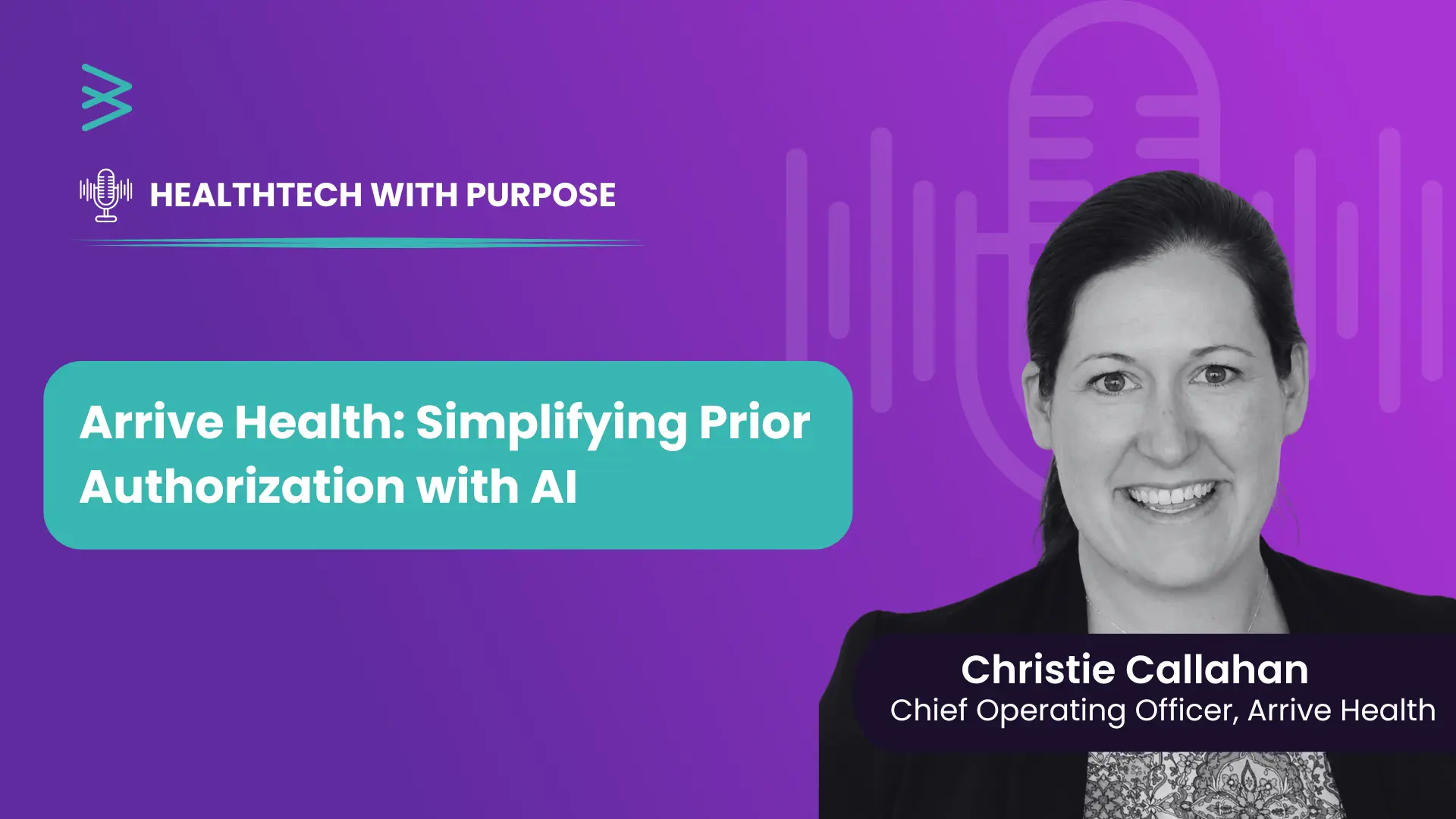
Welcome to the HealthTech with Purpose podcast! In this episode, we explore how AI is revolutionizing prior authorization with Christie Callahan from Arrive Health. Learn how generative AI and real-time benefits integration are streamlining workflows, reducing denied claims, and improving patient access. We also discuss the challenges of using PHI in AI models and the future of augmented intelligence in healthcare. Tune in for insights on AI-driven healthcare solutions!

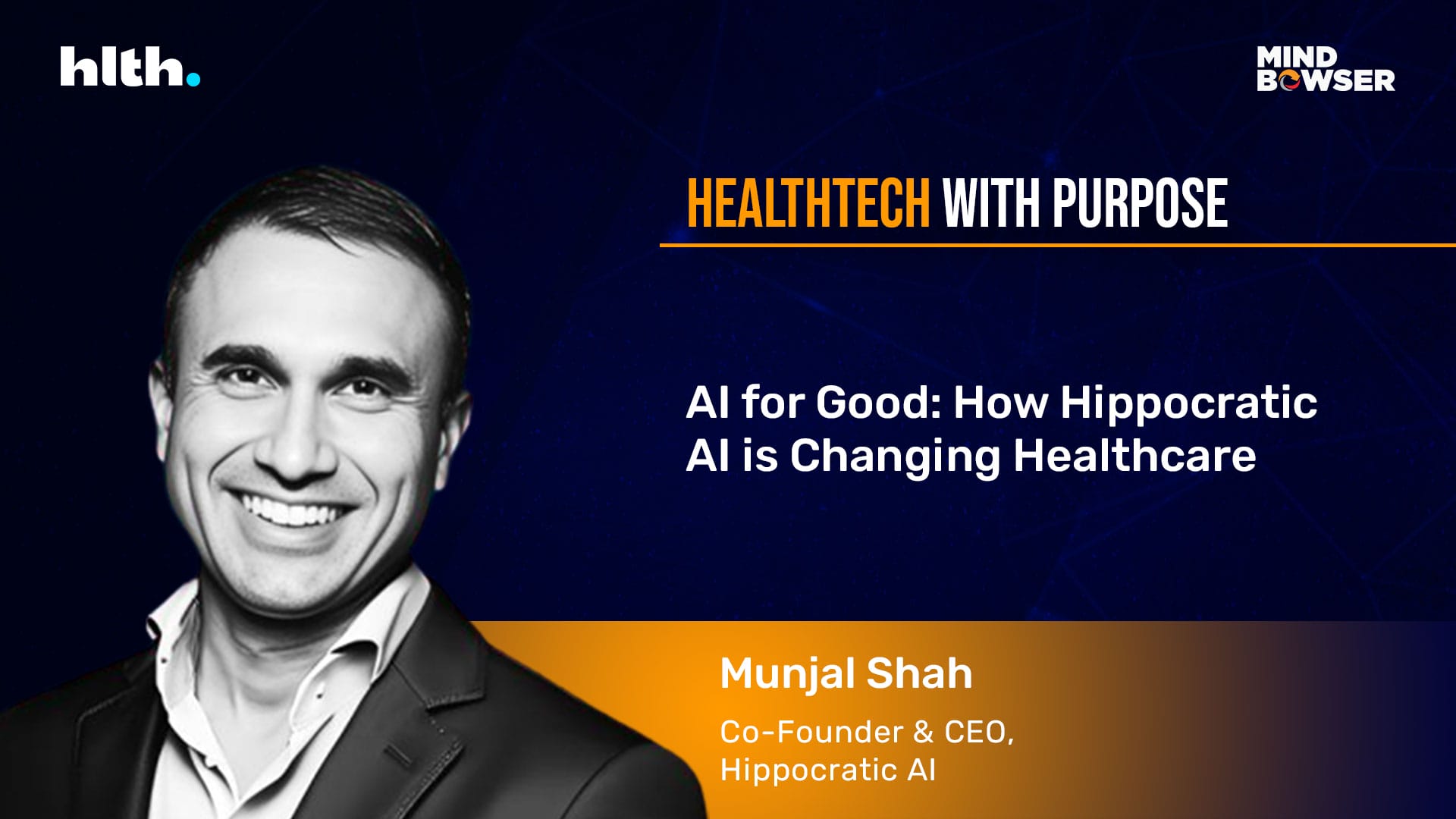
Join us for an enlightening episode of HealthTech with Purpose as we delve into a conversation with Munjal Shah, the visionary Co-founder & CEO of Hippocratic AI, a pioneering company that’s transforming the healthcare industry with its safety-focused Large Language Model (LLM).
In this HealthTech with Purpose podcast, Mahek Chhatrapati, CEO & Co-founder of DocNexus, shares the challenges faced during the development of DocNexus and his current focus on feature development and meeting evolving needs of the users.
Partner with us to design, build, and scale digital solutions that drive better outcomes.
Global Tech Teams LLC, 525 Washington Blvd, Industrious at Newport Tower, Jersey City, NJ 07310, United States.
Let’s discuss your goals, workflows, and next steps in a focused consultation call.
 Schedule a Call















 BLOGS
BLOGS  NEWSROOM
  CASE STUDIES
  WEBINARS
  PODCASTS
  ASSET HUB
  EVENT CALENDAR