
Ayush: Hey, Jamie, how are you today? Welcome to the podcast!
Jamey: I’m doing great sorry. It’s a pleasure to be here and looking forward to our conversation today.
Ayush: Yes, I, too. This conversation has been pending a long, and you know, really excited to bring your story to our audience because you have really, you know, seen through the different layers of healthcare in your experiences. So you know, we really wanted to capture that. But as we do that, why not? We start with a quick recap of your different experiences of the last 25 years. Where you’ve built different companies you’ve part of been different setups and so on. So let’s start from there.
Jamey: Yeah, I’m a serial social impact founder, Ayush. I usually, I’ve spent all that time really focused on the healthcare space.
Jamey: My 1st venture into it was being CEO of an ER hospice and anesthesia group here in Southern California, and I did that for 10 years. While I was there founded another company, called Coudbreak Health about language interpreters, point of care, limited English, and proficient defining patients. And so I’ve really cut my teeth if you will on the provider side of healthcare. Never forgetting right?
They were all patients, and understanding and seeing firsthand the problems that patients or providers have connecting. It’s a fence, a lot of time we’re really focused on the fact that what we really need to do is build that connection, that every patient needs to be seen as a unique data point and unique story.
And not, as you know, part of the masses that as patients, we need to have more compassion for the clinical teams as well that are servicing us. So from that standpoint, taking care of us. So from that standpoint, you know, after I had my health equity business that brought the language interpreters to the point of care which I merged into a public company.
I spent time at StartUp Health, which is the largest digital health innovation ecosystem in the world. I’ve had the pleasure of coaching and mentoring founders there. For a number of years, helping architect their health-transforming university program. And now today find myself at another startup trying to do it all over again.
And I’m at a Khosla ventures back startup called Koko Home. We’re in the the process of transitioning to a new brand called Cairns Health, C.A.I.R.N.S Health, and we’re excited to be at the crosshairs. What I would say are the 2 most important trends in healthcare today, the 1st one being having a rapidly aging population. That we don’t have enough clinical professionals to take care of, and then to this hospital and home movement, and the home becoming a locus of care. And so what we do is we have an AI assistant enabled with ambient sensing
That we have by the bedside, and it can monitor the patient, monitor their heart rate, breathing rate, vitals, and then put the patient in context, in the room. And we’re right now applying that in the senior care space so that we could deliver care plans at scale and make them easily digestible, and then ease the burden of the caregivers. Caring for these patients.
Ayush: Amazing, amazing! And as you speak, I think I see one of the devices right in your background, so.
Jamey: That’s right. That’s right right there, pointing at it right now. Yeah, that’s Luna. Luna is our digital bedside AI system.
Ayush: That’s amazing. No, do you talk? I think about the 2 biggest trends in health fairly right but before we? You know. Jump on to that. I really wanted to piggyback more in a chronological order of the experiences that you had. Especially since you’ve been mentoring a lot of health startups at scale.
Jamey: Yeah.
Ayush: So what are some of your you know, over the years those 3, I would say, go to recipes for every founder like 3 do’s and 3 don’ts when it comes to building a health startup.
Jamey: Yeah, just 3, right? Like, it’s hard to kind of take all that wisdom and experience, all the mistakes that I’ve made, and narrow it down to just 3 areas, but I’ll give it my best shot. You know it’s been a real honor and a privilege to be in a place like StartUp Health as an entrepreneur residence. And while I’m there to really inspire those founders, I’m really inspired by their stories just as much.
And it’s amazing to see the power of community and how it can really be deployed in a way to help these startup founders feel like they’re not alone and help each other. I would tell you that some of the lessons that I’ve learned over the course of mentoring coaching those founders in my career. I really like number one, align your product roadmap with the specific needs of your clients and markets. I think that a lot of times product gets developed in a vacuum.
And as a result you might develop something that you think the market needs only to discover that it’s not what the market needs. So I’m a big fan of doing co-development partnerships and kind of this concept. I don’t know if you’re you know a Ted Lasso watcher, Ayush but the quotes I think it’s Walt Whitman where he talks about being curious, not judgmental, and for me that was like a great lesson as opposed to having a preconceived notion about the way something should be done. Having that curiosity to really learn what your client’s needs are. And not judge them for how they’re doing things currently, but rather ask them why they’re doing that. The why is really important. Helps really guide a lot of products development that can be really productive.
And then, you know, at the end of the day, if you’re doing a co-development partnership, that whatever you’re developing is gonna have a market because you’re developing it for that market specifically and so it’s nice to know that once you’re done with the development process, there’s gonna be revenue at the end of that rainbow.
And then you know, finally, kind of on that aligning of the product roadmap like money and mission are really linked and money tends to follow mission. And it follows impact and healthcare. So when you’re doing your product roadmap design, that product roadmap for impact, and if you’re very successful in doing that, the revenue and funding and everything else will follow. So that would be point number one.
Point number two on the dues. I really think, is in healthcare direct-to-consumer healthcare is really difficult, and I’m a big fan of leveraging other people’s networks to build their own. So and I really again cut my teeth. So I’m a little bit biased on B2B healthcare, and I think it’s a great place to start, as consumers frequently aren’t the ones paying for their healthcare solution.
Might be their insurance company. You know, who’s doing it or their employer. But typically it’s not them. So if you really want to build scale going to that end consumer could be really expensive, it becomes kind of like a Cac versus Ltv type of discussion. And I think in healthcare things are just operate a little bit differently, and it’s you can effectively grow your business and grow your own network by leveraging other people’s in a much more cost-effective type of way. And then, finally, it’s kind of about great storytelling. How do you make your solution simple and relatable? Healthcare is super complex.
All these stakeholders are operating in this environment of overwhelming complexity. And so how do you make that simple? How do you make your solution really easy to understand? And even if your solution demands sophistication and complexity, right? Like AI and big data. And all these things that under you know, under the under the water, might be that duck paddling furiously at the surface. How do you make it simple and do it with really great storytelling? So those would be my tips.
Ayush: Yeah, fair enough, fair enough a quick follow-up question you mentioned about a co-development partnership for a startup person. Are they easy to get? Are there ways that one can quickly get these partnerships, or that’s a pain in itself, because what I imagine a co-development partnership would be with some sort of an institution, a provider, or a payor. But how have you seen this market like like? Is that possible quickly for a founder? Or does that takes its own time?
Jamey: Yeah, the answer is, and you know, I’m sure you’re expecting this is, it depends.
I think, from our experience that we have here at Koko and Cairns. We’ve very quickly been able to secure co-development partnerships because the work we’re doing really resonates with them. And we’re selling people on this vision of what the solution could be. And they can. We’re connecting the dots, right? You have to be able to the scenario to tell that story, connect the dots and really bring people onto your side of saying, Yes, I would love a solution that does XY, and Z. So we’ve been very successful in doing that.
We’ve already secured 3 co-development partnerships. One is in conjunction with a NIH Grant that we’re working on with Indiana University Health and others to develop an Alzheimer’s use case on the platform. Clearly a major and important issue that we’re trying to solve there. Another co-development partnership is with a remote, patient, monitoring company. And with them, we are working on helping them develop a better level of engagement and a better experience to kind of de-commoditize that experience that they’re having in that solution.
And then, finally, we’re working with an independent living and assisted living business to improve their overall user experience, and help them solve what are labor staffing issues and those types of things by deploying the AI as part of the care team. So for us, it’s like it’s about hitting on the key points that really matter to that. And you could see it’s like across different industry sectors, or sub-verticals that we’re operating under.
But we’re really trying to figure out what matters to them and then say, let’s work on a solution that we know, is going to move the needle for you, and I think if you do that there’s a lot of people that are looking to actually move their businesses forward, move their solutions forward, provide better care, better outcomes in a more efficient and cost-effective way. And if you can speak that language, I think those co-development partnerships are out there.
Ayush: Okay, that’s good. But you know, tentatively. You know what kind of timeline is a reasonable time for a founder to be able to assess. You know, that whether this co-development partnership is going or not, because you know sometimes what I can imagine is, it could be stuck in a limbo. So it’s like a yes, yes, yes, but there’s no real contract, or, you know, like substantial action really happening. So what would you say, like a reasonable measurable way for a founder that they’re going in the right direction, especially regarding the product market fit, because the worst thing you want to avoid, for a founder is not to invest time into something that’s, you know, that could end up like wasting the effort and the time that it took.
Jamey: Yeah, I think the best co-development partnerships are when you know you’ve got a team who actually understands the market well enough to develop what I would consider on their own. Some core infrastructure like, you know that in healthcare you’re gonna need to develop a HIPAA compliant infrastructure and a database. And you know, a web app and a front end and a back end, and all those different types of things. So my recommendation is you do some of that work in advance. You don’t start from square one or zero with a co-development partnership. You’ve got a general idea of what you want your product to be in the co-development partnership is really about the last mile
of that solution. It’s about sitting there and saying, Okay, well, I know that this is a general area. We want to operate. And I’ve got my basic platform built. But I want to apply it for a specific use case. What’s the best way to do that? So it’s while there is development work. It’s also more about configuring what you have. And it is about developing a brand-new solution from scratch.
So I found that to be a successful strategy, and then, from a timeline standpoint, I use your ranges. It could be one of it could be a situation where very quickly you can test your product and nail that use case, and frequently in the private market with commercial businesses that can happen more quickly than it can in an academic environment as an example. And it also depends on the goal of the co-development partnership work we’re doing with Indiana University, the goals to do a study and really produce some clinical outcomes that we can report off of that are really gonna bring value, not just to us but the entire industry, whereas the other 2 use cases are really about specific commercial use cases where we can configure our system to meet a specific need, and that could frequently happen much more quickly. Then, doing that clinical study.
Ayush: Fairly set fairly set. So Jamey, let’s move to the don’ts of a founder experience you have. So any learning from other’s experience as well as your own experiences, that if you are doing it today, don’t do it this way.
Jamey: I use. I think we all know just as much as we are defined by what we do, or defined as what we, by what we don’t do right equally is important. And so again, as we’ve spoken about this product development, What’s its tone? I mean, the logical tone is don’t assume you know what the market needs and build your solution in a vacuum. I mean that to me is critical. You’ve got to take market insights and turn them into, you know, an actual workflow on your platform and make sure you’re providing that value and solving something that the market actually wants you to solve right, like health systems have problems. Payers have problems so important to target your solution to those problems not develop in a vacuum.
I think the second thing is when you take a look at the funding environment, VCs or any type of Funder is really focused on recurring revenue models and so creating what I would say is, don’t create a usage-based model or a hardware unit driven type of model where you’re not developing a long-term relationship with your client. The idea is, that the better you know your clients the more and more you can do for them. And so thinking longer term about recurring revenue. And how you can really build that relationship is gonna be is gonna create a much more sustainable business in the long term, and one that can create more impact, more value.
And finally, I think, what we’ve seen over the last few years is the market doesn’t really want point solutions anymore. And if it is a point solution, it’s got to be interoperable with other platforms. So I think you want to target your solution. If you’re a founder on, hey? What platform am I going to build? Or how am I going to integrate with existing workflows via interoperability? Don’t just build a point solution. Have that broader perspective in mind as you’re building out your technology.
Ayush: Right? Right? In fact, that 3rd one is kind of my mission, which is like building interoperability because we believe in that like today. Any founder should not be building like a stand-alone, because no provider really has the time to switch between systems. That’s like the whole base of you know, like introducing a new system, they don’t want additional work basically, the new system should be reducing the work.
James: And Ayush it’s about making again that’s like something interoperability is super complex when you take a look at the care teams of the future. You very well might have an endocrinologist from NYU Langone, and a cardiologist from the Mayo Clinic, and then a primary care physician from Providence Healthcare as an example so local Providence Hospital. So when you think about those types of things and structuring those care teams, and they all might be on different instances of Epic and aren’t interoperable and aren’t taking a holistic view of that patient.
How do we create that? So the interoperability aspect of it is really important. And you actually have to think about the experience and how it works and how you’re surfacing that data to not overwhelm the user and not overwhelm the positions but instead create a very clear, integrated, patient view that those physicians can take, you know, action on from the insights they garner data.
Ayush: Right right true that, I mean can’t agree more, because that’s exactly you know what I do. You know, like working with founders myself. And yeah, that’s the whole view, like, how do you bring everything together on one dashboard, on one scree, basically. And you know, create value because of the cohesion.
So yeah, so my next question Jamey, where I want to touch upon is actually you know, Koko and Kane’s and I would like to talk more about the underlying technology. So what I, the what really piqued my interest is the unique use of radar technology that you are using. Which I’ve not seen yet often being used so tell us more about the whole concept of radar technology and how it can be used to improve the remote patient care monitoring. And also, if there are any other use, cases of it.
Jamey: Yeah, look, I mean, when I joined Koko, Cairns, I was super excited to be working with cutting-edge technology again. And so what does that cutting-edge technology look like? Well, it looks like, and what we call intelligent ambient sensing.
So that’s actually using a radar to detect the patient in the room, and the radar isn’t a camera in the room, so the privacy concerns are less, etc. But the radar allows you to monitor the patient really 24×7 without it feeling like it’s interfering with their normal lifestyle. There’s no need for a wearable, so you don’t need to wear anything. But using that technology, you can detect heart rate breathing rate. You can detect whether a patient you know is potentially getting sick by using the different signals in the room. We can track sleep stages. There’s all sorts of interesting information that you could garner from the radar to help again drive an insight and influence that patient’s care plan.
We can, you know, when the patients getting up, we know when there’s getting into bed. We can launch and trigger certain activities based on those behaviors. There are a lot of people in the world who might have a radar solution or they might have the audio solution. But no one is doing both. We’re really the first people in the space to be putting the patient in context with the radar tracking what they’re doing and using the artificial intelligence, large language model on the other side to intervene and help guide their care plan. And again, this goes to the theme of making the complex simple.
We’re trying to take very complex, chronic and acute care plans break them down to their bite size pieces where the patient can actually digest them and then have the patient then follow and adhere to their care plan as a result. So it can be things like medication reminders, imagine a patient having a device by their bedside when they’re doing prehab, and then rehab for what might be an orthopedic procedure. I knew happened to me, whatever it might be. Being able to have that patient feel supported in their home environment is really the driver of what we’re trying to do, and the Alzheimer’s use cases of importance to us.
We think a great application of the platform, because there’s so much we can do with memory care, reminding the patient about what they’re doing the night before, letting that consolidate overnight, and then reminding them again, as they do their day planning when they wake up it reduces their anxiety. It reduces the anxiety of the caregiver. Imagine the caregiver wakes up, and it’s like your mom had breakfast. Her vitals look great, and she had her therapy session with her therapist.
How great to know that and breathe that sigh of relief as a caregiver. So those are the types of things that we’re trying to do by applying this very cutting-edge technology and making it almost invisible.
Ayush: Right? Right? No, definitely, like the vision that you shared I can think of like, you know, it’s so important nowadays that you know, like, you’re not only having a periodic data, but you are basically knowing, like what’s really happening in the life or in a day-to-day activity. And then, you know, once you are able to track that, you can create all kinds of interventions, and so on. But out of curiosity, you know, since, you mentioned about the radar technology in such a good light. Has this technology always existed? Or has this been an innovation that came in like, what’s the background around using the tech?
Jamey: It’s really been the last few years where particularly even the intelligent, ambient sensing is taken more of a front-row seat. And it’s still, you know, not widely used, not widely distributed. But it’s definitely there are more players in the space now. And people have been trying to do digital healthcare systems for a long time. But I don’t know that artificial intelligence, ChatGPT was kind of where it needed to be. These large language models and the advent of them until recently.
So we’re starting to see a lot more activity in the space and Koko was an early pioneer. Koko used to be called a company called Totemic, and they changed name to Koko. And now we’re potentially rebranding again, as we now really feel like we found the solution that it’s gonna have the biggest impact in market.
But you know, this expertise is not widely held yet. But we’re pretty excited about it, because what it allows us to do is really put the patient in context. We talked about patient story before right? This helps all this information helps build that patient story helps give clinical teams the information that they need to really make a proper intervention. And that’s what this is really about. It’s about building, that connectivity and building that relationship.
Ayush: Right? Yeah, no, it sounds amazing, really, very excited. So what’s behind the name by the way, when you switch from Koko to Cairns. What’s behind the names?
Jamey: Yeah, there’s a there’s a really nice story behind it. So our product designer, Kiko, designed our device right there to look like, you know how, when you go on a hike, Ayush. There are these trail markers that are stacks of rocks. That was his inspiration for building the device, and he had told us, he’s like, you know, Jamey, I wanted to design the device that way, because anytime I was on a hike. And this happened. I knew I wasn’t alone. I knew I was on a path and there was just so rich from a branding standpoint to be like. We are part of your healthcare journey. We are part, we are helping guide you. We’re helping you feel not alone in this world of healthcare that we had to go to rush to Google and say, Oh, my God, what are those things called? And it turns out they’re called Rock Cairns.
And Cairns happens to have AI right in the middle of the word, and we didn’t see any other Cairns health out there. So we locked onto the brand, and thought it was a great manifestation of our mission.
Ayush: Okay, wow! That’s that’s amazing. Oh, like, did you chase the story or the story chased you? It’s like, like, you know.
Jamey: Yeah, yeah, right? It’s like life imitating art, imitating life. Right?
Ayush: Nice, nice. It’s like manifestation getting true because.
Jamey: Yeah, it seems it definitely seems like it was it was meant to be right. Seems like it was meant to be. So we’re we’re stoked about that. We’ll launch that in a couple of months.
Ayush: Great. So tell us more about you know, like, your experiences with funding, like, you know your own experiences as well as you know some of the stories where you have been part as a coach, and as a mentor. How does again, what are the lessons for healthcare startups when it comes to getting funded? And again, the times have definitely changed as well. So what’s the new norm? What I would call in funding.
Jamey: Ayush its such a good question, and it seems to literally be the million-dollar question from the startups right now. I don’t think we’ve seen a market like we’re currently in quite some time. In fact, I think we got very much used to like the go-go days of fundraising. And you know, COVID, really launched digital health into a completely. You know, new stratosphere. I think pre-COVID most funding that it happened in any given year was, you know kind of 7 to 10 billion of funding, and that jumped up to 40 billion during Covid. And now we’re back down to kind of pre-COVID levels. When it comes to funding digital health startups.
And I also think we’ve got you know, this situation where there the momentum that we saw digital health between 2020 and 2023. You know, we’ve now seen some of the bellwether digital health companies running into issues, you know. American Well, Teladoc right? They’re not the public company darlings that they were before. And they’re struggling with their own issues right now as they make transitions.
I also think that we have just a really uncertain economy and that we’re in this very troubling national and global environment. From a social standpoint, we’ve got wars in the Ukraine. What’s happening in the Middle East? We’ve got, you know, an election coming up here in the United States. Other people think is pretty important.
And you know it’s a it’s a very disconcerting and uncertain and unstable environment right now, and predicting the future has become really, really hard in that regard. I think we’ve also seen kind of all those things stocks, you know, Facebook, Apple, Netflix, Google, like all these stocks, were leading indicators for the economy laying people off. I think there have been some bright spots we clearly seen, you know, Nvidia and you know some of their healthcare and AI initiatives really taking off and having the largest market cap in the world right now, at over 3 trillion dollars. Pretty amazing to think of that! We have trillion-dollar market cap companies.
But there still seems to be a general disconnect between investors and founders on what companies are worth. I think it’s time for everyone to really get some religion. Get on the same page, and I’ve seen a lot of startups simply run out of runway and close their doors. And I think it’s happening more now than it has been in the past. I think you know, even going back to the Silicon Valley Bank, scenario, that ended up happening. There was a prediction back when Silicon Valley Bank went under or transitioned and had their issues that you know, 50% of the startups we’re basically just gonna go away. They’re gonna run out of runway and not be able to raise money, and I think we’re starting to see the front end.
Ayush: So do you think it’s part of a just a market cycle? Or is that shift that we get? We need to get used to like. Probably the prior ones were more like a outlier. And now this is the norm. Or do you feel that this is just something that will pass away, and we’ll go back to the norm which we were used to in the past decade.
Jamey: Yeah. So I usually think the answer is somewhere in between. I am a founder. So the founder part of me is naturally optimistic, but I also understand the markets because I was an investment banking and private equity professional for 10 years. And so my viewpoint is kind of in the middle, I think, having some rationality in the market makes sense. I think some companies were funded that shouldn’t be funded.
That probably shouldn’t have gotten funding back during the go-go days, and some companies were well overfunded, and big bets were made on certain companies, all of AI, you know, whatever it might be. I think the middle is the right place to be. I’m a big believer of like everything in moderation.
And I think there’s some great healthcare technology companies out there that are really moving the needle having a great impact. And those companies will continue to get funded. I think the bar has been raised, and in the day where it used to probably, you know, raise money off a napkin. I think those days in healthcare are probably gone, and people are really gonna want to see great fundamentals in the business, great teams, great strategy, great vision, great storytelling, and people who have been there and done that so that they know that there’s a proven track record associated with these teams finding success. I think those are the types of things that people are gonna want to see.
Ayush: So you know, follow-up question on this one, Jamey, like you know, what are your hopes on the alternate funding models apart from the VC funding. So you know, when, if the VC funding is changing, it also calls for the question, for you know, okay, what’s my plan B or C. So what is your take on the other models like crowdfunding or revenue, based financing, and you know, or any thing else, that you may have seen, and then which of these you are particularly bullish about? If any.
Jamey: Yeah, look, I still think the Angel market is pretty vibrant. And so I think what you’re seeing are Pre-seed rounds or seed rounds turn into seed extension or precede extension rounds, and going back to those funding bases and being able to secure more capital. I think the institutional funding market in terms of venture capital like there’s just not as much money being put to work in the bar as high. If you’re one of the businesses that can qualify for that, then you should pursue it. But I think there was a little bit of a fallacy back in the day. We’re like every digital health startup is venture-fundable, and that’s not true.
Certain businesses aren’t venture fundable. And, by the way, certain founders would be happy, not being part of the venture funding market, because that means you have to be high growth, and, you know, have great involvement from your VC Board, etc, and maybe certain founders feel like they would better navigate that just by being in more control of their businesses and suffering less dilution. So there’s pros and cons to both those models.
I think we have seen the advent of crowdfunding places like Wefunder and Start Engine and others, and I think people have found a lot of success with those models. I think that success is found when you’ve been able to have a great story that you can you know, generate a lot of followership in the market. So if you’re a company, that’s a startup, and you’ve been able to build a pretty big social media following, or you’ve had a lot of press. Then you can bring that to a crowdfunding market and have a lot of success. But if you don’t have that, it tends to be a little bit more challenging in the crowdfunding market.
I also think that the family office market has been getting more involved in venture capital, and if you can align your mission with the mission of that family office, you know, finding you know, a billionaire, somebody who sold a company whose daughter has diabetes, and it’s very focused on trying to solve that issue.
I think that can be really successful as well. Clearly on the non-diluted funding side, and that’s kind of like the punchline here. There’s a ton of opportunity. NIH has grants. There’s, you know, all sorts of different parts of the government providing grants right now that can be done in conjunction with academic medical institutions or not. But all those grant funding opportunities are amazing, and they’re not just small grant funding opportunities. Some of them, some of them are multi-millions of dollars, and we’ve seen a lot of companies in the startup portfolio have success on the Grant funding side. In fact, you know I mentioned it before we at Cairns and Koko. We’ve been successful in working with the partner, ideal and security grant opportunity there. So they’re definitely a lot of value in non-diluted funding, and then I would say, secondary value in that crowdfunding space.
Ayush: Great! One thing since you mentioned about, you know the Angel funding scene, accelerators are important part of it. And you know, you have spent a substantial time of your career with Startup Health, and you know, see the whole accelerator space, again your thoughts or wisdom around. You know, like how to choose the right accelerator, or what things to look into, because, of course, every accelerator is doing its best, and probably great in its own means, but as a founder like how to figure like, which one to be part of, and how to make the most out of it, because getting in is one thing, but then you know, you also have to make sure that you are successful out of it, like you got what you were looking for, not just getting in just for the namesake of it, and thinking like some magic going to happen since you’ve just aligned with this brand name. So you know how to choose and how to make the most out of it.
Jamey: Yeah, it’s not enough to say you’re a Y combinator, Techstars or StartUp Health company you definitely have to make the most of your experience. No one is gonna hand you everything that you want on silver platter. And even when you get into these programs, the programs are a lot of work right? And so it really depends on what you’re trying to accomplish. And the Techstars are Y combinator circumstance.
The light, the shine, the light shines very brightly for like 12 weeks, or however long the program is, and you get a lot of very intensive work done, and it does accelerate you forward, and there’s a bunch of great mentorship. But then, you know, once the 12 weeks is over, you become an alumni, and you’re kind of handed back keys again, and you need to then keep that momentum going and find ways to do it. There are longitudinal programs out there like StartUp Health.
But even StartUp Health recently has migrated their bottle into what they call moonshots communities. And these moonshot communities they specifically have partners for Alzheimer’s and type1 diabetes as an example, where they’re specifically taking on like very focused issues. And they’ve assembled a great group of mentors. You didn’t know what they call their impact boards to support the companies as they’re navigating them. But they’re very like disease-focused. So if you don’t fit into that disease-focused model, then, you know like, they’re not taking applications right now for companies that aren’t necessarily one of those moonshot communities. And they’re looking to expand those moonshot communities in the future. And I think that model is really working for them. Because those companies get a, you know, 3 year experience
with mentorship support, and a community of people who are all trying to solve similar problems in a really collaborative and supportive way. And the power of that community is really valuable.
So for me. I’m a big believer in the accelerator model. Each one has their pros or their cons, and depending what the founders trying to accomplish, they need to be very careful with it. Some of the models come with investment rights. Some of the models come with actual funding itself in the beginning, and it really just depends what that funder wants, but they should take a long-term view on what they’re trying to accomplish before considering any of the accelerators.
Ayush: Great. Thank you for that. And my last question, Jamey, is the quote on your back? Don’t give up the ship. Yes, so talk about it. What’s the you know. What’s the the meaning behind the quote, and this your story around putting this one as your background? Or why did you choose this one really.
Jamey: Yeah, look, I think in my time at StartUp Health. And even when I was running Cloudbreak, Cloudbreak health was a StartUp Health Portfolio Company. So one of the things we always focused on. And I’m also part of a group called YPO. The Young President’s Organization, and something that you know StartUp Health and YPO have in common. It’s just kind of this focus on mindset and the importance of having the right mindset as a founder understanding that you know your growth as a founders never linear. It feels like a bunch of roller coasters strung together between your milestones.
And understanding that when you are at your worst and feeling like, Oh, man, I should just shut my doors. There’s a light at the end of that tunnel and a community of people support you and having the right mindset’s really important. So this quote, “Don’t give up the ship” is kind of always a reminder to me to not give up my mindset. And how important that is.
Because, you know, as a founder it’s really all that you have, and it’s what you use, not just to get yourself out of bed every morning, but to inspire those around you. And so you know my one big piece of advice for any founders. Make sure you’ve got the right mindset and make sure that you’re doing things for the right reasons, and that mindset builds your meeting and your purpose and not just your mindset but surround yourself with others who have the same mindset as well, because you want your investors to have a similar mindset in terms of you know how they tackle their problems and solutions, you know great companies, Ayush, are defined, not just about what they do in in times of prosperity but what they do in times of challenge. And so you want to make sure you surround yourself and your employees and your team members with people who all have that same mindset as well.
Ayush: Right. Right. No, of course these small things are what you know. Add up, and what makes us startup and what gets value. I mean, you know, taking care of these small things which say, larger company may just overlook just because they’re focused on larger things. I think that’s where the value lies. So again totally agree with your thought. Thank you so much, Jamey. It’s been a pleasure speaking today, and I believe there are so many wisdom nuggets that other tech founders building in health can take from this episode. Really appreciate this talk. And we wish you all the best.
Jamey: Ayush, Thank you so much. These conversations are important. So thank you for creating a platform where we can have them. If anyone wants to get in touch with me. I’m available on LinkedIn, and I engage there all the time, and also on Twitter. So, looking forward to interacting with the listeners, and thank you for this opportunity.
Ayush: Thank you. A pleasure.
In this episode of the HealthTech With Purpose podcast, we had a fantastic discussion with James Edwards.
His extensive experience in the healthcare industry, where he has founded multiple companies and mentored many startups. Jamey highlights his work in providing language interpreters for healthcare, coaching founders at StartUp Health, and his current role at Koko Home, which is transitioning to Cairns Health.
Cairns Health focuses on using AI and radar technology for ambient patient monitoring, particularly for the elderly and those with Alzheimer’s.
Here’s what you’ll learn:
✅ His career as a CEO of an ER hospice and anesthesia group in Southern California for ten years.
✅ Founded Cloudbreak Health, providing language interpreters at the point of care.
✅ Major Trends in Healthcare like addressing the challenge of an aging population with insufficient clinical professionals and hospital-at-home movement
✅ Key Learnings for Healthcare Startups
✅ Co-Development Partnerships, Funding Landscape, Accelerators and much more.
Jamey shares his insights on building successful healthcare startups, emphasizing the importance of aligning product development with market needs, leveraging B2B networks, and effective storytelling. He also warns against developing products in isolation and stresses the need for recurring revenue models and interoperability.
Let me know your thoughts in the comment section below and if you found it helpful, please leave a like!

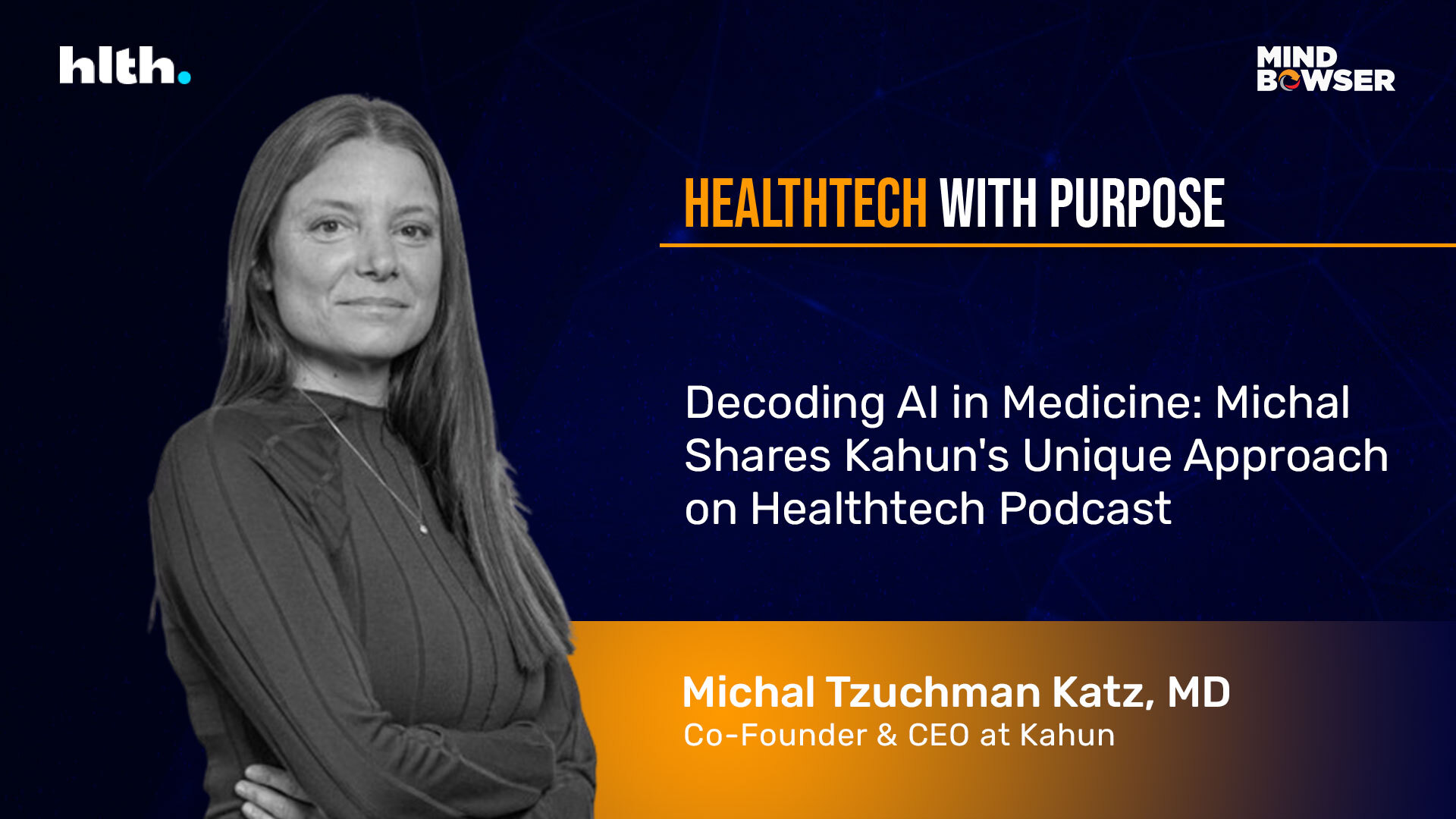
Join us for an enlightening HealthTech with Purpose podcast episode with Dr. Michal Tzuchman Katz, Co-founder and CEO of Kahun. Explore Kahun’s innovative approach using AI to empower physicians, reduce burnout, and enhance patient outcomes.
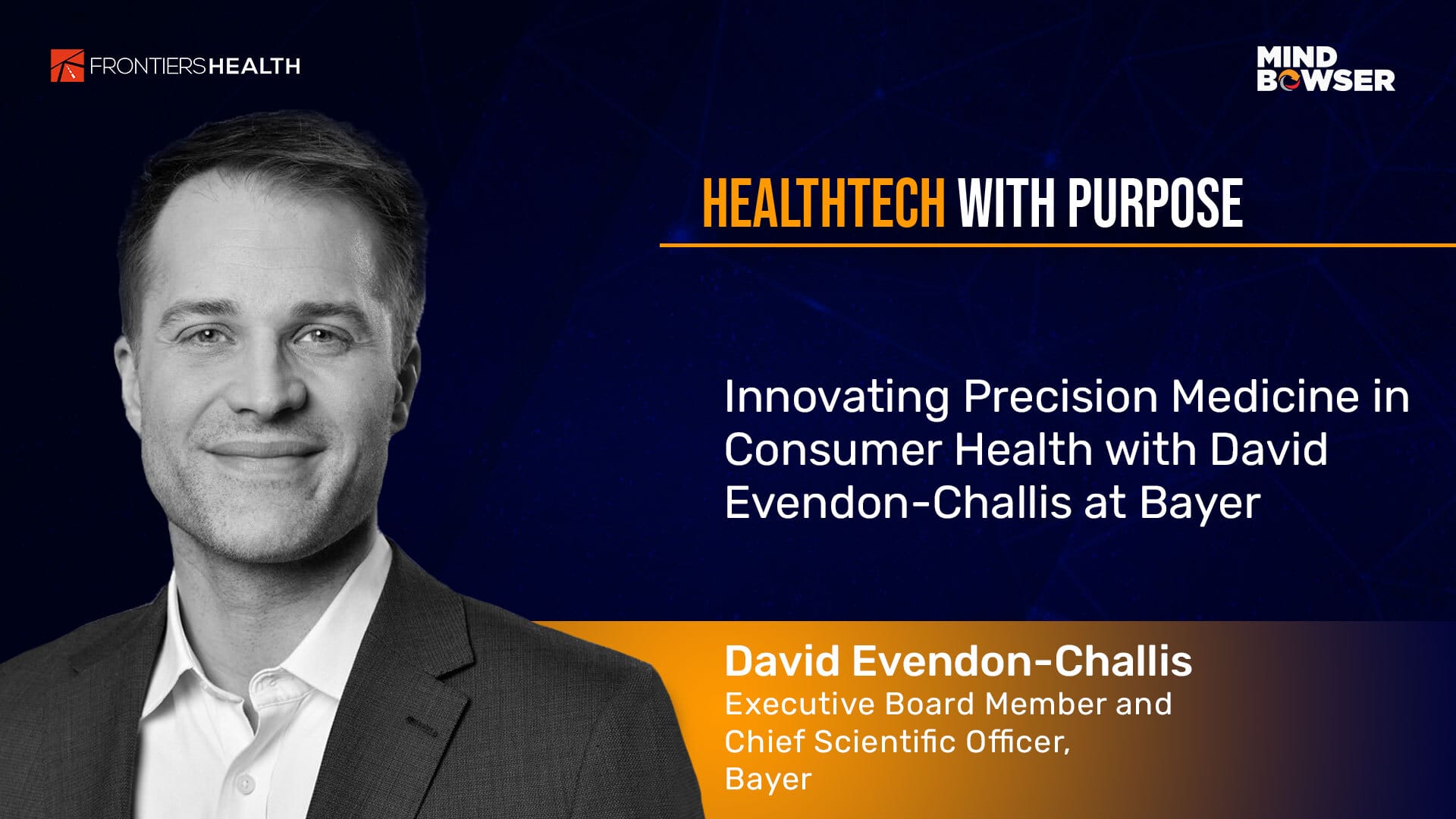
Join us in an insightful HealthTech with Purpose podcast episode as David Evendon-Challis, Executive Board Member and Chief Scientific Officer at Bayer, discusses innovative consumer health advancements.
Partner with us to design, build, and scale digital solutions that drive better outcomes.
Global Tech Teams LLC, 525 Washington Blvd, Industrious at Newport Tower, Jersey City, NJ 07310, United States.
Let’s discuss your goals, workflows, and next steps in a focused consultation call.
 Schedule a Call
















 BLOGS
BLOGS  NEWSROOM
  CASE STUDIES
  WEBINARS
  PODCASTS
  ASSET HUB
  EVENT CALENDAR