
















 BLOGS
BLOGS  NEWSROOM
  CASE STUDIES
  WEBINARS
  PODCASTS
  ASSET HUB
  EVENT CALENDAR















$233M
Year 1 RHTP Award

Deliver Montana RHTP programs with a FHIR-native platform designed for frontier rural healthcare delivery. Enable interoperable care coordination, telehealth, remote patient monitoring, and clinical data exchange across geographically dispersed rural providers while supporting scalable deployment and improving access to care in underserved frontier communities.
Year 1 RHTP Award

With Technology Scope

(highest per-capita)

Across Majority Of Montana Counties

Across Tribal Lands

Mapped To Montana Workflows
California received $233.6 million in Year 1 Rural Health Transformation Program funding, the third-largest state RHTP award in the nation (CMS awards December 2025). The California Department of Health Care Access and Information (HCAI), through its California State Office of Rural Health (CalSORH), leads the program across 3 named initiatives: transformative care model, workforce development, and technology. Over 1,600 stakeholders were consulted in the application development process, with focus areas spanning primary care, maternity, chronic disease, and specialty care access for California’s rural and frontier communities. Vendor procurement opens Q3 2026 through Q1 2027. Mindbowser builds FHIR-native technology for California rural health systems and the CalSORH RHTP initiative scope.
Montana DPHHS filed the state’s RHTP application with an explicit 5-initiative structure, distinct from the 7-initiative structure in some states (Massachusetts, for example). The Year 1 award of $233 million places Montana among the top-tier state awards, reflecting the structural cost of delivering rural health across frontier geography.
Montana’s rural health context:
• Frontier designation across the majority of Montana counties, with HRSA frontier classification applying to areas below 7 persons per square mile
• More than 50 Critical Access Hospitals, representing one of the highest per-capita concentrations in the nation
• Indian Health Service coverage across Blackfeet, Crow, Flathead, Fort Belknap, Fort Peck, Rocky Boy’s, and Northern Cheyenne reservations
• Broadband gaps concentrated in frontier counties, consistent with FCC 2024 Section 706 findings showing major connectivity disparities in rural and tribal communities
• Geographic distances that make specialty care access a structural challenge rather than a preference-based issue
• Workforce shortages compounding HRSA’s projected 25% rural nursing shortage by 2026 and the broader rural physician shortage projected by AAMC through 2036
The 5-initiative plan concentrates technology investment across care access, workforce, population health, clinical innovation, and interoperability layers, with Montana-specific adaptations for frontier geography and Indian Health Service coordination.
Montana rural hospitals run predominantly MEDITECH Expanse across the Critical Access Hospital footprint, Epic and Epic Community Connect in regional hospitals affiliated with larger Montana health systems (Billings Clinic, Bozeman Health, Providence St. Joseph, Kalispell Regional), and Athenahealth in primary care and Rural Health Clinic settings. Indian Health Service facilities run IHS-specific EHR systems requiring distinct integration paths.

• FHIR R4 + USCDI v3 (mandatory July 2026) across Montana rural provider EHRs
• Epic, MEDITECH, and athenahealth integration coverage across Montana’s rural healthcare footprint
• Indian Health Service EHR integration pathways supporting tribal health coordination
• OAuth 2.0 + SMART on FHIR + identity provider federation
• HIE connectivity through Montana Health Information Network (MHIN)
• Cellular-first deployment architecture designed for frontier broadband gaps


• Montana Health Information Network (MHIN) governance alignment
• Indian Health Service EHR coordination across Montana tribal lands
• Frontier connectivity workflows including cellular-first device strategy and offline-tolerant clinical operations
• Montana DPHHS RHTP reporting infrastructure
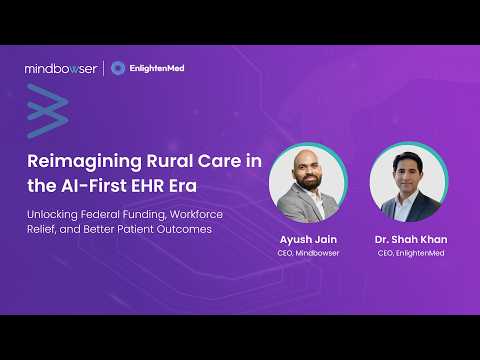
What does AI-first care delivery look like for rural hospitals, clinics, and lean care teams?
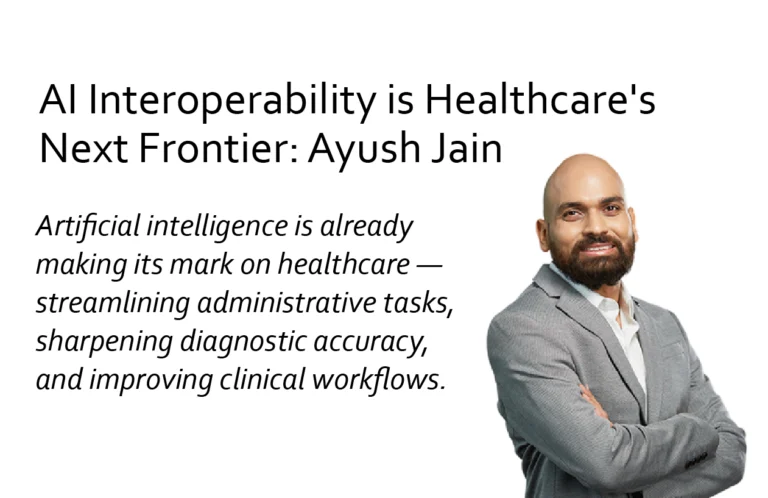
In this replay, Dr. Shah Khan, Founder & CEO of EnlightenMed, joins Ayush Jain, Founder & CEO of Mindbowser, to discuss how AI-first EHR workflows can support rural providers across access, documentation, RPM, follow-up, and care coordination.
Points Covered In this replay:
Frontier geography reframes technology requirements. Specialty access over 1-3 hours by road is the baseline reality in Montana rural counties, not the exception. Chronic disease management, behavioral health, and specialty coordination depend on remote monitoring, telehealth, and AI-assisted workflows to make coverage feasible.
Cellular-first device deployment for counties without reliable broadband. Integration with Montana primary care and CAH EHRs. Indian Health Service coordination for tribal chronic care programs.
The CMS AHCAH waiver extended through September 30, 2030 under PL 119-75 Section 6210 (Consolidated Appropriations Act of 2026, signed February 2026 after a 43-day program lapse) creates the federal framework. H@H in frontier Montana has distinct logistics: EMS response times measured in tens of minutes (not single digits), clinician drive times between home visits, and specialty consultation by telehealth only.
Low-bandwidth telehealth is not a feature preference in frontier Montana; it is the default deployment requirement.
Montana has the highest CAH count per capita nationally (50+ Critical Access Hospitals) and received $233.5M Year 1. See how Montana's technology scope stacks up across all 50 states.
HRSA projects a 25% rural nursing shortage by 2026 versus 5% metro; Montana frontier counties face compounded shortages across every clinical role. Technology investment in workforce amplification is structural to Montana's RHTP scope.

• Virtual training platform infrastructure for Montana rural and frontier CME delivery
• AI-assisted clinical documentation reducing burden on thin rural and frontier clinical staff
• Patient-facing AI absorbing administrative workload in 1–2 person CAH IT and operations teams
• Recruitment and referral infrastructure supporting rural Montana placement programs


Montana nursing licensure (Montana is a Nurse Licensure Compact state), Montana-specific NP scope of practice, frontier clinical placement program infrastructure, Indian Health Service workforce coordination.
Frontier Montana EMS presents distinct coordination challenges: volunteer and part-time EMS coverage across vast geographic areas, long transport times to referral hospitals, Indian Health Service EMS integration on tribal lands, and the absence of hospital-based paramedic services across most frontier counties. RHTP technology scope may include EMS mobile applications, community paramedicine workflow, and rural-to-hospital data flows.
Custom engagement scope:
•EMS mobile app development for prehospital protocols and medication dosing (where funded in Montana RHTP plan)<br>
•Community Paramedicine workflow integration for frontier coverage<br>
•Rural EMS-to-hospital data flow through Montana Health Information Network<br>
•Indian Health Service EMS coordination for tribal lands<br>
•Volunteer EMS coverage model integration
Honest framing: Frontier EMS workflow is highly Montana-specific. No packaged accelerator covers frontier EMS prehospital protocols. The FHIR integration layer ships from the accelerator stack; the frontier EMS workflow itself is bespoke per Montana DPHHS protocols and tribal health agreements.
For Broader RHTP Technology Planning Across States, Explore Our Rural Health Technology Partner
Montana follows the common RHTP six-phase procurement timeline, with Phase 0 activity through Q3 2026 and Phase 1 vendor procurement opening Q3 2026 through Q1 2027. Three engagement pathways for Montana specifically:
Montana Department of Public Health and Human Services runs the RHTP program. Vendors register through Montana's procurement system and respond to DPHHS-posted RFPs.
National prime contractors (Guidehouse, Accenture Federal, Wipfli, Booz Allen) scoping Montana RHTP technology work often need specialized rural and frontier healthcare build capacity. Mindbowser fits as the FHIR-native build subcontractor.
Montana Hospital Association (MHA), MHREF, MHIN, and the Montana Office of Rural Health provide ongoing visibility into rural and frontier health technology efforts, with Indian Health Service coordination managed as a separate tribal health partnership track.
30-minute scope conversations available weekly. Bring your Montana DPHHS contact, MHA or MHIN membership context, or prime contractor scope; we will map capability fit, accelerator alignment, and Montana-specific procurement pathway in real time.
Save minimum 40% in development costs and build products in 55% less time with our advanced solution accelerators.

EHRConnect offers a robust API/SDK for seamless integration with EHRs like Epic and Cerner, enabling secure data exchange via advanced auth protocols. Broad FHIR support boosts interoperability and communication.
Read More
WearConnect is a wearable tech platform enabling seamless integration between devices and apps, enhancing user experience and data access. It empowers users to maximize device potential efficiently.
Read More
PHISecure is a comprehensive solution for protecting PHI in healthcare, ensuring compliance with laws like HIPAA. Advanced encryption and access controls provide security against unauthorized access to patient data.
Read More
SecureSphere offers a holistic infrastructure management solution, enabling deployment in hours. It emphasizes compliance, scalability, and performance, with integrated monitoring tools to ensure security and reliability.
Read MoreHIPAA-ready builds with controlled PHI access, secure environments, and disciplined engineering practices. Designed to reduce vendor risk and speed up onboarding.

Independent audit of security controls operating over time.

PHI safeguards built into access, environments, and release workflows.

Data handling built for modern privacy expectations.

Role-based access with controlled PHI exposure.

Code reviews, dependency checks, and security gates.

Secure integrations designed for traceability and reliability.

 Encryption in transit and at rest
 Role-based access and least privilege
 Secure SDLC with code reviews
 Pen testing based on scope and risk
We don’t just deliver solutions we build partnerships that drive transformation. With a proven track record in healthcare technology, we understand the industry’s unique challenges and offer customized solutions to help you achieve breakthroughs.

Deep healthcare knowledge ensures technology aligns with real-world clinical workflows, driving impact.

Pre-built components reduce engineering time by 30-40%, helping you get to market quickly.

AI models are trained on your local data in your secure cloud environment.

Proven integrations ensure seamless connectivity with EHRs, payers, and digital health ecosystems.

Delivered 50+ healthcare solutions across 10+ countries, representing our ability to provide a diverse healthcare ecosystem.

Reduced the development time by 40% by implementing customized solutions for every challenge.

We deliver 100% ownership with a perpetual license for IP and code, enabling seamless data integration. Ensure full control and flexibility.

Ensure seamless integration with your systems and scalability to adapt to evolving needs.

Our 50+ prebuilt frameworks accelerate the development process and reduce time-to-market by 30%.

The specialized AI tools are customized to address healthcare challenges, significantly improving diagnostic efficiency by 25%.

Stay informed with our hub, offering insights and thought leadership to empower your team.

Achieved 90+ NPS with a user-centric approach ensuring seamless adoption and superior experience.

Leverage automation to reduce errors by 60%, boost efficiency, and enhance care quality.

Our clear, open pricing ensures you understand your investment without hidden costs or surprises.

A quick look at how we help organizations transform ideas into outcomes.

We helped a US healthcare Ed platform streamline physician processes & reduce burnout. Download the case study to learn more!

We helped a top media brand scale affiliate marketing with seamless automation, efficient workflows, and performance optimization.
From leading hospitals to digital-health companies, Mindbowser powers real-world healthcare transformation.
































We go beyond core healthcare solutions by offering a comprehensive suite of technology-driven services that enhance scalability, efficiency, security, and user experience.

From concept to deployment, we design and develop high-performance digital health products tailored to industry needs. Our approach focuses on scalability, security, and compliance, ensuring seamless functionality and a strong foundation for growth.

We provide custom AI/ML development services to help healthcare organizations automate workflows, enhance clinical decision-making, and extract actionable insights from data. Our expertise includes predictive analytics, NLP for medical records, and AI-powered automation tailored to your needs.

We help businesses migrate, build, and optimize healthcare applications on cloud platforms while ensuring compliance and security. Our cloud services include architecture design, DevOps automation, and scalable infrastructure management for seamless performance.

We enable secure and efficient integrations across EHRs, medical devices, third-party APIs, and digital health platforms. Our team ensures data interoperability using FHIR, HL7, and custom API development, reducing silos and improving workflow efficiency.

We offer data engineering, analytics, and reporting services to help healthcare organizations harness their data effectively. Our team develops real-time dashboards, predictive models, and automated reporting to support better decision-making.

We help businesses meet HIPAA, GDPR, and other regulatory requirements by integrating security best practices into development. Our services include risk assessments, DevSecOps implementation, and data protection strategies for secure digital health solutions.

We help organizations design, develop, and integrate telemedicine platforms with features like video consultations, remote patient monitoring, and secure data exchange. Our services ensure seamless connectivity while maintaining compliance with healthcare regulations.

We provide end-to-end mHealth app development services, designing secure, user-friendly, and HIPAA-compliant mobile solutions for healthcare providers, patients, and caregivers. Our services include custom app design, wearable integrations, remote monitoring, and telehealth features to enhance patient engagement and care accessibility.

We develop custom Clinical Decision Support Systems (CDSS) that provide real-time insights, AI-driven recommendations, and predictive analytics to improve patient outcomes. Our solutions integrate seamlessly with EHRs and existing healthcare systems, reducing cognitive load and enhancing clinical decision-making.
Collaborating with Industry Leaders for Smarter Healthcare








































Montana received $233 million in Year 1 RHTP funding (CMS award December 2025) with an explicit 5-initiative plan structure covering care access, workforce, population health, clinical innovation, and interoperability. Montana Department of Public Health and Human Services (DPHHS) runs the state RHTP program. Montana's frontier rural designation across the majority of counties, 50+ Critical Access Hospitals, and Indian Health Service coordination across tribal lands shape the technology scope.
Montana is in Phase 0 activity (setup, infrastructure, stakeholder input) through Q3 2026. Phase 1 vendor procurement opens Q3 2026 through Q1 2027. Phase 2 pilot implementations begin Q1-Q4 2027. Vendors scoping Montana RHTP work should be visible to DPHHS, Montana Hospital Association, and prime contractors before Phase 1 posting begins.
Montana has significant Indian Health Service coverage across Blackfeet, Crow, Flathead, Fort Belknap, Fort Peck, Rocky Boy's, and Northern Cheyenne reservations. RHTP technology work that serves rural Montana residents often overlaps with IHS patient populations. Technology integration paths include IHS EHR coordination, tribal health partnership agreements, and separate procurement considerations for tribal-specific RHTP technology scope. This is a distinct partnership track alongside state-direct Montana DPHHS procurement.
HRSA frontier designation (below 7 persons per square mile) covers the majority of Montana counties. Technology deployment assumes structural broadband gaps, long distances between facilities, volunteer or part-time EMS coverage, and specialty access measured in hours rather than minutes. Cellular-first device deployment, offline-tolerant clinical workflows, and low-bandwidth telehealth configurations are baseline requirements in frontier Montana, not feature preferences. This shapes every technology build decision from device selection through workflow design.
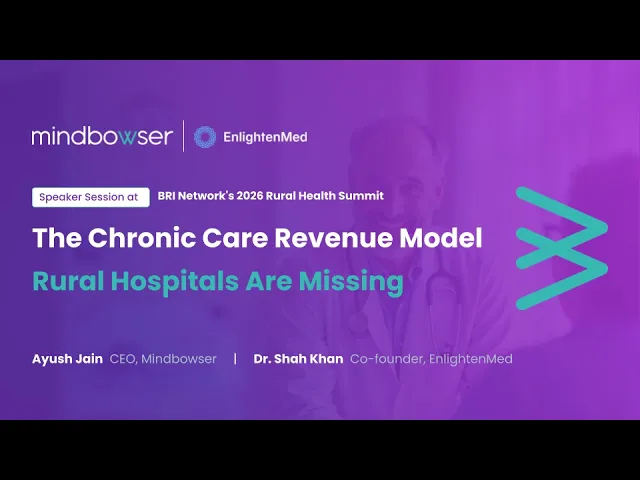
At the BRI Network's 2026 Rural Health Summit, Mindbowser explored the future of rural healthcare through AI and sustainable care models.
Get in Touch ↗Partner with us to design, build, and scale digital solutions that drive better outcomes.
Global Tech Teams LLC, 525 Washington Blvd, Industrious at Newport Tower, Jersey City, NJ 07310, United States.
Let’s discuss your goals, workflows, and next steps in a focused consultation call.
 Schedule a Call