












 BLOGS
BLOGS  NEWSROOM
  CASE STUDIES
  WEBINARS
  PODCASTS
  ASSET HUB
  EVENT CALENDAR


















TL;DR
Epic Emmie brings AI directly into the patient experience inside Epic, handling routine questions, improving engagement, and reducing administrative load. But the real value for CIOs lies in how it is governed, integrated, and extended across workflows. Health systems that treat it as infrastructure, not a feature, will unlock measurable ROI in operations, patient experience, and financial performance.
What happens when your patient portal starts answering questions before your staff does?
Epic Emmie signals a shift from static EHRs to AI-driven patient interaction layers embedded directly inside Epic.
For healthcare leaders, this is not just about automation. It is about redefining how patients engage, how workflows operate, and how value is created across the system.
I. What is Epic Emmie?
A. Definition & Positioning
What happens when your patient portal starts thinking for itself?
Epic Emmie is a patient-facing AI agent embedded directly within Epic’s ecosystem, primarily through MyChart and messaging channels. Unlike external tools, it operates inside the same environment where patients already check results, pay bills, and communicate with providers.
That placement matters.
Instead of asking patients to adopt a new app or interface, Epic inserts intelligence into existing behavior. The result is not a new workflow. It is an upgraded one.
According to Healthcare IT News, Epic’s broader push into AI agents signals a shift from isolated tools to workflow-native intelligence embedded across care delivery systems.
Healthcare organizations are moving from AI pilots to AI infrastructure.
For CIOs, this changes the question. It is no longer necessary to deploy AI. It becomes how do we govern AI that already lives inside our core system?
Emmie is not an add-on. It is a native capability that reshapes how patients interact with your EHR.
B. Core Capabilities
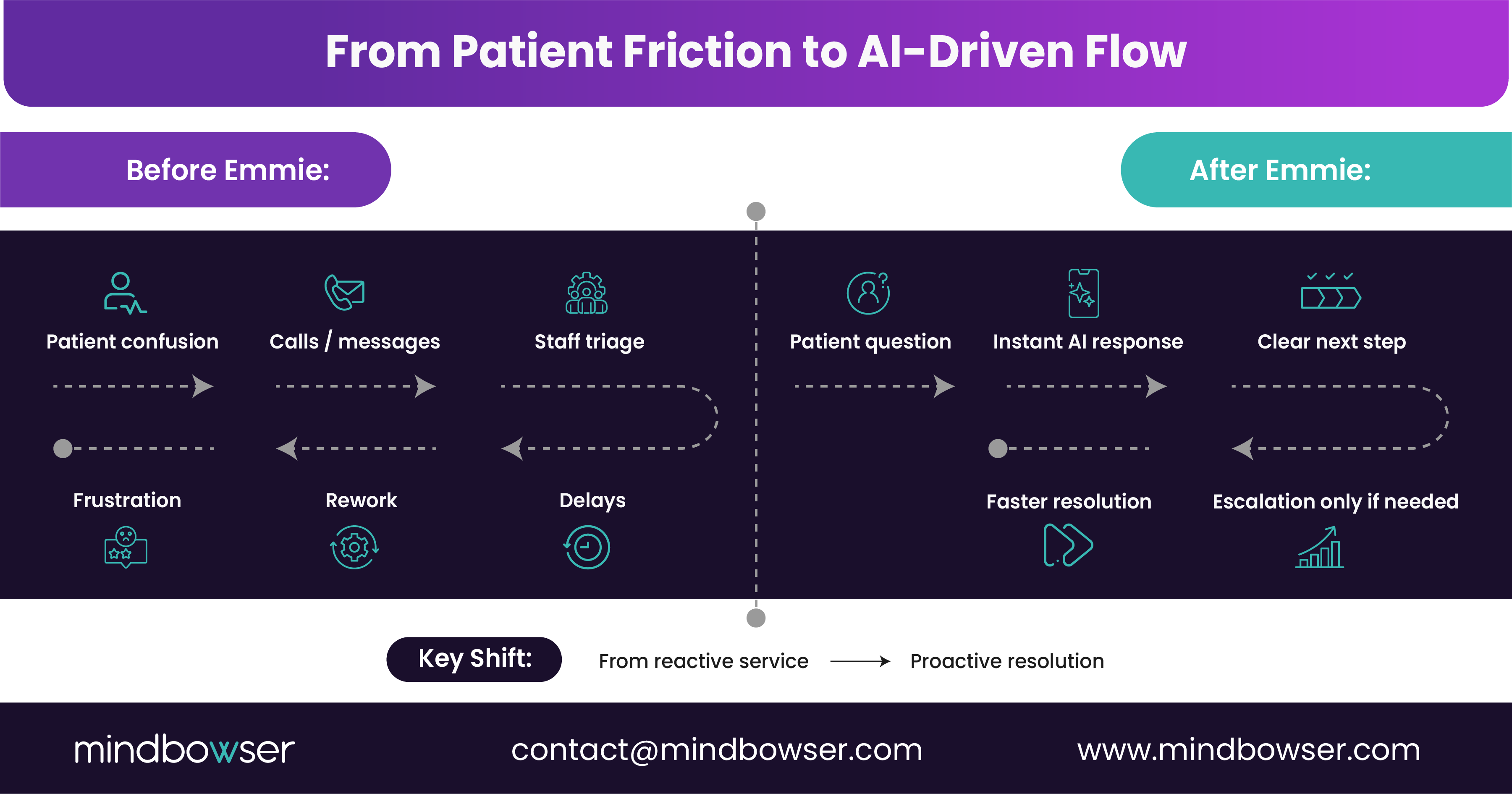
Think about your call center on a Monday morning. Billing confusion. Lab result anxiety. Appointment reschedules. Repetition. Volume. Delay.
Emmie targets exactly that friction.
At a functional level, it can:
- Translate complex test results into plain language that patients can understand
- Answer billing questions, including charges and payment plans
- Assist with scheduling and appointment changes
- Respond contextually based on patient-specific EHR data
This is not generic automation. It is contextual interaction tied to real patient records.
Epic has highlighted that its AI tools, including patient-facing agents, are designed to operate with live clinical and administrative data rather than static knowledge bases. That distinction drives accuracy and relevance.
Now layer in the macro trend.
Patients are no longer comparing you to another hospital. They are comparing you to Amazon, banking apps, and airlines.
Emmie closes that expectation gap.
Short sentence. It helps.
Emmie reduces administrative noise while improving patient clarity at scale.
C. Why It’s Different from Standalone Chatbots
Most healthcare chatbots fail for one reason. They live outside the system of record.
They guess. Emmie knows.
Here is the structural difference:
1. Embedded in Epic EHR
Standalone chatbots sit on websites or third-party platforms. Emmie operates inside Epic EHR. That means no context switching for patients or staff.
2. Real-Time Clinical Context
Because it is tied to the EHR, Emmie can reference actual lab results, billing data, and appointment schedules. Not approximations. Not templates.
3. Enterprise Governance Built-In
Epic environments already operate under strict compliance frameworks. Emmie inherits that structure, including access controls, audit trails, and HIPAA-aligned data handling.
This is where many CIOs pause. And they should.
Scenario: A patient asks, Why is my bill so high?
A generic chatbot gives a canned response.
Emmie can explain line items tied to that patient’s encounter.
That is power. And risk.
According to Forbes, Epic’s expansion into AI includes governance-focused design to ensure health systems maintain control over how AI interacts with patient data and workflows.
AI adoption in healthcare will be defined less by capability and more by control.
Emmie’s advantage is not just intelligence. It is context plus compliance inside the EHR boundary.
II. How Epic Emmie Fits Into Epic’s Broader AI Strategy
A. The Expanding Epic AI Ecosystem
Epic Emmie is not the story. It’s the signal.
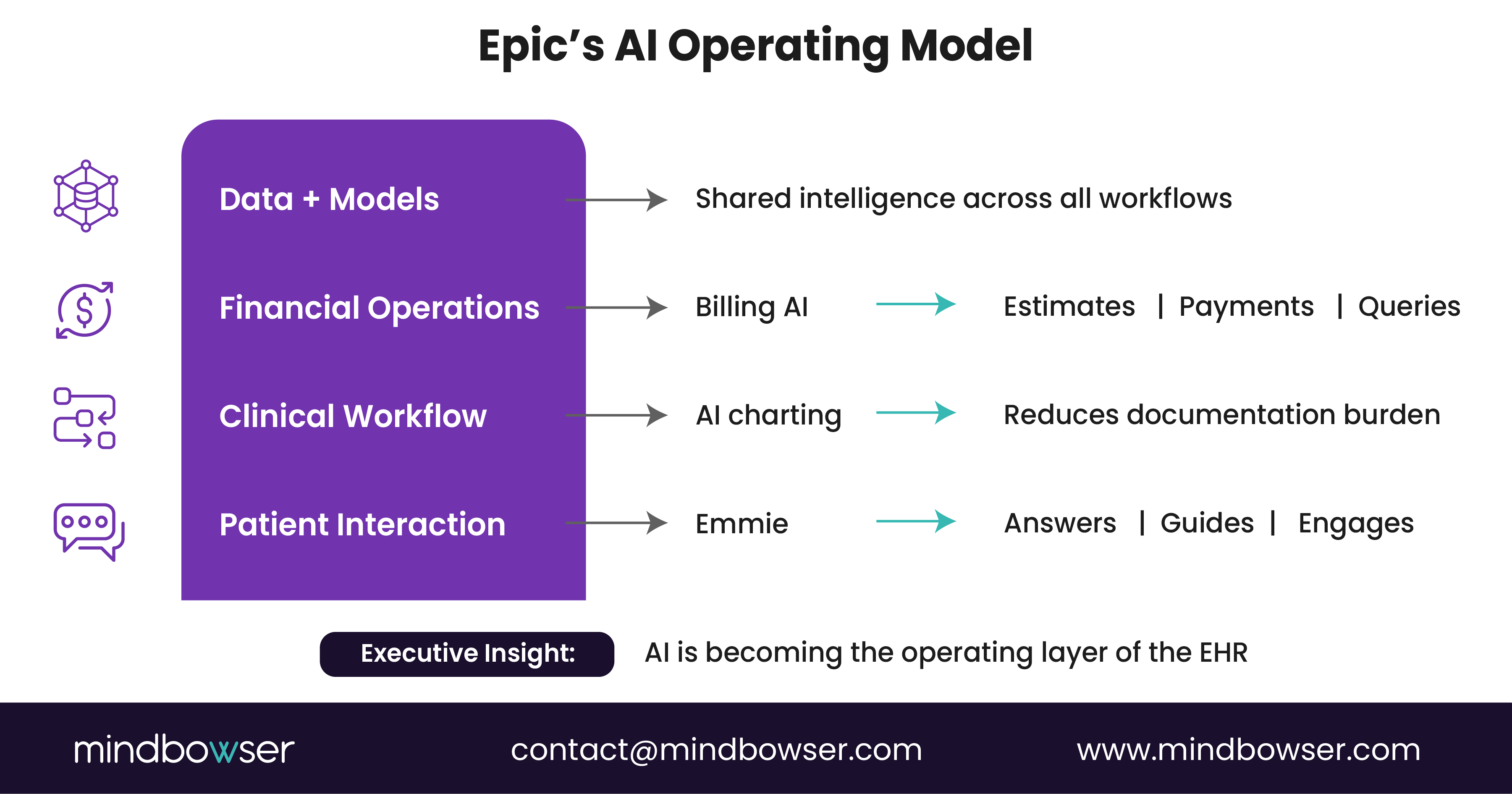
Epic is not launching isolated AI tools. It is building a layered AI environment across the entire care continuum, and Emmie represents the patient-facing entry point.
Here is how the ecosystem is taking shape:
- Patient AI (Emmie): Handles engagement, communication, and self-service inside MyChart
- Clinician AI: Includes AI-assisted charting, documentation support, and in-workflow guidance to reduce cognitive load
- Revenue Cycle AI: Targets billing workflows, coding assistance, and financial interactions
- Foundational Models: Underlying AI infrastructure trained on clinical and operational data to power all layers
According to Becker’s Hospital Review, Epic has been steadily expanding its AI capabilities to support both front-end patient interactions and back-end clinical workflows within a unified system.
That unity is the strategy.
Health systems are no longer experimenting with AI in silos. They are operationalizing it across workflows.
This is where CIOs should lean in.
The question is not which AI tool to deploy. It is how these layers interact, share data, and stay governed under one architecture.
Emmie is the front door, but the real value comes from the connected AI stack behind it.
B. AI as an Embedded Layer, Not an Add-On
What if AI is no longer a project, but part of your infrastructure?
That is the shift Epic is driving.
Traditionally, health systems approached AI as pilots. Limited scope. Isolated teams. Measured risk. Easy to contain. Easy to ignore.
That model is fading.
Epic’s approach embeds AI directly into:
- Clinical documentation workflows
- Patient communication channels
- Billing and administrative processes
This is not surface-level automation. It is deep workflow integration.
According to Healthcare IT News, Epic’s AI rollout reflects a broader industry move toward embedding intelligence directly into core systems rather than layering external tools on top.
Now consider the operational impact.
Nearly 30% of clinician time is spent on administrative tasks. – Annals of Internal Medicine
AI embedded inside workflows targets that exact inefficiency.
Short sentence. It matters.
But here is the tension.
Embedded AI increases adoption. It also increases dependency.
CIOs must now answer:
- Who governs model behavior?
- How are outputs validated?
- Where does human oversight sit?
This is not just a technology strategy. It is an operating model design.
Contrast:
- Standalone AI = optional tool
- Embedded AI = default behavior
That difference changes everything.
Epic is positioning AI as core infrastructure. Health systems that treat it as a side project will fall behind.
III. Strategic Impact for Mid-Market Health Systems
A. Operational Efficiency
Your call center is the first place you’ll feel this.
Every CIO knows the pattern. Rising patient messages. Billing confusion. Staff burnout. Incremental fixes that never quite bend the curve.
Now introduce Epic Emmie into that equation.
By handling routine patient queries in real time, Emmie reduces dependence on human touchpoints for repetitive, low-complexity interactions. That includes billing clarifications, appointment changes, and post-visit questions.
A large portion of patient communications is administrative rather than clinical, making them well-suited for automation.
AI doesn’t remove work. It removes unnecessary work.
That is the hidden risk.
Emmie can compress operational load fast, but only when aligned with real workflows and escalation paths.
B. Improved Patient Experience
What does a patient do after seeing abnormal lab results at 10 PM?
Today, they search Google. Or worse, they wait. Anxiety builds. Calls spike the next morning.
Emmie changes that moment.
By delivering contextual, plain-language explanations directly within MyChart, it gives patients immediate clarity tied to their own data.
This is not just convenience. It is experience design.
According to a report cited by Forbes, digital engagement is now a primary driver of patient satisfaction and retention, especially among younger and commercially insured populations.
“Patients expect healthcare interactions to be as responsive as other digital services.”
Emmie meets that expectation where it matters most. Inside the patient journey.
Contrast this:
- Traditional model → delayed answers, fragmented communication
- AI-assisted model → real-time guidance, continuous interaction
That shift reduces confusion, improves trust, and strengthens your digital front door.
But there is nuance.
Too much automation without clarity can feel impersonal. Too little, and you lose efficiency gains.
Balance matters.
Emmie improves patient experience when it delivers clarity, not just speed.
C. Clinical Workflow Alignment
Here is the overlooked question. What happens upstream when patients are better informed?
Clinicians feel it immediately.
When patients arrive with clearer expectations, fewer basic questions, and a better understanding of their conditions, visit quality improves. Time shifts from explanation to decision-making.
That is the upside.
Better-informed patients are associated with improved adherence and reduced follow-up burden, particularly in chronic care settings.
Now consider the operational ripple effect:
- Fewer clarification messages post-visit
- Reduced documentation back-and-forth
- More focused clinical encounters
This is where Emmie moves beyond engagement and into clinical impact.
Scenario: A patient receives pre-visit instructions and lab explanations via Emmie.
They arrive prepared. The visit starts at a higher baseline.
Small shift. Big effect.
But alignment is critical.
If Emmie provides information that conflicts with clinician guidance or lacks context, it creates friction instead of flow.
That is where governance and clinical oversight come in.
AI should extend clinical workflows, not compete with them.
Emmie works best when it prepares patients without disrupting the clinician’s intent.
IV. Early Adoption Considerations for CIOs & CMIOs
A. Governance & AI Oversight
Who owns the decision-making when AI speaks to your patients?
This is the first question that separates successful adopters from reactive ones.
Epic Emmie operates inside your EHR, but governance does not come pre-installed. Health systems must define:
- Who approves AI use cases
- How responses are validated
- When human intervention is required
According to Healthcare IT News, health systems adopting AI agents are increasingly formalizing AI governance councils that include clinical, IT, compliance, and legal stakeholders.
That structure is not optional anymore.
Scenario: Emmie explains a lab result in simplified language.
If that explanation is misinterpreted, who is accountable? IT? Clinical leadership? Compliance?
Silence here creates risk.
AI governance is no longer a policy document. It is an operating function.
High-performing organizations treat AI like clinical infrastructure, not experimentation.
They implement:
- Human-in-the-loop checkpoints for sensitive interactions
- Tiered rollout strategies by use case risk
- Continuous monitoring of AI outputs
Short sentence. Control matters.
Governance defines whether Emmie becomes a force multiplier or a liability.
B. Integration & Infrastructure Readiness
Can your current architecture support real-time AI inside workflows?
Emmie may be native to Epic, but your broader ecosystem still determines performance.
Three areas surface quickly:
1. Identity & Access Management
AI interactions must respect patient identity, consent, and role-based access. Weak identity layers increase exposure risk.
2. Data Policies & Interoperability
Clean, well-governed data drives accurate AI responses. Fragmented data creates inconsistent outputs.
3. API & System Performance
Real-time responses depend on system responsiveness. Latency kills adoption. Patients will not wait.
Health systems with mature interoperability frameworks see significantly higher success rates in AI deployment initiatives.
This is where many mid-market organizations hit friction.
They adopt AI before fixing the pipes.
Contrast:
- Strong infrastructure → AI enhances workflows
- Weak infrastructure → AI exposes gaps
Emmie performs as well as the systems it connects to.
C. Risk Management
What could go wrong? Start there.
AI in patient communication introduces new categories of risk. Not theoretical. Operational.
Key concerns include:
- Accuracy: Misinterpretation of clinical data or oversimplification
- Bias: Uneven responses across populations or conditions
- Escalation failure: When AI should defer to humans but does not
Healthcare AI adoption is increasingly tied to risk mitigation frameworks that ensure transparency, traceability, and escalation pathways.
That is the new baseline.
Scenario: A patient reports worsening symptoms via chat.
Does Emmie escalate immediately, or respond with general guidance?
That decision pathway must be predefined.
Leading organizations implement:
- Guardrails for high-risk queries
- Confidence thresholds for AI responses
- Clear escalation protocols to clinicians or care teams
“Speed without safety is failure.”
Short. True.
Risk management is not about limiting AI. It is about making it safe to scale.
D. Financial & Licensing Considerations
Where does the ROI actually come from?
AI conversations often stall here.
Epic Emmie is not just a technical deployment. It carries cost implications tied to licensing, implementation, and operational change.
CIOs must evaluate:
- Pricing structures for AI capabilities within Epic
- Cost offsets from reduced administrative workload
- Long-term financial impact on staffing models
Here is the reality.
Savings do not show up as immediate budget cuts. They show up as:
- Slower headcount growth
- Improved throughput
- Better resource allocation
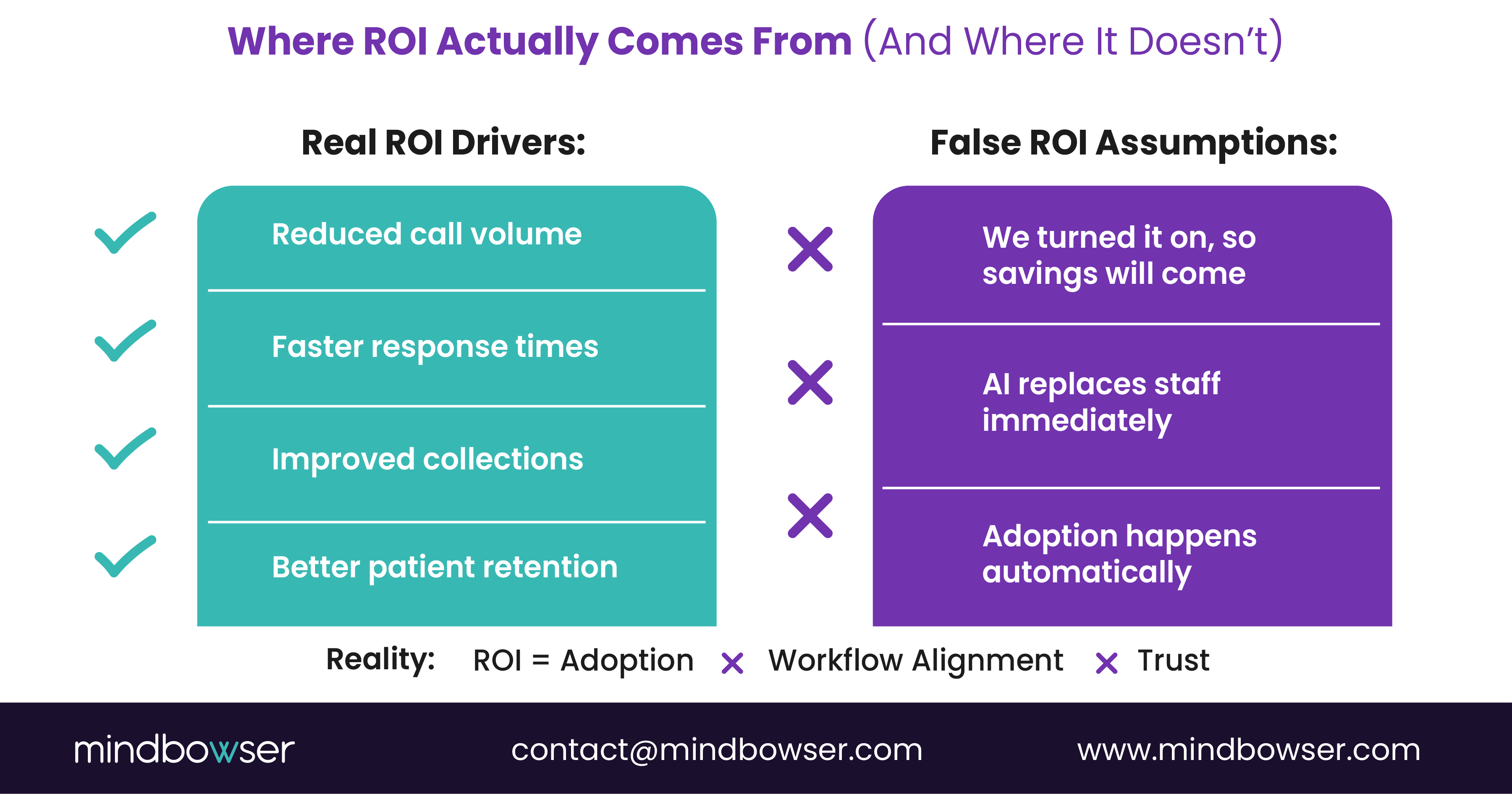
But only when adoption is real.
Scenario: If Emmie handles patient billing queries but staff continue to duplicate responses, ROI disappears.
That is a workflow problem, not a technology problem.
AI ROI is realized through behavior change, not feature activation.
Financial value depends on aligning cost structures with actual workflow transformation.
Need help extending Epic with secure, custom workflow-native AI?
V. Roadmap: What’s Likely Next for Epic Emmie
If today is reactive assistance, tomorrow is proactive care orchestration.
Epic Emmie is just getting started. The current capabilities focus on answering, guiding, and simplifying. The next phase will shift toward anticipating, recommending, and acting.
That evolution follows a clear trajectory already visible in Epic’s broader AI announcements.
A. Proactive Patient Outreach
Today, Emmie responds. Soon, it will initiate.
Imagine automated nudges for:
- Preventive screenings
- Medication adherence
- Care gap closures
Instead of waiting for patient action, Emmie will prompt it.
According to Becker’s Hospital Review, Epic’s AI direction includes proactive engagement tools designed to close care gaps and improve population health outcomes.
Scenario: A diabetic patient misses a follow-up.
Emmie reaches out with tailored messaging and scheduling options.
Small intervention. High impact.
B. AI-Assisted Self-Triage
This is where things get more clinical.
Patients will increasingly use AI to describe symptoms and receive guidance on next steps. Not diagnosis, but direction.
- Should I go to urgent care?
- Can this wait?
These are high-volume, high-uncertainty questions.
AI triage will define the next generation of digital front doors.
But risk rises here. Governance must keep pace.
C. Deeper Personalization
Right now, Emmie is contextual. Next, it becomes predictive.
Future iterations will likely incorporate:
- Longitudinal patient history
- Behavioral patterns
- Social determinants of health
This allows responses to shift from generic explanations to patient-specific guidance over time.
Contrast:
- Current → “Here’s what this lab result means.”
- Future → “Based on your history, here’s what this means for you.”
That difference builds trust. Or breaks it.
D. Multimodal Interfaces
Text is just the start.
Expect expansion into:
- Voice interactions
- Visual summaries (charts, trends)
- Possibly video-based explanations
Epic has already signaled movement toward broader AI interfaces across workflows, including clinician-facing tools.
Patients will expect the same evolution.
Short sentence. They already do.
E. Expanded Revenue Cycle Automation
Billing remains one of the most frustrating patient touchpoints.
Emmie’s future role will likely deepen into:
- Payment plan optimization
- Eligibility clarification
- Real-time cost estimation
Scenario: A patient asks about a procedure cost.
Emmie provides a personalized estimate and payment options instantly.
That reduces confusion. And accelerates collections.
The strategic throughline points to one shift.
- From reactive support to proactive orchestration
- From isolated answers to continuous engagement
- From static workflows to adaptive systems
But here is the real question for CIOs.
Are you preparing your organization for this future, or reacting to it one feature at a time?
AI maturity will not be defined by tools deployed, but by systems designed to evolve.
Epic Emmie will move from assistant to orchestrator. The organizations that win will be the ones ready to guide that evolution, not chase it.
VI. ROI Framework: Measuring the Business Case
CIOs don’t get a budget for features. They get a budget for outcomes.
Epic Emmie will generate excitement quickly. The real question is whether it generates a measurable return.
Here is how leading health systems are framing ROI. Not as a single metric, but as a layered business case across operations, finance, and patient experience.
A. Operational Metrics
Start where the friction lives.
Operational ROI is the fastest to validate because it shows up in daily workflows.
Key indicators include:
- Reduction in patient message volume
- Decrease in billing-related call center traffic
- Staff time saved per interaction
That is Emmie’s sweet spot.
Scenario: A health system reduces billing inquiry calls by 20%.
Call center load drops. Response times improve. Staff reallocation becomes possible.
But here is the catch.
If AI responses are not trusted, staff will double-check everything. Efficiency gains vanish.
Automation without trust creates shadow work.
Short. Painful. True.
Track workload reduction, but validate that work is truly eliminated, not shifted.
B. Financial Metrics
Where does the money move?
Financial ROI from Epic Emmie is indirect but meaningful when measured correctly.
Focus on:
- Cost per interaction: AI-driven interactions are significantly lower in cost than human-handled ones
- Collections improvement: Faster billing clarity increases payment velocity
- No-show reduction: Better communication leads to better adherence
Health systems lose billions annually due to missed appointments and inefficient billing processes, both of which are addressable through better patient engagement.
Now connect the dots.
Scenario: Emmie improves appointment adherence by even 5%.
That translates into recovered revenue without adding capacity.
Small percentage. Large impact.
But financial ROI depends on scale.
- Low adoption → minimal impact
- High adoption → compounding returns
This is why rollout strategy matters as much as capability.
Financial gains come from volume, consistency, and behavior change across patient interactions.
C. Patient Metrics
Experience is not soft. It is measurable.
Epic Emmie directly influences how patients perceive your organization’s accessibility and responsiveness.
Key metrics to track:
- MyChart engagement rates
- Response time to patient inquiries
- Patient satisfaction scores (CAHPS, NPS proxies)
Digital engagement tools are strongly correlated with higher patient satisfaction and retention, particularly in competitive markets.
Now consider the strategic angle.
Better engagement does not just improve scores. It drives:
- Stronger patient loyalty
- Increased service utilization
- Better long-term outcomes
Scenario: A patient consistently receives fast, clear answers through Emmie.
They are more likely to stay within your network for future care.
That is revenue protection.
Patient experience is no longer a differentiator. It is a baseline expectation.
Measure engagement as a leading indicator of both clinical and financial performance.
The executive takeaway on ROI is simple:
- Operational → Efficiency gained
- Financial → Revenue protected and costs reduced
- Patient → Loyalty and satisfaction improved
Miss one, and the business case weakens.
Nail all three, and Emmie becomes more than a tool. It becomes infrastructure.
Provocative question:
Are you measuring AI success by usage, or by outcomes that matter to the business?
VII. How Mindbowser Helps Build Custom EHR Solutions with Epic Integration Capabilities
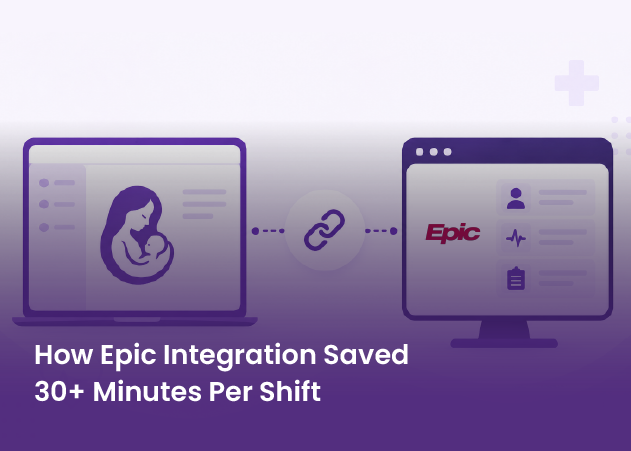
Emmie lives inside Epic, that’s where it works and where clinicians interact with it. Extending that experience to your own patient app, specialty workflow, or analytics layer is integration work. ConnectHealth, Mindbowser’s healthcare integration platform, ships a pre-built Epic connector plus Helix AI to make that connection in days, not a 6-month custom build. See the wider epic-integration picture or the other epic-modules.
Where Epic Emmie Changes the Game for Health Systems
Epic Emmie marks a clear shift from EHRs as passive systems to active, AI-driven interfaces. While every Epic customer will gain access to similar capabilities, advantage will not come from the tool itself but from how it is governed, integrated, and extended. Health systems that treat Emmie as infrastructure, not a feature, will reduce friction, improve patient engagement, and unlock measurable ROI, while those that move slowly risk falling behind as AI becomes the default layer of care delivery.
Epic is setting the foundation, but long-term differentiation will belong to organizations that pair strong governance with smart customization and execution.